
Sam Altman: Enneagram 3w4
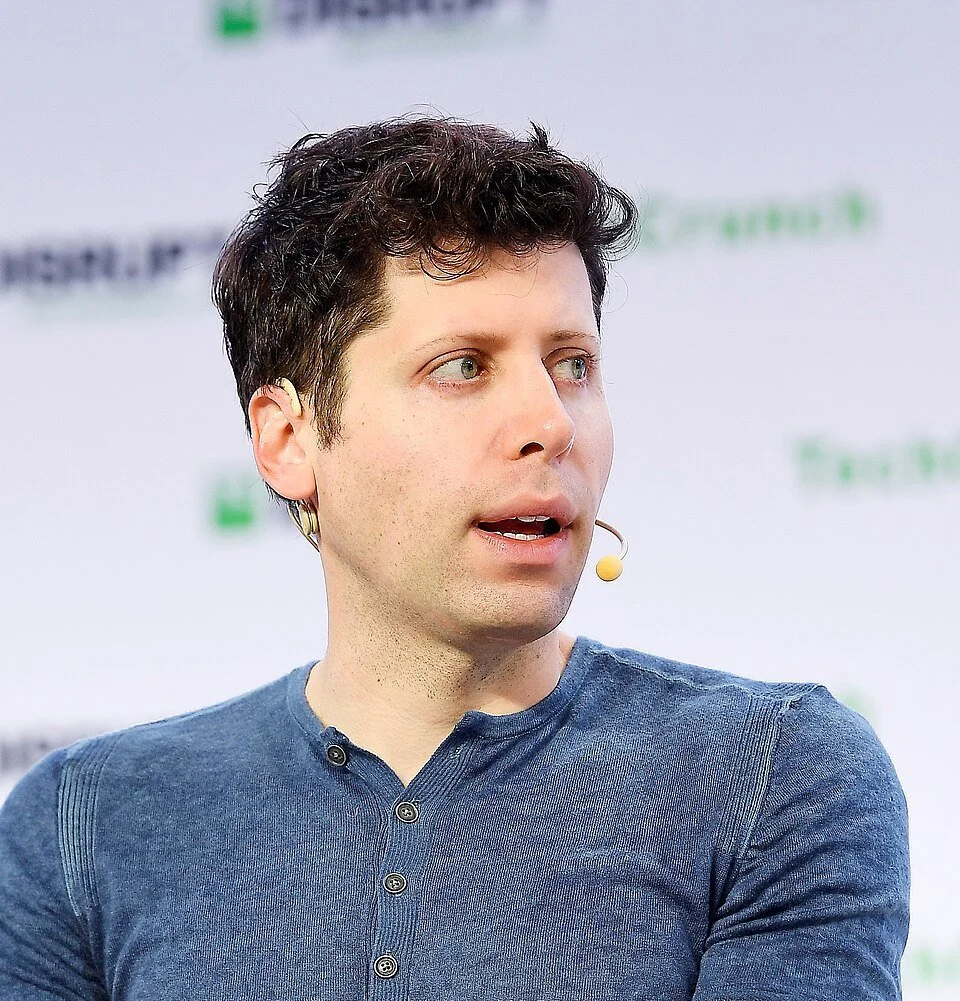
TechCrunch, CC BY 2.0, via Wikimedia Commons
Why Sam Altman is a Type 3
Early fixation on impact and achieving measurable outcomes. Altman left Stanford University after two years to co-found Loopt in 2005, explicitly framing the decision as a faster path to impact and success. In later interviews, he described college as “too slow” for what he wanted to build. Loopt’s acceptance into Y Combinator and eventual $43 million acquisition by Green Dot in 2012 gave him an early, legible win before age 30.
Strategic self-positioning within elite networks. After Loopt’s exit, Altman embedded himself deeper into Silicon Valley’s power structure, becoming president of Y Combinator in 2014 at age 29, an unusually young appointment. Rather than founding another startup, he chose a role that gave him a lot of influence and leverage across hundreds of companies.
Consistent association with “the future” as a personal brand. Throughout the 2010s, Altman consistently articulated grand, future-oriented goals (AI, energy abundance, longevity), while presenting himself as the orchestrator capable of delivering them. His blog posts and interviews emphasize scale, inevitability, and historical importance. Even when discussing risks, he frames them as challenges to be managed en route to success.
OpenAI leadership defined by milestone-driven legitimacy. As CEO of OpenAI, Altman repeatedly ties the organization’s credibility to headline-grabbing model releases, partnerships, and adoption metrics. The Microsoft partnership functioned not just as infrastructure support but as reputational proof of seriousness. While many AI labs remained academically oriented, Altman pushed OpenAI toward visible market leadership.
Rapid recovery and image recalibration. Following his abrupt firing from OpenAI’s board in November 2023, Altman moved immediately to stabilize his public image. He appeared calm, cooperative, and indispensable. Within days, nearly all OpenAI employees signed a letter threatening to leave unless he was reinstated. He returned to CEO less than a week later. The speed and effectiveness of the comeback highlight a knack for navigating complex situations.
Focus on business development, product, and execution over technical mastery. Altman has never presented himself as the strongest technical mind in AI, instead emphasizing coordination, fundraising, and vision-setting. In interviews, he frequently credits technical teams while positioning himself as the driver of alignment and execution.
Polished presence and controlled emotional presentation in high-stakes settings. In congressional testimony and media appearances, Altman maintains a composed, confident demeanor even under aggressive questioning. His language is measured, optimistic, and forward-looking. The consistent polish reinforces credibility.
Competitive orientation. Although OpenAI is framed around safety and benefit to humanity, Altman regularly emphasizes outperforming rivals and setting standards. Statements about “leading responsibly” coexist with aggressive deployment timelines. The moral framing does not eliminate competition as a virtue. It reframes winning as virtuous.
Selective vulnerability used strategically. Altman occasionally references anxiety, fear of failure, or responsibility stress, but these disclosures are brief and framed as manageable. They humanize without undermining competence.
Consistent upward narrative from youth to present. From teenage coding projects to Silicon Valley power broker, Altman’s story is presented as a steady ascent. Detours and failures are acknowledged only insofar as they lead to larger wins. The narrative arc is linear and success-oriented.
Sam Altman quotes that show he is a Type 3
“Most people overestimate what they can do in a year and underestimate what they can do in ten years.”
“The best founders are relentlessly resourceful.”
“Focus and intensity are the most important things.”
“A big secret is that you can bend the world to your will a surprising percentage of the time.”
“Compounding is magic. Small improvements over time lead to extraordinary results.”
“The hardest part of starting a company is deciding to do it.”
“Great execution is at least 10 times more important than a good idea.”
“Most companies don’t fail because they can’t build something. They fail because they don’t get distribution.”
“You need to be able to take risks and be okay with failure.”
“The most successful people are those who are both highly ambitious and very persistent.”
“Confidence and a willingness to be bold are incredibly important.”
Continue Exploring
Type 3 Profiles (With Evidence): Taylor Swift, Tiger Woods, Elon Musk, Madonna, Serena Williams, Barack Obama
Understand Type 3: Type 3 The Achiever
Common Type 3 Mistypes (and how to tell the difference): Type 3 vs Type 7, Type 3 vs Type 9
All Celebrity Types: Hundreds of Profiles (With Evidence)
Enneagram Community (live teaching and discussion twice monthly): Enneagram Library Live