
Maria Sharapova: Enneagram 3w4
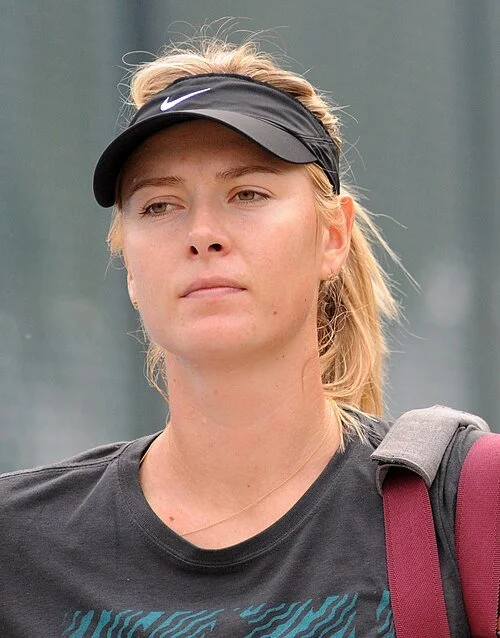
Tatiana from Moscow, Russia, CC BY-SA 2.0, via Wikimedia Commons
Why Maria Sharapova is a Type 3
An early fixation on being better than the people around her. Sharapova traces her competitiveness to watching other children hit tennis balls against a wall when she was four. Before she knew how to play, she remembers wanting to get in front of them and “show them how it’s done.” The question in her mind was not whether she could participate, but whether she had “the ability to be better than them.”
A childhood organized around a singular mission. At six and a half, Sharapova moved from Russia to Florida with her father to pursue tennis, spending two years apart from her mother and initially speaking no English. She practiced from early morning until late afternoon, completed schoolwork, and repeated the schedule the next day. While the other girls at the academy shared interests and decorated their rooms, Sharapova felt that she was there “on a different mission.”
Achievement that continually required further proof. Reaching the top ranking did not allow Sharapova to feel that she had conclusively arrived. In her memoir, she wrote, “Being ranked number one is not enough.” She believed she needed to win a second Grand Slam to demonstrate that she genuinely deserved the ranking. One landmark achievement quickly became the standard she had to validate through another.
Process and grind treated as the route to greatness. Sharapova has described herself as “a sponge when it comes to process and grind,” connecting her appetite for learning directly to her desire to improve and achieve greatness. She similarly credits childhood repetition with developing the persistence required to continue through the tedious parts of excellence, when there is no excitement or immediate reward.
An identity built around doing the work others avoid. After a third-round Australian Open loss, Sharapova said that looking for rest in January would mean “there’s something wrong.” She acknowledged that some days she did not want to work, but argued that pushing through those particular days was what “ultimately” made someone a winner. The capacity to perform despite reluctance is central to how she understands competitive success.
Respect for performance prioritized over connection with others. Sharapova deliberately limited her relationships with other players and spent as little time in the locker room as possible. She said that being respected for what she did on the court was “much more meaningful” than being regarded as a nice person by her competitors. Coach Paul Annacone described this distance as the structure that allowed her to work best, while Chris Evert characterized Sharapova as unusually isolated from the tennis world.
Careful control over what she communicates publicly. In a podcast conversation with Dax Shepard, Sharapova said that she thinks carefully before speaking and waits to speak until she knows what she has to say is valuable.
Composure and narrative control during a public career crisis. When Sharapova announced that she had failed a drug test, she called her own press conference and calmly explained the circumstances before the news emerged elsewhere. She accepted responsibility for failing to notice that meldonium had been added to the prohibited list, while carefully distinguishing the mistake from intentional cheating. Even then, she managed the room with a joke that she would not announce her retirement in a hotel with such an ugly carpet.
Brand ambassadorship treated as an education in excellence. Sharapova began working with Nike at eleven, but resisted treating the relationship as a matter of wearing a logo and collecting endorsement income. She visited Nike’s campus, shadowed meetings, and asked why particular materials, products, and campaigns had been chosen. She described herself as “a little ghost” in the meetings, absorbing product development and learning from leading marketers and executives.
Rejecting quick wins in favor of more powerful opportunities. Sharapova has said that her father taught her to decline apparently attractive opportunities so that she would remain available for “bigger and greater things.” She later applied the same principle to business partnerships, turning down what she called “quick money” because she was hungry for the big win.
Turning a marketable image into business ownership. Rather than remaining only a highly paid spokesperson, Sharapova invested $500,000 of her own money to establish Sugarpova at twenty-five. Her comments about the company emphasize responsibility for the entire operation, from small product decisions to long-term strategy. She has said that when a person begins with little and later earns significant money, they should remain involved “from the smallest things to the largest things.” Forbes
Competitive standards carried into every personal project. Sharapova approached the construction of her Los Angeles home with the same intensity she brought to tennis. She would leave tournaments and go directly to construction sites, architects’ offices, or manufacturers, insisting that she would not delegate any part of the project. Architect Grant Kirkpatrick called her work ethic “astonishing,” described her as “competitive as hell,” and said she examined every detail and material variation. Architectural Digest
A distinct and highly curated aesthetic, suggestive of a 4 wing. Sharapova’s public image combines athletic toughness with fashion, art, architecture, and minimalist design. Her home was inspired by Japanese architecture and filled with personally selected antiques, artwork, and custom materials. Her designers described her as perceptive and detail-oriented, noting that she analyzed every chair, table, stitch, and groove. The result was not generic luxury but a controlled environment intended to feel unmistakably her own. Architectural Digest
Preparing a second achievement identity before the first one ended. Sharapova did not wait until retirement to begin imagining life after tennis. During injuries and breaks, she studied at Harvard Business School, shadowed business leaders, attended corporate meetings, and developed her investments. She later explained that she recognized her athletic career would be short and concluded, “I’ve got to hustle. I’ve got to start learning from other people.” The Blog of Author Tim Ferriss
Legacy framed around turning personal achievement into an example for others. As she moved away from competition, Sharapova increasingly presented the lessons of her career as material that could help other people succeed. In her retirement essay, she addressed anyone who dreams of excelling, warning that failure and public judgment are inevitable but encouraging them to trust themselves and continue. She has since focused particularly on mentoring female athletes who want to build identities and brands beyond competition. vanityfair.com
Continue Exploring
Type 3 Profiles (With Evidence): Taylor Swift, Tiger Woods, Elon Musk, Madonna, Serena Williams, Barack Obama
Understand Type 3: Type 3 The Achiever
Common Type 3 Mistypes (and how to tell the difference): Type 3 vs Type 7, Type 3 vs Type 9
All Celebrity Types: Hundreds of Profiles (With Evidence)
Enneagram Community (live teaching and discussion twice monthly): Enneagram Library Live