
J. D. Vance: Enneagram 3w4
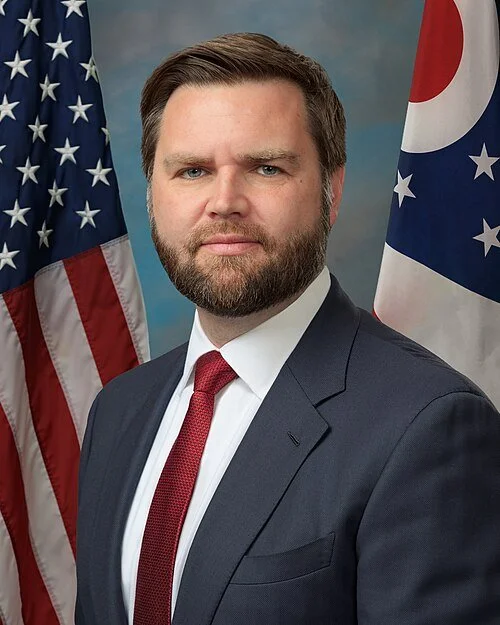
118th United States Congress via Wikimedia Commons
Why J. D. Vance is a Type 3
Framing his life as a story of rags to the elite. Vance’s trajectory from a troubled Appalachian upbringing to Yale Law School became a central identity narrative well before he entered politics. He has repeatedly emphasized the contrast between his childhood instability and later success, with a heavy emphasis on controlling the narrative of what his life is about.
Strategic authorship of Hillbilly Elegy. Published in 2016, Hillbilly Elegy was written as an explanatory framework for white working-class decline, timed precisely as national attention focused on the 2016 election. Vance positioned himself as both insider and interpreter, a role that elevated him rapidly into elite media and policy circles. While many politicians publish memoirs, Vance’s book stood out for its policy relevance and ambition. The success of the book immediately translated into speaking engagements, fellowships, and political capital.
Rapid ascent into elite institutions. After serving in the Marine Corps, Vance pursued Ohio State University and then Yale Law School, where he actively cultivated relationships with influential mentors like Amy Chua. He has spoken openly about recognizing elite credentials as necessary tools for advancement. Rather than rejecting elite systems that contrasted with his roots, he mastered them.
Calculated ideological repositioning for winning elections.Vance was publicly critical of Donald Trump in 2016, comparing him unfavorably to authoritarian figures in private messages later reported by the press. By 2021–2022, he had fully realigned himself as a Trump ally during his Ohio Senate campaign. This shift coincided with the political incentives of winning a Republican primary in Ohio.
Career choices optimized for visibility and influence. After law school, Vance moved through venture capital, think tanks, and media. These roles placed him closer to power brokers and public discourse.
Use of populist rhetoric paired with elite backing. Despite positioning himself as anti-elite, Vance’s campaigns and ventures were backed by wealthy donors and venture capital figures, most notably Peter Thiel. This duality allowed him to claim outsider authenticity while benefiting from insider resources.
Emphasis on strength and dominance in personal presentation. Vance’s physical presentation, speech patterns, and debate style emphasize assertiveness and certainty. The effect reinforces an image of confidence and authority.
Response to criticism framed as resilience and winning. When confronted with accusations of opportunism, Vance often responds by pointing to electoral success or popular support rather than addressing the ethical concerns that are being raised. Success itself becomes the justification.
Focus on legacy and historical positioning. In speeches and interviews, Vance often frames political conflicts as civilizational or era-defining. He positions himself on the “right side” of history as he defines it. This grand framing elevates personal success into historical relevance.
J. D. Vance quotes that show he is a Type 3
“I think that what separates people who succeed from those who don’t is often mindset.”
“You can’t just take a job and expect everything to be handed to you.”
“I’ve learned that while I can’t change my past, I can choose my future.”
“I don’t believe in destiny. I believe in hard work.”
“There are too many people who have come to believe that they cannot control their lives.”
“We talk about opportunity, but we don’t always talk about responsibility.”
“I’ve seen people squander opportunities that others would do anything to have.”
“The truth is that upward mobility is not just about hard work. It’s about the choices you make every day.”
“There is a difference between understanding your circumstances and being defined by them.”
Continue Exploring
Type 3 Profiles (With Evidence): Taylor Swift, Tiger Woods, Elon Musk, Madonna, Serena Williams, Barack Obama
Understand Type 3: Type 3 The Achiever
Common Type 3 Mistypes (and how to tell the difference): Type 3 vs Type 7, Type 3 vs Type 9
All Celebrity Types: Hundreds of Profiles (With Evidence)
Enneagram Community (live teaching and discussion twice monthly): Enneagram Library Live