
Elvis: Enneagram 3w4
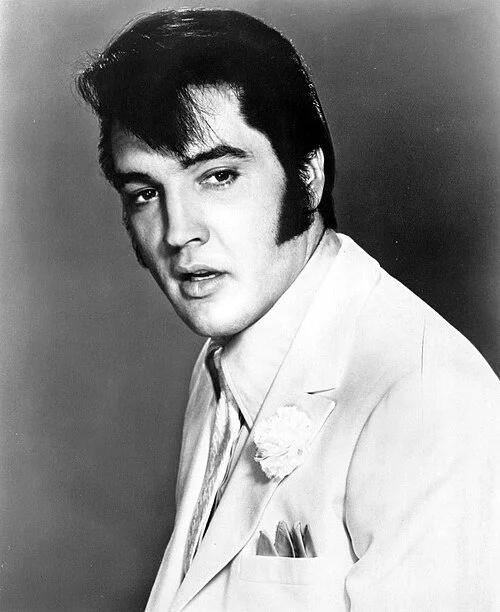
MGM, Public domain, via Wikimedia Commons
Why Elvis is a Type 3
Early fixation on becoming a performer. As a teenager in Memphis, Elvis Presley spoke openly about wanting to become an entertainer rather than pursuing ordinary work. Classmates at Humes High School recalled that he regularly brought a guitar to school and performed informally for friends. Even before professional opportunities appeared, he was experimenting with how to command attention through music and style.
Strong emotional investment in visible success. Friends and collaborators often described Presley as highly sensitive to how audiences and critics perceived him. After concerts he reportedly asked associates how the show had gone and whether crowds had responded enthusiastically. Praise energized him, while negative press could visibly affect his mood. Public reaction functioned as a real-time measure of whether he was succeeding.
Obsessive attention to appearance and stage image. Presley devoted unusual attention to grooming and clothing throughout his career. Associates recalled long preparation before appearances, including careful styling of his hair and selection of stage outfits. His look evolved from flashy jackets in the 1950s to the elaborate jumpsuits of his Las Vegas era. The visual persona became inseparable from the performance itself.
Using television exposure to amplify celebrity. Presley’s appearances on The Ed Sullivan Show in 1956 reached tens of millions of viewers and dramatically expanded his fame. The performances were staged to highlight his charisma and distinctive dance movements. Television allowed him to convert musical success into nationwide cultural visibility. The broadcasts transformed him from a regional star into a national phenomenon.
Treating controversy as a visibility amplifier. Public criticism of Presley’s stage movements during the 1950s intensified his cultural visibility rather than diminishing it. Commentators considered his performances as rebellious or morally questionable, keeping his name constantly in the press. Presley’s management understood that the controversy increased public curiosity. The attention strengthened his image as a disruptive new star.
Rapid expansion into film to broaden status. Beginning with Love Me Tender, Presley expanded quickly into Hollywood while his music career was still accelerating. Film roles exposed him to audiences beyond radio and concert halls. Soundtrack albums tied his movies directly to his recording career. The move deliberately positioned him as both pop singer and movie star.
Hyper-productive film schedule to maintain visibility. During the early 1960s Presley filmed multiple movies per year, including projects such as Blue Hawaii and Viva Las Vegas. The rapid production cycle was to ensure a constant flow of new films and soundtrack releases. Each movie reinforced his presence in theaters and on record charts simultaneously.
Competitive concern about musical relevance. By the mid-1960s Presley was aware that new artists were dominating youth culture. Associates recalled him discussing the success of acts such as The Beatles and comparing chart performance. The changing musical landscape created pressure to prove he remained a central figure in pop music. Maintaining status among emerging stars became an increasing concern.
Career reset through the 1968 television comeback. After years focused on films, Presley reintroduced himself through the NBC special Elvis (1968 TV special). The program emphasized live performance and stripped-down musicianship, rather than the polished movie persona. Broadcast nationally, it dramatically reshaped how audiences viewed him. Critics widely described the special as a career revival.
High-output recording sessions to restore credibility. In 1969, Presley entered intensive recording sessions at American Sound Studio. Over several days he recorded a large number of songs that would supply multiple releases. The sessions produced major hits, including “Suspicious Minds.” The burst of productivity was meant to restore his reputation as a serious recording artist.
Turning personal style into a cultural signature. Presley’s hairstyle, clothing, and stage posture became instantly recognizable symbols of his identity. Fans across the United States imitated his look during the late 1950s. Photographs and publicity materials emphasized the distinctive silhouette associated with him. Personal style functioned as a powerful extension of his celebrity.
Sustaining the image of a singular superstar. Throughout his career, Presley cultivated the aura of a performer unlike any other in popular music. Promotional materials and media coverage regularly referred to him as “The King.” The title cemented the perception that he occupied a unique position in entertainment culture. His identity as a singular star became central to his legacy. He didn’t invent that nickname of “The King,” but he really played into it.
Continue Exploring
Type 3 Profiles (With Evidence): Taylor Swift, Tiger Woods, Elon Musk, Madonna, Serena Williams, Barack Obama
Understand Type 3: Type 3 The Achiever
Common Type 3 Mistypes (and how to tell the difference): Type 3 vs Type 7, Type 3 vs Type 9
All Celebrity Types: Hundreds of Profiles (With Evidence)
Enneagram Community (live teaching and discussion twice monthly): Enneagram Library Live