
Carlos Santana: Enneagram 4w3
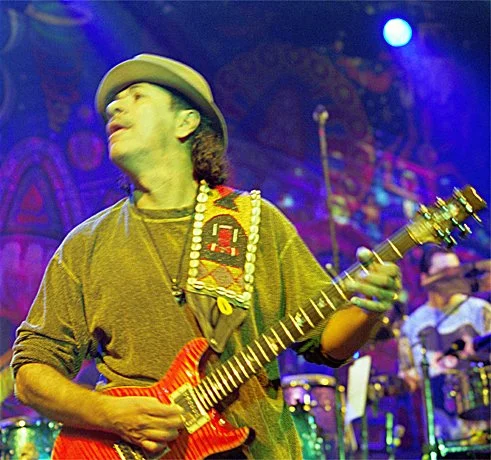
Carlos Santana via Wikimedia Commons
Why Carlos Santana is a Type 4
Relentless emphasis on authenticity over imitation or performance. Santana consistently frames his work in terms of being real rather than performing for approval. He draws a sharp distinction between expression and artifice, saying, “There are two types of people in this world. Artists and con artists. I know which one I am.”
Music as a direct expression of inner emotional experience. He describes playing music as an act of creation and transmission, saying, “You are giving birth to beauty when you play.” His language consistently centers on feeling, depth, and inner experience, with an emphasis on using the heart as the primary instrument. He frequently encourages others to “stay in your heart.”
Resistance to external definition and insistence on a distinct artistic identity. Santana has pushed back on efforts to narrowly define his work, resisting being labeled strictly within a single genre such as rock. Santana has consistently emphasized a sound rooted in his own artistic and spiritual sensibilities, even when industry norms or audiences leaned toward clearer categorization. His fusion of Latin, blues, rock, and spiritual elements reflects an ongoing refusal to conform to external expectations in favor of expressing something more personal and internally guided.
Strong emphasis on depth, vulnerability, and confronting inner experience. Santana openly speaks about engaging with his inner struggles, stating, “I knuckle down with my demons, and with my weaknesses.” He has described periods of intense personal difficulty, including multiple suicide attempts following a relationship breakdown, and frames these experiences as part of a deeper journey: “You have to go through the darkest night of the soul to get to the brightest light.”
Romantic and heightened framing of artistic experience. Santana often describes music in elevated, almost poetic terms, such as encouraging musicians to give themselves chills before playing. His language reflects intensity and emotional amplification, treating artistic expression as something profound and even sacred.
Belief in expanding inner possibility and inspiring others to do the same. Santana describes inspiration as something that “puts wings in people’s hearts and causes them to dream big.” His framing of art consistently points toward expanding emotional and imaginative possibility, both for himself and for others. This also points to his 3 Wing.
Individualistic stance toward personal path and expression. Santana emphasizes that each person must find their own way, stating, “I got what I got and you can’t have what I got. You gotta get your own.”
Carlos Santana quotes that show he is a Type 4
“You can take things… but if you want to stand out, you have to learn to crystallize your existence and create your own fingerprints.”
“I know I’m not the kind of person who’s gonna wind up a walking jukebox… That doesn’t appeal to me.”
“I knuckle down with my demons, and with my weaknesses.”
“There’s never one sunrise the same or one sunset the same.”
“There’s a melody in everything… once you find the melody, then you connect immediately with the heart.”
“I realised a long time ago that instrumental music speaks a lot more clearly… Pure melody goes outside time.”
“There are two types of people in this world. Artists and con artists. I know which one I am.”
Continue Exploring
Type 4 Profiles (With Evidence): Prince, Kesha, Michael Jackson, Bob Dylan
Understand Type 4: Type 4 The Individualist
Common Type 4 Mistypes (and how to tell the difference): Type 3 vs Type 4, Type 1 vs Type 4
All Celebrity Types: Hundreds of Profiles (With Evidence)
Enneagram Community (live teaching and discussion twice monthly): Enneagram Library Live