4w3
Type 4 with 3 Wing
I’m a shy, deep thinker with huge ambition who loves to have an audience I can impact with my gifts, while I constantly feel not up to snuff and that life is passing me by because I’m too slow to keep up.

Enneagram Type 4
4s are sensitive, emotionally deep, and intensely focused on feeling authentic.
4s are sensitive, emotionally deep, and intensely focused on feeling authentic. They filter nearly everything through their feelings, gauging whether each person, setting, or choice allows them to be true to themselves, and they resist conforming to anything that feels fake or ordinary. This often makes them original, insightful, and remarkably honest about the parts of life others avoid, but it can also leave them feeling fragile, misunderstood, and convinced that something essential is missing in them.
Although 4s are frequently associated with artists and creative types, their drive to feel authentic can show up in every area of life: curating a playlist for every mood, spending hours searching for the bedspread that truly expresses their heart, choosing every word with exquisite care, or dyeing their hair platinum blonde so no one could mistake them for anyone else. Their attention is continually drawn toward their feelings, what is missing, and whether they are being seen for who they really are, often creating an internal pressure to feel more intensely, stand apart, and avoid being ordinary.
When they feel secure, they ground their feelings in objective reality, dedicate their gifts to a cause greater than themselves, and turn even painful experiences into wisdom and beauty that help others be who they are. When they feel threatened, they become moody, self-absorbed, and snobbish, amplifying their emotions, dismissing others as shallow, and envying those who seem to live with ease, or slip into people-pleasing and victimhood when their gifts go unseen. Beneath their longing is a fear that they will lose their authentic self. Their growth involves noticing how they underplay the good in their lives, and in themselves.
Behavioral Pattern
Withdrawn. I need space to deeply explore myself separate from the shallow, mainstream world that doesn’t understand me and doesn’t understand, period.
Making me feel like I’m nobody special, my voice doesn’t matter, I’m not extremely deep, clear, real, thoughtful, perceptive, insightful, creative, impassioned, caring, and impactful in my approach to every single thing in life, because the reality is that no matter how hard I try, I’m just too flawed to make it through the world, as I always knew…
I become The Sick Patient. I become so resigned to the reality that the world doesn’t understand and nurture me, knowing I’ve given my whole heart to all that I do and it’s simply not been received (where even the smallest act of mine that goes underappreciated feels like a direct rejection of me), that I carry my heart as a wound I need to nurse indefinitely in an emotional puddle until someone finally notices, empathizes, and lets me show them how brilliant, sincere, caring, honest, and gifted I really am, in every way.
are too many and too deep to process. Which one do I let myself feel first?
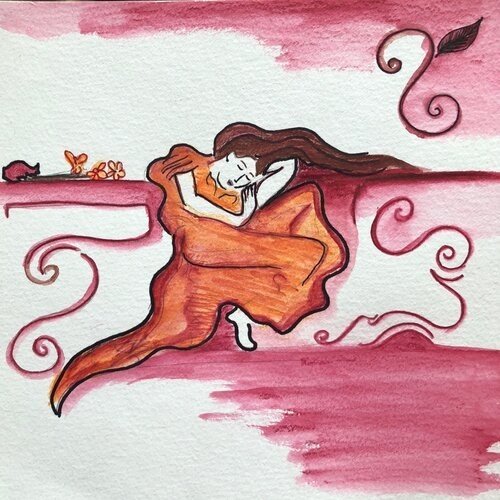
How Was Your Day, Type 4?
“Overwhelming. I don’t even know where to begin sharing…”
Chief Characteristics of Type 4 at Different Levels of Consciousness
unique, profound
snobbish, melancholic
petulant, hopeless
Shock Point Fear
The fear that causes the slip from Creative to Controlling Consciousness.
My changeable feelings won’t sustain me and my creativity.
4w3
I’m a shy, deep thinker with huge ambition who loves to have an audience I can impact with my gifts, while I constantly feel not up to snuff and that life is passing me by because I’m too slow to keep up.
4w5
I’m a heart person longing to connect with others, but I often live in my own world, wondering if I’m meant to be an outsider forever, as I’m unable to care about the things society cares about or fit the social mold with my withdrawn, sensitive, and philosophical nature.
In Growth
In growth, 4s become more grounded, disciplined, and balanced, like healthy 1s.
In Stress
In stress, 4s become more people-pleasing, dependent, and overly accommodating, like unhealthy 2s.
4 in the Heart Center
The Heart Center is the seat of our emotions and, more deeply, of our identity. It’s where we wrestle with who we are, where we belong, and what our lives are worth. 4s belong to the Heart Center, and for them, the heart’s central question is one of identity: Who am I, really?
Of all the Types, 4s are the most openly obsessed with their hearts. I’m feeling this, and this, and now something completely different…what do I do?! They sense that the deepest self lives in the heart, and they want to find it more than anything. They are also more aware than any other Type that the ego’s version of the self doesn’t suffice.
The trouble is that the heart is also where all the coverings of the self reside. 4s end up feeling too much of what they don’t want to feel and not enough of what they do. When the world doesn’t see them as the unique and deep person they long to be, shame sets in, and they withdraw. Without realizing it, they build a self on top of the self, a version of authenticity that pulls them further from who they actually are.
Growth for 4s means letting their feelings come and go without building an identity out of them…and discovering the self that was underneath all along!
Learn more about this dimension of the Enneagram: The Centers of Intelligence.
4s and Frustration with Both Functions
Parental Orientation helps us understand how each Type relates to love, safety, and connection. Rooted in object relations theory, it looks at a child’s earliest relationship with two essential parental functions. The Nurturing Function provides love, mirroring, and nourishment, helping the child feel seen and valued. The Protective Function provides discipline, support, and strength, helping the child feel safe and guided. Either parent can provide either function, and all of us continue to need both throughout our lives.
4s are frustrated with both the Nurturing and the Protective Functions. They need both so badly, and neither ever seems to come in the way they need it. Picture a child who is hugged when they wanted to be understood, and given advice when they wanted to be held. Something in them concludes: No one really gets me. I’ll have to do this myself. 4s grow up feeling like they have to parent themselves!
In adult life, it shows up as the sense that everyone else got a manual for life that they never received. Friends, partners, and mentors may offer real care, but it rarely lands quite right. 4s often feel alone and unfortunate, as if they’re the only ones who have to do everything for themselves while everybody else is somehow ahead.
Growth doesn’t mean pretending they don’t need anything from anyone! It means letting in the love and support that is actually there. They have to let others nurture and guide them, even when it doesn’t come in exactly the form they imagined, so that they can stop carrying the weight of their lives alone. Then they can offer others the deep understanding they have always longed for.
Learn more about this dimension of the Enneagram: Parental Orientation.
4s in the Emotional Realness Harmonic
The Harmonics describe how each Type approaches conflict and tries to restore harmony. 4s belong to the Emotional Realness Harmonic, which looks to honest emotional expression for resolving conflict: if we put all our feelings on the table, we can find our way through.
For 4s, emotions are everything. They come to a conflict needing the full depth of what they’re feeling to be seen and understood, and they sense right away when someone is holding back. Do you really get what this is like for me? Until the answer is yes, nothing feels resolved. Small disagreements can take on enormous weight, and 4s may circle back to them long after everyone else has moved on.
At their best, 4s bring honesty and depth to a conflict, helping everyone touch what is really going on beneath the surface. But when emotional realness is cut off from the bigger picture, it turns into self-absorption, and 4s can slip into playing the victim, making resolution depend on whether others will fully understand them.
Growth for 4s means remembering that the other person has a heart too, and bringing the other two Harmonics alongside their own: affirming the relationship with a Positive Outlook and using Competency to agree on a way forward, so their feelings lead somewhere and don’t keep the conflict going.
Learn more about this dimension of the Enneagram: The Harmonics.
The Passion of the 4: Envy
The Virtue of the 4: Equanimity
Each Type has a Passion and a Virtue. The Passion is the core emotional obsession that keeps the ego fortified as governor of the person. This trait is so pervasive that it usually goes unnoticed as the Type swims in it. Fittingly, passion comes from the Latin for suffering. The Virtue is its antidote – the quality that naturally emerges when the ego loosens its grip and the true self begins to come through more. For 4s, the Passion is Envy and the Virtue is Equanimity.
The Envy of the 4 is not always obvious. 4s tap into something true: life holds more sorrow than most people want to admit, and sorrow lasts longer than happiness. But beneath the surface runs an unspoken assumption: I’m more fundamentally flawed than everyone else. Other people seem to have what I’m missing. So when they see someone happy, 4s often dismiss it as shallow. They’re often right that it is shallow! What poisons them is the wish, deep down, that others weren’t so happy, and the blindness to their own shallowness in that moment.
This Envy keeps 4s comparing their insides to everyone else’s outsides, far away from the depth and goodness already within them.
Equanimity is the way back. It begins with a question 4s rarely ask, or only ask on the surface: What if I already have what I’m looking for? The Bhagavad Gita compares a self-realized soul to the ocean, which takes in river after river and never overflows. 4s with equanimity still feel deeply, but their feelings are absorbed by a grounded depth instead of tossing them around.
Learn more about this dimension of the Enneagram: The Passions and Virtues.
“I Can’t Accept My Own Well-Being.”
The Achilles Heel, a dimension of the Enneagram developed in our early days at Upbuild, names the one thing each Type cannot accept about itself that becomes its undoing. Like the mythical warrior who was invulnerable everywhere but his heel, we can think we’re strong in so many ways and still be brought down by what we refuse to see. For 4s, the Achilles Heel is: I can’t accept my own well-being.
4s build their identity on their emotions, and they notice early on that positive feelings have a much shorter shelf life than painful ones. So, without realizing it, they lean toward the painful ones to keep their sense of self alive. There’s always something tragic: I’m undiscovered. No one understands me. So much is wrong in my life. Meanwhile, the good that is really there gets undercut again and again.
Acceptance rarely comes all at once. Much like grief, it tends to begin with denial and anger. A 4 is likely to first insist that they’re simply being honest about how hard life is, and then bristle at the suggestion that things might actually be going well.
Growth for 4s means grieving the tragic self they’ve held onto and turning toward the life that is in front of them. As they let the good in without needing to undercut it, they come to see that their well-being was never a threat to who they are.
Learn more about this dimension of the Enneagram: The Achilles Heel.
Falling in Love with the 4
Our teacher Russ Hudson made a pact never to teach a Type he hadn’t fallen in love with. Inspired by him, we’ve made the same commitment, and this section is where we share it.
Falling in love with a Type means appreciating its gifts, feeling for its suffering, and finding an access point: a place in our own experience that lets us relate to what it’s like to be that Type.
When their hearts are truly open, 4s want to bring something unprecedented into the world: a beauty that comes from a deep place and helps people connect with truth. A very healthy 4 is honest about reality even when it isn’t pretty, and invites everyone else to be honest too. They long for heart-to-heart connection, and they help bring humanity back to a world that has lost touch with it.
Yet the depth they offer is the one thing almost nobody wants to go to with them. It sounds like too much work for too little payoff, and so they feel terribly alone on their quest. They ask so much of themselves, and they don’t yet know themselves well enough to deliver it. Most Types have defenses that keep them from feeling the cross they carry. 4s feel all of it, and they are left wondering how anyone could possibly understand.
The access point is one we all share: the experience of feeling unseen for who we really are. We have all had moments where no one seemed to get us, and where life felt heavier for us than for everyone else. For 4s, that feeling is a constant companion. Seen this way, the moodiness, withdrawal, or even snobbishness that can put people off is simply a tender heart longing to be known.
Learn more about this dimension of the Enneagram: Falling in Love.
Every name here is carefully researched. Linked names have a full profile laying out the evidence for their Type.
Countries and Cultures That Reflect Type 4 Characteristics: France, Romanticism Movement
Listen · Podcast
I’m doing much better than I think, thanks to the thoughtfulness and care I try to always offer.
Learn to tell the Types apart.
Explore the Enneagram in a more nuanced format through our podcast.
Live teachings and conversation, held every other Thursday.
Join us for our two-day Enneagram workshop.
Reach out to learn more about a private Enneagram coaching session.