5w4
Type 5 with 4 Wing
I’m one of the most withdrawn people: heady and artistic, avant-garde in my vision, with refined taste, and fascinated by the realm of emotions, which is foreign to my cerebral self.

Enneagram Type 5
5s are perceptive, cerebral, and driven to understand how the world works.
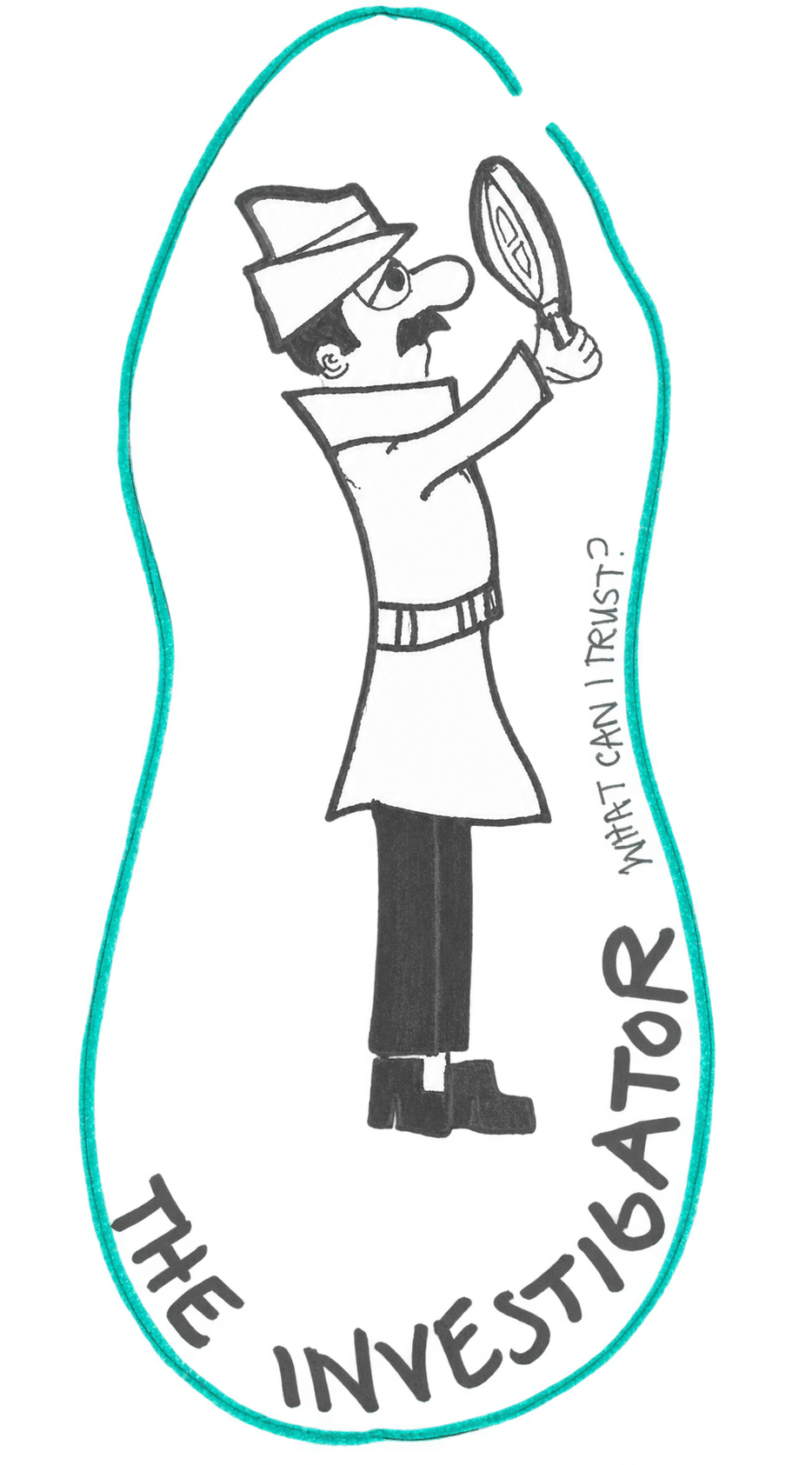
5s are perceptive, cerebral, and driven to understand how the world works. They rely on their minds above all else, observing life from a step back, gathering knowledge, and trusting facts more than feelings or people. This often makes them insightful, innovative, and capable of mastering subjects others find daunting, but it can also cut them off from their hearts, their bodies, and the people around them.
Although 5s are frequently associated with scientists and academics, their drive to feel knowledgeable can show up in every area of life: becoming the leading expert on an obscure niche, amassing collections of books, coins, or specimens, sticking close to the bookshelf at a party, or answering a simple “How are you?” with a detailed lecture on mushroom taxonomy. Their attention is continually drawn toward what they don’t yet know, how things work, and guarding their time and energy from the demands of others, often creating an internal pressure to keep learning, withdraw, and prepare before they engage.
When they feel secure, they become grounded, decisive, and engaged, turning their ideas into action and sharing what they know with warmth and a childlike sense of wonder. When they feel threatened, they become eccentric, reclusive, and intellectually dismissive, retreating into their private world and cutting others down with their knowledge, or spinning into a restless, scattered stream of ideas they can’t ground. Beneath their seeking is a fear that they are ignorant and have no place in the world. Their growth involves noticing how they ignore what others are interested in, and making real human connection before sharing what they know.
Behavioral Pattern
Withdrawn. I need to immerse myself in a world of uninterrupted study, which gives the priceless jewel of knowledge and pricelessly shelters me from all the ridiculous people with emotions.
Illuminating my ignorance, questioning my unemotional perception of reality, or bringing me in touch with emotions and personal obligations that I don’t understand and don’t want to understand, because I’m all about unsentimental, unbiased discovery.
I become The Hermit. I pull out of the world to live immersed in my cave of facts that I study and study and study until I become an expert, since data is the only thing I can trust in life, definitely not humans, who (unless they’re like me) are by definition a curiously odd, feelings-driven species, i.e., an irrational creature.
are puzzling, a strange, sentient anomaly.
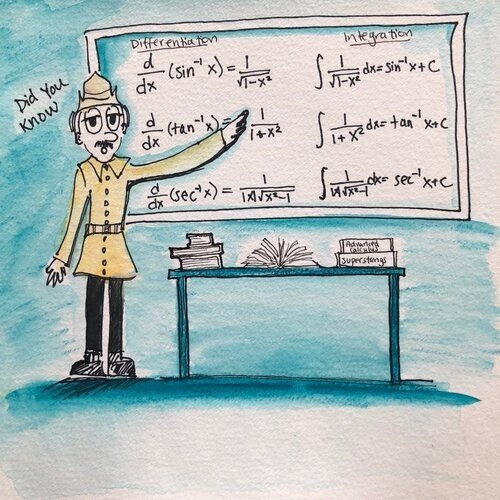
How Was Your Day, Type 5?
“Let me tell you what I read today.”
Chief Characteristics of Type 5 at Different Levels of Consciousness
curious, scrutinizing
eccentric, reclusive
caustic, doomsaying
Shock Point Fear
The fear that causes the slip from Creative to Controlling Consciousness.
I have not mastered enough to feel confident to be in the world.
5w4
I’m one of the most withdrawn people: heady and artistic, avant-garde in my vision, with refined taste, and fascinated by the realm of emotions, which is foreign to my cerebral self.
5w6
I am a compulsive problem-solver who loves to live in the world of books but also loves to be there for others with my knowledge, provided I get to be the expert and nothing feels emotional.
In Growth
In growth, 5s become more confident, decisive, and engaged, like healthy 8s.
In Stress
In stress, 5s become more scattered, anxious, and hyperactive, like unhealthy 7s.
5 in the Head Center
The Head Center is the seat of our thinking and, more deeply, of our sense of security. It’s where we try to make sense of the world, find our footing, and figure out what we can rely on. 5s belong to the Head Center, and for them, the head’s central question is one of knowledge: Do I understand enough?
It’s easy to see why 5s are here. They want to know how everything works, down to the smallest detail, and there’s a real excitement in it for them. Think of someone who reads the whole manual before assembling anything and loves watching each step click into place! 5s bring that clarity to the world, and when they are present in the head, their knowledge leads to discovery that helps everyone.
Underneath it all runs fear. So little seems trustworthy, and people least of all. 5s turn to facts and expertise to steady themselves, collecting more and more information to quell the fear. When they lose their presence in the head, the same mind that could discover something new starts spinning in undirected thought, entertaining ideas with little connection to reality, and sometimes very dark ones.
Growth for 5s means bringing their minds back to what is real and useful…and letting their hearts in on what they’re learning!
Learn more about this dimension of the Enneagram: The Centers of Intelligence.
5s and Rejection of Both Functions
Parental Orientation helps us understand how each Type relates to love, safety, and connection. Rooted in object relations theory, it looks at a child’s earliest relationship with two essential parental functions. The Nurturing Function provides love, mirroring, and nourishment, helping the child feel seen and valued. The Protective Function provides discipline, support, and strength, helping the child feel safe and guided. Either parent can provide either function, and all of us continue to need both throughout our lives.
5s reject both the Nurturing and the Protective Functions. Neither the warmth nor the guidance makes much sense to them, so they step back from both. Our teacher Russ Hudson, himself a 5, says that 5s feel like they were born on the wrong planet. Picture a child who slips away from the family gathering to take apart a radio in the next room. Something in them decides: I don’t get any of this. I’ll figure things out on my own. 5s grow up becoming observers!
In adult life, it shows up as the person who stands at the edge of the room, watching. Objectivity feels safe because it sits apart from the whole messy world of human emotion. So 5s find their place by offering what isn’t touched by feelings: observation and knowledge. Yet the more they stand apart, the more alien they feel, and the harder it becomes to let anyone close.
Growth doesn’t mean giving up their independence! It means letting themselves receive. They have to let others care for them and guide them, even when it feels awkward or intrusive, so that they can belong to the world they have been studying. Then they can offer their knowledge as an act of care and not only as a way to keep their distance.
Learn more about this dimension of the Enneagram: Parental Orientation.
5s in the Competency Harmonic
The Harmonics describe how each Type approaches conflict and tries to restore harmony. 5s belong to the Competency Harmonic, which looks to logic, structure, and agreements for resolving conflict: if we can agree on how this will work, we can move forward.
5s use agreements in a very particular way. What they want most is for everyone to agree that nobody has to agree to anything! If we can sign on the dotted line that you won’t bring me your expectations, and definitely not your emotions, then we’re fine. People’s needs and feelings get in the way of their pursuit of knowledge, and 5s don’t know what to do with their own emotions, let alone anyone else’s. “Let’s just keep this simple” becomes their way out.
At their best, 5s bring clarity and objectivity to a conflict, stepping back far enough to see what is actually going on and naming it without drama. But when competency is cut off from the heart, agreements turn into walls, and resolving a conflict becomes one more way to be left alone.
Growth for 5s means staying in the room when things get emotional, and bringing the other two Harmonics alongside their own: affirming the relationship with a Positive Outlook and having Emotional Realness about what each person is going through, so the agreement brings them closer to others and doesn’t just keep others away.
Learn more about this dimension of the Enneagram: The Harmonics.
The Passion of the 5: Avarice
The Virtue of the 5: Non-Attachment
Each Type has a Passion and a Virtue. The Passion is the core emotional obsession that keeps the ego fortified as governor of the person. This trait is so pervasive that it usually goes unnoticed as the Type swims in it. Fittingly, passion comes from the Latin for suffering. The Virtue is its antidote – the quality that naturally emerges when the ego loosens its grip and the true self begins to come through more. For 5s, the Passion is Avarice and the Virtue is Non-Attachment.
The Avarice of the 5 is not always obvious. 5s rarely look greedy, and many of them live very simply! But beneath the surface runs an unspoken assumption: If I know enough, I’ll finally have my place in the world. So they hoard knowledge, often in some obscure field where no one can contest their expertise, and burrow further and further into their own world. I just need to know more, and more, and more…and then I’ll be safe.
This Avarice keeps 5s feeding the mind with information that serves no one, far away from the heart and the people their knowledge could actually help.
Non-Attachment is the way back. It begins with a question 5s rarely ask, or only ask on the surface: What if I don’t need to know everything to belong? As they let go of knowledge as the foundation of their identity, they can still become deeply knowledgeable, but they gather only what is truly beneficial and share it out of love.
Learn more about this dimension of the Enneagram: The Passions and Virtues.
“I Can’t Accept My Own Heart.”
The Achilles Heel, a dimension of the Enneagram developed in our early days at Upbuild, names the one thing each Type cannot accept about itself that becomes its undoing. Like the mythical warrior who was invulnerable everywhere but his heel, we can think we’re strong in so many ways and still be brought down by what we refuse to see. For 5s, the Achilles Heel is: I can’t accept my own heart.
5s are looking for something they can trust, and emotions seem like the last thing that qualifies. Their own feelings bewilder them. They fluctuate, they’re confusing, and they don’t fit into any system. Other people’s emotions are even more overwhelming, and they come with expectations. So 5s decide, without quite realizing it, to set the heart aside and go with the facts. Yet the self resides in the heart, and no amount of knowledge can take its place.
Acceptance rarely comes all at once. Much like grief, it tends to begin with denial and anger. A 5 is likely to first insist that they’re simply being rational, and then bristle at the suggestion that they might be avoiding their feelings.
Growth for 5s means grieving the years spent living only in the mind and turning toward the heart they’ve kept at a distance. As they let themselves feel, even when it’s uncomfortable, they come to see that the heart was the key to the understanding they were after all along.
Learn more about this dimension of the Enneagram: The Achilles Heel.
Falling in Love with the 5
Our teacher Russ Hudson made a pact never to teach a Type he hadn’t fallen in love with. Inspired by him, we’ve made the same commitment, and this section is where we share it.
Falling in love with a Type means appreciating its gifts, feeling for its suffering, and finding an access point: a place in our own experience that lets us relate to what it’s like to be that Type.
When their hearts are truly open, 5s have a wide-eyed, childlike curiosity about the nature of reality. Most of us just live our lives, but 5s want to look behind the curtain. A very healthy 5 tells you about a discovery the way a child shows off something they just built: Look, this is how it works! In fact, the person who first introduced us to the Enneagram, long before most people had heard of it, was a 5.
Yet the understanding they long for can’t be reached from the sidelines. 5s step back from life so they can see it clearly, but the deepest understanding only comes through experience. Afraid their emotions will cloud their objectivity, they park their feelings, and over time everything starts to dry up. The drier things get, the harder it is for others to relate to them, which only confirms what they already suspected: I’m an alien here.
The access point is one we all share: the experience of a mind that won’t stop. We have all lain awake at night with our thoughts spinning, unable to switch them off no matter how much we want to. For 5s, the spinning rarely stops. Seen this way, the detachment, awkwardness, or even arrogance that can put people off is simply a curious heart that doesn’t know how to come out of hiding.
Learn more about this dimension of the Enneagram: Falling in Love.
Every name here is carefully researched. Linked names have a full profile laying out the evidence for their Type.
Countries and Cultures That Reflect Type 5 Characteristics: Dungeons and Dragons (D&D), Otakus (geeks)
Listen · Podcast
My innocent love of knowledge endears people when I really care about them and can express it.
Learn to tell the Types apart.
Explore the Enneagram in a more nuanced format through our podcast.
Live teachings and conversation, held every other Thursday.
Join us for our two-day Enneagram workshop.
Reach out to learn more about a private Enneagram coaching session.