
ENNEAGRAM TYPE 6: THE LOYALIST
Type 6 Overview
6s are alert, responsible, and deeply committed to the people and causes they believe in. Keenly aware that anything can fall apart at any moment, they scan for what could go wrong and work hard to build the trust, structure, and support that will keep everyone safe. This often makes them loyal, hardworking, and remarkably dependable, but it can also keep them in a near-constant state of anxiety and doubt about others and, above all, about themselves.
Although 6s are frequently associated with worry, their drive to feel secure can show up in less obvious ways: deflecting praise to their team after a big win, building systems and procedures to keep everything predictable, quietly noting that a colleague arrived three minutes late to a meeting, or asking for yet another reference call before they commit to a decision. Their attention is continually drawn toward potential threats, who can be relied on, and whether they are doing what is expected of them, often creating an internal pressure to prepare, double-check, and seek reassurance.
When they feel secure, they make peace with uncertainty and become steady, courageous, and down-to-earth, walking through their fear to quietly serve others without needing all the answers. When they feel threatened, they become suspicious, controlling, and indecisive, testing others’ loyalty and jamming a single viewpoint into their minds to silence their doubts, or turn competitive and image-conscious, trying to stay on top so they can keep things under control. Beneath their vigilance is a fear of being left alone to face the challenges of life without support. Their growth involves becoming aware of how they second-guess themselves, and building trust from within.

Behavioral Pattern Dutiful. I must commit in order to ensure security for myself, and committing is so hard because I can’t do everything I commit to and I don’t know what I’m really supposed to be committing to in the first place.
Essence Qualities Courage, Alertness, Devotion
Basic Fear Being left alone to face the challenges of life without support
Basic Desire To feel secure and supported
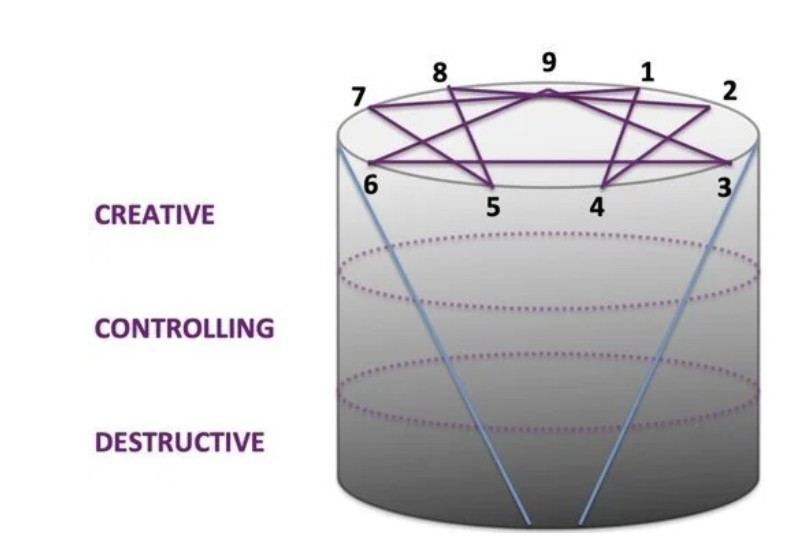
Chief Characteristics of Type 6 at different Levels of Consciousness
Creative: courageous, down-to-earth
Controlling: suspicious, micro-managing
Destructive: paranoid, polarizing
Shock Point Fear (the fear that causes the slip from Creative to Controlling Consciousness)
I do not have a clear or definite sense of how to deal with expectations.
Examples of what triggers the Shock Point Fear
Shopping for a pair of jeans means I have to actually choose which one is the pair I’m supposed to get…but how does anyone really know what’s the pair of jeans they should get?
My super-confident boss was wrong again. It’s clear I need a new authority who won’t ever let me down.
I was asked to do 40 things but could only do 30 of them. I’m just no good.
Is there a contract for girlfriends to make sure they won’t leave? …Hmm…is there a contract for marriage to make sure they won’t leave?? Wait a minute, how do I know that I won’t want to leave?! Relationships are too stressful!
Why I get provoked Raising doubts in my ability to support you, raising doubts in your ability to support me, and raising doubts in my ability to assess the ability for either of us to provide any solid support…
How I cope with fear I become The Nervous Nellie. I get clammed up, thinking on overdrive: “What should I do? Should I really do it? What will happen if I do do it? Am I sure? Who can tell me what I should do? How do I know they know what I should do? What if someone else has a different idea?” And so on, in a paralytic loop that either keeps me stagnant or is overturned by aggressive action that denies the actual complexity of the issue, just so I can feel like I’m really moving somewhere and can totally trust myself, whether or not it’s a good direction to move in and whether or not I’m truly trustworthy.
My emotions make me question everyone’s motives.
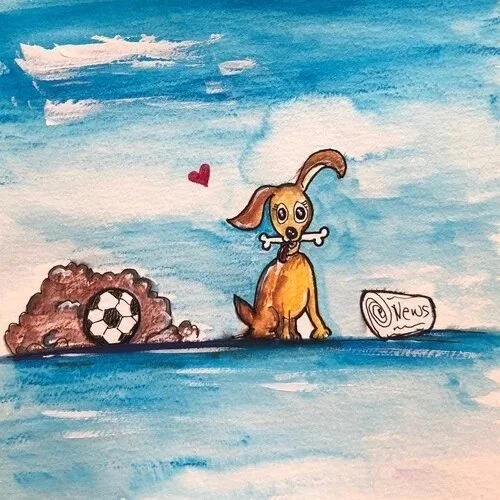
How was your day, Type 6?
“I don’t know. Pretty good, I guess?”
The Wings
Type 6 with 5 Wing I am on my toes trying to support the people in my life, but I’m constantly conflicted about how to know what I’m actually meant to do, and my introverted, heady nature puts me at odds with what I feel the world expects of me.
Type 6 with 7 Wing I love thrills and have a big, gregarious side as I put myself on the line with vigor for all the people I try to trust, but so much of the time I find myself extremely scattered and unable to find my way in life.
Directional Movements In growth, 6s become more calm, trusting, and open to flow, like healthy 9s. In stress, 6s become more image-conscious, pressured, and overachieving, like unhealthy 3s.
Personal Meditation for Growth I know what I need to know right now and can take time to think things through patiently.
Famous Type 6s
Loading…
Countries and Cultures that Reflect Type 6 Characteristics: Japan, Boy Scouts
The Type 6 across More Dimensions of the Enneagram (click on the + to reveal the full description)
-
6 in the Head Center
The Head Center is the seat of our thinking and, more deeply, of our sense of security. It’s where we try to make sense of the world, find our footing, and figure out what we can rely on. 6s belong to the Head Center, and for them, the head’s central question is one of trust: What can I stand on?
6s have a gift for alertness. They notice what’s going on around them, put the pieces together, and respond when something needs attention. In an emergency, they’re often the ones who saw it coming! But when they lose their presence in the head, that same alertness turns into worry, and there’s no limit to how much they can worry about something.
Underneath it all runs fear. 6s want certainty so badly that they confuse uncertainty with a lack of clarity. They try to rush to an answer just to make the anxiety stop, and they tend to swing between extremes. Either they kick the same question around again and again (we talked about this yesterday, but I just want to make sure we’re still on the same page), or they force themselves into a confident position to drown out the doubt.
Growth for 6s means getting clear on where they stand, even without certainty…and asking themselves one simple question: What’s my next step?
Learn more about this dimension of the Enneagram: The Centers of Intelligence.
-
6s and Attachment to the Protective Function
Parental Orientation helps us understand how each Type relates to love, safety, and connection. Rooted in object relations theory, it looks at a child’s earliest relationship with two essential parental functions. The Nurturing Function provides love, mirroring, and nourishment, helping the child feel seen and valued. The Protective Function provides discipline, support, and strength, helping the child feel safe and guided. Either parent can provide either function, and all of us continue to need both throughout our lives.
6s are attached to the Protective Function, and above all to support and direction: knowing that someone has their back and can show them which way to go. Our teacher Russ Hudson offers a vivid image for this. Picture a child being tossed up in the air by a parent. There’s that moment of fear at the top, and then the relief of being caught. 6s go through life wondering whether someone will be there to catch them!
In adult life, it shows up as the search for the right boss, mentor, institution, or belief system to provide solid ground. With so many possibilities, how am I supposed to know what to do, let alone what my life is for? Yet attachment is never satisfied. Trustworthy protectors are hard to find, and even when one comes along, 6s often look for perfection instead of humanity, then tear the authority down and try to become their own.
Growth doesn’t mean pretending they don’t need support! It means finding support they can actually lean on. They have to let real, imperfect people support and guide them, without demanding a guarantee, so that they can develop the inner ground that lets them trust their own direction. Then they can be the steady support for others that they have always longed to find.
Learn more about this dimension of the Enneagram: Parental Orientation.
-
6s in the Emotional Realness Harmonic
The Harmonics describe how each Type approaches conflict and tries to restore harmony. 6s belong to the Emotional Realness Harmonic, which looks to honest emotional expression for resolving conflict: if we put all our feelings on the table, we can find our way through.
6s want everyone’s cards on the table, but they aren’t sure it’s safe to show their own. So they lay a few down and then pull them back. One minute they’re asking for help and telling you how hard things are. The next minute they’re telling you exactly what needs to be done! Underneath the back-and-forth is a simple question: Can I trust where you’re coming from? “But where do you really stand?” becomes a familiar refrain.
At their best, 6s bring honesty and loyalty to a conflict, raising the concerns others overlook and staying committed to working it through. But when emotional realness is driven by fear, it turns into suspicion, and resolving a conflict becomes an endless test of whether the other person can be trusted.
Growth for 6s means taking the risk of putting their cards on the table and leaving them there, and bringing the other two Harmonics alongside their own: affirming the relationship with a Positive Outlook and using Competency to agree on a clear way forward, so the conversation can finally come to rest.
Learn more about this dimension of the Enneagram: The Harmonics.
-
The Passion of the 6: Faithlessness
The Virtue of the 6: CourageEach Type has a Passion and a Virtue. The Passion is the core emotional obsession that keeps the ego fortified as governor of the person. This trait is so pervasive that it usually goes unnoticed as the Type swims in it. Fittingly, passion comes from the Latin for suffering. The Virtue is its antidote – the quality that naturally emerges when the ego loosens its grip and the true self begins to come through more. For 6s, the Passion is Faithlessness and the Virtue is Courage.
The Faithlessness of the 6 is not always obvious. 6s are often deeply loyal and committed, and many hold strong beliefs! But beneath the surface runs an unspoken assumption: If something can go wrong, I can’t put my faith in it. Even a 2% chance of being let down is enough. The safest way not to be disappointed is never to fully trust in the first place. Yet we are fundamentally beings of faith, so when 6s can’t rest their faith anywhere, all that’s left is worry.
This Faithlessness keeps 6s bracing for the ground to give way, far away from the inner steadiness they long to feel.
Courage is the way back. It begins with a question 6s rarely ask, or only ask on the surface: What if I trust even though I might be let down? Courage means putting their faith in something with the fear still fully present and no guarantee in hand. As they take that step, they can still be careful and alert, but no longer from a place of constant angst.
Learn more about this dimension of the Enneagram: The Passions and Virtues.
-
“I Can’t Accept My Own Knowing.”
The Achilles Heel, a dimension of the Enneagram developed in our early days at Upbuild, names the one thing each Type cannot accept about itself that becomes its undoing. Like the mythical warrior who was invulnerable everywhere but his heel, we can think we’re strong in so many ways and still be brought down by what we refuse to see. For 6s, the Achilles Heel is: I can’t accept my own knowing.
6s struggle to trust themselves, and if they can’t trust themselves, how can they trust what they know? Even when they know something, they wonder how they know they know it. So they look for more information and more reassurance. It becomes an endless loop: I need to know more to know, and then more to know that I know. Without any ground to stand on, distrust and even paranoia start to creep in.
Acceptance rarely comes all at once. Much like grief, it tends to begin with denial and anger. A 6 is likely to first insist that they’re just being careful and thorough, and then bristle at the suggestion that they already know more than they’re willing to admit.
Growth for 6s means grieving all the time spent searching outside themselves for certainty and turning toward the knowing that has been there inside them. As they learn to own what they know, they come to see that the ground they were looking for was under their feet all along.
Learn more about this dimension of the Enneagram: The Achilles Heel.
-
Falling in Love with the 6
Our teacher Russ Hudson made a pact never to teach a Type he hadn’t fallen in love with. Inspired by him, we’ve made the same commitment, and this section is where we share it.
Falling in love with a Type means appreciating its gifts, feeling for its suffering, and finding an access point: a place in our own experience that lets us relate to what it’s like to be that Type.
When their hearts are truly open, 6s have a humble, dutiful nature that is so different from the kind of heroes we usually celebrate. A very healthy 6 is the firefighter who walks into a burning building with no certainty of coming out, and afterward doesn’t feel owed a thing. Somebody had to do it, so why not me? They’re the ones who will answer the phone in the middle of the night if you need them, with no frills and no expectation, only a humble heart.
Yet the faith they long to live from is the one thing they struggle most to find. At every moment, it can feel like the ground might give way beneath them, and life keeps offering evidence that it could. They wish someone could show them the way, but every authority turns out to be human. Underneath it all is the hardest question: How can I trust myself? What if I don’t come through?
The access point is one we all share: the heaviness of not knowing what we can trust. We have all had moments where we doubted the people around us, and worse, doubted ourselves. For 6s, that weight never fully lifts. Seen this way, the anxiety, suspicion, or even defiance that can put people off is simply a loyal heart searching for solid ground.
Learn more about this dimension of the Enneagram: Falling in Love.
For a deeper dive into the Type 6, listen to these podcast episodes: Type 6 Foundations and Type 6 Across the Dimensions
Continue Exploring
Learn to tell the Types apart with the 36 Type Misidentifications.
Explore the Enneagram in a more nuanced format through The Upbuild Enneagram Library podcast. Apple, Spotify, or wherever you get your podcasts.
If you’re looking for community and live conversation, join Upbuild Enneagram Library Live, a gathering held every other Thursday.
You can also join us for our two-day Enneagram 101 workshop, or reach out to learn more about a private Enneagram coaching session.