
Benjamin Netanyahu: Enneagram 3w4
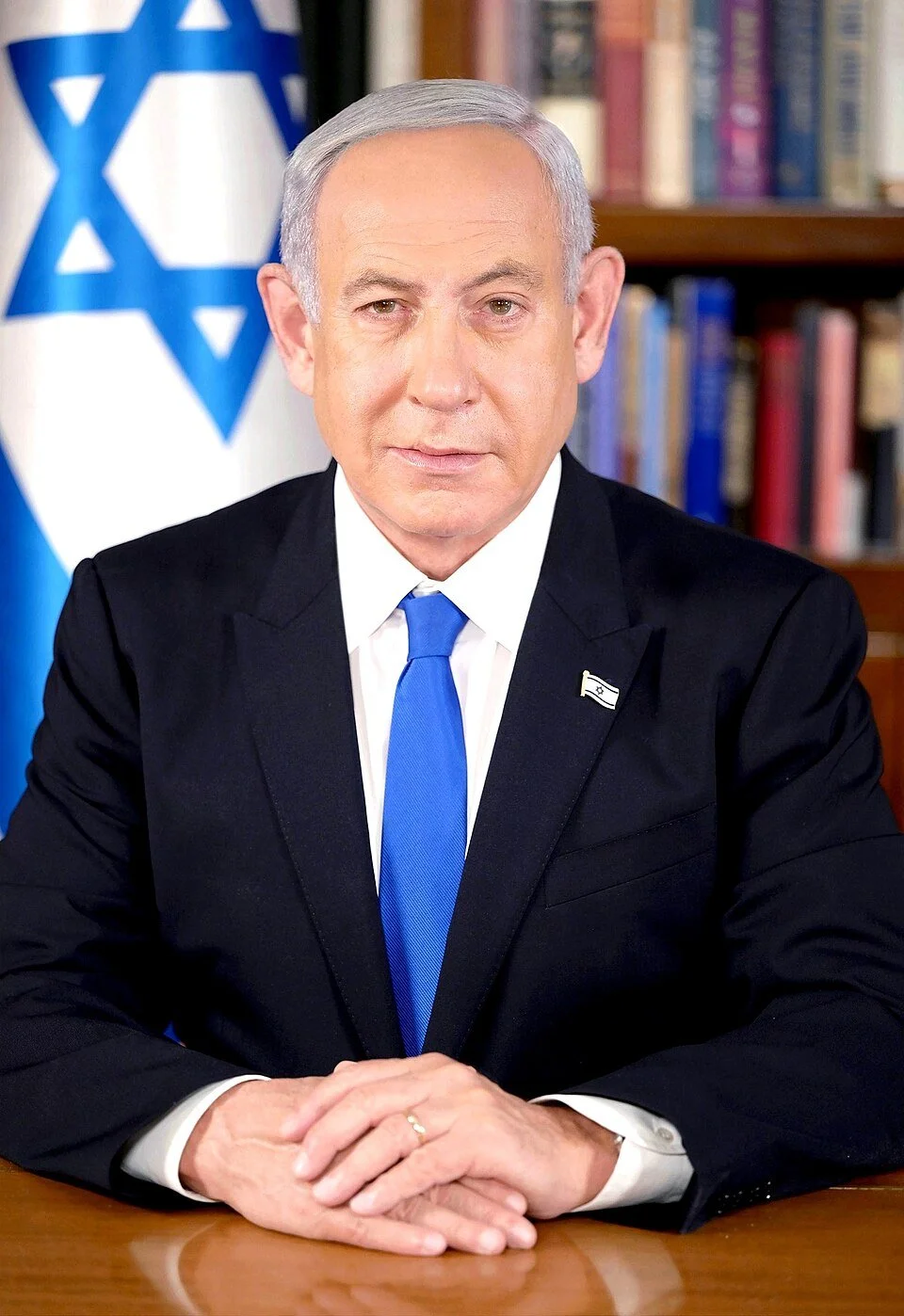
Avi Ohayon / Government Press Office of Israel, CC BY-SA 3.0, via Wikimedia Commons
Why Benjamin Netanyahu is a Type 3
Early exposure to American culture and development of a distinct communication style. As a teenager, Netanyahu spent formative years in the US while his father taught at universities, including time in suburban Philadelphia. He became fluent in English and absorbed a style of communication shaped by American media culture: direct, polished, concise, and oriented toward making an immediate impact. This gave him a notable advantage over many Israeli politicians of his generation in international settings, particularly in the US, where he could present himself in a way that felt culturally familiar, confident, and media-ready. Over time, he became especially skilled at recognizing what different audiences responded to and adjusting his presentation accordingly. In particular, he was especially adept at projecting competence, authority, and effectiveness in ways that would land with the particular audience in front of him.
Training within elite, high-performance academic environments. Netanyahu entered MIT at age 23 after completing military service and immediately pushed to move through the program faster than the normal pace. According to his faculty adviser, he made clear from the outset that he did not intend to spend four years earning his undergraduate degree. He was permitted to take a double course load and completed his architecture degree in just two and a half years, despite returning to Israel for military service during the 1973 war and later making up the missed coursework during the January break. He then moved directly into graduate studies at MIT Sloan, earning a master’s degree in management while simultaneously pursuing additional work in architecture and political science. At one point, what had begun as a double academic load had effectively become a triple load. His adviser remembered him as exceptionally organized, focused, and clear about what he wanted to accomplish and how to accomplish it.
Early demonstration of confidence and performance in international, high-stakes settings. In his early career, Netanyahu served as Israel’s ambassador to the United Nations in the 1980s, where he quickly became known for his fluent English, composed delivery, and media effectiveness. He appeared frequently on American television, explaining Israel’s position in clear, assertive terms, and was noted for his ability to simplify complex geopolitical issues into digestible arguments for broad audiences. This period established him as a highly effective public-facing communicator early in his career.
Use of high-visibility platforms to reinforce personal association with national outcomes. In speeches at venues such as the United Nations, Netanyahu often presents national security issues through a narrative that highlights his leadership role. Visual elements (such as props or diagrams) and direct, simplified framing make the message memorable while reinforcing his position as the central actor.
Deliberate construction and maintenance of a singular leadership brand (“Mr. Security”). Netanyahu has consistently cultivated a clear, repeatable public identity centered on strength. Across campaigns, speeches, and media appearances, he reinforces the idea that he is uniquely equipped to protect Israel. This positioning has been sustained over decades, creating a tight association between his image and a specific leadership function.
Shaping messaging for maximum clarity, repetition, and public recall. Netanyahu’s communication style is highly structured, with short, direct phrases designed to be easily understood and repeated. His messaging avoids complexity in favor of clarity and consistency, allowing key ideas to circulate widely and remain closely associated with him across media environments.
Positioning across audiences to maximize recognition and influence. Netanyahu is highly focused on tailoring his communication to varying audiences, particularly between Israeli voters and international stakeholders such as the United States Congress. His tone, framing, and emphasis shift while maintaining a consistent core image, allowing him to remain effective and recognizable across different contexts.
Repeated linkage of personal leadership with national success and stability. Campaign messaging and public statements frequently connect positive national developments (economic performance, diplomatic agreements, or security outcomes) directly to Netanyahu’s leadership. This reinforces a narrative in which his personal success and the country’s success are closely aligned.
Strategic repositioning to remain competitive across election cycles. Netanyahu has repeatedly adjusted his alliances, messaging, and political positioning. In 1996, he assembled a broad coalition spanning security hawks, religious voters, settlers, and pro-business constituencies. In later elections, he became increasingly active in reshaping the broader right, encouraging smaller parties to unite when fragmentation threatened his path to victory. That strategy helped pave the way for his return to power in 2022. Across decades, the pattern has been that he reads the political environment closely and is willing to reposition himself and his coalition in order to remain competitive and preserve his ability to lead.
High level of composure and control in public-facing situations. Netanyahu consistently maintains a steady, controlled demeanor in interviews, press conferences, and debates. His delivery is measured and deliberate, reinforcing an image of competence and reliability even in contentious or high-pressure settings.
Continue Exploring
Type 3 Profiles (with evidence): Taylor Swift, Tiger Woods, Elon Musk, Madonna, Serena Williams, Barack Obama
Understand Type 3: Type 3 The Achiever
Common Type 3 Mistypes (and how to tell the difference): Type 3 vs Type 7, Type 3 vs Type 9
All Famous Person Types: Hundreds of profiles (with evidence)
Enneagram Community (live teaching and discussion twice monthly): Enneagram Library Live