

UPBUILDING THE SELF
[Part 2] Book Distribution: Timeless Lessons Learned By Two Monks on the Streets and Subways of New York City
In Part 2, Hari Prasada and Rasanath vividly share what it was like in the heat of the moment distributing books in the streets and subways of New York City. They open up more about pivotal struggles they faced, including feeling humiliation and imposter syndrome, and how letting go in the spirit of service made room for the transformation we all crave deep down. Beyond being a most vital practice of compassion by outreach, book distribution also became a mirror that reflected their concocted identities, resistance to change, and something of the true self that lies beneath all these coverings.
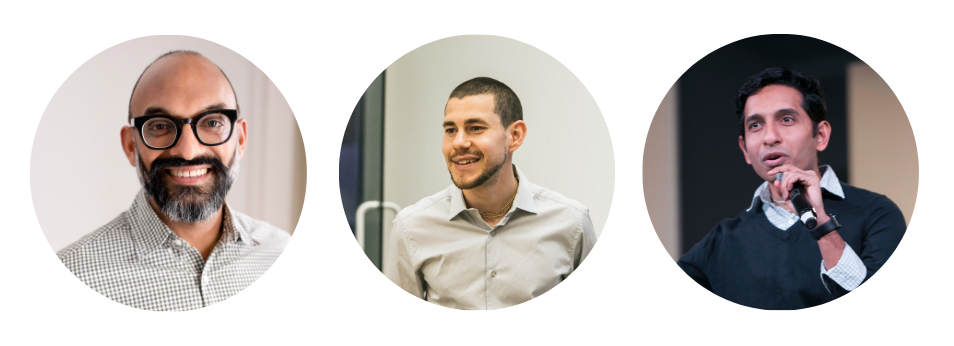
Podcast Hosts: Vipin, Hari Prasada and Rasanath
Listen to this episode on Apple Podcasts, Spotify, or your preferred podcast platform
Highlights
[02:30] Recap of Part 1
[03:20] Hari Prasada’s first book distribution experience in Union Square
[08:30] The process of surrender
[11:20] The ego’s demand for ease
[15:10] Competition and the scoreboard
[34:00] A few of Hari Prasada’s traumatic experiences
[36:40] The uplifting quality of book distribution stories from around the world
[38:00] Lifelong relationships
[44:00] Rasanath on being humbled by the inability to sustain the practice
[45:00] The painful double bind
Quotes
“Ultimately what you are giving is your experience of the books [themselves].” - Rasanath
“The benefit for us as book distributors was to be anonymous…and just be beggars in the service of others and wanting to actually tear down what we had built up so painstakingly of the false self.” - Hari Prasada
“Surrender is the key and there's no substitute for it. You don't become self-realized without surrender. And specifically what?...You surrender the ego.” - Hari Prasada
-
This is an automated transcript and may contain minor errors.
Vipin: Hello everyone. Welcome to Upbuilding the Self. This is Vipin and I'm here with Hari Prasada and Rasanath. And today's episode is the second part of our podcast on book distribution, which takes us into the heart of a spiritual practice that many of us have walked past, but few have stopped to truly understand my up build partners.
Hari Prasada and Rasanath spent years as monks at the Bucky Center and part of their service involved distributing spiritual literature. Public spaces like Union Square. The first part of our podcast on book distribution was really the setup, and we started with some important context about what is book distribution and what was important about it for them as monks.
In this second part, we're going to get into Hari Prasada and Rasanath actual experience of distributing spiritual literature in Manhattan. And as I mentioned last time, this episode isn't just about handing out literature. It's about human connection, ego, humility, rejection and grace, all playing out in one of the busiest intersections of modern life.
So with that, Hari and Rasanath, is there anything you'd like to reflect on about the first part of our conversation before we dive into the second part?
Hari Prasada: Just that as I was listening to it in the recording, I was becoming so excited and so eager for this time to go deeper. Those times were precious in a way that I can't describe. So everyone who's listening, you're doing a great service to me to be able to reflect and mine the realizations in order to share with you.
I, I really pray that this serves you in the best way.
Vipin: So let's actually go back to the first time you went out to distribute books in Union Square, and I want to get into your mindset before the actual experience. What was going through your mind as you stepped into the arena where you were doing your work?
Hari Prasada: So I was sharing that there's a distinction between when I first distributed books versus when I first went out to distribute books. So I shared last time about what it was like to first distribute books, and it was, you know, a little uncomfortable, but good to get out of my comfort zone and start giving some books to people by a musical meditation or kan party that was there in Union Square.
And when I first deliberately set out to give books, I was tailing my mentor, who was very, very experienced in book distribution and had dedicated many years to the service. And he was phenomenal. He did an amazing job of connecting with people and really getting books into people's hands and into their lives.
So I was incredibly intimidated and I felt I'll never be like him. It's impossible. And as I was watching him, I was like, wow, He's an artist out there. He knows exactly what to say to people. He knows just how to like look in their eyes and make a genuine connection. It wasn't forced. There was a routine, but it was not like he just learned some routine and was doing it by rote.
It was very spontaneous and present. Almost like an actor where it has to be alive. You live the part when you're acting. I often say, 'cause I have a background in acting and filmmaking, and I say that the insult to an actor is you say, oh, good job playing the role, or Good job acting. No, I wasn't acting. I was living the part.
So you still learn the lines. And my mentor, he had learned his lines very well, but then he knew exactly how to improvise. He knew exactly how to connect, and I was just looking in awe and feeling really down about myself, little bit excited about the possibilities, but mostly filled with self-doubt. And when it was my turn to then give books out, I was a bumbling mess.
Vipin: What's striking me about what you're saying is you both have made this point many times that the ego that exists out in the world also exists in the ashram and that the. Example, the experience of seeing another do something well and feeling both appreciation, maybe even some envy, some aspiration, self-doubt, imposter syndrome, all of it.
You experience the same as one might in any organizational setting where they're watching one of their colleagues do something really well
Hari Prasada: Yeah, well said. And I also questioned. Why me? Why do I need to do this? Ross, and I've mentioned this last time, but this is not my nature. I'm not a salesperson, I'm an introvert. I'm not somebody who goes out and stops people on the street and what to speak of can like entice them and excite them. That's just not me.
Why am I doing this? Even if this service is so important? Hey, there are so many other people who can do this and who are good at doing it right by me.
Vipin: This is even another parallel, or it strengthens the parallel because so many people experience this in their jobs, in their day-to-day lives, and so I'm even more curious about the lessons that you've learned through this experience because they're highly applicable to all of us in whatever situations we find ourselves in.
so then you're having all these thoughts in your mind. What provided you an anchoring to prepare for what you were about to do?
Hari Prasada: I don't think I had a good anchoring.
I think that's why I showed up the way that I did as a bumbling mess. I was trying to figure it out on the fly, and there was no way to really prepare myself for being out there. This was specifically in the subways of New York. We went to different subway stops. We had our favorite stations, mostly whatever my mentor's favorite stations were.
I I understood, okay, the goodness of this station, there are a number of people that pass by. There are a number of people that will wait for this train. There were different circumstances that made one station more conducive than another, so I was just having to touch and go figure it out, and I. Tried and immediately, you know, there's this voice that says, see, see, you're not good at this and this is a waste of your time.
You already knew this going in. And that's what I was wrestling with. My inner critic was there confirming every negative thought that I had through every interaction. That came,
Vipin: again, very universal experience. Rasanath, you had a similar experience and then you decided yes, that voice is probably correct.
What was your experience with this as you prepared for the times that you went out on book distribution?
Rasanath: No, I think it's to, first of all, observing Hari Psad from the outside. And when you ask the question about, well, how did he go about doing the activity, what I saw. Was the learning to surrender. And it's a process.
There is a way in which the current of the activity and the understanding of what that activity is doing in the lives of other people and in my own life, has to take over all the obstacles. And what I did observe, which was actually quite inspiring for me, and also confronting, I should say, is what I observed in Hari psa is the purity of wanting to surrender to the activity and the repeated trying of it,
Vipin: I really, really appreciate this insight. I. I want to know, can you share a bit more about what it means to surrender to an activity?
Rasanath: I can speak from an observer's position because I can say that I didn't quite do it right, although I would say other things in the monastery forced me to do it in a different way.
But in this particular activity, I resisted it too much. And what I saw Hari Psad doing, my experience with him was his capacity for resilience is humongous. I have, uh, only grown to appreciate that with time. And in this case, the way I saw the resilience was the willingness to act struggle every day, to be in the flow of the activity every day, despite every pore of your body rebelling it, and then recognizing how in the process you are mystically carried by an energy that is completely.
Not your doing. I can't describe it in any other way other than that. And in that process of recognizing how it's happening, everything is resisting. I'm just here, I'm trying, and then there is suddenly there is this shift that just happens and that is not your doing.
I'm a terrible swimmer. And the few times that I have been able to float in water is when I have learned how to trust that the water will carry me. But for someone like me, it's a very difficult thing to do because I have fear of water. you know, I've had water rush into my nose and mouth and.
So it is hard to trust that the water will carry me, and yet when I know how to do that, it's what you call a flow state. But what gets in between is the ego just resisting the process of letting something else carry you
Hari Prasada: Two things I would share on that. What the ego is resisting is also the lack of ease that hey, things should come in a certain way with ease, and two, no guarantee that it ever will.
Vipin: Yeah, again, highly relevant to every. Individuals experience Can you say it one more time?
Hari Prasada: Yeah. The first thing is that this doesn't come with ease, and I expect ease. The ego expects ease always. Yeah. This shouldn't tax me like anything, and especially, especially because of number two, there is no guarantee that it will ever come with ease. So I could justify that it'll be worth it if I'm really determined and confident and clear, you know, I'm gonna get there, I'm gonna make it no matter what.
But I had no sense that that was going to happen. Actually, all data was pointing in the opposite direction.
Vipin: Are some people able to reframe this and allow their ego to reframe it as well? This is good for me, so the harder it is, it's good for me. Even if it never comes, it's good for me. But who
Hari Prasada: just takes lashings and there's no clear output to those lashings?
So I was trying to frame it in that way, but the ego Rebels. And rebels. And rebels, yeah. 'cause it has to know that there will be a win around the corner. Exactly. Exactly. I can go do a workout and bear the pain of the workout and the aftermath of the torn muscles because I know, hey, this is getting me healthy and it's gonna get me into shape and I will.
I've seen people make that transition. Perhaps I've done it before. This is not my first time working out. I have a certain confidence in the outcome, but here I didn't have that.
Rasanath: I also wanted to directly address the knowing that it's good for me, which me are we talking about? Right? The clarity in this activity is it'll never be good for the ego.
Because there is complete loss of control. It's not that at a certain point in time, the timing of how everything happens during the activity. Like yesterday, I had a fantastic day on book distribution, and the next day I can go with pumped up enthusiasm about it and completely fall on my face. The nature of the environment and the uncertainty that exists within it almost guarantees that you can't trust the ability in the activity.
Hari Prasada: Every single book distributor has that exact experience that Rasanath is talking about in including the top book distributors.
Vipin: Past performance is not indicative of future performance.
Hari Prasada: It is, and it isn't. I mean, there's a reason why there are top book distributors that are consistently performing at a certain level and at the same time it's typically because they have reached, was talking about a flow state.
They've reached a sort of determination and dependence on grace that is just above and beyond.
Vipin: When you mention top book distributors, it can feel like veering away from the spiritual service that is behind the activity to something akin to everything we do, which is more an objectification of the activity and I get caught up in my performance.
So how do you help people understand that even as you're speaking about top book distributors, what's the consciousness behind the activity?
Hari Prasada: Yes. So there were measures, and I touched on this last time. We did keep score of the money that was coming back and the number of books that went out. And we also hoped that we weren't losing, but at least breaking, even if not expanding our ability to print these books.
So there were scores that were kept, but there was also a motivating force, which my guru's guru Sheila Pod, very strongly emphasized, believe it or not, and this may seem counterintuitive, but whereas we're trying to get away from the ego and it being about me, he also allowed for some of that to get purified in the process of doing it for a higher purpose.
In other words, when the scores would come out, how many books each distributor had put out there, how many books each community had put out there, and even comparisons between communities that would seem like, Hey, this is all ego territory. What are we doing? We're making a sacrilege out of the sacred.
But actually, he encouraged it because. There is a natural way in which it would motivate us to do better, and he would leave the onus on us to manage our egos and to not make it about us, but to just feel like, Hey, look, if these people are doing this many books, or if this person is doing this many books, why shouldn't I strive to do that?
Why shouldn't I set the bar higher? Why shouldn't I feel like anything is possible? And to be able to affect that many people? Is an incredible thing. So those measures are not the enemy. It's what we do with those measures, how we relate to them. And he was so emphatic that even if people took them in the wrong way, he recognized the purifying nature of the service would mean that they would ultimately come out net positive.
In other words, their ego would be more diminished than built up, and their soul would be more invested in, and so many people would be helped in the
Vipin: process. Again, I'm struck by the similarity with organizational life and the thing many leaders would say, yeah, I, I try to do this exact thing in my organization, is to create a sense of competition.
People striving to win, but that often falls apart in organizational context. So one of the things you're saying is that the nature of the activity itself is purifying. So is that the distinction here, or why else would you not recommend that a founder CEO try to do the same, take what you just shared and apply it to their organization and pit teams against each other to try to raise the performance.
Hari Prasada: Look at the different elements here, right? You have the purification of the ego. You have the investment in the soul and you have the benefit of all other people involved, right? Those things just don't exist in the setup that you're talking about. None of those exist. Then on top of it, you have, who is the person?
Sheila Pro Pod. My guru's guru is the one who really created this book distribution. It's not that it didn't exist before him, it did, but in a very minute form compared to, it was not happening in the west at all with these kinds of spiritual books from the yoga tradition, and it was his disciples that figured out how to make this work and actually earn so much to print, so many more that now Sheila Props, PAVA Gita is the bestselling PAVA Gita of all time.
So they figured something out extraordinarily and his purity. In instituting this model of book distribution cannot be compared to a CEO saying, we gotta meet the bottom line guys. Like, come on, whip yourselves into shape, or I'm gonna whip you into shape. It's just not the same.
Vipin: So I want us to go into the reactions that you would get from people. You're out distributing books. Rasanath said earlier that there's resistance coming from every pore in your body, so that must be related to the kinds of reactions you get. So what kinds of reactions did you typically get from people and how did you work with those reactions, both internally and externally?
Hari Prasada: Yes. Well, I think the first part of that resistance in every pore of my being is from the embarrassment that I am doing this. I'm a pedler of these books. And I'm gonna be perceived as a religious fanatic or somebody that is just incompetent and unable to contribute to society.
Vipin: The embarrassment that people will see me not the way I want to be seen.
Hari Prasada: Yes, exactly. Like I have no value, no worth.
Vipin: You're doing this because you have nothing better to do.
Hari Prasada: Yeah. Or you've bought into some kind of crazy cult. So that was the first piece of it.
Vipin: How'd you get over that?
Hari Prasada: Yeah. Well I think it took time because that voice was very dominating and it took a lot of time and a lot of purification to get over that.
Rasanath: Also, it was very important for us to read the content of the books that you're distributing and the the philosophical clarity and depth that each of these books had. If we divorced that from the activity of giving the books out, then it would just not work. The motivation behind the book distribution was realizing the value of the content.
We had to study the books that we were distributing. This is what power part wanted. Also, and his biggest complaint about his book distributors historically was that my book distributors are not reading my books.
Hari Prasada: These books are not just for distributing. He would say,
Rasanath: so ultimately what you are giving is what your experiences off those books.
When it gets divorced, then it becomes just like anything else that we would say. It just becomes an external material activity.
Vipin: Yeah.
Hari Prasada: Then it feels like you're pedaling something.
Yet it wasn't, you couldn't change the fundamental nature. You could only change how much benefit you would get from it.
Hari Prasada: From incredible to much less so, but still wonderful and so much so that propo on his deathbed, he couldn't see anybody. He didn't have the energy to see anybody. He only wanted to hear the scores of the book distributors that he said gave him life when he was leaving his body because he understood that the messages in these books would transform the hearts of anybody.
Who had contact with these books.
And so for him, whatever external measures there were there was just giving him life. It was giving him life. So you can only do so much wrong with this. And as I spoke about last time, people did do wrong.
People did. You get too caught up in the transaction and the winning, and that's human nature. But the activity itself is so wonderful. And I was also going to say similar to what you said just now, Rasanath, understanding the nature of the activity and the content of the books, which makes for the nature of the activity was the key.
And at the same time, it doesn't necessarily change the fear around perception, it's just that I have to move from the fear of perception into the content and the conviction and the content more and more and almost regardless of the perception. But that was a process that took time.
Rasanath: Also, the identities that we have created for ourselves really come into question, right?
So while we don't necessarily externally really talk about, well, I come from a very sophisticated background. I come from a family of engineers who went to very high schools. And the way we conduct ourselves, there is a certain quote unquote, refined, sophisticated impression that you have about your own identity in society.
And then I remember when I first started doing book distribution, even in India, my parents were so concerned about seeing somebody else, their friends, seeing their son on the street distributing works. It just went against externally, went against every single thing that represented to them, uh, what a cultured person would do.
Hari Prasada: Yeah. And, and sign me up for that one. I mean, this was completely contrary to the pedigree that I was associating with myself and fancying myself to have. And that life had given me a lot of validation for to that point in time.
Rasanath: There is reality to it because yes, we did come from backgrounds and a certain level of education,
And now you are out there distributing books and then everybody, nobody understands. Not one single person there actually understands this is your internal struggle as well. But what they're doing is confirming the fact by their responses that you are indeed a paddler.
Hari Prasada: Well, you tried to turn the tables on that with one experience that you recount where you said, do, do you know who I am?
I was an investment banker.
Vipin: There's so much going on to me, what you're describing, it's viscerally to come face to face with your ego in that way. It's hard to imagine another. Scenario, another experience that can be so poignant in that, I mean, even what you said, Rasanath, how this felt to your parents. Well, it felt that way to you as well.
I and, and so not just the embarrassment of your parents, your caring, but you Yeah. You have that experience like this is, it goes against everything that I've cultivated my whole life, and so who am I now? And needing to let people know, Hey, before we get into a conversation about the book, like you should know who's distributing the book to you.
Rasanath: The important thing here was they have to understand the greatness of my sacrifice. Yes. Right, right. You know, they have to really understand the greatness of what I'm doing here. I mean, look at how crazy the egos mechanism here is. The fact that I achieved so much, the fact that I have given that up and standing on the street distributing these books, you have to know how noble I am here, by the way.
Well,
Vipin: I was thinking not just that I hear that, but also for example, if I were the one walking past you and I perceived you to be just someone who had nothing better to do and had no, no life, that would be one experience. And then if I felt like, wow, you've made a bunch of decisions that have led you to this point, I would be more interested because I would think, okay, I may have misperceived this and so.
What made this person make this choice? And I think that's part of what you also are trying to con, you know, it's hard to convey all of that, but it's not just I'm doing this noble thing, I would imagine, but also maybe if they understood my own process a little bit, they might be more open to listening to what I have to say
Hari Prasada: here.
So there's a place for that that actually works very well. I think when Rasanath tells this experience, he tells it from a place of the desperation of the ego that I just couldn't help myself. I just have to let them know who I am.
Rasanath: You want this intersection where a mechanism is actually a saving grace for your own ego and simultaneously a service for somebody else.
Look at what's going on. Yes, you are right there in that intersection. Now what happens is the way you invest in the mechanism many times. Is with the justification that it is in service for somebody else, while the primary motivation behind the mechanism is actually a saving grace for your own ego.
Mm-hmm.
Hari Prasada: Yeah. And, and, and remember, I, I broke this down last time, that there are two components here. The benefit for the other and the benefit for oneself as the book distributor. And we always prioritize just as we do at up, build ourselves. because what are we able to give others that we don't have ourselves?
And this is also why we were saying we really can't wait to be able to offer someday this experience of book distribution to anybody else because as you rightly said a few minutes ago, Vivin, there's just no way to recreate this as perfectly or even anywhere near in the same stratosphere.
So the benefit for us as book distributors was to be anonymous, was to go out there just as beggars in the service of others and wanting to actually tear down what we had built up.
So painstakingly of the false self and experience the real self out there on the streets and subways.
Rasanath: In my own personal experience, sometimes the technique might have worked really well for, for example, when the person knew what decisions I have had to go through in order to do the activity that I'm doing right now.
Yes, there is a way in which the person will appreciate perhaps the activity and also the literature. So in the process, the person buys it. What I noticed was that even when that happened, something about it felt impure and I had to really look at it.
It was true. It also had its effect in the sense that the person bought the book appreciated it. But there was something from where it came, um, I'm tearing up as I say it, that just felt incomplete because it was motivated from a defensive, almost approving and defensive mechanism that was done in a pretty polished way where the fact, I mean, look at how the layers that the ego works, that you can convey the truth in the service for somebody in a seemingly cool and collected way, and yet something about it is problematic.
Vipin: Yeah. Well, you're also playing into the other person's ego. Correct. So I can see the impurity correct. Feel a feeling of what happens when I remain completely anonymous and I let the literature do all of the work versus I'm going to play to this person's conditioning, my own conditioning and be very effective.
But it's, there's a slight difference.
Rasanath: There's a slight difference and there's a huge difference.
Hari Prasada: Also, for every time, do you know who I am?
Works? There are a hundred times that it doesn't work, and then you're left with even more shame. I'm out there trying to prove, look at who I am. And people don't even care about that. So I'm not only doing this in a desperate and pure way, but now people are making more of a mockery of my whole shtick, right?
Vipin: It's so complex.
Rasanath: The reason why the complexity is important is it's the recognition of the complexity. Even today, as we are running a build, we are walking that very line. We are, and one of the main reasons why I think we have been able to recognize the nuances of everything that exists simultaneously, all the complexity that exists simultaneously is because of repeated engaging in activities like book distribution and having to wade through all the complexities simultaneously.
Vipin: How did you do it? How did you make yourself anonymous?
Hari Prasada: This goes back to the question you had asked, which I got part of the way through answering about the reactions that we would get. And I was talking about the first piece of resistance is I can't bring myself to be perceived in this way.
The second piece is when I put myself out there, I am not efficien in water. I am extremely uncomfortable and awkward. And that amps up the first resistance of the perception, the fear around perception, right? So first I'm fearing perception. Next I'm putting myself out there and I'm not a fish in water.
And that amps up the fear of perception more. And then the third thing is the reaction itself. What kinds of reactions we would get out there, and then we can come to what we did with how to get through it. There were some nice people that restored my faith in humanity. Most people didn't react at all, right?
You can imagine hardly anybody wants to stop and talk to Hari Prasad, who's pedaling his books. Like it is just the nature of the beast and everybody's busy. Everybody has somewhere to go. Nobody's interested in what I have or who I am, and everybody's content with their life or trying to survive or what have you.
And they certainly don't wanna miss the train that's coming or miss when the signal comes at the crosswalk, you can cross the street Now it's like that. So the predominant response was Nothing. Nothing. And that was the worst. I had shared that before. Feeling invisible was the absolute worst. But in addition to that, I had some traumatic experiences as well.
There was a person who screamed at me on the subway platform and looked like he was ready to destroy me. I mean, I can never forget the look in his eyes. I walked away, but I was afraid for my life and he was very, very threatening. He was extremely threatening and there was no explanation. It was just what he decided to do.
In that moment, I had another experience. I remember walking down Prince Street distributing books around Prince Street, outside the subway. And there was somebody who I tried to distribute a book to, and he looked at me, talk about disgust.
He looked at me as if I was the lowest creature he'd ever seen, and then he said, I've killed people for less than this. So yeah, it was, it was super intense. I mean, I had to really shake myself off. I had to, I sometimes I would have to step back and not have another interaction. It was very emotional.
Sometimes I had to try to stay absorbed in. I. The act itself and to stay in the flow and not let somebody deter me because then that energy would win and uh, there's no reason to let that very dark energy win. We were doing something so absolutely uplifting and fulfilling, like I can't even express. So staying in the flow and being determined and trying to meet somebody who would value this or who would have an unexpected receptivity, that's knowing that there were souls on the other end who needed what we had to give, not because we were so great, but because we were so fortunate.
And not that that fortune made us better, but just that we had a duty to give back and that's where it came from. So staying with that duty and staying absorbed in the flow and working through whatever I had to, that was the method. And seeing that. All of this was meant to purify my ego, build my own spiritual strength and reliance on God, that actually he's creating all of these interactions and giving me so many lessons, so many things to take away, and helping me to make it to another level of conviction, confidence, and aspiration to serve in spite of all the obstacles.
Rasanath: The one other thing that also gave energy was there is a worldwide network of book distributors, and there are book distribution stories that are just extraordinary from different parts of the world. Some of these stories, you would not even think that they can be true, and they are, and then you see many of them happening in different parts of the world.
And then you also hear from your own book distribution companions, and they come back and they share a very moving experience that happened in the street. It creates a craving
Yeah. I got a lot of energy from reading those accounts and also from writing them in my own experience. Just before we started recording this, I was going through a couple of. Those experiences that I had been able to capture and it was so moving so wild to see what happens out there.
Hari Prasada: When you really surrender or try to surrender,
Can
Vipin: you share a couple of memories that really moved you? Personal interactions that have stayed with you long after they ended?
Hari Prasada: I met one person in Union Square who was walking down the street with his brother and his brother wasn't interested and they were crossing towards 13th Street from 14th Street where Union Square is. And I was having a tough time. I was very, very doubtful that anybody wanted a book.
So I was in a period where I was questioning everything and so doubtful that anybody would be able to benefit or that I would be able to benefit. But knowing that this is for my greater good, and I met the two brothers, the one actually walked away and left the other brother to talk to me.
And I became shocked at how intent the gaze of this brother who stayed with me was, and how he was wanting to drink in every word that I was speaking. I practically never got this kind of audience from anybody. Who is this person? What is going on and what are the odds that his brother just walks off, but he's like totally into it.
And he took a book. And then I told him about Rad Swami, who was the person who introduced me to the spiritual path, RAAT guru and one of our foremost guides. And I said, he's actually here in New York City. He lives in India, but he travels around the world. He happens to be in New York City right now. He just released his book, the Journey Home Autobiography of an American Swami.
He's gonna be speaking as part of his book tour at this yoga studio. Want to come join me. And he was like, yes. And then he actually showed up. Many people did not show up when I gave that invitation, even if they said yes. But he was one of the people who actually came. And then we had dinner at the Bhati Center Cafe, the Bhati Cafe at the time, and we got more and more engaged in philosophical, spiritual discussion and friendship.
And I had introduced him to Swami and he was very inspired. He started reading the book, he loved it. And we developed a relationship where now like I just came back from a ceremony where I'm the, the godfather of his daughter. And I mean, I can't say that without getting a little choked. Um, but these kinds of things are inconceivable.
He's a very, very dear friend. He's family now. Yeah. I don't understand how these things happen. But he's now actually a practitioner on the path. He is initiated, meaning he has formally accepted a guru and has taken up the practices that these books teach and that we stand for it at Build in Full and uh, which we try to teach.
There was also a person in Union Square who I met, who trained us as coaches after I met him. That's insane. So we're here doing this coaching and coach training and all kinds of other things He was the one who had a coaching school. He wanted to talk to me and we developed a friendship and then he trained us as coaches when we were monks and that that was just.
Extraordinary. Extraordinary.
Vipin: It's beautiful to hear about these experiences and they, they help to balance the experiences, the reactions that you were sharing initially as some of the more challenging ones.
So you have to wade through those to get to these.
Right, right. I was wondering what happened to the other brother, by the way.
Hari Prasada: Oh yeah. So I had, uh, I actually saw him on a few other occasions because as I said, he, he became like family.
My dear friend Eva is his name, and Raat and I went to his sister's apartment in Brooklyn. Uh, early on when I, I first developed the relationship with Jan NVAs, and now he's Jan NVAs. Before he was John. After taking on a guru and he got a spiritual name, so I became really close with him and thereby got to develop a relationship with his sister, his two brothers, and his parents.
And it's amazing to see how they all became very receptive and grateful and would, would welcome me as family. Actually, at one point, His youngest brother got into a horrific accident. He was hit by a car and I came to the hospital when they were afraid that he was gonna die.
Uh, we were offering many prayers for him and then came out to the hospital and it was so heart wrenching and at the same time, so inspiring to see how he was hanging on and how he was just moved by people's care for him. And he ended up making a remarkable recovery where he was supposed to be somebody who wouldn't be able to even live.
And we didn't know if he would be a vegetable if he did live. And then if he wasn't, then he wouldn't be able to carry a job or get into a relationship. But now he's having a child and he has a job and he's actually living on his own. And his parents. So John Eva's parents, they still are so appreciative of the fact that we could be together in that time.
So this is what I mean from that one interaction on the street. You become entwined in people's lives in a way that is so rich, so powerful. It's, it's just insane.
Vipin: I wanna ask, you alluded to this, but maybe more explicitly, how did book distribution impact your faith?
Rasanath: It humbled me
this was one activity that I could not bring myself to do consistently. I couldn't. And that was an extremely humbling experience for me. the stance that I had to take very honestly around this activity was to make myself the servant of the people who were actually going out there doing book distribution, which was in the spiritual tradition that we follow.
We actually emphasize how we are not trying to become the top most spiritualist. We are actually trying to serve the people who are genuinely spiritually advanced.
do.
Hari Prasada: Beautiful. For me, that journey began with what I call my sentence. My book distribution sentence. So I was a young, struggling monk. I was very vulnerable and outwardly so, and we're all vulnerable, but I was outwardly vulnerable.
People could perceive it, and my ashram were monastic. Authorities were concerned about me and they wanted to help me, which I believe they genuinely wanted to help me. Their way of helping me was they decided that, um, I would be forced to go out on book distribution every day for many hours at a time, and that would become my main service.
And they stripped me of other services and almost stripped me of all services except book distribution. There was a goodness to it that I. It was meant to make me really absorbed and focused and not stretched and scattered and to have more likelihood of succeeding. And then there was also a heavy hand to it where at least I, I perceived it this way that it was meant to make a statement to me.
It wasn't said to me in exactly these terms, but the tone was a little bit, do this, or you're out, like you're not making it. And I felt already vulnerable and like I was not good enough and I was failing, and it was excruciating to then have it come to this point and something which I was sure I would not succeed in and didn't even want to succeed in.
So it was basically a, a double bind that if I don't do this, then I won't live up to their expectations and who knows what will happen. Maybe I don't belong here at all and I have to forfeit the opportunity altogether. Might even. Draw the ire of the people that I love and am dependent on for their, their well wishes.
Or I throw myself into something that I'm destined to fail at and which I don't want to do and is going to eat up all of my time and energy. This is not what I had in mind. Like I didn't become a monk for this. That was my book distribution sentence, and it was indefinite. It was not for a particular time period.
It was indefinite, and that scared the daylights outta me and talk about not having an identity for like a few hours. This was not having an identity for my life. I didn't see an exit from this. Didn't want to not be a monk at any point at this point. I wanted to dedicate myself fully, and I had no idea how this was gonna go.
So I was very, very disturbed and I knew nothing. I had distributed books on a couple of occasions, but. Was absolutely poor at it. Like had nothing to show for myself. And I reluctantly agreed 'cause I didn't feel I had much of a choice. And Rasanath was with me. He really helped me through this experience. He was a major source of support and counsel.
But when I made that commitment, there were two things happening. One is I wanna make them happy. Two is I wanna prove them wrong. And I guess outside of that was I want to flourish spiritually, which was more important than anything. And I felt making them happy was also necessary for me to flourish. And frankly, proving them wrong was also necessary for me to flourish, although it had much more of an ego to it.
But this is what I mean about. Pouring your ego into a very purifying service. It will take the ego out of it if you're sincere. And I was trying to be sincere. I still had a lot of ego. I really wanted to prove them wrong. And I wanted to be like, okay, you think that I can't do this, or I'm not good enough to survive in the ashram.
Okay, watch me. So that was there for sure, but I had to make that subordinate to the real thing because if I let that run the show, it would've been a disaster. It would've been an absolute disaster. And I wouldn't be here. I would be a washup from the monastery. So I, I went with the mixed motives and tried to lean more towards the pure motives.
I wasn't as self-aware at that time. I was a little more emotional and reactive and inexperienced, but I was still trying to veer towards the right thing the best that I could. And I think that made a big difference. And I went in day in, day out. Weeks passed by, I got released from being mentored at book distribution by my mentor, and I had to just go out on my own and sink or swim.
I don't think I was in great shape by any means when I got released. In fact, I wasn't. But I did it. It it became what we call in Sanskrit, asana or a spiritual practice, something that you do repeatedly to dig a groove. And I did that just day in and day out, not clinging to when's my sentence over, when's my reprieve?
When do I get parole for good behavior? It was really like, this is my life now. This is who I am and what I do. So after some time I started to get the hang of things more. I started to find like if I learn the lines, I do have an acting background, as I mentioned, and so like. It appealed to me that there are certain things which are very effective in drawing people's attention and furthering a conversation around these books.
And if I tried not to reinvent the wheel, but if I tried to actually stay with what others had paved as a way before, which is by the way, a really important principle, not trying to just do things my way because it's my way and I want to assert myself like the whole world is doing, and like I was doing before that.
This is my way of doing it. Of course that will come, that's necessary, but that assertion is problematic. And there were people, great souls who've come before me who have done this service before. Why not learn from them and why not do it in a way that has worked? And then of course, I'll bring my own personality into it, which is exactly what I did.
And it was so, so special to match myself up with the script, so to speak, and then develop that script myself more as time would go on and then train people in the script. So Rasanath alluded to this last time. That. As I became more experienced and more enthusiastic, I started inviting others out on book distribution.
And my authorities who had given me the sentence became so enthused by my enthusiasm and desire to share the service with others and the experiences that people were having when I would try to take them under my wing, was so positive that they said, you lead the training program, now we have a training program.
You create it, you lead that. You're already doing this. Make it official.
So I, I started training people and it became like a really buzzing thing. And then we started doing marathons and book distribution where we'd stay out for longer. And on weekends we would just stretch ourselves more, push ourselves more in a spirit of service and with, with a lot of drive and, and desire to get as many books out as possible and stay as absorbed in the service as possible.
So, um, that became popular and as our usam or monastery would grow, I. People started taking up the service more then the people who said, this is not my nature. Like I'm thinking of one former Buddhist who was so peaceful and so he would just sit to himself and study his books all day long and teach, and sometimes he would cook or do something, but he was very introverted, very to himself and was not somebody who had any interest in doing book distribution at all.
It was totally contrary to him in an extreme way. He then started going out with me and, and this happened with many people and they started beating me in scores. This former Buddhist who became a Pakta yogi, he started doing better than me and I was just admiring. I was like, he's amazing. This is incredible.
It's a privilege to go out with him. So it really transformed our monastery in a way, and it became a really vibrant force and people wanted to come and take part. Which was incredible. So that's the journey of my faith that I saw. When you just invest a little something and, and you desire to surrender your own ego for something that is bigger than you and for this spiritual cause of self-realization and helping others become self-realized, you can never predict what will take place.
And I kid you not, I wouldn't be doing anything at up build, if not for this book distribution experience. It was one of the most faith giving things I've ever seen in my life on a daily basis and on a the basis of many years, the stretch of time. And my biggest fear was public speaking. So I couldn't imagine getting up in front of people and I stumbled and I was so resistant, I really didn't want to do it.
But book distribution was signing up for rejection after rejection, after rejection and wanting to serve anyway. And having to develop confidence, having to develop skills, having to connect with people and connect with myself and God and be dependent on that higher power that is God. And I saw, okay, then I can speak and I did.
So for me, without book distribution, there is no role that I have at Up build. There's nothing, there's nothing that I can offer.
Vipin: I can understand why you became the head of the training program because I'm in this moment. Feel inspired to go out to Union Square and start distributing books. Just hearing your story and how it transformed you and the faith that you developed.
We could speak about this for another three hours. I feel that's, it's clear to me there's so much more here that is. To be learned and gained by hearing about both of your experiences, and I just appreciate the place where you've taken us here at the end, showing your experience, how it has fundamentally made you who you are and made our organization what it is.
I want to wrap up our conversation with one last question, which is for those people who are listening who have never done anything like this, well that's almost everybody, let's say, who maybe have difficulty even relating to what book distribution is and what you're describing, what's one final insight or invitation that you'd wanna leave them with?
Rasanath: The first thing is if we want any kind of spiritual awakening, the ego has to be challenged.
There is just no other way. And I think a lot of approaches to spirituality, at least what we encounter in today's world is how to keep us still very comfortable in our own egoic framing while at the same time, give me a sense, give the ego a sense that I'm spiritual.
And book distribution is one activity that directly just dismantles that. And I think it's important for each one of us to find an activity that dismantles the comfort of our ego in the pursuit of spirit.
And one of the reasons why these activities are unrelatable is because who wants to do that? Who wants to break down the ego to actually get to the real self?
And I think the freedom that comes with even investing a little bit in that activity is tremendous. We have to find that activity under proper guidance. So the first thing that will be necessary, if you don't know for our listeners, one, if you have a desire for it, and number two if you want to get started on it, is to then approach people who have done it and say, well, I want to get started on this.
What would be one way that I can actually get started on it? That's the place that I would really have you think about. I love that. Thank
Hari Prasada: you, Ana. Yeah. Thank you for cooking meals during our marathons to support the book distributors. That was also extremely touching and the way that you just spoke about it in in this time together brought back a lot and all of the support that you've given me to get to this point is extraordinary.
I also loved learning about your book distribution experiences, which I think are very instructive for all of us, What I would wanna offer is very much what you said in the beginning, surrender. I think
surrender is the key and there's no substitute for it. You don't become self-realized without surrender, and specifically what, just as you were speaking, you surrender the ego.
My GU is such an un swami. Likes to speak about being dependent on your own strength. How limited and limiting that is. Talk about self-limiting beliefs. Well, the core of all self-limiting beliefs are simply resigning ourselves to our own strength.
But when you step outside of yourself and you see what's possible, that is unbelievable. Unbelievable. I want everybody to have experience of that because if you have experience of that, you won't be able to go back. I said it becomes addictive. It was a dance out there. I would get out there and I would have plenty of lulls and terrible times, but I would always try to go back into this mood of, okay, who do I speak to now?
What's gonna happen next? How do I give something from my heart? And I was really like moving and, and feeling moved, activated, like I was an instrument. We, we wear these. Little bracelets that say, just be an instrument based on the Pava Gita verse from the 11th chapter where Krishna instructs Arjuna to just be an instrument.
That's it. Surrender and just be an instrument. And then you'll find yourself moved. You'll find yourself played. How to do that first you have to want it. And then as was saying, you have to sign up for something that is uncomfortable for the ego. And very spiritual has to be very, very spiritual. That means it has to actually relate to a eternal identity as the true self, the soul.
And it has to be an activity that awakens the soul.
Vipin: Thank you both for this conversation. I feel grateful that you both have had these experiences that have shaped you both so fundamentally and have shaped up build.
Hari Prasada: So foundationally and by extension have shaped me Thank you for everything so, so inspiring how you guide us and how you are bringing things out and reflecting back what that's, that's what's making me emotional actually. I mean, it's reliving it and then it's also just seeing how it is impacting you. And I, I hope that everyone listening, we're able to give you something that will stay with you and benefit you by grace beyond us.
Episode Transcript
Continue Exploring
Listen to more conversations: browse all Upbuild podcast episodes or subscribe on Apple, Spotify, or your preferred platform
Bring this work into your organization: explore workshops, offsites, and team experiences
Understand your patterns more deeply: explore the Enneagram
Develop your coaching skills: learn about the Upbuild Coaching Training