

UPBUILDING THE SELF
[Part 1] Book Distribution: Timeless Lessons Learned By Two Monks on the Streets and Subways of New York City, Part 1
If you’ve spent time in New York City, or many other cities around the world, you’ve likely seen monks on street corners or in subways, holding out books and trying to spark conversations. This sacred practice is known as Book Distribution. In this episode, Hari Prasada and Rasanath share what it was like to engage in this practice during their early days in a New York City monastery. They tell stories, some funny, some more serious, and speak about the deeper purpose behind Book Distribution. With honesty and reflection, they reveal how the experience challenged their egos, tested their intentions, and opened them to unexpected moments of grace. Without having to walk the streets of New York book in hand (though we hope one day you will!), they give you a taste of the experience and accompanying lessons.
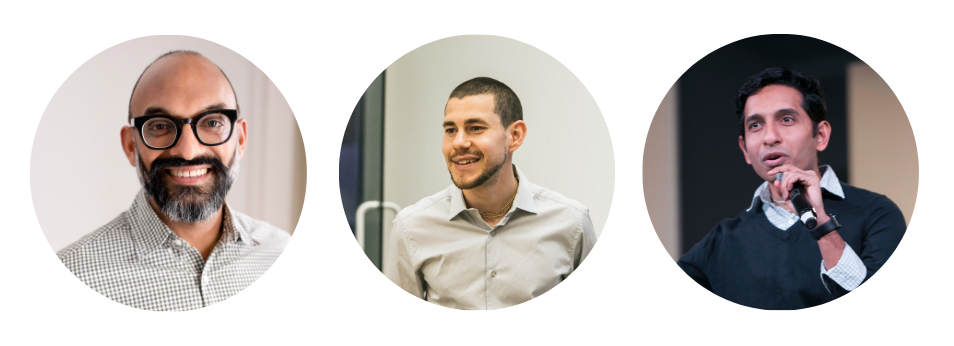
Podcast Hosts: Vipin, Hari Prasada and Rasanath
Listen to this episode on Apple Podcasts, Spotify, or your preferred podcast platform
Highlights
[01:15] What is book distribution?
[04:45] Book distribution KPIs
[12:30] The importance of pure motivations
[16:10] The content of the books
[27:10] From a banker to a street-level beggar
[36:00] Signing up for rejection
[39:10] The overwhelm of Hari Prasada’s first experiences with book distribution
[43:00] Confronting your resistance to becoming a servant
[44:20] A prayer to one day bring this experience to the Upbuild community
Quotes
“Book distribution was a concentrated form of medicine for the ego.” - Hari Prasada
“The warmth, the dynamism, the provocation, the purity …is where the gold is.” - Vipin
“[During Book Distribution], there is a lot happening in a very short period of time. It's a very mystical experience, and it is also a very intense experience.” - Rasanath
“I had to become a beggar. And the irony is we were begging for them to accept something, not for us to get some money so that we could feed ourselves.” - Hari Prasada
“Becoming a beggar means entering a realm of utter humility, where I'm simply a servant on behalf of my teachers who have given me everything, and I just want to give back…I'm requesting you kindly accept.” - Hari Prasada
“Complete lack of control also makes for some of the most mystical experiences, because the one thing you know when those experiences happen, is that it was not because of you.” - Rasanath
-
This is an automated transcript and may contain minor errors.
Vipin: Hello everyone. Welcome to another episode of Upbuilding the Self. This is Vipin and I'm here with Hari Prasada and Rasanath. And today's topic is one that I've been waiting to explore in our podcast for years, and then recently one of our dear community members named John Servin, requested Hari Prasada to talk about this topic.
And we immediately thought. Now it's time. So today's episode will take us into the heart of a spiritual practice that many of us may have walked past, but few have stopped to truly understand. If you've ever wandered through Union Square in New York City, you may have seen a group of monks sitting and chanting, and a few others introducing themselves.
To people walking by and offering them a book. My Upbuild Partners, Hari Prasada and Rasanath spent years as monks at the Buckley Center and part of their service involved distributing spiritual literature in public spaces like Union Square. But this episode isn't just about handing out literature. It's about human connection, ego humility.
Rejection and grace all playing out in one of the busiest intersections of modern life. So in this conversation we'll explore what Hari Prasada and Rasanath learned from this deeply personal and often challenging practice and what it can teach all of us about faith service. Maybe even sales. And most importantly, seeing the sacred in what may seem ordinary.
So, Hari Prasada and Rasanath, I'm so enthusiastic to explore this topic with you both, and I wanna start with some important context. What is book distribution and what was important about it for you both as monks? As monks, we
Rasanath: understood book distribution as the greatest act of service and charity that we as monks were able to contribute to.
And these were not just any books. These were books that had transformed our lives completely. And as a part of extending the effect that these books had on us, the wanted to, uh, give. As many people an opportunity to experience the same kind of transformation. So the spirit behind book distribution was, when you have received the greatest gift is actually give the gift to others.
the other big motivation and inspiration behind book distribution was. That it directly served our teachers. It was a direct service to our teachers for what they have given to us, to take on their mission and mood, be able to extend what they have known to us, to other people
Vipin: Were there specific goals related to this service?
Rasanath: There are many different ways in which we looked at book distribution, There was small books, there were big books. There were super big books. And you know, there used to be a count at the end of the day in terms of how many of those went out.
And the idea was very simple, as many books as possible. But then as a subset of that, for different people, the goals were slightly different. So as an example, one of the ways in which book distribution was measured was how many people did you talk to? Some book distributors, especially one of them who we really look up to who has uh, been a mentor to me by she Ka.
But also talk about counting your book distribution in terms of how many rejections did you get, and then the more rejections you got, the more successful your book distribution was. So there were different ways of measuring, but those ways of measuring were also specifically attributed to what was your internal goal behind the activity.
Very broadly speaking, we all celebrated together. How many books actually went out
Vipin: and what were your internal goals behind the service? Both of you,
Hari Prasada: I'll just underscore some of what auth was saying. There's sort of two sides to this. There's how this affects. You as the book distributor, and then there's how this affects the people who are the recipients of your book distribution.
So there are goals on both sides, and the goal for the recipients is that you're giving as much as you can to them, that you're creating a really warm experience that might even be memorable. In many cases it is like that. And if you meet PTI yogis and we're in the tradition of PTI or PTI yoga, if you meet PTI yogis, so many of them began their spiritual lives.
This whole quest just from randomly meeting somebody in the street or in some arena that they would've never expected, and being handed a book. So those experiences then stay with them forever. And even for those who don't take up that quest many times it becomes like a, a little splinter in the mind, huh.
That was a really special experience. I can't put my finger on what was there because somebody approached me with a different paradigm than I'm used to probably than I've ever experienced before. That's the case for me and. For practically everybody I know when somebody is really coming from a spiritual place, when the paradigm is totally different, it's very provocative, but it's very subtle and most people will not recognize that we don't have the vocabulary.
But when you develop that vocabulary, then it becomes extremely profound and even before. There's the chance of being provoked and thinking, ah, I wonder why that experience is still staying with me. So for the recipients, it's one thing, you know, we want to give as much we wanna create as warm and hospitable of an experience, and also dynamic.
We want to be a little challenging and. A little lively. I would say. That was something that, that was very appealing to me, was feeling like highly energized as I was meeting with persons. And I had always this meditation in my mind of what my guru's, guru should, the pro pod would say that these books, they're all sacred texts.
Nothing is not sacred that we would distribute.
So all these sacred texts. He said they're ticking time bombs. They're ticking time bombs that even if they just sit on the shelf at some point, the spiritual blast is going to go off at some point, even if it's not within this very lifetime, the trajectory of the person is affected their real self.
The soul is impacted by deciding that I want to accept this. I want to take this. And I could never forget that. That was a huge, huge motivator and I experienced it and I saw it regularly. I even met people who received a book 10 years ago and suddenly started inquiring about it. Sometimes even greater amounts of times would elapse is just remarkable.
It's mystical. These books, as Raan said, they transformed our lives completely.
Rasanath: So from that vantage point, we really wanted to give that opportunity to people as much as possible. And there's also, yes, there's a financial component. We should not pretend that there's not something there. But the financial component was twofold. We were not selling the books at cost. We were accepting donations for them.
Hari Prasada: And the first part of that. Which is the most important is because people don't value them when they get them for free. And I experienced that many times and I gave many books away for free because I wanted people to have them and to be affected and transformed. But I saw how people interacted that got them for free.
And People take things cheaply, uh, unfortunately, but when they would give a donation, they're also contributing to a cause. They're contributing to a mission and they would value the book in a different way. So there are many different effects to that, which were wonderful to see.
And you could also see people's generosity. So the other part of this, the first part is that most importantly, we want people. To have the best experience and to value and to do service, to be engaged in service by giving something. But the second part is that then that money would be used to print more books, so it was sustaining for the distribution of the books.
And we also had to be careful because not every monk was on the same level or had the same degree of sincerity. And when you're dealing with money, it's very tricky. You can develop greedy motivations or less than clean intentions, and people could feel that. It could feel salesy, it could feel a little, uh, I don't know.
And that would keep us in check. So for me, the. Ability to ask for a donation was also getting me outside of my comfort zone because I really just wanted to give them away. But it was so helpful on so many levels to actually ask. And that ties to then the component of, what is this for you as the book distributor For me, speaking personally.
Vipin: Wait, but before you go there, I, I wanna interject with a couple of questions on what, what the goals for the recipient. Well, first of all, what you're saying about the, it's very sensitive. Somehow, one of my dear friends from college had an experience at the San Francisco Airport. where he had, uh, crossed paths with a buck, the Yogi monk, who was distributing literature, and
The monk offered him a book, and he had this skepticism. My friend had this skepticism about him, and the offer was, no, this is for you and I really want you to have it. And then as he took it, he thought, you're not gonna ask me for money. You're not. You're really not. And then a little bit later he was like, well, now can you give me a donation?
And he felt like that was a reneging on the sort of. The agreement in the exchange. And so it unnecessarily turned him away and off because he felt like, I can't trust this person. And so I just wanna underscore what you're saying. There's so much sensitivity about how do you walk that line of really wanna offer you this and because it can feel like, look, I, I'm doing this for you.
Even asking you for money is, I'm doing it for your benefit. But people might not, they don't see it that way.
Hari Prasada: That's right. And it's so important that people have a pure experience. and if your motivations and insecurities get in the way, it tampers with the purity, even with best intentions.
Even if you really are deep down thinking, well, this is actually for your benefit, which I believe in many cases I. Was actually what was happening, but something else gets in the way of that deeper intention. And now it's mixed motivations. And the mixed motivations make it not such a pure experience.
And I've seen it all. I've seen people with varying degrees of purity in the way that they would go about book distribution. And it could really rub people the wrong way. It could really turn people off. And now you've done a great disservice because instead of attracting people to the spiritual journey, you've actually repelled.
So this, I mean, as sensitive as it gets, and there's also, I. A lot that I didn't see, which I've heard about and studied of crazy things that were done in the name of book distribution and that we resolved. We would never like try to try to pull one over on people. We would always be for them in their service.
This is for them. This is not about me and my ego and what I can get from them. The whole point is, and I speak about this a lot because it's so important. People have to feel, I am wanting something for you. Not from you, period.
Vipin: Well, the other thing I was going to say, the other insight I got from listening to what you were saying that I hadn't realized before,
your emphasis on the experience of the exchange, the warmth, the dynamism, the provocation, the purity, all of it is where the gold is.
Because I was thinking before, even if they take a book, how often do they start reading it and does that, where does that reading lead to? But when you were speaking, it struck me that actually it's the interaction. They'll always remember the interaction even if they never open the book. And so that, I just never understood how important that interaction is.
And even what you're saying, even if the person doesn't take the book, they may still remember. That interaction years later, if it, like you said it, it places a splinter in the mind that was very different. What about that was so different? What about that person was so different? What about what they were saying was so different?
Even as I'm in a rush trying to get from one place to another,
Hari Prasada: and the only thing that trumps that is the book itself. So just the fact that there's contact with the book. This is where my conviction is. These are special. These are not ordinary. These are extraordinary books. To have an interaction with them, even to have them sitting on the shelf, even to touch them, something different is happening.
Something that is, is really beyond us.
Rasanath: This is common even when you are talking about regular sales, right? That people buy the product because they first trust the person. And when you're talking to someone on the street about a spiritual book
You have a very brief window where they're actually experiencing the book first in the interaction. So the responsibility that you carry as being a true representative of the book is huge. And in that interaction, you are giving them a glimpse of what the book is about, both from a point of view of the interaction itself, but also the content.
Because when we did book distribution, we opened the pages, we showed them, you know what the book was about
Vipin: as well, the books. Potential impact because you're a representation of that.
Rasanath: Absolutely. So there is a lot happening.
There is a lot happening in a very short period of time. The best way I can describe it, it's a very mystical experience, and on the other hand, it is also a very intense experience simultaneously happening.
I cannot describe it in any other way. The only other way to understand this would be to do it.
Hari Prasada: One day, we hope we can afford many people in our up built community this experience. That is a goal.
Vipin: Is there anything you would say about what makes it so intense?
Hari Prasada: So for the book distributor, the goal is to become a beggar, and that is the hardest thing.
The ego hates that. The ego thinks, no, I'm so good. I need to be enough. I need to be enough. I need to be enough. Beggar means not enough. Beggar means I failed. But here the goal was just that, be a beggar and you'll be perceived as lazy. You'll be perceived as a nuisance. You'll be perceived as sort of the dredges of society.
Why don't you get a job? It was so painful. So painful to hear those things, and I knew what I was signing myself up for.
Hari Prasada: I have to become a beggar. And the irony is so in, in line with what we've been speaking about, the irony is we were begging. For them to accept something, not for us to get some money so that we could feed ourselves.
We had donors in our community who helped us, and we had ways of feeding ourselves. That was not the point. We weren't begging for filling our bellies. We were begging for others to accept the grace of these incredible wisdom texts. To begin a journey that revolutionizes your life. It can be said in no other terms that we were begging for, because the ego doesn't wanna go on that journey.
So the ego has to be begged and poked and prodded. That's what we were doing.
Vipin: When you showed up that way as a beggar, how does the. Recipient receive you, because like you said, you're also trying to be dynamic and provocative and so how do these things dovetail with each other?
Because I also think that if someone in sort of our material context. Comes across you and sees you as a beggar, they may be highly turned off by that.
Hari Prasada: Yeah, so the first thing we have to understand is that the beggar means that I'm getting rid of my ego. I'm getting rid of it. At least I'm putting it aside.
I'm trying to remove the layers. I don't want the inflated sense of identity, the self-importance, the self-absorption. Everything revolves around me, me, me, me, me, me. That's what we are countering here.
So becoming a beggar means entering a realm of utter humility, where I'm simply a servant on behalf of my teachers who have given me everything, and I just want to give back, and I'm requesting you kindly accept.
Please, I'm begging you. Please accept how that is done. May not be just like, oh, I'm so impoverished. I have nothing. Come take one of these books and you'll help me very much. No, the spirit is, I have deep conviction. I have deep conviction, and I want to share that with you. I have a passion for this.
That's what I'm offering you, and I'm begging you. Please accept my conviction, my passion, and please accept. The desire to investigate, to explore, to experience for yourself.
Vipin: It actually completely reframes the notion of the beggar that we may have.
Rasanath: At the end of the day, I can tell you a lot of things about the book, but there is an appeal that goes along with it. And the appeal is even if you are not intellectually convinced, just give this a chance. Please, please give it a chance. sometimes people only respond to that appeal.
Well, alright, and, and there is a way in which. Their lives are fundamentally changed because of that appeal. But what goes into that appeal? There's a lot of sincerity. The ego likes to control, and when you are out there on book distribution, the one thing that you do not have is control, which is what makes it so scary because you have no control on the outcome.
You have no control of who you are speaking to, and that.
Complete lack of control also makes for what you call some of the most mystical experiences because the one thing you know when those experiences happen is it was and because of you, but you had no control on who you were stopping. You know, you have no control on how the person is going to respond and what can happen in the interaction, zero control on it.
Vipin: When you said. That
the sentiment is, just give this a chance. I was thinking that we're all often beggars, just give this a chance, whether that's appealing to a relationship or appealing to an idea I have, but we don't ever show up that way. Our egos don't allow us to show up that way to ask, Hey, just give this a chance.
Instead we're like, eh, take it or leave it. This is, here's my idea, but if you, if you want you, and so. As I was thinking about that, I'm like, oh, we're, it actually drains so much of the power because we don't allow ourselves to be that vulnerable. Say like, I believe in this so much, just give this a chance.
That would be putting myself too much on the line. So instead I'm like, Hey, I'm kind of into this. But, uh, if
you're not, then maybe I won't be either.
Rasanath: Thank you for saying that, because in the last
two weeks, in the last yeah, maybe three weeks, I've had two conversations. One with the CEO of a hedge fund, who we have talked about going in front of investors.
The other was the founder of a startup who is the same sentiment going in front of the investors and the intensity of those activities and the taring nature. And I said ultimately we have to internally accept that we are beggars asking for a chance. As we believe in what we are doing, that's what we are doing.
And both of them independently came back and said That just shifted something. The way I showed up there was something very authentic about it. Just very honest. You're not pretending at that point,
Vipin: we don't recognize that's actually what we're doing.
Rasanath: But then there is a sincerity in the appeal that comes in.
There is certain honesty about it that somehow strengthens how you show up.
Hari Prasada: It also depends on what are you begging for? Are you begging for some selfish gain? Are you begging that you develop all this prestige that you've been dreaming of? And are you honest with yourself? Do you know what you're begging for?
Have you intro respected? Have you intro respected deeply enough? Fearlessly enough? Right? Being a beggar is not just like a fashion and it's not a good strategy that will get you far. This is what are you begging for? Who are you begging on behalf of? So that is critical. And then once you've developed the consciousness that, oh, the real self is actually a servant, that is true servant leadership, setting an example, that I am your servant.
I am here to provide you benefit and in the deepest way, from myself to yourself, soul to soul. So when you have that consciousness, then you can apply that in a business context. You can apply it in a family context, you can apply it anywhere.
I. And you will bring that in and you don't have to curb what you're doing and say, oh, that's off limits. That's off limits. No, you bring your consciousness, you bring your service spirit, and you don't let it get corrupted. Just like we were talking about maintaining the purity and not letting mixed motivations enter.
If there are mixed motivations, you are honest about them and you take responsibility for them, and you don't try to make it something that it's not, and pull one over on somebody.
Vipin: Very good. So you've both shared a lot of very important context, and now I want us to get closer to the actual experience of book distribution. So can you take us back to the very first time you went out to distribute books in Union Square?
What was going through your mind as you stepped out to do this?
Rasanath: My first experience of book distribution was in India, and it's a very different context because there's some inbuilt piety. The, the India is a, you know, very, until, even until early two thousands you could see strong remnants of its heritage.
And so when you're handing people, you know, a sacred text, there is some degree of remnants for it. And familiarity with the the Mita. So culturally it was much easier, much simpler,
Hari Prasada: a culture also of giving and what to speak of to monks.
Rasanath: Yes. So there was so much that worked in the favor of the activity.
Now, when I came to the West as. Someone who had a job in a consulting firm and then you are out on West fourth Street. That was my first book distribution experience. West fourth Street, subway platform
Vipin: in the winter
Rasanath: in
Vipin: December, underground on the platform. And you are working outside as a consultant.
Advising Fortune 500 companies making a decent salary, and now you're in under in the platform subway platform trying to get people to listen to you and give them a book.
Rasanath: Yes. And it was ING scorching is the only word that really comes to mind, and you are a nobody. Down there on the platforms, as you're selling books, as you are trying to hand people, you know, the bug with people are not interested, you practically feel like you don't exist because people are just walking past you.
My first time in Best Forward Street, I spent six hours on the platform. Was in 2000 and I couldn't distribute a single book, for someone who loves to be successful, who loves to have results, who had a very different experience of book distribution in India, cultural and familiarity, a certain kind of respect, this just crushed my spirit, and I must say I never went back to it again.
For a very long time. I did not do book distribution for nine years after that last experience on Westfield Street and what it also signified for me, and this is only something that I have recognized over time, I didn't have the depth of spiritual realization when I was doing it.
At that time, It was still about the outward results So the reason why I bring that up is while at that time from a point of view of the number of books that went out, the activity seemed very pointless. What I can say is I also understood the fragility of my ego which.
I think it's a very big part of the activity. It's the purification. You really understand how attached you are to your identities, to results, to outcomes, And so going back to Hari PSAT's point about the concept of servant leadership, and I think the concept is accepted only because the word leadership is attached to the word servant.
And you know, internally. The word leadership is in bright lights. The servant is out.
Hari Prasada: The servant is good pr, good strategy. It works. People will trust you. It'll work,
Rasanath: took everything out. If I were to say, you're just a servant, how attractive is that for the, and that is the real test because what does it mean to really serve?
What does it take to actually serve? It's a real test, and I think that was the uncovering in reflection and. I had avoided looking at it for a very long time, and this took very different set of experiences outside of book distribution for me to understand the significance of what I experienced on Westfield Street.
You said that where you were in your spiritual journey had a lot to do with what you decided to do. Post and not come back to this. I also am curious, I mean, you shared a little bit about how, what were the implications internally? I'm assuming there were implications externally as well, meaning part of the reason why maybe you spent those six hours without any books being distributed was the external manifestation of some of those insecurities and that people can sometimes even feel.
Vipin: You're coming from as pure a place as possible, but they can feel like this person wants something from me or they want, they're trying to like, you know, I imagine if I'm doing that and I really need this person accept this book from me. It's been four hours down here. That energy is experienced.
Rasanath: You are questioning your own identity on the platform.
Vipin: How can you talk to people with a depth of conviction You're questioning your own identity and then you're trying to talk to them about this di completely different paradigm at the same time,
Rasanath: and very distinctly, remember standing on the platform at various stages of like how much crowd is there.
You know, a train coming by, you know, another train coming by, and then you see rats on the scurrying around. I mean, the whole scene is just so intense.
Vipin: And you're wondering, am I like one of these furring rats that people just wanna avoid?
Rasanath: Yeah. Your actual insignificance and the how confronting that is to the ego and yet to be able to then say, I'm here to serve.
I'm here to actually serve, takes a lot of courage. It is not an activity when, you know, from an external, you know, when people say, well get a job. Or some other snide remarks to actually do that activity. To do it, genuinely do it. I would say till date has been the greatest act of courage that I have ever confronted or experienced.
Vipin: Yeah, because I imagine, especially when someone says that and feeling is, I have a job. And I imagine you have an experience like that and you just, you question, why am I doing this? Like I can offer so much more value, quote unquote value or productivity or all these things that we're attached to in my other life.
So why am I, why? Like is this really useful? Somebody else should be doing this, not me. I mean, I can imagine all of, I mean, if I were in your shoes,
Rasanath: I had very similar thoughts. And while there may be, and this is the deeper connection with the activity, while there may be truth to it in the sense that this may not necessarily fully align with your nature, perhaps
So one of the challenges that I have experienced over the years is. I'm not a very good stopper of people on the streets. I cannot, I personally feel terrible about interjecting somebody's life that way. Like there is a certain sensitivity that comes with it. It is not in my immediate nature to do that.
And yet with all of those reasons, there is still a great deal of escapism that's involved when you don't want to do it. And for me, I. It took that one experience and subsequent experiences after that too, when I was in the monastery full time, really showed how easy it was for me, one, how I could justify doing other things, how I avoided it, how, how I avoided rejection, desperately avoided rejection.
Those experiences have been very fundamental in making me more honest and genuinely appreciate, even if I am not able to do that activity as well as somebody else, to genuinely appreciate people who are out there doing book distribution day in and day out.
Vipin: Harry f. What would you share about the first time you went out, or if you have comments on everything Rasanath has shared? I'm sure you have so much that you're thinking about right now.
Hari Prasada: See, of the two motivations that which is for the recipient and that which is for the book distributor, one of them is much more important than the other.
We always start with ourselves and that's what we do at Up Build. We always start with ourselves because everybody that. You touch will be affected by whatever you invest in yourself. The deposits you make into your own journey will affect everybody else. So we always take responsibility first for ourselves, and then with that spirit of offering that and wanting to be generous as a servant to others and even for ourselves, when we think about what this means for our own trajectory, that is also for the sake of everybody else as a servant.
So they're interconnected, but first things first, the foundation is me. I am thinking about my spiritual journey and I recognize that people are so jaded and I speaking personally, I myself was so jaded and if a monk were to have approached me with spiritual book, I don't think I would've been receptive because so many people are trying to sell me something, give me something, and.
Most of the time it's useless. And even in spiritual contexts, I find it not inspiring because I don't know how genuine the spirituality is. It doesn't feel like a genuine experience when I've, I've been in those situations. Now that's not true in all cases, and it's also a spectrum there, there's incredible potency and then there's, uh, no potency and everything in between, but.
It's natural that people are so jaded. So we're going out there signing up for rejection to humble ourselves to not think I'm so great. And I came with this desire. I came to book distribution. I came to the monastery with this desire. I'm embarrassed to always have to say this to see my name in lights.
I wanted to become a movie star especially an auteur, a writer director who would star in my own films. I wanted to be as big as it gets remembered for all time to come. That's how I thought I would make use of this life, And then you bring that to the streets and subways of New York City, and it's like the biggest crash course. It's like insanity, how those two cannot coexist. So what this did for me is sort of unspeakable, and that's why I started this path. That's why I joined the monastery, to really focus and deepen my spiritual experience, remove the layers and layers and layers.
Almost countless layers of ego that were shackling me and book distribution was one of the most concentrated, exceptional medicines for the ego in that vein. So I got out there and everything in me said, no, don't do this. You're better than this. How could you, could you imagine this is what you're gonna be doing?
I just. There was nothing in me that said yes, everything said no. And I tried in different ways. I started off like casually, I. You know, we're doing some kan, we're doing some musical meditation. That's very nice. Some people are being attracted to it, some people are singing along, and there's some books to explain the practice of meditation and how to make spiritual advancement.
And so I'll offer it to somebody who's attracted by the kirtan. And I'm on behalf of the kirtan, and I'm just sort of, I'm just here. I'm not like a book distributor or anything. I'm just part of this scene, you know.
Vipin: So much strategy around how you would create more acceptability, uh, about the service that you were engaging in.
Hari Prasada: Mostly unconscious. I mean, it was like it was ever even a consideration to go out and be a book distributor, but people were kind of like wanting me to get my feet wet. Other monks were like, Hey, you could distribute a book here. Just go, it's easy. Look, you know, you're part of this. Party. I'm like, uh, I don't know.
They're like, yeah, yeah, you can do it here, just here. And they would put in my hand and just, you just ask for a donation. Just tell them it's a good book. Ask for a donation. It's that simple.
Vipin: There's no training program. It's not at that point that not in my first experiences, a book distribution
Rasanath: was, uh, instrumental in building a training program.
This is something that we learned would actually. How do you reduce the unnecessary suffering? you know, when there is a system of training and onboarding and a consciousness that is created around the activity, there is a very different relationship that you develop with it.
You don't feel resentful. And many times also heard stories about book distributors who have become resentful because of what they had to do. So Hari Psad was very instrumental in building a training program.
Vipin: given all the context that you both have shared and the goals and the intentionality and the, the importance of consciousness the idea that someone would just say casually, you can do this here.
Just take this book and do it. If it sort of flies in the face of the gravity of what you're doing and making sure that you're entering in the right consciousness as you go and do that activity.
Hari Prasada: And they were engaging me in service and easing me in, you know, as I said, helping me get my feet wet in like a, a soft launch kind of way.
So it was helpful. I just would require a lot more, but it was helpful.
Vipin: So we knew when we started this conversation that uh, there's going to be a lot to unpack here and. What we're going to do is pause this conversation. You both have laid the groundwork and given so much context to what this experience is about, and now we'll go directly into the experience and we'll, so we'll break here because we've been speaking for a while, and we'll have a separate episode that goes into the experience so that.
It doesn't run for hours and hours, but we need to keep talking for hours and hours because there's so much richness here. So is there anything you both wanna say before we close this part around the context and the, the groundwork, the foundation for book distribution.
Hari Prasada: I mean, I'm so grateful for these experiences. I cannot express it. I wouldn't be here at up build if not for these experiences. I feel very confident about that. So what I would wanna offer to our listeners is think about what you are resisting in the consciousness of becoming a true servant.
Think about what you're resisting in the consciousness of becoming a true servant.
Confront that this will shape you. This will make you most effective.
This will bring you closer to yourself. Whatever your walk of life is, whatever your means is, it doesn't matter. The ego is I. The ego and it is blocking the real self from shining if you want to shine, to fulfill your potential to be really activated and the best servant of everybody else, meaning you provide the greatest benefit to everybody in your life.
So pay attention to that resistance and think. How can I lean more into accepting and even embracing, truly being a servant of beggar?
Vipin: Thank you. I remember you suggesting a few years ago that we should one day create a program where all of our coaching clients can go out on book distribution to experience what you're talking about.
And, um, that would be a profound experience for people. I, myself. Well, I can say I have a curiosity to experience and of deep seated fear about experiencing what you're talking about, but maybe I will close with one other thing, just repeating what you had said. Sorry, PSAD, just a, a few minutes ago that
book distribution.
Was one of the most concentrated forms of medicine for the ego that you ever experienced and could imagine. And I think the question that I would pose is, what is that for you, each listener? What is the form of medicine for your ego that you are exposing yourself to because. We don't have experiences like that.
I mean, we're, there's so many experiences that we have that are challenging to our ego, and there's so many experiences that are reinforcing our ego, but what can you be consistently doing that is excavating our ego? So thank you both for this first part, and I am really excited to get into the second part.
Likewise. Thank you so much, and thank you everyone listening deeply. Deeply appreciated.
Episode Transcript
Continue Exploring
Listen to more conversations: browse all Upbuild podcast episodes or subscribe on Apple, Spotify, or your preferred platform
Bring this work into your organization: explore workshops, offsites, and team experiences
Understand your patterns more deeply: explore the Enneagram
Develop your coaching skills: learn about the Upbuild Coaching Training