
Jack Nicholson: Enneagram 8w7
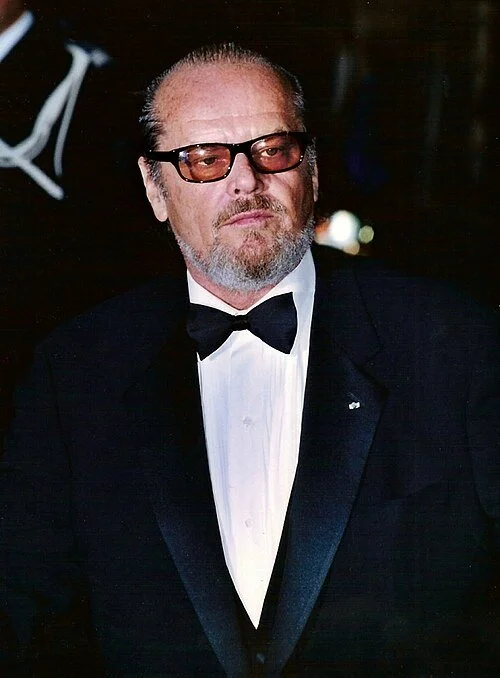
Georges Biard, CC BY-SA 3.0, via Wikimedia Commons
Why Jack Nicholson is a Type 8
Resistance to being controlled, even by the director. While filming Terms of Endearment, Nicholson refused to perform a scene the way director James L. Brooks envisioned it. Brooks wanted him to cry, but Nicholson flatly said, “I won’t do it,” believing the moment rang false for the character and didn’t like the vulnerability that was required. Rather than simply objecting, he began rewriting the scene himself. Even on an Academy Award-winning production, he was unwilling to surrender his instincts simply because someone else was in charge.
Quickness to respond physically when feeling crossed. In 1994, after a traffic dispute in Los Angeles, Nicholson confronted another driver and struck the man’s Mercedes with a golf club, smashing the windshield and roof before later apologizing and settling the matter privately. The incident illustrates how rapidly anger could escalate into assault when he felt disrespected.
Never trying to become the polished Hollywood leading man. Nicholson spent nearly a decade making low-budget films before breaking through, but even after becoming a star he never sanded off his rough edges. He didn’t reinvent himself into the clean-cut leading man Hollywood often rewarded. The sunglasses, devilish grin, raspy voice, and slightly dangerous energy became part of his public identity. Rather than chasing after romantic heroes, he repeatedly chose characters who were rebellious, intimidating, morally ambiguous, or openly abrasive, from Randle McMurphy in One Flew Over the Cuckoo’s Nest to Jack Torrance in The Shining to Frank Costello in The Departed.
Separating conflict from relationship. Nicholson recalled working with strong personalities by saying, “We fought like the dickens, but we also had dinner together every night.” Disagreement did not threaten the relationship. Conflict was simply part of working passionately with other strong people, after which everyone could sit down together as though nothing had happened.
Drawn again and again to characters who refuse to submit. Nicholson’s most iconic roles all share the same backbone. In One Flew Over the Cuckoo’s Nest, Randle McMurphy walks into a psychiatric hospital and immediately begins challenging Nurse Ratched’s authority rather than accepting the rules. In The Shining, Jack Torrance gives himself over to rage and domination instead of restraint. In A Few Good Men, Colonel Nathan Jessup doesn’t retreat under cross-examination; he leans forward, pounds the witness stand, and erupts, “You can’t handle the truth!” Across decades, Nicholson was repeatedly drawn to characters who would rather fight, confront, or explode than submit or back down.
Speaking exactly what’s on his mind, whether people like it or not. Nicholson has rarely come across as someone trying to give the “right” interview. He’ll drift into stories, flirt, swear, laugh at himself, or make provocative observations with little concern for how they’ll be received. There is very little sense of rehearsing himself for public approval.
Protecting his independence above almost everything else. Despite decades of relationships, Nicholson never married. Asked why, he repeatedly said he valued his freedom too much. His life has always had a strong “I’ll come and go as I please” quality to it, resisting arrangements that would require someone else to have too much claim over his time or decisions.
Living life with obvious appetite. Nicholson rarely projected restraint. Basketball games courtside. Nights out until dawn. Expensive houses. Beautiful women. Big laughs. Good wine. He seemed to approach life the same way many of his characters did: if something was worth doing, it was worth doing fully. Even his smile often looks less like amusement than someone enjoying as much pleasure as he can in the moment (all of this is highly indicative of his 7 Wing).
Owning the room. One of Nicholson’s trademarks is how little he appears to hurry. In interviews he’ll lean back, smile slowly, let silence hang for a second longer than expected, then answer in a way that makes everyone else lean toward him. He has a way of commanding attention in any space he inhabits.
Choosing intensity over comfort in his performances. Nicholson repeatedly chose characters who were angry, obsessive, intimidating, morally compromised, or psychologically volatile. His career is filled with performances that risk making the audience uncomfortable.
Continue Exploring
Type 8 Profiles (With Evidence): Aretha Franklin, Chelsea Handler, Donald Trump, Harriet Tubman, Howard Stern
Understand Type 8: Type 8 The Challenger
Common Type 8 Mistypes (and how to tell the difference): Type 3 vs Type 8, Type 6 vs Type 8
All Celebrity Types: Hundreds of Profiles (With Evidence)
Enneagram Community (live teaching and discussion twice monthly): Enneagram Library Live