
Aretha Franklin: Enneagram 8w9
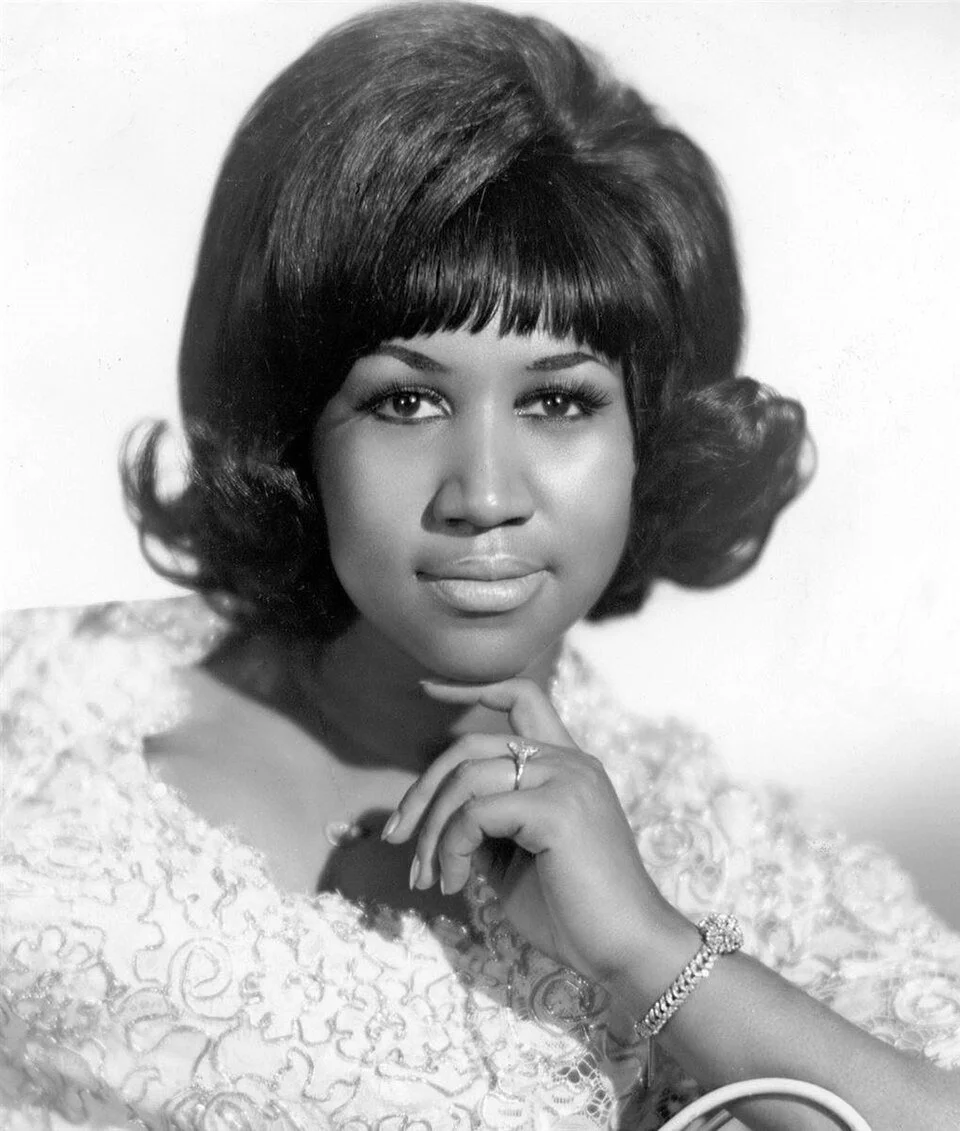
Atlantic Records, Public domain, via Wikimedia Commons
Why Aretha Franklin is a Type 8
Taking control of “Respect” in the studio. When Aretha Franklin signed with Atlantic Records in 1966, she refused to simply follow the producer’s vision. She sat down at the piano, took charge of the session, and shaped the groove, vocal phrasing, and overall arrangement of what became “Respect.” Although Jerry Wexler was the credited producer, musicians recalled that Franklin was the one leading the room. Her authority, confidence, and unwillingness to surrender creative control transformed the recording and established a pattern that would define her career: she insisted on having the final say over her music, even in an industry where women, especially Black women, were rarely expected to lead.
Transforming “Respect” into a declaration of power. Franklin’s 1967 recording of “Respect” fundamentally reshaped the meaning of the earlier version recorded by Otis Redding. She altered lyrics, rearranged the structure, and added the famous “R-E-S-P-E-C-T” spelling sequence and backing vocal responses. The performance reframed the song from a man’s demand for obedience into a forceful statement of autonomy and dignity.
Fierce and confrontational pursuit of justice. When activist Angela Davis was jailed in 1970, Franklin publicly offered to help pay her bail, declaring, “Angela Davis must go free.” She added, “I’ve been locked up… and I know you got to disturb the peace when you can’t get no peace.” Franklin used her platform to stand with Davis directly, framing the issue as a matter of freedom, justice, and solidarity.
Direct confrontation with record executives over control. Throughout her career Franklin frequently challenged executives over contracts, royalties, and artistic direction. She insisted on approving songs, musicians, and arrangements rather than accepting label decisions automatically. Industry figures who worked with her described negotiations that could become intense when she believed her interests were threatened.
Demanding respect from fellow musicians in the studio. Franklin was known for running recording sessions with an extremely commanding presence. Musicians described situations in which she would stop a take mid-song if the groove or arrangement did not meet her expectations. Rather than deferring to producers or engineers, she often communicated directly with band members about how the music should feel. The presence of her piano at the center of many sessions reinforced her leadership role. Colleagues frequently described the atmosphere as one where Franklin clearly controlled the room.
Financial independence through performance power. During the height of her fame in the late 1960s and early 1970s, Franklin became one of the highest-paid live performers in soul and pop music. Concert promoters understood that her reputation could sell out large venues. She was known to insist on favorable financial terms before agreeing to appearances. These negotiations reflected a willingness to use her commercial power to secure independence. Success in live performance translated directly into leverage within the music industry.
Refusal to tolerate disrespect from critics. Franklin was known to react strongly when she believed critics or journalists treated her unfairly. Several music writers recalled tense interviews where she corrected statements or pushed back against interpretations she disliked. Her responses could be blunt and direct, leaving little ambiguity about her expectations.
Blunt and unfiltered communication. During a 2014 rapid fire interview with The Wall Street Journal, she was asked for her thoughts on Taylor Swift. After a brief pause, Franklin replied simply, “Great gowns, beautiful gowns,” offering no further assessment of Swift’s music or artistry. The remark became iconic for its understated bluntness.
Continue Exploring
Type 8 Profiles (With Evidence): Chelsea Handler, Donald Trump, Harriet Tubman, Howard Stern, Marlon Brando
Understand Type 8: Type 8 The Challenger
Common Type 3 Mistypes (and how to tell the difference): Type 3 vs Type 8, Type 2 vs Type 8
All Celebrity Types: Hundreds of Profiles (With Evidence)
Enneagram Community (live teaching and discussion twice monthly): Enneagram Library Live