
Andy Warhol: Enneagram 5w4
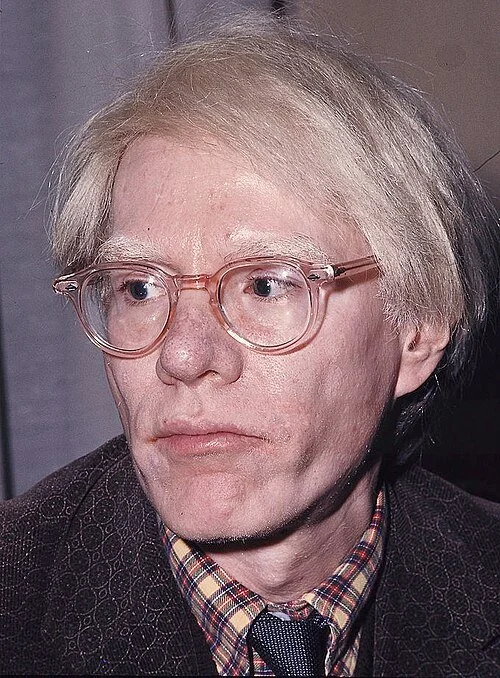
Why Andy Warhol is a Type 5
Deliberate emotional detachment and identification as an observer rather than participant. Andy Warhol often described his experience of life as distant and mediated, saying after being shot that events felt “like watching television, you don’t feel anything.” He had a consistent orientation toward observing reality rather than fully inhabiting it, with emotional experience muted in favor of distance and awareness.
Use of mechanical processes to minimize personal expression in art. Warhol’s reliance on silkscreen printing and repetition (e.g., Marilyn Monroe, Campbell’s soup cans) reduced subjective involvement and emphasized process over expression. He stated that he did not try to make things extraordinary, but “just tr[ies] to paint them ordinary-ordinary.”
Creation of environments that allow observation without full engagement. At The Factory, Warhol surrounded himself with eccentric and often extreme personalities while maintaining a quiet, watchful role. He facilitated activity and experimentation but remained more observer than participant, creating a setting where he could study behavior while limiting personal exposure.
Provocation used as a way to explore boundaries rather than express personal feeling. Warhol’s work frequently pushed social and artistic boundaries, including experimental films and unconventional art practices. These provocations were typically delivered with a dry, detached tone, reflecting curiosity about what could be done.
Minimalist and evasive communication style that resists emotional disclosure. In interviews, Warhol often refused to provide expected answers, offering short, flat, or ironic responses. This pattern maintained distance from the interviewer, a protective intellectual high ground, and prevented deeper access to any emotion.
Fascination with systems of fame, media, and cultural production. Warhol’s work consistently examined how fame is created and circulated, including his observation that everyone could have “15 minutes of fame.” Despite participating in celebrity culture, his approach remained analytical and musing, focused on the mechanics of attention.
Construction of a persona that enables visibility while preserving privacy. Warhol’s signature look (wig, sunglasses, monotone delivery) created a highly recognizable but opaque public identity. The persona allowed him to be widely visible while keeping his feelings concealed.
Preference for curiosity and “interestingness” over authenticity or emotional truth. Warhol’s comments and work reflect a consistent focus on what is interesting rather than what is meaningful or emotionally real. His artistic choices, from long, uneventful films to unconventional materials, reveal a curiosity-driven exploration of perception and experience.
Walter Mori, Public domain, via Wikimedia Commons
Continue Exploring
Type 5 Profiles (With Evidence): Bill Gates, John Cage, J.R.R. Tolkien, Mark Zuckerberg
Understand Type 5: Type 5 The Investigator
Common Type 6 Mistypes (and how to tell the difference): Type 3 vs Type 5, Type 1 vs Type 5
All Celebrity Types: Hundreds of Profiles (With Evidence)
Enneagram Community (live teaching and discussion twice monthly): Enneagram Library Live