
The Upbuild Enneagram Library
Enneagram Type 8 The Challenger
Subscribe on: Apple Podcasts, Spotify, YouTube, or wherever you get your podcasts

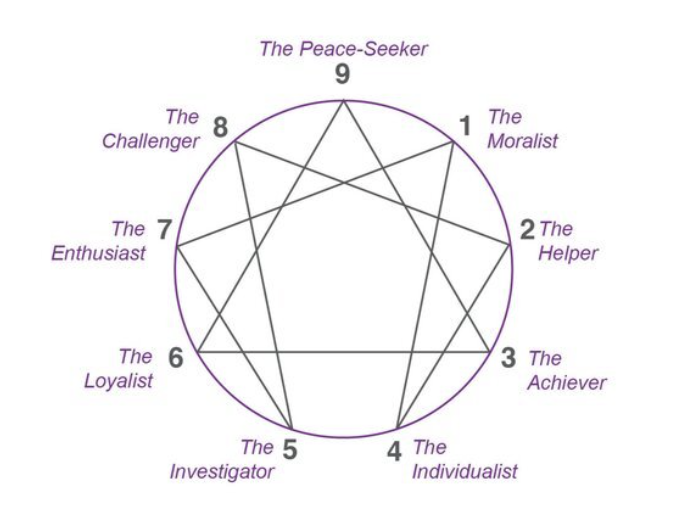
Episode Description
Enneagram Type 8s, called The Challenger, are all about strength and showing who’s in charge to reassure themselves that they don’t have a weak bone in their body. They often can’t admit to themselves how scared they really are of their buried weakness, and so they show up larger than life in nearly all situations hoping to leverage their power for the people they love. Famous examples include Steve Jobs, Chelsea Handler, MLK Jr., Donald Trump, Aretha Franklin, and Vladimir Putin.
In this episode, we explore the essence of the Type 8 and the insecurities and motivations that drive their every action and relationship. We walk you through the story of the Type 8’s life by looking at their journey through the Levels of Consciousness from their healthiest to their average to their most destructive ways of operating. We close the episode by offering a critical type-tailored practice to help 8s rise up in consciousness and be the best version of themselves.
This episode is designed to help Type 8s thrive in their personal and professional lives by fostering a deeper understanding of their insecurities and motivations. It’s also an invaluable resource for friends, partners, and colleagues of Type 8s who wish to better support and relate to them.
Podcast Hosts: Rasanath Das and Hari Prasada Das
Listen to this episode on Apple, Spotify, or your preferred podcast platform
Highlights
[1:20] The Essence Qualities of fortitude, aliveness, and majesty
[3:20] The larger than life presence of the Type 8
[5:00] The Basic Fear of being shut down and violated by others
[5:30] It’s a dog eat dog world out there. Kill or be killed.
[7:00] The example of Hari’s sister climbing Mt. Kilimanjaro when she was pregnant
[8:00] The Basic Desire to feel like a force in the world
[8:30] Creative Consciousness. Everything is bigger, including their hearts. The protective energy and the ability to take heat.
{12:00] The strength that comes from being able to embrace my feelings of weakness
[13:30] The insecurity that I don’t have enough strength to not feel weak at all
[14:00] Controlling Consciousness. The overcompensation to put on my armor and try to be stronger than others
[21:00] Destructive Consciousness. Intense suppression for the sake of strength. Everything is bigger, including destruction.
[22:30] Saddam Hussein as an example of a Destructive 8
[23:00] The practice to rise up the Levels of Consciousness. Become extremely aware of how you are trying to intimidate people
[24:00] The real strength of being my authentic self

-
This is an automated transcript and may contain minor errors.
Rasanath: as. You love to call it our ego safari, and we are meeting different species of the ego through this Enneagram journey, and today we will be discussing the Type Eight, and we'll be uncovering its flavor. So please walk us through what is the essence?
What does the Type Eight stand for? What are they after at their core?
Hari Prasada: So the essence qualities of the eight are fortitude, aliveness, and majesty, fortitude, aliveness, and majesty. And ultimately it really comes down to this feeling of strength, this feeling like, ah, I am powerful, like I am a force to be reckoned with.
But that's already starting to get distorted a little bit. At the essence, it's the sense of. Intoxicating feeling of being alive, which brings such a power to it. And then if I'm a force channeling that for something that is bigger than me and then I love feeling like a force, but it can easily get distorted into this ego idea, which we'll talk about.
Rasanath: Yeah, I like this is such a fundamental, the most fundamental. State of life is aliveness to feel like I'm living. And you know, we touched upon that in the type seven as well.
Hari Prasada: Yeah. And the distinction here, unlike the seven, the enthusiast, the eight, the challenger. There's something big about the experience of my being and I bring a presence with that.
Not to say that the sevens don't have a big presence, and certainly if they have an eight wing, all the more so, but there's something fundamental that's nuanced here, where it's like when the eights walk into the room. You know, they're there, you know, they're there. The sevens maybe, you know they're there because there's this like, like exuberance, this very high positive energy.
But the eights walk in, it's like a grounded, here I am, you know, like I have arrived, and they're just a little bit larger than life, sometimes. A lot larger than life. They like that because it feels like that's me. That's how I'm meant to be. Come in. It's almost like an
Rasanath: announcement. Hey, I'm here, I'm alive.
It's just like a childhood. When it's gone, how does it go wrong? What's the basic fear for the a fear?
Hari Prasada: Yeah, that's, that's an ivy I like to recount, uh, at our workshops, how I met an eight very lovable person at the Enneagram Institute when we were doing our training with Don Reso and Rus Hudson. And I, I had an intimate conversation with her and we were talking about all the deeper aspects of who we are and what we're discovering and the training.
Some of the pleasant, some of the not so pleasant things. And at a certain point I realized I'd made a false move because she said insecurity. We're talking about insecurity. I guess I had brought it up. She said, insecurity, insecurity. Don't you know I'm an eight, I don't have any insecurities. What do you mean insecurity?
And I was spell bound because I'm thinking. The entire training here for a week of like, you know, from eight or nine in the morning until 10 or 11 at night. So full on is all dedicated to uncovering what are the fears and insecurities that are holding us back so that we don't play into them and we can be our fullest selves.
And she was saying, I don't have any insecurities. So you see how deep rooted this sense of. I can't have fears is for the eight. So the basic fear is being weak, being shut down and violated by others. If I am not strong enough, people will take advantage of me. My sister is an eight. And I also like to give this example that when I had decided to become a monk, full-time monk, I went to her for blessings.
She's eight years older than me. I went to her for blessings. It would mean a lot if I had her support and feeling like she's behind me, you know? And the eights, it's powerful. When they're behind you, it's a force, right? You're carried by that force. So I went to her and I said, so I'm going to become a monk.
And she said, oh, you are gonna become a monk. It's a dog eat dog world out there. What are you gonna do about it? You gonna become a monk? Okay, great. You know, like go knock yourself out. You'll see you come back to me. You'll come back to the strong people and you'll recognize what life is. That's the paradigm of the eight.
It's, it's a dog eat dog world out there. You kill or be killed.
Rasanath: Right?
Hari Prasada: It's really like that intense. And eights can also be peace loving people. But there's this visceral fear of like, if I don't hold my ground and be strong and go against the forces of life and other people who are not good or don't have my best interest in mind, then I will be eaten alive.
And there's truth to it. There's
Rasanath: truth to being seen that happen. There's truth to it. I think it's just that when you live your life that way, at every moment, even when it's not required, it
Hari Prasada: can be really overbearing. And what do you do about it? And am I facing the fear or am I just being governed by it unconsciously?
And all my decisions are being filtered through a fear I don't even know I'm operating out of. There's no intentionality to it. There's no actual exercising of my free will. I like the story of
Rasanath: your sister again, when your mom shares the story about how she climbed. Ki when she was pregnant and she mistook morning sickness for altitude sixes.
That's an eight for you.
Hari Prasada: And she played hockey, so there you go. Now if my sister's listening, I love her so much and I don't think she would even be conscious of these moments. I think. These experiences again, it's like I don't even realize my paradigm or the strength that I'm bringing into things or the fears, and that can be intense to see, but it also leaves an impression on other people.
Very true.
Rasanath: Very true. So walk us through the basic desire and then we'll go into the levels of consciousness right there.
Hari Prasada: The basic desire for the eight is to, as I mentioned, to feel like a force to feel so strong, like a force in the world.
Rasanath: Talk to us about the creative aids. Eight's also, and this has been a regular experience for us when we.
Uh, when we do Enneagram workshops, just like sometimes with threes, uh, people tend to form an opinion about threes. Oh, that ambitious. Not caring for anything. Always want success kind of a person. The aides have a very similar effect, unfortunately not because of who they are, but because they're so misunderstood.
They are strong. They're forced to be reckoned with, and I think it's very important to bust the myth around, well, I don't really like those eights. So tell us about what the creative eight looks like.
Hari Prasada: The creative eight. The main thing here, this is always my meditation on the creative eight, is everything's bigger about them, including their hearts.
So their hearts are huge. And they love people with such intensity, such ferocity, that it's the most powerful force. Again, that force of love is how it manifests, and there's a protective quality about the love. They're not afraid of nurturing. They can nurture too, but they're naturally wired to be protective, right?
So while they don't undermine their nurturing qualities, they can exercise this protective energy in a way that nobody else can and they can take heat. Like nobody else can. So if there is danger or if there is opposition, they always have a cause at this level of consciousness that they believe in they would give their lives for, and they would lay down their lives.
For the sake of other people protecting innocent people and doing good for the world, they can't imagine living any other way for, it's not even a thought for them. It's just this is what we do. We leverage our strength for the benefit of others. We leverage our strength for the benefit of others.
Otherwise, what would be the purpose of being me?
Rasanath: I remember in one of our workshops, we had an Igram type eight, and he shared how on the subway he watched somebody being harassed. By a few people and he was just saying how, what bothered him so much. Of course he's intervened and you know, he's a big guy and he, he stopped those individuals, but then he was sharing, what really bothered him was how can anyone sit quiet?
How can people just stay silent in the heat of this kind of violation that's been happening? It's, there is a mobility. At the creative levels of consciousness that necessarily is devoid of the feeling of being a hero. It's not about being a hero. It's not. It's just very genuine that. Like, Hey, you know, how can someone sit quiet at just tolerate injustice?
Right? Like, and that kind of mobility is just, we need that in today's society more than ever. The creative, it's the not wanting to be a hero kind of mobility, rather than, Hey, look at Lee kind of mobility. It's very powerful to, to, to witness it. And you can, and there you can see the heart of the eight.
Mm-hmm. It aches to see that kind of injustice being meted out.
Hari Prasada: Creative eights, they recognize that this feels like an archetypical masculine energy. The protective, and again, it can be undermining of the nurturing, uh, the, you know, the archetypical feminine energy, but the creative eights are able to reconcile both sides.
And in intimacy, they can be so tenderhearted and they can bring that. Sort of fearlessly, even if it, it, it may momentarily be uncomfortable for them. There's a way in which their courageousness is like, yeah, I know I'm vulnerable, I know I have vulnerability, I have fragility, I have tenderness, I even have weakness.
And the real strength that I show is in being able to face that, being able to own it. It's not strong. To pretend I don't have it or to look the other way or to do up my strength artificially, which we'll see as we go down. The levels of consciousness. Yeah, compensation. That's not strength. It's actually being able to face my fears and walk through them and bring other parts of myself that I've probably neglected or I've been uncomfortable with.
I didn't know how to use. There's a full heartedness. About the eights. It's big heartedness and a full heartedness where I can embrace different sides of myself and other people and I'm, I don't become intimidated by my own weakness or the weakness of others. That reminds me of my own weakness or makes me feel like, Hey, I don't like that.
That's baby stuff. What are you doing? You know, grow up, live life, grow up. I don't do that stuff. I actually. I care so deeply and I see how we have these different elements of ourselves that we need to reconcile and embrace. So how does the compensation
Rasanath: happen? What brings us to the controlling aids and in this case, again, the word controlling, uh, very ironically, overtly controlling for the aids, it's
Hari Prasada: very literal.
Yeah, so what's happening is I recognize, usually I don't recognize, but, but there's some part of me that unconsciously feels that I don't have the inexhaustible strength that I require to be who I think I should be, right? My ego is, I am who I think I should be, and I can't find that in myself. I'm feeling the vulnerability, I'm feeling insecure.
So what am I gonna do with that? Do I like that? No, I hate that. I despise it, so I have to root it out of myself. But that's easier said than done. I, I'm not successful. I've never met an eight who successfully rooted the weakness out of themselves. It doesn't happen. So what I have to do is then the easier method is covering it up, burying it, you know, pushing it down.
No, it's not there. I'm strong. So that's where the overcompensation is. I toughen up. I put on the armor. Now I'm super strong. Dammit. You think you can mess with me? Think again. Who do you think you are? And I love to catch people off balance, to tip people, put people on edge and make them uncomfortable.
Why? Because strength is no longer an absolute quality. Strength has become relativized and for all the types, we do this in some way, some for some, it's very pronounced. For the eight, it's very pronounced that we relativize the thing that we're after, and it is. Now, at least I'm stronger than you. If I can't be fully strong, if I can't be just objectively strong, at least I'm stronger than you.
And I will show you whose boss. And so I might call a meeting, even if I'm not the person in charge, I might call a meeting just because I can. And you will listen and you will show up, right? And then I have like my notepad, my legal pad, where I have all my agendas written down for this meeting. I'm flipping through the pages
and you're getting hit with gusts of wind from 20 feet away. I'm, I'm marching into the room and I'm like, boom. You know the talk about I've arrived at this level of consciousness. The, the arrival is frightening. It's like, oh my God, that's so tacky and loud and intense and unnecessary. That's how people feel.
But for the eight, why are they doing it? It's because I need to feel my strength, so I will overdo it because I'm feeling the weakness in the hopes that I will feel my strength and it becomes very heavy handed. And it's exhausting. I mean, to live with that kind of crazy energy. Eights will say this, they know what it's like.
It is absolutely exhausting. I met an eight at the Enneagram Institute. She spoke on this panel of eights and she just broke down crying. You rarely get to see the eights cry. They're so afraid of that emotion, right? And what to speak of in public. But it's the most amazing thing at our workshops when the eights, they allow themselves to go there and they show themselves that it's so hard for them.
Even the creative eights, it can be very hard for them, but they know it's healthy and healing. And so at the Enneagram Institute, when this eight was crying, crying, crying, it was so moving, and she said, you know, I can't do it anymore. And I was thinking, what? You can't do what? She's just, I can't do it anymore.
And then she revealed I can't be an eight. I was like, what? But you have to, I mean, we don't get to change our types. We don't get to change our personalities. We have to work through our stuff and become our best selves according to our nature. And what she meant was. It's too exhausting to bring this energy and amount of control and strength to every life situation.
Every moment it is killing me. I can't take it anymore. So, I mean my, even as I'm speaking about it, my heart was just, oh my God. It's like, it's very emotional and they are tenderhearted people talking about busting the myths. You know, I'm very passionate about this. Very passionate about this with all of the types and with life in general, even outside the Enneagram busting the myth.
But for the eight, it's one of the most important myths that they don't have soft hearts. You know, they have extremely soft hearts, but it's often hard for them to get to it, and often it's even harder for other well. It's both, you know, harder for other people to get to 'cause they're afraid to show it and it's uncomfortable.
At one of our workshops, we had an eight who said, I feel so misunderstood, and this is a common experience we see. I feel so misunderstood because people expect me to be strong all the time. And of course they expect themselves to be strong all the time. And it's like I have other sides to me. You know, I'm a human being.
It's so touching, and when we show clips in our workshops, you would never believe that the persons that we show have vulnerability or are what to speak of, what to speak of. Feel weak in the moment when they're unleashing their aggression, their anger, but they're feeling weak and that's why they wouldn't need to prove it otherwise.
And we need to empathize and see what's going on beneath the surface. Not just look at how are they presenting themselves, but feel what is going on inside. And if we know this stuff, if we become immersed in the knowledge of the human condition through the specific manifestations with the Enneagram, it's incredible what we can do to serve people and to not be so disturbed by them
Rasanath: what you recognize in this whole thing.
Is how much overcompensation can happen or protecting a tender heart. The heart is tender. It's true for all of us and specifically for the aids, the fear of violation. We all know what it feels like to be violated in small ways in big ways, right? It's somebody is cutting in a line that we have been standing for the past half an hour, and we can experience anger.
You know, we talk about road rage. It's, it's the same for the aids. It's like living life in that space. It's, I'm almost waiting. I'm expecting to be violated because the heart is so sensitive. I recognize that deep down. That at some point in time intentionally are, many times unintentionally my heart will be violated.
And so life becomes this one big project of never letting that, I will never let that happen to me. And before somebody does that, I will do that to like, it's almost, it's such an overcompensation. That's the suffering. So what happens further down the destructive levels of consciousness,
Hari Prasada: but the destructive consciousness, the eights.
Are feeling so weak, so like shut down inside, and they're suppressing that so much that they're shutting themselves down and they're not able to experience. Emotions of life. There's so much suppression for the sake of strength. The armor is so thick, so heavy that it's like the only thing I can do is destroy.
So again, the control is literal more than any other type. I mean the, the threes can also be quite literal, but for the eights it's more unabashed with the control. And for the destructive, it's the same thing. Again, threes and other types, but especially threes can destroy so much at this level of consciousness.
It's never quite so unabashed as with the eights, because again, everything's bigger for them. The kind of catastrophes that they can leave in their wake. It's extreme and we find the disproportionate number of eights in prisons because it's so quick to get physical, you know, the strength. It's so visceral, it's so bodily.
It gets physical fast. It's a very tragic state for all the types and for the eights, we have to really wake up before we get here. The world depends on it.
Rasanath: Yeah, it's true. It's true. And because eights are also natural leaders. The cost of having a leader who may be in the lower levels of controlling, perhaps even the destructive is intergenerational.
The destruction that's left may take many generations to actually heal, if at all.
Hari Prasada: Saddam Hussein as an example of an eight at this level of consciousness.
Rasanath: Yeah. Yeah. So what can the aids do? What can we do for the aids? How do we rise back up the levels of consciousness?
Hari Prasada: Practice for the eight is become extremely aware of how you're trying to intimidate others, become extremely aware of how you are trying to intimidate others.
Because as soon as I feel weak, as soon as my fear kicks in, being shut down and violated by others, I don't have the strength I start trying to intimidate, and I don't even realize that that's what I'm doing. It's so deep ingrained in me and I have to bring it to consciousness. I have to see that I'm actually trying to intimidate people.
Sometimes I know it, but I don't realize even the effect of how much I'm intimidating them. They don't realize their own strength. They don't realize their own strength in terms of the true meaning of strength, and they also don't realize their own strength in terms of the overcompensation and the effects of the lack of strength.
So it's really bringing that awareness to this quality of intimidation and grounding myself, ugh, I don't have to do that. I'm just feeling weak right now. Yes, I'm feeling weak. That's right. I'm feeling weak. I can, I have the strength to face that. I can look at that in the eye, and that is real strength actually.
I'm very, uh, passionate about sharing. Real strength is the strength of authenticity. You cannot shake an eight who is in touch with him or herself and is owning. Whatever it is that's inside. If they're being themselves, if they're authentic and they're able to see what's happening and take responsibility for it, and simply try to be who they are, not who they think they should be, you cannot throw them off.
You cannot force them into anything. You cannot stop somebody from being themselves That is real strength. Eights can take a note from the forest who are all about pursuing authenticity, right? This is the strength, and I had a relationship with an eight who was starting to really wake up to this and seeing the beauty of authenticity and was so enamored.
It was very like it would bring me to tears. The last thing I'll say is there's another eight in our lives who is, uh, part of the up build community and I can't resist sharing, you know how he shows up and he's been through the darkest, yesterday darkest experiences. Yeah. Even just yesterday, he was, uh, sharing with us in our class really, really intense stuff like suicidal.
And he expresses when he's at a workshop with us, like, hey. You. You and he's talking to us and he says, you don't know what you've done. You don't even know what you've done for my life. You changed my life. You've got that. You changed my life. And if anybody messes with you, you know who to call. This is the flavor of love that can be present when we deal with our stuff, when we really take responsibility.
The love is, it's funny, it's so different. It's so unique, but it's beautiful. The spirit, you can feel the spirit. When I get a hug from him, I don't need to go to the chiropractor. It's such a force, but it's, it's the force from the essence.
Rasanath: Like we can, we can capture that image in our minds as we exit out of the eight and we will be back with you again with end another episode of a different Ingram.
Vipin: Thank you all. Thank you.
Episode Transcript
Continue Exploring the Enneagram
Browse all Enneagram podcast episodes
Understand the Enneagram framework — clear breakdowns of the Types and how the system works
Join our live Enneagram community, Enneagram Library Live, hosted by the Upbuild team.
Take the two-day Enneagram 101 workshop