
The Upbuild Enneagram Library
Type 2 The Helper
Subscribe on: Apple Podcasts, Spotify, YouTube, or wherever you get your podcasts

Episode Description
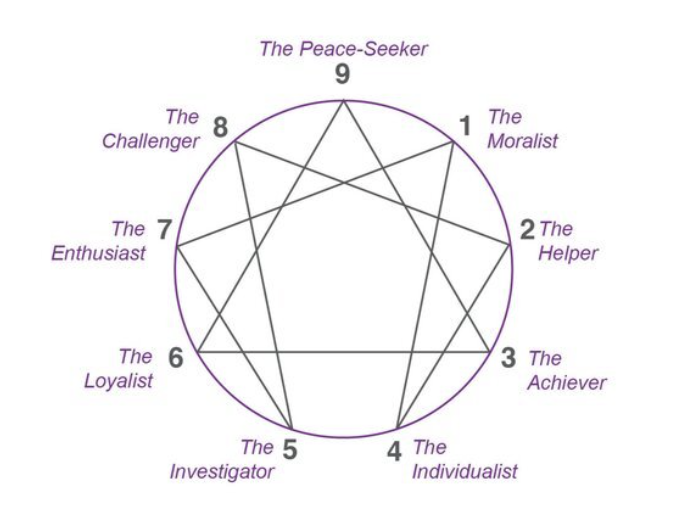
Enneagram Type 2s, called The Helper, are all about taking care of others and having deep intimate connections so they can feel really close and loved. They also have a hard time giving others space or seeing their own needs. Famous examples include Fred Rogers, Sally Field, and Stevie Wonder.
In this episode, we explore the essence of the Type 2 and the insecurities and motivations that drive their every action and relationship. We walk you through the story of the Type 2’s life by looking at their journey through the Levels of Consciousness from their healthiest to their average to their most destructive ways of operating. We close the episode by offering a critical type-tailored practice to help 2s rise up in consciousness and be the best version of themselves.
This episode is designed to help Type 2s thrive in their personal and professional lives by fostering a deeper understanding of their insecurities and motivations. It’s also an invaluable resource for friends, partners, and colleagues of Type 2s who wish to better support and relate to them.
Podcast Hosts: Rasanath Das and Hari Prasada Das
Listen to this episode on Apple, Spotify, or your preferred podcast platform
Highlights
[1:00] The Essence Qualities of tenderness, sweetness, and warmth
[1:30] The Basic Fear of not being lovable enough and not having love myself to be worthy of love
[2:30] The Basic Desire to feel loving
[4:00] Creative Consciousness. Being in touch with my needs and serving unconditionally.
[5:30] The identity crisis that comes from recognizing that I am needy
[8:45] Controlling Consciousness comes when I become insecure because I don’t feel enough intimacy
[10:00] The Type 2 propensity to lean in
[10:45] Putting a little extra top spin on my actions
[11:15] The dishonest story I am telling myself about being selfless and others needing me
[13:00] The controlling tendencies to be flattering and hovering
[13:30] Destructive Consciousness. I am driving people away because I am so intense
[14:30] Kathy Bates in Misery. The violence of the destructive 2.
[16:30] The practice to climb up the levels of consciousness: become extremely aware of how you are doing things with strings attached

-
This is an automated transcript and may contain minor errors.
Rasanath: You have so many people in your life. Are type two or have a two wing. So you have substantially experienced. So why don't you start off by giving us a sense to what the type two is. What are the essence qualities of the type two? What does the two stand for?
Hari Prasada: Yeah, yeah, indeed. So the two, the essence qualities are tenderness, sweetness, and warmth. It's all about. Feeling like I'm bringing something positive, sweet, inviting into relationship with other people, and the basic fear then is based on these essence qualities that I, I'm not gonna have enough of that.
And so the fear is not being lovable enough and not having enough. Love that makes me worthy of receiving the love from other people. So it's both not being lovable enough and because almost like more so because I won't have the love to bring to the world that makes me worthy of receiving the love than I need so much.
Rasanath: Thank you. And it feels like the relationship with love is interesting to the two. They probably also feel like there is not enough love in the world and that they have to become the inexhaustible source of love for other people, and it can be pretty exhausting, dare I say. So what is their basic desire?
What do they want to do?
Hari Prasada: The basic desire is to feel that they are loving enough, that they are bringing love to other people. So I want to feel loving. And notice that again, the emphasis is on what I am offering, what I'm giving more than what I'm receiving. And it's tricky because that starts to obscure what I need and why I am doing this in the first place, because I actually need to be loved and to feel that sense of I'm lovable, right?
As we talked about with the fear. Instead, the emphasis is going towards being loving because I need to justify. I can't emphasize this enough. I need to justify receiving any love from anybody else.
Rasanath: When we talk about the levels of consciousness for the type two, the type, the name of the type two, the helper.
Just by naturally listening or hearing the name, you can't really imagine, well, how can this go wrong or go, hey, by it? Right? So walk us through the levels of consciousness. What does a creative tool look like? And I think in the process of describing the creative tool, it might also be helpful to pay attention to the fact that a creative too might almost be going against the very notion that.
The two is selfless. Anyway, I just wanted to lay that out a little bit. The creative
Hari Prasada: two is very in touch with what they need. The fact that they need love. They need to love and to be loved. And that means that I am looking to receive and there's an honesty that's powerful here where it's not just emphasizing.
The other, the other, the other. And giving, giving, giving. There's this grounded energy that is so different from the way we tend to see twos showing up because we don't operate at the creative consciousness. And the emphasis again, there is always on the other and my giving. And so with the creative two, there's a lot of that energy, but it's so grounded because.
I am not fooling myself that it's all about you all the time. I am able to own my needs and to see them clearly and see how they're acting on me, and to speak about them and to walk through the shame of, dare I say, being needy, you know, which has very negative connotations in general, what to speak of for a two that prides him or herself on being selfless.
So to your point, it's like, oh my God, I'm not selfless. That's an identity crisis. I'm the helper. I'm helping everybody else if I need help, if I have needs, and you're helping me by filling my needs, I have no identity. What am I doing in the world? My whole place in the world is I help other people. I need to be needed, but I don't recognize that I need to be needed.
Here in the creative consciousness, I'm recognizing I do need to be needed and I can ask for things and I can say, humbly, you know, I'm doing this because I wanna serve you because I care about you, but also because it makes me so happy to feel connected with you. And I have that urge in me to be connected.
So there's that facility with seeing and owning needs and acting on them, and many times not playing into them because the two will be, you talked about the, it being exhausting, needing to be the inexhaustible source of love in the world, which is a prideful idea, is not ground grounded. It's not humble and it's exhausting.
So I'm always on my feet doing things for people constantly to be needed. Here, I'm not doing that all the time. I'm able to resist the temptation in the creative consciousness and to do things which will be most beneficial for people, and I don't just enable people because it makes me feel close and makes me feel good.
I only do what is genuinely helpful for other people and really will fill me up and I create a sense of loving connection wherever I go. And there's a, a warmth again, those essence qualities are so vibrant and they're so attractive. They're irresistible because as I love to share what is more essential in life than what the two comes for.
Love and be loved. This is what we're all about. Not just twos, but the twos are so tapped into this. It's the only thing that they are conscious of practically. It's like, I live for this. We all live for this. But the twos, it's like they have blinders on other things in some ways, and they are so focused, so narrowly focused on this most important thing that it becomes a huge strength.
Also, again, as they become more integrated at the creative consciousness, they're able to take on the other valuable things in life. So they're not just like pigeonholed, but they bring this loving energy wherever they go and it is the greatest need for everybody. Thank you.
Rasanath: We have experienced this during our workshops as well, that when tools discover their sense of neediness as you put it, and.
Also that they are not as selfless as they think they are. It's pretty hard to digest that because they hold themselves to such a standard of selflessness. And you also used the word pride around it. Can you talk a little bit about how that shows up in the controlling levels of consciousness? What happens when the tooth slips into the controlling levels of
Hari Prasada: consciousness?
It's painful to acknowledge that I'm human, right? That's really what the two is trying to surpass my humanity. It's like, no, I'm not human. I can just be the source of love for everybody all the time and be completely selfless and not have needs that's inhuman. So I'm denying my own humanity. That's what's happening at the controlling consciousness and the slip into the controlling consciousness is that.
I don't feel enough intimacy, enough connection. So again, you know the basic desire is to feel loving, to feel intimate, to feel close at heart. That's my measure, that's my gauge on. How am I doing in life? If I'm loving enough, it means there's intimacy. I feel the closeness. That's how I measure it. And so at this point, I'm not feeling that.
I'm feeling like some distance, and that distance may be healthy, it may be natural, and we're still very connected, but it's not as. Close as I wanna be. The twos are always leaning in and it's like, I wanna feel this close, this close, like so much that we're intertwined that that may not be healthy all the time.
So here there may be a sense of like a disconnect that is something to troubleshoot or it may not be something to troubleshoot. It may be just that my desire is to be so intertwined because I'm insecure. So that's what's happening. And then when I act on that, I have to do something. I have to trigger some response in the other person.
Because I'm being triggered by my insecurity. So then to compensate for that, I need to make something happen. To spark a connection, and this is what I like to talk about, is putting a little top spin on my serve. It's like there's a little sparkle in my eye to try to connect with you a little bit more vehemently.
I look at you with a kind of like, don't you see the love in my eyes? And it can get weird. I can. Start to massage your shoulder a little bit because don't you feel really good? Doesn't, isn't that nice when I massage your shoulder and I'm, I can be breaching boundaries here. Again, it's all about you. It's all about you.
It's all about you. But why am I really doing it? That's dishonest. The story I'm telling myself is, it's all about you and it's dishonest. It's actually about me. I'm the one who's insecure. You weren't insecure in that moment about that, or if you were, it had nothing to do with my action. I'm insecure and I'm trying to do something about that to make us feel closer.
And the controlling consciousness is all about trying to feel closer to other people, to the point where I start like implanting myself into people's lives. Hey, do you need this? Do you need this? Hey Rasanath, you know, you work so hard. You do so much for so many people. I see you. My story is, you need me to see you, so I have value because other people don't see you.
But I'm here to see you, so you need me and I make you feel so good about yourself. And then I put a little more into it and I'm like, Russ, because you're working so hard, you deserve a break. Let me take something on for you. Let me be your secretary. Let me be there for you. And now you really need me.
Right? Did you ask for that? No. And when you're not as grateful as I think you should be, when I don't feel as seen by you, I start to become resentful because it's like, Hey, you're not appreciating everything that I'm doing for you. I'm appreciating you and it's not mutual, but you didn't ask for me to step in like that.
And so there's all kinds of disconnects and weird stuff going on, and it makes people feel awkward. I can be really smothering and flattering and something is so ingratiating and enabling and it feels inauthentic. I'm just loving you so much, but do I really love you? Is that really what love is?
Rasanath: It feels like there is a certain desperate energy that you can get from the two of the controlling levels of consciousness.
And when you imagine that. Your mind and your heart. All that they're trying to do is basically saying, I need some love, but I can't say it that way because then what does it mean about me if I'm in need of the very thing that I consider myself the source of? So it's setting yourself up for failure. And so what happens in the destructive levels of consciousness?
What happens when this continues even further?
Hari Prasada: I just dial it up much more, you know, because I don't get the message that people are running away for air. You know? I don't get that message. It's so ironic, right? I wanna be so close to people and yet I'm driving them away because my energy is so intense.
My sweetness is so overbearing that it's like, you know when you taste something and you're like, oh my God, this is too sweet for me. Some people, like kids may think, well, there's no such thing as too sweet, but Oh, there is, there is. And the two sort of embodies that. And at the destructive consciousness it can get really ugly.
The example we show in our Excavating Your Ego Workshop on the Enneagram of Stephen King's Misery and Kathy Bates' character in the film version. She is so intensely needing to be needed, that she's willing to actually force somebody. The uh, character played by James Kahn to remain an invalid so that he is dependent on her care, and she actually takes a sledgehammer.
It becomes violent. She takes a sledgehammer to his leg. To keep him incapacitated. He was already, you know, recovering from an accident, and now if he recovers and he leaves, then what will be my identity? I'm here. I need to be close to you. Okay? It's really dark for all the nine types. It gets violent.
Even the sweetness of the twos becomes violent because I am so desperate and so hell bent on getting what I feel I deserve and I'm being deprived of.
Rasanath: It's such a contrast to when you speak about the tenderness, the sweetness, and the warmths. You can't really imagine how it can get so dark and twisted.
Watch that movie. She
Hari Prasada: has the tenderness, the sweetness, and the warmth. It's just dark. It's the ego's, refraction of those essence qualities. It's the manufactured version of it. She's still like, oh, I love you. Right? And she means it, but it's coming from the wrong place. It's distorted by the ego and it accommodates for so much garbage.
As with all the types at this level.
Rasanath: That's exactly it. That's one thing that we do recognize when we understand very deeply the Enneagram types is the potential for slipping down as much as the potential for living the essence. They both exist simultaneously, and it's so important to be aware of the choices that we make when we do feel those insecurities, so that we don't slip down the levels of consciousness.
How do we climb up back the levels of consciousness? Or how do we make sure we are making the choices that don't take us down the levels of consciousness?
Hari Prasada: So it just comes down to one simple thing. If we can remember this one simple thing, the twos can climb up the levels of consciousness. It's really clear, and that is.
Become extremely aware. The practice we give for the twos become extremely aware of how you are doing things with strings attached. There are strings. I'm sending that text message. I love you honey, and I'm, you know, checking my phone constantly. Hey, where's the reciprocation? I didn't send that text message free of charge.
I've convinced myself that that was for you. That was not free of charge. There are strings attached to everything I'm doing and I need to sober up and wake up to that. It's a tough pill to swallow and I empathize. Really, we have to empathize with the twos. It's a tough pill to swallow, but it's the most healing thing.
Everything good will come from that. I don't have to be inhuman. This is so important. I don't have to be inhuman. I have needs, I need to be loved, not just to love. I need to be loved and in that effort to be loved. And with that need, I recognize that I do things for that purpose. And let me be really intentional about what those things will be, and let me be very honest in my doing them and let it be mutual and reciprocal, not me implanting myself into people's lives and just.
Overcompensating for my own insecurities, but let me do things from a genuinely loving place that is grounded and accepting of my own humanity. Charity starts at home if I want to give to other people. I have to be empathic and giving towards myself. I'm priding myself again on being empathic towards everybody else.
I need to empathize with my own self. My needs. So see that you're doing things with strings attached and orient from there. Thank you.
Rasanath: That was such a vivid and concise, eloquent portrayal of the type two I very deeply appreciate and resonate because I have a two wing myself and I was steering up in places when we were talking about the need for honesty, and I see how it's taken a lot of effort.
To even start to do that. So thank you. Thank you so much. Thank you for helping me on this journey.
Hari Prasada: That's beautiful. That's so touching, but you are giving a as much as anybody, and that's your own sincerity. Thank you. Thank you.
Episode Transcript
Continue Exploring the Enneagram
Browse all Enneagram podcast episodes
Understand the Enneagram framework — clear breakdowns of the Types and how the system works
Join our live Enneagram community, Enneagram Library Live, hosted by the Upbuild team.
Take the two-day Enneagram 101 workshop