
The Upbuild Enneagram Library
The Heart Center
Subscribe on: Apple Podcasts, Spotify, YouTube, or wherever you get your podcasts

Episode Description
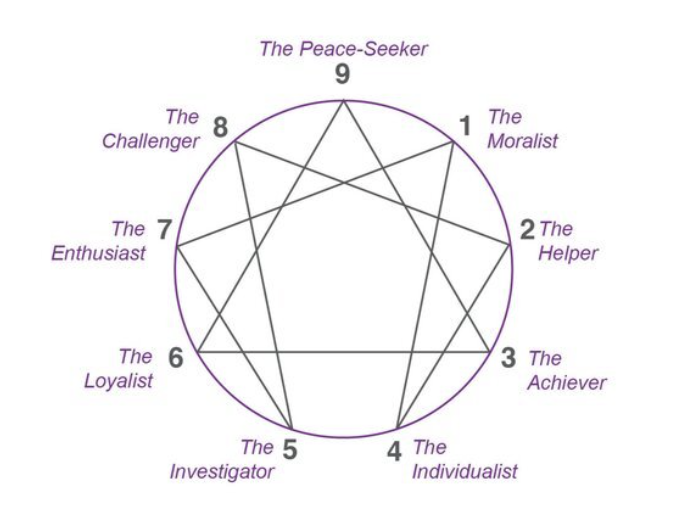
Just because you feel a lot does not mean you are present in the Heart Center. In this episode, Hari, Michael, and Rasanath explore what it really means to live from the heart. They look into the realm of emotion, identity, and our longing to be seen.
They reflect on how emotions shape our humanity, why we often mistake validation for value, and how the heart connects us to love, gratitude, and one another. They also unpack the emotional landscapes of the Heart Center types (Type 2, Type 3, and Type 4), exploring how each seeks to be seen in its own way, and what is at stake for all of us in becoming more connected to our hearts.
Podcast Hosts: Michael, Hari Prasada Das and Rasanath Das
Listen to this episode on Apple, Spotify, or your preferred podcast platform
Highlights
[01:00] A meditative portrait of the Heart Center
[04:00] Hari Prasada’s experience of being seen at the Enneagram Institute
[07:30] A litmus test for presence in the Heart Center: “What is it like to feel available to the world?”
[12:30] The heart as the driving force behind everything
[13:40] Type 2, The Helper: “Do you love me?” and the longing to be needed
[17:00] Type 3, The Achiever: Confusing validation with value and detaching from feeling
[19:15] Shame as the central emotion of the Heart Center
[23:30] Type 4, The Individualist: Feeling a lot as a way to feel authentic
[26:30] The 4’s obsession with being in the Heart Center
[29:00] The impact of shame
Quotes
“ The heart is the gateway for the core experiences that we crave. Through the heart, we come to know the gamut of human emotions, and all of them are tightly connected to our sense of identity and the richness of our lives.” -Hari Prasada
“ Emotions are at the baseline of even logical thinking. It is what really exemplifies our humanity… and the heart is the seat of all emotions.” -Rasanath
“The heart drives everything…so it is not something that is optional to connect with…it's actually the driving force behind everything. And when we're not in touch with it…then we wonder why life is so dry.” -Hari Prasada
“ When we're present in our hearts, we're fit to receive people and experiences as they are without expectations…in doing so, we can be filled up by beauty. Love is the result, and gratitude is the reflective quality for that beauty and love.” -Hari Prasada
-
This is an automated transcript and may contain minor errors.
Michael: Hello everyone and welcome back to our Enneagram podcast. This is Michael Sloyer and I am here with Hari Prasada and Rasanath. And today, guys, I'm really excited to be getting into the Heart Center with you. So Hari Prasada, could you get us started by sharing your meditative portrait of what the Heart Center is all about?
Hari Prasada: As we discussed the body is the most foundational center of the three. It gets us immediately in touch with our present circumstance. The body grounds us where we are. So what about the heart?
The heart is the gateway for the core experiences that we crave through the heart. We come to know the gamut of human emotions, and all of them are tightly connected to our sense of identity and the richness.
Of our lives. So without emotions, good, bad, or ugly, we just wouldn't feel ourselves to be human. Everything beautiful that we come to know is accessed only through emotion. And when we try to describe or communicate that experience and connect with others, it's only the emotion that really gives that ability.
So relationships are a matter of sharing emotions and love is the pinnacle of that experience where the heart brings us in contact with another heart.
We spoke about how the eight. Exemplifies aliveness from the standpoint of the body center.
But here with the heart, the aliveness comes from feeling something. If I don't feel something, how do I know I'm alive? Doesn't work for me. I need to feel something. Otherwise, I'm like a robot. So I would rather feel something. Even that is difficult if it makes me feel like I'm alive. Why do we go to the movies, for example?
The heart is calling us to enhance our experience of the world and perhaps also to get us in touch with something of our essence that we feel is remote or lost to us.
When we're present in our hearts, we're fit to receive people and experiences as they are without expectations. This is key. In so doing, we can be filled up by beauty. Love is the result, and gratitude is the reflective quality for that beauty and love.
So when we're present in our hearts, we feel open, impressionable.
Appreciative and grateful, which gratitude is actually the closest emotion linked to happiness. And when we're not present in our hearts, we just long for those feelings and we attempt to extract them from the world by seeking attention and validation.
Rasanath and I were up at the Enneagram Institute for our Part three training with Don Reone and Russ Hudson. We had a Skype. call with my guru Swami, and I was going through all kinds of difficult emotions as I was being. Really push to introspect more and to do this self work that the Enneagram calls us to do and that the spiritual journey calls us to do as well.
So I was feeling very confronted. I was in a, a vulnerable spot. and feeling a bit hopeless and helpless, and somehow we had this call scheduled in the thick of all of that. When there was really not time, but it was, it was a godsend because in that fall I could experience that I was being seen and not that I was being seen just for the challenges, for seeing my ego and feeling, oh, I'm weak, I'm not enough,
That, yes, there was empathy and I was seen for that, but that wasn't the ultimate seeing, I felt seen for who I am beyond all of that, beneath all of those coverings and all of those struggles, and for my potential, I just felt seen.
The feeling of being seen is so core to the heart center. It is what we are all craving. And my response to that experience was I melted and I caved, and I broke into tears and I felt unbelievable Gratitude, a kind of gratitude that's indescribable. It's so rare and so precious to feel seen for who we are like that, and really the deepest self.
Soul. So such a primordial experience of being seen is what brings out the best in us and what brings us the opportunity to bring that out in others. It allows us to be touched at heart and to touch the hearts of others being open to receive them as we have been received.
That is the characteristic of presence in the heart center and it's contagious. So just as action we talked about is not characteristic of presence in the body center, feeling itself is not characteristic of presence in the heart center.
We can easily be obsessed with emotions or kicked around by them. That happens all the time. We act irrationally, ungrounded based on emotions. Many times we're not even aware that there are emotions there, That is not the experience of presence.
So sometimes people will say, I'm a heart person. because they're overwhelmed by their hearts. That doesn't mean they're centered in their hearts. To be centered in the heart is not to be acting impulsively based on emotion. It's to be truly grounded.
So a simple litmus test for presence in the heart. How available do you feel to the world? Don and Russ kindly gave us these litmus tests. Simple litmus test for the heart. How available do you feel to the world? What is it like to feel available to the world? You're impressionable as a child. You realize that you're a vessel for love and capable of pouring that love onto others through your own unique experience and expression of it.
Presence in any of the three centers opens up the floodgates of possibility as we feel ourselves more aligned and more alive. Thank
Michael: you Harry Prasad. You said the heart center is contagious and I'm feeling you're being so connected to your heart by sharing that portrait and how that's affecting me right now.
So very grateful for that. Uh, just to reflect back a few core phrases or words that I picked out from what you shared about the Heart Center, it's the gateway for core experiences, emotions, identity, humanity, beauty, relationships, love essence, gratitude. We become open, impressionable, and grateful. I. We feel seen for who we actually are and for our potential.
And this question that is the litmus test. How available do you feel to the world? So for the body center, our question was, can I feel my feet on the ground? And for the heart center we have this question, how available do I feel to the world? Okay, so let us now get into our discussion and ov it would be great to hear from you.
When you think about what's important about connecting to the heart and being present in the heart center, what comes to mind?
Rasanath: What do we do without the heart? I mean, imagine a world. Your interactions are completely dry and transactional and it's not such a foreign concept because even in the world that we live today, we, we do experience quite a bit of that.
It's like the world has completely lost its color, right? We live for experiences. We live to actually genuinely feel joy. We live to genuinely feel love. We live to feel things. And without those emotions, without the experience of those emotions, what is the point? Let's say we win an award or. We have an incredibly good year.
I'm talking about it in terms of like things that we preoccupy ourselves with a lot, performing, getting ahead, improving. If we didn't really feel what being there feels like, why would we even do it? I remember, and this was very, very early on, at Upbuild, I was doing a presentation for a company and one of the participants.
The group said, well, you know, we are very logical here. We don't really talk about emotions. And I asked him are you saying that you don't have emotions? And you know, he couldn't respond to that. And what I also gleaned from it was any logical thinking, any drive towards even logical thinking A, leads to B.
B leads to C. C leads to D if they fundamentally looked at it. The basis behind it is that we want to experience something.
Emotions are at the baseline of even logical thinking. It is what really exemplifies our humanity, our life. That is nothing without emotions really, and the heart is the seat of all emotions.
When we don't know how to work with our hearts, when we ignore our hearts, we will also experience a form of death. It actually feels like life is so dry. Everything out of it has been sucked out.
Michael: The way you're speaking, it's very clear that this is. This is so important. I mean, this is everything as you said, because even if we quote unquote, achieve our hopes and dreams, if we don't also have the emotions that are associated with it, we're not gonna feel like we've achieved our hopes and dreams.
Hari, anything you wanna add about the heart center?
Hari Prasada: Wonderful. Yes. So as you've both been sharing, I really wanted to underscore that the heart drives everything.
It drives our whole lives. So it is not something that is optional to connect with. It's not like, oh yeah, I, well, I'm centered in one of the other centers, So the heart is let, it's just. Less for me. You know, I'm just not such a hard person.
No, no, no, no, no. That doesn't work. That it's actually the driving force behind everything. And when we're not in touch with it, as Raath was saying, then we wonder why life is so dry or worse. We don't wonder why life is so dry. That is a bigger problem. And many times we settle for the dopamine hits in the mind.
Or some sensual experience of the body or combination of those two to cover the void in our hearts. In fact, I will be very bold and I will state the truth of the matter. That is what is really making our world go around, and we're calling it love because we know intuitively that we're meant for love, but we're settling for something so, so, so puny in relation.
It is, we cannot call it love, and it is not opening our hearts. It is not bringing us in touch with
Michael: our hearts. So let us get into the three types of the heart center, two, three, and four. Let's start with type two. Two
Hari Prasada: is the helper, and they are all about feeling needed, and so they'll do things for other people with a sense of service and care.
I. Do this because I love you, but love is such a deep thing, and the twos, by default are not able to wrap their minds around that and their hearts around it. So it is something which is taken very cheaply, like with all of us until the two really work on themselves and they understand the depth of the thing that they're after and trying to express.
And their connection with the heart is quite evident that what, how can you love and be loved? Which is what they want more than anything, all human beings. But for the twos, this is the most central on the surface thing for everyone else. It's the deepest thing for the twos, it's like right there on the surface in everything they do.
Do you love me? Do you love me? Do you love me? Do you like me? Are we close? Are we close? Was that helpful for you? I know, I, I know you need me. and therefore they need their hearts to be able to produce emotions, feelings, care, sense of connection, and they're very keen on that.
But it has to go deep. So
Michael: for the two, it's not hard to see why they are in the heart center. Their whole identity is around. I'm a loving person and I take care of you.
And so I love connection and I love intimacy. So that is all about the heart.
Hari Prasada: Big emotions, also big emotions. They can really tower over you with their emotions for you. Oh, I love you so much. Yeah.
Michael: We speak about, when we talk about the two, how this could be one of the core sufferings that they experience is that they're feeling their heart so much, or I should say they're feeling their big emotions so much, not necessarily fully present in their hearts as you were.
Making that distinction before, but it's an intense experience. And then they also can sometimes pick up on the fact that it's a very intense experience for other people to have such big emotions themselves. And so it can feel like, well, other people can't handle my emotions. And then it can feel like, well, other people can't handle who I am and the special gifts that I have in this world.
Hari Prasada: When they're aware of that, yes, when they're aware of that. Unfortunately, awareness is. Hard to come by for all the types, and so the two is no exception and they can really miss the cues. The irony of ironies is that they're all about attunement and they have this special gift to be attuned, but it often shows up in terms of what will make you need me or what will make me think that you'll need me more than actually, what is your experience of me and how can I really best serve you?
Michael: Okay, so let's now move into a type which has. Maybe a less obvious relationship with the Heart Center, but is bang on in the middle of the heart center, the type three, the achiever. And Rasanath, I think you'll be a good person to get us started for this one.
Rasanath: One of the complexities, as you rightly highlighted, is a lot of type threes will not necessarily identify themselves as heart-centered people because the tendency is to compensate.
although I can never fully remove myself from the heart. For the three
It's about value and worth and my sense of purpose and meaning, what am I really living for? And when you translate that is, what am I valuable for? How are the things that I have been given really fit with what the world needs and can I experience when that fit happens? That gives me a sense of my own value.
Without the heart, it is impossible to experience my own value. Now, what the threes tend to do, and this happens because implicitly the way threes work is because they're in search of their own value and worth. When it doesn't come, the substitute for the experience of value becomes validation.
Value and validation go very much hand in hand. And for the type three validation is everything And when I don't get it, then I experience.
Shame, and this is common for the types two, three, and four. They all experience shame. And shame is a very deep, very painful emotion because the characteristic of shame is, I'm so fundamentally flawed and I feel a certain helplessness about it. So in the case of the type three. I don't have any value.
When the validation doesn't come, that is the experience. So there is a deep feeling of shame that arises again from the heart. And the mechanism to then not make myself suffer or cope with it, is by detaching myself from the heart, because that way then I don't have to feel the pain. But then what I lose with it, it's a double-edged sword, is also the experience of my own worth and value.
So even when the validation comes, because I'm so detached from my heart, it is not really adding anything to my sense of worth. It lives on the surface and then it dries up and then I feel worthless again.
Michael: So the threes are in the heart center because they're constantly searching for their value.
And value can only be experienced through the heart. That's right. It is one
Rasanath: of the aspects of understanding who I am, you know, my sense of identity through the means of what I can offer to the world through my value.
Hari Prasada: Now the threes, interestingly, Rasad, you mentioned that they may not be quick to identify themselves as in the heart center. That's very true. That often they will not unless. Being in the heart center is valued. Unless I see myself as such a heart person, because people love that. That's great. That really gives me the validation.
Now I feel my worth. That also is there a lot, and there's so many different ways that culture and gender and all kinds of dynamics play a role in influencing them.
Rasanath: Well, a lot of threes find their sense of value in professions. In doing things, and in those settings, 99% of the time, your emotions are not really valued.
You are actually implicitly and explicitly expected to not bring your emotions into those spaces, which essentially means now the three recognize this is very quickly because I'm in such of my own value and I want to be valued, which means I shouldn't be bringing things that are not valued. Emotions.
So because they very quickly pick up on that, they try to move away from their own emotions because emotions are not valued and this is many threes also get this message very early on in childhood that they're not valued for their emotions.
Michael: I was just gonna add one more. I. Thing in addition to what you just shared is also they recognize that in order for me to be valued for whatever it is that I'm trying to be valued for, I need to move quick and I need to
take care of a lot of things and emotions can get in the way of me being super efficient and productive in the world. So this is yet another reason, in addition to what you shared earlier about shame and in addition to what you shared about emotions not being valued.
This is a third reason why threes tend to have a very difficult time accessing their heart, is because they've shut down emotions for this reason.
Rasanath: Now what is also interesting with a lot of threes is based on the situation, they also, because they want to be liked, they can't completely divorce themselves for off emotions in the sense that they want to come across as warm and very likable.
But what you do experience is a quality of artificiality that's associated with it.
Hari Prasada: Sometimes the thinness of that is just like a enough warmth just to make it have like a little veneer of emotion
Rasanath: and there's a certain artificiality that gets us. So even when I am trying to come across as having emotions, people are not necessarily experiencing my heart because it's still very guarded and put away.
So what we many times experience is just. Some semblance of the heart, some shadow of the heart, but not, not the real heart.
Michael: So we could talk about any of the types all day long, but this is particularly true for the three. So, we'll, let's move on for now and then we'll come back as we talk more
So let's get into the last of the three. Heart types, the type four, the individualist and Hari. You can bring us into this one, please.
Hari Prasada: Yeah, so the four, the individualist is. Obsessed with their hearts. They're, they're the most blatantly obsessed with their hearts, maybe more obsessed with their center than any other type, is obsessed with their center.
It's all about what I'm feeling. I'm feeling this, I'm feeling this, I'm feeling this, and now I felt something totally different. What do I do? It's because they want to get at who they are. We talked about how the heart is the seat of identity and intuitively we all can get a sense of this, that my real self, the deepest me, resides in the deepest part of me the heart.
And when I'm trying to, you know, we have expressions that sort of approximate that in very worldly terms, like I'm telling you from my heart and soul or you know, we. Grab our hearts or we, we put our hands to our hearts. We pledge from our hearts because we know the deepest me, the core of me is there.
And that's where the feeling resides. And it's emanating from the real me. But it's also where all the coverings to me reside. All of my ego identities and all that blocks me from being who I am resides. And the four innocently is looking for the real me. Like all the types, settling for the ego and the, the version of me that is more accessible, safer, and which gives me immediate gratifications and is acceptable to the world, but which actually doesn't suffice.
And the fours. They're also most in tune with the fact that it doesn't suffice of any of the types on the Enneagram. There's a way in which they feel something is not quite right here, but I can't put my finger on it and I feel so much, but what is it really leading me to? There's so much beauty. There's so much pain.
I don't know how to make sense of any of it. I just wanna feel, because I know if I feel, then I'm getting closer to the sense of aliveness that emanates from who I am, but it's being refracted through the ego, so it's not reliable and it's kicking me around. It's pushing me in all different directions, and it's just hard to control.
And then I try to show up like, yeah, I'm a normal human being, but really I don't feel like a normal human being.
Rasanath: You're appearing very as thoughtful as a forward right now.
Hari Prasada: Why are the fours appearing so thoughtful? Because they're churning their hearts to figure out how do I really feel about everything?
Does it connect to the real authentic me? Even though it's not the real authentic me, I'm still trying to connect to the real, authentic me in some skewed version. So I need to see, does this really come from the heart of me? How do I feel about everything in life?
Michael: what you said right off the bat struck me a lot, which is that the fours are more obsessed with being in the heart center compared to any other type, certainly in the heart center, but also possibly any other type as it relates to their, their center.
Hari Prasada: And sometimes they're more obsessed with turning it off than any other type. I mean, the threes, they're not so obsessed. They just like, they don't even have to think about it. They just, it's like a valve. They've shut off. Are like, where the hell is the off button for this thing? It's just constantly spewing loud emotions and then.
There's also this paradoxical other side where it's not giving me enough emotion. I'm not feeling enough to feel my sense of identity now. I just went to this movie and I was hoping it was gonna be the most epic experience of my life. I've been waiting for opening day to see it, and I've got all of my closest friends to come together with me ceremoniously at the time when the film was just released and the film didn't make me feel enough, and I'm going around my entire life.
Not feeling enough and feeling too much at separate times, and sometimes simultaneously I'm not feeling enough of the things I want to feel, and I'm feeling too much of the things I don't want to feel. Ugh, and nobody understands. Ugh, nobody knows my heart. I don't even know my heart. I don't understand.
It's exhausting. It's exhausting to just, oh my God, it's exhausting. Just listening to you tell me, imagine
Michael: I can't even imagine
Hari Prasada: experiencing
Michael: it.
Hari Prasada: That's how the fours feels. It's like, God, will anybody give me some sympathy? But don't give me sympathy. 'cause that's condescending.
Michael: We say that the fours are some of the more complex types on the Enneagram, and they also like to see themselves as complex.
And there's a truth to it. There is a truth because of. Some of these contradictions and just really always wanting to be in touch with the deepest part of me. That's a complicated thing, and it's not a small thing either, and where a lot of other types are sort of willing to overlook that quest for.
There are other quests where there other things that they're going after in this life. The fours, even if they try to get away from it, they can never really get away from that quest. Okay, so let us address the other types not in the heart center for now. And what do all types stand to gain by being more in touch with their heart and being more firmly present in the heart center?
Hari Prasada: First of all, I wanna just make clear and really, really drive home that no type is exempt from shame. Shame is one of three predominant emotions. Again, we'll do a series on the predominant emotions. We'll go deeper into it, but it's one of three predominant emotions that we all experience constantly.
It's just that one of those predominant emotions is more central to our lives than the others. It's more of a driver of our decision making. It's more intense in some way. It can also lead to the experience of other emotions very intensely. For example, with the type two, I am wanting to feel connected.
I'm wanting to feel close, I'm wanting to feel loved, and I'm doing all of these things for you to make me feel that way, and I'm pretending it's for you. I'm convincing myself. I genuinely believe that I'm doing it for you, but it's because I want to feel close and loved. That's the rude awakening that is very clear for the twos, and so then when I don't get what I want, the big emotion that follows is shame.
That shame was driving it in the first place, but that quickly turns to anger. Becomes big emotions of anger. How dare you take for granted all that I've done for you. Can you believe I'm so selflessly serving you and you treat me like that you don't see me the way that I have been serving you and caring for you and everything that I am my God raging anger.
And oftentimes I don't let it out, but. It finds its leaks. It finds its leaks, and then I try to cover it back up again. So the shame becomes the gateway to other emotions, and oftentimes it's anger because when I feel ashamed, it's too vulnerable, so therefore I move quickly to anger, which feels more powerful and empowering falsely.
It's a sense of empowerment. It's not true Empowerment. And all the types have to learn from this, that we all are experiencing shame for not being our true selves. We're all experiencing shame for not being enough, for not being enough of who we actually are and not being enough of who we think we should be,
And as a result, it's just shame, shame, shame, shame, shame. But for the two, three, and four, that is the central driver behind the decision making. It's most tightly connected. It's most on the surface. So if you're not a two, three, or four, don't think you're exempt. It is there. We are swimming in it. It's there constantly, and we have to really grapple with this.
To also see what is it pointing us towards? It's pointing us towards not being who we really are and settling for something that we can never be, who we think we should be based on. The ego is a phantom. We can never actually be, so, we'll always be not enough. So we'll always be feeling shame.
Michael: So what I hear you saying is in order to truly access and be present in the heart center, we have to recognize the shame that we're feeling.
Yes.
Hari Prasada: We're not aware of it, so that's exactly what I was just going to follow up with. We're not aware of it. In order to be present to our hearts and to gain what the heart stands to give us, which is everything, it is the most central of the three centers. It houses our true self. So if we want what we stand to gain from it, which is everything, we have to be aware of the blockages and we have to be aware of the shame and, and the fact that we're not aware that we take the easy way out.
I don't wanna deal with that.
Rasanath: And it's not just the emotion of shame, although shame is the deepest because it has, it's very, very deeply connected to who we are fundamentally. You think about other emotions like guilt, anxiety. Hopelessness, sadness, rage. The heart is the seat of all of those emotions, and that's what makes us human love.
The experience of love actually lives in the heart. And the more we learn how to be present, the more we become aware of those emotions. I. The more we also learn what those emotions are actually trying to tell us.
So when we talked about three centers very early on, we said all the three centers are helping us navigate the world, not just navigate the world, but in the case of the heart, the heart is the center for our experience of this world. We wouldn't be doing the things that we are doing if we did not want to experience relationships.
If we did not want to experience. Different things in this world.
Hari Prasada: Yeah. Again, if you're not in the heart center as your Enneagram type, it doesn't mean that it's any less important to you. I wanna make that crystal clear.
I. It's also really, really important that we grasp the gratitude that we spoke about in the beginning. That is available when we're present to our hearts. Everybody wants to be grateful.
Nobody wants to be an ungrateful rich. And again, studies show that gratitude is most closely linked to happiness or pleasure seeking beings. My gurus guru, he would say, yes, the purpose of life is to enjoy. I'll give you that concession. It's true. The purpose of life is to enjoy. Everybody thinks, well, I want to enjoy myself to the maximum degree.
I wanna have a good life. That means I've enjoyed myself thoroughly. Okay, but you don't know how to enjoy. That's the problem. How you enjoy is through serving other people and through the experience of gratitude, actually through serving. The Supreme and seeing everyone as part and parcel of God and serving from that place in the deepest way, serving the true selves of everyone in real connection.
Part of the spiritual reality, a fabric that is so much bigger and more satisfying, beautiful. That fills us with gratitude, unlimitedly. That is for all of us. If we become aware that we have these hearts, that we need these hearts and that it's the most important piece, then we will orient accordingly and we will work through all the difficult emotions and do it courageous.
Michael: Beautiful. Thank you. Bye. I wanna highlight one thing and then share one additional thing, which is something that we've been sort of alluding to but haven't said explicitly yet, which is that we don't get to selectively feel our emotions. So we have to experience the full range of what we're really experiencing, or we're gonna shut down everything.
So we can't just say, oh, I wanna experience joy and happiness. And pleasure and love, but I'm not willing to feel shame and sadness and any other negatively valent emotions that might be there. And then the second thing that I wanna share is what you shared in your opening portrait about being impressionable.
And as I think about my own life and the moments where I have felt deeply connected to my own heart. I've also experienced that feeling of I'm just sort of open and here to receive right now. And it's an innocent purity that you can feel of, yeah, I can be affected. Right now it's, it's actually okay. I feel safe and I wanna be affected, and the love is just flowing out and it's such a beautiful
Hari Prasada: feeling.
Beautiful. So going back to the experience I shared at the beginning when Ssat and I were on this video call with S Swami, my guru. I felt so received. I felt his openness to be so profound, like it was cavernous, like his openness just had no borders. And that opened me up in a way. I felt so received that I became.
So receptive. This is the contagiousness. This is how one heart can light up other hearts and it can go on, add infinitum. This is the force we all want to change the world, right? We all wanna change the world. What does it mean it's actually doing this work and letting one heart light up another add infinitum.
Michael: So you mean the Beatles knew what they were talking about when they said love is the answer.
Hari Prasada: They knew
Michael: at one level. I think only George
Hari Prasada: knew what it really
Michael: meant. Beautiful. Well, I think we've answered the question that we usually wanna leave our listeners with for the end of the Center podcast, which is, what do we stand to gain spiritually by connecting to the heart center? And I think you've made a very clear case for that.
Follow George. Follow
Hari Prasada: George. He really understood this. Anything you guys wanna share in closing? Just remember that the simple litmus test is a good starting point. How available do you feel to the world? You can ask yourself that question at any moment, and it will get you in touch with how present or not present you are, and that can lead to becoming present if you make that choice.
So the choice is ours. Do we want to deal with the difficulty of our hearts, which is a necessary. Part of becoming present. And that's true for all of the centers. It is especially true of the heart center, which is the most complex and challenging, vulnerable, fragile. We know this intuitively again, but it takes courage to face our hearts, to be in our hearts, to be really present.
Michael: Well, I am feeling much more available to the world right now than I did at the beginning of this conversation, so very grateful to you both for sharing your wisdom and your hearts with me and everyone listening
Hari Prasada: such a
Michael: privilege.
Hari Prasada: Thank you. Thank you to everyone listening.
Episode Transcript
Continue Exploring the Enneagram
Browse all Enneagram podcast episodes
Understand the Enneagram framework — clear breakdowns of the Types and how the system works
Join our live Enneagram community, Enneagram Library Live, hosted by the Upbuild team.
Take the two-day Enneagram 101 workshop