
The Upbuild Enneagram Library
The Enneagram Wings
Subscribe on: Apple Podcasts, Spotify, YouTube, or wherever you get your podcasts

Episode Description
The Wing is one of the most powerful forces shaping personality. In addition to the primary Type, it strongly influences what we want, how we show up, and even whether we experience ourselves as more introverted or extroverted. In this episode, Hari, Michael, and Rasanath explore why identifying the correct Type-Wing relationship is essential for accurate typing and meaningful growth. Moving through all nine Types, they show how different Wing combinations create distinct energies, body language, and ways of engaging with life. Special attention is given to Wings they see creating a more prominently polarizing effect, where opposing orientations can feel like two very different people living inside one personality. Throughout the conversation, they emphasize how understanding Wings helps us recognize ego patterns, honor our gifts, and engage in the deeper work of self-realization.
Podcast Hosts: Michael, Hari Prasada Das and Rasanath Das
Listen to this episode on Apple, Spotify, or your preferred podcast platform
Highlights
[01:00] Introducing the Wings and why they matter
[02:50] Can you have both Wings?
[04:20] The color-blending metaphor for understanding Wings
[08:10] Type 1 and its possible Wings
[09:30] Type 2 and its possible Wings
[11:50] Type 3 and its possible Wings
[13:40] Type 4 and its possible Wings
[17:50] Type 5 and its possible Wings
[19:30] Type 6 and its possible Wings
[22:30] Type 7 and its possible Wings
[24:00] Type 8 and its possible Wings
[26:40] Type 9 and its possible Wings
[28:50] Personal examples of the impact of the Wing
[32:10] “Big flapping Wings” and why they are never insignificant
[34:40] Why knowing Type vs. Wing changes everything
[40:10] Seeing more deeply how Wings enable much needed support for introspection and self-realization
Quotes
“ The Wing is a driving force that is so strong… It is really determining our motivations and how we see the world, our lens on the world, as well as how we show up.” -Hari Prasada
“Introspection is necessary for freedom. How will you become the self if you don't know yourself? And that means disentangling our conditioned natures and purifying our conditioned natures, which really means understanding my personality, how I'm wired, why I'm wired. My Type and my Wing are as central as it gets for this.” -Hari Prasada
“The difference between knowing which is the Type and which is the Wing is so important. It changes everything..” -Hari Prasada

-
This is an automated transcript and may contain minor errors.
Michael: Hello everyone, this is Michael Sloyer, and as usual, I am here with Hari Prasada and Rasanath, and today we are going to be getting into the wings of the Enneagram. So let us get right into it. And Hari, could you kick us off by sharing what are the wings and how does it work?
Hari Prasada: The wings are a secondary type. We have our primary type.
Then we have another type, which is secondary. It's a driving force that is so strong. It's just not quite as strong as that of our primary type, but it is very, very influential. It is really determining our motivations and how we see the world, our lens on the world, as well as how we show up. We are profoundly affected by our wing in terms of even in many cases, introversion versus extroversion and the feel or energy that we give off.
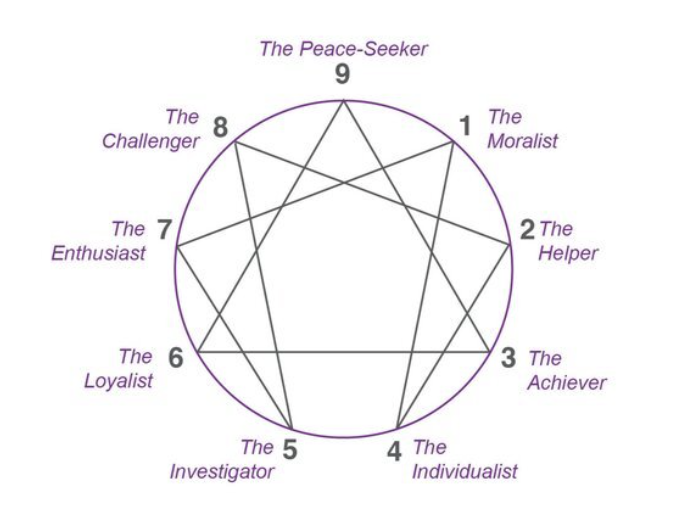
So The wing, is always adjacent to. Your primary type. So if you're a nine, you would have either a one wing or an eight wing. You can't be a nine with a seven wing or a three wing. It's not possible. That's how the framework works, and that we have to see, and that will clarify if we're on the right track, and it's super, super helpful even in terms of typing to see, well, if this.
Would be the type that I'm thinking it is either in myself or typing somebody else. Does the wing match up? What about the two types that are adjacent? Is one of them the strong secondary driver, the wing, or not?
Michael: Excellent. And a common question that we get in our workshops is, can you have both wings?
Hari Prasada: Yeah. The answer to that is yes and no. You can have both wings and you also can have all nine energies of all nine types in you. Not only can you, but you do, so you can say yes, you do have both wings, but when we're speaking about the wing proper, we're not speaking about. We're speaking about the one that is so strong, it really blows the other types out of the water in terms of its influence on you constantly.
So while it may be useful to think about what. Connection do I have to the other type that is adjacent to me? It's not that much more useful than thinking about all the nine types in that regard. And we wanna do that. We have to do that. It's not that we want to put more focus on the other wing. We don't even like to refer to it as the other wing because it is confusing, misleading in most cases.
So when we speak about the wing, we're talking about. Which is our secondary type, which is a huge, huge part of our life, massive part of our life. That's what we want to be
Michael: really clear about. Thank you. And before we move into a brief summary of each of the types and their wings, Rasanath, is there anything you wanted to share about the wings?
Just. Piggybacking
Rasanath: on what Har said, that it does make a huge difference to your life based on what wing it is. I was just thinking about the colors of the rainbow, and the idea is that when two colors blend, they create a third color. There is a different color.
It's the same thing with the wings too. As an example, A three with a two looks very different than a three with a four, although the primary color is still three.
The secondary color shades the personality and creates a very different color altogether.
Hari Prasada: It's such a fitting metaphor because you also see how the framework works that you can't have one color jump. It's always the same colors that are adjacent to each other on each side. So you see built into the fabric of the universe are these physical laws, and we can't say, well, why is it always.
Like this, how do we have faith in that? It simply is, it's part of how the universe was set up, the physics of it and the metaphysics of it. So with The Wing it's like that as well.
Rasanath: Many times when people ask the question around why can't it be a six wing a nine with a six wing? Or I've heard people say, well, I think I'm a three with a seven wing.
despite us telling many times that the wings are adjacent to the type. There is a way in which we can accept certain laws about objects, things, laws of the universe, for example. But when it comes to human nature, we experience those same laws as limiting, and there is a way in which many times when people ask the question, even out of curiosity, there is also I would say, a certain feeling of.
That just limits me in a certain way. I'm experiencing energy of a different type. And when you say that I can only have the wings that are adjacent to my own type, it just limits me in a certain way. But the fact is that what works in nature also applies to human nature.
Hari Prasada: Human nature is still part of nature.
These are still universal laws. Just because they're existing within us doesn't mean they're not universal laws. For laws of the universe both, and there are reasons why we can feel connected to other types. That are not dependent on the wing. There are directional movements. We a podcast on that. There are so many factors.
At the very least it's because we have all nine energies within us and we should be very careful to not gravitate towards types that we want to be. Unconsciously. It's unconscious. It's not that I'm saying I want to be this type. That can happen, but very rarely. It takes a lot to see. I'm gravitating towards this because I would rather be this that applies to the wing as well.
Michael: That was certainly my own experience when I figured out my type. I very much wanted to be the wing that I'm not.
So let us briefly walk through each of the nine types and share just a concise difference between what the type looks like with one wing versus the other wing.
Hari Prasada: We'll just go with the look and the feel of these types very briefly, and then at another point in time, we can come back and go more in depth.
But the look and feel of the type is so significant and this is so critical for. Identifying for typing and for understanding how big the influence of the type is. It's almost like as if it affects every fiber of our existence in this life, that it's so strong that we're showing up completely differently based on the way.
So we'll look at it from that standpoint. So a one could either be a one with a nine or a one with a two, a one with a nine would be introverted primarily. A one with a two would be primarily extroverted. Now, there are other factors to consider, but if you're just looking at type and wing, the influence of the wing is pulling the more neutral one you could say, towards introversion or extroversion, because the one with a nine is putting a foot in a withdrawn energy.
There's also behavioral patterns that we can look at. Nines are withdrawn types. They're more introverted and twos, they are extroverted by nature, so a one with a nine will feel much more pulled back, contained, trying to be peaceful. A one with a two will feel much more forward on my feet, ready to go, what needs to be done.
And you can see that in the body language there's more of a lean out energy versus a lean in energy A, a more hold back peaceful air versus a more forward moving connecting here.
Rasanath: So going to the type two and the two with a one and a two with a three wing. I just wanted to draw attention to what could be the subtle difference between A one with a two and a two with a one.
Because they're essentially mirror images of each other, A one with a two, you'll still experience the squeeze of the one. There is a certain tightness that now goes out in the world, but has a a sense of like, I wanna serve others. When you interact with the one, with the two, you still feel the intensity of being right As I am also smiling with other people.
The two with a one, the squeeze disappears. It actually becomes more like insistence. There is a lot more smile. You see, the uptightness gives way to the friendliness of the two, but the one still appears as an insistence. There is a way in which I'm still pushing for what's right, but you don't necessarily experience the squeeze of the one as much when you have a two with a one wing as against one with a two wing.
Hari Prasada: It's there. It's just not as prominent. There's still a gravity. There's still an intensity of I have to be right, but it's masked by sweetness. By sweetness, which is the biggest energy that's moving me.
Rasanath: The two with the three has a tremendously outgoing energy. In fact, the two with the one, the distinction between the two with the one and the two with the three, the one there is an inner compass that is driving a two with the one from a point of view of adherence to certain principle and values.
A two with a three. The entire center of gravity is outwards. It's about my environment. It's about the people in my environment. It's about my contribution. The entire sense shifts outwards, and there is a lot more energy of wanting to win people over because both the two and the three, the helper and the achiever have a strong social.
Sense to them, you will see the energy to being very extroverted. The two with the three is on the spectrum of extroversion and introversion. It definitely is strongly extroverted.
Hari Prasada: The three with a two is similar to the two with the three. Very, very extroverted, totally driven outwardly. And the difference between a two of the three and a three with a two is the two of the three is much more bubbly and trying to connect and feel like we're really intimate.
And the three with a two is. Like I'm still getting the job done. I'm still like, of course two and three has that side to them. But the predominant energy we're talking about, the three of the two is I still get the job done and I can be bubbly and sweet as is needed to get the job done and satisfy that part of me.
So I'm leaning in, you know, I have the happy, happy-go-lucky air that makes me likable and that's a big part of my wiring. But I'm also like, here we go. You know, this is serious. We're gonna get into stuff and move things forward. And that's just how I show up. There's an intense readiness for action that is different.
Three with a four. Now you're taking a withdrawn type again, the four more introverted, and you're putting that into the mix, and now you're getting a really polarized energy. So the three being very extroverted, a go-getter driven. Constantly making things happen. Action packed, action oriented. Now you have this thoughtful, reflective side and am I in touch with myself?
And so you feel the pullback energy and the reflectiveness and the sense of needing time. And I'm not leaning in. I'm not just trying. I want you to like me, but I want to make sure that. We're understanding things and we're going deep, and that there's mystique as well, so very, very different flavor.
Rasanath: A four with a three is similar to the three with a four, but it's more pulled back because the four, the type four is the dominant energy, so you will see between the three with a four and a four with a three if you were to compare their extroversion versus introversion.
A four with A three is more introverted because of the dominance of the four. Being the main type, but you'll also get this, I want to go out and do things in the world spirit to it. So when I talk to people with three, with a four and a four with the, the biggest distinction that I've seen is a three with a four.
My primary orientation is still to fit in. But I bring a little bit of standing out in the fitting in. I, I have access to the four energy and. Now that I am fitting in, let me stand out a four with a three is beginning with the premise of I am different fundamentally, but then I also want to be a little bit in the world.
The starting place is how am I standing out and how do I stretch that to maybe perhaps fit in a little bit? So that's how you find the energetic pulls,
Michael: so to say. Is great, and I just wanna say that the three with the four wants to stand out. Also, it's like I'm gonna fit in and be the best and that's how I'm gonna stand out,
Rasanath: or I will fit in.
Then I create the world first, whose validation that I need, and then now I'm going to be, I'm not like the rest, even in the world that I fit in. I'm just not like the rest. Right. There is a standing out. After putting it,
Hari Prasada: I stretch the limits of what can be popular,
Rasanath: whereas with the four, with the three, it's basically the other way.
I know I'm fundamentally different, but then I'm afraid that if I'm so different, I will never be able to bring my difference to be relevant in the world. So I have to stretch the other way to find a way where my difference and my uniqueness will overlap with how things fit into the world. It's fun to bring out these differences.
A four with a five on the spectrum of extroversion and introversion. This is really going the other direction. We have spoken about extroversion now. This is going introverted. A four with a five is definitely one of the most introverted types in the Enneagram because the four and the five are both withdrawn energies and a four with a five.
This is a type that brings an immense amount of curiosity. A type four is curious. And now combine that with the curiosity, the intense intellectual curiosity of the five and the emotional curiosity of the four combined. This makes that introverted and very, very curious. The difference will be the four is still, it's a heart center type.
And so you will see the emotionality of the four still out winning the intellectual nature of the five. There is still a lot of heart present.
Hari Prasada: I just want to clarify because the forests also have a strong intellectual bet about truth and depth and profundity. So there's a heavy, heavy intellectual drive to many forests and the five just takes that into a different direction and puts a different flavor on it.
Four, with a three also, there's, I'm gonna put pedigree and trying to. Reach the mainstream through the profundity, but the five just makes it more of a detached. Like I'm sitting here looking at everything and I'm super pulled back. You might not see me kind of a person because I'm really in my own world.
So the five, five of the four is most likely. The strongest introvert on the Enneagram because the five is so heavily introverted, withdrawn. And then also seeing the world as a distraction for my own discovery and my own basing things on facts. So I'm really, really to myself and I feel emotions are so foreign and people's needs are so.
Overwhelming for me and don't make sense to me. So very pulled back, a little bit awkward in many ways, much of the time. And the four then gives me some sense of wanting to be in contact with my emotions and wanting to be in contact with other people, although in a very withdrawn way. And I show up as really, really distant, but also yearning for connection.
Five with a six. The six wants to be oriented in the world, responsible and doing things for people so that I feel supported and I feel like I'm a supportive force and deserving of the support that I need. So I'm doing all these things. The five with a six is. More engaged and more heady even in certain ways because there's not that leaning towards what am I experiencing at heart and what about the profundity of the human experience in my heart, so I can be a little bit more interfacing with people, but less heartfelt in the default settings here.
Rasanath: Now we come to the type six, uh, six with a five. So the subtle difference between the five with a six and a six with a five is the five's. Curiosity can take the five to. So many different places. There is just, uh, branches that just come off of other branches and it just keeps going. A six with a five has some structure to it.
You will always see that the curiosity of the five is still very present, but the need of the structure from the six provide. Some sense of where am I going with this? It needs to be organized in a specific way. A six with a five is also more, I would say, doing things out in the world, because the six is a dutiful type.
I have a duty to perform. I have to show up in the world. To do what I need to do, what I'm going to bring in a lot of curiosity and the knowledge that the five element brings to the doing that I'm doing. So the six of the five is more extroverted than a five of the six, because the six is the more extroverted energy.
Hari Prasada: Six with a five is still predominantly introverted because of that five wing.
Rasanath: That's right. So on the spectrum of introversion to extroversion, you can call them introverted, but more extroverted than a five or the six. A six with a seven. Now we are stepping into extroversion again because the seven is a go-getter type that is out there doing things in the world.
A six with a seven. Just like the three with the four, Harry Pout spoke about polarized synergies. A six with a seven is a polarized. The reason for that is six loves structure. The seven. That's the thing that I don't want. I just want freedom. So energetically the six with the seven, there is still more structure that is guiding life because the six is the dominant type.
But there will be a time where I'm just so done with structure. I've talked to a lot of six with sevens who basically say, oh, the weekend I just lie on a couch just watching tv. I don't script my weekends at all. And I've also heard six seven saying, well, I like to plan trips, but as long as the flight tickets and where we are staying is done and booked, then I'm fine with what will we do in the day?
I don't wanna plan the day. I just wanna be there and do what happens very spontaneously. So it's a very delicate dance between the combination of structure and spontaneity.
Hari Prasada: It can also be all about a particular structure for security. That. Then I keep haphazardly changing because I want something else.
I want something else. I want something else. It's uh, very interesting, but yes, six with seven, much more extroverted. Seven with a six. This is perhaps even more extroverted because of the dominant go-getter energy of the behavioral pattern, this dimension that the seven falls into. Yet there's this side to me that's a little more meek.
A little bit more pulled back. Modesty, the six has kind of a modest air about them as the default wiring. They can overcompensate for that, but typically it shows up that way. So the seven with a six, there's a little bit more space and a little bit more. Like what do you think and what do you want me to think?
Kind of energy, while I'm really bubbly and excited and going out there doing all kinds of things, seven with an eight is more forceful, more dominating the eight energy. Is intense and it's also a double go-getter. So this is one of the most intense types on the Enneagram. The seven and the eight are both go-getters.
They're both extroverted by nature. And I'm going out there and there's kind of a taking up space kind of energy, like we're out there to conquer the world and make things happen. Yeah, we're gonna plow through and you gotta deal with me, but it's about having fun, conquering everything that is tempered by the fun loving nature of the seven, but just with an edge and intensity and a, a kind of leaning forward, not leaning in for connection, but taking up space, being in charge kind of energy.
Rasanath: An eight with a seven is very similar to a seven with an eight. There is a lot of intensity and now the intensity is even more amped up because the eight, the intensity of the eight, the external intensity of the eight is perhaps the strongest on the Enneagram than you take in all the nine types, seven with an eight.
There is still a certain degree of softness. Also, perhaps more sprinkled with humor. The eight with a seven, there is a certain gravity and intensity. You're not always laughing, and even the humor, it's a lot more cutting. The edge is much sharper than the edge would be for a seven with an eight. Because the eight energy is about conquest, and especially when it gets more into the controlling levels of consciousness, it is a lot about pinning the other down, the seven and an eight.
My primary desire is to still have fun, and so if I alienate you too much, I wouldn't be having the fun even when I'm having fun at your cost. The eight with a seven is I will pin you down and I'm having fun. Pinning you down. It's a lot more intense. The eight with a nine. Again, this is one of the polarized energies, the nine being the peace seeker and the eight being the challenger.
Now you can see how the two energies are opposing mutually opposite. The nine is also one of the viron types in the Enneagram. So energetically you will see the polarity. I am pulled back, but there is also a regality associated. So the eight or the nine, even when I sit on a chair. I sit and I lean back, but I'm the king that is resting after a hard day.
There is a sense of regality that you still bring through the introvertedness, that regality that comes from the eight. It's almost like when you observe a lion resting after a hunt. That's the eight or the nine. Its'. I have done my hard work. I have conquered, and now
Michael: it's time to relax. My cousin, who's an eight, described it like this.
It's like, I'm gonna beat your ass, but I'm gonna do it tomorrow.
That's, that's a good,
Hari Prasada: it's so funny, the, the eight with a nine brings some sensitivity to harmony and making sure that everybody's okay. But not too much, not anything that would threaten my position as being in charge and being really intense. And you know, who's boss? The nine with an eight. Has that edge, but it's really covered.
It comes out and you can see it coming out, and it's often shocking for people, or it's so subtle that people might miss it, or you have to be really intimate with the person to see more of the flavor of it. The nine with an eight is predominantly introverted from the nine, but has a wild side and a kind of strength loving endurance chasing.
Element to them and they're more of a like the casual hanging out kind of peace lover. We're just here hanging out that nine with a one by the influence of the one is more introverted. And is more prim and proper and like, okay, so we're here. We're being peaceful, right? We're doing a good job, being peaceful, I hope, and there's this little bit of uptightness and making sure that I'm proper enough, whereas the nine with an eight is slinking back.
Like, yeah, we're just hanging out. We're just chilling. It's all good. Very different energies.
Rasanath: You will also see the nine with an eight. There's a certain stubbornness to the nine. They can dig their heels and you don't necessarily know that's what's happening because they still have a smile on their face.
The nine with an eight is more defined. There is a, I'm still gonna do it with a smile, a nine with a one. There is a sense of duty. I'm bound by duty. So I am not as openly defined as you would get with a nine, with an eight, but the stubbornness comes out in the form of there is a principle that I have to live by and I'm not going to move from that principle.
So you will see it less as defined, but more as internally stubborn. That's the difference.
Michael: Incredible. Thank you for that round trip of the Enneagram. I learned a lot from that. So are there any. Examples that you would share from your own life in some way, maybe a client that you've worked with or from one of our workshops where you've seen how The Wing has been a very impactful reveal for the person?
For me, the way I've experienced it has, uh, especially with the polarized
Rasanath: types, the types like three with a four, the four with a three, six with a seven. Seven with a six. Eight with a nine, a nine with an eight. The energies, they actually feel like they're two different people internally because the Wing has such a strong and yet an opposing energy to the dominant type that I actually feel like schizophrenic and I wonder.
Many times, why am I feeling this way? And it is because of two dominant energies that are mutually opposed. And I have found in my work with clients, a lot of three with four wings that I work with where understanding the wing, because as a three and if I'm spending a lot of time in the three world. I'm doing a lot of doing.
I'm achieving a lot of things, but there is this sudden experience of I suddenly experience this darkness that I don't typically otherwise experience as a three. And we talk about how when the three becomes tired, the four shows up, the wing shows up, and then it seems to be very contrasting to the type and to understand that side.
The Wing has been very helpful to balance them out, for them to actually work more closer together than work in a polarized fashion.
Hari Prasada: Just to be very clear, this polarization is not a dimension of the any REM itself. It's. Our coining to help make sense of what's going on. And it's not officially these types, but it's where you see that polarization most.
Where we've seen it most is in the types that Ross not described. It's very evident when it comes from introversion versus extroversion. You have a type and a wing that are. Dealing with both that the type is introverted and the wing is extroverted or vice versa. But Raav mentioned that it can also come from what the type is after as a six versus a seven.
That's not about introversion versus extroversion. That, as said, was about the desire for security versus the desire to break free. The six one security, the seven wants to break free, and it's really hard to get both of those and to really make them match up nicely so that polarization is there and it can come from different dimensions of the, any of them can come from instincts as well.
So this is not a strict. Think, but something which we found very insightful and, and helps to see what's going on and why. With respect to the wings, this is never not present. This is never something which I'm like, oh yeah, the wing is not that important. When I'm working with somebody or when I'm perceiving somebody in my life or in the world, it's as our teachers, Don and Russ at the Ennea GR Institute would say, people have big flapping wings and we want to really get a handle on that.
So that is constantly with me and in my own. Personal understanding of myself, seeing how my wing plays such a, uh, crazy important role. I've had times in my life, and I've spoken a lot with Raach about this long ago where I was like, wait, am I really my type? I never really questioned am I my type. I knew I was my type, but there was this.
The sense that the wing is so intense, it's like driving me insane, that I wanted to better understand how is this happening? So I, I'm a four with a three and the four energy is wanting to be to myself and thoughtful and not just pulled away by the masses and pulled away by all of the constant doing in life.
And my three wing is so. Driven to make things happen and make my contribution and make sure that I don't waste a single moment, that everything has to be as efficient as possible. But then my four is like. Wait, but how do I match all of this up? So in trying to make peace with myself, which is an ongoing process, I can't think of something that is more substantial on the Enneagram than seeing my type and my wing and really getting a handle on both and working with both, trying to channel them constructively for my growth and for my service, for my understanding of other people, my empathy for what they're going through, what they have to offer, and really how to align.
With each person to serve them.
Michael: What you shared about the six and the seven is making me think of a conversation that I had with someone who is a seven but was debating her job prospects, and on one hand was like, freelance is the way to go, but I need the security of a full-time job. And just this decision around.
What to do professionally as her next step was such a difficult decision because of this polarizing feeling between the wing and the actual dominant type. So just another example to share.
Hari Prasada: Also, I think it's worth emphasizing here that the difference between being the type with the wing versus the other way around.
Is incredibly impactful and important, so it's great to be in the right territory. I love to try to help people get there and there's a comfort with, Hey, we're definitely in the right territory. It's okay that we don't yet know which is the dominant, which is the wing. No problem. But don't stay there forever because the difference between knowing which is the type and which is the wing.
Is so important. It changes everything. It really does. Your body language is completely different. We tried to give you a little taste of that, the energy that you're putting out to people, what you're seeking, how you're seeking it, how all of this gets organized and plays out. And when I said I was questioning, could I be this type.
The reason why I knew that I'm not a three, I'm not my wing is because my experience of life is so dramatically different from a three with a four, and that is always staring me in the face.
Michael: So in closing, how does Understanding the Wing connect to our mission at UP build of realizing who we are as the self?
Completely separate from the ego.
Rasanath: When you think about the type, the wing and the type, from a point of view of the ego, there's two ways to understand this. One is when we understand the essence qualities of the type and the wing, what they truly stand for, the true gifts that they bring, and I should even say the actual qualities of the true self that are present in the energy of the type.
That is so universal for life, but also if I am a particular type and wing, I have more access to those qualities of the true self. Which is very important to understand, just like you would understand that about a type. Now you understand that about a type and a wing combination. What you also then become aware of is when we are not in touch with the essence qualities, we try to manufacture them and when we try to manufacture them, then we enter into the specific egoic patterns of those types that have an interplay with each other.
So the one thing that we have to understand about The Wing is that the insecurities of the Wing are both situationally and sometimes not situationally pretty dominant. They are very present, and when I use the word situationally, sometimes when the type has gotten a certain level of security, perhaps because of circumstances.
But the Wing hasn't been satisfied as much. You will see the need and the insecurity of the Wing really showing up. Showing up so strongly that sometimes I might think, oh my God, that might be by Domino type. So what we can't downplay here is how strong the insecurities of the wing. Show up. It happens to people in stages of life.
I work with a lot of threes with fours, and what I have seen is when the success of the three, the desire for success of this three is saturated. A lot of people start to question their authenticity about how they went about living their life. And what is really happening is the four is now showing up because the three is saturated, perhaps even tired.
The wing then starts to step in and then really ask the questions about life. So the important thing again to understand is the type and the wing together form our personality. And many times we may only live satisfying one off the two of them, but the other side will show up at some point very strongly.
Hari Prasada: It's always showing up in so many ways. It's just that we may not be fully satisfying. I mean, we cannot really fully satisfy until we get to the self that we'll never be satisfied. So certainly we have to pay attention to the different pieces of the puzzle here, the type and the wing to be able to get to what is true about the type.
The essence qualities as mentioned, and how do I experience those and express those in a way that is natural, that is. Not posturing, not an angling for validation or trying to convince myself that I'm enough. Proving that yes, I am this, I am good enough. I am peaceful enough. I am righteous enough. I am, I am, I am.
Everything revolves around me, but serving. So the type in the wing give us. The understanding by which we can introspect and we speak about introspection. We encourage introspection all the time at up build. I was just hearing a talk this morning by a mentor of mine who is speaking about the necessity for introspection and how without that, there's really nothing that you can gain.
How will you get to the real self if you don't introspect? And he was even referencing the yoga sutras, the foundation of the yoga tradition. Of which is inspired by the text that we are most inspired by and which informs everything we do. Our mission at bu that introspection is necessary for freedom.
How will you become the self if you don't know yourself? And that means disentangling our conditioned natures and purifying our conditioned natures, which really means understanding my personality, how I'm wired, why I'm wired, my type and my wing are as central as it gets for this. And they give us the tools to really healthily.
Serve and also take responsibility, own our insecurities, the difficulties that we face and that we create for other people. Seeing the ego for what it is, pulling back on it and trying to use my gifts to serve others in line with the true self. That's the key. So type and wing are fundamental building blocks, most fundamental building blocks when you speak
Michael: about the Very inspiring.
Well, thank you guys very much for this conversation Thank you. Thank you.
Episode Transcript
Continue Exploring the Enneagram
Browse all Enneagram podcast episodes
Understand the Enneagram framework — clear breakdowns of the Types and how the system works
Join our live Enneagram community, Enneagram Library Live, hosted by the Upbuild team.
Take the two-day Enneagram 101 workshop