
The Upbuild Enneagram Library
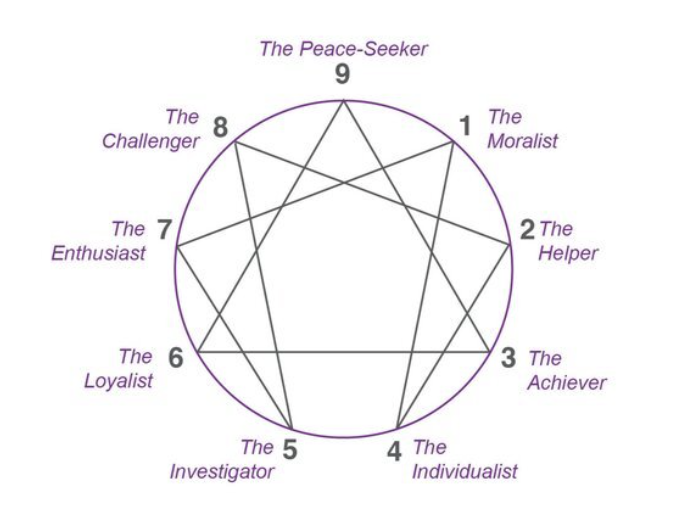
Enneagram Type 7 The Enthusiast
Subscribe on: Apple Podcasts, Spotify, YouTube, or wherever you get your podcasts

Episode Description
Enneagram Type 7s, called The Enthusiast, are care-free and fun-loving with a moment-to-moment appetite for adventure and zero tolerance for boredom. They often run from their problems in life which pursue them relentlessly in spite of their intelligence and joyfulness. Famous examples include Robin Williams, the Dalai Lama, Amy Winehouse, and Russell Brand.
In this episode, we explore the essence of the Type 7 and the insecurities and motivations that drive their every action and relationship. We walk you through the story of the Type 7’s life by looking at their journey through the Levels of Consciousness from their healthiest to their average to their most destructive ways of operating. We close the episode by offering a critical type-tailored practice to help 7s rise up in consciousness and be the best version of themselves.
This episode is designed to help Type 7s thrive in their personal and professional lives by fostering a deeper understanding of their insecurities and motivations. It’s also an invaluable resource for friends, partners, and colleagues of Type 7s who wish to better support and relate to them.
Podcast Hosts: Rasanath Das and Hari Prasada Das
Listen to this episode on Apple, Spotify, or your preferred podcast platform
Highlights
[1:00] The Essence Qualities of joy, gratitude, and freedom
[2:30] The Basic Fear of being trapped in the difficult emotions of life
[3:10] The Basic Desire to feel light, free, and fulfilled
[3:50] Creative Consciousness. The recognition that life is a gift and an acceptance that life can be difficult
[4:40] The sun and rain as ingredients of a rainbow
[5:40] Tearing muscle to build muscle
[8:30] Controlling Consciousness. The desire to outrun the pain of life.
[9:00] The challenge with routines and the restlessness
[11:20] Shopping has become the new opium
[12:30] The challenge with commitment
[15:30] The fear of missing out (FOMO)
[17:00] The image of a Controlling 7 as an electron
[18:15] Why Type 3s mistype as 7s
[19:00] The Type 3 propensity to use their phones during meetings for texting people, making others laugh, and doing other work. The propensity of the Type 7s to play games on their phones during meetings
[21:00] Destructive Consciousness. Recklessness that can end up in an accident, overdose, or suicide
[22:00] Robin Williams’ suicide
[22:50] The practice to rise up the Levels of Consciousness. Become extremely aware of how you try to keep your options open

-
This is an automated transcript and may contain minor errors.
Hari Prasada: Hey, Rasanath. Yeah. Great to be back
we are discussing today, Type Seven, the enthusiast. The seven energy is one that is immediately uplifting when we get to the essence of it. I'm looking forward to exploring more with you. Let us start with the essence. The essence qualities of the seven,
Rasanath: the essence qualities of type seven are joy, gratitude, and freedom.
That's why when you come in contact with a Type seven on the Enneagram, you experience this lightness even at the lower levels of consciousness. We talk about that, that there is a sense of like, life just doesn't get to me or putting it the other way. I am not going to be brought down by life, so I'm just gonna stay above all the, uh, difficulties and pain that life has to offer.
When sevens are really healthy, they live the essence because they have learned how to transform the more difficult parts of life into very meaningful and joyful experiences. There is a certain, again, just like the type five people see this with a type seven two, there is a childlike way of going about life, a childlike joy about life, but at its healthiest, it's not at the cost of avoiding.
The difficult, the more painful parts. Speak a little bit about the basic fear. I alluded to it how the sevens at the healthiest do not avoid the pain of life. And so the fear for the seven is that I will be trapped in the painful emotions of life. And when we think about it, it is a scary feeling, just thinking about how we can just stay forever.
Dealing with the difficult, the not interesting parts. So it's not just the difficult, right? It's just also the not interesting parts of life. Russ Hudson, our Enneagram teacher, likes to say how sevens only like to deal with half range of the emotions that human beings have, which is just the happy parts.
Hari Prasada: And so the basic desire then becomes, if we flip around the basic fear. To feel
Rasanath: joyous, to always feel joyous, to always feel exuberant, to always feel light. That's what I'm pursuing at every single moment. And unfortunately, life, if we live it honestly doesn't necessarily afford that.
Hari Prasada: I want to feel light, free, and fulfilled always all the time.
And anything that conflicts with that, ooh, I don't like it and I'm going to avoid, I'm gonna do all kinds of things to maneuver around it, which we'll see as we go into the levels of consciousness can distort reality. So let's go into the levels of consciousness, starting with the creative,
Rasanath: at the creative levels of consciousness, just like with any other type type.
Sevens also recognize that. Life itself is the biggest gift that we can get. The fact that we have life gives us the opportunity to experience so many things, and that experience of having life, the ability to live itself is very fulfilling. And at this level of consciousness, they're not necessarily avoiding.
The difficult parts of life. They understand and they don't want the difficult parts of life. It's not like they say, okay, bring on the difficulty. That's not what this is about. But at the same time, there is an acceptance that to live means to have the sunny and the rainy parts, and life is like, it feels like the colors of the rainbow and far the rainbow to appear.
Then we need both the sun and the rain. You come in touch with a creative healthy seven, you experience a certain lightness, and simultaneously you experience a gravitas about life. These are contradictory emotions. Yes, in their presence you feel uplifted, and at the same time, it's a grounded upliftment.
It's not escaping, it's not frivolous. It has a certain strength of character for having walked through. Difficulty having seen pain and having transformed that pain into very deep experiences, which is what the sevens are after. They're after the experiences of life.
Hari Prasada: Growth becomes the most exciting thing, and for growth to happen, there's always.
Some pain point you have to break out of your comfort zone. There is always some pain. I, I often use the metaphor of tearing muscle to build muscle, and the sevens at the creative consciousness. They're aware of this. And they're not avoidant. And they're not resentful. We're trying to make life conform into their philosophy.
They're actually embracing of life at its fullest. That's the freedom. Freedom is not being constricted and trying to make life constrict into their paradigm. The freedom is being able to embrace all things because they're all catalysts for my growth and for my ultimate happiness, my fulfillment, which is so much deeper than the flickering happiness of the moment.
So I stopped chasing after the momentary, flickering excitement, and I become excited. By the journey that is so much bigger than me and so much more of a, a calling to show up as my best, and that is a deep experience.
Rasanath: The experience of presence is just what you described. Every moment is so precious, every moment.
It's such a big gift. And when we are present to the moment. The gifts that a single moment gives us is enormous. Most of us live our life not being present, and especially for the seven. Living life without that presence means escape, and we all escape in different ways, and the sevens escape into just the happy parts, quote unquote, happy parts of life.
Hari Prasada: The happy parts of life look very different for a creative seven than from an average seven that you'd meet on the street. The Creative seven sees happiness in different places. It's not just about like, oh my God, I went on a rollercoaster. Now I'm really happy. Or I drank so much with my friends and that was amazing.
Woo-hoo. You know, it's, I find happiness in a very, very different way, and the greatest source of happiness I see is actually within me. And that's very different because sevens are so, they're externalizing life. They're externalizing life is actually within. But it's all about the external experiences and chasing one thing after the next, and the restlessness and life becomes inner directed, and it becomes so much bigger than the limited fleeting experiences of shallow pleasures, you know, superficial, momentary.
I satisfied my mind's desire for something exciting. So what happens as we get to the controlling consciousness,
Rasanath: the desire to outrun the pain of life takes over. So when the sevens experience natural pauses of life, for example, yeah, life has a routine. Sometimes certain moments are you're just doing simple tasks of life and sometimes that happens.
Regularly, you know, day one, day two, day three, you have to just go through routine. I come home from work, I eat, I go to bed. I wake up and I go back into work. We are all very familiar with routines. Sevens have a very big challenge with routines and because routines can feel very boring really quickly, and when I have to deal with the natural pauses of life, the natural routines of life, somehow the unbuilt with pain.
Things that I have escaped from. I haven't really, really dealt with start to research. And so now I feel that I have to outrun the pain of life. And again, it is when somebody's so oriented towards feeling joyful at every moment, that can feel very threatening. It's so important to understand what the suffering is internally, and then also recognizing that we can't really escape.
We can't just keep distracting ourselves and at the controlling levels of consciousness, I say in the sevens unconsciously, try to outrun the, and this manifests in the form of restlessness. So I'm sitting in a meeting. Morning, Monday morning, 9:00 AM I had an amazing time over the weekend. I didn't sleep much.
I hung out with friends. I watched a lot of movies. I played board games. I went to the bar. I didn't get a lot of sleep, and now Monday morning is here. This 9:00 AM meeting just doesn't have the same caliber of excitement as all the different things that I did over the weekend. And so I'm sitting in the meeting and everybody there can experience my restlessness.
I'm pulling out the phone from my pocket. My legs are shaking underneath the table and the message, the body language is just clear. I just want to be out doing something else because this is just, this meeting is just too boring. It's making me feel trapped. That's the experience. That's somebody who is working with or is interacting with a seven at this level of consciousness experiences.
Seven's also, Russ Hudson, not Enneagram teacher likes to say that at this level of consciousness, when the going gets tough for the seven, the tough go shopping. It's a very easy way to keep myself entertained. Shopping has become the new opium. We don't even have to walk to a store anymore. We just open up our computer screens and there's plenty to keep us engaged and interested and excited about buying new things.
So sevenths of this level of consciousness, and we have experienced it in our workshops too, and sevens, then we get to this part
seven very. Excitedly. And at the same time with the feeling like, oh, I just got caught. Share how, yeah. Buying pairs of buying shoes that they never really use and their closets get filled with shoes, clothes, gizmos, things that they don't necessarily use or might use once or twice, but they just have this excessive, uh, consumption.
The idea behind the consumption is to experience one moment, fleeting moment of excitement, then onto the next one. Commitment also becomes a pretty big challenge for the sevenths of this level of consciousness, because when I commit into something, that means I have to deal with the difficult parts of the commitment.
It's natural. Every commitment that brings with it. The glorious parts and the not so glorious parts, the icky, mucky parts of it. At this level, I know that as a seven, I know that if I make a commitment, I have will have to deal with those parts and it feels like a trap.
Hari Prasada: Yeah. Not only that, but the moment that I commit to something, I've closed out on all other options.
That's in relationships, that's in work, that's, you know, projects, personal habits. It's, it's so hard for me to stick to something. Oftentimes I will commit, but I won't really commit. I'll commit because it's exciting in the moment to commit to something. Then I've just closed out all other options. So am I really committed?
No, because my freedom is being constricted, and I live for freedom, really? Freedom baby. That's my motto. And so then it starts to catch up to me, and either I'm afraid of committing or I'm not afraid of committing because I'm so careless in my commitments. I just don't care about following through or I avoid the consequences.
I follow through just enough. Just enough to convince myself I'm okay and possibly to convince other people that I'm okay so that they leave me alone. But usually there's a trail of frustration that I'm leaving.
Rasanath: Also, going back to what you said about making a commitment in the moment, but not necessarily following through.
We've had so many experiences in our workshops. Where Sevens will sign up and will send an email saying, oh, I'm so excited for this workshop, and the day off or the day before you get an email again saying, oh, sorry, I signed up too soon. I have other commitments. I'm so sorry, but. But then the email will end with like, but definitely next time.
I'm so excited for that already looking forward to it. Yeah. Yeah. And we have experienced this several times and the thing here again, uh, based on what you said is it is exciting in that moment in my head, and because I'm not present, I have imagined the excitement. My head already my, and by the time the experience really happens or is happening, it doesn't feel as exciting as it was in my head.
I've already lived it out in my head, so now I want something else that can give me the same rush, and because I'm not present for what I committed to, what I committed to has already lost
Hari Prasada: its excitement value. It's no longer novel in the moment. It's like I already tasted it in my mind beforehand. It loses its novelty, and things are rarely as good as I can imagine them to be.
My imagination is much more vibrant than the reality. It's so true. Again,
Rasanath: the necessities of life are not necessarily like the possibilities. They, you know, they're, they're different. So again, sevens, they don't like to miss out. Like, uh, FOMO is a big thing for, and FOMO is not just exclusive for the sevens, but fomo, very characteristic of the sevens.
I, if there are five flavors of ice cream that I have never really tasted before and this new ice cream shop opened up right next to my home, guess what? I'm going to order all the five, right? I don't like to miss out. So at a certain point in time, it just feels like I'm living life in a very wasteful fashion and people.
Just like with all other types of the Enneagram, people feel objectified in the sense, I'm just an object for your entertainment, and as soon as that entertainment value stops, I'm gone. I'm no longer present with you. I'm just gone to the next thing that will give me the entertainment and relationships can become really difficult.
Intimate relationships can be even more challenging at this level of consciousness because. Yes. Uh, the other person in the relationship can experience a, a lack of commitment to the relationship and can feel like, well, I just am only an entertainment value to this individual.
Hari Prasada: Yeah. And the complaint is often shallowness superficiality.
I love to share that sevens are not actually shallow and superficial. They're living in such a way that it can feel like that. But generally what we see is. Sevens actually are very deep people. Every person is deep at heart, but they're not staying in one place enough for you to be able to discover that they're just.
Bouncing around. You know, we give the image of like an electron in a molecule. They're bouncing off the walls and so people don't get to experience any depth 'cause how can you in that state? But just before we see how that gets even more out of control in the destructive, I want to take one moment because many, many threes in particular achievers.
Often mistype as sevens, and it's because they share a behavioral pattern of being go-getters. They're both very externally oriented. They're good at making things happen. They come off as strong. That's how we look at the go-getters. And they can get a lot done. They're strong personalities. Right. And they can feel, just as you described in that meeting, the restlessness, even the.
Foot. Moving around the leg, moving around, getting out the phone. I'm disinterested. I'm disengaged. All of that can happen. With any of the types, but especially with the threes. But the reason is different, and this is so critical to understand. The reason is different. For the three, it's, I'm not valuable enough in this moment.
I can't feel my value. The center of attention is on somebody else. I don't get to make my mark. So what's the point? And I don't know that that's what's happening. Usually I think I'm just looking for more excitement. But for me, the excitement is in being able to shine. Whereas for the seven, it's like a stimulation, anything, and I often like to think about the way they use their phones differently.
In this situation. We may have talked about this. The three is going to be like texting somebody to make them laugh so that they can feel like, yeah, I'm funny. See, I make people laugh. I'm a great personality. Or they're getting their work done. See, I'm a busy person. I'm important. I'm sending out emails all the time because if I waste one moment, I'm just too important for that.
The sevens are playing games, they're just having fun, and the threes, the threes think that they're fun because that's a good thing to be, but it's a very different thing. We have to see what's going on beneath the surface, and we have to courageously. Confront that because the threes will often feel ashamed that they're not sevens, that they're looking for something else.
No, I'm a seven. I really am a seven.
Rasanath: I was doing a deep dive recently with someone who identified as a seven and was happy owning like the name enthusiast. That sounds right. Like that's who I am. And in digging deeper, it became more and more evident that it may not be a seven, but a three. This happens regularly, regularly.
And part of the challenge is that the word ambitious has started to become a cliche, not so liked, and threes feel sometimes ashamed of their own ambition. It's easy to identify as a seven. I'm fun loving. I'm exciting. I'm doing all these different things and oh yeah, like yes, I do have some challenge with commitment.
I'm not very disciplined, but to really own what's going on inside. This is true for all the types in to really own what's going on inside. Takes digging in and honesty.
Hari Prasada: Yeah, and it's a learned practice. We're not used to it. We're not taught this. We don't, it's not valued in our society, sadly. I mean, that's why this work is so, so critical to us.
We wanna offer this learning, this practice of introspecting and having courage to face ourselves. So please take us into the darkest part of the seven before we come up to the beauty of the seven, uh, through a practice, so the destructive consciousness, and then you can take us into the practice. To wrap us up
Rasanath: at the destructive levels of consciousness, the pace of life only increases and to their living, living their life fast in style.
And because of the speed at which they're living their life right now, it becomes reckless. That recklessness eventually gets them to stop, but many times through an accident, many sevens report that at this level of consciousness they have met with an accident or have overdosed and have to be hospitalized, where suddenly now I am forced.
I can't move anymore, and I'm forced to deal with the pain of life. Sevens at this level of consciousness. Many sevens, famous sevens that we know of as well have overdosed themselves and have, and have died because they have just tried to outrun the pain of life
Hari Prasada: or even committed suicide because they realized that they can't outrun the pain of life.
Robin Williams is a very tragic example, and you would never know that these people are so. Down and depressed and disturbed because they always smile and make you laugh. And there's so many examples. Famous examples.
Rasanath: Yeah. And it is a shock because we only watch these individuals on the screen and we see how funny they are, and they do add so much color to other people's lives.
But when these events occur, it's shocking and it's a wake.
Hari Prasada: So bring us up. How do we climb up the levels of consciousness through the practice?
Rasanath: For every type. There is this one thing that if you learn how to do consistently, you will begin to recognize the patterns that keep you trapped in the lower levels of consciousness.
And for the type seven it is, watch out for how you try to keep your options open. Stay very present to how you try to keep your options open and you will see you are always trying to keep your options open. Now sevens. Plan. And it's not like planning as organized planning. That's not the kind of planning you're talking about.
It's just, just it's this intellectual backup planning for what would keep me entertained. And it's happening all the time. So when you make a commitment, seven, watch out for how internally, you're not really making a commitment, you're just saying, yeah, yeah. I would love to do it without actually really making commitment and at the same time.
The back of your mind thinking, you know, and I can do all at these four things too, right? That's what we mean by saying watch out. Really look for how you are trying to keep your options open and make a commitment. Every time you make a commitment, it will bring about the real growth that is needed for your specific personality type.
Hari Prasada: Again, the threes also love to keep their options open and they can mistype because of this. But the difference is the threes are thinking, well, what would be a more important, more valuable experience that will help me to achieve or to shine or to be seen in a certain light? Oh, if I'm with this person or if I do this thing, or if I do that.
That'll be better, and I'm waiting till the last minute and keeping flexibility so that I can constantly optimize for that. And this is a subtle difference that we're not trained to see, but it's not at the core of what the three, when you work on the core aspect, you'll see this for the seven. This is at the core, the keeping my options open is my philosophy of life that is so deeply, deeply ingrained in me because I'm so scared.
I'm so scared of losing my freedom, and this is absolutely at the essence,
Rasanath: the most important thing for the sevens is to commit to their own life. It's to commit to living life for everything that it has to offer rather than just like, you know, deselecting parts of it. So when they into their own life, there is a way in which they learn how to walk through the pain and transform them.
To very meaningful, very deeply joyful, not fleeting joy, but very deeply joyful parts. They can be so wise because of that, and that's the, the rainbow. It brings a smile to everybody's faces when they see a rainbow, the variation of colors. But what it takes to create a rainbow is the sun and the rainbow.
Thank you so much,
Hari Prasada: Rasanath.
Vipin: Thank you.
Episode Transcript
Continue Exploring the Enneagram
Browse all Enneagram podcast episodes
Understand the Enneagram framework — clear breakdowns of the Types and how the system works
Join our live Enneagram community, Enneagram Library Live, hosted by the Upbuild team.
Take the two-day Enneagram 101 workshop