
The Upbuild Enneagram Library
Enneagram Type 6 The Loyalist
Subscribe on: Apple Podcasts, Spotify, YouTube, or wherever you get your podcasts

Episode Description
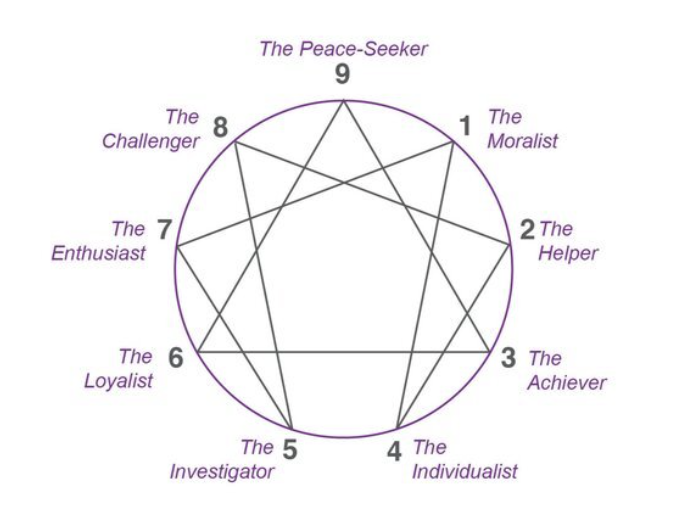
Enneagram Type 6s, called The Loyalist, live in a zone of constant questioning as they strive to be dependable for those they care about. They often wish that they had a cause to dedicate their life to which they could completely trust and that they had the support of others whom they could completely trust. Famous examples include Woody Allen, Adolf Hitler, Jason Alexander, and Larry David.
In this episode, we explore the essence of the Type 6 and the insecurities and motivations that drive their every action and relationship. We walk you through the story of the Type 6’s life by looking at their journey through the Levels of Consciousness from their healthiest to their average to their most destructive ways of operating. We close the episode by offering a critical type-tailored practice to help 6s rise up in consciousness and be the best version of themselves.
This episode is designed to help Type 6s thrive in their personal and professional lives by fostering a deeper understanding of their insecurities and motivations. It’s also an invaluable resource for friends, partners, and colleagues of Type 6s who wish to better support and relate to them.
Podcast Hosts: Rasanath Das and Hari Prasada Das
Listen to this episode on Apple, Spotify, or your preferred podcast platform
Highlights
[0:50) The Essence Qualities of alertness, courage, and devotion
[3:00] The Basic Fear of everything falling apart
[4:30] The simultaneous feeling of wanting responsibility but also being scared of it
[6:00] The Basic Desire of being supported and supportive
[7:00] Creative Consciousness. The image of the 9/11 firefighters. The courage and devotion to face difficult challenges
[11:30] Japan has a Type 6 culture. The CEO bows to the janitor.
[12:30] Controlling Consciousness. Anxiety as an every moment experience because I don’t trust.
[14:20] Trying to get everyone to sign on the dotted line
[15:30] The experience of going shopping for jeans
[16:30] Are you with me or are you against me?
[17:20] Trying to put on a mask of confidence even when I am not confident
[18:00] Destructive Consciousness. Defensive attacks on people that are not with me.
[19:30] Trust to doubt to suspicion to distrust to paranoia
[20:00] The practice to rise up the Levels of Consciousness. Become extremely aware of catching myself second guessing myself

-
This is an automated transcript and may contain minor errors.
Rasanath: So please start with the essence qualities and, uh, help us understand what the Type Six is all about.
Hari Prasada: Great. Yeah. So the essence qualities are alertness, courage, and devotion. The alertness is like there's a, a fail proof radar to detect all variables, obstacles, and system breaches, and this practically manifests.
I often share that our dear friend and teammate who's a six when we're absorbed in conversation while we're crossing the street. He's had to throw up his hand to just blow me back in case, you know, I was going to go into oncoming traffic and I think at least once, he's probably saved my life. So there's this alertness, what could go wrong and how can I jump in?
And there's a courage, a quiet kind of acceptance of duty in the face of fear. There's no bravado to it. It's like I'm gonna do what other people are afraid of and what I'm also afraid of. But it needs to be done, so someone ought to do it. Why not me? That's the courage, walking through the fear and then devotion to a cause that is much bigger than me.
I love to be smaller and feel like I'm working for something that is so big and that humility is incredibly endearing, attractive, and needed for all the types, but the sixes, they're so tapped into that. It's a a beautiful thing.
Rasanath: So then what is the basic fear for the six? Of course, if you use the word fear, no one on the Enneagram.
All of us have fears. All the Enneagram types have fears, but the connection to fear is so acutely experienced by types five, six, and seven, but specifically the type six.
Hari Prasada: Yeah, indeed. So the basic fear for the six is losing my orientation in the world. It feels like the ground is evaporating from underneath my feet, and it can be challenging to tie that back to the essence qualities like we talked about with the type four.
It's not as straightforward. There's more complexity here, but what's going on is that I'm seeing that I live in a world where nothing can be trusted. Everything is fallible and every one is fallible. Something can turn at the drop of a dime at any moment without warning, right? And so I am really, really deeply aware of that truth, not even consciously.
It's not something that sixes talk about consciously. It's just something that they feel in a way. It might have even trouble articulating. It's very much like, again, we talked about with the four, not only in terms of the complexity, but the fours have this sixth sense that happiness is more fleeting, more flickering than distress, and so they see that distress in some way feels more real.
And that's true. That is part of the nature of this world. So the sixes are also getting at an element that is part of the nature of this world, that everything can fall apart at any moment, and I can be left alone to face the challenges of life without support, and that connects to the alertness of like what could go wrong.
And the courage of having to face that fear and walk through it and the devotion of, I need something to dedicate myself to, I want to be supportive of other people, but if I don't have support, what's gonna be left of me? How am I gonna make it?
Rasanath: It's these simultaneous, wanting to be responsible, but at the same time afraid of the responsibility because responsibility is such a big thing.
Sixes really understand the word responsible. Take it very seriously, and you can only imagine how hard it is to carry that kind of responsibility about responsibility.
Hari Prasada: The word responsibility is so intense for them that they're drawn to it. Also pushing it away simultaneously. And sometimes you get more one side from them.
Sometimes you get more the other side and sometimes within the same idea of what would be responsible, you'll see they sign up for it happily, but then it's like, wait, I can't be held responsible for this. I don't. I'm not, and it's puzzling. Because it's so intense. My whole identity is pinned on this idea of being a responsible person.
And it's like if my identity is gonna go down with the ship here, I better not be responsible. You can't hold me responsible.
Rasanath: It almost seems like when I will take all the responsibility, because that's the best way to assure that everything is done,
Hari Prasada: and I have a sense of self also because I'm a responsible person, so I need responsibility,
Rasanath: right?
And then if I have to be the person responsible to make sure that nothing falls to the crack, that can be pretty anxiety inducing.
Hari Prasada: Indeed. Yeah. Very much
Rasanath: so. What is the basic desire then?
Hari Prasada: The basic desire is both to feel supportive and supported, and there's more emphasis on the feeling. Supportive is this is, uh, what we call a dutiful type.
That's their. Pattern of behavior, how they manifest externally is very dutiful and they want to do what will be best for others and be, again, subordinate to a higher order of things. Right? So the emphasis is always on giving more than I'm receiving. So I wanna feel like I'm a supportive person, but in order to be supportive.
I need to know that I'm supported. Otherwise, I feel like I'm gonna spin out. I'm not gonna be able to do anything for anybody. So it's really both.
Rasanath: Okay. So walk us through the levels of consciousness
Hari Prasada: at the creative consciousness. Sixes are so modest and so ready to jump into action for the benefit of others.
They're incredibly just inspired. To offer their lives in devotion to the things that matter most. And the image that we like to give for the six of the creative consciousness is, it's a very dramatic one. It's the nine 11 firefighter. So many of these firefighters who gave their lives to save others were indeed sixes, and many of them were.
Terrified of going into a burning building where it was clear what could become of them, and yet they did it anyway because I have a duty to perform. And what could be more meaningful than doing something for the benefit of others, even if it's a great risk to myself. Somebody has to do it, so why not me?
Instead of, Hey, why me? It's, why not me? And of course, this can be dialed down to very everyday circumstances. Not all creative sixes are gonna be like that. But the idea of that, I love, again, to give the example of our dear friend and and teammate that I referenced before, I could call him, wake him up in the middle of the night at any time.
Just because I need something signed urgently. I, it doesn't have to be that my life is on the line, but he would jump to do some service. And doesn't matter what it is, no job is too small. And if I love these people and if I believe in this cause I am there in a heartbeat. And don't thank me because I mean, I appreciate your thank you, but.
I'm doing this because I wanna do it. It's so touching.
Rasanath: Yep. Yeah, it's, uh, the modesty is so pronounced and it's natural. They're not trying. I also feel like even when you don't thank them at the creative levels of consciousness, it's almost like when you thank them, it's like you have brought down what they have made a, you know, in terms of their own contribution, there is a sense of like, well, this is what.
Anybody would do, but this is what I would do.
Hari Prasada: Yeah. Hey, I'm just doing my job. Even if that is your job still, that's glorious and everybody should do their job like that. I mean, not everybody should do their job like that. Not everybody can. It's not even in, in our nature to do it. But it's amazing. It's awe-inspiring and many times it's not just your job, but that's how they experience it.
It's, it's my job. The other thing that's really moving about the creative six is there's a kind of confidence with the humility. I see this in my wife's guru who is a six. It's one of the best things, just this way in which he's so clear, he has so much conviction. Whatever he says is extremely powerful because he has walked through self-doubt and he has seen truths deeper than I could imagine, and he is so clear.
At the same time that humility is preserved in a way where you see all the nine types are super humble at the creative consciousness. That's the predominant characteristic. But it shows up with a particular flavor for the six where it's like, Hey, nothing to see here. I'm nobody and I'm just one of you.
And so this incredibly self-realized soul who's, you know, such a treasure to have on the planet. Is walking around like, Hey, what? I'm just one of you. And he's the guru and he is, oh, we're just, we're just talking. And you don't see that, but that's the, the six, you know, that feel of incredible humility in such a pronounced, unique, remarkable way with this extraordinary confidence.
Rasanath: It seems like there's something very unassuming about the six at that level of consciousness where they don't really see. As above anybody and no job is too small, there is a way in which I respect the janitor and the CEO the same way because each person is doing their job, which is important.
Hari Prasada: So we talk about Japan as a six culture, where everybody's bowing to everybody.
And that exact example, we give that the CEO bows to the janitor. Because you're contributing to the whole, you are a part of this cause we are in this together and I honor the service that you're providing. That's something that's really special about the culture. Yeah. That that's something which that sixes bring to the table, which is unique.
Again, all the types that the creative consciousness, humility is probably the most important quality. Right, but the way that the sixes humility shows up is so different and it's so disarming,
Rasanath: beautifully explained.
Hari Prasada: So then what happens? Yeah, that the controlling consciousness sixes become insecure, and it's really that I'm committed to all these different things and I don't.
Have the confidence that I'm gonna be able to come through and that other people will come through for me. So now I have to check in and test out well. How can I make things predictable? The uncertainty is killing me, and that's where the anxiety comes in. Anything can fall apart at any moment. Huge anxiety.
Sixes are accustomed to living with that anxiety. I, I would say at a high burn. At a high burn, and so much so. That if you ask them, Hey, are you an anxious person? Or Do you have more anxiety than others? They may very well say no because it's so normalized for them. It's so much, I don't know anything else.
I don't have a frame of reference. I mean, aren't all, and yes, all people are anxious for sure. It's not that sixes are necessarily more anxious than other people. What's happening is the experience of anxiety is closer to them. It's more palpable. In a very direct way. The fear is the emotion of fear as opposed to underlying fear and insecurity that drives all of us.
I'm becoming insecure because anything can fall apart at. At any moment, I could be left alone to my own devices and without an identity, without a cause, without people that I can trust, who I know will be there for me. It's a tough world. I need people to be there for me to get through it. I have some vulnerability in that, and there's some healthiness to that, but at the controlling consciousness, it's like I don't trust.
I don't trust because I don't know. So I need to make things predictable. So what do I do? I streamline. I create systems, I troubleshoot, and I try to get everybody to sign on the dotted line. You're gonna do this, right? You're gonna do this. You said you were gonna do this. You didn't say you were gonna do this.
How do I know you're gonna do it? You have to sign on the line, which is dotted. Hey my dear fiance, we are engaged to be married and you have full freedom to break off our engagement or to break off. Our marriage to divorce at any time. If we get married, how do I know that 20 years from now, you are not gonna walk away?
Wait a minute, how do I know that 20 years from now I'm not gonna walk away? Oh my God. So I don't know. We should sign something to just make sure, but then how do I know? I wanna sign that. Well, maybe let me consult some people to see is this a good idea to sign this contract for marriage? I don't know.
This person says this thing, this person says this thing. Now I'm all confused and I'm seeking support from other people, but I'm getting more confused because I have a perspective. It just changes a lot. Other people have perspectives that contradict each other, and I don't know where I stand and. It's hard for me to figure out the world.
So the simplest thing, like going out and buying a pair of jeans becomes an anxiety producing affair like nothing else. I walk out without the pair of jeans because my girlfriend told me this pair is good. And my mother told me this pair is good, and it was a different pair and I liked something else, and I was doubting myself and I was doubting them.
So I walk out without the pair of jeans. So at the controlling consciousness, everything becomes nerve wracking. And what I have to do to reassure myself is like, well, if I want to be responsible and I need people to trust me to be responsible, then I have to amp up my confidence and I have to kind of.
Take on this role and train myself to appear confident, and I start to shut down other viewpoints that threaten my confidence, even if they may be right, or they may be more inclusive or better or more creative, and things become very stale and I'm testing people to see, are you with me or are you against me?
Rasanath: So at this level of consciousness, the shutting down is coming from other viewpoints, threatening my own confidence, but to begin with, I don't have confidence in my own worldview. And I feel like when I hear other worldviews, that is just further to distort my confidence and my capacity to trust anything at all.
So as you would say in our workshops, I jam a viewpoint into my head. I shut everything else down so that at least I can appear confident and I can make my way through this world. Otherwise, I feel so incapacitated to navigate this world of uncertainty.
Hari Prasada: Yeah, and some people will see through it like, Hey, this person seems really anxious.
Sometimes the sixes become so good at it that they can fool everybody. They might even fool themselves because they have jammed this viewpoint in so deeply that it's like I am super confident about it, but I've just suppressed my self-doubt. That is not confidence.
Rasanath: That's right. And then I also suppressed other people because if they speak up or say anything, that is even slightly off from what I have jammed into my head.
That threatens my sense of confidence and also I guess amps up the anxiety of how will I navigate this uncertain world? Brings up that basic fear that becomes just very, very visceral that everything beneath my feet will just crumble. Very fragile at this point. So how does that then go to the destructive levels of consciousness?
Hari Prasada: Yeah, so at the destructive, it becomes a witch hunt. I'm polarizing everybody. Again, you're either with me or you're against me, but now it's serious. If you're against me, there will be consequences. I've divided the entire world into those that are with me and those who are against me, and the people who are with me.
I'm always doubting them. So I don't even trust them, but they have to align with me. I'm like, there are consequences if they prove not trustworthy, if they prove my suspicion to be true, and those people who are against me, they are the enemy and I will attack. So it's a defensive attack. It's like I will preempt any kind of, you know, you are not with my cause.
And sixes are always about a cause, right? They may have more confidence in it or less confidence. Ironically, at the destructive consciousness, sixes tend to show up with a lot of quote unquote confidence in their cause, but it's that suppression again, so they can be really, really intense about what they believe in, and other people will suffer because they don't align.
Rasanath: Russ actually talks about the dissent of the six in terms of the different shades of trust itself, and he, he talks about how it starts with trust. Then it turns a little bit into doubt, and that doubt then becomes suspicion. That suspicion then becomes distrust, and then that distrust then becomes paranoia, and at the level of paranoia, it just explodes.
Everyone's
Hari Prasada: out to get me.
Rasanath: I better attack
Hari Prasada: to defend myself,
Rasanath: and at this level, it can appear like an eight sometimes. Okay, so how do we climb up back the levels of consciousness?
Hari Prasada: The practice for the six is become extremely aware of how you're second guessing yourself. So I'm second guessing myself all the time, but I'm not so aware of it.
It's just happening. And when I bring awareness, then I have the opportunity to see what do I want to do with that aspect of myself that is constantly creating self-doubt and see, I'm never gonna be able to trust anybody else or trust the world. I don't first trust myself because that's the filter through which all trust is given.
That's the interface. So if I don't trust myself, then what's happening is if I trust you, how can I trust my trust in you? So it all comes down to. Gaining self-trust, which the six is all about. Even the destructive six is all about self-trust, but not through Suppression does not work. It has to come through an honest, introspective process where I see the second guessing.
I catch it at the root. I'm seeing it happening all the time, and I am sitting with it and I'm thinking, okay, where is this coming from? What am I doubting? What do I know is true? What can I actually put my trust in? What do I know? Not what do I think is true? What do I know is true? And then from there, let me see.
What could be a beneficial way to navigate this even that I know this is true, then I know enough to be able to take a step and then I can adapt. I can reorient when I get new information, where if I find out, Hey, this is not the best way to go. I don't have to be so afraid. I start with what do I know is true and then build from there and experiment, and don't be afraid to make mistakes.
Holding my knowledge base and my trust in myself.
Rasanath: What I have understood about this six is the responsibility of choice in decision making. It feels like it's high stakes every single time because nobody else can make decisions. I have to make the decision. Even if I am surrounded by people at the creative levels of consciousness who can help me discern and bring about clarity, I still am responsible for the decisions I make in life and the sixes.
I think what they're tempted to do is give away that responsible to somebody else, and that is something that they can't, nobody can.
Hari Prasada: Right, or again, suppression. I mean, this can't be emphasized enough. The sixes, when they do this practice, the temptation will be, make no mistake. The temptation will be okay, I see myself second guessing.
Then let me just make a decision. Hey, we just make a decision and I've heard sixes talk about this. Like, look, at the end of the day, you just have to choose something. No, that is not. That is your anxiety running you and you're overcompensating. That's right. But that is not confidence and that is not grounded.
That is frenetic energy that is not serving you and the people in your life. You have to be able to see what is my doubt? Why am I doubting this? What do I know to be true? And be able to stay with the fear, that's the courage of the essence, quality, and then make the best decision I can and if I need help from one or two other people, okay.
No problem, but let me also be responsible and understand my own perspective and not be lost in that. Beautiful,
Rasanath: thank you. Thank you. This was very insightful. Stepping into the world of the six.
Hari Prasada: Thank you so much.
Episode Transcript
Continue Exploring the Enneagram
Browse all Enneagram podcast episodes
Understand the Enneagram framework — clear breakdowns of the Types and how the system works
Join our live Enneagram community, Enneagram Library Live, hosted by the Upbuild team.
Take the two-day Enneagram 101 workshop