
The Upbuild Enneagram Library
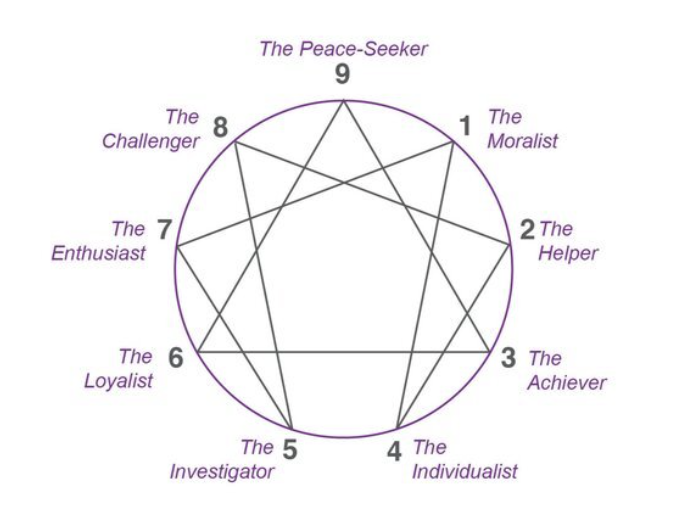
Enneagram Type 4 The Individualist
Subscribe on: Apple Podcasts, Spotify, YouTube, or wherever you get your podcasts

Episode Description
Enneagram Type 4s, called The Individualist, try to be authentic with every fiber of their being, but it’s so hard for them to know who they really are deep down. They often feel overwhelmed trying to do justice to their talents, all the while feeling misunderstood by people who move too fast, are too shallow, and act too harshly to understand their full heart. Famous examples include Bob Dylan, Johnny Depp, Prince, Michael Jackson, and Frida Kahlo.
In this episode, we explore the essence of the Type 4 and the insecurities and motivations that drive their every action and relationship. We walk you through the story of the Type 4’s life by looking at their journey through the Levels of Consciousness from their healthiest to their average to their most destructive ways of operating. We close the episode by offering a critical type-tailored practice to help 4s rise up in consciousness and be the best version of themselves.
This episode is designed to help Type 4s thrive in their personal and professional lives by fostering a deeper understanding of their insecurities and motivations. It’s also an invaluable resource for friends, partners, and colleagues of Type 4s who wish to better support and relate to them.
Podcast Hosts: Rasanath Das and Hari Prasada Das
Listen to this episode on Apple, Spotify, or your preferred podcast platform
Highlights
[1:30] The Essence Qualities of originality, depth, and beauty
[4:30] The Basic Fear of losing my authentic self
[6:00] The overwhelming question of trying to figure out who I am
[7:00] Using experiences and emotions to figure out who I am
[8:45] The Type 4s modification of Descartes’ “Cogito, ergo sum” (I think, therefore I am)
[11:00] The Basic Desire to feel completely authentic
[11:15] Creative Consciousness. A recognition that I am naturally unique and the propensity to invite others to be themselves.
[16:45] The Type 4 desire to bring humanity back to the world
[18:00] If I am not feeling enough, then who am I? The need for constant emotional intensity.
[20:00] The Type 4 obsession with music and becoming my own emotional DJ
[21:00] It’s called scarring for a reason
[21:30] Zack de la Rocha from Rage Against the Machine
[23:20] Destructive Consciousness. The mantra that, “no one can understand me.”
[24:30] The victim mentality
[25:30] The practice to rise up the Levels of Consciousness. Catch myself underplaying the good.

-
This is an automated transcript and may contain minor errors.
Rasanath: and I feel very honored to interview you about type four because nothing can be so close to you as type four. Uh, without getting too much away, without giving too much away.
And I've also had the privilege of witnessing the type four. And you so closely for the last 15 years and feel so benefited by how it has impacted my own life. So without further ado, let's start with the, uh, with the essence qualities of the type four. What does the type four signify stand for?
Hari Prasada: Yeah, so the essence qualities of the four are originality, depth, and beauty.
So they want to bring something into the world which is unique. They wanna birth the unprecedented. If something has been done before, well, why should I do it? You know, my, my contribution has to be different. It has to be something that matters in a way that not anybody else could have just done it. It's, I have a unique purpose, right.
Depth. It has to be coming from a place that is at the core of me and touches as profoundly the truth of things as possible and beauty that, uh, I always need to feel in tune with beauty and able to share that, offer that to other people. So these three things are what I'm. All about, and unlike the other types, I would say that the four is sort of spread a little bit thin by these essence qualities because they're quite disparate, you know, to be original, to be deep, and to be so much a lover of beauty and able to communicate that beauty to others, it's like I have to do a lot of different things.
Whereas if you look at, for example, the type eight. You know, it's all about strength or the type three. It's all about being something great and offering that to the world, becoming something that is glorious. Whereas the the four is like, it has to be this and this and this, and how am I gonna fuse them all together?
And it's a lot of work now when I'm actually just living as my essence, when I'm completely pure and free from ego. It may still feel like work, but it's not taxing in that same way because it's natural. It's just who I am that I bring these different elements. So I, I work hard and it's not that it, it's so easy, but it comes so naturally that it's not, it's not that kind of like, oh my God, grueling effort that you'll see with force as they enter into the levels of consciousness because the ego is sending us through these different levels.
Rasanath: So given those essence qualities, uh, how would you describe the basic fear and the basic desire for? So
Hari Prasada: the basic fear is, again, a little bit trickier than for other types where it can be straightforward. Like again, using the example of the eight, it's all about strength. The basic fear ties to being weak, right?
This is a little less straightforward here. The basic fear for the four is losing my. Authentic self losing my authentic self. And the reason is because I know that if I am my real self, then I will be original, I will be deep, and I will have all of that beauty that I carry with me. Right. So I just have to go back to the source.
I have to go back to everything. And this is instructive. Actually. This is instructive for all the types because that is a universal truth. But the fours are so tapped into it, and there's a sense of like, yeah, these three essence qualities will all come together if I can just be who I am. So I'm on a quest to rediscover the depth of my being, who I really am.
Rasanath: Thank you. And this is true for all the types of the Enneagram, that they're all tapping into one universal truth that they very deeply feel, and yet the way they live, that truth is so distorted by the insecurities of the ego. And I guess for the type four, it's about finding the self. And then I go about defining myself.
Based on the temporality of my own life. Can you elaborate on that a little more?
Hari Prasada: Yeah. I mean, if I am searching for myself, the question is, well, where do I begin? How do I mean? That's a pretty overwhelming question. It's a very overwhelming question. And if I'm trying to find the depths. Of my being, like, where do I go?
I can't go to a library, I can't go to a physical room. I can't go to a cave and discover in that place myself. I have to go within And then who has a compass for navigating that? And like, what does that even mean? It's so abstract, right? How do I go inside? I don't know. So what I do is I look for myself.
Through external experiences, and I think that those will inform who I am. And this will become clearer as we get into the levels of consciousness. But the basic idea is because I don't know how to find myself within me, and I'm trying, and I am going inside, you know, any way that I know how, but it's also like.
I'm having this experience, so this must communicate something about who I am and I use experiences to inform me about who I am, which is not completely wrong, but it's also, as you said, it's temporal and it changes. And I have, you know, I can have the same experience a year from today and it feels very different and suddenly I'm a different person and we have to understand force that we are not.
Completely different people. At the core of us, we are the same person. That core is solid. It is unchanging. It is who we are in a way that is totally reliable, trustworthy, and absolute. That's like the essence of my beam. That's what I'm seeking, not this me. That feels good now and oh, this must. This must be me versus, you know, it doesn't feel good tomorrow.
So this must be me. That kind of temporal, emotionally shape shifting feeling of itself is not who I am. And this is a huge challenge from the
Rasanath: force. And so by experiences, and I think we will discuss this more in the levels of consciousness too. When you say experiences, you actually mean the emotions tied to those experiences.
And I like. What you say about the force coding Descartes, I think, and therefore I am, but the force put a spin on that
Hari Prasada: as they do, they, they always need their unique twist on things, so Yeah.
Rasanath: And, and, uh, for the force, it's, it's, I feel, and therefore I am, and, and their sense of experiences are derived from how they feel.
When they are in a specific circumstance, a specific situation. And the
Hari Prasada: reason for that is because the identity of every one of us, regardless of our Enneagram type, is situated in the heart. That's the deepest part of us and who is wanting to go deep and wanting to find themselves. They have this intuition that I will find myself in my heart, and that's correct.
Rasanath: Yes.
Hari Prasada: So, and what does the heart do? It feels right. The heart is the, the seed of emotion. It's, it's function is feeling. And so the fours are not wrong here. It's just that, um, feelings are so in flux and it's hard to find a solid sense of self. It's hard to get at the soul of me, the unchanging soul when I'm looking at feelings that are constantly fluctuating as a proxy.
So I'm, I'm trying to find myself through feelings. If I feel, then I feel alive, then I must be closer to myself. And in some way, I am closer to myself because I'm at least arriving at the heart. But I haven't gone, I haven't penetrated beyond, I haven't penetrated into the part of me that is solid and fixed.
My soul, I'm stuck on the emotionality of the heart, which is constantly changing. So then I don't feel like I have a solid sense of self and I feel vulnerable and overly sensitive and like everything, you know naturally because the heart is the softest part of us. It is so vulnerable, it's so fragile. So I feel that fragility all the time.
And we can empathize with the fours 'cause that's a very real, very important experience that deserves a lot of empathy and the force we need to empathize with ourselves for that as well. It's not easy. So the, the basic desire for the force, their orientation to feel completely authentic to myself, it's the opposite of the basic fear.
I want to feel completely authentic, very good as myself.
Rasanath: Okay.
Hari Prasada: So walk us through the levels of consciousness. Yeah, so the force at the creative consciousness, they are not trying to be different. They're not trying to separate themselves and show, look, see, I'm so unique. I have my place in the world because I'm not like you.
I'm not like you. I'm not like you. I'm not like you. This is generally how the forests operate by default with the ego. 'cause I need to manifest the essence quality of. Originality. So I'm always trying to be special, trying to be unique, trying to be different. And, oh, I don't fit in here. I don't fit in here.
I don't fit in here. Where will I find myself? Where will I find my place? And when I'm with you, will I feel authentic? And when I'm with you, will I feel authentic. And so, of course, with different people, we will feel, be able to be more ourselves or less ourselves. The fours are not wrong in that. But there's not the preoccupation of the creative consciousness with distinguishing myself that I am not gonna be like you.
You know I am going to dye my hair, platinum blonde. So that I, you're saying, you're saying you didn't do that? I never, no, I never dyed my hair platinum blonde to be a fire head turner that nobody else had seen before. That never happened in my life, and I'm definitely not a four. Um, it's a creative consciousness.
There's no urge to do those things that are, are sort of, uh, we were talking earlier about exhibitionistic behavior. The force can have. A more subtle, I mean, this is not so subtle, but usually you think about the threes as more exhibitionistic, uh, amongst the types. All, all of them can be in different ways, but the threes kind of have a special place of exhibitionism.
The fours have their own like more subtle version of that, where it's like, look at me, I stand out. I'm so different. I'm not like you. So at the creative consciousness, it's so important. To recognize and to become creative. It's so important to not be striving to be different. You'll naturally be unique if you are yourself.
And deep down the fours know this, if I can just be me. That is unique. And that's true, not just for the four. That's true for every single type. The four may manifest that more clearly than other types because they love to innovate. They love to push the envelope. They love to say, okay, it's been done this way so many times, so let's try something else because anybody could have done it this way or we've already done that.
Let's see what else there is. And that's exciting. And that can be cre, that is creative, that is creative consciousness creative, but that's. One of the most defining features. The other thing that is really critical at the creative consciousness is I invite other people to be themselves. I allow them to be who they are, warts and all.
There's such a refreshing oxygen that I bring to the room. It's, it's like people have never experienced that before. Oh my God. I don't have to put on a front. I don't have to conform to expectations. I don't have to like try to mold myself and fit in. I am accepted and there's a deep, deep sense of connection and empathy and heart, and we talk about the most meaningful things and it's always constructive and like edifying that.
When I'm with a for the creative consciousness, I am becoming more and more myself. I am accepted for who I am, where I am, and I'm pushed to go deeper and to realize more and to walk through difficulty for the sake of growth. Because I've set that example, or the four has set that example for others who are with them.
The fours are able to turn negative experiences that are painful into. Incredible growth and beauty and they're able to show the beauty of even the darkness because of the potential for realization for wisdom that only comes through walking courageously through the difficulty, through the things that other people are too afraid or, or avoidant
Rasanath: to face.
I think it's very moving when you think about the life of the four in that way, at the, at the creative levels of consciousness, and I have. I have tremendously benefited from that push towards authenticity, especially in the years that I've known you. It has so personally impacted my life. And I also find with the force that that authenticity never leaves them even in the controlling levels of consciousness.
And what I have noticed is that the creative levels, it is so much grounded. It doesn't have the exhibitionistic quality. It's a very somber acceptance of reality and a beauty of getting in touch with that. Whereas you'll see the same authenticity even in the controlling for, but I think now the controlling levels of consciousness starts to become a little dramatic.
Can you talk us through that going down the controlling levels of consciousness? Yeah, sure.
Hari Prasada: Yeah. I would just add. Quickly that the mission of the four, especially at the creative consciousness, but this is also true in the controlling to some degree, is to bring humanity back to the world. It's like we've lost touch with our humanity, and if you see the workplace, my God, it's like.
You know, have we all become automatons? Are we all just objects that need to be moved to get to a goal? Is it all just like for producing value? Am I a productivity machine? Is that what our world is? Do we just use each other? And even in our relationships, it can be so transactional and so the fours are looking for the heart and they're looking for the humanity and what's real and like, can we be.
Accepting of the sides of ourselves that are uncomfortable to look at and to talk about. Let's bring that to the table. Let's, because we'll connect more deeply and we'll grow much more if we deal with things and if we're human and we're ourselves. So at the creative, that is a force that they are bringing to everyone.
And as they slip into controlling consciousness, what's happening is. They're searching for themselves and they're searching for themselves through emotions as we talked about through feeling, and feelings are unreliable, just like we said, and sometimes I don't feel enough, so I panic. Wait a minute, if I'm not feeling enough, then who am I?
You know, for example, I'm at work and I have to push paper all day long. I'm in my bureaucratic mode, and it's like I don't feel anything that is terrifying for a four. It's like, then who am I? And I'm losing my meaning and I'm losing everything. I'm losing myself. The basic fear. So, and one moment of not feeling enough.
Or feeling like I'm losing myself is absolutely horrifying. And so the slip happens when I feel that my emotional intensity is not enough. The emotional intensity in my life is not enough to sustain me. I need emotions to be high and constant, and they're not sustaining me, so then I have to do something about it.
I have to, you know, correct that. Because I can't stay with that. That's too difficult. So I have to do something and this is where we overcompensate, right? And I like to say that the forest then become their own emotional DJs and they start trying to find experiences that will make them feel, and they, they flock to them and they often are literally their own emotional DJs.
They have a playlist. You know, when I was growing up it was mix tapes and you know, CD mixes where I know it will make me feel this and it will make me feel this and it'll make me feel this. And I would like take shelter of that. I couldn't wait for school to end or you know, whatever, because then I can be in a place where I can just feel again and it is.
Music is made. It's designed to make us feel, that's the purpose of music. It's to make us feel something. And so the forest, they just like, I've never met a single four who's not a diehard about music and like it gets really personal. And they start defining themselves based on their tastes because again, this is an experience I'm having and it makes me feel a certain way, and then I feel more in touch with myself 'cause I feel more alive with the emotions and I need to have happy music that pumps me up.
Then, but the world is such a downtrodden place. There's too much suffering and too much injustice. So it's not real to just be happy all the time. So I have to experience, you know, the sadness and the grief. So I have really, as you mentioned, somber songs at the creative consciousness for can be happy and they can be joyful at the controlling consciousness.
I start to feel like, ah, it's inauthentic to be joyful and happy. Because the world is so screwed up. And it's true. The world is, it's the world is is suffering and it's wounded. And also if you look at like what has a longer shelf life, happiness or distress, it's called scarring for a reason because it stays so much longer and it's so much more intense and pronounced.
And prominent. So the fours are tapped into that truth, that suffering. Is bigger and more lasting and there's almost something more true about it, but then they miss out on. Happiness, right? So they're, they're dialing up these experiences and I'm angry about all of this suffering and injustice. So I need to listen to my angry song.
You know, I rage against the Machine. That's Zach DeRoche. He knew, he understood me completely, and I feel when I'm listening, right? And, and I'm just designing these experiences. And then I think, see, I know what beauty is. I know what depth is. I know what truth is. I know what's real and. You know nothing.
And I become personally offended by poor taste. 'cause I'm the tasteful one. I have refined elegance. I know what's what and I will school you in beauty. So you come, I hold office hours, I will school you. The fact that you like that Britney Spears song, Raan, that hurts me. That hurts me. I feel for you. Like I one should be compassionate.
It's good to be compassionate. I feel compassion for you. Come, I told you I have office hours. Come. I'll be there for you. 'cause that's painful.
Rasanath: And, and people can feel very written off, dismissed. Um, also brought, you're all shallow. Everybody's shallow, shallow, superficial. And it, it also becomes really hard.
At this level of consciousness to encourage the four, because there's almost a vehement stubbornness around like, well, I do not want to be encouraged. Like, I'll come, I'll talk to you about everything that I'm feeling. All these painful things you never understand, but then you'll never really understand.
You'll never left. It's hard for people to feel like they can really help this person in any way. Or, uh, people themselves actually feel pulled down to the darkness of humanity, so to say. Uh, how does that lead us into the destructive levels of consciousness? What happens there?
Hari Prasada: Yeah. I mean, the forests are feeling like nobody understands me.
I need to isolate myself from a world that is so shallow and artificial and just coasting on the surface, and I'm so disgusted. They have their reasons. We, it's as important, they have their reasons, but the way they deal with it is so self-pitying and in a way self-righteous even. And they're so much above, and they also set the rules up in opposition for themselves because it's like you'll never understand me, so I won't even give you a chance.
And it's true that they're hard to understand and they're hard, like I can't even understand myself because there's so much depth and so much complexity, and how do I understand my own being? I can't even understand the depth of my emotions, which are so trying what to speak of my actual self. So what hope do you have who don't even experience life the way that I do?
So I isolate myself and I play the victim. I have a story and this, this is where I really get into the destructive consciousness. I have this story that no one will ever understand. No one will ever get me, and I'm this incredibly talented, gifted virtuoso, but I'm undiscovered. I'm the undiscovered virtuoso, and the world will never receive me.
They won't take the time to understand me and to empathize and to give me a place and to showcase my talents. And so. I will just wallow and I will absorb myself in the pain and I'll nurse my wounds with the soothing balm of pouring salt on them, where it's like, ugh. Life is so horrific. It's so disgusting and terrible, and you are all idiots.
You're all shallow. People that don't get anything. And I'll just suffer over here and maybe I'll even die. It's a really, really awful place. Very difficult to get out of.
Rasanath: So how do we get out? How, if you are a four or if you are with a four in a relationship, how can we help the force climb back up the levels of consciousness?
Hari Prasada: Yeah. We offer a practice for the forests. Become extremely aware of how you're underplaying the good. Become extremely aware of how you are underplaying the good. As we talked about, the orientation starts to get more and more towards seeing all of the difficulties, the bad things, the superficiality, the conformity, all of the imperfections.
Forests are perfectionists, so they have, like we talked about with the ones. They have this vision always for what would be perfect. At every moment they're thinking how things could be and should be, and things never go that way. So they're always suffering from that vision, not manifesting and seeing all the imperfections.
So what is critical is for the four to see, oh my God, I am underplaying. The good there is good, there's good in my own heart. There's good in other people, and the sincerity of other people is so important to be encouraged by and to encourage, and I need encouragement as much as anybody, and when I can be with somebody that sees the good in me, that sees as much of the core of me as possible, or at least sees my sincerity, my striving, my beauty.
It's so powerful. It's so uplifting, and I need that. I really need that. So it's all about how I'm underplaying the good. The one simple step that leads to so many other things is see how I'm underplaying the good and climb up to levels of consciousness by honoring the good, staying with it, and getting help.
To lean more and more in that direction and not to deny the bad, not to deny the imperfections, to work through it, to talk through it, to process, and to turn that into something beautiful that makes me wise and able to give realizations and benefits other people through my own experiences of difficulty and what I perceive to be wrong in the world.
Thank
Rasanath: you. Thank you. That was such a, a wonderful. Very insightful journey into the four territory and, uh, no better person to, to let us in other than you. Thank you very much.
Hari Prasada: You're kind to me, and you're, you're my lifeline, so thank you. Thank you. Thank you.
Episode Transcript
Continue Exploring the Enneagram
Browse all Enneagram podcast episodes
Understand the Enneagram framework — clear breakdowns of the Types and how the system works
Join our live Enneagram community, Enneagram Library Live, hosted by the Upbuild team.
Take the two-day Enneagram 101 workshop