
The Upbuild Enneagram Library
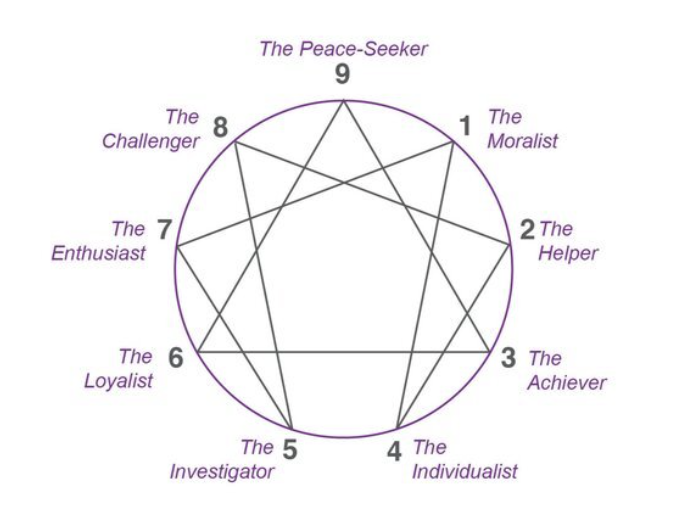
Enneagram Type 3 The Achiever
Subscribe on: Apple Podcasts, Spotify, YouTube, or wherever you get your podcasts

Episode Description
Enneagram Type 3s, called The Achiever, are smooth and success-driven, endeavoring to show with their life that the sky’s the limit for what can be accomplished. They are also often concerned that others can see through their image. Famous examples include Elon Musk, Oprah Winfrey, Michael Jordan, Barack Obama, Taylor Swift, and Lady Gaga.
In this episode, we explore the essence of the Type 3 and the insecurities and motivations that drive their every action and relationship. We walk you through the story of the Type 3’s life by looking at their journey through the Levels of Consciousness from their healthiest to their average to their most destructive ways of operating. We close the episode by offering a critical type-tailored practice to help 3s rise up in consciousness and be the best version of themselves.
This episode is designed to help Type 3s thrive in their personal and professional lives by fostering a deeper understanding of their insecurities and motivations. It’s also an invaluable resource for friends, partners, and colleagues of Type 3s who wish to better support and relate to them.
Podcast Hosts: Rasanath Das and Hari Prasada Das
Listen to this episode on Apple, Spotify, or your preferred podcast platform
Highlights
[1:00] The Essence Qualities of glory, value, and hope.
[1:30] The importance of manifesting my full potential
[2:30] The Basic Fear of worthlessness which shows up as the fear of failure.
[4:30] The story that I need my fear of failure in order to succeed
[5:45] The sense of confidence and the anthem that “nothing is impossible”
[6:30] The interview with Tiger Woods when he says that winning is “a belief that you just have to have.”
[7:30] The Basic Desire to be superlatively successful
[8:00] Research that shows that winning a bronze medal at the Olympics makes athletes happier than winning a silver medal
[9:30] Why Type 3s are the type that are the most likely to want coaching
[10:00] How 3s love to gamify everything
[10:30] The stigma of the words “ambition” and “competition”
[12:30] The obsession with replaying situations in my mind
[14:00] Creative Consciousness. Being authentic and adaptable.
[15:00] The need to be mirrored
[16:00] The acceptance of my failures and appreciation for those who have contributed to me. The expression made popular by Isaac Newton, “[I] stand on the shoulders of giants.”
[18:00] Controlling Consciousness. The feeling of being overshadowed.
[19:00] Name-dropping and the need to feel important
[20:00] The pursuit of efficiency, productivity, and effectivity, which causes 3s to disconnect from their hearts
[20:30] The bottomless bag of medals. Without the heart, there is no fulfillment.
[22:30] The need to convince other people of stories so that I can convince myself of that story
[23:00] Destructive Consciousness. Psychopathic tendencies, fraud, sabotage, lying.
[23:30] Lance Armstrong’s interview with Oprah about taking performance-enhancing drugs
[24:00] The practice to rise up the Levels of Consciousness. Becoming aware of how I try to impress others.
[25:15] Radical honesty as the path to authenticity

-
This is an automated transcript and may contain minor errors.
It's great to be with you, Rasanath, and I'm really happy that we get to explore the type three on the Enneagram today.
Hari Prasada: This is obviously close to both of our hearts. I know you have a lot to share on this. We'll get a good taste right now. What is the type three about? What are the essence qualities? Just to kick us off
Rasanath: the type three EPIs.
The complete fulfillment of an individual's potential, and the essence qualities of the three in that regard are glory, value, and hope. Every single three that I have spoken to has been able to relate to how very early on in their life they have imagined themselves as they're playing mock tennis, hitting the ball against the wall, that this is the finals of the movement.
And they are playing the fifth set because there's something about the glory, the winning, the manifestation of my full potential that I experienced very, very early on in life. And it's amazing that when you can really see that kind of manifestation, it's inspiring. It encourages and inspires everyone to be able to find their potential and work towards manifesting it.
In a, that is very meaningful and impactful to the world. That's what the Type
Hari Prasada: three stands for in a sense. And what is the fear then that is running the three?
Rasanath: The manifestation of potential is very directly tied to my sense of self-worth. And this is where it gets tricky for the three, because deep down.
I am so petrified that I may be a worthless person. The fear of being worthless is the most painful thing for the type three and the shame that accompanies that feeling of worthlessness. Even when I have accomplished a lot in my life and when one thing doesn't go right or doesn't go in the direction that I want for it to go, it feels so immediately worthless.
My own sense of value just dramatically takes a drop. So that feeling of worthlessness is what I'm so afraid of. And the way it manifests externally is in the form of failure. So I put my head to something I want to achieve something. That's my definition of success. And then not achieving that. Failing in it is how on a tangible quote unquote practical level.
And the threes use this word a lot practical. That's
Hari Prasada: how it manifests. Just before we move to the basic desire, one more question about the fear. Yesterday we were having a coaching session, Enneagram deep dive with someone who is pretty certainly a three. He was having some trouble relating to the heaviness of the term worthlessness, and I noted it because I've seen it many times when we speak with threes that it, it's like, it can be hard to relate to that idea of worthlessness.
Can you just bring us a little bit more into how that would manifest for somebody who's not in touch with the, you know, depth of that pain or fear?
Rasanath: Thank you. Uh, so that, which is part of the reason why I said failure is a very tangible way in which the threes experience their worthlessness. And what is failure?
If you were to unpack failure? It directly draws a line to my potential, not manifesting the way I want for it to manifest, which then means. Then what's my place in this world? What's my worth? And the part of the challenge that the threes experience in what you were sharing that it doesn't feel so heavy is I have run away from it.
I feel it's so acutely that somehow I find a way to disguise that feeling of worthlessness as well when I fail. That just inspires me more to succeed, and that is many times an overcompensation for my own deep feeling of worthlessness that I have consciously and unconsciously
Hari Prasada: run away from. Threes also tend to be super confident and we'll, we'll see that more in the levels of consciousness, but that's a really key attribute of the three.
They come across as very confident and typically feel themselves to be confident. Not always, but many times they feel themselves to be very confident and that can also mask this connection to worthlessness. Is there anything that you would wanna share on that? Threes are
Rasanath: so aware of their sense of worth that they are very rehearsed.
One of the reasons why their confidence manifests in the way that it does is sure enough, a lot of threes are very capable individuals. They have done a lot of things in life. There's also an anthem that they have, which is nothing is impossible, right? That is also the manifestation of my full potential.
So they walk around the world with that sense of confidence. I think where it gets tricky is many times it's a projection of confidence rather than actually feeling it. And I heard this last week, this were exactly the words that this individual who was a type three was saying when I asked this person the question, so you.
I feel very convinced that you will win every single time. And this just reminds us of the interview with Tiger Woods that, that we showed during a workshop and this person said, yeah, and then he said, that's just a belief you need to have. It was so verbatim from the Tiger Woods interview, my favorite lines.
That's funny when they say, well, it's just a belief you need to have what they're actually seeing. You have to have. That's just a way of saying, well, if you don't have it, then fake it. Right, and this is a theme that just follows the three their entire life is the faking. They have found a way to regain, quote unquote, their value by artificial projection rather than the grounded authenticity.
Hari Prasada: That's great. Thank you. So
Rasanath: the basic desire, the basic desire for the three is to feel super relatively successful. Again, the word super little is very intentional because I recently read some research conducted on the Olympics, the recently concluded Olympics, and this research was talking about how somebody who wins the bronze medal.
Is happier than someone who won the silver medal. Mm-hmm. Yeah. Yeah, because it seems like, you know, the person who won the bronze medal feels like, well, I made it to the podium, whereas this person who won the silver medal feels like, well, I just failed. Right. It's pretty amazing to see, and this is the life of the three.
It's if I am not super relatively successful, I would rather be the underdog who just made the cut. Then there is now scope for me to go even further. But when I fall from Grace, where I know I had the potential to be number one, but I became number two, it's disappointing. Now, I can always disguise that as like, well, there's more room for improvement.
I'm going to come back with a vengeance. And a lot of threes say that, you know, like, I'm just gonna make use of this as a stepping stone to success. But deep down, it's
Hari Prasada: painful. So we encounter in our lives and our work, so many threes who feel like, but I'm not like this other three that I know who's like, that's a real three.
I must not be a three because I don't need to be that successful. I'm not so preoccupied with success or like my drive is just not that intense. I'm pretty grounded and measured and like I'm not really competing with people to get the gold. So what do you say to that? The other reason why
Rasanath: threes might come across that way is threes are very calculated in the way they set their goals.
What they're afraid of is failure. So what they're going to do is set their goals in a way that they're always going to exceed it. And to me, this is the key here. This is true for a lot of threes. Yesterday I was speaking to another three who
Hari Prasada: I pushed a little bit. We work with threes all the time. It's the most common experience for us.
Well, people also come to coach
Rasanath: because they're like, well, how can I manifest my full potential? Like I'm really looking to be my best self and there's a lot of goodness to it. And also. I think a lot of threes are in for a surprise when they step into this journey because this is not quite what they're expecting to find.
What they're not expecting to find is that they're actually playing a game with themselves, right? And our partner weapon likes to, and this was an incredible insight that he brought to the fore about the three. His threes love to gamify everything in their life, and they gamify their own goals. Which means now what I'm going to do is I'm gonna set the rules of the game in such a way that I always win.
So some threes, for some threes that may look like, and I was one of them. I did not apply to Harvard because I felt I would never be able to get there. And my story around that was that, well, Harvard is a big school. It's like, you know, it's a class of 900 people. I want something that's more small and intimate.
But that was a story that I told myself. And also the other thing is there is a stigma around the word ambition. And sometimes people are ashamed of coming across as being ambitious because a lot of threes will report this too, that ambitious people are not liked by other people. Threes want to be liked what to speak of.
Competitive. Right, exactly. So there is a stigma. So I have to somehow hide my own sense of ambition and so. I might say, oh, you know, well, I'm not like that person. I'm much more toned down. I'm much more chill. But if you're really honest,
Hari Prasada: that's not completely true. The biggest game is with myself. I hide it for myself.
I don't see that, oh my God. Wait a minute. I'm really competitive. I was just playing a basketball game with my wife last night, and our two nephews, my wife and I were on the team against my nephews, two of them, and we were neck and neck. It was a win by two game. And when we lost, I can't tell you, I, I reflected on this right before going to bed, like it stayed with me.
I was like, God, I hate losing. I can't believe we lost. And the reason I bring this up is because it's like I didn't realize how much I hid for myself, how much I am competitive with my nephews. That's embarrassing, you know, with my wife and with my nephews. That's super embarrassing. I would never wanna broadcast that to the world.
That doesn't make any sense. But here I was like, I'm feeling very competitive to the point where, and it shows up in different ways if we're honest, but to the point where it's like. Man. The last thing I thought about when I went to bed was like, I need a little self empathy for having lost that game. I can't believe.
And then I was thinking this morning about what plays I would've done differently, so, so yeah, it's helpful. We have to be honest
Rasanath: with ourselves. A lot of three. Do that. Whether it was a speech that they gave, whether it was a strategy plan that they presented, they keep replaying that conversation until they have beaten the crap out of it to understand what more they could have done to improve.
And while I think there is merit to like going back and seeing, well, what can I do to improve? Somehow for the threes, it becomes an obsession. And when you become obsessed, you are missing your own connection with your heart. Which is a conversation that we can have for almost a, you know, more than an hour.
Hari Prasada: About that three. Yeah. Yeah. Good. So many threes will have this subtle sense of, I'm not like this, I don't want to be like that. And I've seen threes who are like, they're the real threes, but we want to be reflective that. I may have some more quote unquote tacked around things, or I may not be as comfortable leaning in a hundred percent to the urges in me.
I may temper it, but we may very well be threes. In fact, in this case, we're talking about threes who just operate. A little bit more covertly and even hide things from themselves. So what does it look like when threes are super self-aware, when they're really creative in consciousness?
Rasanath: The creative three is the expression of authenticity that is most touching to the heart.
And the reason why I say that is force can be very authentic, force are very authentic. And yet there is a difference between the authenticity of the four and the authenticity of the three. What you find with the creative threes is as I'm being authentic, I also recognize the suffering that I experience in my own sense of not being able to see myself without a mirror.
Threes understand the function of mirroring more than any other type in the Enneagram does. They constantly need someone to be telling them how they're doing. So that being the mirroring, like how, that's the mirroring. Like, how am I doing? Right, what's my value? I need a mirror. It's just like how we can't see, we can see all the parts of our body, but we can't see our face without a mirror.
Right. And the phase in many ways is the biggest part of our identity. It's exactly like that. For the three, my identity is never really full. Until someone is actually reflecting back to me what my identity is. So when threes are competing, when threes are looking for the accolades, for the validation, they're tapping into something real, which is the need for me to see myself and experience my sense of worth, and I need somebody else for it.
And the creative levels of consciousness, I just recognize how that need to be mirrored is such an important thing. I pursue that need for mirroring in a very authentic way. I don't project, I don't, uh, claim, I don't, uh, make up stories about myself that will put me in good light. I'm able to accept my failures.
I can be very honest about them, and I can also be very honest about my successes in the sense. I realized that everything that I have achieved and gained has only been because somebody else contributed so significantly to it, and my sense of worth doesn't fall because I have failures. My sense of worth doesn't fall because I'm standing on the shoulders of giants.
I feel seen very deeply for who I am. Because of the light shining from other people, they give this, uh, metaphor. The threes are essentially a star in a cluster of stars. And when some of the stars shines brighter than I shine, I'm not ashamed by it. I can actually go and appreciate, oh wow, I so inspired by your shine.
And there is a certain authenticity and honesty to that.
Hari Prasada: The healthy threes, the creative threes are so humble and unassuming. It's disarming, and especially because they're such accomplished people that have such wisdom and maturity that it's amazing when you see, one of the, the definitions of humility in our spiritual tradition, bti, is when you have every reason to be proud and you're not.
This speaks to the three in creating consciousness
Rasanath: and at the creative levels of consciousness. And this is not artificial at the creative levels of consciousness. Threes are almost going the other way where when people, people tell them, oh my God, look at you. Look at everything that you've done right?
And not in an undermining way, they can say, thank you. Thank you for what you see. They can also say, but there's so much more that you don't see that I don't like what I see in myself, and there is a certain comfort in being able to share that. That doesn't make me less of a person. That is the disarming nature of the three, which otherwise in the controlling levels is trying to hide all of those parts and just projecting and saying, oh, look at how awesome I'm.
Do you see that? Do you see that? Oh, you missed, you know this part of my awesome business. I'm just going to tell you about that
Hari Prasada: a little more. That's great. So bring us into what's happening. When the threes start to control
Rasanath: at the controlling levels of consciousness, threes feel overshadowed. And essentially the feeling of overshadowed is like a cloud just came over my shine, my brightness.
And so in the feeling of over feeling overshadowed, I immediately experienced the loss of worth. So now I have to be competitive in order to regain my value. And a lot of threes at this level of consciousness start to project. It's almost like I have to declare to the world how great I am, but I'll do it in a way that the world doesn't really see that I'm actually desperate for the validation and I, I almost play it very cool.
It almost feels like, oh, too bad you don't know this about me. Right? It's done in such a calculating way. And in such a, a projection of confidence way that now I have to name drop and in a casual conversation I might just say who I had breakfast with today morning, and to say, you know, yeah. Today I just like, life has been really busy.
I, like today, morning, you know, I had breakfast with Mark, mark. Yeah. Mark Zuckerberg. In saying Mark and in seeing your reaction, like what do you now, what do you think about me? You know, I'm just trying to eke out some validation and then feel important myself. I become competitive about everything, small things and working out, and the person right next to me is working out as well, and I have to.
Take a glance into how fast that other person is running and then slowly increase my own speed. So this just becomes, I'm proving my own sense of worth in every single aspect of life. And I think where it gets really tricky is I disconnect from my own heart because the heart is the seat of my own potential and my value, but it is also the seat of shame and emotions and in my pursuit to become efficient.
Clinical effective. These are all the words that threes love. I disassociate myself from my own emotions, and what happens in that process is I also lose my own sense of value. I become further and further distant from it, and I just keep running around the world. Even when I get accolades. They're shelf life.
It's so small that by the time I collect them, it's like putting metals into a bottomless bag of metals. But I don't even hear it click. And my life is just exhausting and I'm terribly prone to burn out and burning out all my relationships because I don't let people in. 'cause I'm afraid if I let them in, they will actually find that I have told a lot of stories.
I've stretched the truth. To project myself as being bigger than who I'm, and they'll find that about me.
Hari Prasada: Yeah. Yeah. And that bottomless bag metaphor teachers, Don and Russ at the Enneagram Institute give is so powerful that without the heart present, there's no satisfaction. There's no fulfillment. I'm just doing all this stuff in the hopes of getting something, but all I get is a little buzz, a little rush, and then it's the next thing, and then it's the next thing and it's the next thing.
And I'm on a treadmill all the time. And as they also share, you know, my life starts to resemble a perpetual job interview. Like I'm constantly just proving, proving, proving. I don't even know that I'm doing that. It's unconscious. Most of the time I don't realize how stressful. There are many threes who will say, yeah, I don't get stressed, but they don't even realize the amount of toll that energy takes on the mind, the body, and especially the fulfillment of the heart, which is now empty.
One of the things that
Rasanath: we have to recognize as threes and about threes. Is that they convinced themselves of a story because that's the only way they can convince somebody else of the same story. There are so many layers of stories that I have told myself and convinced myself that they're true, that I don't even know what is true anymore, and it is a hall of mirrors when you go inside of a three and a lot of threes, if they're being honest, they will actually say, when you ask them the question, who are you?
It is a very difficult question to answer. They feel very confronted with that question because they have been everything for everybody. A lot of things, for a lot of people that they have forgotten who they're,
Hari Prasada: yeah. So now what happens at the bottom rung of destructive consciousness
Rasanath: at the destructive levels of consciousness, I have dissociated from my heart so much that at this point, psychopathic tendencies arise in my desire to actually get ahead.
I'm comfortable frauding, I'm comfortable sabotaging other people and I don't even think about that twice because hey, that's just the game everyone plays to win, right? And I've become so clinical and cord about it. We give the example of, uh, Lance Armstrong in his interview with opera, she asked him when you were taking performance enhancing drugs, which are not allowed.
What were you thinking? And he said, you know, did you feel guilty? Is what she asked. And he said,
Hari Prasada: no, this gets scary, isn't it? And here, the disconnect from the heart has become so vast that the heart is actually buried under layers and layers and layers of ego. And it's almost like it's non-existent. Yeah, it's non-existent.
Non-existent until I figure out. What's going on and climb up the levels of consciousness. So bring us to the close here. With the way to come out of this mire and to become our best,
Rasanath: threes have to really watch for how much they're trying to impress people. Threes, if you make a list of this every day, you'll find that the list is pretty long.
How many stories we have told, how much we have stretched the truth in order to impress people. And just becoming acutely aware of that is the only way we have to learn how to be radically honest with ourselves. There is a certain degree of ruthlessness that is necessary here to ask ourselves the question, well, am I being truthful here?
Am I being honest here? And it is just incredibly helpful to go back and perhaps correct certain things. Places where we have not been fully honest. And I know it's hard, it's, it can be shameful because now it's not just discovering that you weren't where you said you were, but also discovering the fact that you lied about it.
But that kind of honesty alone can help us really go back to where we left the heart and consequently our own potential. So threes the practice of radical honesty is the way to authenticity. And, uh, the good way to start that is by making a list of all the ways in which you try to impress people every day.
Hari Prasada: Wonderful. Thank you so much Rasanath, so much here to pour over. And as you said, we could have many hours of conversation about any one of these aspects of the three so important and the world is. Run by threes right now. People who are high achieving, they get these positions. So it's incredibly relevant for everybody to see the culture that we're living in and how do we make the best of it, understand, empathize, and try to interact in a healthy way with that three energy.
Thank you. Thank you.
Episode Transcript
Continue Exploring the Enneagram
Browse all Enneagram podcast episodes
Understand the Enneagram framework — clear breakdowns of the Types and how the system works
Join our live Enneagram community, Enneagram Library Live, hosted by the Upbuild team.
Take the two-day Enneagram 101 workshop