
The Upbuild Enneagram Library
Type 1 The Moralist
Subscribe on: Apple Podcasts, Spotify, YouTube, or wherever you get your podcasts

Episode Description
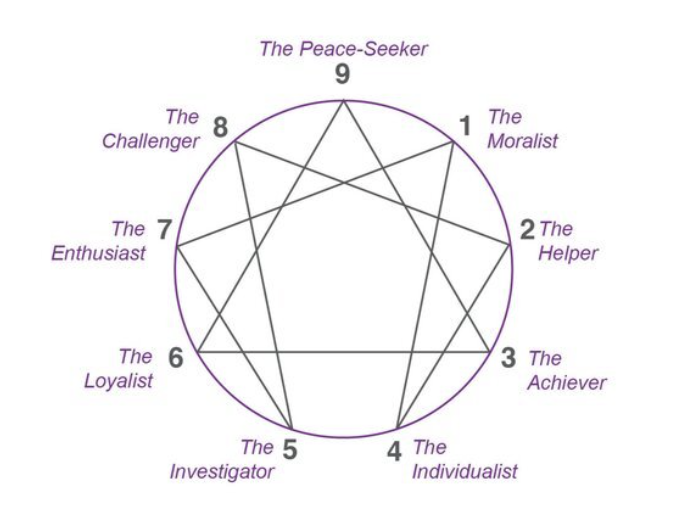
Enneagram Type 1s, called The Moralist, are detail-oriented visionaries driven by a set of principles personal that they feel in their gut and want others to align with. They also forever feel the guilt of not living up to these principles themselves. Famous examples include Nelson Mandela, George Harrison, Mahatma Gandhi, Osama Bin Laden, and Queen Elizabeth II.
In this episode, we explore the essence of the Type 1 and the insecurities and motivations that drive their every action and relationship. We walk you through the story of the Type 1’s life by looking at their journey through the Levels of Consciousness from their healthiest to their average to their most destructive ways of operating. We close the episode by offering a critical type-tailored practice to help 1s rise up in consciousness and be the best version of themselves.
This episode is designed to help Type 1s thrive in their personal and professional lives by fostering a deeper understanding of their insecurities and motivations. It’s also an invaluable resource for friends, partners, and colleagues of Type 1s who wish to better support and relate to them.
Podcast Hosts: Rasanath Das and Hari Prasada Das
Listen to this episode on Apple, Spotify, or your preferred podcast platform
Highlights
[1:00] The Essence Qualities of goodness, sacredness, and purity
[2:00] Wanting to feel like there is no contamination in both external and internal environment
[3:00] The Basic Desire to feel aligned with what is right
[3:45] The Basic Fear of being bad
[5:00] Type 1s are one of the two types that are perfectionists by definition
[6:30] Creative Consciousness. Living by a set of principles that are objective and beneficial for everyone.
[9:30] The Serenity Prayer. “God, grant me the serenity to accept the things I cannot change, the courage to change the things I can, and the wisdom to know the difference.”
[10:45] The insecurity that drives Type 1s to Controlling Consciousness: feeling that I am not being influential enough
[12:30] The right way to put the toilet paper on the rack. Over or under?
[14:30] Upright, uptight energy. Guilt-instilling propensity of the Type 1
[16:30] OCD tendencies
[16:45] Destructive Consciousness. Punishing myself and punishing other people get taken to the extreme
[17:45] Driving others to hell through impossible expectations
[19:00] The practice to climb up the levels of consciousness: become extremely aware of how you are being overly critical
[19:30] Charity begins at home

-
This is an automated transcript and may contain minor errors.
Rasanath: Hello everyone. Today we are talking about the type one on the Enneagram, so maybe you can kick off by talking to us about the essence qualities of the type one. What does the type one really stand for? At its purest core,
Hari Prasada: at the heart of the one, these essence qualities are goodness, sacredness and purity.
Goodness, sacredness and purity. So there's this incredible desire to just. Live in the most unadulterated, pure, healthy, good way possible. And to see everybody live like that, to bring that to the world, I really feel like that's my mission in life, to experience that and to bring that to everybody.
Rasanath: And how does the one experience the essence?
Can you paint us a little portrait of the essence qualities? The one as you experience
Hari Prasada: it, see it in the world. I mean, if you imagine keeping a room pristinely clean and having everything in its right place, and knowing that I have like my little meditation cushion on the comfy throw rug that symbolizes when I step into this space, I'm in a different world.
I'm somewhere where sanctity rules. I want that to be my internal experience all the time. I wanna feel like there's no contamination in my heart that like everything I do is coming from the right place, and it's so good and so beneficial for everybody.
Rasanath: Thank you. And you also talk about this very frequently, even when we do our workshops, that there is a constant seeking of alignment in the one and alignment to the right, the pure.
And I'm checking to see am I aligned to the right? Am I aligned to the pure checking myself and also checking other people because so deep down, that's all I want. I just wanna do the right thing from the purest place possible. Yeah, that's my basic desires to feel aligned with what's right. So what is the basic fear?
What brings
Hari Prasada: insecurities into the one. So underlying even that desire to be aligned with what's right, that basic desire is the fear. The basic fear, which comes from feeling like I'm not enough of my essence qualities. I don't find the goodness, sacredness, and purity in myself enough. I'm not convinced that I am made of that, even though factually I am, but I can't find it.
It's like buried and I worry. I don't have what it takes to live up to my essence. And so the fear comes in and that basic fear runs my life. It runs everything, as I said, even that basic desire to feel aligned with what's right and the basic fear is very simple and straightforward. Being bad. It's just being bad and nobody feels bad.
Quite like the ones, I mean, the sense of. Like, oh my God, my essence has been corrupted. The sense of loss and terror, that I am not good. I am carrying that with me all the time in everything that I do. I can't get away from it. I'm constantly fearing that even if I make the smallest mistake. See, that's the proof.
You're not so good. You are
Rasanath: bad. In my experience of, uh, speaking to many ones, there is also a certain kind of hopelessness that it brings to how they look at themselves and the world because it just feels like nothing is pure. There is no purity in the world. What's the point in anyone chasing it?
Hari Prasada: Yeah, and I wanna be perfect.
Ones are perfectionists. By definition. There are only two types on the Enneagram that must be perfectionists. Everyone can be, every type can be a perfectionist. The ones are one of the two types that can't not be a perfectionist, and so they're looking for a purity that is like complete. That is perfect, and that's the feeling of hopelessness, that where does that exist?
I don't see that in myself, which I'm craving most, and I certainly don't see that when I look at the world. So it's painful and I feel it's my responsibility to bring that into the world and when I am not able to change the world and make it that pristine, sacred place. I blame myself that I didn't have enough purity to inspire people to make it happen, which we'll see that comes out in the levels of consciousness, but it's really intense coming from that fear of being bad.
Rasanath: I remember you also say that for the one, the feeling of being corrupted is even more severe because there was once I was good and I have lost. I have become corrupted and it can be very painful to experience that feeling of being corrupted,
Hari Prasada: uh, loss of my essence, qualities that I know I am this, I know I am this at my core, and yet I am not this, and how do I explain that?
I've been corrupted and it's horrible.
Rasanath: So walk us through the levels of consciousness of the type one starting with the creative.
Hari Prasada: At the creative consciousness, the ones are visionaries. They're seeing what needs to happen in the world to set things right, and they are empowered to really help in their causes, and they're so self-sacrificing.
They're so intent on doing what's good for everybody and. It's coming from a really beautiful, pure place, and they can reconcile with their own failings and they can be honest about their shortcomings, the imperfections, and they're not so deeply disturbed. I mean, they are deeply disturbed, but they can also see that the disturbance of the world is not a sign that I am bad.
They're disturbed by all of the injustice and all of the pain points in life, but they don't make that about themselves. So I am not good enough. I'm so bad. Instead, they find a lot of strength to persevere and keep serving to try to make a difference. And they're principles. They live for principles. I mean, all ones at any level of consciousness.
They're defined by living for a set of principles that are higher than them. They're subordinate to their principles, but at the creative consciousness, those principles are the most objective. They are truly beneficial for everybody. As opposed to like, Hey, these are my principles, and you better, you better subordinate yourself to my principles.
And then you see that there's so much conflict between even ones who are so devoted to their principles, because principles are a variable. You plug a different value into them and then you can fight it out. But at the creative consciousness. It's really universal. It's really like seeing what is at the soul of everyone and aligning in that way.
And there's a wisdom because they've considered life. They've thought things through so deeply. They've tried to make every decision, every action come from that place. What will really be best for everyone? And they take their time. And because of that. The wisdom means they can see more than most people can see, and our world is at a loss because we don't have enough creative ones.
They would've never let the world be so destructive to itself. It's really, we need that creative one energy.
Rasanath: As you were speaking about the wisdom, I was rethinking again about the Serenity Prayer, how the creative one, they know what they can change. And, uh, they have accepted things that they will not be able to change.
Not that they will not change forever, but perhaps will not change immediately, will not change in my lifetime. And in the process of really being able to separate those two things, have developed this really deep wisdom of seeing things not as black and white, but more as gray. And my experience of ones the creative levels is, uh, they have this tremendous patience to work with things to move them in the direction of that objective, right?
And that patience is a sign of hope. It's incredibly powerful. So what gets the ones to the controlling levels of consciousness?
Hari Prasada: It's that fear that arises connected to the basic fear and the specific fear that's stemming from the basic fear is that I won't have the influence. I don't have the influence to inspire people to align with my cause.
As I was alluding to earlier, I feel like it's my responsibility to be pure enough. To inspire everybody else to set an example, I will set the example. People will see my purity and the purity of my example, and they will naturally get it, that they have to align with that. And the fear is that I do not have the influence to inspire people.
And then I reflect that back again on the basic fear is that therefore I must be bad. I must not be good enough. And then what it means is I have to push myself to higher and higher standards so that I'm pure enough and I'm setting the example. And then people will understand. They will see it, and I'm correcting people and I'm correcting myself to try to bridge the gap.
Of where I see impurity and imperfection, I see it within me. I see it outside of me, and I'm constantly in this corrective mode, like trying to parent everybody like, you didn't do this right? And then I'm doing that to myself. Oh my God, I didn't do this right. Oh no, I have to try harder. And it's so exhausting.
It's sucking the oxygen out from other people because it's so stiff and they're constantly feeling like somebody's looking over their shoulders, waiting for them to make a mistake and say, see, you are bad, because that's what I'm carrying. All that I'm carrying is this feeling of being bad. So that's what I have to give others instead of the purity that I'm looking to give people.
Rasanath: And this can happen with the smallest things. Right. You said that by definition, the type one on the Enneagram is one of the perfectionists, and so it can happen with the smallest possible things. I, I love that you give the example of the toilet paper. Can you, can you share with us the example of the toilet paper
Hari Prasada: that you give?
I'll give you the abridged version. My girlfriend when I was in college, I believe is a type one, and, and she once asked me. So, do you know what's the right way to put the toilet paper on the rack? And I thought, that's brilliant. You know, I hadn't considered it, but I have enough one in me that like, that question resonates deeply.
So, yeah, I have to know the answer to this again 'cause I know what's right. I'm pretty one-ish, so I have to know what's right. Yeah, I know it's under. She said, you're right. I was like, yes, yes. I got the one to validate me that I'm right. And then she said, but studies show that most men and ones always have their studies, you know, to back their logic, their views, their right rightness, righteousness.
So she said, studies show. Most men think it's over. And I was like, what are you trying to say about me? That's, that's not, Hey, wait a minute. And then years later, I had a come to Jesus moment where I saw the light and I realized that actually the right way is over. And uh, that's a, you know, that's a topic for another day.
But yeah, it was powerful.
Rasanath: We've also talked about how when the type ones are in somebody else's home using the bathroom, they can have pretty strong views about the toilet papers, you know, how it's placed on the rack, and perhaps even change the toilet paper direction before they use the bathroom because it disturbs them to the core.
Hari Prasada: Yeah. And I just did you a favor. You know, you can thank me later. One day you'll realize that the fact that I changed your toilet paper roll that day, I was setting a very high example. So, so you can see that this applies in the most arbitrary areas that perfectionism in that sense of what's right. And you can get into heated debate with ones about all kinds of things I've done.
I made the mistake of having like an all night discussion with a one. Debating, you know, film from the perspective of should it be art for art's sake, or do you need to understand the author's intent, the artist's intent. And, you know, I wish that I had my time back for that all night discussion, but it can get intense with the ones to know what you're getting into,
Rasanath: what's really happening.
You, you spoke about the effect in other people, like the oxygen is being sucked out, uh, because of, uh, the tower over you from a place of judgment. Can you walk us through a little bit on what else is the effect on other people and also what is the effect on the type one themselves? Like what suffering are they really caring at this level of consciousness so that we really understand what's happening in the inner world of the one.
Hari Prasada: Ones have this kind of upright and often uptight energy where they're, they're really like, their posture is very prim and proper, and there's something so feels so dry and so like I'm being scrutinized all the time and it's guilt instilling and people don't like when you make them feel guilty. The ones are expert at it, and again, it's because they feel so guilty themselves.
They're punishing other people for their wrongs, and at the same time, then they're punishing themselves and I feel like I need to beat the crap out of myself. Because I'm not good enough. And then sometimes it's like I made this person feel bad. That means that I'm not inspiring them, right? So I should feel bad about not inspiring them and making them feel bad.
And it's just this vicious cycle. And you know, I'll clean the same place. 10 times because it needs to be spotless. And you can see how there can be OCD tendencies that come to light as we go down the levels of consciousness. 'cause it has to be perfect. And I'm gonna show that like this is really perfect and other people can't live up and they feel like, what's the point in trying?
And it's so discouraging and painful.
Rasanath: Then what happens when they don't wake up to the effect on themselves and other people? What happens in the destructive levels of consciousness?
Hari Prasada: It just gets brutal. That same mechanism of punishing other people and punishing myself gets taken to the extreme, and that's where there can be physical violence, there can be, you know, terrible emotional abuse that's debilitating, where people feel like they'll never be good enough that, uh, you just lay into them this idea that they're, you know, they're so bad and they have no hope.
And that again, that's how I feel about myself. So for all the nine types of this level of consciousness, homicide and suicide become possibilities. But from the standpoint of what they're seeking, validation for, in this case, that I am good. Everybody has to make me feel that I'm good. So align, get with it, and I'm willing to drive people to hell with my expectations.
And again, it can become very violent. So it seems like
Rasanath: from a place of aspiring for that purity and so deeply trying to align with that, you see at the destructive levels of consciousness, it's the same type, but it's behaving so differently. But still deep down beliefs that what they're doing is actually an expression of purity.
And it's the distortion of, you know, what the essence is at the destructive levels of consciousness, which is so remarkable and so shocking.
Hari Prasada: Also, I'm, I'm at war with myself even into the controlling. By the time I get into destructive, especially, there's the side of me that's. Wanting purity. And there's a side of me that can't live up to that and is indulging, and then I can't reconcile it too.
So I'm just at war with myself. I see the darkness and the light, and I'm letting the darkness leak out and I'm indulging, but I can't reconcile with that. So I, you know, it's like very, very brutal inside the, the war going on.
Rasanath: What can the one do? Climb back up the levels of consciousness.
Hari Prasada: We give a practice for each of the nine types.
The practice for the one to climb up the levels of consciousness is become extremely aware of how you're becoming overly critical. That goes for both yourself and for other people. Become extremely aware of you, of how you are being overly critical. There's a harshness to the ones I have to catch that, and charity begins at home.
I'm not gonna be easygoing and loving. You know, towards other people. If I am so wicked towards myself, so harsh towards myself, I have to be able to see it. It's unconscious. I don't see how hard I am. It just seems like this is justified. You know, we have to lay down the law and like my inner critic is going wild and it's unconscious.
I often don't hear the voice of my inner critic. I'm just beating myself up as an instinctual reaction. I'm not even aware that I'm doing it a lot of the time, so I have to bring awareness, see how harsh it is, how inhuman it is, and charity starts at home, become compassionate, recognized I'm human, and one step at a time, one step at a time.
And you know, like a child loving with, you know, my own imperfections and failings. I can't expect a child to act like a perfect adult. That's what it comes down to really become so aware of that critical side and reign it in with self-compassion and compassion for others.
Rasanath: Thank you. My father is one, and as you were explaining the journey of the one and how hard they are on themselves, it just reminded me of how he made me emotional because he's fought against corruption his entire life.
In small ways, in substantial ways sometimes, and I could see the agony of in his own face about how he needs to be so much better in order to be able to do this. And when you were talking about the practice for the one just reminded me of walking through that suffering, which is so powerful. Thank you.
Thank you for walking us through the type one. This was very enlightening.
Episode Transcript
Continue Exploring the Enneagram
Browse all Enneagram podcast episodes
Understand the Enneagram framework — clear breakdowns of the Types and how the system works
Join our live Enneagram community, Enneagram Library Live, hosted by the Upbuild team.
Take the two-day Enneagram 101 workshop