
The Upbuild Enneagram Library
Type 1 in the Body Center: Intuition, Rightness, and the Squeeze of Perfection
Subscribe on: Apple Podcasts, Spotify, YouTube, or wherever you get your podcasts
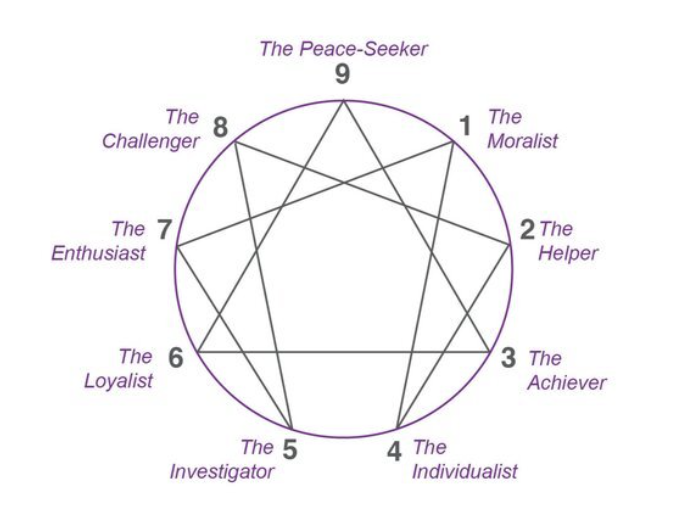

Episode Description
What does it mean for the Type 1 to operate from the Body Center? In this episode, Michael, Hari Prasada, and Rasanath explore the Type 1’s unique relationship with bodily intuition, gut-level urges, and the instinctive drive to move the world toward what is right. They unpack how they use logic after the fact to rationalize gut instincts, the hidden trap of hypocrisy and self-righteousness, the physical sensation of "the squeeze", and how Type 1 can move up the Levels of Consciousness toward genuine purity and the real self.
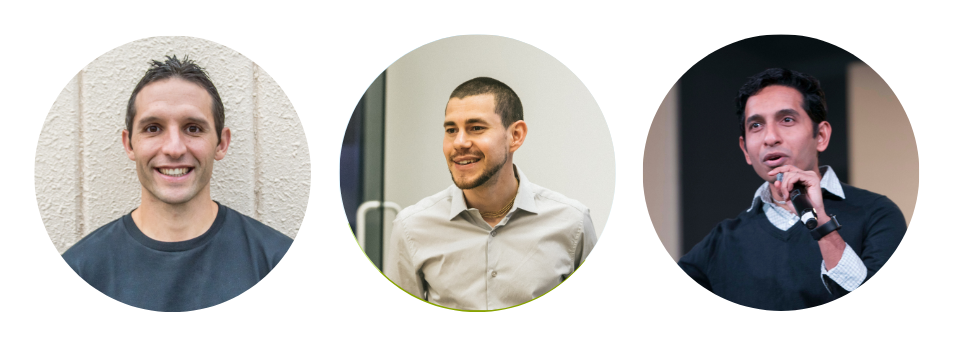
Podcast Hosts: Hari Prasada, Michael, and Rasanath
Listen to this episode on Apple, Spotify, or your preferred podcast platform
Highlights
[00:40] The 1 in the Body Center.
[01:00] Moving the world according to what is right
[01:40] Posture and physical alignment
[03:30] Logic vs. intuition: Rationalizing gut-level urges
[06:20] Backing up pre-made decisions
[11:00] Judgment and guilt
[12:00] The "finger of doom" (from Don Riso and Russ Hudson)
[15:50] Moving up the Levels of Consciousness
[19:30] "The Squeeze"
[21:50] Moving from ego-based purity to the life of the soul
Quotes
"[For the 1] The connection to what is right is very strongly felt, very strongly experienced…and the 1s feel it in the gut." -Rasanath
"1s like to think, 'I'm a very sensible, rational person.' That is more after the fact. That is not the origin of where they're coming from." -Hari Prasada
"You wanna root out hypocrisy from the world, you wanna root out hypocrisy from yourself, but first you have to figure out what is my self. Otherwise, the hypocrisy is what's running the show..." -Hari Prasada
"Types 1 are in search of purity, and purity doesn't really exist on the level of the ego... To be aligned with what is pure means to live the life of the soul." -Rasanath
Episode Transcript
-
Michael: Hello, everyone. Hello, Hari and Rasanath. It's great to be back with you guys. Today, we are going to be covering the type one in the body center, so we can get right into it. And Hari Prasad, could you get us started by sharing what does it mean again to be a body center type, and what is the one's unique relationship to the body center?
Hari Prasada: So the body center types are in tune with the way the world is moving. They have a gut sense of how things move within the world and a strong desire to move the world . So the one's unique relationship with this Is that they have an intuition, a gut sense of what is right and what is wrong, something that they feel in their bones, and they want to move the world accordingly.
They want to move in the world and have the world move according to what is right and what is countering that which is wrong.
Michael: And so what are the gifts that the one has that they can bring to the world as a result of their presence in the body center?
Rasanath: one of the most important aspects of the physical body is posture, learning how to walk straight, feeling like I'm standing erect and walking erect.
The body gives us an experience of what alignment feels like. When you walk with a straight back, there is a sense of alignment. There is a physical feeling of alignment. For the ones, the same feeling of alignment is much more universal, much more cosmic, in the sense I want to be aligned with what is universally right.
And this is a gift that the ones have because in their gut, especially when they're healthy, but also even when they go down the levels of consciousness, the connection to what is right is very strongly felt, very strongly experienced. I share how once a one told me that they're not trying to be right.
They're really not trying to be right. She was closing her eyes, and she was very sincere about how she conveyed it. She said, "I'm not trying to be right. I just am." And it's funny when you hear it, but when you understand the inner experience, there is a sense of complete alignment with what is universally true and right, and the ones feel it in the gut.
It's just that as they go down the levels of consciousness, how they express, how they respond to that starts to get distorted.
Hari Prasada: Even the inputs are getting distorted as they go down the levels of consciousness. The sense of what is right is getting distorted, and as they go further and further away from the self, the sense of rightness becomes more and more abstracted from actual objective universal rightness, that which is most beneficial for all.
Michael: And one point of clarification, because when we think about right and wrong and morality and knowing what's the good thing to do, it might be easy to think that this is coming from the head. This is actually, like, my thoughts are driving that understanding. So how should we understand the one's presence in the body center then?
Hari Prasada: It's coming from a sense of what's right, and I will back that up by logic. I'll employ my head to justify it, but that's not the origin . It's a sense in me that this is right, and therefore I must do it. It's like an urge. The body center is full of urges to do, to make things happen based on the inputs that we receive from the world.
And so I'm getting some read on the world that this is what would be right, and then I'm moved to respond, and I use logic to justify it. So one's like to think I'm a very sensible, rational person. That is more after the fact. That is not the origin of where they're coming from. Of course, education is needed, and of course, we need to use our minds at all times.
I'm not saying otherwise, and that will impact the one if they're open, if they're healthier, if they're impressionable. However, there's something ontological, if you will. There's something in the setup, in the structure of their being, which is to pick up in a sensorial way what is right as an urge to then make it happen, to fix what is wrong, and so on.
Michael: Very, very helpful. I'm thinking how this center is also called the gut center sometimes. You can think of it as the body center or the gut center, and we talk in our common language about having a, a gut sense of things. And so the ones have a particular orientation with that.
Hari Prasada: And the gut sense changes based on knowledge
In other words, when one is receptive and becoming healthier based on knowledge of what is reality, and especially knowledge of the real self, which is the ultimate reality that we want to go towards, the reality of the self and everyone else as a self, a spiritual reality, then the gut sensations change.
They actually move accordingly. Now I'm picking up different things than I was picking up before. It's like I was picking up static before, and I was responding to the static feeling like this is right, and now I'm starting to pick up the actual signal.
Michael: What are some of the challenges that the one faces as a result of being in the body center?
Rasanath: The decision is made even before it's backed up, right? The sense of right is so strong. As an example, my father-in-law is a type one on the Enneagram, and just two nights ago, we had a conversation where, uh, we discovered that he had actually stopped taking his medication that he had received for his kidney malfunctioning, and then we had to have a serious conversation.
And in the conversation, I had to ask him, "Do you trust-- Do you actually trust that the medication is helping you, or do you trust that the doctors are actually speaking for your benefit?" And I had to, like, really push hard, and eventually it came out. He said, like, "Fundamentally, I don't trust Western medicine."
So I'm not gonna take it. But he was giving data . He was giving evidence in terms of, like, so many other things as to why he has to listen to his body and why this medicine may not be appropriate for him. But what we discovered was that the decision of right and wrong was just already fundamentally made, and then everything else was just backing up that internal decision of what is fundamentally right and wrong.
This is the challenge. The ones can, as they go down the levels of consciousness, become very closed-minded about how they're looking at life, and, uh, they will also back things up with data, but that data is only supporting a decision of what they f- already feel is right.
Michael: I'm-- I can experience the depth of what you're saying here for the one, because in some ways, their whole thing is about rooting out hypocrisy in this world.
And yet when you describe being closed-minded, that is such a hypocrisy compared to what they supposedly stand for. And so here they are sabotaging the very thing that they're actually after in this world.
Hari Prasada: And it has to be that way. As much as it pains the ones to think about, to even consider the possibility of this truth which they have not reconciled with, unless they're very spiritually advanced
But it has to be this way because as soon as I abandon myself for my ego, my identity of who I think I should be rather than who I actually am, the true self or the soul, then I'm already a hypocrite, and anything I do is not related to the real me. It's not coming from the real me. It's not going to the real me.
It's not related. So everything that I'm taking on is an abstraction that I have to then justify really well and create as good of a case, as strong of a case as I can and convince myself, convince everybody else, and I do it all unconsciously. So for the one, this is exactly what's happening. It's actually the nature of the true self.
There's a Sanskrit term that s-speaks it beautifully, Saralata. It's simplicity, straightforward, clean, pure. Ones are all about purity. They're all about cleanliness. The nature of the true self is this. This is what they're looking for. But when we create a self on top of a self, it becomes the opposite.
It's covered, it's unclean, and then we align everything with that self on top of the self, which is not clean. And then the ones wonder, "Why am I not satisfied?" Or they can't admit to themselves they're not satisfied with their purity. So the nature of each of us operating in this world until we're fully self-realized, fully identified with who we actually are, the true self, is duplicity We are always positioning ourselves to be something we're not and to get validation for that.
That is the case for everyone, regardless of type. It's true for the fours who just wanna be authentic. This is how the game gets rigged, and, and I often especially speak about that for the fours, but it applies equally to all the types. And certainly you can see how fundamental it is to understand this for the ones.
Ones, we've rigged the game. You're trying to do what's right for something which isn't. We are not our egos. So you wanna root out hypocrisy from the world, you wanna root out hypocrisy from yourself, but first you have to figure out what is myself. Otherwise, the hypocrisy is what's running the show, and that is intolerable, so much so that I can't even grapple with it, but this is where the work lies.
I have to grapple with it, I have to work through it, and I have to move towards who I actually am.
Michael: What is the experience like on the other side for somebody who is dealing with a one at a lower level of consciousness?
Rasanath: They feel incredibly judged because the ones, they're always looking at things in terms of right and wrong.
As the ones go down the levels of consciousness, the self-righteousness of the one increases dramatically. And so if you are around a one at that level of consciousness, you feel that you're not aligned with what's right, 'cause that's how they're looking at you And it's intense to work around someone because when someone is looking at you as though you're not doing what is right, then the natural effect is guilt, and then also shame many times because it's not just what you're doing, you fundamentally are an impure person, right?
And so there is a lot of experience of guilt and shame with the self-righteousness of the one.
Hari Prasada: It also gets very intense very quickly. So ones with this kind of bodily energy about them, it's a little bit more dressed up than for the eight, right? And for the nine, the nine just mutes it. It's a suppression.
All the types do a form of suppression very, very heavily. But for the nines, they're suppressing that intense bodily energy of wanting to move and move the world. For the eights, that's not what they're suppressing. They're suppressing weakness, right? And, uh, anything that makes them feel vulnerable. For the ones, it's kind of a dressed up bodily energy of wanting to move and move the world.
It's, it's dressed in some form of propriety. Even if they are punk protesters who are tough and intense in the way they look and feel, they're still trying to be proper in another way. And yet I draw the contrast between such a punk one and like a Victorian style, outwardly prim and proper one. But there's a very strong similarity.
They're trying to be proper in different ways And regardless of which one we're talking about or anything in between or, or otherwise, there's an intensity that you'll feel very quickly. You get into debate mode. Ones are always ready for it, and it- there's something they just like about this debate, and it should be fierce.
There should be some fierceness to it 'cause that makes me feel like, yeah, you know, the bodily energy is flowing, the intensity of moving the world and moving my body is flowing. But it's not like the eight, you know, boom. It's around what's right, and rhetoric, and ethics, and it should be done like this and not like this, but it's intense, and people feel like, "Oh, that, that bodily energy is being thrown at me.
I don't know what's hitting me."
Michael: For people who are listening on audio, can you give a little bit of, uh, an audio version of some of the hand signals that you were- ... you were just using?
Hari Prasada: Yeah, for the eight I was pounding my fist, and for the one it's moving the hand this way and this way, to the left, to the right in terms of discerning what is right and that which is not right.
That cannot be accepted.
Michael: And we often reference the finger of doom that, uh-
Hari Prasada: Oh, yeah ...
Michael: it comes from Don and Russ, I believe.
Hari Prasada: Oh, yes. Yes.
Michael: Which is the, uh, the pointer finger outwards shaking at somebody, and, uh- It can be a very intense experience to be on the receiving end of one of those fingers of doom.
Hari Prasada: Yeah, and I, I often give the example of one dear soul we were working with who told us , "You know, we just don't debate enough." And I was so puzzled by this when Asanat and I heard this from him because I was like, "We debate everything. Nothing actually goes to press, so to speak, until we've debated it thoroughly and really arrived at something, and we can be strong, and we can get into very serious debate."
And what I learned from that experience was he wasn't satisfied with the intensity, the bodily energy of the debating. It was like he didn't get enough juice from it. I was like, "Okay, that's, that's not my thing." That's very different. And so you get a sense of the one in the body center. It's like there's some juice from the bodily energy of like, "Yeah, I can move things."
Michael: So how can one start to become more present in their body center and, and move up the levels of consciousness through this understanding of the center?
Hari Prasada: Ones need to be aware, first of all, that they are body center types and what that means. It's not as obvious for them. Again, as you rightly pointed out, Michael, ones identify a lot with their head.
Like, "Oh, I'm reasoning everything out. I'm just such a reasonable person. I do everything based on my good sense." But good sense is actually coming from the bodily sense, the sensation of picking up things, how the world moves, and then I form my decision from that. And so we have to be honest with ourselves that that's what's happening.
There's kind of a, a presetting here, an inclination that comes from a different place that's not as logical as I'm making it out to be, and if I can admit that, then I might be able to open up to what might be actually higher. Ones hate this. Higher? What? Higher than me and my righteousness? Are you kidding me?
This is the direct confrontation of the ego. Nobody likes this. Everybody hates this. Ones, this is the center of their struggle. I have to be right. I have to be good. Ah. And so when we hit up against that, it's so intense for the ones, and then that's why they bring out that intensity on other people because they wanna prove to themselves that I am so good, I am so right.
You just have to align with me. Damn it. Once we admit that this is not coming from the place that we think it is, then we can do some more research. We can become curious in an exploring mood of what might be more right than how I'm thinking currently, which is based on a gut sense. And it's not that gut senses are inferior to logic.
That is not the point. It's that both are needed, and sometimes the gut sense is superior. It's not that the head center types have any kind of advantage here But we have to be attentive to where it's coming from so that it's not hypocritical and again, dressed up as something else than what it is, and that we're actually open, that we're actually open to receiving.
Our hearts are also needed in this process, right? So first, become present to your center and the fact that you are getting some urge in the body that this is what would be right. Question it. Question it seriously. Question where it's coming from. Think more deeply. Think about what moves my heart, and then go from there.
But for all of this to actually work, you need the right sangha, the right association, people who are further along on the path to true self who can guide you. And without that, it's all kind of shooting in the dark and, and conjecturing and grasping for straws. So somebody who's further along can give that education of what is truly sound, what is coming from the highest reasoning, from the most heartfelt place, and the best gut intuition of right and wrong.
Michael: Before we move on from here, I wanna just give you the chance to talk about the squeeze, 'cause I feel like that's a very important part of understanding the one and especially in the body center, and what we can do when we notice ourselves if we are ones with, with that squeeze.
Hari Prasada: Oh, yeah. Well, o- ones that shows up in their body language, in their posture, that there's a tightness because they're so strict about things.
They're also not strict about many other things. The things they don't care about, that we don't wanna stereotype them, the things that they don't care about, they can be completely callous to and l- very loose with. And you can imagine when there's so much strictness on certain things, there has to be, as a compensation, a lot of not strictness about other things.
But what they are so strict to, they are really so strict to . And when they fail, which they do, in adhering to their values, then their values either change or they come into this place of being in a constant war within themselves, and all of this shows up in the body language. And even at their healthiest, there is a kind of propriety and sternness that you can feel And as they go down the levels of consciousness, it gets squeezed and squeezed and squeezed.
Don and Russ talk about it like a toothpaste that has been squeezed out of all of its juice. And with that, there's a dryness. It's like all the juice of life has been squeezed out of me because I'm so strict, and I have to adhere to this, and I'm failing. I'm not good enough, and people are frustrating the hell out of me.
They're not good enough. Why don't they listen to me? Why don't they align with me? They're not making me feel like I'm good, and I'm good enough to inspire them and influence them, and I just feel so squeezed inside that when you see me, there's a closeness and a tightness, an uprightness and uptightness in my energy.
Michael: We should definitely have the body center episodes recorded on video and not, not just audio. Wonderful. Thank you very much. I, I really appreciate you, you bringing us into the, the full experience like that. So as we come to a close here, what would you share in closing, and especially as we think about the spiritual understanding of moving from the ego to the self or the type one?
Rasanath: The ones, ones are in search of purity, and purity doesn't really exist on the level of the ego. Fundamentally, by definition, the ego is pseudo. The ego is not the real self. And when we base our sense of purity on the ego, then we are fundamentally not pure. The, the ultimate purity is only experienced when we return to the real self.
So the ones have to understand, ultimately, deep down, that's what they're actually searching for. To be aligned with what is pure means to live the life of the soul. It is actually as simple as that. And most ones will not necessarily debate it because they know intuitively, and this is the beauty of the one too.
There is a sense that something is actually uncontaminated. To live aligned with that takes us to know what that true self is. So without investing in understanding what the true self is, then everything else that comes out of that is only false.
Hari Prasada: There are also many very, very aspiritual ones. I would say that's the majority of ones because it's the majority of this world, and the ones are not an exception to that.
But there may be more of an intuition of a core of me than perhaps other types which they can lean into. But then they have to also see that that's leading me to the spiritual. As soon as that becomes the obstacle, then we're stuck.
Michael: Wonderful. I have a lot to take with me from especially this last part of, of the discussion.
Thank you so much for sharing your wisdom as always, and, uh, thank you everyone for listening.
Continue Exploring the Enneagram
Browse all Enneagram podcast episodes
Understand the Enneagram framework — clear breakdowns of the Types and how the system works
Join our live Enneagram community, Enneagram Library Live, hosted by the Upbuild team.
Take the two-day Enneagram 101 workshop