
The Upbuild Enneagram Library
Type 9 Across the Dimensions
of the Enneagram
Subscribe on: Apple Podcasts, Spotify, YouTube, or wherever you get your podcasts

Episode Description
This compilation episode brings together our discussions of Type 9 across the many dimensions of the Enneagram to build a richer, more complete understanding of the Type. The team explores the 9’s connection to the Body Center, its relationship with anger, its search for peace, harmony, and unity, Behavioral Patterns, Wings, and patterns of growth and stress. They examine both the remarkable strengths of Type 9 and the internal struggles that can accompany the pursuit of peace, harmony, comfort, and stability, including the suppression of anger, withdrawal from conflict, lethargy and procrastination, and the challenge of recognizing one’s own importance and engaging fully with life.
Podcast Hosts: Hari Prasada, Michael, Rasanath, and Vipin

Listen to this episode on Apple, Spotify, or your preferred podcast platform
Highlights
[00:50] Introducing the Enneagram Type 9 Compilation
[02:00] The Body Center
[05:40] The Withdrawn Behavioral Pattern
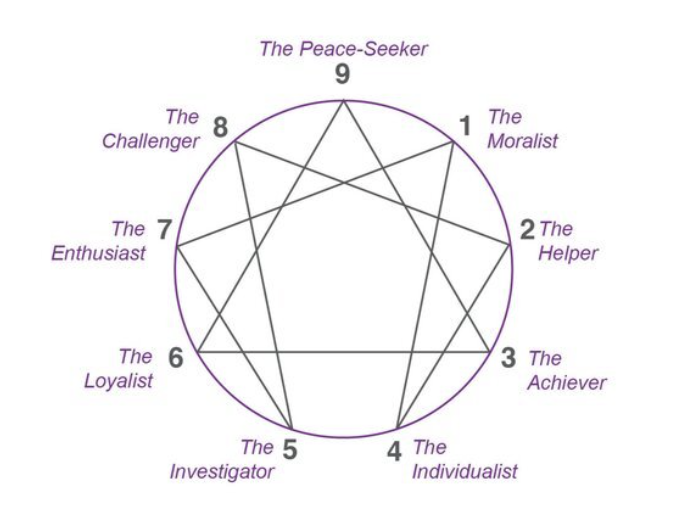
[09:20] The Directional Movements: toward Type 3 in growth and Type 6 in stress
[12:00] The Predominant Emotion: Anger
[15:50] The Wings: 9w1 vs. 9w8
[17:50] Falling in Love with Type 9
[23:00] Parental orientation: Attachment to the nurturing and protective function
[23:30] The Harmonic Group: Positive Outlook
[24:50] The Achilles Heel: “I cannot accept my own importance.”
[27:50] The Passion: Sloth; and the Virtue: Engagement
Quotes
“[For the 9], I suppress my anger because it directly contrasts with my sense of identity as The Peaceseeker.” -Rasanath
“[For the 9], by not taking responsibility, I'm saying I don't matter.” -Hari Prasada
“[For the 9], I basically make myself so small that, yeah, then I'm peaceful. But this is artificial, it's escapist, it is unkind to myself, and it's unkind to the people in my life who I am responsible for.” -Hari Prasada
Episode Transcript
-
Welcome to the Upbuild Enneagram Library. Drawing on years of teaching, coaching, and lived experience, we've created this podcast as a deep library of Enneagram knowledge to support you in the most important journey there is, the journey from the ego to the true self Hi, this is Vipin. Before we get into the episode, we wanted to share a few things happening at Upbuild.
We've got our six-month coaching certification program, a bi-weekly space for deep conversations on the Enneagram called Enneagram Library Live, and our weekly spiritual gathering, Remembering Who We Are. You can learn more at upbuild.com. And now, on to the episode
Welcome to this special Enneagram compilation episode on the type nine.
Michael: In our podcast, we've explored the Enneagram through lots of different dimensions, including the centers of intelligence, behavioral patterns, predominant emotions, and many more. Each of these episodes looks at one particular dimension and explores how it shows up across all nine types.
For this episode, we've flipped that around and pulled together all the excerpts related to a single type to give you a deeper understanding of that type through the different dimensions we've covered. Since each clip comes from a longer conversation, in this episode, you'll be jumping into discussions that are already underway.
Between each section, you'll hear a brief chime and a quick introduction to the next dimension so you know where we're headed. Each dimension shines a light on something different. Put them together and you start to get a fuller picture of the type, including both its incredible gifts and the darker patterns that each type is called to recognize and gradually transform.
We hope you enjoy the journey. Over time, we'll also be releasing full-length episodes that explore each Enneagram type through these dimensions in greater depth.
Our first stop is the centers of intelligence, the dimension that helps us understand where each type primarily processes and responds to life. For type nine, that's the body center. Let's listen in
Hari Prasada: The nine. Their essence qualities are wholeness, unity, and flow. So they're sensing how the world is moving and they're. If they're not wanting to go against it, the eights are like, let me go against the world, let me shift things, counter things.
Let me give my presence to move a mountain. Benigns are thinking almost the opposite. Things are already moving in this world. How do I just get into that current? So nines are sensing, okay, things are going like that and like that, and like that. I'll just ease myself in. Yeah, I have that intuition. I'll just enter into that flow like that, and then there will be harmony and I will be able to be peaceful and it will be very nice.
That's the feeling of benign. The world is moving, the world is moving. The world is moving. Don't let it knock me over. Don't let it cause me any disturbance. Let me figure out exactly the right place to enter the stream when it's exactly the right speed and everything is comfortable and nice, and then I can move with it.
Michael: And so how does that situate them in the body center?
Rasanath: One of the characteristics are. The essence of the type ninex is flow. So this word flow has been used a lot. Sometimes in coaching sessions I hear, but I wanna be, I wanna experience the energy of flow. I wanna be in that flowing space. And many times we are talking about that as like intellectual ideation or creativity.
The fundamental basis of flow state, it begins with the physical body. The nines understand this, the how do I navigate the world with a certain sense of smoothness and ease and grace, despite the all the obstacles that I face When you see nines, when they're very present. Our teacher, Russ says this, that nines are very, very good with their physical movements.
There is a way in which when their hands are moving on the piano or when they're playing a sport,
there is a certain ease and grace and flow through the world in terms of navigation. The other thing with.
The nine is also, so when we talk about the eight as the announcement that I am here, the aliveness of it, the nine is also embodying the what does it feel to actually be grounded, you know? And one of the experiences of groundedness is I feel connected. I feel connected to everyone, and there is a sense of unity and harmony that comes with it.
Nine's also. When we talk about the Enneagram, one of the characteristics of the nine, especially as they go down the levels of consciousness, is a sense of overwhelm. A feeling like I have just been uprooted, a sense that my world has been completely shaken, and all of that is coming because there is no longer a sense of grounding.
Our next stop is behavioral patterns.
This dimension explores how each type tends to move through the world. Type nine is one of the withdrawn types, which means they are often shy, thoughtful, and prone to overwhelm.
Rasanath: the withdrawn types, by definition, these are types that are shy and are prone to overwhelm and as a way of coping with the overwhelming nature of the world, they tend to pull back. That's why they're called withdrawn.
the ego boundary is a perforated ego boundary. Uh, teacher Russ Hudson also calls it a picket fence in the sense there are gaps, there are perforations, which means now they understand why they feel overwhelmed, because things enter so much more easily from the outside world inside of me, they affect me instantly.
This is also what happens with the difference between the go-getter types and the withdrawn. It takes time for the go-getter types to even recognize that they have been affected because of the solid ego boundary. Whereas with the withdrawn types, I immediately know it's, in fact, I'm almost preparing to be affected.
I know as soon as I step outside, I'm going to be affected by the world because I have things just come in. I also, in the same way, have access to my subconscious and unconscious more readily. Things flow more freely from my subconscious and unconscious into my conscious, so that makes it pretty overwhelming the amount of things that can really affect me, and as a way of coping with the overwhelm, as a way of responding to the overwhelm I tend to pull back from the world.
That affects me so much.
Michael: You use the. Metaphor of soundproof walls for the go-getter types. I'm thinking of being in a New York City apartment on the first or second floor and having paper thin walls on a very crowded street where there's lots of honking and having that is the experience of life for the Withdrawns.
Hari Prasada: When we were living in our ashram, were monastery that we had founded for the purpose of doing this work when we were still monks and we had branched out of our original monastery to focus on this work. I remember having sleepless nights in the beginning because of that noise. I mean, it's such a vivid metaphor and so fitting because that's exactly what it's like that I can't sleep until I get all of the noise machines in place and I figure out exactly what room is most cordoned off, and I mean, we literally have to switch rooms, all of that stuff.
It feels, and this is what I wanted to say, it's crazy making for these types. It's crazy making, and the external world is equally overwhelming, as is the internal world that this free flow of all of the unconscious and subconscious things that just kind of rear their ugly head or crop up or tempt me or attract me.
It's like, what am I supposed to do with that? And it can happen at any time.
Michael: So then it's also not a stretch to understand why these types behaviorally are the most introverted. That's right. Of the three behavioral patterns.
Rasanath: That's exactly right.
Next up are the directional movements, the dimension that helps us understand how each type tends to grow and what happens when they're under stress.
For type nines, this means taking on some of the healthier qualities of type three, the achiever in growth, and some of the less healthy behaviors of type six, the loyalist under stress.
Hari Prasada: The nine last of the types benign in growth, moves towards the three. Benign is feeling like I'm so insignificant. What do I matter? I'm nobody. And well, that may be nice if it's done out of true humility.
It's coming out of insecurity by default that. I really don't want to deal with mattering. I don't want to have the responsibility that makes me very not peaceful if I'm a key player in anything. If people are really expecting things from me, oh, I can't, that's too much for me. That's so, so disturbing. So when I move towards the three, I'm actually engaging in a way where I recognize that I do matter and it's still not about me.
It's about what's really important, what will best serve, and I become so driven to serve other people in the biggest and best, most committed way, where actually I shine. I really give it my, all, my full force, my full heart, my, my full capability. And I invest so heavily in contributing to the lives of other people that I'm unstoppable, like the three, when I move towards stress.
The nine goes towards the six. The insecurity of not being a peaceful person gets so amped up that I start causing all kinds of anxieties for myself, and I am I. Really grasping for what is my comfort zone? What can I rely on, what can I depend on? What order and structure can I create? What habits and barricades can I make so that there is certainty and order, and then I'll be peaceful at last.
But actually I'm feeling so, so, so encroached on in my little world of hopeful peace that I'm in much more anxiety
Michael: like the six.
Now let's turn to the predominant emotions, the dimension that helps us understand the core emotion that each type most centrally experiences.
For type nines, that predominant emotion is anger, and along with that comes a core mantra shared by the types in this triad, "Don't mess with my world. Don't mess with my world."
Rasanath: If you are a type IX and you're listening to this podcast, this is not the first time that this has happened to us in our experience, you might be very surprised that the predominant emotion for the Type IX is anger.
Remember, the name of the Type IX is the peace seeker and me angry. No way. This just doesn't make any sense. I'm just not able to relate to it. But here is the catch. It's expressed their anger, as Arial said, in a very straightforward way. For the nines. It's the same autonomy. Don't mess with my world. I want to keep my internal world peaceful and there is all these chaos outside People are too loud.
Sometimes people are just talking about their troubles. I'm just reminded of the messiness and the brokenness of the world. I just don't want that you are messing with my world. Just leave me alone. Is actually the inner spirit of the nine, but because I'm the peace seeker, this is how I do it. I suppress my own anger.
My relationship with anger is quite complex actually, and because I suppress my anger, because it directly comes in contrast to my sense of identity as the peace seeker. I have to suppress it. Many times, nines think that they don't even know what this emotion is because they don't feel much of it. But when you suppress it a lot, it lives in the unconscious and it comes out in passive aggressive ways.
And others experience it as stonewalling, but deliberate stonewalling. It feels very calm from the outside, but it's very stubborn from the inside. And when they don't come in touch with their anger, it's a much more readily in touch with their anger.
I almost like that about myself. Yes, deal with it. This is anger. Deal with it. The nines, they are not in touch with your own anger. And the way they express it is they're trying to protect themselves from seeing their own anger, and they're also trying to protect others from their own anger, which means the only way they can express it is by some sort of stubborn stone walling.
Hari Prasada: One of the most striking things that Don and Russ point out about the nine is that they have the self same anger as the eight. It is exactly the same energy that is being unleashed by the eight, which is so big and so loud and intense is all present in the nine to the same degree. And it's all used to suppress because to minimize my emotions, to make me peaceful, to wall off my emotions requires so much intense energy.
But because it's all happening unconsciously, I don't know, everything's fine. Even when they
Rasanath: say, sometimes
Hari Prasada: everything
Rasanath: is fine. You feel like somehow the anger is just leaking, waiting to come out, but I'm just gonna keep it inside.
Hari Prasada: And many times people won't even feel it and they won't even know.
Next up are the wings. Here we explore the differences between a Type Nine with an eight wing and a Type Nine with a one wing.
Hari Prasada: The nine with an eight is predominantly introverted from the nine, but has a wild side and a kind of strength loving endurance chasing.
Element to them and they're more of a like the casual hanging out kind of peace lover. We're just here hanging out that nine with a one by the influence of the one is more introverted. And is more prim and proper and like, okay, so we're here. We're being peaceful, right? We're doing a good job, being peaceful, I hope, and there's this little bit of uptightness and making sure that I'm proper enough, whereas the nine with an eight is slinking back.
Like, yeah, we're just hanging out. We're just chilling. It's all good. Very different energies.
Rasanath: You will also see the nine with an eight. There's a certain stubbornness to the nine. They can dig their heels and you don't necessarily know that's what's happening because they still have a smile on their face.
The nine with an eight is more defined. There is a, I'm still gonna do it with a smile, a nine with a one. There is a sense of duty. I'm bound by duty. So I am not as openly defined as you would get with a nine, with an eight, but the stubbornness comes out in the form of there is a principle that I have to live by and I'm not going to move from that principle.
So you will see it less as defined, but more as internally stubborn. That's the difference.
The next conversation focuses on the question: How do we fall in love with this type? In this excerpt, we explore both the extraordinary gifts of Type Nine and the deeper suffering that lies beneath its personality structure
Rasanath: the type ninex just wants to flow through life. they feel like the world is a broken place and it registers very, very loud when they experience that brokenness, even in like regular day-to-day relationships.
That I actually want to feel very united together, harmonious with the world around me. And it is just like everything is just broken. In fact, this was the example in the visual that I was sharing with our participants at our Enneagram training, that the loudness of hearing glass shatter and then the visual of seeing all those pieces just fallen.
It's a very visceral experience. So the track nine, that's how I experience the world And so what do I do to actually put the world together? uh, the person that I'm most reminded of is my guru, my spiritual master, a swami.
My first experience of him was. A person who actually genuinely understands how broken the world is, and so sensitive to making no assumptions about when somebody talks to him. Just fully aware that there is just more suffering than the human eye can see, and the kindness and the true desire to understand and heal is just extraordinary because I know, what it is to be broken,
And to approach every relationship with genuine kindness, empathy, and wanting to understand all points of view, the amount of patience that is required for that, the amount of tolerance that is required for that is just unending. And yet there is this feeling that nines you naturally love them because there's certain unassuming nature about them.
I'm nobody big. There is truth to it because when you know how broken the world is, how overwhelming the brokenness of the world is, you genuinely experience a sense of like, well, how will I ever be able to put this together? Right? And so there is a genuine spirit of understanding that I'm a very limited person, and yet when they're healthy.
I will do everything in my capacity to put it together, even if I know that it is beyond my capacity. I wanna do something about it. I want to do my part,
Michael: So one of the things that makes nine so lovable is they not very threatening.
They're really willing to hear one point of view out and then hear another point of view out and bring in voices that might be contradictory and to allow people the space to be able to be themselves and to share.
Rasanath: it's also very, very authentically done. When it's healthy. It's not a scheme.
It's not a strategy. It's how I genuinely feel about the world. There is unity in diversity. I actually feel it. I see a vision in my heart
Now, where the nine succumbs to the suffering is I just feel so terrified by the brokenness of the world. That becomes a reminder of my own brokenness.
That then I'm just desperately trying to escape the brokenness and the best way to escape it is to not see it. So which is where the hiding of the nine starts to happen. Where I'm just going into a shell that I'm not reminded of anything of any conflict of the pain. It's just a very comfortable place to live.
And then the way to justify that, also, nines genuinely feel that they're not really of any big consequence in this world. When it's healthy, it actually translates as humility. Like I'm very real about that, but I don't stop playing the role that I really need to play when the fear overcomes them. I just feel so inconsequential.
I use my own inconsequentially as a way to just not do anything, right. Ah, nothing is gonna happen anyways. I'm not a big person. I can't do anything here, so, so why try?
Michael: So the lethargy and the procrastination and the numbness, it just gets so intense for the nine.
Rasanath: It's like you see someone who is so scared.
I'm so scared to even own my place because I'm so concerned about if I own my place, what I have to deal with. And as a consequence of that, what other people might experience. Because if I own my place, I will be different. I will have a voice, and that might potentially cause a conflict with somebody else.
Oh my gosh, I can't take that. But I just feel like a scared child
Next is parental orientation, which looks at how each type relates to the nurturing and protective functions.
For type nines, there is an attachment to both the nurturing and protective functions in their life
Rasanath: attachment to both is the type nine.
So I need both. I need the mirroring, I need the mirroring, the comfort, and I also need the orientation around the world, and I want both of them at the same time,
Next up are the harmonics. This dimension explores how each type typically responds to conflict and tries to resolve it. Type nine belongs to the positive outlook harmonic, which means they tend to invest heavily in seeing the good and orienting towards that
Hari Prasada: the nine, the peace seeker says, okay, I don't have needs. You don't have to have needs. You're choosing to have needs, which you don't need. Neither of us need to have needs.
What is the need for them? They're just creating conflict. It's not peaceful. I don't want them. So you have to give up your needs. I'm already giving up my own. Which, by the way, I'm not, because this is indicating my needs, need for peace being the primary driver, right? But no, no, no. I don't need peace. I just naturally create peace.
Everything is peaceful if you just follow what I'm saying. So no need, no need, and I minimize all of your problems. I minimize all of my problems and ah, positive, positive, positive, everything is really good. The relationship's great.
Now let's turn to the Achilles heel, the dimension that shows us the one thing that each type cannot accept about themselves and how that becomes their undoing. For type nine, it's I cannot accept my own importance. I cannot accept my own importance.
Hari Prasada: I can't accept my own importance. Now, this seems paradoxical because the ego wants to make us so self-important, so why should we accept that? This is a different kind of importance. This is not the self-importance like that from the ego.
I can't accept my own importance. It requires a little digging to understand. See, for the 9, I wanna be peaceful at all costs, right? My basic fear is, uh, that I will be unharmonious. My world of internal peace will be lost. And so in order to salvage that, in order to try to live in that world, I decide any kind of responsibility is inherently unpeaceful.
It is not helping the cause. It is exactly what is breaking my peace. And then responsibility also means that other people may have a stake in this, and they may not see everything the same way that I do. There might even be conflict. Oof, this is really too much. So let me avoid all responsibility, and I'll just live in my fantasy land where you're good, I'm good, everything's good.
We just be peaceful, and we flow together, Now, is that real? No. It's a fantasy. It's a la-la land, and it's actually a rejection of my own importance. By not taking responsibility, I'm saying I don't matter. I'll say, I'll be so insignificant that nothing should fall on me that is not peaceful, and then I'll have my out.
I'll have my escape, my justification for not having to do anything that I don't find comfortable And I think of myself in those terms, and I basically make myself so small that, yeah, then I'm peaceful. But this is artificial, it's escapist, it is unkind to myself, and it's unkind to the people in my life who I am responsible for.
It's not satisfying because every one of us needs a sense of contribution, and it's just not true. You are important because your self is important, and your self is important to everybody else in your life. Fulfill your potential. Stop not accepting your own importance. It makes no sense. It's just a very, very poor coping mechanism.
As with all of the types' coping mechanisms, they don't hold up.
Our final stop is the passions and virtues. This dimension explores both the emotional trap that keeps each type stuck and the quality that naturally emerges as the ego begins to loosen its grip.
For type nine, the passion is sloth and the virtue is engagement
Hari Prasada: So for the peace seeker, the Nine, the passion is sloth There is a kind of reluctance, a reticence to take responsibility for my life. I feel myself as insignificant.
That's a safe place to be so that I don't have to deal with the challenges of life, which are not peaceful. I wanna be peaceful all the time. My ticket to peace is just don't take on responsibility. Let others handle that. You go do your thing. I'll be over here. I'll be happy by my peacefulness. Even if I'm not so happy, I'm much less happy out there.
At least there's some modicum of peace here. So I am run by this unwillingness to engage, a stubborn unwillingness, a s- kind of languorousness that I just leave me alone, let me wallow away my time in peacefulness, fantasy land, la la land. You do all of your doing, and I'll look and I'll think, "Ha, how unpeaceful you are."
But this doesn't do anything for the nine. This doesn't help even slightly. It's their philosophical stance of having figured out life to be a necessity of peacefulness, and everybody else is missing the boat, is just their own pridefulness. It's their own arrogance, actually. They have missed the boat. So what it takes to actually make this healthy, to heal this terrible suffering of feeling insignificant, which nobody actually wants to feel.
Even the nines don't wanna feel this way. It's a defense mechanism. It's just to try to cope with greater suffering they're terrified of.
So again, the virtue then comes down to engagement. I give up my petty unwillingness, my sloth, my laziness to engage, and I decide I'm taking responsibility. I'm taking responsibility for my life and for the service of other people. I'm stepping into action. That's it.
It's not about my peace. Actually, my own peace is only possible when I achieve the real self. Everything else is just some silly version of peacefulness that is by negation, by shutting out reality, and that doesn't suffice. So I focus on engagement, and I become peaceful by aligning with who I really am, which is peaceful by nature, no matter what.
Continue Exploring the Enneagram
Browse all Enneagram podcast episodes
Understand the Enneagram framework — clear breakdowns of the Types and how the system works
Join our live Enneagram community, Enneagram Library Live, hosted by the Upbuild team.
Take the two-day Enneagram 101 workshop