
The Upbuild Enneagram Library
Type 8 Across the Dimensions
of the Enneagram
Subscribe on: Apple Podcasts, Spotify, YouTube, or wherever you get your podcasts

Episode Description
This compilation episode brings together our discussions of Type 8 across the many dimensions of the Enneagram to build a richer, more complete understanding of the Type. The team explores the 8’s connection to the Body Center, its relationship with anger, its search for strength, autonomy, and protection, Behavioral Patterns, Wings, and patterns of growth and stress. They examine both the remarkable strengths of Type 8 and the internal struggles that can accompany the pursuit of power, protection, and independence, including the suppression of sensitivity, difficulty accepting vulnerability, and the challenge of allowing others to care for and protect them.
Podcast Hosts: Hari Prasada, Michael, Rasanath, and Vipin

Listen to this episode on Apple, Spotify, or your preferred podcast platform
Highlights
[00:20] Introducing the Enneagram Type 8 Compilation
[01:40] The Body Center
[05:00] The Go-Getter Behavioral Pattern
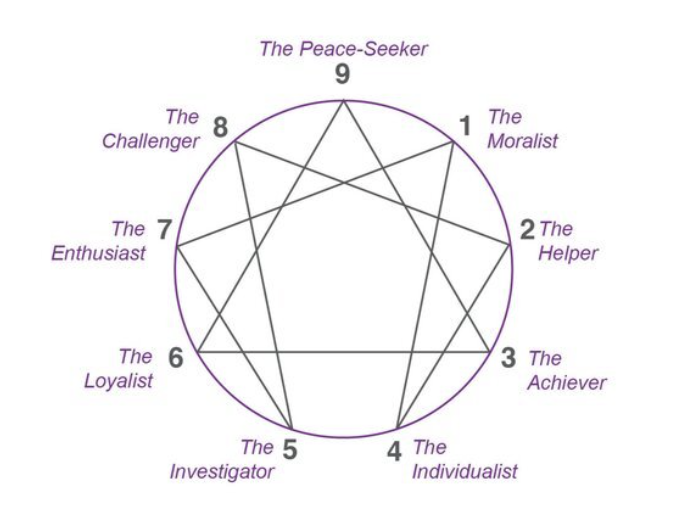
[12:40] The Directional Movements: toward Type 2 in growth and Type 5 in stress
[14:50] The Predominant Emotion: Anger
[17:40] The Wings: 8w7 vs. 8w9
[20:40] Falling in Love with Type 8
[26:00] Parental Orientation: Rejection of the nurturing function
[27:10] The Harmonic Group: Emotional Realness
[27:40] The Achilles Heel: “I cannot accept my own vulnerability.”
[28:30] The Passion: Lust; and the Virtue: Innocence
Quotes
“The essence [qualities] of the Type 8 are fortitude, aliveness, and majesty.” -Rasanath
“The 8s love to feel that their body is powerful.” -Hari Prasada
“Everyone is sensitive. The question is, how comfortable are they with their sensitivity and how does it manifest?” -Hari Prasada
“The 8 [can sometimes] recede only to come prepared with a bigger blast.” -Rasanath
“[When the 8s are healthy], they want to protect people with their very lives.” -Hari Prasada
“[For the 8], I have to be just so tough all the time, and I feel misunderstood by the world because I have a sensitive heart.” -Hari Prasada
Episode Transcript
-
Welcome to this special Enneagram compilation episode on the Type Eight.
Michael: In our podcast, we've explored the Enneagram through lots of different dimensions, including the centers of intelligence, behavioral patterns, predominant emotions, and many more. Each of these episodes looks at one particular dimension and explores how it shows up across all nine types.
For this episode, we've flipped that around and pulled together all the excerpts related to a single type to give you a deeper understanding of that type through the different dimensions we've covered. Since each clip comes from a longer conversation, in this episode, you'll be jumping into discussions that are already underway.
Between each section, you'll hear a brief chime and a quick introduction to the next dimension so you know where we're headed. Each dimension shines a light on something different. Put them together and you start to get a fuller picture of the type, including both its incredible gifts and the darker patterns that each type is called to recognize and gradually transform.
We hope you enjoy the journey. Over time, we'll also be releasing full-length episodes that explore each Enneagram type through these dimensions in greater depth.
Our first stop is the centers of intelligence, the dimension that helps us understand where each type primarily processes and responds to life. For Type Eight, that's the body center. Let's listen in.
Rasanath: so we talk about how the essence of the Type eight is fortitude, aliveness, and majesty.
as a reminder, for every Enneagram type, we have what we call the essence qualities. The essence signifies the predominant energy of a particular type. What are they really about in its purest form? In its purest form. Thank you. A hundred percent. So type eight is about fortitude, aliveness, and majesty.
And when we talk about aliveness, aliveness is the fundamental characteristic of the physical body. We know we are alive when we move. We know we are alive when we sense. When somebody is just sleeping, we know that that person is still alive. When we see their body movements, their chest is moving up and down their, their stomach is moving up and down.
There is a way in which the characteristic of aliveness and the experience of aliveness is most strongly felt on the level of the physical body.
It's very similar in terms of fortitude. Fortitude essentially means a sense of presence physically. I, I'm here, I feel rooted. I am ready to face the world. You know how. When I use the subway and I can't hold onto a handle or a bar because the subway is too crowded, I see how I change my stance.
I actually plant my feet on the ground more strongly and shift my balance in a particular direction so that I feel rooted. That is essentially the stance of the eight. As they face the world, there is an experience that they, they know that nothing can shake them, nothing can move them until an unless they want to move.
Hari Prasada: The eights love to feel their body is powerful when you get a sense of power. To me it's so visceral. Like I always think about what it's like when you flex your muscle, you feel your power. That's the thing. Of course, many people do it for looks and to admire themselves, and that's a little different than what we're talking about.
I'm talking about the most visceral thing here. Like you flex your muscle to show your might. Yeah. You know, I'm strong, I'm powerful. That's what the eights are doing to feel fortitude, strength. Aliveness and majesty, like I make things happen. I'm in this world, you gotta deal with me. Yeah, I can plow through stuff Now.
Other types will also relate to that in different ways, but this is core to the eight. This is core to the eight, and it shows up in the body. Just the posture, the kind of like the way that I'm just ready to eat things up in the world because that's what I do.
Our next stop is behavioral patterns.
This dimension explores how each type tends to move through the world. Type Eight is one of the go-getters, which means they tend to make things happen and come off as strong
Hari Prasada: the go-getters, they are characterized by making things happen and coming off as strong. And as Michael you said, they're like a force in the world thatBut the overarching sense is I kind of let things roll off me. I plow through life and things, they just, they roll off me. I don't let them affect me so much. You gotta be bold. And actually underlying this behavioral pattern is a very, very crucial dimension within the dimension, and that is called the ego boundary.
and what that means is your interface with the world. So the dividing line between the external reality and your internal reality.
In other words, how much do I allow myself to be affected by the external world? This also applies internally. This is another important nuance that
So the ego boundary means it's not only a boundary between the external world and my internal world, but it's also between layers of my internal world.
Okay? So with the go-getters, their ego boundary is solid. It's a big thick line. It's a solid ego boundary, so the world is not affecting me so much. It still affects me, but I have like an armor. There's a layer of protection that also means I'm protected from being touched. I'm protected from being impacted.
It works both ways, and the same is true internally, that I have less access to my unconscious and subconscious mind, even when I'm trying to go there, but I can go there. It's just that the default setup is there are these thick barriers I have to break through, and this is why I can plow through the world and I can feel really good that I'm making things happen.
Look at me. I'm a strong person.
Rasanath: I've encountered this in my own coaching work where the CEO of this company. She has just come back from the hospital. It was a pretty traumatic experience. She runs a big firm with with a lot of assets under management, and she told me on the call it's like, I don't know when I will break, but I'm still doing fine.
I'm doing fine. And they're doing fine as a connotation in the sense that I'm still pretty functional. I'm moving things, I'm moving towards my goal, and yes, I feel quite vulnerable, but I'm still going to show up and keep doing the things that I'm doing. So with the Go-getters, the solid Ego boundary gives them a certain kind of functionality, even when things are dire, which actually they sort of wear it as a badge of honor.
Michael: I was gonna say the idea of compartmentalization and Oh yeah, that's great. We talked about this in the past, these are the people who have the easiest time compartmentalizing things because of the solid boundary. And ha, you did such a nice job, even on the audio format of helping us all visualize what this would actually look like with the solid lines.
Rasanath: It's like having soundproof windows. It's, you know, that's the analogy that I give. There's just so much padding that is available that I don't hear what's happening in the other room. I don't hear what's happening outside the house, um, in my office. And I can just pl through things and there is a certain advantage to that and there is a certain disadvantage to that.
Hari Prasada: Totally. And I just wanna emphasize also the inner world, 'cause this is so important and it's not often well understood. This is going on internally. I'm locking doors within myself. There is an air tight boundary between my unconscious, subconscious, and conscious world, so I have to pay very close attention to that.
And if I wanna raise my consciousness, this is key to understand that I'm gonna
Michael: have to break through some walls. And it doesn't mean that these types are not sensitive people, right? Everyone is
Hari Prasada: sensitive. Everyone is sensitive. The question is, how comfortable are they with their sensitivity and how does it manifest?
So the solid ego boundaries are not foolproof. This is what we also have to understand. It's not that nobody can get to me. I may present myself that way. I may like to think of myself in that way. It's absolutely not true. People are getting through things are getting through, experiences are getting through my own unconscious and subconscious mind is cropping up and calling me.
But these thick walls made me feel like, yeah, I'm fine. I'm good.
Michael: So it's not hard to understand why these types, the go-getter types are the most extroverted
Hari Prasada: Absolutely.
I wanna just give one caveat here.
When we're talking about not being affected by the world or by my internal world, that's for ease of understanding. That's to make a point. It is not strictly the case. Everyone is being affected. The go-getters are no exception. Often what's happening is they're using their ego boundary unconsciously to block to suppress.
It's not actually that they're just not affected, it's that it's more natural in their default state to be less affected, to feel the effect less, but the experience is still living in them and it's causing issues. It's not that they can just ignore it because, well, I have the protection against it with my solid ego boundary.
And if you look at the work of Dr. Sarno, he passed a few years back in the medical field, he uncovered how the unconscious stress is way more devious and even deadly than the conscious stress. So. All types need to be aware of this. Go-getters need to be especially aware of this because it's so easy to chalk it off of like, yeah, I'm just not that affected by things.
And now I just heard this podcast where it's like, see, I'm really not that affected by things. I'm just graced with a solid ego boundary. Yeah. I mean, it has its drawbacks. Sure, I can work on them, but it's pretty good. That's not the case. There is a suppression mechanism that's built in here that we have to be so careful about because everyone has a soft, sensitive heart and everyone is being affected by the external and internal world.
Everybody,
Michael: no exceptions.
Hari Prasada:
Next up are the directional movements, the dimension that helps us understand how each type tends to grow and what happens when they're under stress.
For Type eights, this means taking on some of the healthier qualities of Type two, the helper, in growth and some of the less healthy behaviors of Type five, the investigator, under stress
Rasanath: for the Tai eight. The direction of growth is going to the two, and the experience is the strength of the heart, the real strength of the heart, where I deeply now love people.
I want to actually sacrifice myself for the sake of other people. It's in the service. It's done in the service of other people, and there is also a certain humility that comes with it and experience that I don't have all the strength required to even protect myself, and yet I'm going to give everything I have to protect and serve others.
It's a very powerful expression of the eight energy, but there is also an associated, grounded kindness that comes with it. It is strong and it's kind at the same time. Then, uh, the eight is coping. The direction of stress is going to the five. There is a withdrawal from the world because I recognize I don't have all the resources to keep up my strength.
So what I'm going to do is withdraw and prepare, and the preparation takes on many different qualities. It's experimenting, it's reading, it's talking to people to gain more information, but the idea is. They say how before there is a tsunami, one of the ways in which you identify that there is a tsunami coming is when the water recedes, and that is the energy you will experience.
The eight actually recedes only to come prepared with a bigger blast, and that's the way of coping.
Now let's turn to the predominant emotions, the dimension that helps us understand the core emotion that each type most centrally experiences.
For type eights, that predominant emotion is anger. Along with that comes a core mantra shared by the types in this triad, "Don't mess with my world. Don't mess with my world."
Hari Prasada: So for the first of the centers, the body center, that mantra is. Don't mess with my world 'cause I am acting in the world. I'm intuiting and sensing how to move things and I'm paving my way through the world and it's about autonomy.
I do things the way that I want to do them. I've structured my world in this way. I do the things you do not mess with my world. If you're infringing on my autonomy, I get angry. Don't mess. So the first type, the eight, you see this most directly, most straightforwardly, the eight. The Challenger is really feeling like if you mess with my world.
You gotta mess with me or I am going to mess with you. And that intensity, that strength, that toughness, that identity around not being vulnerable and putting on armory, it comes out and the anger is the most natural protection. And everybody feels more comfortable with anger to some degree. I mean, there are nuances here.
We'll see when we speak about the next type, benign. And also with the one, but for the most part, anger is something that's more comfortable, especially when it's like a righteous anger. It feels less vulnerable than some of the other emotions. So the eights, they feel like, yeah, I'm angry, and you know what?
That's great. That makes me tough. That makes me strong. It brings me further into
Michael: my identity. That's great. I also wanted to mention that these mantras are heavily tied to the basic fears, and we talked about how for the type eight, the basic fear is being shut down and violated at its deepest. That is the fear for the eight.
So you can see how this mantra of don't mess with My world is all about making sure that I'm not being shut down and violated
Hari Prasada: and no other type is as. Bold and brazen about their mantra, don't Mess with My World, and they ate
Next up are the wings. Here we explore the difference between a Type Eight with a Seven wing and a Type Eight with a Nine wing
Rasanath: An eight with a seven is very similar to a seven with an eight. There is a lot of intensity and now the intensity is even more amped up because the eight, the intensity of the eight, the external intensity of the eight is perhaps the strongest on the Enneagram seven with an eight.
There is still a certain degree of softness. Also, perhaps more sprinkled with humor. The eight with a seven, there is a certain gravity and intensity. You're not always laughing, and even the humor, it's a lot more cutting. The edge is much sharper than the edge would be for a seven with an eight. Because the eight energy is about conquest, and especially when it gets more into the controlling levels of consciousness, it is a lot about pinning the other down, the seven and an eight.
My primary desire is to still have fun, and so if I alienate you too much, I wouldn't be having the fun even when I'm having fun at your cost. The eight with a seven is I will pin you down and I'm having fun. Pinning you down. It's a lot more intense. The eight with a nine. Again, this is one of the polarized energies, the nine being the peace seeker and the eight being the challenger.
Now you can see how the two energies are opposing mutually opposite. The nine is also one of the viron types in the Enneagram. So energetically you will see the polarity. I am pulled back, but there is also a regality associated. So the eight or the nine, even when I sit on a chair. I sit and I lean back, but I'm the king that is resting after a hard day.
There is a sense of regality that you still bring through the introvertedness, that regality that comes from the eight. It's almost like when you observe a lion resting after a hunt. That's the eight or the nine. Its'. I have done my hard work. I have conquered, and now
Michael: it's time to relax. My cousin, who's an eight, described it like this.
It's like, I'm gonna beat your ass, but I'm gonna do it tomorrow.
That's, that's a good,
Hari Prasada: it's so funny, the, the eight with a nine brings some sensitivity to harmony and making sure that everybody's okay. But not too much, not anything that would threaten my position as being in charge and being really intense. And you know, who's boss?
The next conversation focuses on the question: how do we fall in love with this type?
In this excerpt, we explore both the extraordinary gifts of Type 8 and the deeper suffering that lies beneath its personality structure
Michael: Type
Hari Prasada: eight eights are very conscious of the fact that they've been gifted with a certain strength of, uh, almost a brute force that is just very, very rare. And they're thinking, what am I gonna do with this? This has to be used. This has to be leveraged for the benefit of other people. Otherwise it's a waste.
So they want to protect people with their very lives. That's what it's all about for them, is like being a force for the sake of others and protecting them. Protecting them from harm, from the danger of this world, from the terrors of what happens in this world so ugly, I will lay down my life at the heart of it's, I will lay down my life to stop that from happening to other people.
And deep down, they're so terrified of that happening to them. They're so terrified of being conquered by old age, by other people, by other forces. So to compensate, they feel I have to become that force that is stronger than everything. And is that possible? Absolutely not. And yet they don't consider that.
It doesn't even cross their mind that it's not possible. I just have to do it. I have to be a force that is bigger than the forces against me. And so they always feel at odds with life, like I am going against the grain and I have to be the biggest force, which denies my humanity, denies my limitations, denies my vulnerability, and steeps me in greater fear.
When is this gonna run out? Because I know everything has its expiration date, So I am fighting a battle that cannot be won, and yet I don't know how to stop fighting it. And it's so much suffering. The demands of myself are insane, and I will drive myself to the ground trying to be bigger than my own humanity, trying to provide and protect and be there in a, uh, forceful way to care for others.
But I'm not allowed to experience my own softness, my own limits, my own weakness, and that in and of itself is the weakness. There's no weakness if I can actually face that, but I'm so scared and I can't admit my fear because that is weak. So I have to be just so tough all the time, and I feel misunderstood by the world because I have this sensitive heart.
Nobody gets to see. And when it comes out, I feel really vulnerable and weak and I feel confused because it's a relief and it's necessary, but like that has to go right back in where it came from, if anybody gets to see it at all. And can you imagine living your life like this where my heart cannot be seen, it cannot be shown to the world because that would be weak.
I'm thinking of a particular member of our community, Peter, who, uh, he has been studying with us the Pita for many, many years. And he's also studied the Enneagram with us for many, many years.
And he is such a larger than life personality. It's crazy. He is, it also works in his favor that he's from Brooklyn. He loves that about himself. So he has this booming Brooklyn accented voice, and he, and he'll come to a workshop to leverage his strength for the benefit of those he cares about. And he wants other people to receive the benefit that he's received, which is so, so sweet.
But his sweetness has a different flavor to it. And so he'll say at the end of a workshop, he would take the mic and say, I gotta say something. You, you, you don't even know. And he is looking directly at Rast. To me, you don't even know what you did from my life. And if anybody ever. Does something to you.
You know who to call. You got that. And then he will give us these big bear hugs where I don't need to see my chiropractor. It's just so much love with so much force, it all gets aligned. This is the spirit of day.
Next is parental orientation, which looks at how each type relates to the nurturing and protective functions. For type eights, there is a rejection of the nurturing function in their life
Rasanath: So type eight is the rejection of the nurturing. It makes sense, the soft, touchy feely stuff. Ah, we had an eight in our workshop who told us when that when his mother gave him hugs and kisses as a child, he said, stop that. Stop that. I don't get it.
It just makes me uncomfortable. And so what I tend to do, I don't get that, you know what I'm gonna do? I'm going to do more of the other, which is also why type aids. We've talked about this. It feels very masculine. It's the alpha male energy. The overdoing of the protective.
Vipin: They're rejecting the nurturing, which is why they're providing the protective.
The
Rasanath: protective, right? Uh, they overdo it and that's what they provide, right?
Next up are the harmonics. This dimension explores how each type typically responds to conflict and tries to resolve it.
Type eight belongs to the emotional realness harmonic, which means they tend to approach conflict by trying to make sure that the emotional truth is on the table for everyone to be aware of
Hari Prasada: And the eight, is saying, I'm being emotionally real. I'm gonna tell you what's what.
Now you deal with that.
Now let's turn to the Achilles heel, the dimension that shows us the one thing that each type cannot accept about themselves and how that becomes their undoing. For Type 8, it's I cannot accept my own vulnerability
Rasanath: The Type 8, I can't accept my own vulnerability. This hits the core of the 8's being itself. And I would say just as true to the Type 8, this doesn't require a lot of explanation. It's very straightforward. The 8's whole being is to make sure that I can never feel my vulnerability.
That's the show of strength and toughness because I can't accept my vulnerability.
Our final stop is the passions and virtues. This dimension explores both the emotional trap that keeps each type stuck and the quality that naturally emerges as the ego begins to loosen its grip.
For type eight, the passion is lust and the virtue is innocence
Rasanath: The passion for the type 8 is lust. There is a certain intensity about how the 8 goes about living their life.
Everything feels like a conquest. The expression of lust is, "I will come and I will just, like, take it." There's the sense of like, "I will take it, deal with it." There's almost a very defiant conquest quality to how they live life, especially when they give in to the suffering. And the reason why that happens is because they, you know, the basic fear of the Type 8, which is I feel if I don't show up that way, then somebody is going to stab me behind my back.
And the virtue for the Eight is innocence, and the innocence has the ability to put myself in the arms of other people, not being defended really, you know, like a child. There is the experience of actual surrender. When we truly become innocent, there is nothing really to defend, and the Eight becomes l- like a child.
It's the complete opposite of how they express themselves, where I can let others carry me, where I can let others truly care for me. I can give myself to other people. I can put myself in their hands so that they will protect me. That's the innocence of the Eight.
Hari Prasada:
Continue Exploring the Enneagram
Browse all Enneagram podcast episodes
Understand the Enneagram framework — clear breakdowns of the Types and how the system works
Join our live Enneagram community, Enneagram Library Live, hosted by the Upbuild team.
Take the two-day Enneagram 101 workshop