
The Upbuild Enneagram Library
Type 7 Across the Dimensions
of the Enneagram
Subscribe on: Apple Podcasts, Spotify, YouTube, or wherever you get your podcasts

Episode Description
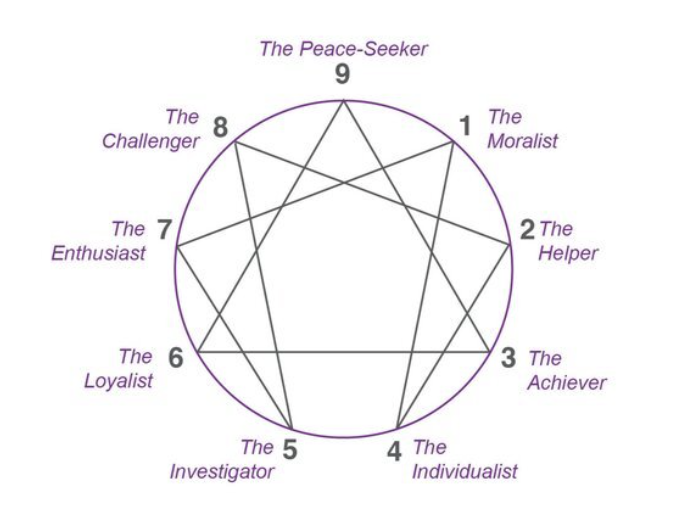
This compilation episode brings together our discussions of Type 7 across the many dimensions of the Enneagram to build a richer, more complete understanding of the Type. The team explores the 7’s connection to the Head Center, its relationship with fear, its search for happiness and freedom through experiences, Behavioral Patterns, Wings, and patterns of growth and stress. They examine both the remarkable strengths of Type 7 and the internal struggles that can accompany the pursuit of stimulation, pleasure, freedom, and positive experiences, including anxiety, avoidance of pain, difficulty going deep, and the challenge of becoming grounded and present rather than continually seeking the next experience.
Podcast Hosts: Hari Prasada, Michael, Rasanath, and Vipin

Listen to this episode on Apple, Spotify, or your preferred podcast platform
Highlights
[00:50] Introducing the Enneagram Type 7 Compilation
[02:00] The Head Center
[06:10] The Go-Getter Behavioral Pattern
[13:50] The Directional Movements: toward Type 5 in growth and Type 1 in stress
[16:00] The Predominant Emotion: Fear
[21:00] The Wings: 7w6 vs. 7w8
[22:50] Falling in Love with Type 7
[26:10] Parental Orientation: Frustration with the nurturing function
[27:00] The Harmonic Group: Positive Outlook
[27:50] The Achilles Heel: “I cannot accept my own pain.”
[29:50] The Passion: Gluttony; and the Virtue: Sobriety
Quotes
“The essence qualities of the Type Seven are joy, gratitude, and freedom.” -Rasanath
“[For a 7], what they have manufactured in their head about what the experience will be like [is often] more thrilling than what’s really happening.” -Rasanath
“The 7s need to have the experiences through the heart and not just through the mind.” -Rasanath
“[For a 7], what I trust is experiences.” -Hari Prasada
“[For a 7], because I run so fast for experiences, I also run too fast from experiences, which then makes me compromise on the depth of it.” -Rasanath
“The 7s are running away from their own pain. They don’t want to feel burdened by the pain of life.” -Rasanath
Episode Transcript
-
Welcome to the Upbuild Enneagram Library. Drawing on years of teaching, coaching, and lived experience, we've created this podcast as a deep library of Enneagram knowledge to support you in the most important journey there is, the journey from the ego to the true self Hi, this is Vipin. Before we get into the episode, we wanted to share a few things happening at Upbuild.
We've got our six-month coaching certification program, a bi-weekly space for deep conversations on the Enneagram called Enneagram Library Live, and our weekly spiritual gathering, Remembering Who We Are. You can learn more at upbuild.com. And now, on to the episode Welcome to this special Enneagram compilation episode on the Type Seven
Michael: In our podcast, we've explored the Enneagram through lots of different dimensions, including the centers of intelligence, behavioral patterns, predominant emotions, and many more. Each of these episodes looks at one particular dimension and explores how it shows up across all nine types.
For this episode, we've flipped that around and pulled together all the excerpts related to a single type to give you a deeper understanding of that type through the different dimensions we've covered. Since each clip comes from a longer conversation, in this episode, you'll be jumping into discussions that are already underway.
Between each section, you'll hear a brief chime and a quick introduction to the next dimension so you know where we're headed. Each dimension shines a light on something different. Put them together and you start to get a fuller picture of the type, including both its incredible gifts and the darker patterns that each type is called to recognize and gradually transform.
We hope you enjoy the journey. Over time, we'll also be releasing full-length episodes that explore each Enneagram type through these dimensions in greater depth.
Our first stop is the centers of intelligence, the dimension that helps us understand where each type primarily processes and responds to life. For Type 7, that's the head center. Let's listen in
Rasanath: the essence qualities of the type seven is joy, gratitude, and freedom. Then you really try to understand the texture of joy, gratitude, and freedom. We understand that they are. Experiences of the heart. Now what the that seven tends to do, especially as they go down the levels of consciousness, is manufacture that with the head.
And how do I create the experience in my thoughts? Because going closer to the heart is not purely joy, gratitude, and freedom.
Michael: I wanna stop you there for a second because it seems to me that the sevens would be thinking, I'm gonna create all that stuff out there in the world and I'm gonna be doing lots of things.
So can you just shed a little bit more light on what you mean by the head part of this?
Rasanath: So one of the common examples that we give about the Type seven is they're trying to create all of these experiences. They plan a lot in terms of what experiences they need to have, and our teacher, Ru Hudson likes to say every time when the seven is actually going through the experience.
They feel let down by what's happening at that moment. Because what they had manufactured in their head about what the experience will be like was more thrilling than what's really happening.
Hari Prasada: Plus, I've already enjoyed it in my mind, so now it's kind of stale. Talk about chewing the chewed. This is prime, prime, prime example.
I've already enjoyed, Ooh, this ice cream will taste so good. Oh, this nightclub will bring me so much liveliness and excitement. And I've already tasted that in my mind in a superior way where I've imagined the best case scenarios for everything. And then when I get to it, it's like, oh yeah, I've been there, done that.
But it was better in the mind.
Rasanath: So it's like, I will do this and I'll do that. And oh wow, this will taste so good. And maybe I can add a little bit of this and this will taste even better. And I'm doing, this is just going in the head.
Michael: So it's not a conscious thing that they're trying to have their experiences in their mind.
Of course not. What they think they're wanting is to have those experiences out there in the world. But what's happening on autopilot is they're having the experiences ahead of time in the mind. And then when they actually go through it, if they're not present, they're not gonna be able to experience what they were hoping to experience.
Hari Prasada: And the mind is a poor substitute for the reality because the mind, the mind is, it's like you're in la, la land. I mean, you're actually not living in reality. You're just living in your own thoughts. When people say, and we will come to this also, like, get out of your head, stop just like living in your thoughts.
This is it. But the sevens don't realize that that's what they're doing and this is the way that they're self-sabotaging.
Michael: Excellent. And I think what you shared about how the sevens, in order to really get what they're after and to be able to naturally exude their essence, qualities of joy, gratitude, and freedom, they need to be able to have their experiences through the heart and not just the mind
Hari Prasada: It has to move from being so self-oriented and frankly selfish to being oriented towards service. And when I actually want to serve other people, I experience joy, gratitude, and freedom. It's a magical thing. But when it's all about me and I want to get what's mine and there's this scarcity, how will I get, what's mine?
I want to enjoy, I wanna enjoy. I wanna enjoy, and I have to control to enjoy. It doesn't work. Where is the joy? Where's the gratitude? And it's certainly not free. I'm controlled by my own desires to control.
Our next stop is behavioral patterns. This dimension explores how each type tends to move through the world. Type seven is one of the go-getters, which means they tend to make things happen and come off as strong
Hari Prasada: the go-getters, they are characterized by making things happen and coming off as strong. And as Michael you said, they're like a force in the world thatBut the overarching sense is I kind of let things roll off me. I plow through life and things, they just, they roll off me. I don't let them affect me so much. You gotta be bold. And actually underlying this behavioral pattern is a very, very crucial dimension within the dimension, and that is called the ego boundary.
and what that means is your interface with the world. So the dividing line between the external reality and your internal reality.
In other words, how much do I allow myself to be affected by the external world? This also applies internally. This is another important nuance that
So the ego boundary means it's not only a boundary between the external world and my internal world, but it's also between layers of my internal world.
Okay? So with the go-getters, their ego boundary is solid. It's a big thick line. It's a solid ego boundary, so the world is not affecting me so much. It still affects me, but I have like an armor. There's a layer of protection that also means I'm protected from being touched. I'm protected from being impacted.
It works both ways, and the same is true internally, that I have less access to my unconscious and subconscious mind, even when I'm trying to go there, but I can go there. It's just that the default setup is there are these thick barriers I have to break through, and this is why I can plow through the world and I can feel really good that I'm making things happen.
Look at me. I'm a strong person.
Rasanath: I've encountered this in my own coaching work where the CEO of this company. She has just come back from the hospital. It was a pretty traumatic experience. She runs a big firm with with a lot of assets under management, and she told me on the call it's like, I don't know when I will break, but I'm still doing fine.
I'm doing fine. And they're doing fine as a connotation in the sense that I'm still pretty functional. I'm moving things, I'm moving towards my goal, and yes, I feel quite vulnerable, but I'm still going to show up and keep doing the things that I'm doing. So with the Go-getters, the solid Ego boundary gives them a certain kind of functionality, even when things are dire, which actually they sort of wear it as a badge of honor.
Michael: I was gonna say the idea of compartmentalization and Oh yeah, that's great. We talked about this in the past, these are the people who have the easiest time compartmentalizing things because of the solid boundary. And ha, you did such a nice job, even on the audio format of helping us all visualize what this would actually look like with the solid lines.
Rasanath: It's like having soundproof windows. It's, you know, that's the analogy that I give. There's just so much padding that is available that I don't hear what's happening in the other room. I don't hear what's happening outside the house, um, in my office. And I can just pl through things and there is a certain advantage to that and there is a certain disadvantage to that.
Hari Prasada: Totally. And I just wanna emphasize also the inner world, 'cause this is so important and it's not often well understood. This is going on internally. I'm locking doors within myself. There is an air tight boundary between my unconscious, subconscious, and conscious world, so I have to pay very close attention to that.
And if I wanna raise my consciousness, this is key to understand that I'm gonna
Michael: have to break through some walls. And it doesn't mean that these types are not sensitive people, right? Everyone is
Hari Prasada: sensitive. Everyone is sensitive. The question is, how comfortable are they with their sensitivity and how does it manifest?
So the solid ego boundaries are not foolproof. This is what we also have to understand. It's not that nobody can get to me. I may present myself that way. I may like to think of myself in that way. It's absolutely not true. People are getting through things are getting through, experiences are getting through my own unconscious and subconscious mind is cropping up and calling me.
But these thick walls made me feel like, yeah, I'm fine. I'm good.
Michael: So it's not hard to understand why these types, the go-getter types are the most extroverted
Hari Prasada: Absolutely.
I wanna just give one caveat here.
When we're talking about not being affected by the world or by my internal world, that's for ease of understanding. That's to make a point. It is not strictly the case. Everyone is being affected. The go-getters are no exception. Often what's happening is they're using their ego boundary unconsciously to block to suppress.
It's not actually that they're just not affected, it's that it's more natural in their default state to be less affected, to feel the effect less, but the experience is still living in them and it's causing issues. It's not that they can just ignore it because, well, I have the protection against it with my solid ego boundary.
And if you look at the work of Dr. Sarno, he passed a few years back in the medical field, he uncovered how the unconscious stress is way more devious and even deadly than the conscious stress. So. All types need to be aware of this. Go-getters need to be especially aware of this because it's so easy to chalk it off of like, yeah, I'm just not that affected by things.
And now I just heard this podcast where it's like, see, I'm really not that affected by things. I'm just graced with a solid ego boundary. Yeah. I mean, it has its drawbacks. Sure, I can work on them, but it's pretty good. That's not the case. There is a suppression mechanism that's built in here that we have to be so careful about because everyone has a soft, sensitive heart and everyone is being affected by the external and internal world.
Everybody,
Michael: no exceptions.
Hari Prasada:
Next up are directional movements, the dimension that helps us understand how each type tends to grow and what happens when they're under stress.
For type sevens, this means taking on some of the healthier qualities of type five, the investigator in growth, and some of the less healthy qualities of type one, the moralist under stress.
Hari Prasada: So the seven goes towards the five in growth, where they actually, just the flip side of what we described with the five, going to seven, the seven this.
Kind of electron bouncing around a molecule that very scattered, dispersed energy of desperation for stimulation becomes very grounded. Very reigned in. Very anchored in what is most meaningful, most important, which propels me forward towards who I really am, and I can take things in. With a thoughtfulness, a consideration, and an expertise.
I am so, so thoughtful and can go so deep, just like the five. The other way it goes is towards the one, which is when I'm in stress. I feel people are depriving me of my happiness that I'm owed by life. And if anyone's getting in the way, there's going to be a hell to pay. So I start criticizing people, I see you're doing this wrong, you're doing that wrong.
This is not right. This is not right. And I harp on circumstances and especially people that. Obstructions to my unadulterated freedom and happiness, so I go towards the one,
Now let's turn to the predominant emotions, the dimension that helps us understand the core emotion that each type most centrally experiences. For type Sevens, that predominant emotion is fear. Along with that comes a core mantra shared by the types in this triad: "What can I trust? What can I trust?"
Hari Prasada: the seven is the enthusiast. What can I trust? I don't know. People sometimes go my way, sometimes, not facts. Uh, they can be boring. They could be useful sometimes, but I don't know. What I trust is experiences. That makes me feel like I have the identity of a happy go-lucky person.
When I have really joyful, exuberant experiences, then I know I am who I think I should be. I'm a happy person. I'm enthusiastic about life. Give me more and more experiences and so I, the voracious of the five towards information goes towards experience. Gimme, gimme, gimme, gimme, gimme. I want this, I want this.
I want this. Oh, we can do this. We can do that. The possibilities are endless, isn't just amazing. Fear, fear, fear, fear, fear. I'm not gonna have enough to make me happy. All these experiences are gonna run out. What am I gonna do? There's a frenetic intensity that is driving me, and I don't even know it because I'm so bent on being happy and outrunning my emotional pain.
That. I'm like, yeah, things are fine. Yeah, life is difficult. Okay, fine. But no problem. You gotta just, you know when life gives you lemons, you make lemonade, no problem. Yeah, it's problems, but it's not real problems. We, we laugh at them anyway. What else can you do? So the sevens, they're feeling so much anxiety.
They're running constantly, but they think it's positive. I'm running two things. I'm not running from things. Ah, look more closely. You're running from something. You don't even know where you're running to. You're just running everywhere. You're running from something. It's the anxiety, oh, life will catch up to me.
I won't be happy. Things will get boring. Things will get hard. Things will make me feel sad, pained, and not able to be who I'm supposed to be. Oof. Terrifying side
Rasanath: because I run so fast for experiences. I also run too fast from experiences, which then makes me compromise on the depth of it. I haven't really fully gotten the depth of it, and very, very soon I have run out of everything.
There is to experience because I've just like gone over the surface, right? And now what I have to do is in order to keep myself entertained, I have to make things entertaining. And this is where things become off color. It's fun for the sake of fun, and it actually gets into gluttony. It gets into like very crass consumption.
Because there is only so much to be had when you can't go deep enough, and so just, I'm going to stuff myself
Hari Prasada: and my anxiety is so endless. That I'm constantly stacking my experiences and constantly going from one thing to the next, to the next, to the next, and I have plan A, plan B, plan C in mind. I have all of this.
I have like spreadsheets in my mind that are so organized and at the same time, so disorganized just. A kind of chaos of planning that when I'm in one experience, I'm like, ah, this is lukewarm. I'm already in my mind in the next experience to try to get the hit of happiness. That makes me feel like I am who I think I should be.
And so I'm never present enough in any experience to even taste it and to get the happiness that I think is there. Which is also questionable and is actually a, uh, a coloration as my guru AMI would say. AMI says. That we're all coloring our experiences to get the juice from them. We're projecting onto them what we think they should be, and we're enjoying that more than the actual thing itself.
So the sevens are going into all these experiences and they're thinking, oh, this is a blast. And so then they kind of coaxed themselves into being like, yeah, that was a blast. But if you actually look at it, it was just a compensation for the fear.
Next up are the wings.
Here we explore the differences between a Type Seven with a Six wing and a Type Seven with an Eight wing
Hari Prasada: Seven with a six. This is perhaps even more extroverted because of the dominant go-getter energy of the behavioral pattern, this dimension that the seven falls into. Yet there's this side to me that's a little more meek.
A little bit more pulled back. Modesty, the six has kind of a modest air about them as the default wiring. They can overcompensate for that, but typically it shows up that way. So the seven with a six, there's a little bit more space and a little bit more. Like what do you think and what do you want me to think?
Kind of energy, while I'm really bubbly and excited and going out there doing all kinds of things, seven with an eight is more forceful, more dominating the eight energy. Is intense and it's also a double go-getter. So this is one of the most intense types on the Enneagram. The seven and the eight are both go-getters.
They're both extroverted by nature. And I'm going out there and there's kind of a taking up space kind of energy, like we're out there to conquer the world and make things happen. Yeah, we're gonna plow through and you gotta deal with me, but it's about having fun, conquering everything that is tempered by the fun loving nature of the seven, but just with an edge and intensity and a, a kind of leaning forward, not leaning in for connection, but taking up space, being in charge kind of energy.
The next conversation focuses on the question: how do we fall in love with this type? In this excerpt, we explore both the extraordinary gifts of Type Seven and the deeper suffering that lies beneath its personality structure
Rasanath: Type seven. When you meet a healthy seven, you know how sometimes life can feel so overwhelming and you feel like you're being pulled down by the weight of the world and you know, sevens have this. It's like nothing really brings me down.
My brother-in-law is a type seven, A man who has actually been through a lot of suffering in his life. including the recent one where he lost his mother with very, very close to him. And you see that the spirit of life never leaves him.
Like he is, been through so much, so many disappointments. Yet there is still a desire to actually like. Live and there's something about looking forward to, uh, that is very present in his spirit. And even now when something is hard, you know, when something goes wrong, he, he'll just say, oh, that's just life, you know?
And there is a smile on his face. he also can play with the kids. He can become a kid, like a real kid with the kids. They love him. They just wanna be with him all the time because he is 53 years old and he will play with them as though he is six years old
It is really amazing to watch how much unbounded energy there is to experience this spirit of life. And then what you also see is the suffering where there is levity, and alongside that levity, I just don't put the time and energy to go deep into anything.
I just float on the surface because I just don't want to be dragged down by life This is also something that I experienced with my brother-in-law where I'm trying to have a serious conversation with him and I can never hold a conversation.
he is brushing it off. It's just too heavy, too intense, too time consuming. I just wanna be funny. I just wanna have fun in life. And especially when a serious conversation actually needs to be had, it just becomes very challenging.
The sevens are running away from their own pain. They don't want to feel burdened by the pain of life.
Michael: When I think about access points, I think about what you shared about the fear of being dragged down. we all know what it is like to be dragged down and to be resisting that. And there's times in life when we just wanna feel light. And for the sevens, that's a constant experience. And to have to be fighting that fight all the time is exhausting, even though they might not act like they're exhausted.
Rasanath: It's also feeling like I will never be able to escape. It's not just feeling dragged down. It's like once I'm dragged down, that's it. I will never be able to experience joy anymore, like ly trapped in a cage.
Next is parental orientation, which looks at how each type relates to the nurturing and protective functions.
For type sevens, there is a frustration with the nurturing function in their life
Vipin: Seven is frustration with the nurturing. I want. I want, I want experiences that make me feel happy and cared for. I'm being provided for. Give, give, give, give, give. I don't want to be deprived. Oh, so, but I'm, nobody's giving as much in, in the way that I need or want.
So I'm frustrated. I better do it for myself. I'm gonna go out there and make my own experiences of life that will nurture me all the way through.
next up are the harmonics. This dimension explores how each type typically responds to conflict and tries to resolve it. Type seven belongs to the positive outlook harmonic, which means they tend to invest heavily in seeing the good and orienting towards that
Hari Prasada: The seven is saying the seven is the enthusiast. Okay, look, I've got all these needs that are not being met, but it's fine. It's fine. Like I'll be happy. I'll find my own way of meeting my needs. You be happy with your thing.
Just leave me alone. Let me be free. Let me be happy. Don't hit me with any conflict. I'm happy you be happy. All good. Very positive.
Now let's turn to the Achilles heel, the dimension that shows us the one thing that each type cannot accept about themselves and how that becomes their undoing.
For Type 7, it's I cannot accept my own pain
Hari Prasada: For the seven, it's I can't accept my own pain.
I can't accept my own pain. This is, of course, very clearly coming from the basic fear that what I'm afraid of is being trapped in emotional pain Being trapped in emotional pain, and therefore I have to run away, run away, run away into all the happy-go-lucky experiences so I can feel like myself in the way that I want.
And the fact of the matter is life dishes out so much pain, and there's so much pain before life dishes out any of it because I'm carrying in my heart the disconnect from myself, which is the greatest pain and the source of all other pain. It is the only real suffering. Everything else is a derivative of that.
So I am at odds with this because I just wanna be happy go lucky by default, which I am as the true self, but as long as I'm disconnected from myself, it doesn't work. I have to accept the pain of that disconnect in order to then reconcile, and I don't do that. Instead, I run towards pleasures to drown out my pain.
I'm not in pain. I can't accept my own pain.
Michael: So
Hari Prasada: there's a theme emerging
Michael: of I actually am the thing deepest down
Hari Prasada: Yes
Michael: But I'm not the thing in my current state
Hari Prasada: Yes
Michael: And I can't accept that I'm not the thing in my current state, which prevents us from getting to the thing which is deepest down
Hari Prasada: Well said.
Exactly.
Our final stop is the passions and virtues. This dimension explores both the emotional trap that keeps each type stuck and the quality that naturally emerges as the ego begins to loosen its grip. For Type Seven, the passion is gluttony and the virtue is sobriety
Hari Prasada: So the seven, gluttony For the enthusiast, it's all about acquiring more and more experiences, consuming, getting thrills, pleasures of life. Uh, this is a- as opposed to avarice, which has a very, very similar connotation, but the avarice is about hoarding, and for the five, it's about hoarding things for the mind, knowledge.
For the seven, it's about experience, and it's about the thrill, the pleasure, the joyful anticipation and hits of dopamine that I get all throughout. I want more and more and more and more and more. Gluttony. Uh, we referenced Dave Matthews Band too much, and the music video is very-- the lyrics and the music video are very helpful for understanding the world of the seven.
Dave Matthews is indeed a seven, which is amazing. So you can see the gluttony. The-- it, it epitomizes it. I want too much. I want too much. I want too much. I eat too much. I drink too much. I want too much. Too much . Gluttony. And to heal that, the virtue is required, which is sobriety. It means I become grounded.
I become not intoxicated by the pleasures of this world. I actually move toward inwardness. Again, this is true for all the types, but the sevens are so outwardly focused. They're so, "Ugh, I want more and more and more and more and more out there." No. Become greedy, become gluttonous even to understand who you really are.
If you apply that to the soul, you will become sober about the nature of this world. As, as Krishna says in the Bhagavad Gita, every pleasure has a beginning and an end, and it's all based on contact with the senses and the sense objects. Five twenty-two of the Bhagavad Gita.
And because the wise can see what is happening, they do not indulge. They do not delight in these pleasures. They actually see that as suffering. They see the passion. So this is universally true. The sevens absolutely need to reign this in, become sober, become even-keeled, desiring to integrate the happiness with the distress, and to do so on a human level, but most importantly, on a spiritual level, where we're learning more about who we really are, which can never be satisfied by the indulgences of worldly pleasure.
Continue Exploring the Enneagram
Browse all Enneagram podcast episodes
Understand the Enneagram framework — clear breakdowns of the Types and how the system works
Join our live Enneagram community, Enneagram Library Live, hosted by the Upbuild team.
Take the two-day Enneagram 101 workshop