
The Upbuild Enneagram Library
Type 6 Across the Dimensions
of the Enneagram
Subscribe on: Apple Podcasts, Spotify, YouTube, or wherever you get your podcasts

Episode Description
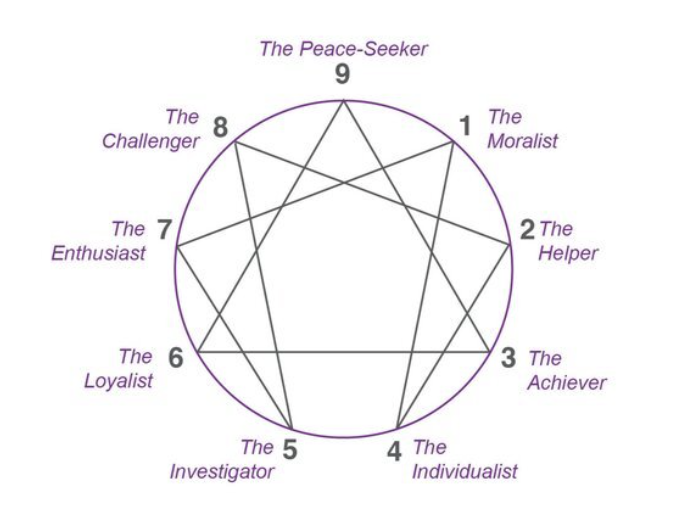
This compilation episode brings together our discussions of Type 6 across the many dimensions of the Enneagram to build a richer, more complete understanding of the Type. The team explores the 6’s connection to the Head Center, its relationship with fear, its search for trust and certainty, Behavioral Patterns, Wings, and patterns of growth and stress. They examine both the remarkable strengths of Type 6 and the internal struggles that can accompany the desire for security, guidance, loyalty, and support, including anxiety, self-doubt, and the challenge of learning to accept uncertainty and trust one’s own knowing.
Podcast Hosts: Hari Prasada, Michael, Rasanath, and Vipin
Listen to this episode on Apple, Spotify, or your preferred podcast platform
Highlights
[00:20] Introducing the Enneagram Type 6 Compilation
[00:40] The Head Center
[08:30] The Dutiful Behavioral Pattern
[09:30] The Directional Movements: toward Type 9 in growth and Type 3 in stress
[12:10] The Predominant Emotion: Fear
[15:50] The Wings: 6w5 vs 6w7
[18:50] Falling in Love with Type 6
[24:50] Parental Orientation: Attachment to the protective function
[31:30] The Harmonic Group: Emotional Realness
[34:00] The Achilles Heel: “I cannot accept my own knowing.”
[35:10] The Passion: Faithlessness; and the Virtue: Courage
Quotes
“Being clear doesn't necessarily mean you have certainty.” -Rasanath
“(For the 6], the driving force is to quell the anxiety at the uncertainty.” -Hari Prasada
“For the 6, the foundation is so shaky that I don't even trust my own knowing.” -Rasanath
“(The 6) just wants to figure out what's solid. What can I stand on?” -Hari Prasada
“Courage is taking on the possibility that I might put my faith in something and still be let down, and yet I have to do it.” -Rasanath
Episode Transcript
-
Welcome to this special Enneagram compilation episode on the type six
Michael: In our podcast, we've explored the Enneagram through lots of different dimensions, including the centers of intelligence, behavioral patterns, predominant emotions, and many more. Each of these episodes looks at one particular dimension and explores how it shows up across all nine types.
For this episode, we've flipped that around and pulled together all the excerpts related to a single type to give you a deeper understanding of that type through the different dimensions we've covered. Since each clip comes from a longer conversation, in this episode, you'll be jumping into discussions that are already underway.
Between each section, you'll hear a brief chime and a quick introduction to the next dimension so you know where we're headed. Each dimension shines a light on something different. Put them together and you start to get a fuller picture of the type, including both its incredible gifts and the darker patterns that each type is called to recognize and gradually transform.
We hope you enjoy the journey. Over time, we'll also be releasing full-length episodes that explore each Enneagram type through these dimensions in greater depth.
Our first stop is the centers of intelligence, the dimension that helps us understand where each type primarily processes and responds to life. For Type 6, that's the head center. Let's listen in
Rasanath: So for the type six, the essence quality that we talk about is alertness and courage and devotion, and alertness has this quality of very keen attention to my surroundings.
I have a sense of what's happening. I can also put them together to then respond appropriately so that, you know, a difficult situation is addressed and emergency situation is addressed. There is a alertness is a very big component of how the head works, is awareness of what's going on. When, when you're not present in the head center, then that same alertness starts to degenerate into angst worry, right?
And the worry is then instead of the response being appropriate or the preparation being appropriate. Then we over worry, we overthink, and there is no limit to how much we can worry about something.
Hari Prasada: six. Wants to rush the process to get to clarity as quickly as possible, not because of efficiency, although they don't dislike efficiency. They also can like efficiency for sure, but that's not the driving force.
The driving force is to quell the anxiety at the uncertainty, so they wanna rush the process of getting clarity on decision making so that their anxiety about the uncertainty stops as soon as possible. The problem with that is you cannot rush clarity. You can try to get there as quickly as possible, but that requires patience, and so the sixes have to really learn to stay with their thoughts and systematically approach them.
As we talked about, this is the gift of the head center that it can systematize. Our thoughts and provide us with greater understanding and a more intentional approach based on that understanding.
Rasanath: The other challenge that happens with six is this is a universal experience, but especially heightened for the sixes, is, uh, the first confusion arises between clarity and certainty.
So being clear doesn't necessarily mean you have certainty being uncertain. Something doesn't mean you are unclear. And there is a conflation that happens between the two that the sixes so badly want certainty, but they confuse the existence of uncertainty to be un clarity.
Michael: Can we walk through a actual, so let's say I'm in a business setting and I have to make a decision about what to do with somebody on my team.
Rasanath: Yes. So clarity will look like this. these are the two things that I'm very clear about. These are the three things about this person that I'm somewhat clear about, and these are the two things that I just don't have any information about.
Clarity. Do I have certainty about what I should be doing with this person? No. But do I have clarity on where I stand? Yes. Right. So knowing the layers here gives a sense of clarity.
Michael: It reminds me of the pie chart that I've seen before of like there's a slice of the world of I know that I know. Then there's a slice of the world that I know that I don't know.
And then there's a whole much bigger slice of the world where I don't know that I don't know. And so what I hear you saying is that the clarity piece is certainly knowing what I know, knowing what I don't know, and then also knowing that there is a big piece of the world that I don't know. And so I, I have clarity on all three, even if I don't know what's in that third piece.
Rasanath: Exactly, and there is a clarity on where I stand at this point, and from that place that I know, okay, where do I need to do, where do I need to move in order to actually get a more clearer picture? So clarity is not just I have it all, or I don't have it. I'm very clear about where I stand right now. Can things become more clear?
Yes. How do I need to refocus, recalibrate, reorient, so that I can get more clarity? Right. What is my next step
Hari Prasada: exactly? What's my next step? That's what we always emphasize for the six, what's my next step? And the sixes, they tend to work in extremes. So it's either, I don't know, I don't know, I don't know.
Or like I can really drive into myself a viewpoint to try to make sure that I. Completely suppress all of that anxiety and uncertainty of not knowing. And then I can show up confidently and then I'll be trustworthy, and then I don't have to deal with all of this craziness. And they can flip flop a lot between those two.
So I'm either, I don't know, and kicking the same thing around again and again and again. And we're having the same conversation we just had yesterday. Yeah, yeah, yeah. But we just, I just wanna make sure that we're still on the same page. Yeah. Yeah. Tomorrow, uh, yeah. We'll talk tomorrow again. Oh, yeah. I, I was just checking about yesterday that we're still on the same page.
Yeah, yeah, yeah. Because you know, today's a new day, right? And we're just kicking the same thing around again and again and again. Or it's like boom suppression. Like, I know what I need to know. I'm going forward. Here we are. It's an overcompensation. Neither one works and the flip flopping is also not great.
So what we want is to get clarity. What is our next step in terms of how to be clear
Michael: on
Hari Prasada: our
decision
Michael: making? Sixes certainly don't have a monopoly on overthinking or anxiety, but for them, that's definitely a part of their experience. We've never met a six who doesn't self-report that? Those two things are a huge part of their experience.
Hari Prasada: Yeah. We all go through this. Uh, I appreciate that a lot, Michael. We all go through this, but for the sixes, this is the central feature of their lives and it can be very confusing for other people and for themselves.
Our next stop is behavioral patterns. This dimension explores how each type tends to move through the world.
Type six is one of the dutiful types, which means they are constantly measuring how much they are giving relative to how much they are receiving and always trying to make sure that they're giving more than they're receiving
Rasanath: Sixes also have this deep desire to want to be a support for others. It's like I wanna be the pillar that is supporting everything else, and at the same time, I'm looking towards the ground to see if the ground beneath me is standing. Because otherwise I would like support the ceiling if the ground beneath me is not standing.
So at the same time, I do want to be able to support the roof with the anxiety that I don't want the ground beneath me to be falling apart.
Next up are the directional movements, the dimension that helps us understand how each type tends to grow and what happens when they're under stress.
For Type Sixes, this means taking on some of the healthier qualities of Type Nine, the peace seeker, in growth and some of the less healthy behaviors of Type Three, the achiever, under stress
Rasanath: when the six goes to the nine. The direction of growth, the experience is very much the acceptance of uncertainty in life, and there is a sense of peace that is actually made with uncertainty.
I don't have all the answers. I may not know all the things. I may not even know the things that I feel I so badly want to know. And yet, there is a certain commitment, a peaceful commitment to keeping one foot in front of the other, walking through life, which then starts to resemble the behavior of the type nine, uh, that is the expression and the living of courage really.
Now, when the six is under stress. Their behavior resembles a lot like the type three where I become very competitive. I'm comparing myself to others, but the difference between the three and the six is I'm not doing it because I feel completely unworthy. It's that I have lost so much trust. I don't have the trust both in myself and other people, that the only way I feel.
I can reduce my anxiety is by somehow being on the top, is by essentially being in charge so that then that way I know I control things and so their behavior resembles a lot like the type three word.
Hari Prasada: I think again, there's nuance to that aspect because it's universal, that everybody wants to be seen and valued.
People don't feel good enough. They don't feel worthy. And with the six going to three and stress, that gets amped up more. So there is one strong impetus towards like controlling things for the sake of resolving my trust issues. And there's also a desperation of I don't trust myself. I want to be good enough.
I want to be seen for capable and competent and responsible, and I want to be seen and clapped for in that way.
Michael: So there's some image consciousness there and a tendency towards overachievement.
Hari Prasada: Absolutely.
Now let's turn to the predominant emotions, the dimension that helps us understand the core emotion that each type most centrally experiences.
For Type Sixes, that predominant emotion is fear, and along with that comes a core mantra shared by the three types in this triad, "What can I trust? What can I trust?"
Rasanath: Type six, the loyalist. And uh, again, the, the mantra for the head center is what can I trust? And this is much more viscerally felt by the six, which is, so the five will say, I can trust knowledge for the six, the immediate answer will be nothing because knowledge requires some level of trust in my perception.
For the six, the foundation is so shaky that I don't even trust my own knowing. This is where it all starts, right? So when I can't trust my own knowing, I just don't have anything to stand on. And so this becomes a hall of mirrors where in order for me to stand on something, I need external support. How do I know that that external support will help me stand?
So it just becomes circular here. The mechanism here is very circular, which means there is just this endless supply. And Russ puts it very interestingly. He says it's angst. The fear expresses itself in the form of angst, constant angst because of the circularity in the mechanism and for the type six.
Going back to what Hari Psad said, people get in the way for the five people get in the way of the truth. For the six people cannot be trusted. Information cannot be trusted. So what can be trusted? Well, it has to come down to process. I have to make everything so foolproof. Right, how we get the information, who we get the information from, the rules that we have in place to make sure that the way we get the information and the people who are giving us the information are following a set of rules, is what I then tend to rely on in order to keep that angst and the control.
So this is the complexity around the fear.
Hari Prasada: It's trying to pin everything down to make it as reliable as possible, and it's very tenuous. The interesting thing is that sixes have this sense about them, similar to it is interesting, Fox Mulder of the X-Files is a five, so also part of the fear triad. So there's something there, but I'm, I'm gonna use this saying particularly as it applies to the six.
I want to believe the sixes have this sense of, I want to believe, because otherwise the fear is too much. So I want to trust you and I'm just trying to create systems to make sure that I'm supporting you so that you're trustworthy and isn't that good of me. But really it's so that I can trust you because I don't trust you, but I want to believe because otherwise.
I can't live.
Rasanath: Well, it's so interesting that the theme of the X-Files and the captions that they present, sometimes it's, I wanna believe and then sometimes trust no one. Trust. No one. Trust no one. And you see, you see that simultaneously being shown. This is the world of the six.
Next up are the wings. Here we explore the differences between a type six with a five wing and a type six with a seven wing
Rasanath: Now we come to the type six, uh, six with a five. So the subtle difference between the five with a six and a six with a five is the five's. Curiosity can take the five to. So many different places. There is just, uh, branches that just come off of other branches and it just keeps going. A six with a five has some structure to it.
You will always see that the curiosity of the five is still very present, but the need of the structure from the six provide. Some sense of where am I going with this? It needs to be organized in a specific way. A six with a five is also more, I would say, doing things out in the world, because the six is a dutiful type.
I have a duty to perform. I have to show up in the world. To do what I need to do, what I'm going to bring in a lot of curiosity and the knowledge that the five element brings to the doing that I'm doing. So the six of the five is more extroverted than a five of the six, because the six is the more extroverted energy.
Hari Prasada: Six with a five is still predominantly introverted because of that five wing.
Rasanath: That's right. So on the spectrum of introversion to extroversion, you can call them introverted, but more extroverted than a five or the six. A six with a seven. Now we are stepping into extroversion again because the seven is a go-getter type that is out there doing things in the world.
A six with a seven. Just like the three with the four, Harry Pout spoke about polarized synergies. A six with a seven is a polarized. The reason for that is six loves structure. The seven. That's the thing that I don't want. I just want freedom. So energetically the six with the seven, there is still more structure that is guiding life because the six is the dominant type.
But there will be a time where I'm just so done with structure. I've talked to a lot of six with sevens who basically say, oh, the weekend I just lie on a couch just watching tv. I don't script my weekends at all. And I've also heard six seven saying, well, I like to plan trips, but as long as the flight tickets and where we are staying is done and booked, then I'm fine with what will we do in the day?
I don't wanna plan the day. I just wanna be there and do what happens very spontaneously. So it's a very delicate dance between the combination of structure and spontaneity.
Hari Prasada: It can also be all about a particular structure for security. That. Then I keep haphazardly changing because I want something else.
I want something else. I want something else. It's uh, very interesting, but yes, six with seven, much more extroverted.
The next conversation focuses on the question, how do we fall in love with this type? In this excerpt, we explore both the extraordinary gifts of Type 6 and the deeper suffering that lies beneath its personality structure
Hari Prasada: The type six sixes are. Spent on figuring out what is their orientation in this world. The world's chaotic and it is completely shaky in every way at every moment. And they just want to figure out what's solid. What can I stand on? How can I navigate this world to be a responsible contributor, somebody who is doing things in a reliable, dependable way that supports other people.
That's what I live for, and there's a humble, dutiful nature that is so beautiful, so endearing, and so different from the kinds of heroes that we tend to glorify. They are just doing their job. What's the big deal? We give the image of the nine 11 firefighter for the creative, for the very healthy six that they would even go into a burning building with no certainty that they will ever be able to come out and not feel that they're owed anything, not feel that they did anything that was so great.
It's just somebody had to do it. So why not me? People deserve to be supported. Why should I not support them? And it's such a touching spirit, such a modest, earthy, I'm here for you without any frills, without any bells or whistles. It's really amazing. And what they suffer from is all of the obstacles to being that.
With all the types that that's really difficult. How can one actually live up? And the world is constantly showing how nothing is certain and they can't trust, and that's the thing that they're craving most. I just need to be able to trust. I need to be able to trust, I need to be able to trust, but nothing is trustworthy.
At every moment I feel like the ground could evaporate from under me, and it's a kind of visceral terror that is there. And then there are always cracks that make it look like that's going to happen any moment. There are substantiations of my fear that I'm getting all the time, and it's so heavy, and I just wish that I had an authority who could help me orient, help me navigate this world and show me what I'm meant to do responsibly for the benefit of others, that I could just follow their lead and then everything would be all right.
But they're all fallible soldiers. They're all human. They don't live up to my expectations. So I suffer so much and I lose faith. And only thing I want is faith, but I can't find it. I can't bring myself to stay with it when I do find it. And there's a back and forth, uh, flipping back and forth between trusting, not trusting, having faith, not having faith.
And ultimately it all comes back to me. I can't trust myself. I may not be able to live up. I may not be able to show up. I am so flawed. I don't come through, oh, what will I do? What will I do? I'm thinking of, uh, our dear friend is also family and, uh, a member, a volunteer member of the Bala Krishna, who does constant.
Service for up build behind the scenes. Nobody knows what he's doing. Maybe a few people know, but they don't know the half of it, even they, and he's struggling to serve with his full heart, not wanting any recognition, not thinking that I deserve anything, not wanting to take a single thing. It's just, well, this is a valuable mission to help people realize the self.
So I'm on this path, I've benefited from it. I was a student and I'm still a student and contributor, so everyone should get this. And so I'll do whatever is needed. And it's really like, call me in the middle of the night. Wake me up even if you need a photocopy of something. I'll do it. I'll be there for you without any expectation, only gratitude and a humble heart.
And it, it melts my heart. I mean, it's so touching once again. So touching much more can be said, but that's the spirit of the six that is very lovable and, and you see the struggle, you see the anxiety and the, how will I do it all and how do I know where I can best serve? Because there's so many causes, so many things, and I'm so limited, so flawed.
I forget things. I don't do things when I want to or when I should or when I'm asked.
Michael: Oh, it's heavy. Thank you. The access point that resonates the most for me with the six is this, the heaviness of this question of what can I trust? And underneath that, how could I ever trust myself? I think we can all relate to those questions in some way.
And for the sixes, they carry the burden of these very intensely,
Next is parental orientation, which looks at how each type relates to the nurturing and/or the protective functions in their life.
For type sixes, there's an attachment to the protection function
Rasanath: The attachment to the protective function is the type six, the protective function in the form of discipline and orientation in the world.
This is where you need to go. Go here, do this. That's what I'm actually looking for. How am I oriented in the world? And I'm very attached to that, which is provided by the protective function and attachment to both. We can talk about the type six because it gives a relationship, an attachment relationship with the protective function, the feeling of the hard ground underneath my feet that somebody has my back. And, um, I remember Russ Hudson giving the example of how the child is tossed up in the air and held back again.
Somebody is there to catch me, somebody is there to catch me, even if I'm thrown up in the air. Somebody, what you see in the child is when the child is thrown up, there is this, oh, you know, and then being caught, there's sense of relief. That's the experience for the six. It's almost like, like, will someone have my back?
Because life just throws me up in the air. Will someone have my back? And that is the protective role and somebody has my back. Somebody has the ground ready for me to hold me, to catch me when that happens. And I'm looking for that. The other thing that the protective function also provides is a sense of direction in the world.
This is how we walk. This is how we move, you know, go here, go here, go here. And that also has a feeling that somebody is looking out for me. Somebody has my back
Vipin: because there are a billion things that I can do in the world. How am I supposed to know what I'm supposed to do? This is how the six feels.
It's like I could do anything that, I mean, not anything, but I, there are any number of possibilities. Unlimited possibilities. How on earth am I supposed to know what I'm supposed to do at any given moment? Much less like the ultimate, what is the purpose of my life, which I really am craving to know? What is my purpose?
How am I supposed to live? And I need somebody to direct me.
Rasanath: That is what I'm going. I'm look when, when, when I grow up, when I go out into the world. That's what I'm looking for. Somebody has my back. What that does to someone is the experience of trust. I can trust where I'm moving. I can trust where I'm going because somebody is telling me this is where I need to go.
And so that is what I am looking for. Just like the three looks for the validation, the mirroring, the six looks for the orientation and the support, um, when they go out into the world. But it's something that I have been always looking for, even as a child, right? And then that doesn't come, then I experienced the loss of it, just like the three does with the mirroring.
But when it's done well in life, in the beginning stages of life, then that's provided. Well, there is a way in which I internalize that this is a very, very important piece. I internalize that function and the internalization of that function means a sense that. I can still look at myself. I can still orient myself through what was given for me very early on in childhood.
The sense of identity, again, going back to secure attachment, the sense of identity is so well formed that I can actually live off of it. It's not that I don't experience the absence of it, but it doesn't make me desperate or throw me off. There is a way in which I can still harness what was provided because it formed the solid core of my identity very well.
Vipin: It also doesn't stop me from needing it in the present. It's not that, oh, okay, it was given to me in my childhood. Now I've got it. That's not how this works,
Rasanath: but it significantly affects the way I pursue it.
Vipin: Yes, that's why the object relations are always playing out even in our adult life. But we may pursue it in a more secure, healthier way if we received a certain amount in, in a healthy way in our childhood.
So that pursuit never stops, but it has to be grounded and grounded in understanding the importance of what we're pursuing and what will be most effective in achieving it. Not selfishly, but for my own wellbeing and wanting to really provide that for other people. And the sixes. Unfortunately, what ends up happening is because there aren't so many good protectors in this world, and we all have a sense of that, and you can see, my goodness, the experience of women.
It really boggles my mind again and again and again. Every woman has had some experience of a protective figure. Typically, a man abusing them, exploiting them, or wanting to, or making them feel unsafe. It's practically happening all the time, so how many trustworthy protective figures are there? Now for the sixth, this doesn't have to be a man, of course, this is the function, but you can see that whereas it most closely aligns to the masculine nature, it is so difficult to find.
And so then the six is disappointed and disoriented and hopeless, not able to trust, and even when it comes along, if by chance it ever does, even if somebody is healthy or relatively healthy, the six will not trust. They will project things onto that person and look for perfection over humanity, and they will set the person up.
So I'm looking for an authority, looking for an authority, looking for an authority, and then I tear down the authority, tear down the authority, tear down the authority, where I just go my separate way. Um, you know, where I just don't believe that there is an authority and I, I have to make myself the authority.
And that becomes really, really unhealthy, like where it can be very destructive.
Next up are the harmonics. This dimension explores how each type typically responds to conflict and tries to resolve it. Type sixes belong to the emotional realness harmonic, which means they tend to approach conflict by trying to make sure that the emotional truth is on the table for everyone to be aware of.
Rasanath: The six, which is the middle of the four and the eight, and this triad, it has this relationship where I can be like the four, where I will tell you I'm seeking help. I'm telling you how challenging things are, and in the same way, I will also behave. Similar to the eight where it's like, let me tell you what needs to be done, because if we do what needs to be done, what I think needs to be done, then everything will be resolved.
So it's sort of doing a little bit of both
Hari Prasada: For the individualist is wanting the attention and to be understood like, please, no, I'm being emotionally real. You have to deal with that. And the eight, the Challenger is saying, I'm being emotionally real. I'm gonna tell you what's what.
Now you deal with that. And the six, the loyalist. In the middle is playing one and then playing the other, and then playing one, playing the other. And you can't figure out which side is gonna come out, the child or the parent in the same conversation. It can happen like that because I don't really trust where you're coming from.
We gotta get your cards out on the table. I'm going to give you something of mine, but what are you holding in? Uh, I gotta get to it and then you should help me.
Rasanath: For the sixth, I'm also not sure if I can put all my cards on the table because I'm afraid if I put all my cards on the table, then I can be taken advantage of.
So I put my cards on the table and then I would draw them. And then I want to make sure that you are putting all your cards on the table, but I'm not sure if you are putting all your cards on the table. So it gets pretty confusing to deal with.
Hari Prasada: The fluctuation is, here's how you can help me. Oh, I don't know how you can help me, but just understand and then here, let me help you.
This is what you need to know. Let me help you. Right? And so it, it goes back and forth about vacillating like that,
Now let's turn to the Achilles heel, the dimension that shows us the one thing that each type cannot accept about themselves and how that becomes their undoing. For type sixes, it's I cannot accept my own knowing. I cannot accept my own knowing
Rasanath: Type six is I can't accept my own knowing. The sixes experience the challenge of not being able to fully trust their own self, and when I don't trust my own self, how do I trust what I know? Even if I know, how do I know I know? So I need to know more in order to know, and then I need to know more in order to know that I know.
This is an endless loop. So it starts with being able to accept that I know. I can own my own knowing. But when I don't accept my own knowing, then there is no ground for me to stand on, which leads to the constant experience of distrust and paranoia for the type six.
Our final stop is the passions and virtues. This dimension explores both the emotional trap that keeps each type stuck and the quality that naturally emerges as the ego begins to loosen its grip. For Type 6, the passion is faithlessness and the virtue is courage
Rasanath: For the type six, the passion is, is faithlessness. And, uh, we can understand this because the sixes really struggle with self-trust.
We know how, how difficult it is for the six to put their trust in anything. Now, they're tapping into the truth of the world again, which is yes, thi- can things go wrong? Yes, things can go wrong. But then when we ask them the probability of how something can go wrong, then even if it's 10% probability, 5% probability, 2% probability, just the fact that the probability that something can go wrong exists, it gives me enough credence that I should just not put my faith.
So because I live in the terror of trusting and then being let down, so the best way of not being let down is to just not put myself in that place. But then if I can't put faith, then all that I have is worry 'cause I have to still live in this world, which means fundamentally, fundamentally we are beings of faith.
And so when fundamentally we are beings of faith, and that is the very thing I can't repose, then what do I do then? That's the suffering of the six.
Vipin: Denying my own fundament.
Rasanath: Exactly, or not knowing what to do with it. So the virtue for the six is courage And you see why it's not faithfulness necessarily, which is the opposite of faithlessness, it's courage.
And the idea of courage is courage is taking on the possibility that I might put my faith in something and still be let down, and yet I have to do it. It's not the absence of fear. It's not the presence of 100% guarantee. It's the presence, it's the very presence of fear. It's the presence of the possibility that I will be let down, and yet I have to put my faith.
That's the idea of courage.
Vipin: So the passion seems to veer farthest from the seven deadly sins. Faithlessness, I think, is not directly one.
Rasanath: the way Don, Don Rizzo defined passion was the suffering of the heart when one is disconnected from God, which directly ties to the idea of faithlessness.
So what I would say is that the source of the seven deadly sins is faithlessness. It's not being able to recourse myself to rest myself in
God.
Vipin: With that definition, it feels like all types really suffer from that same passion. They
Rasanath: do, yes. But just like how we speak about the type three when we speak about the ego needing validation, say all types need validation. But for the three, the threes are the poster children for validation. They say the same thing about the, the one in the form of the inner critic.
All types have inner critics, but the one is the epitome, the personification of what the inner critic is. So
Vipin: the sixes are the poster children for faithlessness?
Rasanath: Yes, that's what they fundamentally struggle with.
Continue Exploring the Enneagram
Browse all Enneagram podcast episodes
Understand the Enneagram framework — clear breakdowns of the Types and how the system works
Join our live Enneagram community, Enneagram Library Live, hosted by the Upbuild team.
Take the two-day Enneagram 101 workshop