
The Upbuild Enneagram Library
Type 5 Across the Dimensions
of the Enneagram
Subscribe on: Apple Podcasts, Spotify, YouTube, or wherever you get your podcasts

Episode Description
This compilation episode brings together our discussions of Type 5 across the many dimensions of the Enneagram to build a richer, more complete understanding of the Type. The team explores the 5’s connection to the Head Center, its relationship with fear, its drive for knowledge and objectivity, Behavioral Patterns, Wings, and patterns of growth and stress. They examine both the remarkable strengths of Type 5 and the internal struggles that can accompany the pursuit of understanding, expertise, independence, and certainty, including the tendency to withdraw from the world and reject the heart in favor of knowledge and facts.
Podcast Hosts: Hari Prasada, Michael, Rasanath, and Vipin

Listen to this episode on Apple, Spotify, or your preferred podcast platform
Highlights
[00:50] Introducing the Enneagram Type 5 Compilation
[02:00] The Head Center
[05:10] The Withdrawn Behavioral Pattern
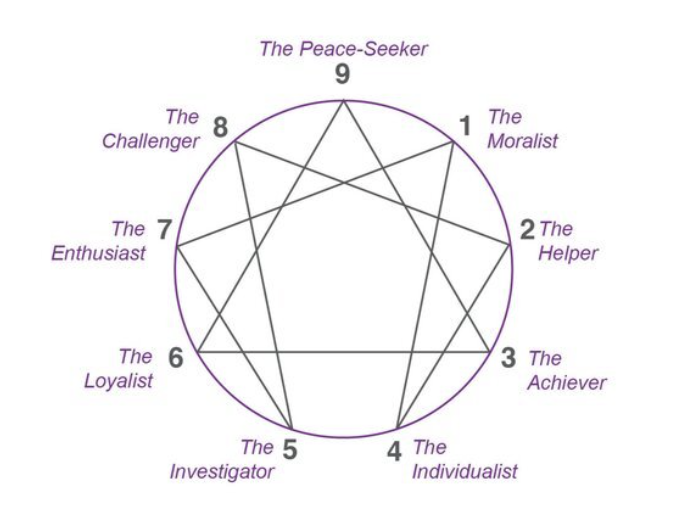
[12:30] The Directional Movements: toward Type 8 in growth and Type 7 in stress
[15:30] The Predominant Emotion: Fear
[17:40] The Wings: 5w4 vs 5w6
[19:40] Falling in Love with Type 5
[25:20] Parental orientation: Rejection of the nurturing and protective function
[27:10] The 5’s Inner Critic
[28:00] The Harmonic Group: Competency
[29:30] The Achilles Heel: “I cannot accept my own heart.”
[31:50] The Passion: Avarice; and the Virtue: Non-Attatchment
Quotes
“[The 5s] have this deep desire to understand how [the world] works.” -Rasanath
“The 5 is more in the realm of the mind.” -Hari Prasada
“[As a 5], I have so many impressions and memories and things that are itching to be seen and dealt with and studied, and I wanna produce expertise out of it all.” -Hari Prasada
“[For a 5], people's emotions are super overwhelming for me. I don't even know how to deal with them.” -Hari Prasada
“The deepest level of understanding only lives in experience.” -Rasanath
“Endless curiosity, that's the endearing quality of the Type 5.” -Rasanath
Episode Transcript
-
Welcome to this special Enneagram compilation episode on the Type Five
Michael: In our podcast, we've explored the Enneagram through lots of different dimensions, including the centers of intelligence, behavioral patterns, predominant emotions, and many more. Each of these episodes looks at one particular dimension and explores how it shows up across all nine types.
For this episode, we've flipped that around and pulled together all the excerpts related to a single type to give you a deeper understanding of that type through the different dimensions we've covered. Since each clip comes from a longer conversation, in this episode, you'll be jumping into discussions that are already underway.
Between each section, you'll hear a brief chime and a quick introduction to the next dimension so you know where we're headed. Each dimension shines a light on something different. Put them together and you start to get a fuller picture of the type, including both its incredible gifts and the darker patterns that each type is called to recognize and gradually transform.
We hope you enjoy the journey. Over time, we'll also be releasing full-length episodes that explore each Enneagram type through these dimensions in greater depth.
Our first stop is the centers of intelligence, the dimension that helps us understand where each type primarily processes and responds to life. For Type 5, that's the head center. Let's listen in.
Rasanath: For the type five, we talk about how the essence of type five is clarity, illumination, and objectivity, and that is very directly tying to the function of the head center. Fives pursue knowledge.
There is a way in which their place in this world is that of a knowledge better. And when we think about knowledge. When you have a clear idea, so like for example, when you buy a new equipment and you have a manual that comes with it, when you know exactly how to assemble it, how to put it together, uh, there is a way in which you methodically progress.
You know exactly what goes where and how it works. And when you do that, it actually works. Now many of us have a very different habit, including myself, have done it in the process of being very efficient. I don't look at the manual. I try to just put things where I feel they belong because I feel like going through the manual is a very tedious process.
I will only do it if it's required.
Michael: I totally do that. I totally do that. That might speak a little bit to your Enneagram type.
Rasanath: I had this experience last week when I was assembling something. That when you look through the manual, they do this like, you know, they do this work, step one, you know, step two, step three, step four, and there is something very clean about that.
When you go through the steps and you really see, ah, okay, it's all coming together. Fives bring that quality, there is a way in which every minute thing in this world, and they have this deep desire to understand how it works and there is an excitement that surrounds it. And then they are also providing that function, that knowledge to the rest of humanity really.
Now, when fives are present in the head center, that kind of knowledge provides clarity. There is a sense of discovery in it. New things are found, new things are applied. There is a way in which I. The word progresses because of the knowledge that comes when there is no presence in the head center. Then that same kind of thinking that is directed towards discovery and finding something new, gets redirected to just undirected, musing, thinking about things that have very little possibility of being true, but just for the sake of keeping myself entertained in my thoughts, and it starts to delve into things that are essentially non-functional, but perhaps also very dark.
Hari Prasada:
Our next stop is behavioral patterns. This dimension explores how each type tends to move through the world.
Type 5 is one of the withdrawn types, which means that they often come across as thoughtful and more pulled back in their energy. It also means that they tend to be more prone to overwhelm
Rasanath: the withdrawn types, by definition, these are types that are shy and are prone to overwhelm and as a way of coping with the overwhelming nature of the world, they tend to pull back. That's why they're called withdrawn.
the ego boundary is a perforated ego boundary. Uh, teacher Russ Hudson also calls it a picket fence in the sense there are gaps, there are perforations, which means now they understand why they feel overwhelmed, because things enter so much more easily from the outside world inside of me, they affect me instantly.
This is also what happens with the difference between the go-getter types and the withdrawn. It takes time for the go-getter types to even recognize that they have been affected because of the solid ego boundary. Whereas with the withdrawn types, I immediately know it's, in fact, I'm almost preparing to be affected.
I know as soon as I step outside, I'm going to be affected by the world because I have things just come in. I also, in the same way, have access to my subconscious and unconscious more readily. Things flow more freely from my subconscious and unconscious into my conscious, so that makes it pretty overwhelming the amount of things that can really affect me, and as a way of coping with the overwhelm, as a way of responding to the overwhelm I tend to pull back from the world.
That affects me so much.
Michael: You use the. Metaphor of soundproof walls for the go-getter types. I'm thinking of being in a New York City apartment on the first or second floor and having paper thin walls on a very crowded street where there's lots of honking and having that is the experience of life for the Withdrawns.
Hari Prasada: When we were living in our ashram, were monastery that we had founded for the purpose of doing this work when we were still monks and we had branched out of our original monastery to focus on this work. I remember having sleepless nights in the beginning because of that noise. I mean, it's such a vivid metaphor and so fitting because that's exactly what it's like that I can't sleep until I get all of the noise machines in place and I figure out exactly what room is most cordoned off, and I mean, we literally have to switch rooms, all of that stuff.
It feels, and this is what I wanted to say, it's crazy making for these types. It's crazy making, and the external world is equally overwhelming, as is the internal world that this free flow of all of the unconscious and subconscious things that just kind of rear their ugly head or crop up or tempt me or attract me.
It's like, what am I supposed to do with that? And it can happen at any time.
Michael: So then it's also not a stretch to understand why these types behaviorally are the most introverted. That's right. Of the three behavioral patterns.
Rasanath: That's exactly right. And when you have a go-getter. This also explains so much in terms of how we don't understand how people are getting affected.
Going back to the ashram, we had a bunch of go-getters who lived in the monastery, some of whom even when they walk, you can experience the go-getter energy. And so for the rest of us who are either napping or reading, even the walking of this person from their room to the bathroom would like significantly affect.
That's loud. And the withdrawn types might sometimes say, Hey, you know, this is too chaotic for me. The go-getter types, look, what are you talking about? Come on, grow up would be the message without really understanding how crazy it is. And this is a lesson that I myself as a go-getter type had to learn because there is a way in which I can just cope with the noise.
Because of the solid ego boundary, but how my behavior is affecting someone else is something that I have to learn.
Hari Prasada: So you preempted something that I, I really wanted to drill into, which is the relationship between these, the go-getters are very much wanted and accepted in the world. They are making things happen in the world.
They're shaping the world, and the world then revolves around them. And the withdrawn types have to somehow fit into that and be sort of governed by the go-getters, which is extremely challenging. Extremely challenging, and in many cases excruciatingly painful. And the response of the go-getters is typically become like me.
Just become like me, do what I do, be as good as I am. Grow some thick skin, toughen up, get
Michael: out there, do something. This is why Susan Kane had to write her book. Quiet. Yes. I was just looking up the subtitle. The Power of Introverts in a World That Can't Stop Talking. Yeah, indeed.
Hari Prasada: The five is more in the realm of the mind. You see that the thoughts are constantly percolating, and I'm being affected by this idea and this thing.
Then inside me, oh, I have so many impressions and memories and things that are itching to be seen and dealt with and studied, and I wanna produce expertise out of it all, and it's very overwhelming, and I need to sort of block myself from the world to just study and do my thing and not be affected by all of these unreliable people that are bringing me away from what will make me an expert.
If I just can be cordoned off from the world and have the time to just study and produce and figure things out, investigate. Then, ah, then it will be all right. So I withdraw. And the world of people's emotions is super overwhelming for me. I don't even know how to deal with that. That doesn't make sense to me.
So all the more reason to sequester myself and be separated,
Michael:
Next up are the directional movements, the dimension that helps us understand how each type tends to grow and what happens when they're under stress.
For Type Fives, this means taking on some of the healthier qualities of Type Eight, the Challenger, in growth, and some of the less healthy tendencies of Type Seven, the Enthusiast, under stress
Hari Prasada: the five moves towards the eight in growth. What this looks like is. Five who is so in the head and chewing on thoughts and ideas and facts, data or experimental possibilities suddenly becomes very practical. Of course, it's not sudden.
I'm saying suddenly for the way that. This has a, um, a dramatic impact and more it manifests, but it happens very gradually. They become very pragmatic and very grounded, very embodied, and there's a weight to the way they carry themselves. There's a fullness in their presence. There's an engagement that's very active and direct, and there's a power to the way they connect with other people in that way, and they can move things in the world.
The ideas don't just sit here in the head, but they actually manifest in the world and they're willing to make sacrifices, take heat and be leaders to shepherd things forward. Great strength and vigor. So as they then move towards stress, the fives go towards the seven. What's happening there is all of the chaos of the mind's thoughts and.
Intellectual preoccupations, they start to consume me to a point where I become manic. I'm just constantly thinking, thinking, thinking, and being titillated by these thoughts, but they're aimless and directional. They're taking me in all different scattered places, and I can't ground myself. I become like this electron.
It's just bouncing around inside a molecule aimlessly, so much going on in the mind, so much restless energy and an inability to really be present with reality. Like the seven.
Rasanath: There is also a, a gluttonous quality, like the seven that appears in the five. I just consume information because it's intellectually stimulating, which is what the seven really.
Lives far, especially at the lower levels of consciousness. The five has a very similar intellectual consumption, like the seven would
Now let's turn to the predominant emotions, the dimension that helps us understand the core emotion that each type most centrally experiences. For Type Fives, that predominant emotion is fear. Along with that comes a core mantra shared by the types in this triad: What can I trust? What can I trust?
Hari Prasada: So the five, the investigator, they are looking for something solid, which they can then establish their identity in the world as expert in.
But the problem is that. There is so little that I can rely on that I know to be true, and people are certainly not giving me truth all the time, and they're certainly not giving me the expertise, especially just if I look around me in, in my little world, how many people are giving me expertise or, or expert enough to trust.
So what I'm looking for is forget about people facts. Facts. People are getting in the way of truth more than they're giving truth. So I look for facts. This is how I'm oriented, and I have to sense that that will then quell my fear of what can I trust? Even if the facts change tomorrow, I'll be up on it.
I'll be up on it. I'll be with the trends in science. I will be with the trends in art. I will be with whatever I need to discover on the cutting edge to quell this fear, get the facts, be an expert, and then be able to espouse knowledge in the world. I'll have my place as a knowledge bearer all out of this fear.
Rasanath: So as a compensation for that fear, I have this voracious appetite for information. It doesn't have to be necessarily practical in any way or form. I just collect and collect and collect the imagination for the type five, especially when they have succumbeded to the fear is a lot of just unbridled thinking.
I am trying to understand the truth of the end and this just completely spirals outta control.
Next up are the wings. Here we explore the differences between a type five with a four wing and a type five with a six wing
Hari Prasada: So the five, five of the four is most likely. The strongest introvert on the Enneagram because the five is so heavily introverted, withdrawn. And then also seeing the world as a distraction for my own discovery and my own basing things on facts. So I'm really, really to myself and I feel emotions are so foreign and people's needs are so.
Overwhelming for me and don't make sense to me. So very pulled back, a little bit awkward in many ways, much of the time. And the four then gives me some sense of wanting to be in contact with my emotions and wanting to be in contact with other people, although in a very withdrawn way. And I show up as really, really distant, but also yearning for connection.
Five with a six. The six wants to be oriented in the world, responsible and doing things for people so that I feel supported and I feel like I'm a supportive force and deserving of the support that I need. So I'm doing all these things. The five with a six is. More engaged and more heady even in certain ways because there's not that leaning towards what am I experiencing at heart and what about the profundity of the human experience in my heart, so I can be a little bit more interfacing with people, but less heartfelt in the default settings here.
The next conversation focuses on the question, how do we fall in love with this type? In this excerpt, we explore both the extraordinary gifts of Type 5 and the deeper suffering that lies beneath its personality structure
Rasanath: the type five has a childlike curiosity, when I'm so wide-eyed, really wanting to understand the nature of reality, the truth about reality for so much of the world.
We just live our lives, right? And the fives are actually trying to look behind the curtain, to be honest, to see what is this about the curiosity. And so the feeling that, well, if I am a participant, then I won't be able to really understand. So what I have to do is not participate. So that I can then see is what leads them to essentially starting to isolate from the world.
But it is coming from a place of very genuine childlike curiosity and when they choose to participate while simultaneously. Trying to understand because the only way you can fully understand is if you participate. There is no other way. You can't just separate yourself. And this is the thing, I can't just understand everything by study.
I have to understand things by experience. The deepest level of understanding only lives in experience. And so the heart is a very important part of the understanding, which many times the fives don't know what to do with that because I'm so afraid that when I step into my heart, my emotions will come in the way of my objectivity, my curiosity will actually be interrupted.
My capacity to understand things will actually be interrupted when I experience emotionality. While there's some truth to it, because we all know that when people say, just let's try to be objective. And when they say, let's try to be objective, what they're saying essentially is park your emotions and don't bring them in.
The fives essentially make that their life, They just park their emotions and don't really bring them in. And with time, then everything starts to get dry because now everything is experienced through the intellect. There is no real life to it. There is no taste in it. It is just dry mulling on things, right?
And everything starts to dry up. And now when that dryness happens, I just become even more unrelatable because the realm of emotions become so foreign both to people who are interacting with me and for me in interacting with other people, which then. Confirms. Again, the fundamental notion that the five has, that I'm, I'm just an alien on this planet and I just feel more alienated.
Going back to what said, every type struggles with a certain kind of isolation. The fives feel very isolated and in that isolation then the mind just doesn't stop that. It's just this constant thinking and now it's just undirected thinking. for me, this was actually one of the glimpses of the suffering of the type five, is when you can't get your mind to stop, you can't sleep, you're just constantly thinking about something, and even when you want to stop the mind, you actually cannot stop it.
Michael: So this is one of the access points to the five?
Rasanath: Yes. Just imagining how this thing is just constantly spinning. The mind is just constantly spinning and it's undirected spinning. It's not even like there is a goal here in mind. It is just at this point, it's dry curiosity that has no real end to it,
So again, the two ways of falling in love with the type, right, what do they bring to this world? And I was speaking about the childlike curiosity. When you experience the innocent curiosity of a child, it is just very natural to fall in love with that.
You see their eyes so big and bright and they make something new happen and they come in, they, they wanna show you and say, oh look, I did this, you know, and this is how it works. Oh my God, I discovered something. There is just that excitement about life, living life like a child would. Endless curiosity, that's the heart endearing quality of the type five.
I remember walking on the streets of New York with, again, a mentor figure of mine who was a type five. The very fact that we are having this conversation today about the Enneagram is the gift of a five to us. He was the first person who introduced us to the Enneagram. This was at a time when hardly anybody knew about the Enneagram, and he had really delved into it very deeply, and they introduced it to some of the other monks in the monastery that we were about.
Harry and I were monks, and as a way of understanding the true self, and when you talk to him. You see the curiosity, When you hear him say stories, it's like a child actually telling a story. You actually experience, like you're listening to a, an innocent child telling the stories, all the details around it, and there is just so much heart in it.
Next is parental orientation, which looks at how each type relates to the nurturing and protective functions in their life.
For type fives, there is a rejection of both the nurturing and protective functions. Let's see how that plays out
Rasanath: Now the rejection of both is the type five. Now you also understand the complexity of the type five. So if you were to think about the predominant energies in this world as nurturing and protective, and if I'm unable to relate to either one of them, what do I do?
One of the things that Russ Hudson tells us as an Enneagram five himself is he says that the fives feel like they have been born on the wrong planet. I'm an alien in this space for multiple reasons, but this is one of the primary reasons why I don't understand the gamut of human emotions, really, neither the nurturing nor the protective, which is one of the reasons also why the fives like objectivity.
It's separate from both. Separate from human emotions. Separate from human emotions, right? Nurturing and protective. So then what's my place in the world? Well, if I'm separate from both, what can I do? I can objectively observe knowledge. That's what I give. So I have to do something. I'm a provider of something.
As a rejection type. That's what I provide. I provide neither in the sense of the emotions, but then what is not touched by emotions is observation. Is knowledge. That's what I'm gonna get.
We now turn to the inner critic. Every type has an internal voice that's constantly evaluating how we're doing, giving us pluses or minuses based on whether we're measuring up
Hari Prasada: if I am a type five, my inner critic is telling me, you must be somebody who is so knowledgeable. You can feel encyclopedic, the basic desire as we coin it. You must be so knowledgeable that you feel encyclopedic. So then I'm driven. I have to get knowledge, have to get knowledge, have to get knowledge, and then that also means I have to be able to spit it out so that I can prove to myself, I'm knowledgeable, I'm knowledgeable, I'm encyclopedic.
I can feel it.
Next up are the harmonics. This dimension explores how each type typically responds to conflict and tries to resolve it. Type five belongs to the competency group, which means they tend to rely heavily on agreements, but they have a very interesting way of using those agreements.
So let's listen in
Hari Prasada: for the fives. I really don't want any agreements. I want us to agree that we don't have to agree to anything. I need you to agree to that because if you don't agree to it, then you might come to me with things that I don't want to deal with. And the whole thing about the five is wanting to be free of other people's expectations because people are, number one, an obstacle to my gaining knowledge.
They disturbed me. They have emotions, they have things that get in the way of my pure pursuit of knowledge. So I think, and number two, then tying to the emotions piece of this, I don't know what to do with my own emotions. I certainly don't know what to do with yours. So can we just get 'em out of the picture?
Can we just sign on the dotted line? That's not gonna be there. Please don't come to me with. Your expectations and definitely not your emotions. so let's agree. Please. That's the five's relationship with competency.
Now let's turn to the Achilles heel, the dimension that shows us the one thing that each type cannot accept about themselves and how that becomes their undoing. For Type 5, it's "I cannot accept my own heart. I cannot accept my own heart."
Hari Prasada: For the investigator, it is I cannot accept my own heart. Now, this is, again, universal. All the types have a very, very fraught relationship with their hearts, every one of them without exception, and this would be a fantastic focal point for all of us.
For the type five, why is this the thing? Why is this the centerpiece? The Achilles heel is that I don't fit in to this world where people have all of these emotions and these expectations, and I have to relate to people when I don't even know how to relate to myself. I don't know how to relate to my own emotions.
They bewilder me. I can't trust them. They're fluctuating. I'm looking for what can I trust, and I'm thinking absolutely not my emotions. Absolutely not the emotions of other people. So what are we doing here? I just need my place in the world in a way that I can trust, which is based on facts And emotions seem to be almost the antithesis of that, and then I get all these expectations on my head which overwhelm me, and I feel like I don't know what I'm doing.
I feel like an alien on this planet, and it starts with the fact that I reject my own heart and the emotions that it produces. I decide this thing is confusing, it's bewildering, I don't get it, it's uncomfortable, and definitely that's the case for other people in my life. I just decide I don't really accept my heart.
I'm just gonna go for the facts, and that is my undoing, because I can never be fulfilled in that way. It's impossible to be oneself. The self resides in the heart. emotions are the first thing we have to wade through before we can get anywhere near the core of who we are,
Our final stop is the passions and virtues. This dimension explores both the emotional trap that keeps each type stuck and the quality that naturally emerges as the ego begins to loosen its grip.
For Type 5, the passion is avarice and the virtue is non-attachment
Hari Prasada: So the investigator is suffering from the passion of avarice. I hoard knowledge so that I can become an uncontested expert, and I need to do this generally in some obscure arena so that I can remain uncontested and be secure in my identity, and I want the world not to disturb me.
I just wanna go burrow further and further and further and further into my own little world that's going to make me something encyclopedic, my basic desire. Then the world will see I have my place as the knowledge bearer. So it's this avarice that is so, so intense that I just wanna feed the mind more and more and more and more with frankly useless information
I'm not here to try to, like, serve the real self of humanity, what to speak of other species that are also a real self. I'm here to just feed my own desire to be somebody encyclopedic, somebody who's an expert, somebody that you can look to as a guru. This is, uh, completely selfish, and it's such an obsession.
Vipin: I wouldn't have naturally attached avarice to the type five, but as soon as you said hoarding knowledge, it just clicks. Yeah.
Hari Prasada: Yeah. Yeah. So then the virtue for the five is non-attachment, and that is specifically in the realm of knowledge and trying to establish myself as an expert. Now, again, the threes are also trying to establish themselves as experts so that the world sees them in the way that they wanna be seen.
The fives are doing this for their own sense, averting ignorance, my basic fear. I want to know that I know And that I have a place in the world for my knowledge, that I'm important because I have something to offer you. I feel like I don't fit into this world. I'm just so heavy. Emotions are so foreign to me.
Relationships are overwhelming. They're difficult for me to navigate. I don't understand my own heart. I don't really want to. And I need some identity that makes me belong. I don't wanna feel like an alien. So I am diving deeper and deeper and deeper into knowledge to try to bring that about. And non-attachment is, "No, that's not my identity.
That's not what I exist based on." Of course, when a five is healthy, just as we said about the three, it's not that they won't be knowledgeable. It's not that they won't have a place in the world of giving knowledge. It's just that that's not the fixation.
Instead, they actually want to serve. So non-attachment is, "I will only gather what knowledge is beneficial for myself and the self of others."
I give it out of love 'cause I really want to benefit you. I want the best for you. This is the non-attachment.
Continue Exploring the Enneagram
Browse all Enneagram podcast episodes
Understand the Enneagram framework — clear breakdowns of the Types and how the system works
Join our live Enneagram community, Enneagram Library Live, hosted by the Upbuild team.
Take the two-day Enneagram 101 workshop