
The Upbuild Enneagram Library
Type 4 Across the Dimensions
of the Enneagram
Subscribe on: Apple Podcasts, Spotify, YouTube, or wherever you get your podcasts

Episode Description
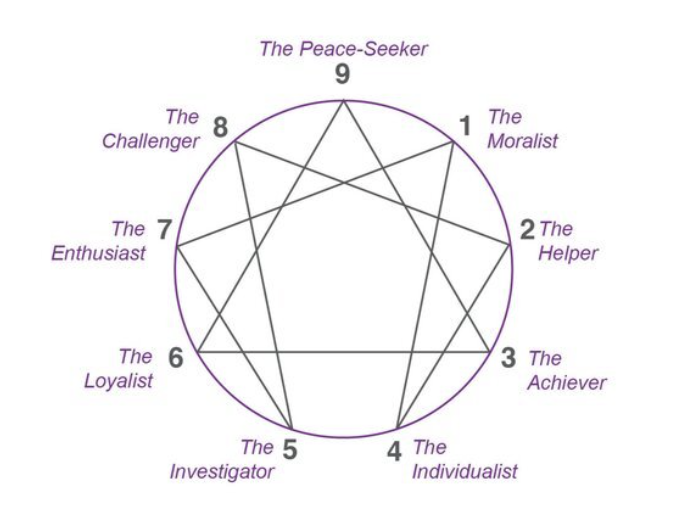
This compilation episode brings together our discussions of Type 4 across the many dimensions of the Enneagram to build a richer, more complete understanding of the Type. The team explores the 4’s connection to the Heart Center, its relationship with shame, its search for authenticity, Behavioral Patterns, Wings, and patterns of growth and stress. They examine both the remarkable strengths of Type 4 and the internal struggles that can accompany the pursuit of originality, depth, beauty, and a sense of being truly understood.
Podcast Hosts: Hari Prasada, Michael, Rasanath, and Vipin

Listen to this episode on Apple, Spotify, or your preferred podcast platform
Highlights
[00:30] Introducing the Enneagram Type 4 Compilation
[01:40] The Heart Center
[07:10] The Withdrawn Behavioral Pattern
[13:20] The Directional Movements: Type 1 in growth and Type 2 in stress
[16:30] The Predominant Emotion: Shame
[21:40] The Wings: 4w3 vs 4w5
[24:40] Falling in Love with Type 4
[30:00] Parental Orientation: Frustration with the nurturing and protective functions
[31:00] The Harmonic Group: Emotional Realness
[32:00] The Achilles Heel: “I cannot accept my own wellbeing.”
[32:20] The Passion: Envy; and the Virtue: Equanimity
Quotes
“[For the 4, the experience can feel like] there’s so much beauty. There’s so much pain. I don’t know how to make sense of any of it.” -Hari Prasada
“Why are the 4s appearing so thoughtful? Because they’re churning their hearts to figure out how do I really feel about everything?” -Hari Prasada
“[For the 4,] I know inherently that I’m unique, and yet it never feels quite complete if others don’t see it.” -Rasanath
“The 4s want to birth the unprecedented into the world, and they are always envisioning what is the unique beauty that is possible to manifest.” -Hari Prasada
“They are very demanding of themselves to be authentic and to find the most profound reality that is possible, and then communicate that to others.” -Hari Prasada
“The 4s want to live in that heart-to-heart connection that is so meaningful and that is so absolutely inspiring and edifying.” -Hari Prasada
Episode Transcript
-
Welcome to this special Enneagram compilation episode on the Type Four
Michael: In our podcast, we've explored the Enneagram through lots of different dimensions, including the centers of intelligence, behavioral patterns, predominant emotions, and many more. Each of these episodes looks at one particular dimension and explores how it shows up across all nine types.
For this episode, we've flipped that around and pulled together all the excerpts related to a single type to give you a deeper understanding of that type through the different dimensions we've covered. Since each clip comes from a longer conversation, in this episode, you'll be jumping into discussions that are already underway.
Between each section, you'll hear a brief chime and a quick introduction to the next dimension so you know where we're headed. Each dimension shines a light on something different. Put them together and you start to get a fuller picture of the type, including both its incredible gifts and the darker patterns that each type is called to recognize and gradually transform.
We hope you enjoy the journey. Over time, we'll also be releasing full-length episodes that explore each Enneagram type through these dimensions in greater depth.
Our first stop is the centers of intelligence, the dimension that helps us understand where each type primarily processes and responds to life. For Type 4, that's the heart center. Let's listen in
Hari Prasada: so the four, the individualist is. Obsessed with their hearts. They're, they're the most blatantly obsessed with their hearts, maybe more obsessed with their center than any other type, is obsessed with their center.
It's all about what I'm feeling. I'm feeling this, I'm feeling this, I'm feeling this, and now I felt something totally different. What do I do? It's because they want to get at who they are. We talked about how the heart is the seat of identity and intuitively we all can get a sense of this, that my real self, the deepest me, resides in the deepest part of me the heart.
And when I'm trying to, you know, we have expressions that sort of approximate that in very worldly terms, like I'm telling you from my heart and soul or you know, we. Grab our hearts or we, we put our hands to our hearts. We pledge from our hearts because we know the deepest me, the core of me is there.
And that's where the feeling resides. And it's emanating from the real me. But it's also where all the coverings to me reside. All of my ego identities and all that blocks me from being who I am resides. And the four innocently is looking for the real me. Like all the types, settling for the ego and the, the version of me that is more accessible, safer, and which gives me immediate gratifications and is acceptable to the world, but which actually doesn't suffice.
And the fours. They're also most in tune with the fact that it doesn't suffice of any of the types on the Enneagram. There's a way in which they feel something is not quite right here, but I can't put my finger on it and I feel so much, but what is it really leading me to? There's so much beauty. There's so much pain.
I don't know how to make sense of any of it. I just wanna feel, because I know if I feel, then I'm getting closer to the sense of aliveness that emanates from who I am, but it's being refracted through the ego, so it's not reliable and it's kicking me around. It's pushing me in all different directions, and it's just hard to control.
And then I try to show up like, yeah, I'm a normal human being, but really I don't feel like a normal human being.
Rasanath: You're appearing very as thoughtful as a forward right now.
Hari Prasada: Why are the fours appearing so thoughtful? Because they're churning their hearts to figure out how do I really feel about everything?
Does it connect to the real authentic me? Even though it's not the real authentic me, I'm still trying to connect to the real, authentic me in some skewed version. So I need to see, does this really come from the heart of me? How do I feel about everything in life?
Michael: So. Yeah, what you said right off the bat struck me a lot, which is that the fours are more obsessed with being in the heart center compared to any other type, certainly in the heart center, but also possibly any other type as it relates to their, their center.
Hari Prasada: And sometimes they're more obsessed with turning it off than any other type. I mean, the threes, they're not so obsessed. They just like, they don't even have to think about it. They just, it's like a valve. They've shut off. Are like, where the hell is the off button for this thing? It's just constantly spewing loud emotions and then.
There's also this paradoxical other side where it's not giving me enough emotion. I'm not feeling enough to feel my sense of identity now. I just went to this movie and I was hoping it was gonna be the most epic experience of my life. I've been waiting for opening day to see it, and I've got all of my closest friends to come together with me ceremoniously at the time when the film was just released and the film didn't make me feel enough, and I'm going around my entire life.
Not feeling enough and feeling too much at separate times, and sometimes simultaneously I'm not feeling enough of the things I want to feel, and I'm feeling too much of the things I don't want to feel. Ugh, and nobody understands. Ugh, nobody knows my heart. I don't even know my heart. I don't understand.
It's exhausting. It's exhausting to just, oh my God, it's exhausting. Just listening to you tell me, imagine
Michael: I can't even imagine
Hari Prasada: experiencing
Michael: it.
Hari Prasada: That's how the fours feels. It's like, God, will anybody give me some sympathy? But don't give me sympathy. 'cause that's condescending.
Michael: We say that the fours are some of the more complex types on the Enneagram, and they also like to see themselves as complex.
And there's a truth to it. There is a truth because of. Some of these contradictions and just really always wanting to be in touch with the deepest part of me. That's a complicated thing, and it's not a small thing either, and where a lot of other types are sort of willing to overlook that quest for.
There are other quests where there other things that they're going after in this life. The fours, even if they try to get away from it, they can never really get away from that quest.
Our next stop is behavioral patterns. This dimension explores how each type tends to move through the world.
Type four is one of the withdrawn types, which means they are often shy, thoughtful, and prone to overwhelm
Rasanath: the withdrawn types, by definition, these are types that are shy and are prone to overwhelm and as a way of coping with the overwhelming nature of the world, they tend to pull back. That's why they're called withdrawn.
the ego boundary is a perforated ego boundary. Uh, teacher Russ Hudson also calls it a picket fence in the sense there are gaps, there are perforations, which means now they understand why they feel overwhelmed, because things enter so much more easily from the outside world inside of me, they affect me instantly.
This is also what happens with the difference between the go-getter types and the withdrawn. It takes time for the go-getter types to even recognize that they have been affected because of the solid ego boundary. Whereas with the withdrawn types, I immediately know it's, in fact, I'm almost preparing to be affected.
I know as soon as I step outside, I'm going to be affected by the world because I have things just come in. I also, in the same way, have access to my subconscious and unconscious more readily. Things flow more freely from my subconscious and unconscious into my conscious, so that makes it pretty overwhelming the amount of things that can really affect me, and as a way of coping with the overwhelm, as a way of responding to the overwhelm I tend to pull back from the world.
That affects me so much.
Michael: You use the. Metaphor of soundproof walls for the go-getter types. I'm thinking of being in a New York City apartment on the first or second floor and having paper thin walls on a very crowded street where there's lots of honking and having that is the experience of life for the Withdrawns.
Hari Prasada: When we were living in our ashram, were monastery that we had founded for the purpose of doing this work when we were still monks and we had branched out of our original monastery to focus on this work. I remember having sleepless nights in the beginning because of that noise. I mean, it's such a vivid metaphor and so fitting because that's exactly what it's like that I can't sleep until I get all of the noise machines in place and I figure out exactly what room is most cordoned off, and I mean, we literally have to switch rooms, all of that stuff.
It feels, and this is what I wanted to say, it's crazy making for these types. It's crazy making, and the external world is equally overwhelming, as is the internal world that this free flow of all of the unconscious and subconscious things that just kind of rear their ugly head or crop up or tempt me or attract me.
It's like, what am I supposed to do with that? And it can happen at any time.
Michael: So then it's also not a stretch to understand why these types behaviorally are the most introverted. That's right. Of the three behavioral patterns.
Rasanath: That's exactly right. And when you have a go-getter. This also explains so much in terms of how we don't understand how people are getting affected.
Going back to the ashram, we had a bunch of go-getters who lived in the monastery, some of whom even when they walk, you can experience the go-getter energy. And so for the rest of us who are either napping or reading, even the walking of this person from their room to the bathroom would like significantly affect.
That's loud. And the withdrawn types might sometimes say, Hey, you know, this is too chaotic for me. The go-getter types, look, what are you talking about? Come on, grow up would be the message without really understanding how crazy it is. And this is a lesson that I myself as a go-getter type had to learn because there is a way in which I can just cope with the noise.
Because of the solid ego boundary, but how my behavior is affecting someone else is something that I have to learn.
Hari Prasada: So you preempted something that I, I really wanted to drill into, which is the relationship between these, the go-getters are very much wanted and accepted in the world. They are making things happen in the world.
They're shaping the world, and the world then revolves around them. And the withdrawn types have to somehow fit into that and be sort of governed by the go-getters, which is extremely challenging. Extremely challenging, and in many cases excruciatingly painful. And the response of the go-getters is typically become like me.
Just become like me, do what I do, be as good as I am. Grow some thick skin, toughen up, get
Michael: out there, do something. This is why Susan Kane had to write her book. Quiet. Yes. I was just looking up the subtitle. The Power of Introverts in a World That Can't Stop Talking.
Next up are the directional movements. This dimension helps us understand how each type tends to grow and what happens when they're under stress. For Type Fours, this means taking on some of the healthier qualities of Type One, the moralist, in growth, and some of the less healthy tendencies of Type Two, the helper, under stress
Rasanath: At four. The direction of growth is the one and the movement is.
From a subjective experience of reality to an objective experience of reality, the force tend to rely on their emotions tremendously for understanding what is real and who they are, which is a very subjective experience. And the one understands that the subjective only lives because there is an objective reality.
And so when the four moves to the one, I start to align myself towards that objective reality. And measure my subjective experience with respect to that objective reality. There is a very, uh, good reconciliation happening between the two, whereas previously it would just be my reality, my subjective experience.
The four goes to the two in stress, and the experience of that is feeling very much like how a two would. When they are stretched thin, which is I am doing all of these things for people and I just don't feel seen. And the four fields very similarly, it's uh, we talk about how at the lower levels of consciousness, the four fields like an undiscovered virtual.
So that is exactly how the two feels Like. I have so many of these qualities, I'm doing so many things for people and nobody is seeing how good I am. I. The four begins to experience those very feelings that the two has under stress.
Hari Prasada: Oh, I was gonna say one distinction between the two and the four there.
In terms of the undiscovered virtuoso, I. The twos are all about you. The fours are all about me. And the twos are they. They love talent for sure, especially if they're really invested in their talents. But the fours are obsessed. They're obsessed with, I have all these gifts, I have all these talents. The world must see them.
My creativity must explode onto the world and be appreciated for it. So in that sense, the four. It really claims more the undiscovered virtuoso, but the behavior is still very much like the two.
Michael: Yeah. So I was gonna mention some of the behaviors, like becoming people pleasing and overly accommodating, that you'll start to see sometimes in lower consciousness force, and that's the resembling of the two.
Rasanath: Well, also tools that level are actually blaming people for their situation. And you will see the same thing about the four. I am actually saying that I. It's essentially being a victim. And, uh, that victimhood you'll find with two at lower levels of consciousness and the fours when they're coping, that is typically their initial experience.
I feel like a victim,
Now let's turn to the predominant emotions, the dimension that helps us understand the core emotion that each type most centrally experiences. For Type Fours, that predominant emotion is shame. Along with that comes a core mantra shared by the types in this triad: "See me the way that I want to be seen.
See me the way that I want to be seen."
Rasanath: the type four is same. That belongs to the heart center.
See me the way I wanna be seen. And if we recollect. Type four. The essence qualities of the type four is all around originality, depth, and beauty. And now I wanna be seen as this unique snowflake, right? It's true that every snowflake is unique, but how many people are really noticing it? So I have this very complex relationship with it where.
I know inherently that I'm unique, and yet it never feels quite complete if others don't see it. So see me the way I want to be seen as this unique different from everyone. Uh. Sense to it, but I'm not going to be very overt about it. It's done very covertly. It's done in a very dignified, or rather, I would say understated and classy is the theme here.
Hari Prasada: At least that's the attempt on the part of the four at least.
Rasanath: I'm not going to be so overt about it because if you were classy enough, you would understand. Yet, I feel so pained at the fact that so much of the world is just not classy enough. But deep down, I feel very disturbed by the fact that I'm not seen the way I want to be seen.
And for the fours, when you talk about See me the way I wanna be seen, the force will say, it's not see me the way I wanna be seen. See me the way as I am. Period, and there is some truth to it. See me the way as I am because the fours have attempted to go closest to who they are. But if they're honest, if they're actually honest, they will see that their attempt to go closest to who they are has potentially taken them further away from who they are.
It's as Hari Psad, you would say, a self on top of the self, a version of authenticity that is actually not really authentic and the experience of not being seen. The way I am in codes brings up the emotion of shame and the compensation for that emotion is I would draw. And then there is this thing that the world just will never understand who I am.
Hari Prasada: See me the way I am is code for see me the way I think I should be. So my ego is we define the ego to build as. The identity of who I think I should be, and for the four, I'm so fixated on being authentic, but I've forgotten who I am. So the only thing I can do is be authentic to what's present, which is the ego.
So I will be so authentic to my ego. You've never seen somebody more authentic. To their ego than me. Now see me the way I want to be seen. See me as my ego actually, please. It's so deep. My ego is so deep. But of course they can't admit this to themselves. This is the problem. I'm being authentic to what is more prominent than the depths of who I am, the core, the self, the soul.
I can't go there. So let me at least be authentic to some version of myself that I can feel good about. So if
Rasanath: we said that the heart is the subtlest of the three centers, the four is the most subtle in terms of understanding and expressing the emotional shame,
Hari Prasada: and it's, it's absurd because it's like. Oh yeah.
I'm really this goth person. That's who I am. See me as the most authentic, deep goth person. That's what I am. Yes. This is absurd. And then 10 years later, I'm a punk. I'm not goth. I'm totally different. Totally different and, and then I'm a hipster or what? You know, it's so embarrassing and I feel the shame of that.
And I'm trying to tie myself to something which is not real, and I feel the shame of that constantly. But I need you to see me for the closest to what I can conjure of who I am as possible.
Michael:
Next up are the wings. Here we explore the differences between a type 4 with a 3 wing and a type 4 with a 5 wing
Rasanath: A four with a three is similar to the three with a four, but it's more pulled back because the four, the type four is the dominant energy, so you will see between the three with a four and a four with a three if you were to compare their extroversion versus introversion.
A four with A three is more introverted because of the dominance of the four. Being the main type, but you'll also get this, I want to go out and do things in the world spirit to it. the biggest distinction that I've seen is a three with a four.
My primary orientation is still to fit in. But I bring a little bit of standing out in the fitting in. a four with a three is beginning with the premise of I am different fundamentally, but then I also want to be a little bit in the world.
The starting place is how am I standing out and how do I stretch that to maybe perhaps fit in a little bit?
A four with a five on the spectrum of extroversion and introversion. This is really going the other direction. We have spoken about extroversion now. This is going introverted. A four with a five is definitely one of the most introverted types in the Enneagram because the four and the five are both withdrawn energies and a four with a five.
This is a type that brings an immense amount of curiosity. A type four is curious. And now combine that with the curiosity, the intense intellectual curiosity of the five and the emotional curiosity of the four combined. This makes that introverted and very, very curious. The difference will be the four is still, it's a heart center type.
And so you will see the emotionality of the four still out winning the intellectual nature of the five. There is still a lot of heart present.
Hari Prasada: I just want to clarify because the forests also have a strong intellectual bet about truth and depth and profundity. So there's a heavy, heavy intellectual drive to many forests and the five just takes that into a different direction and puts a different flavor on it.
Four, with a three also, there's, I'm gonna put pedigree and trying to. Reach the mainstream through the profundity, but the five just makes it more of a detached. Like I'm sitting here looking at everything and I'm super pulled back. You might not see me kind of a person because I'm really in my own world.
The next conversation focuses on the question, how do we fall in love with this type? In this excerpt, we explore both the extraordinary gifts of Type 4 and the deeper suffering that lies beneath its personality structure
Hari Prasada: the fours. They want to birth the unprecedented into the world, and they are always envisioning what is the unique beauty that is possible to manifest.
That comes from a deep place and helps people connect with truth. It's a lot that they ask of themselves. They are very demanding of themselves to be authentic and to find the most profound reality that is possible, and then communicate that to others so that they can experience it too, and they want to live in that heart to heart connection that is so meaningful and that is so absolutely inspiring and edifying.
So they're very devoted to this. This is what they feel called to do and to not shortchange the reality even when it's not pretty. Hardly anybody wants to go there with them. I mean, this all sounds like way too much work and not enough payoff for people. And who needs this? Is it even possible? Or is it efficient?
You know? So they feel very, very lonely in this quest and they feel also bereft that I'm not able to do all of that, and it is really taxing. And I want to connect so badly with a world that doesn't want what I'm trying to do. And I don't even know myself enough to do what I'm asking of myself. So how is this ever going to work?
And I feel so much pain. Because I feel so much as a, a soft-hearted person, I just feel so much more than any other type and nobody gets what I'm going through. So I feel really cordoned off from everybody.
And I just wish that I could get people to be honest with themselves the way that I'm trying to be honest with myself about where I'm falling short.
I want to bring humanity back to the world and I want to really have the most significant impact possible by going to the greatest depths possible. And I think of my guru Ami, he's so deep, people dunno what to do with him. He's like an anomaly on this planet.
And he sometimes thinks like that. That like people just don't know what to do with me. I'm so different.
He is very soft hearted and he feels a lot, but he's also extremely transcendental. So this is the most unique situation 'cause he is so self-realized. He's realized. Soul, at least I can say this. He wouldn't say this, but I can say this. He's realized the soul, so therefore he's above the, uh, petty struggles of this world.
And yet at the same time, he's still human and very honest and overwhelmed by all of the different demands on his time, different demands of people, the demands of the body. It's super intense, super intense, and he just is so open and honest about it and wanting other people to become authentic and saying, why are you trying to pretend?
Why are you trying to pretend? Can't you be a little authentic? Won't that do some good? What is the use of all this? Pretending so much more. I could say that he's the most lovable, and so
Michael: I will contain myself. I don't want you to contain yourself. 'cause I love when you speak about the four and when you speak about such an non swami in particular, and I feel as you were speaking about the four initially, I really felt similarly to how I felt when Rosoff was describing the one earlier.
There's such a tall ass that they have of themselves. As you said, it's intense and it's like how are you ever gonna find happiness if this is the way that you see the world and you see yourself.
Hari Prasada: Yeah. And my emotions are so heavy. They're so big.
And the drive for creativity is so intense and to like want to always do things in a way that is so unique and so captivating. It's a lot to ask. The forest care, they feel the cross they're carrying, they really feel it.
Most types we're all carrying across. Most types don't feel it very much. They have their defenses against it. The force are like, how do I get defenses? Please help.
Next is parental orientation, which looks at how each type relates to the nurturing and protective functions. For Type Fours, there is a frustration with both the nurturing and protective functions in their life
Vipin: And then you have the type four frustration with both. I get that. I need so badly protection and so badly nurturing. Who can argue It's obvious. We need those forces for our wellbeing.
And I'm not getting either one in the way that I need. This is so outrageous. I have to do both for myself. Who in the world has to do that? Nobody else. It's only me. I'm so alone and so, ah, unfortunate that I gotta do everything for myself. Everybody's ahead of me and my God, how will I ever do it? It is too overwhelming.
Next are the harmonics. This dimension explores how each type typically responds to conflict and tries to resolve it. Type four belongs to the emotional realness harmonic, which means they tend to approach conflict by trying to make sure that the emotional truth is on the table for everyone to be aware of
Rasanath: as we know about the type four Emotions are everything for me and for the type four.
The way the emotions express themselves, especially when they go down the levels of consciousness, is, well, do you really get everything that is happening to me at this point? I need to put all my cards on the table because without getting the understanding and making sure that you are emotionally real, there is no real resolution here.
what happens here is that in the process of becoming emotionally real. The four tends to play the victim, and there is also a sense that, do you really want to understand me? You know, because if we are not going to get there, then this conflict can never really be resolved
Now let's turn to the Achilles heel, the dimension that shows us the one thing that each type cannot accept about themselves and how that becomes their undoing.
For Type 4, it's "I cannot accept my own wellbeing."
Rasanath: The identity of the four is based so tightly on their emotions, and they also, like, often begin to recognize that the positive emotions, they have a much shorter shelf life than the not so positive emotions, especially about myself.
And so as a way of sustaining my identity for a long time, the gravitation is towards the more negative emotions that is fueled from the fact that nothing is quite good in my life. There is a sense of tragedy, and I want to sustain my life in that sense of tragedy. Like, I am just undiscovered. People don't understand me.
So much is wrong in my life. But what they fail to recognize is there is so much good going on, and there is constant underplaying or undercutting of the good. So I can't accept my own well-being.
Our final stop is the passions and virtues. This dimension explores both the emotional trap that keeps each type stuck and the quality that naturally emerges as the ego begins to loosen its grip. For Type 4, the passion is envy and the virtue is equanimity
Rasanath: For the type four, the passion is envy, and the expression of it, fours tend to be tying it back to what we talked about, authenticity.
There is a way in which fours tap into the tragic sense of life, so to say. There is a feeling, a deep-seated understanding that there are more sorrows in life than there are good times. The sorrows also have a longer shelf life, and they're tapping into the truth about the material world . Now, what then happens is I begin to feel that I'm the only person who is experiencing the limitations.
I'm just fundamentally flawed, and others don't have the same flaws as I do. And when it comes down to that way of seeing the world, I feel envious about this, and that envy, it's a poison Where everything, when I see somebody happy, I have to somehow undercut that as, "Oh, that's just shallow." You see how the four does that.
There is a sense of a snobbish dismissal of anything that appears to be happy because of the envy, the feeling that I'm just more fundamentally flawed than other people, so I just have to bring them down.
Hari Prasada: Just to add to that, the fours are typically right on this, that the happiness that they perceive as shallow is indeed shallow.
What they're wrong about is the sort of animosity, the malice of not wanting others to be happy, not being their well-wisher. That is the poison. Moreover, this gets further embarrassing for the fours who are all about authenticity. the last thing they want is hypocrisy, and yet they don't see it in themselves, that when they're decrying the happiness of others for being shallow, they don't understand their own shallowness
Rasanath: And the virtue for the four is equanimity.
The experience of equanimity, there is a beautiful expression or metaphor in the Bhagavad Gita that talks about the equanimity of a self-realized soul. The metaphor that they give is, uh, of the ocean and the rivers flowing into the ocean, but the ocean never seems to increase its size. It still stays the same even when there's so much water flowing into it, right?
And the equanimity of the four is the ability to... It's not that I don't feel. I feel a lot, but because of the depth, the genuine depth I have, there is a way in which it gets absorbed. It's also there is a very grounded understanding of the truth, and from that place, I look at the world from a place of depth and not from a place of agitated emotions Very different experience.
It's not dramatic as typically the not so healthy four would express themselves. There is a very deep grounded expression of the depth of human emotions that is very deeply touching.
Hari Prasada:
Continue Exploring the Enneagram
Browse all Enneagram podcast episodes
Understand the Enneagram framework — clear breakdowns of the Types and how the system works
Join our live Enneagram community, Enneagram Library Live, hosted by the Upbuild team.
Take the two-day Enneagram 101 workshop