
The Upbuild Enneagram Library
Type 3 Across the Dimensions
of the Enneagram
Subscribe on: Apple Podcasts, Spotify, YouTube, or wherever you get your podcasts

Episode Description
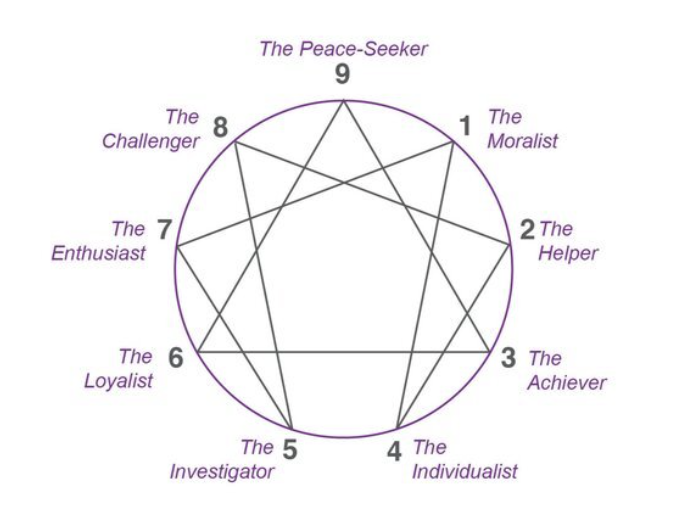
This compilation episode brings together our discussions of Type 3 across the many dimensions of the Enneagram to build a richer, more complete understanding of the Type. The team explores the 3's connection to the Heart Center, its relationship with shame, the search for value through validation, Behavioral Patterns, Wings, and patterns of growth and stress. They examine both the remarkable strengths of Type 3 and the internal struggles that can accompany the pursuit of success, recognition, and authentic self-worth.
Podcast Hosts: Hari Prasada, Michael, Rasanath, and Vipin

Listen to this episode on Apple, Spotify, or your preferred podcast platform
Highlights
[00:50] Introducing the Enneagram Type 3 compilation
[02:10] The Heart Center
[08:10] The Go-Getter Behavioral Pattern
[17:45] The Directional Movements: Type 6 in growth and Type 9 in stress
[20:00] The Predominant Emotion: Shame
[22:20] The Wings: 3w2 vs 3w4
[24:30] Falling in Love with Type 3
[30:50] Parental Orientation: Attachment to the nurturing function
[36:30] The 3’s Inner Critic
[40:50] The Harmonic Group: Competency
[43:00] The Achilles Heel: "I cannot accept my own self."
[44:40] The Passion: Vanity; and the Virtue: Authenticity
Quotes
"Without the heart, it is impossible to experience my own value." -Rasanath
"The substitute for the experience of value becomes validation." -Rasanath
"When we shut down so that we don't have to feel the pain of shame, we also lose the experience of our own worth and value." -Rasanath
"The solid ego boundary gives them a certain kind of functionality, even when things are dire." -Rasanath
"3s naturally invest in the gifts that they have been given." -Rasanath
"When [the 3s] are connected to their heart, they can actually see how every person is playing such an important role...and can make people genuinely feel valued." -Rasanath
Episode Transcript
-
Michael: Welcome to this special Enneagram compilation episode on the type 3. In our podcast, we've explored the Enneagram through lots of different dimensions, including the centers of intelligence, behavioral patterns, predominant emotions, and many more. Each of these episodes looks at one particular dimension and explores how it shows up across all nine types.
For this episode, we've flipped that around and pulled together all the excerpts related to a single type to give you a deeper understanding of that type through the different dimensions we've covered. Since each clip comes from a longer conversation, in this episode, you'll be jumping into discussions that are already underway.
Between each section, you'll hear a brief chime and a quick introduction to the next dimension so you know where we're headed. Each dimension shines a light on something different. Put them together and you start to get a fuller picture of the type, including both its incredible gifts and the darker patterns that each type is called to recognize and gradually transform.
We hope you enjoy the journey. Over time, we'll also be releasing full-length episodes that explore each Enneagram type through these dimensions in greater depth. Our first stop is the centers of intelligence, the dimension that helps us understand where each type primarily processes and responds to life.
For type three, that's the heart center
Rasanath: One of the complexities, as you rightly highlighted, is a lot of type threes will not necessarily identify themselves as heart-centered people because the tendency is to compensate.
For the three
It's about value and worth and my sense of purpose and meaning, what am I really living for? And when you translate that what am I valuable for? How are the things that I have been given really fit with what the world needs and can I experience when that fit happens? That gives me a sense of my own value.
Without the heart, it is impossible to experience my own value. That's where it really lives. Now, what the threes tend to do, and this happens because implicitly the way threes work is because they're in search of their own value and worth. When it doesn't come, the substitute for the experience of value becomes validation.
There is a reason why it's called validation. Value and validation go very much hand in hand. And for the type three validation is everything because that's how I experience my sense of value. And when I don't get it, then I experience.
Shame, And shame is a very deep, very painful emotion because the characteristic of shame is, I'm so fundamentally flawed and I feel a certain helplessness about it. So in the case of the type three. I don't have any value.
When the validation doesn't come, that is the experience. So there is a deep feeling of shame that arises from the heart. And the mechanism to then not make myself suffer or cope with it, is by detaching myself from the heart, because that way then I don't have to feel the pain. But then what I lose with it, it's a double-edged sword, is also the experience of my own worth and value.
So even when the validation comes, because I'm so detached from my heart, it is not really adding anything to my sense of worth. It lives on the surface and then it dries up and then I feel worthless again.
Michael: So the threes are in the heart center because they're constantly searching for their value.
And value can only be experienced through the heart. That's right. It is one
Rasanath: of the aspects of understanding who I am, you know, my sense of identity through the means of what I can offer to the world through my value.
Hari Prasada: Now the threes, interestingly, Rasad, you mentioned that they may not be quick to identify themselves as in the heart center. That's very true. That often they will not unless. Being in the heart center is valued. Unless I see myself as such a heart person, because people love that. That's great. That really gives me the validation.
Now I feel my worth. That also is there a lot, and there's so many different ways that culture and gender and all kinds of dynamics play a role in influencing them.
Rasanath: Well, a lot of threes find their sense of value in professions. In doing things, and in those settings, 99% of the time, your emotions are not really valued.
You are actually implicitly and explicitly expected to not bring your emotions into those spaces, which essentially means now the three recognize this is very quickly because I'm in such of my own value and I want to be valued, which means I shouldn't be bringing things that are not valued. Emotions.
So because they very quickly pick up on that, they try to move away from their own emotions because emotions are not valued and this is many threes also get this message very early on in childhood that they're not valued for their emotions.
Michael: I was just gonna add one more. I. Thing in addition to what you just shared is also they recognize that in order for me to be valued for whatever it is that I'm trying to be valued for, I need to move quick and I need to
take care of a lot of things and emotions can get in the way of me being super efficient and productive in the world. So this is yet another reason, in addition to what you shared earlier about shame and in addition to what you shared about emotions not being valued.
This is a third reason why threes tend to have a very difficult time accessing their heart, is because they've shut down emotions for this reason.
Rasanath: Now what is also interesting with a lot of threes is because they want to be liked, they can't completely divorce themselves off emotions in the sense that they want to come across as warm and very likable.
But what you do experience is a quality of artificiality that's associated with it.
Hari Prasada: Sometimes the thinness of that is just like a enough warmth just to make it have like a little veneer of emotion
Rasanath: So even when I am trying to come across as having emotions, people are not necessarily experiencing my heart because it's still very guarded and put away.
So what we many times experience is just. Some semblance of the heart, some shadow of the heart, but not, not the real heart.
Michael: Our next stop is behavioral patterns. This dimension explores how each type tends to move through the world. Type three is one of the go-getters
Hari Prasada: the go-getters, they are characterized by making things happen and coming off as strong. They come off as strong, they make things happen. And as Michael you said, they're like a force in the world thatBut the overarching sense is I kind of let things roll off me. I plow through life and things, they just, they roll off me. I don't let them affect me so much. You gotta be bold. And actually underlying this behavioral pattern is a very, very crucial dimension within the dimension, and that is called the ego boundary.
and what that means is your interface with the world. So the dividing line between the external reality and your internal reality.
In other words, how much do I allow myself to be affected by the external world? This also applies internally. This is another important nuance that
So the ego boundary means it's not only a boundary between the external world and my internal world, but it's also between layers of my internal world.
Okay? So with the go-getters, their ego boundary is solid. It's a big thick line. It's a solid ego boundary, so the world is not affecting me so much. It still affects me, but I have like an armor. There's a layer of protection that also means I'm protected from being touched. I'm protected from being impacted.
It works both ways, and the same is true internally, that I have less access to my unconscious and subconscious mind, even when I'm trying to go there, but I can go there. It's just that the default setup is there are these thick barriers I have to break through, and this is why I can plow through the world and I can feel really good that I'm making things happen.
Look at me. I'm a strong person.
Rasanath: I've encountered this in my own coaching work where the CEO of this company. She has just come back from the hospital. It was a pretty traumatic experience. She runs a big firm with with a lot of assets under management, and she told me on the call it's like, I don't know when I will break, but I'm still doing fine.
I'm doing fine. And they're doing fine as a connotation in the sense that I'm still pretty functional. I'm moving things, I'm moving towards my goal, and yes, I feel quite vulnerable, but I'm still going to show up and keep doing the things that I'm doing. So with the Go-getters, the solid Ego boundary gives them a certain kind of functionality, even when things are dire, which actually they sort of wear it as a badge of honor.
Michael: I was gonna say the idea of compartmentalization and Oh yeah, that's great. We talked about this in the past, these are the people who have the easiest time compartmentalizing things because of the solid boundary. And ha, you did such a nice job, even on the audio format of helping us all visualize what this would actually look like with the solid lines.
Rasanath: It's like having soundproof windows. It's, you know, that's the analogy that I give. There's just so much padding that is available that I don't hear what's happening in the other room. I don't hear what's happening outside the house, um, in my office. And I can just pl through things and there is a certain advantage to that and there is a certain disadvantage to that.
Hari Prasada: Totally. And I just wanna emphasize also the inner world, 'cause this is so important and it's not often well understood. This is going on internally. I'm locking doors within myself. There is an air tight boundary between my unconscious, subconscious, and conscious world, so I have to pay very close attention to that.
And if I wanna raise my consciousness, this is key to understand that I'm gonna
Michael: have to break through some walls. And it doesn't mean that these types are not sensitive people, right? Everyone is
Hari Prasada: sensitive. Everyone is sensitive. The question is, how comfortable are they with their sensitivity and how does it manifest?
So the solid ego boundaries are not foolproof. This is what we also have to understand. It's not that nobody can get to me. I may present myself that way. I may like to think of myself in that way. It's absolutely not true. People are getting through things are getting through, experiences are getting through my own unconscious and subconscious mind is cropping up and calling me.
But these thick walls made me feel like, yeah, I'm fine. I'm good.
Michael: So it's not hard to understand why these types, the go-getter types are the most extroverted
Hari Prasada: Absolutely.
Rasanath: So the types three, seven and eight are the go-getter types and the Enneagram. And what we will also see the solid ego boundaries coming into play even when they are internally dysfunctional, the go-getter types, they can be externally extremely functional.
This is a very strong characteristic of the go-getter types in their roles, in their jobs and their functions. They can be highly competent even when they're not doing internally very well because of that solid ego boundary. What also becomes the challenge? Is because of the solid ego boundary, they are less affected by the world, which also means, especially as they go down the levels of consciousness, it becomes very easy to shut down what the world is trying to tell me and what is happening in my own internal world.
Extremely easy to shut that down, which means the level of awareness that I have of my surroundings and also of my own self very quickly false because first of all, the access to them is harder. And secondly, when I'm not working to improve the access than they become very quickly unavailable to me.
Hari Prasada: I wanna just give one caveat here.
When we're talking about not being affected by the world or by my internal world, that's for ease of understanding. That's to make a point. It is not strictly the case. Everyone is being affected. The go-getters are no exception. Often what's happening is they're using their ego boundary unconsciously to block to suppress.
It's not actually that they're just not affected, it's that it's more natural in their default state to be less affected, to feel the effect less, but the experience is still living in them and it's causing issues. It's not that they can just ignore it because, well, I have the protection against it with my solid ego boundary.
And if you look at the work of Dr. Sarno, he passed a few years back in the medical field, he uncovered how the unconscious stress is way more devious and even deadly than the conscious stress. So. All types need to be aware of this. Go-getters need to be especially aware of this because it's so easy to chalk it off of like, yeah, I'm just not that affected by things.
And now I just heard this podcast where it's like, see, I'm really not that affected by things. I'm just graced with a solid ego boundary. Yeah. I mean, it has its drawbacks. Sure, I can work on them, but it's pretty good. That's not the case. There is a suppression mechanism that's built in here that we have to be so careful about because everyone has a soft, sensitive heart and everyone is being affected by the external and internal world.
Everybody,
Michael: no exceptions. And with the three individual types that we just talked about, I mean the threes are the most attuned to what other people are thinking. And so how people are perceiving me. And what the need of the hour is, and there's so much sensitivity there.
Next up are the directional movements, the dimension that helps us understand how each type tends to grow and what happens when they're under stress. For type 3s, this means taking on some of the healthier qualities of type 6, the loyalist, in growth, and some of the less healthy behaviors of type 9, the peace seeker, under stress
Hari Prasada: The three, the achiever. They are so intent on establishing their worth and becoming the most valuable person that they possibly can be and being seen for it applauded by the world, or at least by their little world. And so when they grow towards the six, they start to.
Become humble and modest and they shed the vanity of it's all about me and my shining. It suddenly becomes about something much bigger than me. They become devoted to a cause that is worth subordinating myself to sacrificing myself for and being as dependent and loyal and even invisible for. Even as they shine with all of their talents and their capability and the beautiful qualities that they have, so the three goes to six in growth and towards the stress.
The nine qualities start to come about where the three is feeling ashamed that I don't have the worth that I'm seeking, I'm not being seen the way I want to be seen. I'm not going to win. I'm going to lose. And I don't play games where I lose. I don't come out when I'm not going to be seen the way I want to be seen.
So to craft my image and safe face, I. Get rid of the shame. I just disengage from my heart and I disconnect from the world. I become disengaged, procrastinating. You don't hear from me if you do. It's sort of automated responses with as little effort as possible to keep the peace like benign.
Michael: Now let's turn to the predominant emotions, the dimension that helps us understand the core emotion that each type most centrally experiences. For type threes, that predominant emotion is shame. Along with that comes a core mantra shared by the types in this triad, "See me the way that I want to be seen.
See me the way that I want to be seen."
Hari Prasada: With each of these types, see me the way I want to be seen is there as something that is even more, again, central than for the other types.
Because for everybody it's about our ego identity. And so I want to be seen and validated. It's all about validation for all of the types. So in one sense, see me, the way I want to be seen is. The thing for all of us, but for these types, it is most on the nose, it is dead on. It is running my life in a way that is just beneath the surface.
Always, always right there. So that's what we have to look out for. And with the shame you can feel like, ah, I don't want to be seen right now. I don't want to be seen.
With a three. There is no type that is as centrally tied to this mantra and that whole crafting of how I want to be seen it is so predominant. It's unbelievable. They become masters at. Crafting the image of how they want to be seen. And so the shame is that I need to be successful. I want to have worth, I want to have my value.
And if you don't see me as valuable, then everything falls apart. Everything is a mess. I can't live like that. So I'm feeling so ashamed that I will do anything to get you to see me the way I wanna be seen. And I have all kinds. Of tricks up my sleeve. I can do this dance, I can do that dance, I can do this dance now.
Michael: Do you see me the way I wanna be seen now, am I valuable? You like that, right? You like that? Yeah, I can do that. See, look, I'm winning in life. Shame is what's running that shame. 'cause I can't accept myself as I am. Next up are the wings. Here we explore the differences between a type 3 with a 2 wing and a type 3 with a 4 wing
Hari Prasada: The three with a two is similar to the two with the three. Very, very extroverted, totally driven outwardly. And the difference between a two of the three and a three with a two is the two of the three is much more bubbly and trying to connect and feel like we're really intimate.
And the three with a two is. Like I'm still getting the job done. I'm still like, of course two and three has that side to them. But the predominant energy we're talking about, the three of the two is I still get the job done and I can be bubbly and sweet as is needed to get the job done and satisfy that part of me.
So I'm leaning in, you know, I have the happy, happy-go-lucky air that makes me likable and that's a big part of my wiring. But I'm also like, here we go. You know, this is serious. We're gonna get into stuff and move things forward. And that's just how I show up. There's an intense readiness for action that is different.
Three with a four. Now you're taking a withdrawn type again, the four more introverted, and you're putting that into the mix, and now you're getting a really polarized energy. So the three being very extroverted, a go-getter driven. Constantly making things happen. Action packed, action oriented. Now you have this thoughtful, reflective side and am I in touch with myself?
And so you feel the pullback energy and the reflectiveness and the sense of needing time. And I'm not leaning in. I'm not just trying. I want you to like me, but I want to make sure that. We're understanding things and we're going deep, and that there's mystique as well, so very, very different flavor.
Rasanath:
Michael: The next excerpt is from a different kind of conversation. Rather than a new dimension, this focuses on a simple question: How do we fall in love with this type?
So in this excerpt, we explore both the extraordinary gifts of the Type Three and the deeper suffering that lies beneath its personality structure.
Rasanath: to talk about the gifts of the three threes, they naturally invest in the gifts that they have been given. When you can invest in the gifts that you have been given you can naturally use it for the benefit of the world.
And there is also a way in which I can notice the gifts of other people very quickly. Threes in one sense, have the easiest access to appreciation because, of how they can perceive value. There is a way in which when they're very open and healthy, they can actually see how every person is playing such an important role in their life and can make people genuinely feel valued.
Because that appreciation comes from the heart. The heart feels it, and when the heart conveys it, other people naturally just feel seen. It's remarkable how one of my mentors, by BU, who we know is type three. It is amazing to see him walk on the street interacting with people and you know, he can talk to a complete stranger.
I have seen this happen so many times. You talk to a complete stranger and that person will walk away feeling like, oh, I've never been seen like this before in a five minute interaction. And I see it's not a technique, it is actually the openness of the heart that really sees the true value.
It's so powerful that the other person, even if they haven't experienced themselves that way, suddenly live with a very different feeling about themselves. It's extraordinary, and when you see that happening again, it's just natural to fall in love with someone who can see you, who can genuinely see other people and teach you a new way of seeing yourself.
Michael: So Ana, you often talk about how threes are to poster children for this idea of mirroring, and they require mirroring to really be able to see themselves. What I hear you saying is they're also uniquely gifted with the ability to serve as a mirror for other people and empower them through being that mirror.
Rasanath: Absolutely. They know the function very deeply. They know how important it is, and when they are connected to their heart, they can provide it in such an incredible way because it's natural for them, right? It's not like they're striving for it. It is just very natural for them. The suffering then comes because when I struggle to connect with my own heart, I am not in touch with my value.
My heart doesn't reflect my own value, what to speak now of value of others. That doesn't mean that I don't see other people's values. What then happens is that when I see other people's value, it becomes a threat to my own. This is the izing. It's the same function. I'm still in touch with somebody else's potential.
But now because I'm not in touch with my own, I feel overshadowed and the suffering here then becomes constantly feeling like I don't have with.
And in that process, then I compensate and that compensation then results in VA glory projecting myself to be bigger than what I am who I am at the cost of feeling my own heart, where my true value rests in my own heart.
And when I stop going there because I actually deeply fear and believe that I don't have any worth, then what do I have to do in order to be worthwhile Is project. And that then becomes my suffering.
So there's this emptiness that surrounds what actually felt so full and heartfelt when I was able to mirror extremely well. Now it's the complete opposite where it's just like there's just nothing, right?
A feeling of just emptiness, like when you knock there is really no one to answer because the heart has just been buried
Michael: All types get a bad rap for different reasons. For the threes, they can get a bad rap for being competitive and deceitful, and that's certainly true at lower levels of consciousness for them.
But one of the access points to falling in love with the three is to think about what drives that competitiveness. It can often be a feeling of shame of I'm not worthy, and we all have had an experience of feeling not enough and and wanting to feel more valuable or to be seen as more valuable, and this is an experience that the threes are living with constantly and feeling the weight of not having as much value as I believe that I could have.
Rasanath: Yes. And it is such a fleeting thing for the type three, right? Uh, I can share from my own experience how it's a day-to-day suffering that I have to carry when three coaching sessions go really well, that that feeling seen to then it is not even that something doesn't go well, it's just that the next day I can't feel my own worth.
The fact that so much good happened yesterday, it's shelf life is just so short.
Michael: There's an addiction and the substance is not as much in the system anymore, and then you feel the withdrawal effects of it.
Rasanath: You just return to the emptiness. Next day when I wake up, it's like I have to search again for, okay, where am I really?
What are my hormones to this world?
it's so hard to live life every day feeling like I have to go back and prove it.
Michael: Next is the parental orientation, which looks at how each type relates to the nurturing and/or the protective functions in their life. For Type Threes, they are particularly attached to the nurturing function.
Rasanath: So the attachment to the nurturing is the type three, and specifically what the three is attached to in the nurturing function is mirroring. Reflecting back to me, reflect back to me who I am. Tell me my purpose and value.
Vipin: So to make this even more concrete for folks, let's take one or two examples to really illustrate how someone's parental orientation shows up.
In their adult life, in relationships and work in stressful situations.
So I. You can imagine who owns the workplace. It's quintessentially the three, right? The achiever. They're rising to the top of the ranks and calling the shots and promoting other threes who want to be like them and get to the top. And it's all just predominated by threes. There are other types that get to the top, of course, but the threes, they're sniffing out the way to the top and more determined to get there for their sense of self-worth than any other type.
That is just how it is, and our world rewards that in a way that is guided by threes and four threes to profit off of. And it also creates crazy anxiety for the threes and neurosis around this for the threes and competition, and I'm not enough, and all of that imposter syndrome. So what's happening here is actually the top means nurturing.
People will see me. I'll be mirrored. People will clap for me. I'll get to give a presentation. I'll get to receive an award. I'll get a paycheck that says You're valuable. Yes. Congratulations. I'll get all of these things. I will be able to pat myself on the back and feel like, see, the world just appreciates me because I'm a contributor.
So all of this is attachment to the nurturing. It comes in terms of my bank balance. It comes in terms of my title. It comes in terms of my influence. It comes in all different ways, but it's all actually the attachment to the nurturing. And when somebody is not performing, they're not making me look good, and they're making me waste time and energy that I don't have because I need to be getting to the top or getting higher and better and doing more.
And contributing and contributing and contributing. So now you're really frustrating me. That doesn't mean you're a frustration type. That's actually your attachment to the nurturing that's playing out in the form of frustration. 'cause you're not getting me the attachment that I'm looking for.
I think one of the, the descriptions that Sana, I remember you sharing, I believe, came from Don and Russ.
About the three's parental orientation that was so helpful for me was to imagine the type three as a baby who takes his first steps and all of a sudden the parent or the mother, in this case, representing the nurturing function, starts to clap and cheer for the baby. And the baby doesn't fully understand the moment, but sees I'm being seen by the parent, by the mother.
And there's a twinkle in that mother's eye, and I am thinking, I like this feeling. Let me do this again. And that twinkle in the eye of the mother on my first steps. I'm actually seeking in every interaction, in every relationship. And Sori Prasad you were talking about, look, that's represented by my climbing the corporate ladder.
It's represented by my bank balance. But to see that, wow, I'm looking for this twinkle, this feeling of being seen and recognized and being validated and clap for in the eyes of every person that I'm talking with was a profound awakening. You see, wow. It's, it's so, there's so much desperation. There's so much attachment to that mirroring that I even in the most subtle or mundane interactions that's present, that was a very powerful unlock
Rasanath: I had a conversation with a type three earlier this week who was talking about how she just doesn't want validation anymore.
and you see the same cycle that actually repeats. I'm so attached and it's not coming as fast and the way I want and I feel so terrible, I'm just gonna reject it. Right?
Vipin: Or I just want to be above it because it makes me feel like I'm controlled. So I want to fancy that I'm above it and I convince myself that I am.
I don't need it. I'm just that good, right? But in meanwhile, I'm trying to live my life in such a way that the crowd always goes wild.
Michael: We now turn to the inner critic. Every type has an internal voice that's constantly evaluating how we're doing, giving us pluses or minuses based on whether we're measuring up
Rasanath: So when we go back to the sense of identity, one thing that you want to do is sustain that sense of identity at a certain level. Now we all know, and deep down that's what we are so deathly afraid of Given the innumerable uncertainties that we have in this world, that identity is actually not sustainable.
So for example, in the case of type three, I will get the accolades and it feels very good when I get the accolades, when I gives this outstanding speech, and like everybody is standing right, and then I walk home feeling like, oh, this is so good. But the next morning when I wake up, I have to sustain what happened yesterday because it's lost its shine.
Now for me to feel as successful, I have to keep producing. Right, and the next morning again, the inner critic is saying, all right, let's see if you can do that again today.
Vipin: Right, Ana, I'm just reminded of a very dear client of ours, and what happens for those who actually feel like they can sustain that identity, who feel like, well, I've accumulated enough points on the scoreboard to be able to point to that.
Even if I have a slight dip, I always look at the scoreboard and know that I've got many, many plus fives, so I'm okay.
Rasanath: The fact that I need to point to that scoreboard every time is proving to the other side that, Hey, you know, is this enough?
Hari Prasada: But I don't know that I'm doing it. That's the problem. I don't know that I'm pointing to the scoreboard, so if you ask me, I'm like, I don't need to point to the scoreboard.
I'm good.
Vipin: Yes. And then there is also, I don't stop, if I'm being really honest, if I'm being really honest, that's a way for me to not feel the shame of not producing anymore.
Hari Prasada: It's hard to be that honest. This is what we have to develop that honesty.
Rasanath: If we really look with a very fine tooth comb, I am still making the attempts to make myself feel productive. I'm still continuing to do things, but I'm concerned that I may never reach that same level of external success, and so I have to live off of the memory.
Interestingly, the New York Times produced this incredible article, I think it was last year, where several very successful sports people from across different sports spoke about what the experience was after winning the biggest championship and they all confessed to experiencing depression post. And they said that it really woke them up to asking the bigger questions around, well, what is the meaning of my life?
That is the honesty that is required? One of the interviews that was published was Michael Phelps, who right now currently is the greatest swimmer that we've ever seen. And he very honestly speaks about his winning of 12, breaking Spitzers record and winning 12 Olympic goals, I think it was.
And then still like post experiencing a real down. What else to then pursue after that. And with the recognition, especially in this field, that my body will never be the same. So to perform at that level, to sustain performance on that level, my body is never going to be the same. So the recognition that, well, this is it, it's pretty stark.
Hari Prasada: And that comes for all of us in some unconscious way that we're aware, even we don't think about it. But we're aware this body has a very short shelf life. Very, very, very short shelf life. And compared to the limitless nature of our desires, the amount of desires that it can fulfill within this life is nothing.
And then we have to convince ourselves, but it's enough and we settle
Rasanath: Well, I had a great life.
Hari Prasada: I lived a life, I did it.
Rasanath: Even when it's expressed, it's a constellation. Huh. It's very rare to actually experience the fullness of gratitude.
Vipin:
Michael: Next, we go to the harmonics. This dimension explores how each type typically responds to conflict and tries to resolve it. Type three belongs to the competency group, which means they tend to rely heavily on agreements, but they have a very interesting way of using those agreements. So let's listen in
Hari Prasada: The three is thinking, well, we need structures in order to resolve a conflict. So I'll create the expectations in just such a way that you'll agree to them, and I will find every loophole that I need. For me to come out on top in any conflict, I will always figure out exactly what rules can be bent, what can be broken, what you need to adhere to, what I don't necessarily need to adhere to.
I'll adhere to them if it serves me, if it doesn't. No problem, no problem. You just play by my rules. So I play both sides and it's very interesting for the three that is their relationship with the competency harmonic,
Rasanath: I just wanted to underscore how
For all the three types that we just spoke about, I just become fixated on something.
for the three. it's efficiency. So what will very efficiently get me the outcome that I want.
Michael: Efficiency and winning. And winning.
Rasanath: Winning. Yes. Yes. So efficiency towards getting the goal that I want, right?
threes will always say, well, you know, it depends. Let's see There will always be a clause where I'm actually letting myself I, I don't want to tie myself too much to something because I may realize that this is not working to meet my goal. So it's like right from the start, I want you to head here, but then I will just leave myself the freedom to pivot
Hari Prasada: I'm measuring your adherence, but I'm not so much thinking about mine unless.
I'm afraid that you're gonna be measuring my adherence, in which case I have all of the numbers. I can figure it out.
Michael: Now let's turn to the Achilles heel, the dimension that shows us the one thing that each type cannot accept about themselves and how that becomes their undoing. For the Type 3, it's a little tricky. The Achilles heel is, "I cannot accept my own self." This takes a little unpacking, so let's see how it plays out
Type
Hari Prasada: three is I can't accept my own self. I can't accept my own self What is the idea here?
I want to be what you value. I want to be whatever it is that makes me shine in your eyes. I want to feel like I am successful, and that has to be based on standards of other people, what they think is successful. And therefore, I lose myself in the game of trying to win, trying to become something that is valuable.
Valuable means intrinsically other people have to value it. So me, the intrinsic me, gets lost in that, and therefore, I will mold myself, I will do whatever it takes to become something that I think is my own idea, that I think is coming from within me, but it's based on all of the external inputs that I've gotten of what makes somebody truly valuable.
So I cannot accept me. I cannot accept my own self. I lose myself.
Michael: Our final stop is the passions and virtues.
This dimension explores both the emotional trap that keeps each type stuck and the quality that naturally emerges as the ego begins to loosen its grip. For type three, the passion is vanity and the virtue is authenticity
Hari Prasada: So the three's passion is vanity. Rasnath was saying that it sort of builds from pride and it takes it to another place.
Rasanath: Vanity is the expression, in the expression of how I revel in my own glory is the expression of vanity.
Hari Prasada: Yes, except the threes are also looking to come across as humble because people don't like the vainglorious.
So the, it gets very tricky. The passion for the three is this vanity that I am So competent, so capable. No wonder I'm such a success. Of course, everybody should just love me and worship me. I mean, I don't think that they should do that, but they should just do it. I'm not thinking this. It's just they should do it.
So again, these are unconscious thoughts . They're not conscious of this. This is the key, but they expect that people will rally around them, and if people are not rallying around them in this way, then they're not good enough. They're not successful enough, or they're not yet manifesting enough of their potential.
There's more to come, and they may spin this as, "Look, I'm doing great. I just have more greatness to unlock." That's all the vanity, all the vanity that's actually blocking me from being who I really am and manifesting the true glory of my essence, and they don't see it.
They think by externalizing achievements and being impressive that that is great. Yes, that is my potential. That's greatness. It's actually the exact opposite. Not to say that when the three becomes healthy, they don't do great things. They don't express them in a way that's impressive. That is not the point.
The point is that's not the path to greatness. When they are healthy, they're not fixated on that. They're naturally doing that. So the virtue of the three is authenticity To go back inside, inward, to think about who is this person that's doing all of this stuff out in the world for the claps? I want the acclaim.
I want people to look at me and ogle over how amazing of a person I am, whether it's in relationship or in career. Usually it's everything, but sometimes it, it narrows into one category if I've determined I'm not gonna be successful in another. So I want people to just be in awe, and I don't want them to know that I want them to be in awe of me.
I don't even wanna know that I want them to be in awe of me. I rationalize it that it's just my own meritocracy, the internal system of meritocracy that warrants this. And so to heal this madness of moving so far away from myself out into the world for achievement, I have to focus on who I really am inside.
I never ask that question, and when I do, I ask it on such a shallow, superficial level, I can never get a proper answer. Who am I really? That is authenticity. I will align with that, and that requires some deep self-understanding on a psychophysical level, but a much deeper understanding on a soul level, on the level of the core.
So when I do that, and when I behave accordingly, when I conduct myself with a deep conviction in the true self, this is true for all the types. But for the three, you can see how this plays out, is that I'm so externally oriented. I have to really go back, as Don and Russ would say, to the scene of the crime where I've abandoned my heart and where my self resides and be authentic.
Ask deeper questions of myself, uncover who is it that's behind all of this doing, and align with that. That is not easy, but that does everything.
Rasanath:
Continue Exploring the Enneagram
Browse all Enneagram podcast episodes
Understand the Enneagram framework — clear breakdowns of the Types and how the system works
Join our live Enneagram community, Enneagram Library Live, hosted by the Upbuild team.
Take the two-day Enneagram 101 workshop