
The Upbuild Enneagram Library
Type 2 Across the Dimensions
of the Enneagram
Subscribe on: Apple Podcasts, Spotify, YouTube, or wherever you get your podcasts

Episode Description
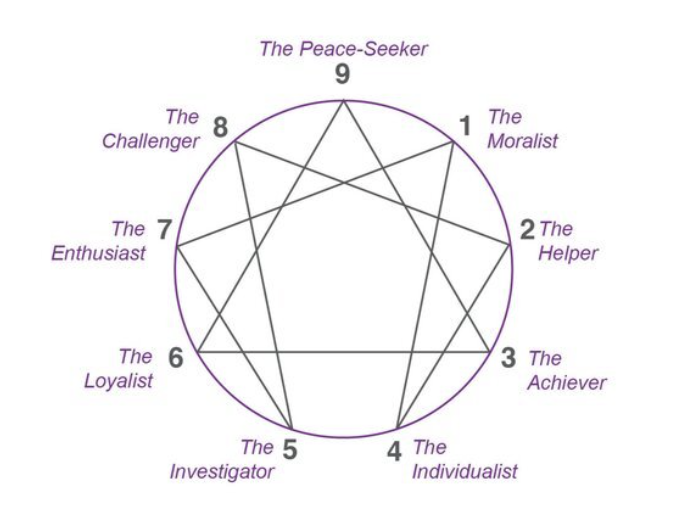
This compilation episode brings together our discussions of Type 2 across the many dimensions of the Enneagram to build a richer, more complete understanding of the Type. The team explores the 2’s connection to the Heart Center, its relationship with shame, its drive to serve, its movement in growth and stress, the challenge of accepting personal needs, and the transformational movement from pride toward humility. They examine both the remarkable strengths of Type 2 and the internal struggles that can accompany the pursuit of goodness and integrity.
Podcast Hosts: Hari Prasada, Michael, Rasanath, and Vipin
Listen to this episode on Apple, Spotify, or your preferred podcast platform
Highlights
[00:50] Introducing the Enneagram Type 2 compilation
[01:40] The Heart Center
[05:10] The Dutiful Behavioral Pattern
[09:00] The Directional Movements: Type 4 in growth and Type 8 in stress
[10:40] The Predominant Emotion: Shame
[12:30] The Wings: 2w1 vs 2w3
[13:30] Parental Orientation: Rejecting the protective function
[14:20] The Harmonic Group: Positive Outlook
[15:00] Achilles Heel: "I cannot accept my own neediness."
[16:20] The Passion: Pride; and the Virtue: Humility
Quotes
"[The 2’s] whole identity is around, 'I'm a loving person and I take care of you.'" -Michael
"...they're all about attunement... but it often shows up in terms of, 'What will make you need me?' rather than, 'What is your experience of me and how can I really best serve you?'" -Hari Prasada
"The Dutiful Types are defined by constantly measuring how much I am receiving from people so that I can then calibrate to make sure that I give always just more than I'm receiving... so that I'm worthy." -Hari Prasada
"[The 2s] feel like a doormat... and the resentment builds up to a point where then it explodes." -Rasanath
"2s have a tendency to dismiss their own needs.”
Episode Transcript
-
Welcome to this special Enneagram compilation episode on the type 2
Michael: In our podcast, we've explored the Enneagram through lots of different dimensions, including the centers of intelligence, behavioral patterns, predominant emotions, and many more. Each of these episodes looks at one particular dimension and explores how it shows up across all nine types.
For this episode, we've flipped that around and pulled together all the excerpts related to a single type to give you a deeper understanding of that type through the different dimensions we've covered. Since each clip comes from a longer conversation, in this episode, you'll be jumping into discussions that are already underway.
Between each section, you'll hear a brief chime and a quick introduction to the next dimension so you know where we're headed. Each dimension shines a light on something different. Put them together and you start to get a fuller picture of the type, including both its incredible gifts and the darker patterns that each type is called to recognize and gradually transform.
We hope you enjoy the journey. Over time, we'll also be releasing full-length episodes that explore each Enneagram type through these dimensions in greater depth.
Our first stop is the centers of intelligence, the dimension that helps us understand where each type primarily processes and responds to life. For Type 2, that's the heart center. Let's listen in
Michael: Two
Hari Prasada: is the helper, and they are all about feeling needed, and so they'll do things for other people with a sense of service and care.
I. Do this because I love you, but love is such a deep thing, and the twos, by default are not able to wrap their minds around that and their hearts around it. So it is something which is taken very cheaply, like with all of us until the two really work on themselves and they understand the depth of the thing that they're after and trying to express.
And their connection with the heart is quite evident that what, how can you love and be loved? Which is what they want more than anything, all human beings. But for the twos, this is the most central on the surface thing for everyone else. It's the deepest thing for the twos, it's like right there on the surface in everything they do.
Do you love me? Do you love me? Do you love me? Do you like me? Are we close? Are we close? Was that helpful for you? I know, I, I know you need me. and therefore they need their hearts to be able to produce emotions, feelings, care, sense of connection, and they're very keen on that.
But it has to go deep. It can't be a sort of surface experience of. I'm gonna take care of you. You're gonna be grateful for that. And therefore we're close and connected. Done.
Michael: for the two, it's not hard to see why they are in the heart center. Their whole identity is around. I'm a loving person and I take care of you.
And so I love connection and I love intimacy. So that is all about the heart.
Hari Prasada: Big emotions, also big emotions. They can really tower over you with their emotions for you. Oh, I love you so much. Yeah.
Michael: We speak about, when we talk about the two, how this could be one of the core sufferings that they experience is that they're feeling their heart so much, or I should say they're feeling their big emotions so much, not necessarily fully present in their hearts as you were.
Making that distinction before, but it's an intense experience. And then they also can sometimes pick up on the fact that it's a very intense experience for other people to have such big emotions themselves. And so it can feel like, well, other people can't handle my emotions. And then it can feel like, well, other people can't handle who I am and the special gifts that I have in this world.
Hari Prasada: When they're aware of that, yes, when they're aware of that. Unfortunately, awareness is. Hard to come by for all the types, and so the two is no exception and they can really miss the cues. The irony of ironies is that they're all about attunement and they have this special gift to be attuned, but it often shows up in terms of what will make you need me or what will make me think that you'll need me more than actually, what is your experience of me and how can I really best serve you?
Our next stop is behavioral patterns. This dimension explores how each type tends to move through the world.
Type two is one of the dutiful types, which means they are constantly measuring how much they are giving relative to how much they are receiving
Michael: the dutiful
Hari Prasada: types are defined by constantly measuring how much I am receiving from people so that I can then calibrate to make sure that I give always just more than I'm receiving or as much as I can so that I'm worthy. The idea is if I receive more than I'm giving, then I'm unworthy, and this is what.
Constitutes my sense of wellbeing as a dutiful type, that I'm always trying to make sure that I am responsible in that way. And really you can see this as an obedience to a higher order. The dutiful types are all in different ways, obedient to some higher order. They subordinate themselves to something that is bigger than them, and they want to make sure that they live up to that.
So the dutiful types, they fit squarely in the middle of the solid ego boundary and the perforated ego boundary, we will call it a thin ego boundary. Their ego boundary is thin. It's not perforated, letting everything in and having free flow. It is completely closed. Which is very significant and yet it is not so solid and thick.
So there is an interesting middle ground. That doesn't mean, oh, they're the healthiest. They have the ideal, optimal situation. They got the balance right? Not at all. Not at all. It has its own complexity essentially. You could say they're still impacted by the world and by themselves inside, but not as much.
Rasanath: the type two is very extroverted. It's about going out there. And the reason again is because for the two, it's so much about serving others and being in
Hari Prasada: connection.
Rasanath: And being in connection. Exactly.
Hari Prasada: What I am subordinating myself to in the ultimate is actually love. That's the thing.
Rasanath:
For the two, it's even more direct. Well, if I'm not doing more for other other people, how can I even be the helper? So it gets relativized for all the igram types, but for the two, and you'll see that the two get very uncomfortable when others around them are serving them. I have seen this. I have a two wing, I've seen this in myself.
If somebody gets up from the couch and goes to wash the pots, I get physically disturbed. I wanna actually just sit back and relax because I've had a long day. But now I feel the compulsion to get up and go and help the person because my identity, my role as a helper here is I have to give more than I receive.
And in this case, in the realm of service love, this is how I express my love, is by I have to become the source of love for other people. Before I can even consider getting something from them in the form of love.
Next up are the directional movements. This dimension helps us understand how each type tends to grow and what happens when they're under stress. For type twos, this means taking on some of the healthier qualities of type four, the individualist, in growth, and some of the less healthy qualities of type eight, the challenger, under stress
Rasanath: So for the type two, the direction of growth is the four, and the direction of coping and direction of stress is the eight.
So the two is a type that very quickly tends to merge its identity towards the person that the two so deeply loves and wants to be loved by. So I don't have an independent identity outside of the identity of that person or a group when they grow. They take on the qualities of a four, where my sense of identity, just like the fore would, that my unique individual identity is so critical and important.
The two begins to own my own personal identity There is a way in which I can draw healthy boundaries because of that. Now in the direction of stress, the two goes to the eight I. as tools tend to stretch themselves very, very thin because of how many things they want to do for people.
And at this stage, definitely with strings attached, and they're disappointed that people are not reciprocating and giving love, and the resentment builds up to a point where then it explodes. They feel like a doormat, they feel being treated like a doormat. And then it comes out in a very explosive form.
Like an eight would express its anchor.
Now let's turn to the predominant emotions, the dimension that helps us understand the core emotion that each type most centrally experiences.
For type twos, that predominant emotion is shame. Along with that comes a core mantra shared by the types in this triad, "See me the way that I want to be seen. See me the way that I want to be seen."
Rasanath: So the type two see me the way I want to be seen. I wanna be seen as the most loving, most connected. Person And when I'm not seen that way or when I feel disconnection from someone else whose connection is very important for me, I feel I am unlovable.
That is where I go. And going back to the basic fear of the type for the type two, the basic fear is I'm unlovable. And even deeper than that, there is no love to be had, And when I feel unlovable, unworthy of love, what is the emotion that I'm experiencing?
It's the emotional shame. So now many times tools will say that they become very angry at people. They will say they feel angry when they're not reciprocated to. They feel angry when they feel treated like a doormat. And the reason why the anger comes out is when I feel treated like a doormat, I actually feel unworthy of love.
That is shame. And coming from that shame is a reaction to the world, which may show up as anger,
Next up are the wings. Here we explore the differences between a type 2 with a 1 wing and a type 2 with a 3 wing
Rasanath: the distinction between the two with the one and the two with the three, there is an inner compass that is driving a two with the one from a point of view of adherence to certain principle and values.
A two with a three. The entire center of gravity is outwards. It's about my environment. It's about the people in my environment. It's about my contribution. The entire sense shifts outwards, and there is a lot more energy of wanting to win people over because both the two and the three, the helper and the achiever have a strong social.
Sense to them, you will see the energy to being very extroverted. The two with the three is on the spectrum of extroversion and introversion. It definitely is strongly extroverted.
Next is parental orientation, which looks at how each type relates to the nurturing and/or the protective functions in their life. For type twos, there is a rejection of the protection function
Rasanath: the type two. It's the rejection of the protective. Now, since I reject the protective, again, the protective discipline, move this way, move that way.
Giving the direction, you know, that energy is like, I don't like this. You know, I can't speak this. And so what I have to do is over to the other. I'm going to be the the loving one, the caring one, the one that is really soft, and that's when we get the type two.
Next up are the harmonics. This dimension explores how each type typically responds to conflict and tries to resolve it. Type 2 belongs to the positive outlook harmonic, which means they tend to invest heavily in seeing the good and orienting toward that.
Hari Prasada: the two. The helper relates to this harmonic. By saying, oh, you're so wonderful. You're so good. We don't have to have any conflict around things. I can be there for you. Whatever you need, I can take care of it. Positive
Now let's go to the Achilles heel. This is the dimension on the Enneagram that shows us the one thing that each type cannot accept about itself and how that becomes their undoing. For type two, it's I cannot accept my own neediness. I cannot accept my own neediness
Rasanath: The type two, I can't accept my own neediness. And we have observed this consistently in our workshops as well. When you talk to a two, the word need and the word needy are essentially the same. We all have needs, but for the two, when I acknowledge that I have needs, I essentially become a needy person, and that completely will goes against the grain of me thinking of about myself as being quite unselfish.
Twos have a tendency to dismiss their needs. It's about other people's needs and I meeting other people's needs. It's not about my needs at all. But I use other people's needs as a means to fulfill my own And I'm not able to draw that line. I'm not able to really accept the fact that I am a needy person.
And when I resist this, then I make it all about the other.
Our final stop is the passions and virtues.
This dimension explores both the emotional trap that keeps each type stuck and the quality that naturally emerges as the ego begins to loosen its grip. For type two, the passion is pride and the virtue is humility
Rasanath: The passion for the type two is pride, and this will be very surprising, and they themselves are very surprised when they learn about the passion for their own type, because the type two doesn't come across as proud.
Vipin: Yeah, that feels like the passion for the type three .
Rasanath: We'll come, we'll come to that. It has a very specific flavor.
Uh- I would say pride is underselling the type three. But for the type two, because they express themselves as wanting to serve other people, so how can someone who is serving be proud? But the suffering behind the sense of service is that I am the source of love. Only I can give it to you. And when you take it even deeper, twos tend to deny their own needs.
They behave as though everybody else around them have needs, but they are above it.
Vipin: Mm. That
Rasanath: is
Vipin: the pride. That's the pride. Okay.
Rasanath: But it's disguised, which is why it's so hard to understand.
Vipin: Loot it out.
Rasanath: Yeah. And that's the beauty of understanding the passion and the virtues is the suffering is so deep that sometimes it defies the way the type presents itself But, uh, that is the reason why the type is going through the suffering, is the passion of the type.
So for the type two, it's pride. And the virtue is the opposite of pride, which is humility. Now twos again will say, well, they naturally come across as humble people that they only want to serve somebody else. But the humility here is the recognition of my own human limitations. The true acknowledgement that I have needs.
And it can feel so hard for the two, because subconsciously they want to be the source of all love. And when I have needs, how can anyone love me? But the understanding that I have needs and the learning how to ask for my needs to be met is the practice of humility, which is very antithetical to how the type two wants to show up.
Because if they are asking for help, their entire sense of identity of being the helper is obliterated.
Continue Exploring the Enneagram
Browse all Enneagram podcast episodes
Understand the Enneagram framework — clear breakdowns of the Types and how the system works
Join our live Enneagram community, Enneagram Library Live, hosted by the Upbuild team.
Take the two-day Enneagram 101 workshop