
The Upbuild Enneagram Library
The Passions and the Virtues
Subscribe on: Apple Podcasts, Spotify, YouTube, or wherever you get your podcasts

Episode Description
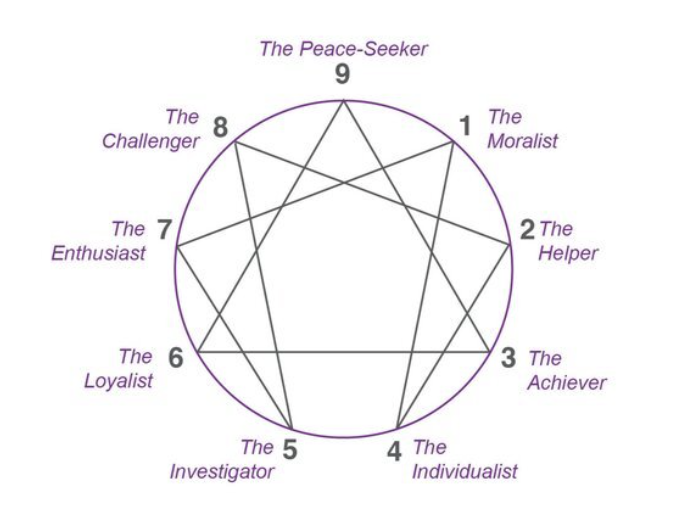
What keeps each Enneagram Type trapped, and what helps it move toward freedom? In this episode, Vipin, Hari Prasada, and Rasanath explore one of the deepest dimensions of the Enneagram: the Passions and the Virtues. Drawing on the work of Oscar Ichazo, the Desert Fathers, and modern Enneagram teachings, they explain how each Type has a characteristic form of suffering called a Passion that reinforces the ego structure, and a corresponding Virtue that opens the way back to the true self. Through examples and reflections, they unpack why the Passions often remain hidden in plain sight and how the Virtues offer a practical path toward growth.
Podcast Hosts: Michael, Hari Prasada, and Rasanath

Listen to this episode on Apple, Spotify, or your preferred podcast platform
Highlights
[00:50] Introducing the Passions and Virtues
[2:00] The relationship to the Seven Deadly Sins
[04:10] Oscar Ichazo, the Desert Fathers, and the origins of this dimension
[06:10] Type 1
[09:30] Type 2
[12:00] Type 3
[17:00] Type 4
[21:40] Type 5
[24:50] Type 6
[28:10] The universality of Enneagram Passions across all types
[30:50] Type 7
[33:30] Type 8
[36:30] Type 9
[39:10] Using the Virtues to clear the heart and overcome the Passions
Quotes
"We don't need to do anything to invite the Passion into our lives. We're swimming in it. What we have to do is invite the Virtue into our lives..." -Hari Prasada
"When we strive towards the Virtue, the Passion begins to take care of itself." -Rasanath
"People will erroneously think, 'Oh, I'm glad I'm not that type, you know. Phew. I don't have that thing to deal with.' Wrong... You do have that pattern. You just don't have it as centrally." -Hari Prasada
Episode Transcript
-
Vipin: Hi, everyone. This is Vipin, and I'd like to welcome you to another episode of the Upbuild Enneagram Library. I'm here with my partners, Hari Prasad and Rasnath. Great to be with both of you.
Hari Prasada: Very happy to be here.
Vipin: Today, we're exploring another deep and transformative dimension of the Enneagram, the passions and the virtues.
The passions describe the emotional traps that keep the ego structure in place, And the virtues, on the other hand, point toward the qualities that naturally emerge as we become less identified with the ego and more aligned with the true self
So to begin, Hariprasad and Rasnath, could you explain a bit more about what are the passions and virtues in the Enneagram?
Hari Prasada: The Enneagram types each consist of two qualities. One when they're at their best and the other when they're in the pit of suffering. And that's what we're talking about here.
So the virtue is a unique aspect of the type that emerges when they're healthy and present that shows the beauty of that type. It's really helping the essence qualities to radiate out from the type. So each type has as its core their essence qualities. That's really what the type is made of, and then there are so many coverings of ego and further identities and desires that block our potential of manifesting who we really are with these amazing qualities, these gifts.
So the virtue is when we focus on it, it helps us to remove the static and to get past the coverings for the essence of the type to shine forth. Essence qualities will shine. So this is one aspect of the type that is an unlock for the type to really come out, and it's directly correlated to the passion, which is the suffering.
So in Latin, passion means suffering. So this is the suffering of the type. It's something which governs based on this one quality that the type is so bound by that they can't get out of it. Their whole life runs based on this suffering, which is, by the way, unbeknownst to them. This is something which takes a lot of digging, and it's running all the time.
But like with practically all of our Enneagram work, we don't see it. It's unconscious. That's the deadliest part. And the passions also correlate, we can say another word about this, but they correlate to, in Christianity, the seven deadly sins with some extension. But, uh, there are nine types, seven sins, so it- it's not a direct match up just like that.
But it's based on the understanding also of seven deadly sins. So it's something which is deadly, and especially so because we're not conscious of it, that keeps us locked into our egoic patterns
Vipin: You've really whetted my appetite to want to hear about the passions and the virtues of each type.
But before we go there, will you share a bit more about where these ideas come from?
Hari Prasada: The passion and virtue were synthesized by Oscar Ichazo, this Bolivian philosopher and very, very key, not only teacher of the Enneagram, but part of the development of the framework.
He's one of the most instrumental persons to make this framework what it is today, and he was studying ancient mysticism from different traditions, and the Desert Fathers contributed a lot. So he was also studying the Desert Fathers in Christianity, and there was one particular Desert Father named Evagrius Ponticus, who spoke about vices that are very, very difficult to overcome, that run us, and Ichazo was able to map those to the Enneagram types.
And this then became codified later on from Evagrius Ponticus' work as the Seven Deadly Sins. So Ichazo looked at that. He saw correlation to the nine types on the Enneagram, very mystically. Not to say that we don't all suffer from all the seven deadly sins. Of course, we do. They're universal, but there's a particular flavor, there's a particular leaning into one of them that then governs us.
So from there, the psychiatrist, Claudio Naranjo, the teachers of... our teachers, Don and Russ at the Enneagram Institute, Don Riso and Russ Hudson, he further developed that and integrated that with more psychology. Ichazo was also very psychologically minded. And then Don and Russ continued to adapt and evolve this framework, and we follow in their footsteps with the virtues and passions.
Vipin: Okay, great. So now can you give us a brief tour of the passions and the corresponding virtues for each of the nine types?
Hari Prasada: So for the first type, the type one, the moralist, the passion is resentment. Ones are looking at the world and they're seeing everything that's wrong, everything that's bad, everything that's preventing them from being good, and they feel so bitter. Oh my God, the world just does not align with my values.
People aren't listening to me. How the heck am I going to show them what is right, what must be done? They are insolent. So much resentment, and it boils in me. So that is, of course, not the most inspiring feature of the one . It's not something which then further invites people to align with them and feel that they wanna transform their values and align with them and make the world a better place.
So then the one feels more resentment, and this becomes a vicious cycle. This is how the passion works. Now, what happens to be able to surmount that foremost obstacle of the passion is I have to focus on the virtue, which for the one is serenity. The serenity that I am not the controller. I am not in charge of what people's values are, how they manifest them, how the world functions.
I'm just not that powerful or important or influential. I have to reconcile with that. That's not easy. My ego makes me think, "No, but you must, you must, you must. How can you think that? You must be good. Show them." And I have to somehow reconcile that no, I am a humble part of this world, but I don't get to call the shots that way.
This is also very foreign to me because as a one I'm thinking, "Oh, I'm not egoic. I'm good, you know? I'm just trying to get everybody else to be good. I don't have any ego about me. Come on." And yet you see unconsciously how the ego is running the show, making me think that the world depends on me to reform it, and I don't even know it.
So serenity is the antidote. That's when I become reconciled.
It is not up to me. I will just do whatever I can in my capacity. That is the serenity. And of course, Reinhold Niebuhr is famous for this beautiful serenity prayer. I really need to be able to see what it is that I can change, what it is that I can't, have that wisdom to know the difference, right? So the courage to change what I can, the serenity to accept what I cannot, and the wisdom to know the difference.
This is what the virtue is like for the one.
Vipin: I'm already getting the sense that these virtues and passions are both very logical when you understand the type, but also not obvious necessarily
Hari Prasada: Exactly.
Vipin: So Rasana, please could you share the passion and virtue of the two?
Rasanath: The passion for the type two is pride, and this will be very surprising, and they themselves are very surprised when they learn about the passion for their own type, because the type two doesn't come across as proud.
Vipin: Yeah, that feels like the passion for the type three .
Rasanath: We'll come, we'll come to that. It has a very specific flavor.
Uh- I would say pride is underselling the type three. But for the type two, because they express themselves as wanting to serve other people, so how can someone who is serving be proud? But the suffering behind the sense of service is that I am the source of love. Only I can give it to you. And when you take it even deeper, twos tend to deny their own needs.
They behave as though everybody else around them have needs, but they are above it.
Vipin: Mm. That
Rasanath: is
Vipin: the pride. That's the pride. Okay.
Rasanath: But it's disguised, which is why it's so hard to understand.
Vipin: Loot it out.
Rasanath: Yeah. And that's the beauty of understanding the passion and the virtues is the suffering is so deep that sometimes it defies the way the type presents itself But, uh, that is the reason why the type is going through the suffering, is the passion of the type.
So for the type two, it's pride. And the virtue is the opposite of pride, which is humility. Now twos again will say, well, they naturally come across as humble people that they only want to serve somebody else. But the humility here is the recognition of my own human limitations. The true acknowledgement that I have needs.
And it can feel so hard for the two, because subconsciously they want to be the source of all love. And when I have needs, how can anyone love me? But the understanding that I have needs and the learning how to ask for my needs to be met is the practice of humility, which is very antithetical to how the type two wants to show up.
Because if they are asking for help, their entire sense of identity of being the helper is obliterated.
Vipin: So illuminating these passions and virtues. So let's go to the type three, Harry Persad.
Hari Prasada: So the three's passion is vanity. Rasnath was saying that it sort of builds from pride and it takes it to another place.
Not to say that the three is any worse off than the two, it's not the case, but I was appreciating Rasnath's humorous angle on this which I think is fitting.
Rasanath: Vanity is the expression, in the expression of how I revel in my own glory is the expression of vanity.
Hari Prasada: Yes, except the threes are also looking to come across as humble because people don't like the vainglorious.
So the, it gets very tricky. The passion for the three is this vanity that I am So competent, so capable. No wonder I'm such a success. Of course, everybody should just love me and worship me. I mean, I don't think that they should do that, but they should just do it. I'm not thinking this. It's just they should do it.
So again, these are unconscious thoughts . They're not conscious of this. This is the key, but they expect that people will rally around them, and if people are not rallying around them in this way, then they're not good enough. They're not successful enough, or they're not yet manifesting enough of their potential.
There's more to come, and they may spin this as, "Look, I'm doing great. I just have more greatness to unlock." That's all the vanity, all the vanity that's actually blocking me from being who I really am and manifesting the true glory of my essence, and they don't see it.
They think by externalizing achievements and being impressive that that is great. Yes, that is my potential. That's greatness. It's actually the exact opposite. Not to say that when the three becomes healthy, they don't do great things. They don't express them in a way that's impressive. That is not the point.
The point is that's not the path to greatness. When they are healthy, they're not fixated on that. They're naturally doing that. So the virtue of the three is authenticity To go back inside, inward, to think about who is this person that's doing all of this stuff out in the world for the claps? I want the acclaim.
I want people to look at me and ogle over how amazing of a person I am, whether it's in relationship or in career. Usually it's everything, but sometimes it, it narrows into one category if I've determined I'm not gonna be successful in another. So I want people to just be in awe, and I don't want them to know that I want them to be in awe of me.
I don't even wanna know that I want them to be in awe of me. I rationalize it that it's just my own meritocracy, the internal system of meritocracy that warrants this. And so to heal this madness of moving so far away from myself out into the world for achievement, I have to focus on who I really am inside.
I never ask that question, and when I do, I ask it on such a shallow, superficial level, I can never get a proper answer. Who am I really? That is authenticity. I will align with that, and that requires some deep self-understanding on a psychophysical level, but a much deeper understanding on a soul level, on the level of the core.
So when I do that, and when I behave accordingly, when I conduct myself with a deep conviction in the true self, this is true for all the types. But for the three, you can see how this plays out, is that I'm so externally oriented. I have to really go back, as Don and Russ would say, to the scene of the crime where I've abandoned my heart and where my self resides and be authentic.
Ask deeper questions of myself, uncover who is it that's behind all of this doing, and align with that. That is not easy, but that does everything.
Rasanath: Well, Russ Hudson would talk about authenticity as a love for the truth about the self. I will be uncompromisingly Adhering to the truth about myself is the resolve that the three makes
Vipin: It's a movement from the love of the self to the love of the truth
Rasanath: It's actually movement from the love of the false self Exactly what I was gonna
Hari Prasada: say Right,
right,
Hari Prasada: right.
Vipin: The false self. Thank you. Yeah, yeah
Rasanath: It's not about the love, it's about where the love is directed to that makes all the difference
Hari Prasada: And this authenticity will stand in contrast to the authenticity of the four, which is coming up. So we'll see how that is, Rasna
Vipin: Yes. Let's go into the four, Rasna
Rasanath: For the type four, the passion is envy, and the expression of it, fours tend to be tying it back to what we talked about, authenticity.
There is a way in which fours tap into the tragic sense of life, so to say. There is a feeling, a deep-seated understanding that there are more sorrows in life than there are good times. The sorrows also have a longer shelf life, and they're tapping into the truth about the material world . Now, what then happens is I begin to feel that I'm the only person who is experiencing the limitations.
I'm just fundamentally flawed, and others don't have the same flaws as I do. And when it comes down to that way of seeing the world, I feel envious about this, and that envy, it's a poison Where everything, when I see somebody happy, I have to somehow undercut that as, "Oh, that's just shallow." You see how the four does that.
There is a sense of a snobbish dismissal of anything that appears to be happy because of the envy, the feeling that I'm just more fundamentally flawed than other people, so I just have to bring them down.
Hari Prasada: Just to add to that, the fours are typically right on this, that the happiness that they perceive as shallow is indeed shallow.
What they're wrong about is the sort of animosity, the malice of not wanting others to be happy, not being their well-wisher. That is the poison. Moreover, this gets further embarrassing for the fours who are all about authenticity. Again, we'll contrast this to the threes authenticity, but the fours who are all about authenticity, the last thing they want is hypocrisy, and yet they don't see it in themselves, that when they're decrying the happiness of others for being shallow, they don't understand their own shallowness
Rasanath: And the virtue for the four is equanimity.
The experience of equanimity, there is a beautiful expression or metaphor in the Bhagavad Gita that talks about the equanimity of a self-realized soul. The metaphor that they give is, uh, of the ocean and the rivers flowing into the ocean, but the ocean never seems to increase its size. It still stays the same even when there's so much water flowing into it, right?
And the equanimity of the four is the ability to... It's not that I don't feel. I feel a lot, but because of the depth, the genuine depth I have, there is a way in which it gets absorbed. It's also there is a very grounded understanding of the truth, and from that place, I look at the world from a place of depth and not from a place of agitated emotions Very different experience.
It's not dramatic as typically the not so healthy four would express themselves. There is a very deep grounded expression of the depth of human emotions that is very deeply touching.
Hari Prasada: And this is not the depth of, "I love Stella Artois, and you love Coors Light." That's not it. This is where the fours are hypocritical.
Can you see this? Okay, relatively speaking, there may be a little more depth there, little bit, but we're splitting hairs. It's absurd. It's ridiculous. It's not depth. So and the authenticity in contrast to the three is something that I'm naturally geared towards, whereas for the three I'm naturally not geared towards it.
So it's a great strain for me to be authentic as a three. For the four, I'm naturally geared towards it. It's not easy, don't get me wrong. It's still hard. It's very hard. But it's more natural, and the problem is that I'm authentic to a self that is not me, the Stella Artois loving self. That is not who I am.
It has nothing to do with who I really am. So this is to show that the three's authenticity is really something that shines by the mountain they have to climb to express it.
Vipin: Okay, very helpful. So let's go to the five
Hari Prasada: So the investigator is suffering from the passion of avarice. I hoard knowledge so that I can become an uncontested expert, and I need to do this generally in some obscure arena so that I can remain uncontested and be secure in my identity, and I want the world not to disturb me.
I just wanna go burrow further and further and further and further into my own little world that's going to make me something encyclopedic, my basic desire. Then the world will see I have my place as the knowledge bearer. So it's this avarice that is so, so intense that I just wanna feed the mind more and more and more and more with frankly useless information
I'm not here to try to, like, serve the real self of humanity, what to speak of other species that are also a real self. I'm here to just feed my own desire to be somebody encyclopedic, somebody who's an expert, somebody that you can look to as a guru. This is, uh, completely selfish, and it's such an obsession.
Vipin: I wouldn't have naturally attached avarice to the type five, but as soon as you said hoarding knowledge, it just clicks. Yeah.
Hari Prasada: Yeah. Yeah. So then the virtue for the five is non-attachment, and that is specifically in the realm of knowledge and trying to establish myself as an expert. Now, again, the threes are also trying to establish themselves as experts so that the world sees them in the way that they wanna be seen.
The fives are doing this for their own sense, averting ignorance, my basic fear. I want to know that I know And that I have a place in the world for my knowledge, that I'm important because I have something to offer you. I feel like I don't fit into this world. I'm just so heavy. Emotions are so foreign to me.
Relationships are overwhelming. They're difficult for me to navigate. I don't understand my own heart. I don't really want to. And I need some identity that makes me belong. I don't wanna feel like an alien. So I am diving deeper and deeper and deeper into knowledge to try to bring that about. And non-attachment is, "No, that's not my identity.
That's not what I exist based on." Of course, when a five is healthy, just as we said about the three, it's not that they won't be knowledgeable. It's not that they won't have a place in the world of giving knowledge. It's just that that's not the fixation.
Instead, they actually want to serve. So non-attachment is, "I will only gather what knowledge is beneficial for myself and the self of others."
I give it out of love 'cause I really want to benefit you. I want the best for you. This is the non-attachment.
Vipin: Wonderful. And the type six, Rasanaath?
Rasanath: For the type six, the passion is, is faithlessness. And, uh, we can understand this because the sixes really struggle with self-trust.
We know how, how difficult it is for the six to put their trust in anything. Now, they're tapping into the truth of the world again, which is yes, thi- can things go wrong? Yes, things can go wrong. But then when we ask them the probability of how something can go wrong, then even if it's 10% probability, 5% probability, 2% probability, just the fact that the probability that something can go wrong exists, it gives me enough credence that I should just not put my faith.
So because I live in the terror of trusting and then being let down, so the best way of not being let down is to just not put myself in that place. But then if I can't put faith, then all that I have is worry 'cause I have to still live in this world, which means fundamentally, fundamentally we are beings of faith.
And so when fundamentally we are beings of faith, and that is the very thing I can't repose, then what do I do then? That's the suffering of the six.
Vipin: Denying my own fundament.
Rasanath: Exactly, or not knowing what to do with it. So the virtue for the six is courage And you see why it's not faithfulness necessarily, which is the opposite of faithlessness, it's courage.
And the idea of courage is courage is taking on the possibility that I might put my faith in something and still be let down, and yet I have to do it. It's not the absence of fear. It's not the presence of 100% guarantee. It's the presence, it's the very presence of fear. It's the presence of the possibility that I will be let down, and yet I have to put my faith.
That's the idea of courage.
Vipin: So the passion seems to veer farthest from the seven deadly sins. Faithlessness, I think, is not directly one.
Rasanath: the way Don, Don Rizzo defined passion was the suffering of the heart when one is disconnected from God, which directly ties to the idea of faithlessness.
So what I would say is that the source of the seven deadly sins is faithlessness. It's not being able to recourse myself to rest myself in
God.
Vipin: With that definition, it feels like all types really suffer from that same passion. They
Rasanath: do, yes. But just like how we speak about the type three when we speak about the ego needing validation, say all types need validation. But for the three, the threes are the poster children for validation. They say the same thing about the, the one in the form of the inner critic.
All types have inner critics, but the one is the epitome, the personification of what the inner critic is. So
Vipin: the sixes are the poster children for faithlessness?
Rasanath: Yes, that's what they fundamentally struggle with.
Hari Prasada: Going back to the four with envy, I mean, there's so much that we can speak about ontologically here and spiritually here with how envy is actually the cause of our bondage.
And yet the fours have particular relationship with it, and there's a certain flavor that guides that relationship. Likewise, we'll come to another type that is driven by lust. Krishna in the Bhagavad Gita, when he's teaching Arjuna and all of us how to become self-realized, he's saying that it is lust only which is preventing you from being self-realized.
It's just your lust. So we don't say, "Oh, this type is so unfortunate. They got all the lust." They got all the lust. No, no, no, this applies to all of us, but we'll see how it manifests for them in a way that makes them the poster child.
Vipin: Very good.
Hari Prasada: But we're all, we're all equally afflicted. It's just the centrality and the flavor of how it manifests.
This is very subtle stuff. This is always the case for understanding the human condition, and the Enneagram is very good for unpacking it.
Rasanath: Which is why there is a certain archetypical flavor to the Enneagram. When you really understand the type, you understand the struggle with something very particular.
That type embodies the intensity and the depth of that struggle With something very particular
Hari Prasada: Yeah, pride and vanity, I mean, come on, we're full of this stuff, all of us. We'll see even the types that think they're the least prideful, Two is one of them, but Nine is another one. There's so much pride there.
There's so much pride. It's just that the direction of the pride is the guiding force into their bondage in this specific way for the Two versus all of us.
Vipin: Yeah, yeah. This is very helpful. The- these points that you're making about how envy is at the root of what brought us here, the, um, lust that needs to be conquered in each one of us, the mountain of pride that needs to be broken down.
The, even though these are particular passions for particular types, these are really very universal and need to be addressed across everyone.
Hari Prasada: Yes, and people will erroneously think, "Oh, I'm glad I'm not that type, you know. Phew. I don't have that thing to deal with." Wrong. You just don't have that particular pattern of how you have to deal with it, and even that is wrong, actually.
You do have that pattern. You just don't have it as centrally, and you have it very, very strongly in other ways that you're not seeing.
Vipin: So let's go to the seven, Hari Prasad.
Hari Prasada: So the seven, gluttony For the enthusiast, it's all about acquiring more and more experiences, consuming, getting thrills, pleasures of life. Uh, this is a- as opposed to avarice, which has a very, very similar connotation, but the avarice is about hoarding, and for the five, it's about hoarding things for the mind, knowledge.
For the seven, it's about experience, and it's about the thrill, the pleasure, the joyful anticipation and hits of dopamine that I get all throughout. I want more and more and more and more and more. Gluttony. Uh, we referenced Dave Matthews Band too much, and the music video is very-- the lyrics and the music video are very helpful for understanding the world of the seven.
Dave Matthews is indeed a seven, which is amazing. So you can see the gluttony. The-- it, it epitomizes it. I want too much. I want too much. I want too much. I eat too much. I drink too much. I want too much. Too much . Gluttony. And to heal that, the virtue is required, which is sobriety. It means I become grounded.
I become not intoxicated by the pleasures of this world. I actually move toward inwardness. Again, this is true for all the types, but the sevens are so outwardly focused. They're so, "Ugh, I want more and more and more and more and more out there." No. Become greedy, become gluttonous even to understand who you really are.
If you apply that to the soul, you will become sober about the nature of this world. As, as Krishna says in the Bhagavad Gita, every pleasure has a beginning and an end, and it's all based on contact with the senses and the sense objects. Five twenty-two of the Bhagavad Gita.
And because the wise can see what is happening, they do not indulge. They do not delight in these pleasures. They actually see that as suffering. They see the passion. So this is universally true. The sevens absolutely need to reign this in, become sober, become even-keeled, desiring to integrate the happiness with the distress, and to do so on a human level, but most importantly, on a spiritual level, where we're learning more about who we really are, which can never be satisfied by the indulgences of worldly pleasure.
It's not possible.
Vipin: Thank you. And Rasnath, the type 8
Rasanath: The passion for the type 8 is lust. There is a certain intensity about how the 8 goes about living their life.
Everything feels like a conquest. The expression of lust is, "I will come and I will just, like, take it." There's the sense of like, "I will take it, deal with it." There's almost a very defiant conquest quality to how they live life, especially when they give in to the suffering. And the reason why that happens is because they, you know, the basic fear of the Type 8, which is I feel if I don't show up that way, then somebody is going to stab me behind my back.
And the virtue for the Eight is innocence, and the innocence has the ability to put myself in the arms of other people, not being defended really, you know, like a child. There is the experience of actual surrender. When we truly become innocent, there is nothing really to defend, and the Eight becomes l- like a child.
It's the complete opposite of how they express themselves, where I can let others carry me, where I can let others truly care for me. I can give myself to other people. I can put myself in their hands so that they will protect me. That's the innocence of the Eight.
Vipin: It makes sense, and yet I'm also feeling like the passion and the virtue of the Type Eight feels the least obvious to me of all of the types that we've talked about so far.
I don't know why I'm-- I wouldn't have associated those two words just exactly with the Type Eight.
Hari Prasada: Children aren't lusty in the sexual way, right? Now, this lust has a more universal definition, just as Krishna is speaking about it in the Bhagavad Gita. This is the type we referenced earlier. Lust is the passion.
So children don't have that sexual drive, and here the innocence is that I'm not driven by these tentacles of, like, conquering people and things the way that, that a child walks through the world. I become much more in wonder of the world, rather than trying to own it and conquer it for myself- Control it
Yes, and control it for myself. Yeah. That's how this works. Now, of course, I should say that lust also has a strong sexual connotation that is intentional and that is a root cause of things if you look at things spiritually and why yogis or spiritualists of all traditions will look to conquer that appetite as well.
But this applies very, very broadly.
Vipin: Thank you. So let's finish up with the Type Nine, Hari-Prasad, the passion and the virtue of the Type Nine.
Hari Prasada: So for the peace seeker, the Nine, the passion is sloth There is a kind of reluctance, a reticence to take responsibility for my life. I feel myself as insignificant.
That's a safe place to be so that I don't have to deal with the challenges of life, which are not peaceful. I wanna be peaceful all the time. My ticket to peace is just don't take on responsibility. Let others handle that. You go do your thing. I'll be over here. I'll be happy by my peacefulness. Even if I'm not so happy, I'm much less happy out there.
At least there's some modicum of peace here. So I am run by this unwillingness to engage, a stubborn unwillingness, a s- kind of languorousness that I just leave me alone, let me wallow away my time in peacefulness, fantasy land, la la land. You do all of your doing, and I'll look and I'll think, "Ha, how unpeaceful you are."
But this doesn't do anything for the nine. This doesn't help even slightly. It's their philosophical stance of having figured out life to be a necessity of peacefulness, and everybody else is missing the boat, is just their own pridefulness. It's their own arrogance, actually. They have missed the boat. So what it takes to actually make this healthy, to heal this terrible suffering of feeling insignificant, which nobody actually wants to feel.
Even the nines don't wanna feel this way. It's a defense mechanism. It's just to try to cope with greater suffering they're terrified of.
So again, the virtue then comes down to engagement. I give up my petty unwillingness, my sloth, my laziness to engage, and I decide I'm taking responsibility. I'm taking responsibility for my life and for the service of other people. I'm stepping into action. That's it.
It's not about my peace. So I focus on engagement, and I become peaceful by aligning with who I really am, which is peaceful by nature, no matter what.
Vipin: Wow. Thank you for this very rich tour through the passions and the virtues of each of the types.
And how the understanding of the passions and the virtues supports the movement from the ego to the self. Such an important, deep understanding. Thank you for sharing all of this with us. What would you both like to share in closing
Rasanath: It's very helpful to keep the virtues as something to really walk towards.
There is a way in which when we understand the virtues and truly aspire to live the virtue, it quells the passion. There is a, a very direct correlation between the two. It's also the healing, the cure for the passion. So when I first learned this, the understanding of the virtues was very helpful For me to look towards, to deeply, genuinely aspire for.
And when we strive towards the virtue, the passion begins to take care of itself.
Vipin: I love that. Thank you.
Hari Prasada: So we don't need to do anything to invite the passion into our lives.
Vipin: It's there.
Hari Prasada: We're swimming in it. What we have to do is invite the virtue into our lives, and it's also there, but it's buried. It's buried along with our awareness of the passion.
So in order to get a hold of the virtue and to bring it out, which will then bring out our essence qualities and what makes us uniquely shine as our type, we have to first see what's blocking it, what's covering it, which is this passion, this quality that is taking us away from ourselves and causing our suffering.
It's governing us by suffering, not what we want. But we have to see it. We don't see it. This is the key. And then when we see that, we can invite its antidote, which is the virtue and which will unlock the beauty of the real self.
It's just that we have to do what is called anartha nivritti in the yoga tradition, bhakti yoga especially, the yoga of devotion. Anartha nivritti means clearing the unwanted things from the heart. Nivritti is to clear, and artha means value, un negates. So anartha, that which has no value, and nivritti is clearing it.
This is what we're talking about, anartha nivritti, clearing the unwanted things in the heart so that we can let ourself be free.
Vipin: and Rasnath, I'm always in awe of your understanding of the depth, the nuances of the Enneagram framework, and I'm also in awe of how this framework is so rich and subtle and nuanced and can unlock so much understanding of ourselves So thank you very much for everything that you have shared with us.
And to our audience, thank you for joining us for this episode of The Upbuild Enneagram Library. We are extremely grateful to be on this journey with you
Continue Exploring the Enneagram
Browse all Enneagram podcast episodes
Understand the Enneagram framework — clear breakdowns of the Types and how the system works
Join our live Enneagram community, Enneagram Library Live, hosted by the Upbuild team.
Take the two-day Enneagram 101 workshop