
The Upbuild Enneagram Library
Parental Orientation: Attachment, Frustration, and Rejection in the Enneagram
Subscribe on: Apple Podcasts, Spotify, YouTube, or wherever you get your podcasts

Episode Description
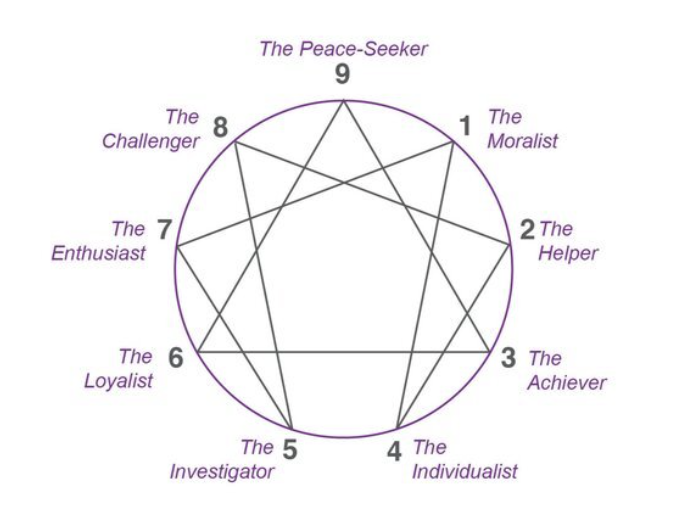
Every Enneagram Type carries a specific relationship to nurturing and protective energy. That relationship begins in childhood, but it does not stay there. In this episode, Vipin, Hari Prasada, and Rasanath unpack Parental Orientation, the Object Relations framework that explains attachment, frustration, and rejection across all nine Types.
They explore how each Type internalizes the nurturing and protective functions and how those early adaptations shape adult behavior, leadership style, relationship patterns, emotional tone, and even our unconscious bias toward strength and softness.
By mapping the three relational stances onto the Enneagram, they reveal a precise psychological matrix that helps explain why we seek certain energies, resist others, and feel chronically disappointed in specific ways.
Podcast Hosts: Michael, Hari Prasada Das, and Rasanath Das
Listen to this episode on Apple, Spotify, or your preferred podcast platform
Highlights
[00:20] Introduction to Parental Orientation
[01:40] Object Relations theory
[06:40] Defining the nurturing and protective functions
[13:10] Attachment, rejection, and frustration
[19:30] Integrating the Enneagram Types with the Object Relations matrix
[23:20] Attachment Types: Type 3 (nurturing), Type 6 (protective), Type 9 (both)
[25:10] Frustration Types: Type 1 (protective), Type 7 (nurturing), Type 4 (both)
[27:10] Rejection Types: Type 8 (nurturing), Type 2 (protective), Type 5 (both)
[31:00] How Type 3 seeks validation and mirroring in adulthood
[40:10] How Type 6 looks for security and direction
[46:20] Role of gender, health, and partners in providing parental functions
[49:50] Moving from psychological wounds toward spiritual growth
Quotes
“The first two objects that the child interacts with when the child first comes into this world are the father and the mother, and functionally we call them the nurturing function and the protective function.” -Rasanath
“ We commit a lot of emotional violence. If we don't work through these things, we expect things from other people, we hurt them, and we create offenses.” -Hari Prasada
“Healing happens when we strive for forgiveness, both of ourselves and of the other.” -Rasanath
“Even on a spiritual path, we have so many doubts. We have so many misconceptions. We have so many concerns, anxieties and ways of mistreating other people and ourselves based on our psychological incompleteness, our lack of wholeness, our wounds and traumas and troubles. We have to stop shoving that under the rug. We have to actually take responsibility and work through these things.” -Hari Prasada
Episode Transcript
-
This is an automated transcript and may contain minor errors.
Vipin: Hi everyone. This is Vipin and I'd like to welcome you to another episode of the Upbuild Enneagram Library. I'm here with my partners, Hari Prasada and Rasanath, and today we're going to explore another dimension of the Enneagram that gives us a deeper understanding of why we show up the way we do, especially in our closest relationships.
This dimension is called parental orientation. It refers to the pattern each of us comes into the world with about how love, safety, and connection are earned. Each type has its own distinct parental orientation, and it continues to influence our behavior long into adulthood, often without our realizing it.
By understanding our parental orientation, we can start to see the roots of our behavior. With more clarity and compassion. And when we do that, we open up the possibility of relating to ourselves and to the people in our lives in a more conscious, less conditioned way. So to begin, Hari and Ana, what do we actually mean by parental orientation within the Enneagram framework?
Rasanath: The primary basis behind the parental orientation within the Enneagram has its roots in object relations theory. And the idea, the premise being that the first two objects that the child interacts with when the child first comes into this world are the father and the mother, and functionally we call them the nurturing function and the protective function.
What we want to clarify here is that many times the father can be the provider of the nurturing function, and the mother can be the provider of the protective function. So we are going to talk about it more as functions then as specific roles.
And these two functions are absolutely critical for the formation of the child's identity without which there is imbalance in the system. So these are also the two energies the child is looking for and is regularly interacting with which is why understanding the parental orientation based on the Enneagram can become such an important insight into why we do what we do.
Vipin: Thank you for that, Ross. Now, just to clarify, object relations theory is completely separate area of research and study, and the parental orientation as it relates to the Enneagram is applying that framework to how it relates to the nine types, and it does so in a very natural and seamless way.
Rasanath: That's right.
So the objects essentially are the same from the object relations theory,
Vipin: mother, father nurturing or protective.
Rasanath: Yeah. And we call it parental orientation because the types are naturally oriented in a specific way towards those two functions.
Vipin: Great. Thank you. So Har, why is parental orientation such an important dimension to understand when looking at personality and development? It demystifies a lot when sometimes people say, I'm still a child in an adult's body, or I have to go find my inner child, or all of those different psychological understandings.
There's a heavy truth there that we have not yet grown up, and those expressions exist as an acknowledgement of that for those who are willing to acknowledge. And the parental orientation is an extraordinary thing because it sheds light on that in such a specific and remarkable way. That is almost inconceivable because there is a pattern.
That exists in each one of us, and it's based on our type. And then you can extrapolate further with your wing what's going on there. But each one is predicated on the type that we've come into this world with and it fits seamlessly into a bigger picture. A system where visually, we would often in our workshops give a matrix that we learned from Don and Russ at the Enneagram Institute where you can actually categorize each type in each of the different possibilities for their object relations or their parental orientation.
And this will become clearer as we get into the nitty gritty of it. But the point here is why it's so important is because there's something operating in us, unbeknownst to us that is very. Regimented. It's very well inculcated into us, and it is defining our relations with our primary caretakers from the beginning of our lives, and it is carrying over with us into our adulthood.
Because we have not grown up. We have not. We must acknowledge, we must admit, and this will help us to understand what it takes to grow up and to set these relationships in as constructive of a place as possible. It's really amazingly revealing. I often think that we are all children just walking around in adult bodies.
So it makes sense what you're saying and yes, I'm ready for you to demystify us. That feels very, very exciting. So let's start that process. Could you walk us through the parental orientations for each of the nine types? And let's start with understanding the parental functions more as auth had laid out.
Let's start by understanding those two parental functions and then we'll go to the three different relationships with those functions.
Rasanath: So the two functions are, as I had mentioned earlier, the nurturing function and the protective function
the analogy here would be, if you were to think about cultivating a garden, you require both the nurturing of the plant and the protection of the plant, and without one of the two, there is an imbalance in how the plant is growing.
Nurturing for a plant we see comes in the form of sunlight, water that actually nurtures the growth. The protection comes in the form of support structures, like some plants need a strong support structure that they can then use to grow. You need fencing to protect them from.
Harm, especially if you have a, a vegetable bed and rapids can come and eat away everything. So similarly for a child, the nurturing and the protective functions are necessary for a very healthy growth. The nurturing function comprises of things like provision, so giving things that are necessary for the child to grow, the basic necessities for the child when the child is crying.
Providing those basic necessities. Mirroring is a very important part of the nurturing function, to reflect back to the child what the child is doing so that the child develops a sense of identity through the eyes of somebody else. the protective function elements like discipline, boundaries.
Do not do this, do this, providing the fencing around what the child. Can do or cannot do, so that then the child can learn through that process. Those are elements of the protective function.
Vipin: It sounds like the two primary functions that parenting provides. Are there any other functions or is everything that happens in parent-child relationship fall under one of those two buckets?
Rasanath: That is exactly what the object relations, fundamental object relations theory actually does. It's the nurturing and the protective, every form of energy. Are exhaustive. They are both a certain kind of force in the life of a child. The protective force is more, it has the more masculine quality to it. The nurturing has the more feminine quality to it.
So if you were to think about energies broadly as masculine and feminine in terms of how they express themselves, the quality of them, it covers pretty much every kind of energy that we see. And then there's a spectrum. We can actually say, well, how much nurturing and how much protective is provided.
Vipin: Okay. And I think maybe. In the past, I might have oversimplified and associated nurturing with love and protective with discipline, but the reality is it's all love.
That nurturing is expressed in that love expressed in certain ways and manifested certain ways, and protective is also love than expressed in different ways. My own association is probably more indicative of my own parental orientation actually, than anything else.
Rasanath: Well, also, also yesterday I was having a conversation with a client and the person was talking about soft skills and the person immediately said, well, I don't really like the use of the term soft skills.
You know, even in the corporate setting, there is the hard skills and the soft skills right there is again, the associations with those terms is subtle and not so subtle judgment around them too.
Vipin: That's why, to reframe it for people, people have started talking about the soft skills are now the hard skills.
So now people can get comfortable, people can become more, more comfortable with the soft skills. They're now hard skills.
Rasanath: You see how there is an association where when we think about the corporate,
Vipin: I don't wanna be soft.
Rasanath: Yeah. The admiration is towards the hard,
Vipin: I wanna do hard things. So if you're telling me this is hard, I'm, yes.
Rasanath: That I'm willing to do it, or, well, that's what makes me successful if I do the hard things right, which is why this is so important to understand is something with those object relations has been fundamentally tampered with in our childhood, where we have developed either inherently or because of our environment, an association with one or two of those energies With one or both of them.
Vipin: You're saying we've overdeveloped. Overdeveloped or
Rasanath: underdeveloped.
Vipin: Yeah, overdeveloped or under some kind of dependence or reliance on either one or both of those energy or perhaps have formed an unconscious bias. An unconscious bias. Yes. I know I have one. I must say we're at this point in the podcast where if you're going to then try to diagnose your parental orientation based on what we've just said, stop right now, please.
It will not be so fruitful to do that. You may see, oh, wait a minute. I don't like too much protective stuff going on. Or, oh, the nurturing feels too soft to me. Therefore, I must be like this. Or you might even try to type yourself based on that if you don't know your type, or you might question your type.
No, that's not how this works. What we wanna get straight here is that there is a separate reveal going on when you understand your particular parental orientation.
There is a separate reveal. So it's not just that, well, if I like soft and I don't like hard, then I, okay, I know I must be this type. It doesn't work like that. You'll see how it works. Yes. Yeah. So let's just be very clear. Blank slate coming in. Thank you. So that's a perfect segue into what I wanted to ask you next, which is let's go into the three different types of relationships we can have with these functions, these energies that Ana just laid out.
So we have the nurturing energy and the protective energy or function, and what are the different relationships that each person can have with those functions? Well, first of all, there are three categories based on those two objects. The third category that is to be stated now is both. You can have a relationship with both.
Obviously we all do have a relationship with both, but here we're talking about a fixation. We're talking about a particular focus that is even indicative of fixation. So it's either directed towards protective, the nurturing, or both. And then there are three different. Relations with those objects. There is attachment.
That means I want, I want, I want, I want. I'm familiar with that one. It's never enough. I just always want more. There is rejection. Flip side of the coin. I don't want, I don't want, I don't want anything I get is too much. And then there's a very interesting one that sits in the middle and it's not the most balanced.
It's not just like, oh yeah, this is the right one. No, they're all equal. They're all equally fortunate and unfortunate, depending on our consciousness. That is frustration. Now, frustration is not what you would immediately think. Frustration is actually more similar to attachment than it is to rejection.
Yeah, that's not what I would've expected exactly, but it's attachment with a twist. So attachment with a twist of rejection, almost something like that. The way it plays out is I want this so badly. I'm so attached to it that not only is it never enough, but it's never coming in the way that I want it, and therefore I develop an edge around it.
I get a chip on my shoulder about it where it's like, Ugh, I don't like this. This is annoying me. It is bothering me. It's frustrating me. Why? So the attachment types in contrast are, oh, I want more. I want more. I want more intoxicated. It's all positive in a way. I just want more. I want more. I want more. Of course, that's not actually positive in terms of value, it's just the feeling there.
I can't get enough. And it doesn't matter in what form it comes. I'll take it. I'll take it. Now when you're talking about the frustration, it sounds like I want it so badly, but you're just not doing it right? Yes. And it has to come in a very specific form and and shape. And my frustration is with that not being met.
Yes. So it develops a kind of negative valence emotion. Attachment has more of a positive valence emotion. That doesn't mean it's more valuable or better, but it's, we're talking about the valence of the emotion, so it's a little more positive valence versus negative valence. Can you just explain valence for those who are unfamiliar with that term?
Yeah. It's like, I'm happy. That's a positive valence emotion. I'm angry, is a negative valence emotion. It's intuitive. Now why we're distinguishing this? Because it doesn't mean that if you're happy, you're better than if you're angry. It seems like it. Well, well
I may be happy because I just committed a murder. Right? Or I may be angry that somebody was just murdered. So you see in the extreme case, this is not what it seems, right. That just became very dark. Yes. It's important to understand through the extreme case like what, why this is as it is. So a positive valence emotion is not the thing to strive for.
And a negative valence emotion is not the thing to shut down. And that's unfortunately where we get all of our fixation and. Our suppression from is striving for positive valence emotions and trying to shut out negative valence emotions that makes us very unhealthy. What we need is to be able to integrate both and direct them, channel them in the right way.
So ultimately, one becomes positive valence, but not with a relationship of sneering, at shutting out the negative, able to healthily integrate and channel them in a positive direction, higher consciousness. So, so much can be said about this. It's a big subject. We talk about it in many other aspects of our work, but the bottom line is frustration here is not worse than attachment.
So if we're tempted in that direction, it shows our bias and that we have to remove. If we want to understand this dimension of the framework, we must remove that bias. So attachment, rejection and frustration are the three possibilities for how we relate. What are the relations with the objects of protective, nurturing and both.
And they each are equally fortunate or unfortunate, depending on our consciousness. Thank you. So would you say frustration could be considered even more attached than attachment? Kind of. Kind of. So the other aspect of this is it means I feel like I have to do it myself. I am so done with the people who are supposed to be doing this for me, that I feel like I just have to do it for myself.
Because if they're not doing it right, so who will I have to do it for myself? So I basically become, depending on where the fixation is, on which object. I become the self caretaker, so I'm gonna do this for myself. And I'm kind of like, again, there's a chip on my shoulder about, it's like, why should I have to be doing this?
I didn't get what I needed, but I'm doing it anyway.
So let's now integrate this understanding of the parental orientation with the Enneagram types. And I think when we are in our workshops, it's so helpful to be able to visualize this. As you were alluding to earlier, you can think about the parental functions On one axis, you could say the X axis.
There's the nurturing function, the protective function. Both those are three columns, and then across rows you can think of these three relations with those parental functions of attachment, frustration, and rejection. And so when you cross those parental functions with these three different relations, you get nine boxes.
Conveniently, you have nine boxes, and there are nine Enneagram types. So can you help us understand how these two frameworks integrate? I mean, it's so crazy that it works out mathematically that way. And when you see the precision of this, it's mind blowing and lots of credit to Don and Russ who've taught us so much about this dimension and who created that matrix and really mapped things out.
It's unbelievable. And you see a divine hand in this, like how could it be a coincidence? How could it be a coincidence? It's unbelievable. It's just like when you start to see patterns in the world. And Don and Russ did a beautiful job of pointing this out in so many different ways, not only with respect to the Enneagram, but just seeing how nature's laws function in all these different patterns that cannot be accidental.
It cannot be coincidental. The odds of that happening are impossible. So you see here, there's a little glimpse into the wonder of existence and what is so much bigger than us. Just from seeing how you said, conveniently, these nine boxes show up. It's really amazing. Let us be in that state of wonder. I also think it's very helpful to recognize just as we're about to start going into each type specific parental orientation, that there are overarching pieces to this.
So the relation of attachment, frustration, and rejection, it means something. It means, and I've alluded to this, I said, you may be a frustration type, and this is how Don and Russ would speak about the types that are frustration types. You become defined by that. You become a frustration type. What does that mean?
Frustration is always just beneath the surface. So like we talk about predominant emotions and how that predominant emotion is always just beneath the surface. Similarly, the parental orientation and the relation. Two, the object is just beneath the surface. So it adds a whole new spectrum of considerations and things to be conscious of, conscientious of.
You'll see the frustration types walk around with a palpable frustration. You'll see the rejection types. They walk around fearing rejection, and so they strike first, I'm gonna reject you before you reject me, or I'm gonna figure out a way to make sure that I'm not rejected. And the attachment types, they walk around like more, more, more, more, more.
I'm attached. You can see it in their being. If you really understand this steeply.
So let's do the intersection.
Ana, please, can you walk us through how the types fit into this matrix? So we'll begin with the
Rasanath: attachment row, reminding that in the attachment row we can have attachment to the nurturing. Attachment to the protective and attachment to both. So we are talking about three types. One which is attached to nurturing, one which is attached to the protective, and one which is attached to both.
So the attachment to the nurturing is the type three, and specifically what the three is attached to in the nurturing function is mirroring. Reflecting back to me, reflect back to me who I am. Tell me my purpose and value. That's the attachment to the nurturing function. The attachment to the protective function is the type six, the protective function in the form of discipline and orientation in the world.
This is where you need to go. Go here, do this. That's what I'm actually looking for. How am I oriented in the world? And I'm very attached to that, which is provided by the protective function and attachment to both. You can take a guess. Now when you see the pattern, we have the three, the six. So attachment to both is the type nine.
So I need both. I need the mirroring, I need the mirroring, the comfort, and I also need the orientation around the world, and I want both of them at the same time, which is also one of the reasons why you might actually look at the nine As. Nine always talks about balance in harmony. I want look at want both.
I want both.
That's what I'm looking for. So the attachment types three, six, and nine. So frustration types start
Vipin: with the one, frustration with protective function. So I recognize that there is a strong need for discipline and to actually really be feeling like I can be good. I need to know what is bad, what is wrong, and to not do that and to be guided, strongly guided, but nobody really has the standard that I have, so I better do it myself.
Frustration with the protective. Then next one we'll do is the seven. Seven is frustration with the nurturing. I want. I want, I want experiences that make me feel happy and cared for. I'm being provided for. Give, give, give, give, give. I don't want to be deprived. Oh, so, but I'm, nobody's giving as much in, in the way that I need or want.
So I'm frustrated. I better do it for myself. I'm gonna go out there and make my own experiences of life that will nurture me all the way through. And then you have the type four frustration with both. I get that. I need so badly protection and so badly nurturing. Who can argue It's obvious. We need those forces for our wellbeing.
And I'm not getting either one in the way that I need. This is so outrageous. I have to do both for myself. Who in the world has to do that? Nobody else. It's only me. I'm so alone and so, ah, unfortunate that I gotta do everything for myself. Everybody's ahead of me and my God, how will I ever do it? It is too overwhelming.
Thank you. And then Ana, can you walk us through the rejection types?
Rasanath: So rejection again, we have nurturing, protective both. So the rejection of the nurturing function is what I'll start with first, and we can all take a guess. The rejection of that nurturing function appears as completely opposite of the nurturing energy.
Remember what the nurturing does? I overdo the other of what I reject. So type eight is the rejection of the nurturing. It makes sense, the soft, touchy feely stuff. Ah, we had an eight in our workshop who told us when that when his mother gave him hugs and kisses as a child, he said, stop that. Stop that. I don't get it.
It just makes me uncomfortable. And so what I tend to do, I don't get that, you know what I'm gonna do? I'm going to do more of the other, which is also why type aids. We've talked about this. It feels very masculine. It's the alpha male energy. The overdoing of the protective.
Vipin: They're rejecting the nurturing, which is why they're providing the protective.
The
Rasanath: protective, right? Uh, they overdo it and that's what they provide, right? So now we come to rejection of the protective function, the type two. It's the rejection of the protective. Now, since I reject the protective, again, the protective discipline, move this way, move that way.
Giving the direction, you know, that energy is like, this is just too, I don't like this. You know, I can't speak this. And so what I have to do is over to the other. I'm going to be the the loving one, the caring one, the one that is really soft, and that's when we get the type two.
So that's the eight and the two, and there is only one more type remaining. Now the rejection of both is the type five. Now you also understand the complexity of the type five. So if you were to think about the predominant energies in this world as nurturing and protective, and if I'm unable to relate to either one of them, what do I do?
One of the things that Russ Hudson tells us as an Enneagram five himself is he says that the fives feel like they have been born on the wrong planet. I'm an alien in this space for multiple reasons, but this is one of the primary reasons why I don't understand the gamut of human emotions, really, neither the nurturing nor the protective, which is one of the reasons also why the fives like objectivity.
It's separate from both. Separate from human emotions. Separate from human emotions, right? Nurturing and protective. So then what's my place in the world? Well, if I'm separate from both, what can I do? I can objectively observe knowledge. That's what I give. So I have to do something. I'm a provider of something.
As a rejection type. That's what I provide. I provide neither in the sense of the emotions, but then what is not touched by emotions is observation. Is knowledge. That's what I'm gonna get.
Vipin: Wonderful. So to make this even more concrete for folks, let's take one or two examples to really illustrate how someone's parental orientation shows up.
In their adult life, in relationships and work in stressful situations. I just want to give one really simple, quick one
So I. You can imagine who owns the workplace. It's quintessentially the three, right? The achiever. They're rising to the top of the ranks and calling the shots and promoting other threes who want to be like them and get to the top. And it's all just predominated by threes. There are other types that get to the top, of course, but the threes, they're sniffing out the way to the top and more determined to get there for their sense of self-worth than any other type.
That is just how it is, and our world rewards that in a way that is guided by threes and four threes to profit off of. And it also creates crazy anxiety for the threes and neurosis around this for the threes and competition, and I'm not enough, and all of that imposter syndrome. So what's happening here is actually the top means nurturing.
People will see me. I'll be mirrored. People will clap for me. I'll get to give a presentation. I'll get to receive an award. I'll get a paycheck that says You're valuable. Yes. Congratulations. I'll get all of these things. I will be able to pat myself on the back and feel like, see, the world just appreciates me because I'm a contributor.
So all of this is attachment to the nurturing. It comes in terms of my bank balance. It comes in terms of my title. It comes in terms of my influence. It comes in all different ways, but it's all actually the attachment to the nurturing. And when somebody is not performing, they're not making me look good, and they're making me waste time and energy that I don't have because I need to be getting to the top or getting higher and better and doing more.
And contributing and contributing and contributing. So now you're really frustrating me. That doesn't mean you're a frustration type. That's actually your attachment to the nurturing that's playing out in the form of frustration. 'cause you're not getting me the attachment that I'm looking for.
Rasanath: Also, what is important to understand is that these three emotions are circular.
In the sense that you know when you're attached to something and then it's not coming enough, then you become frustrated. When you're frustrated long enough with something, then you basically reject it and go to something else, right? That is just the cycle of how we operate because of attachment. This is a very fundamental and very important piece.
What we have to understand is in this cycle, right at the beginning of our life, we are at already at a certain point in this cycle, which is actually pretty, pretty mind blowing if you really think about it. So that's just our starting point in this life. Just so that we understand that this is both, all the three are just human, regular, human emotions that spring from attachment.
Vipin: And, and again, this contextualizes further what's going on within one's parental orientation. So I'm getting frustrated because I'm attached. That doesn't mean I change my parental orientation. It doesn't mean suddenly I'm a frustration type just because people can perceive my frustration. It's still, we have to see what is the, for the sake of, it's, for the sake of attachment to the nurturing.
We always have to point it back to what is the causality. So the causality is, the frustration is stemming from attachment to the nurturing. If I'm a three, and likewise if I'm an eight and my rejection of the nurturing leads me to take on an overprotective way of being, then even if. I feel soft and I feel like, ah, why are people not giving me nurture?
Which eights will feel though. They don't like to feel that way, but they will feel that. It doesn't mean that, oh, now I'm changing my parental orientation because I'm seeing that I have this need for nurturing. No, it's just that I'm having to reconcile with my rejection of the nurturing.
Rasanath: It's still that I will be able to speak that language the best, but when I get healthier, I recognize the importance of the other language.
I also feel like I need it. That is the growth,
Vipin: and therefore I can also give it to other people. Because when you become healthy, you want to give what is valuable. A hundred. You were talking about the example of the three and the three's attachment to nurturing. I think one of the, the descriptions that Sana, I remember you sharing, I believe, came from Don and Russ.
About the three's parental orientation that was so helpful for me was to imagine the type three as a baby who takes his first steps and all of a sudden the parent or the mother, in this case, representing the nurturing function, starts to clap and cheer for the baby. And the baby doesn't fully understand the moment, but sees I'm being seen by the parent, by the mother.
And there's a twinkle in that mother's eye, and I am thinking, I like this feeling. Let me do this again. And that twinkle in the eye of the mother on my first steps. I'm actually seeking in every interaction, in every relationship. And Sori Prasad you were talking about, look, that's represented by my climbing the corporate ladder.
It's represented by my bank balance. But to see that, wow, I'm looking for this twinkle, this feeling of being seen and recognized and being validated and clap for in the eyes of every person that I'm talking with was a profound awakening. You see, wow. It's, it's so, there's so much desperation. There's so much attachment to that mirroring that I even in the most subtle or mundane interactions that's present, that was a very powerful unlock
Rasanath: I had a conversation with a type three earlier this week who was talking about how she just doesn't want validation anymore.
and you see the same cycle that actually repeats. I'm so attached and it's not coming as fast and the way I want and I feel so terrible, I'm just gonna reject it. Right?
Vipin: Or I just want to be above it because it makes me feel like I'm controlled. So I want to fancy that I'm above it and I convince myself that I am.
I don't need it. I'm just that good, right? But in meanwhile, I'm trying to live my life in such a way that the crowd always goes wild.
Rasanath: The humility that you develop is one recognition of the attachment, but also knowing what healthy attachment actually looks like. What does it look like? You know, deep down that attachment is actually a function, and that's why in the object relations theory, one of the biggest things is attachment theory and what secure attachment is.
Secure attachment is a very healthy provision of. The functions, then there is a very healthy provision of the functions. It forms the core of my identity in such a way where even when I look for it in the world, the desperation doesn't exist. There is also a depth to what I receive and when I receive it deeply and even when I'm attached to it, and I would love more of the same.
Here's the interesting thing. I also begin to see how the world doesn't really provide what I received. It can't really give me the depth of what I received, and so I don't look for it the same way because I know what I received is so, so deep that the taste of it can only be provided by a handful. So the way I approach the pursuit of it significantly changes.
It's not that I stopped pursuing it. The way I pursue it changes drastically.
Vipin: Very good, thank you. We often will speak about the type three because we have that energy is so pervasive in the world that we are living in, whether one is a type three or not. I'd love to hear about, just, let's take one other example of a type parental orientation and how that shows up in their adult life.
In relationships work or moments of stress.
Rasanath: We can talk about the type six because it gives a relationship, an attachment relationship with the protective function, the feeling of the hard ground underneath my feet that somebody has my back. And, um, I remember Russ Hudson giving the example of how the child is tossed up in the air and held back again.
Somebody is there to catch me, somebody is there to catch me, even if I'm thrown up in the air. Somebody, what you see in the child is when the child is thrown up, there is this, oh, you know, and then being caught, there's sense of relief. That's the experience for the six. It's almost like, like, will someone have my back?
Because life just throws me up in the air. Will someone have my back? And that is the protective role and somebody has my back. Somebody has the ground ready for me to hold me, to catch me when that happens. And I'm looking for that. The other thing that the protective function also provides is a sense of direction in the world.
This is how we walk. This is how we move, you know, go here, go here, go here. And that also has a feeling that somebody is looking out for me. Somebody has my back
Vipin: because there are a billion things that I can do in the world. How am I supposed to know what I'm supposed to do? This is how the six feels.
It's like I could do anything that, I mean, not anything, but I, there are any number of possibilities. Unlimited possibilities. How on earth am I supposed to know what I'm supposed to do at any given moment? Much less like the ultimate, what is the purpose of my life, which I really am craving to know? What is my purpose?
How am I supposed to live? And I need somebody to direct me.
Rasanath: That is what I'm going. I'm look when, when, when I grow up, when I go out into the world. That's what I'm looking for. Somebody has my back. What that does to someone is the experience of trust. I can trust where I'm moving. I can trust where I'm going because somebody is telling me this is where I need to go.
And so that is what I am looking for. Just like the three looks for the validation, the mirroring, the six looks for the orientation and the support, um, when they go out into the world. But it's something that I have been always looking for, even as a child, right? And then that doesn't come, then I experienced the loss of it, just like the three does with the mirroring.
But when it's done well in life, in the beginning stages of life, then that's provided. Well, there is a way in which I internalize that this is a very, very important piece. I internalize that function and the internalization of that function means a sense that. I can still look at myself. I can still orient myself through what was given for me very early on in childhood.
The sense of identity, again, going back to secure attachment, the sense of identity is so well formed that I can actually live off of it. It's not that I don't experience the absence of it, but it doesn't make me desperate or throw me off. There is a way in which I can still harness what was provided because it formed the solid core of my identity very well.
Vipin: It also doesn't stop me from needing it in the present. It's not that, oh, okay, it was given to me in my childhood. Now I've got it. That's not how this works,
Rasanath: but it significantly affects the way I pursue it.
Vipin: Yes, that's why the object relations are always playing out even in our adult life. But we may pursue it in a more secure, healthier way if we received a certain amount in, in a healthy way in our childhood.
So that pursuit never stops, but it has to be grounded and grounded in understanding the importance of what we're pursuing and what will be most effective in achieving it. Not selfishly, but for my own wellbeing and wanting to really provide that for other people. And the sixes. Unfortunately, what ends up happening is because there aren't so many good protectors in this world, and we all have a sense of that, and you can see, my goodness, the experience of women.
It really boggles my mind again and again and again. Every woman has had some experience of a protective figure. Typically, a man abusing them, exploiting them, or wanting to, or making them feel unsafe. It's practically happening all the time, so how many trustworthy protective figures are there? Now for the sixth, this doesn't have to be a man, of course, this is the function, but you can see that whereas it most closely aligns to the masculine nature, it is so difficult to find.
And so then the six is disappointed and disoriented and hopeless, not able to trust, and even when it comes along, if by chance it ever does, even if somebody is healthy or relatively healthy, the six will not trust. They will project things onto that person and look for perfection over humanity, and they will set the person up.
So I'm looking for an authority, looking for an authority, looking for an authority, and then I tear down the authority, tear down the authority, tear down the authority, where I just go my separate way. Um, you know, where I just don't believe that there is an authority and I, I have to make myself the authority.
And that becomes really, really unhealthy, like where it can be very destructive. One thing you said raised the question for me, we've been talking about how nurturing is often represented by is a feminine energy and the, the protective is a masculine energy, but it doesn't have to be a male and a female providing those.
If you had a mother who was an eight, are you more likely to get the protective function from an eight mother or the nurturing function from a two father? A type two father? Or is that not how it works? It depends. It depends on how healthy the person is and it depends on how healthy their partner is.
'cause there's also a lot of compensation that happens between partners, consciously, unconsciously, most of it is unconscious. So if you have, for example, an eight mother and an eight father, now what happens? Right? How are you gonna get nurturing? So hopefully somebody gets it. And certainly for a mother that's really, really important.
It's important for both, but it's, it's especially critical for a mother to understand that the need of nurturing and it is not beyond them just because they're innate, they still have the feminine energy. It is a natural inborn instinct in them to nurture. And it is very wonderful and needed. And men need to learn this.
It is not as innate, but it's. Critical and you can imagine any number of permutations of the situation based on the health of the person, the type of the partner, the health of the partner, the health of the relationship, and so on, where it can pan out in different ways. So it's not necessarily that if you have an eight mother, that's gonna be the protective function.
It may be, or it may be sort of gray zone where this can either be good or bad that I'm getting some of the nurturing, some of the protection and it's not so cleanly defined. That can be good if it's like, well, I'm getting a lot of both and if I'm getting overdone overcompensated or not enough, then it's not so good.
Okay, thank you. Yeah, it was helpful just thinking about there's the gender piece of this and then you layer type on top of that. So. Some combination of gender type health and our partners gender, health and type all play into then how I'm providing, how one is providing the nurturing and or protective functions.
Yeah, exactly. Exactly. And every single person, regardless of their type or their parental orientation, needs to learn to both nurture and protect. That is uncompromisingly the case. One must learn how to nurture and how to protect. It's not that you get a buy if you're this type, oh look, my parental orientation's this way so I don't have to do this.
Like, I'll just neglect that. No, no, that's not the point. What we're looking at here is the psychology of our fixation, not a get out of jail free card for what is needed in the world and what is required to be healthy. To be healthy, you need both nurturing and protection. If you wanna help other people be healthy, you need to give them nurturing and protection.
You may recognize somebody may be better than you at one of these or the other. Try to change. Try to become better yourself. You may not be meant to be the best nurturer or the best protector, but you have to try your best and make sure that other people can do what you can't do if you really care.
Okay, so we've covered a lot of ground here. and I think it would be wonderful to move to our final question, which is, how does recognizing our parental orientation help us loosen the ego's grip on us and move us more toward the self, which ultimately is our purpose in understanding the Enneagram and with all of the work that we do at Upbuild,
Rasanath: the first recognition when you understand the parental orientation is the importance of both energies in our life.
It's not just psychological, it also has a spiritual implication, very big spiritual implication. In fact, the psychological is a result of the spiritual implication. Yes. And the understanding that a human being. Is comprised of both the nurturing and the protective. And when we talk about the divine and the orientation towards the divine, the divine is nurturing and protective, and that's where the need for, or the attachment to those two energies are coming from.
Because naturally that's how we are oriented. So that's the first piece. The recognition of that is a huge one because now in terms of how we pursue it, we also recognize how we need to pursue it and why does the need exist in us in the first place. The second piece is if you are in the role of a parent, it understanding the orientation of your child who's a Enneagram type, you might know is significant.
Why they respond to you the way they do is huge when you understand their orientation. And then it actually sets a very different field. You look at them very differently, and that has the capacity to change everything in terms of your relationship with the child.
The third piece here is our home healing. So much of the wounds that we carry originate with our parental fingers. That's why it's called object relations theory, because those are the first two objects that we actually learn and learn how to see the world through, right? And so when there are wounds knowingly and unknowingly in that, those relationships, those are the wounds that we are essentially carrying and playing out in our lives.
Vipin: So just tying that back specifically to the journey from the ego to the self.
You cannot get to the self if you're carrying all kinds of wounds that are preoccupying you and derailing you. It goes without saying, and yet it must be said. The thing is, we are even on a spiritual path. We have so many doubts. We have so many misconceptions. We have so many concerns, anxieties and ways of mistreating other people and ourselves based on our psychological incompleteness, our lack of wholeness, our wounds and traumas and troubles.
We have to stop shoving that under the rug. We have to actually take responsibility and work through these things. As Ana said, we have to heal. Now, that can become a very all consuming thing in and of itself, and I've seen many people either dilute or walk away from the spiritual path altogether in the name of, well, I have to first fix my psychological stuff.
That is not what we're advocating. That is worse. Unfortunately, that is worse because then you abandon your real self in the name of psychology. What we have to do is integrate both, and one is more important than the other. Your soul, who you really are, is more important than the functioning of your mind.
Your mind is meant to be in the possession of guided by your real self, the soul. So what we're doing is trying to make that happen here. We're trying to effect a relationship with our minds. That is constructive. How will you meditate? How will you be able to fix yourself in transcendence and be self controlled and realize who you actually are beneath all the fluctuations of the mind?
If all of these things are so unsettled, there's so much, so much unprocessed stuff, that's why we're looking at this. Because there is no escape. There is no way to not deal with this stuff. And at the same time, if we put so much stock in it that we pour all of our hours and all of our energy, and all of our excitement, enthusiasm, or pain into just this feature, then we lose ourselves and we've lost the whole point of the thing.
And Don and Russ will also tell you the Enneagram is a spiritual tool. It's meant for spiritual purposes. It's meant for reclaiming yourself. So now you're misappropriating. Thing, you're taking it away from its purpose and it may have some benefits, but it's highly temporary. It's very fleeting, and it's very, it's very much robbing ourselves of the satisfaction, the fulfillment, and the life that we crave, all of us.
So here we're walking that fine line, psychologically doing our due diligence for the sake of the spiritual goal and to help other people similar. As a listener, if I feel inspired to, oh, I need to work on this so that, how do I approach the self if I have these holes or these traumas? How does one start?
What is the first step I take?
Rasanath: The first step is in all of the traumas that we have there is the recognition of what I needed and how it was not given. Or how it was violated and um, to be able to step back and to really see, well, what really happened? Healing happens when we do strive for forgiveness, both of ourselves and of of the other.
There is really no healing without it. But for forgiveness to happen, that requires some kind of healing as well. They're very, very intertwined. So the place to begin here is to understand when we understand our orientation, we also are honestly able to own our needs. And when we own our needs, we also can then see how otherwise our needs become entitlements and we go about the world as though people are supposed to provide that for me, when we say, oh, these are mine, this was my starting point, and oh, I recognize that it was not given, and then why wasn't it given?
Why didn't I receive it? It's starting to piece all of those things together,
Vipin: even when it was supposed to be given by the parents. Let's say still there's an entitlement that comes from the sense of deprivation, and that has to be healed. That has to be healed. You cannot walk around with those kinds of misgivings and the desperate energy and the kind of reactivity that results, and then be like, oh, well, I'm a spiritualist, so it's all good.
It doesn't work. You can do that for some time, but if you want the actual fruit of spirituality, self-realization, identifying exclusively with who you are, the soul, you have to actually cultivate. You have to know yourself, and you have to cultivate wholeness and reconciliation. Where you are at, present who you are at present in this incarnation so that you can get beyond, so that you can go to the deepest self and you wanna be able to provide that for other people.
Otherwise, we commit a lot of violence emotionally, and hopefully not anything more than that, but that's bad enough. We commit a lot of emotional violence. If we don't work through these things, we expect from other people, we hurt them, we create offenses, and that is a spiritual understanding that we have to avoid offenses for our path to be clear and for us to actually succeed.
Thank you both for demystifying. Parental orientation, first of all, and for really inspiring the need to understand and act on this insight that comes from parental orientation with the Enneagram. So I am grateful, uh, I've gained a lot from this conversation and I really hope that others who are listening do as well.
Thank you. Likewise. Thank you so much.
Continue Exploring the Enneagram
Browse all Enneagram podcast episodes
Understand the Enneagram framework — clear breakdowns of the Types and how the system works
Join our live Enneagram community, Enneagram Library Live, hosted by the Upbuild team.
Take the two-day Enneagram 101 workshop