
The Upbuild Enneagram Library
Why Mistypings Happen and Common Mistypings
Subscribe on: Apple Podcasts, Spotify, YouTube, or wherever you get your podcasts

Episode Description
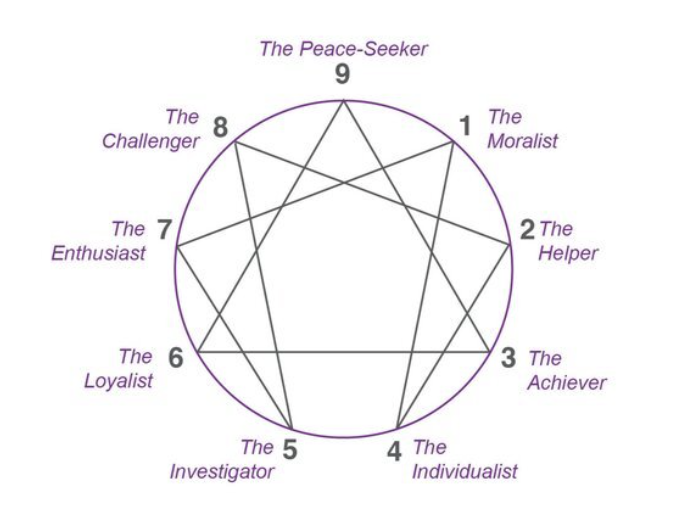
Typing is one of the most critical aspects of the Enneagram, and yet, mistyping is rampant. In this episode, we explain why this is case and what we can do about it. We also explore the one Type that is more likely to mistype than any other Type, and give you a Type by Type run through of how each Type approaches the Enneagram. What we find is that how we approach the Enneagram is often very revealing of our Type.
Podcast Hosts: Rasanath Das and Hari Prasada Das
Listen to this episode on Apple, Spotify, or your preferred podcast platform
Highlights
[1:30] Enneagram typing as analogous to going to a doctor to get a diagnosis
[3:00] Mistyping is rampant
[4:00] The obstacles to typing: the ego and the casual approach to typing
[5:30] Rasanath originally mistyped himself because he didn’t like someone who he knew that was a Type 3
[6:30] The stereotyping that is present in the Enneagram world
[7:00] Our Upbuild partner Michael Sloyer initially mistyping himself as a Type 8, even though he’s a 3, because of locking in on a particular feature of the 8
[10:00] Richard Rohr’s Discovering the Enneagram
[13:30] CS Lewis’ quote: “If you look for truth, you may find comfort in the end; if you look for comfort you will not get either comfort or truth…”
[17:00] The Type 3 as especially prone to mistyping
[17:30] The Type 3 propensity to mold myself to whatever is valued and to be chameleonic
[19:30] The most common mistyping of 3s thinking they are 7s
[20:30] The Type 9 propensity to see themselves as all types
[21:00] The Type 6 propensity to doubt their typing and the Enneagram framework
[21:30] The Type 4 propensity to think that they can’t be reduced to one number
[22:00] The Type 5 propensity to think that more rigor is needed
[22:30] The Type 8 propensity to knock down the Enneagram system
[23:50] The importance of the body language

-
This is an automated transcript and may contain minor errors.
Rasanath: and we have been so incredibly enjoying putting this material together and we are discovering so many things as we stitch the different episodes. Keeping in mind there, we want to take. Our audience, one of the important topics that came up is Typing and Mistyping, and the reason why eruptive feel that this topic is so critical is because the accuracy of the Enneagram or the effectiveness of the Enneagram framework is substantially improved when we are accurate in our typing.
It's just like when you would go to a doctor and you are experiencing some symptoms and you want the doctor to tell you what's wrong with your body. You would expect the doctor to provide a very accurate assessment of what's happening because that way then you
Hari Prasada: can address the issues. I literally used that metaphor in the chapter of this Enneagram book on.
Typing and Mistyping.
Rasanath: Well, I didn't know anything about that. Yeah, yeah, yeah. Some, some of these examples and when things happen this way, just, um. I'm always amazed at the, the serendipity of it, but that's how I liken the exercise of, uh, typing in the Enneagram and there's certain gravity to it. There's a certain seriousness that we need to bring into the whole process of typing.
And today we are going to spend a little time understanding how can Mistyping happen. So we did an episode before we stepped into the nine types about the process of typing, and we spoke a little bit about how typing works. What's the mindset that we need to adopt in order to. Go about the typing process and after finishing a walkthrough, the nine types, we feel that having a conversation about mistyping is extremely important, and this is addressing the whole idea of typing in a different way.
How does Mistyping happen? And believe it or not, in the work that we do, we see rampant miss stipend. And rampant convinced Mistyping. And when I say convinced, meaning people are convinced that they are a type when it's very clear that that's not their type. So how do we understand this and hopefully prevent mistyping from happening as we go about this journey of discovery.
So what are some of the mistyping. That you have come across
Hari Prasada: in the Enneagram world, what are the causes for it? Again, you're taking the words right out of my mouth and off the page. Mistyping is rampant. I mean, I could not emphasize that enough and I've thought a lot about this, different examples, but here I just wanna say that it's more common than not.
To type accurately is less common. To type inaccurately. And the reason goes back to the two obstacles we gave you at the beginning, before we got into the nine types, which is the ego, the identity of who I think I should be, which colors everything, and makes me want to see myself a certain way or mistake myself for being something that I'm not.
And two, the casual approach to typing, not knowing enough about the richness of the framework. Being impatient, restless, wanting it to just be fun and within my comfort zone and fast, and that's at the heart of all of the Mistyping. It, it became very clear as I was going through, how can it be that mistyping is more common than typing?
That was the breakdown, the ego and the casual approach to typing, which again, are not mutually exclusive. They're related to each other, so. We have to really recognize that the momentum is gonna be in that direction, that my default, my instinct is going to be to mistype myself, and I have to have guardrails for that.
Rasanath: I can very honestly say it. I have not been free of that myself. Uh, my first foray into the Enneagram had me mistype. And, uh, one of the reasons why I mistyped is because the person that I didn't like. The person that I, uh, I was having difficulties in relationships with, I typed that person as what I eventually discovered is my type and I couldn't reconcile, well, how can I be that type?
'cause I'm so much better than the other person. And I've heard this many times being, uh, well, I know the type threes and I. I don't think I'm a three because I don't like, I know this person is a three and I don't like that person. Right. So it's, it's coming from a frame of reference, a very relativized frame of reference that leads to biases and typing.
The other thing is also the Enneagram world is filled with stereotyping too. There is a way in which the types are explained that casts the type in a. In a specific way, and without too much nuance, without too much expansion, just say, well, if you see these three things, that must mean you're this type.
And, uh, that stereotyping also leads to misinformation, as I understood. Would, would you, would you agree with
Hari Prasada: that? Yeah, yeah, sure. Definitely. And as our partner, Michael likes to say, he mistyped during our first. Debut Enneagram workshop back in 2012 that he had typed himself as an eight when he is in fact a three.
He had thought that he was a challenger, an eight after going through the eight experience with us, and then realized later on that he's a three achiever. After going through that experience and having some more thought and discussion and so. The reason this happens is because we lock in on some feature, well, first of all, again, we wanna see ourselves a certain way that goes without saying, but then we lock in on a certain feature, for example, like, oh yeah, I come across as really strong and I'm forceful and I get things done.
And sometimes people are intimidated by that, and it's. Powerful, so I must be an eight because that's how eights are. And it's true. Eights are like that, but threes can also be like that. So we have to scratch beneath the surface, right? We have to get at what is the heart of the type, what is the body language?
What are the subtle distinctions in the three areas that we talked about of. Basic fear trajectory and consciousness and body language, especially in those three areas. 'cause that will make it really simple and clear and focused. Mm-hmm. And then again, ask myself, well what is my wing? If I'm an eight, do I have a seven wing or a nine wing?
And if I'm force fitting it, which you'll often see there's sort of an awkwardness around, well, yeah. I probably have a nine wing 'cause like I have an introverted side to me and I don't like conflict. Yes, you have an introverted side to you and you don't like conflict, but that could be a four. That's so high level.
It's so not grasping the type. Right and the
Rasanath: why behind I don't like a conflict is so significantly different. Between the types themselves, between types that avoid conflict. There are so many subtle nuances that we have to pay attention to, to really discovering where a particular behavior is actually coming from.
Uh, the other interesting thing that we have encountered, which is a common experience when people mistype, is a resistance to knowing what. Their actual type might be, and I've seen that happen specifically with certain types, which I can, um, very honestly say. But at the end of our typing session, I've heard several people say, well, you know, I read this type and I just didn't want to be that type.
Hari Prasada: How do we deal with that resistance? We need help. We can't do this in a vacuum. As I shared in our episode on typing. I was given the book Discovering the Enneagram by Richard Rohr, and I found my type immediately through the book, but I had a counselor who helped me to process what it means to be the type, how to deal with it, how to live as that type.
Mm-hmm. As opposed to just like, okay, now what do I do? Now the book should be able to help you with that. Also, it's not to diminish the medium of literature of books, certainly not, but we also need people that we can engage with in real time. That is critical. So if I'm encountering resistance, all the more reason to talk about it, to let it out, to deal with the discomfort.
Until it starts to settle more and more and we can accept ourselves more and more. And that's liberating. Just shoving the discomfort under the rug is not helpful at all. Suppressing isn't gonna do anything. It doesn't make it go away. And unfortunately, that's the typical way that we learn to deal with things is by not dealing with them.
It's very common. And that's controlling consciousness sort of. Reaction, right? I'd rather not deal with it. But when we're doing this self work, we're only cheating ourselves by not dealing with it. So talking about it and gaining acceptance from someone else, airing it out, beginning to engage with it, and really learning to accept that.
I come with shadows, I come with gifts, and I come with. Pitfalls I come with, right? Things that are unbecoming and the controlling consciousness has both, but it's really the gifts are not coming from the controlling consciousness. The gifts are coming from the self. The gifts are coming from the core of who we are and our essence qualities.
And at the controlling consciousness, when we're experiencing the gifts, we're not even getting a fraction of what they have to offer, right? So. Recognizing the resistance is coming from controlling consciousness, and I need more acceptance and I need the encouragement that whatever gifts I have, there's a lot more where they came from.
Mm-hmm. If I can move past this resistance and come out of that controlling consciousness as much as possible, thank you.
Rasanath: I also see how. Resistance is a natural part of the discovery because the ego is going to resist. Absolutely. The only way the ego really can function at its best, meaning at its most devious, is when it's undiscovered.
Hari Prasada: Mm-hmm.
Rasanath: Truly.
Hari Prasada: Totally. Totally.
Rasanath: And so naturally there is a resistance to discovery. Especially when you know it hits too close to home, there is the feeling that the game is up. And that does create a lot of discomfort. But we have to ask ourselves the question, well, what do we want? And in our workshop, in the larger workshop, excavating your ego, we talk about how we quote s Lewis talking about.
Truth was discomfort and asking the question, well, are we after truth or are we after comfort? And I think the quote goes, if you are looking for truth, you will eventually find comfort. But if you're looking for comfort, you'll never find the truth. And I think that's a very important question. We, uh, to me that's the definition of sincerity is are we really seeking?
Is true and the truth will make us uncomfortable because we are, it's too close to home. So, uh, I think the resistance is natural and we can be compassionate towards that resistance. Yep. And at the same time, it's important to not use the resistance as, as a way to deny what the framework might be showing us.
Hari Prasada: It, it's amazing because I was just writing about this today in a reflection unrelated to the Enneagram and how. We're going to be confronted as soon as we start to expose the ego for what it is. The key is recognizing the ego is not me. See, we're so identified with the ego. Yeah, that's right. We think it's us.
This, this projection that we need to prove and defend. We think it's us and so then we're very resistant, but we become free and really open-hearted and. Much better, stronger versions of ourselves when we just see, oh, that's just a projection that I'm conditioned to inhabit. Mm-hmm. It's not the real me.
Right. I don't have to be so threatened. Yes, it's intimidating. Yes, there's work to be done, but okay, but it's not me. I am something else. And when I, when I embark on that journey, and I realize. Who I am more and more through the journey and I align with that. It's so wonderful. It's so wonderful. What am I afraid of?
Thank
Rasanath: you. What are some of the more common mistyping that we have seen? And the reason why I ask this question is we have seen some patterns. That happened during our mistyping or when we discovered that there is a mistyping and it might be helpful to provide those clues so that as the audience listens to the series, they can just keep that with that.
Hari Prasada: Well, this is sort of a can of worms because you're, you're opening up Pandora's box ra, uh, any type can mistype and it happens all the time. Every type is susceptible to mistyping. That is a hundred percent, and I don't wanna diminish that. At the same time, in our experience, there is one type that is especially prone to mistyping.
This is not an official rule. This is not written in any Enneagram book or website that I've encountered, but it is our lived experience. Again, and again, and again and again over so many years. So much work with organizations and individuals, it, it blows my mind. And that type is the three, the achiever.
And the reason is because, I mean, there are many reasons, but if I were to boil it down to one chief reason, it's because I can. Mold myself to whatever is valued, right? And I have all nine types within me, all nine energies. And so if I want to be a little more Aish or I want to be a little bit more two-ish or.
Six-ish. I can go there. I can find that part of myself. You know, I got that down. I'm really good at that. I, whatever you need, whatever is going to get me to shine and allow me to come out successful and likable and admired and like I'm on top of stuff and that I'm a worthy person, I'll be that type. No problem.
I got it. I can do it. And the word at the controlling consciousness is chameleonic. So I don't actually know that I'm doing this. It's unconscious. I'm changing colors without realizing it, and I need to realize it. And before I can accurately type myself, I have to be on to that possibility. If I have any tendencies at all in that direction, watch out.
I am very likely a three, very likely. And then I have to face the shame of what. Doesn't seem to be as attractive to me. I don't want to be a three because I don't wanna be so competitive. I don't think I'm that competitive. I know this person is much more competitive and, and sometimes actually it's a shame of like, it can also be, if I were really a good three, I would be so much better at being a three.
I failed too many times to be a three or I'm not big enough of a person to be a three. And that's a different kind of walking through the shame. So that that happens a lot as well? No, no, no. My cousin is a three. My cousin is always out there getting every award. I'm always overshadowed. You can still be a three just because you're not winning constantly or you're not that big, or you don't let your competitiveness come out in that way.
The last thing I would say on this is for some reason the threes seem to think that sevens are valuable to be, they have, they have honed in on the fact that sevens are likable, they're happy and free spirited, and there's like an innocence that they can associate with them. They're not so self-conscious and image conscious as the threes, and they're funny and they get likes and.
They're also go-getters. They make things happen. They can do well in the world, so they can easily pivot into, yeah, I'm a seven. And we have encountered that as the The most common mistyping of Mistyping. Yeah, the threes. The threes mistyping themselves as sevens, but it happens in so many different ways.
I don't want to say that that's the only way. It's not the only way. It happens in so many ways and for all of the nine types, we are all prone to mistyping. It's not only the threes. But be warned, there are some patterns that are fascinating and good to know.
Rasanath: I've
Hari Prasada: also
Rasanath: seen come across, you know, uh, similar things with the sixes and the nines in a different way.
And I've seen the sixes and the nines, the nines, especially saying, well. I could see all the types in me, which again, truly characteristic of the nine. They're tapping into the universality and the capacity to see multiple perspectives. And so I've seen a lot of nines saying, well, I think I'm all types.
Hari Prasada: I'm, don't pin me down. Don't pin me down. Don't pin me down down the six. Lemme be harmonious with all things and all types.
Rasanath: And sometimes the sixes. Uh, just not sure what their type is. Yes, exactly.
Hari Prasada: How does anybody know what their type is? I don't, I don't know. How do you know? How do I trust that you know, what you think, you know, or how do I trust what I think I know?
I don't know. I don't know what type could I be? Does this framework, is it for real? And,
Rasanath: uh, what is so amazing? And so I would say inescapable about the Enneagram framework. That if we were to pay attention to our patterns of mistyping, we might actually find our type. Exactly.
Hari Prasada: Exactly. Exactly.
Rasanath: Which is so incredible because you can't escape the blueprint.
Hari Prasada: Uh, yeah. Fours, the individualists are often saying, oh, I can't be a type because I'm so much more unique than just one of nine types. You can't, you can't put me in that box. Right. But then it's like, whoa, wait a minute. There's a type for that. Right? And, and, and the fives, they're like, oh, I don't know. I need to see more of the rigor of this.
I'm skeptical and I'm not sure what I am. I mean, of course that's also leading to no typing in many cases. That's right. That's right. Not just mistyping, but No typing. No typing. Um, as, as kind of stalemate, uh, which we also don't want. Yes. Um, and I've seen many times the eights are like just trying to knock down the system.
It's like, oh yeah, Enneagram, what do you got? Ou, Enneagram practitioner. Okay. Try to pull one over on me. Try to type me, yeah, gimme, gimme your best shot. Let's see what happens. I'm interested. So that's another kind of resistance to typing. It's true. Very good. So if we become aware of these things, we can poke fun at ourselves and let down our guard and become open for an experience that is really, really exactly what we need, what the self is longing for, to be given a chance to come out
Rasanath: and at the, at the same time, we do see the Enneagram, how.
Behaviors of certain types closely resemble the behavior of certain other types. In fact, we can't classify them into triads Yep. Because of behavioral similarity. But again, the, the emphasis here is even when there is behavioral similarity, we need to really look underneath to see what's driving that behavior.
And we will come to see the differences between the types very, very clearly. But it takes, it takes work. And it takes patience and courage, as you mentioned earlier, to go to those places. So a
Hari Prasada: hundred percent, and don't forget about the body language. Don't forget about the body language. That is very crucial, really, like that is so impactful in really determining is that the type and distinguishing between types that have similar behaviors.
Rasanath: Thank you so much, har. This is always such a rich topic as we discover more about Enneagram typings and Mistyping, and it also helps me be in the mindset of wanting to go closer to the truth, even as I do this work of helping other people type themselves to not turn this into a game. It's very sobering.
I would say to understand that the ego can so easily come in the way of concluding about our type or somebody else's type. Thank you very much. Thank you.
Hari Prasada: Thank you. We will see you soon. All the best everyone. Thank you.
Episode Transcript
Continue Exploring the Enneagram
Browse all Enneagram podcast episodes
Understand the Enneagram framework — clear breakdowns of the Types and how the system works
Join our live Enneagram community, Enneagram Library Live, hosted by the Upbuild team.
Take the two-day Enneagram 101 workshop