
The Upbuild Enneagram Library
The Imbalances of the
Centers of Intelligence
Subscribe on: Apple Podcasts, Spotify, YouTube, or wherever you get your podcasts

Episode Description
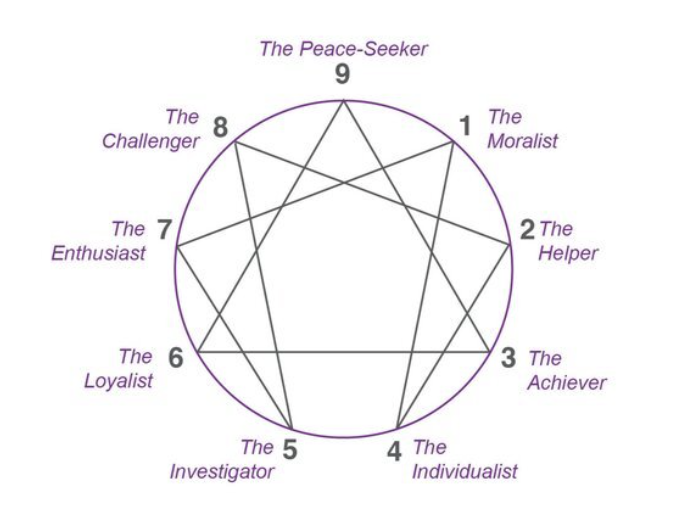
In the Enneagram, there are some Types that disassociate from their Center of Intelligence and other Types where one Center “enslaves” another. Which pattern do you fall into, and what is actually happening beneath the surface? In this episode, Michael, Hari Prasada, and Rasanath explore the concept of the Imbalances of the Centers. They break down the mechanics behind the first and second imbalances and how these patterns form unconsciously.
Podcast Hosts: Michael, Hari Prasada, and Rasanath
Listen to this episode on Apple, Spotify, or your preferred podcast platform
Highlights
[00:40] The Centers of Intelligence
[01:40] Defining Center Imbalances and its relation to the Levels of Consciousness
[03:40] Distinguishing the first and second imbalances
[04:40] Mechanics of dissociation and enslavement
[07:40] Imbalances in the Body Center: Types 8 and 1
[14:20] Dissociation in the Body Center: Type 9
[16:00] Imbalances in the Heart Center: Types 2 and 4
[18:30] Dissociation in the Heart Center: Type 3
[20:50] Imbalances in the Head Center: Types 5 and 7
[24:30] Dissociation in the Head Center: Type 6
[26:20] Strategies for rebalancing the Centers
[29:10] Reclaiming the heart and the journey to self-realization
Quotes
“Down the Levels of Consciousness, the Centers naturally become imbalanced and at higher Levels of Consciousness, the Centers become integrated and balanced.” -Michael
“If you want to reach somebody whose Center has become imbalanced, which is practically where all of us live all the time...look for the Center which is not yet co-opted and walled off.” -Hari Prasada
Episode Transcript
-
Michael: Hello everyone, this is Michael Sloyer and I am here as always with Hari Prasada and Rasanath. And today we're gonna be talking about a dimension of the Enneagram called the Imbalances of the Centers. So let's start very foundationally with a little reminder on what the centers of intelligence are,
Hari Prasada: the centers of intelligence are.
The means by which we navigate the world and their specific faculties that allow us to gain experience. So the body, the heart, and the mind or the head are the three centers, and we each come with a predisposition towards one of those based on our type.
we have all three of these faculties, but one of them is dominating us by default, and therefore we have to see what about the others and how do we strike the balance.
Michael: Excellent. And as a reminder, we have the types two, three, and four that are part of the heart center, the types five, six, and seven that are part of the head center and the types eight, nine, and one that are part of the body center. And so what does it mean for a center to then be imbalanced?
Hari Prasada: Theoretically what Russ would say, Russ Hudson at the Enneagram Institute, he would say that why would you want to be one third of a person? And I love this statement. It's something which resonates deeply and has stayed with me for so many years. Why would you wanna be one third of a person? In other words, if you could just clinging to your center, which is the tendency that we feel more comfortable in our zone, like people who are head centered.
If they're not integrated, they feel uncomfortable dealing with emotions and matters of the heart. So he gives this question that is a provocation. Why be one third of a person Upon further examination, it's not really possible.
You can't really be one third of a person because that would presume so much presence in one of these three centers that. You couldn't be ignorant of the others because presence or consciousness, your level of consciousness. Applies in any dimension, and
if you were really so present in your head, your heart or your body, then you would naturally have more alignment and we'll talk more about this, more balance, more integration of the other parts of you. So it's a fantastic. Statement to help us remember the other centers and not strive to be one third of a person, but in actuality, who is one third of a person I've not met,
Michael: Great. So you're really pointing to how down the levels of consciousness.
The centers naturally become imbalanced and at higher levels of consciousness, the centers become integrated and balanced.
Hari Prasada: Yes, and the more awareness we have and the more intentional we are, the more we can help that process have and accelerate it.
Michael: so could you guys give us a little background on this dimension and how it actually works
Hari Prasada: so When we talk about imbalances of the centers, there are two. There's what Don and Russ call the first imbalance and then the second imbalance. And these take place at particular junctures within the levels of consciousness, and they line up exactly with the border between.
Be creative and controlling consciousness. That's where the first imbalance takes place. And then. The second imbalance, it's at the border between the controlling and destructive consciousness.
And we focus more on the controlling consciousness that we live in rather than the destructive, because at that point we're really beyond the ability to be reached. And we'll see what that's like a little bit.
Michael: Very helpful. So we'll focus mostly on that first imbalance then. And can you give us a little bit on the mechanics of how it works?
So every center has what you call the center of the center. And that center of the center is flanked by two other types. So you have one type that is the center of the center, and you have two types that flank the center.
Rasanath: what we will find in the mechanics is that the type that is the center of the center. Will have a specific mechanics in terms of how the imbalance works and the types that flank the center will have. Specific mechanics in terms of how it works.
So the types that flank the centers, the mechanics begins with the starting point, which is their own center. And when the imbalance happens. The center that they belong to, the center that is the starting point.
Then enslaves one of the two remaining centers. The word enslaved is an important thing because that other center that is enslaved now has no independence. And so now it becomes a very rigid mechanism where the center that was available for independent working and providing its own independent input can no longer do it.
That is the first imbalance. That is what brings one to the controlling levels of consciousness. So what I just explained is for the types that flank the center of the centers, now we step into the types that are the center of the centers.
Michael: And when you say the center of the center, just to clarify, you mean there are three types within each center?
So the middle number of those three is the, is the center of the center,
Rasanath: essentially it'll be the nine, the three, and the six. So now for those three, the mechanics is a little different. So these three types of what you call dissociative types. So when the imbalance suckers, when they step into the controlling levels of consciousness, the reason is because they dissociate from the very center that they belong.
So the way the imbalance starts is they hit the eject button. On the very center that they belong. That is the difference between the types that flank and the types that are the center of the centers.
Michael: Okay, great. So you've wet my appetite a lot for actually getting into this a little bit more 'cause it's a lot to keep track of.
Rasanath: This was like a very clear, when we step into the centers and go through the types, so hopefully that'll clarify that.
Michael: I, I also just wanted to say how mind blowing the Enneagram is. It's so incredible that this all exists and also so much credit to Don and Russ for organizing this and figuring this stuff out is quite amazing.
Hari Prasada: I was just gonna say that, I mean, it's incredible the person who designed us, who made the human condition what it is, and the mindscape, what it is, it's beyond me completely. And Don and Russ discovering so many key aspects of that and clearly noting them and communicating them, finding the patterns.
It's really remarkable.
Michael: Let us step into it now and we can start with the body center, the types eight, nine, and one.
Hari Prasada: So for the type eight, this is again, not a center of the center of course. So this is one of the two types that flank. So for the eight, the Challenger, the way this works is they are body centered and they're body centered when the first imbalance happens in slaves.
The head center, so now the body wants to act, wants to move, wants to assert. I am so powerful. I'm such a force. You have to reckon with me and I get the mind. To be completely co-opted, consumed by that. Ooh, how will I show up? What will I do? Strategic planning, figuring out how I'm gonna show up with force and I can't stop it.
It's just happening automatically. It's not that I. Plan to do this. It just happens as with all of the imbalances of the centers. It's a mechanic that happens. Unbeknownst to me. I'm not aware of it, and it doesn't ask me permission. It's only if I want to intervene that I can then change things. That's the first imbalance.
By the way, this is a really important thing, and Don and Russ emphasized this nicely that at this point the heart center is still left open. So they draw a visual, which is really simple and really helpful. If you have these three centers, the body, the heart, and the head, or they speak about it as thinking, feeling, and willing, you can imagine that they're open and then.
When the first imbalance takes place, two of the centers get boxed. They're walled in and one of them has like an arm that's recruiting, enslaving the other, so the body gets boxed in and then in slaves, the head or the mind, the. Thinking center
Michael: in the case of the eight you're talking about
Hari Prasada: in the case of the eight, so they are both boxed off.
They're both walled shut, but there's one center, that is available. It's not boxed off. It's not walled off, it's not out of reach yet. That is in the case of the eight, the heart. So that is available. If you want to reach yourself or if you want to reach somebody else who's at this point of the first imbalance of the centers, which is practically where all of us live all the time in this imbalance, then look for the.
Open center, look for that center, which is not yet co-opted walled off. So in the case of the eight, again, that's the heart. They can be touched by someone's genuine care, if it's expressed in a way that is sensible for them and very genuine, very authentic. So the second imbalance, that is no longer the case.
So now the body. Which has enslaved already. The head decides I'm enslaving the other one, I got 'em both. Now it's a monopoly. I call the shots on everything and it's completely out of control. So the body enslaved. The second of its enslaved centers, which is. The heart, and now I'm totally out of reach. So whereas I could have been potentially touched at heart, now the chances of that happening are much, much, much smaller.
It's not to say that pristine purity cannot affect the heart of the eight at this level, but even pristine purity is unlikely to do it because. Eight has to want to be receptive and at this level of consciousness, in the destructive, I don't want to be receptive unless I'm on my path, unless I'm already figuring out, oh, I gotta do something about this.
So that's how the second imbalance works. It's all I'm completely out of reach. Everything is boxed up, and at the behest of the slave driving. Center itself, the body.
Michael: Excellent. So now we can get into the second, uh, type that flanks. So the type one.
Hari Prasada: So then for the next type that's flanking the center. You have the one, the moralist, and the first imbalance is that the body center enslaves the heart.
So now I want to. Act righteously in the world, and I want to experience that I can move the world in the right direction towards goodness and reform, and my heart starts to become consumed by this, that. I can't bear the weight of it and the fact that nobody listens, nobody actually does what I want, and it's so painful and I'm so misunderstood.
And the heart gets more and more squeezed and emotional and lonely. So at the second imbalance, then everything gets co-opted, right? The heart, which. Before this, the head was free because the heart was co-opted. So one could still appeal to the one with some data, potentially some information or some reasoning.
That is true and correct and right. But here at the second imbalance, now, there's no way because. My head has also been co-opted by the body, so both the head and the heart or the heart, and then the head are co-opted by the body. So that's how it works for the one. Then we go to the center of the center, which is the nine, the peace seeker.
So the peace seeker being a dissociative type, dissociates from its own center, the body. And what that looks like is, uh. I am just sort of floating in la la land. I don't really realize. How I'm using my body. I'm just coasting through life and just kind of flowing. But it's not a real flow. It's not a flow of presence, although the nines will think and and argue that it is.
But I am really just kind of moving through life, going through the motions as a searcher for creature comforts. That's the first imbalance. Before we get to the second imbalance. At that point, the other two centers are still available in some way to be reached the heart and the mind. But because I'm so kind of in my own fantasy land, my la la land of what comforts me is not so easy to be reached in those ways.
But they're both. Technically more open. So at the second imbalance point, now they all get boxed up. Now they're functioning disparately. All three of these.
They're all dissociative in a way. They're all just operating, like I'm doing something while I'm thinking of something else on overdrive, while I'm feeling something else that I'm not even aware I'm feeling. And none of it is cohesive or even coherent.
Michael: Very, very helpful.
So let's get into the next center, the Heart Center.
Rasanath: The heart center types, the types two, three, and four. I'm gonna talk about the two and four first. So type two. The first imbalance of the center occurs when, the heart. Recruits and slaves, the body.
And so now as a two, I just want to do, I just want to connect with people and I recruit my body for doing various different things for other people that I want to feel connected to, right? So now the body, I'm not really listening to my body. My body is just being dragged around. By my heart's, desperate need to connect with other people,
So at this state, when the first imbalance occurs, the way you can reach to at this level is through reasoning. Hey, look at what's going on here. Can you see it? But when they reach the destructive levels of consciousness, the second imbalance, suckers, where the head is also recruited by the heart, and now there is no center available for any reasoning either.
So it's all consumed by the desperation to connect, and both the body and the head have now become slaves to the heart's desperation. So we can now go to the type four. The starting point is the heart, and when the first imbalance occurs, the heart recruits the head. The head becomes the slave of the heart.
This is the opposite of what happened to the two. And so the body is still free available. But now the heart and the head form a loop where the head is helping the heart enhance its emotions. So the head now becomes the slave of the heart to amplify certain emotions.
Now the body is still available for being able to reach the person at this stage, which is why. When we talk to force at this level of consciousness, we usually ask them to get into their body, do some running, get into some physical exercise that breaks the pattern. But when that doesn't happen, then we go into the destructive levels of consciousness and at the destructive level, the body is also now recruited by the heart, and now both the head and the heart are essentially working to amplify the feelings that the heart wants.
And the type becomes unreachable at this point. Now we come to the center of the heart center, which is type three. The type three as belonging to the heart center and a dissociative type just like the nine did in the body center, The immediate reaction when the type three goes into the controlling levels of consciousness is to eject from the very center that they belong, which is the heart center.
So now the heart center becomes walled. I no longer have access to the very center that I belong, and somehow the head and the body work together. So that's why we see a lot of threes will say, well, I think a lot. I think, and I do, that's the pattern you see for the type three I'm thinking and I'm doing, but the heart is just completely not included in the process.
And when I go to the destructive levels of consciousness, now the thinking and the doing also becomes separate from each other. So all the three centers are wall and essentially acting completely uncoordinated. This is the characteristic of the dissociative types where all the centers eventually become dissociated from each other and they're working completely independently and the person becomes unreachable.
Michael: These pictures that you guys are painting are super helpful for. Really clarifying what it means to become integrated at higher levels of consciousness, where the centers are working together, and then what the word disintegrated means. We use that word a lot, but now it's more clear as you think about the centers being walled off from each other.
Rasanath: True. And what you also see, the interesting thing with the patterns for the types that flank. As you can say, that they're integrated because they're all working together in a way because two of the centers are now enslaved by a third center. So in that sense of the term, they're all working together, but integration requires independence.
Integration is the actual dependence on each other, not enslaving. And this is something that we have to fully recognize. Whereas for the dissociative types, they're actually completely disjointed. They are just working completely uncoordinated with each other. This is a big nuance.
Michael: So the system is disintegrating as one center makes the other two centers a slave,
Rasanath: correct?
Correct. Or when one center is walled off and completely working independent of the other centers.
Hari Prasada: Okay, the head center,
so the five, the investigator coming from the head at the first imbalance, the head makes the heart a slave, and now I'm experiencing that. I wanna go really deep and understand what it is that will make me feel like I'm an expert.
And I'm trying to extract as much juice from that as possible, and I have no sense of how my body fits into the equation at all. I mean, the heart is also not, not the thing that I really identify with, but it gets enslaved in a way where I just have to pump juice. Out of these things that I'm studying or experimenting with or trying to produce as a discovery so that I can feel like I'm an expert.
And at this point, like with the four, and it's interesting, they're both withdrawn types. They're both introverted and in behavioral patterns, withdrawn types. The body is very good for them to get into. That still remains available at this point. Second imbalance. Now the body also becomes a slave. So the head is just driving everything in the same direction of, I must conquer knowledge, I must know everything.
And I become really almost manic in my quest for things. And I, I. Become totally walled off from the world and nothing can really get me out of that state. So that is the first type. Then we go to the seven. The seven is the enthusiast, and coming from the head at the first imbalance that recruits the body.
Now the body is enslaved by the head because I want to know that I can trust. My life and how do I do that is based on experiences. How am I gonna get those experiences? The body, I can move, I can go out there and have fun, do all kinds of things. So the body, unbeknownst to me, is a slave to my mind's desire to trust something stable in this world, which.
For the seven is experience. It's not actually stable. It doesn't work, but this is the programming nonetheless. So what's left open at that point is the heart. One could still touch their heart potentially if approached in the best way, and if the seven is sincere and receptive enough. The second imbalance that shifts too.
So now I'm gallivanting all around the world, or my village or my whatever. My little sphere and I, I have recruited, or the head has recruited both the body and the heart. So now I'm just like trying to feel, feel, feel. This is enough. This is great. This is amazing. I just need more, I, I need to feel more, but it's all completely crazy making and none of it actually satisfies me and nobody can help me.
So then we go to the center of the center or the last of our types, which is the sixth, the loyalist. And I dissociate from the center. I'm a part of the head center, and so now my thoughts are just. Kind of spinning and spiraling. I don't have any sense of really what's going on and what's the reality.
The head center is supposed to provide clarity. It's supposed to help us see what's what and decision on that basis. And here it's, I have no idea. It's my head is just swirling. What about this? What about this? I mean, it's so much anxiety. And the other two centers are still marginally available. There's some way that they could potentially be reached.
The heart and the body at the second imbalance that shifts where now nothing is really within reach, at least not by any reasonable means and. They're all firing separately from one another. Each one caged off each one with a square or a box around them, and none of them communicating with each other.
So the head is just going wild while I'm trying to move here and there, and the heart is making me feel all these kinds of things that I don't want to feel and I don't know, I don't know how to make sense of any of it.
Michael: Thank you both for those explanations and it also makes me very excited for what's to come as we have individual type episodes on the imbalances of the centers and really get into each of the types deeper.
'cause I know there's so much more that, that each of you would wanna say about the types. So let's talk about now what it means to start to rebalance the centers. How do we go about doing that?
Rasanath: The rebalancing of the centers. It has to start with giving the centers independence to work as going back to what Haad said earlier, quoting Russ, why do we want to be one third of a person?
The idea here is for the centers to work independently and freely together, right? So when the first imbalance, Zuck is when the first center is recruited. And the first center is dissociated. That is the place to really pay attention to because when we don't pay attention to the first slip, the first imbalance, then the first imbalance actually becomes a set pattern, right?
It becomes our way of operating and the work to really separate, to then un enslaved to bring the center that is recruited. The center that is associated back in is where the work really needs to start.
Hari Prasada: Except that the slip has already happened. We're living in the controlling zone, so this is all over the place,
Rasanath: which is why the, we have to take the stance that the center that has been recruited. We have to learn how to let that center work independently
We have to really be willing to take help and guidance from someone who can help us rebalance. Without that help, it's actually pretty hard to do it because we, at this level, we are pretty fixated. The controlling levels of consciousness, a pattern is already set in and it is hard for us to free ourselves from that pattern without having some degree of external help.
Michael: I appreciate the targeted. Invitation that you're offering us here, which is as a certain type to pay attention to one specific center, either the one that gets dissociated or the one that gets enslaved, and to do work on that. And of course, there's so many ways, which we've talked about in all of our podcasts, about how climb the levels of consciousness.
And depending on which dimension you're looking at, there's a lot of information. But here this is pointing to one specific angle on what we need to pay attention to in order to climb the levels of consciousness.
Hari Prasada: I was gonna say that this is a bit counterintuitive given that we share from Don and Russ that focus on the center that's available. And here we're saying the other way around, focus on the center, which is not available.
Michael: That is a little counterintuitive,
Hari Prasada: I think what Ana is trying to say is you don't want the center that is unavailable to remain unavailable, so you have to disentangle it.
Michael: So Hari, can you bring us into the universality of this? We've talked a little bit about the specifics and now let's talk about the universal.
Hari Prasada: Yeah. The idea is. I often emphasize this, including in our Enneagram book the universal is always infinitely more important than the individual.
The individual cannot be neglected. That which is unique to us and our journey cannot be neglected because we will never be able to attain what is universal for all of us. If we neglect what makes us distinct, and that is. Glorious. What makes us distinct and focusing on that is glorious. However, what unites us is even so much more important.
So if we just focus on these distinctions, we'll lose the forest for the trees. 'cause at the end of the day, what are we all?
We are all the self. We're not the same self, we're distinct, which is why this is necessary. We are all a different self from one another, but the same substance of spirit. We are all souls and we are all connected as souls. And that which is universal. The fact that we are the self, we are souls. That's what we have to invest in.
And where does the self reside? The deepest part of us. Everybody knows in my heart of hearts, in the core of me, that's where the real me resides. It's intuitive. We have that sense when we say I'm speaking from my soul, we say, I'm speaking from my heart and soul, and we sometimes even gesture towards our heart.
So the soul scientifically, according to sacred texts. Resides in the heart. Therefore, we all have to reclaim the heart. We all have to focus most on the heart. And how will we do that is by understanding the nature of the mind and how it confuses things and how our decisions are contaminating the heart, and then how our actions, their use of the body is furthering that.
So it all has to become harmonious and none of us can say. Well, I'm just gonna focus on the center that I'm in or no, I'm gonna be really clever. I'm gonna focus on the center that I'm not in 'cause I already know my center, which by the way is not true. You don't know your center, you. We have to become present and conscious within our center as well.
So the universal is. We have to see that our heart, and we mentioned this also in the Centers of Intelligence episode, that our heart is the most important part of us. It is the house for the soul. And that is true regardless of what center dominates.
It doesn't mean that you have a leg up if you're heart centered. No, no, no. We all have to reclaim the self within the heart and. Put all of these three centers under the care of the heart, driven by the heart towards realizing who we actually are, and that is a whole journey. That is the journey to self-realization with.
People practice and philosophy as ami, my guru puts it, we need people practice and philosophy to embark on that journey, which is a journey of awakening the heart to the soul.
Michael: So beautifully said, thank you, Hari, and that feels like a really great place to close. So I will very much as I always do, look forward to getting into the specifics as we get into the individual types around this specific dimension of the Enneagram.
But very grateful for each of your wisdom, for your ability to recall all these complex nuances and as we shared earlier to Don and Russ for discovering this and organizing it as they did. Thank you everyone for listening.
This is an automated transcript and may contain minor errors.
Continue Exploring the Enneagram
Browse all Enneagram podcast episodes
Understand the Enneagram framework — clear breakdowns of the Types and how the system works
Join our live Enneagram community, Enneagram Library Live, hosted by the Upbuild team.
Take the two-day Enneagram 101 workshop