
The Upbuild Enneagram Library
The Head Center
Subscribe on: Apple Podcasts, Spotify, YouTube, or wherever you get your podcasts

Episode Description
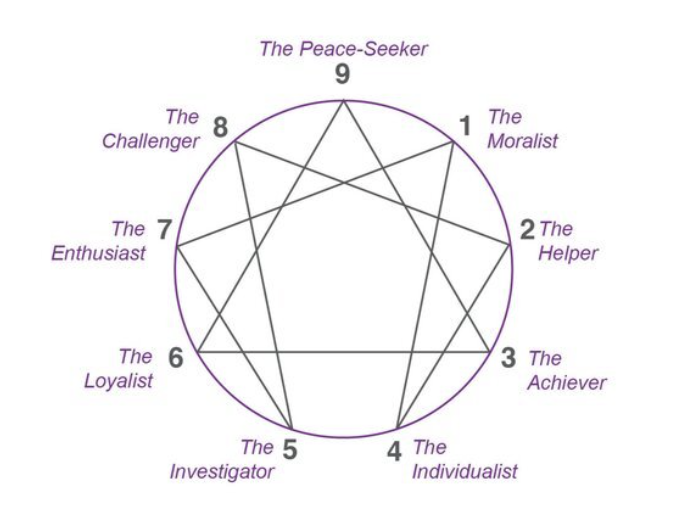
There might be a lot going on in your head, but that does not mean that you are making good use of it. In this episode, Michael, Rasanath, and Hari Prasada discuss the Head Center’s essential role in managing the complexity of life and the flood of information we face each day. They explore how awareness of thought, not thinking itself, is the hallmark of presence in the Head Center. They unpack the inner worlds of the Head Center Enneagram Types (Type 5, Type 6, and Type 7), exploring how each seeks to find something that it can trust in its own way, and what is at stake for all of us in becoming more present to what’s happening in our heads.
Podcast Hosts: Michael, Hari Prasada Das and Rasanath Das
Listen to this episode on Apple, Spotify, or your preferred podcast platform
Highlights
[00:50] A meditative portrait of the Head Center
[05:50] The litmus test for presence in the Head Center: awareness of thought
[07:20] The head’s role in managing the other centers, and the danger of letting it rule
[09:10] Chaos, entropy, and the “chaotic manager” within
[12:40] Calmness as the real indicator
[14:30] The courage and patience required to face the mind’s endless activity
[16:10] “Chewing the chewed”
[17:30] Type 5, The Investigator
[21:30] Type 6, The Loyalist
[28:10] Type 7, The Enthusiast
[35:30] The other six Types of the Enneagram
[42:00] What we stand to gain by being present in the Head Center
[45:30] Distinguishing among the Body, Heart, and Head Centers
[51:40] Advancing in our spiritual life through presence in the Head Center
Quotes
“ In our culture especially…there is a lot of emphasis on how the head is used…the head becomes a place where the sense of competence is most heavily relied upon and exercised, which is why we can see many of other Types also talking about how ‘Yeah, I'm in my head all the time.” -Rasanath
“ The head is the operating system that takes into account the uncertainty that we deal with and comes out with a certain conclusive direction. So when the head is functioning well, we feel lucid, clear, and filled with wonderful knowledge and insight.” -Rasanath
“Thinking…is not indicative of presence in the Head Center, just like feeling is not indicative of presence in the Heart Center, just as movement is not indicative of presence in the Body Center.” -Michael
“ Whatever type we are…the heart is the key.” -Hari Prasada
-
This is an automated transcript and may contain minor errors.
Michael: Hello everyone, this is Michael Sloyer and I am back here with Rasanath and Hari Prasada. And today we're going to be finishing off this little mini series getting into the three centers of intelligence. And today we'll be talking about the head center. So Rasanath, could you bring us into our meditative portrait for the head center, please?
Rasanath: Thank you, Michael.
Our world is very complex, very fast-paced, and can be very overwhelming. There is so much information to process. We have to take so many factors, opinions, and variables into account in a very limited amount of time in order to make any decision. So how can I sort all of this out? What can I rely on to sort all of this out?
That is where the head center comes into play, and the facility that the head center offers us is the capacity to systematically weigh out each piece of information, prioritize them, and then come out with an educated conclusion. Without the head center, we feel ourselves to be lost, anxious, and impulsive.
The head is the operating system that takes into account the uncertainty that we deal with and comes out with a certain conclusive direction. So when we are present in our head center. We feel ourselves to be lucid, clear, and filled with wonderful knowledge and insight.
When we are not present in our head center, We feel clouded, foggy, confused. An example of how I personally experienced the effectiveness of the head center is in the fall of 2007. I was just starting my career as an investment banker, and at the start of this career, I had to take a very big exam called the Series seven Exam, and I failed my series seven.
I was the only person in my class of 72 associates to fail the series seven exam, and by the sheer dent of failing that exam. How the environment works is you are judged for not being qualified enough to do the job. There is a lot of shame associated with it, and so the result created a lot of internal chaos for me.
I remember very distinctly staring into the screen as I got my results, and just not knowing what to do. And in that process of chaos, as I walked out of the examination center, the strategy to save myself from all the shame was lie to my coworkers that I passed the exam.
And during that time, especially during times when we face a lot of internal chaos and confusion, there are multiple layers of reality.
There are multiple layers of truth that simultaneously live and in the experience of fear our mind just goes out of control. We have all experienced that. And in this particular situation, for me, what I had to do was really parse through the multiple layers of reality that existed.
And when I started walking through each layer of reality, I began to see things more clearly, fundamentally, how affected I was by the fear of being judged, losing my job, and then the consequence of protecting my job, which means that I would lie and just tell other people that I passed, I would just lose myself and I could not allow that.
So there was this sudden descent of lucidity and clarity, and I knew what I had to do. So the next day when I went back into work, I proceeded to volunteer my examination course to every one of the bank. there was this quiet calmness and acceptance that, I run the risk of perhaps losing my job, but I will not take a step.
That in course of which I will lose myself. So I couldn't lie. And that was just very clear. I had made my decision and I was very willing to suffer whatever consequences would come my way.
And that was a very powerful experience that. I couldn't have gotten there without examining and sifting through the multiple layers of reality
it was not just by thinking. In fact, thinking itself is not characteristic of presence in the head center. One can be thinking very, very fast and not have any clarity or insight. Our thoughts can be very undirected. We can be daydreaming and never really arrive at true knowledge. People think so much, and we hear this many times, people don't know how to shut off their thoughts, right?
So the real dominant trait of being present in the head center is calmness. The simple litmus test for presence in the head center is how aware are you of your thoughts? How aware are you of your thoughts? When we become aware of our thoughts, we realize that we can shape them rather than our thoughts shaping us.
So presence in any of the three centers can open the floodgates of possibility. It brings us to a place where we feel more aligned and more alive. Thank you,
Michael: Rasanath. So to reflect back some of the key words as it relates to the head center from this portrait that you shared, the head center is all about processing and making decisions, sorting out things, weighing out information, prioritizing.
Coming to educated conclusions. And then these adjectives being lucid, clear filled with knowledge and having calmness is ultimately a sign, is the sign of being present in the head center. And we have this litmus test. How aware are you of your thoughts, Soha? Psad? What would you like to share about the head center to open us up here?
Hari Prasada: I think Ana set us up so nicely with the, the whole foundation. my experience of the head is that it's so important to help us wade through the muck of the heart and to make sure that the actions of the body are. Very thoughtful. We need that. So the head is extremely important in helping us with the management of the other centers, that it becomes a facility by which all the information coming at us in our thoughts, our emotions, and our intuitions, our desires to act, all of that can be filtered through the head of the mind and with the intelligence that is also part of the head center.
We can then decide, ah, this is the right thing to do. Ross, and I've mentioned it felt so clear and calming to know, aha, this is the right thing to do. So it helps us to really govern nicely the other, or manage the other centers. Although there's a caveat there, which is we don't want exactly the head to be sitting on top as the king because as we spoke about in our Heart Center episode last time, the heart should actually be the driving force and the head just provides the guardrails and allows us to act from the place of the heart.
We'll speak more about that as we go, but I'm just saying something small to plant a seed. Now,
Michael: any more words about what happens when we're disconnected from the head center?
Hari Prasada: Yeah, it's as was speaking about the internal chaos becomes unmanageable. So if you look at the head as sort of a management system for all of the overwhelm of information of the world and internally again from error.
Hearts with emotions and are certainly the thoughts that are coming in from the head itself. And then again, also the body with intuition, instinct, and, uh, desire to act it becomes that I'm not able to manage. It's like we have no manager on site, so everything just goes as it would if there was complete entropy, right?
There's nobody actually managing things, so there's a vacuum, and in that vacuum, chaos reigns, entropy is the dominant feature. Unfortunately,
Rasanath: sometimes it's not that there is nobody to manage. Sometimes it's a chaotic manager, and I have had experiences of working with somebody who is chaotic, and when that person is giving you orders.
If we all know what a cyclonic effect it can have. Um, and I mean to very intentionally use the word cyclonic, that is exactly what it feels like when thoughts are just racing about in our heads, and we act impulsively on those thoughts.
Hari Prasada: Yeah, we get really buried by our thoughts and it causes us to then neglect the other centers.
We become less active or we become overactive. That's also not good because the head is saying, okay, do this now, do this, do this, do this, do this. You have to do this. Or the head is just trying to sort itself out indefinitely, and it just won't move. I can't do anything. I'm just buried in the thoughts. So it goes both ways with that bearing of the thoughts that I allow myself to stay buried or.
My actions become very frivolous and hyper. I've become a doer without actually knowing why I'm doing what I'm doing, or caring enough to have good reason, even if I know why. And the neglect of the other centers becomes very, very obvious as we delve deeper into the chaos of the head without really being present to manage it, to sort through it in a thoughtful and peaceful manner.
I mean, you have to also give attention to the thoughts. Like Ana said, the litmus test is how aware are you of your thoughts for presence? And so if you're not able to calmly, patiently wade through them, then there is no question of presence.
Michael: This has been one of the biggest unlocks for me of this series, is really getting how, what we think of as the main function for that center. So for example,
thinking in the head center that that is not indicative of presence in the head center. Just like in the heart center feeling is not indicative of being present in the heart center and with the body center doing and movement is not indicative of presence in the body center, but it's actually much different than that.
So with the head center we're saying that it's really this idea of being aware of our thoughts and experiencing calmness and lucidity. So having a certain quality of thought rather than just having thoughts.
Hari Prasada: Yeah, and it may not always be a peaceful experience, let's be honest. When we are aware of the overwhelm of our thoughts, all of the inputs coming to us, and then we have to make decisions based on that.
That doesn't have to be a peaceful experience, but we do require patience and a certain calmness to be able to approach it in the best way possible. Even if it doesn't feel comfortable, it doesn't feel pleasant, it doesn't feel peaceful. We still have to bring some peace into that process. To be able to do our best with the information we're given, and then make our determinations accordingly,
Michael: right?
So when we have clarity, when we get that clarity, it still might be an uncomfortable experience to then move forward with the clarity that we have, but the clarity is in itself, giving us some experience of calmness.
Hari Prasada: Absolutely. And we don't wanna settle for a false clarity or a false assurance that would be short circuiting the process.
The process requires a lot of patience. Uh, again, this is true for all the centers, but it's quite striking when it comes to the head center. It really requires a lot of patience. The thoughts are, I mean, you have sort of a finite number of emotions, right? You, you can get out a, uh, one of those feeling wheels or something.
You can determine, okay, there's this variation on this emotion. We can give it this adjective. Then there's this one and there's this one. But at a certain point, you run out of words and they just become synonyms for the same thing. When it comes to the thoughts, you cannot run out, you cannot run out.
It's so overwhelming. So there's something very striking about the fact that the mind goes a mile a minute, and it can take us from one end of the earth to another. It can take us to other planetary systems. What did we do with that? That's intense. So until we've achieved a certain level of self-growth, a certain level of consciousness, it will be a daunting experience by nature.
And we have to have the courage and the goodness of heart to little bit suffer through, tolerate that and make the best of it, really try our best. And that becomes intrinsically rewarding and brings us to greater levels of consciousness that way.
Michael: That's true what you say, and it's also, there's a lot of studies about how we're constantly thinking the same thoughts, that we actually don't have so many new thoughts.
And that even if you look at your life overall, not just from day to day, but if your life overall is governed by a very small and finite number of the same thoughts.
Hari Prasada: Yes, absolutely. This is where the idea of chewing the Chew comes into play. This is something from the Sacred Text, the which is an extraordinary sacred text that we get, this wisdom that we are constantly chewing, the chewed, trying to run away from ourselves, to enjoy with the ego, the identity of who I think I should be to establish our worth in the world, to feel good about ourselves, to feel like I'm able to control things and I'm enjoying my life.
Yes, I'm controlling, I'm enjoying, I'm Enough. There are only so many permutations of that. Ultimately, it comes down to really those two things I'm trying to control. I'm trying to enjoy. All of my thoughts are filtered into those two things. I want to control things so that I can enjoy, and at the same time, there are unlimited ways that are constantly bombarding us, that I'm thinking I want to control, I want to enjoy as we go through life.
It's uh, nonstop. What about this and this and this and this and this and this and this and this and this, and it never ends.
Michael: To let us get into the Enneagram types that make up the head center. What are the three types that are situated in the head center?
Rasanath: Type five, the investigator type six, the and type seven.
The enthusiast are the three types So can you bring us into the type five please? For the type five, we talk about how the essence of type five is clarity, illumination, and objectivity, and that is very directly tying to the function of the head center. Fives pursue knowledge.
There is a way in which their place in this world is that of a knowledge better. And when we think about knowledge. When you have a clear idea, so like for example, when you buy a new equipment and you have a manual that comes with it, when you know exactly how to assemble it, how to put it together, uh, there is a way in which you methodically progress.
You know exactly what goes where and how it works. And when you do that, it actually works. Now many of us have a very different habit, including myself, have done it in the process of being very efficient. I don't look at the manual. I try to just put things where I feel they belong because I feel like going through the manual is a very tedious process.
I will only do it if it's required.
Michael: I totally do that. I totally do that. That might speak a little bit to your Enneagram type.
Rasanath: I had this experience last week when I was assembling something. That when you look through the manual, they do this like, you know, they do this work, step one, you know, step two, step three, step four, and there is something very clean about that.
When you go through the steps and you really see, ah, okay, it's all coming together. Fives bring that quality, there is a way in which every minute thing in this world, and they have this deep desire to understand how it works and there is an excitement that surrounds it. And then they are also providing that function, that knowledge to the rest of humanity really.
Now, when fives are present in the head center, that kind of knowledge provides clarity. There is a sense of discovery in it. New things are found, new things are applied. There is a way in which I. The word progresses because of the knowledge that comes when there is no presence in the head center. Then that same kind of thinking that is directed towards discovery and finding something new, gets redirected to just undirected, musing, thinking about things that have very little possibility of being true, but just for the sake of keeping myself entertained in my thoughts, and it starts to delve into things that are essentially non-functional, but perhaps also very dark.
Hari Prasada: Yeah, I was, I was thinking of a couple of things. One, I was thinking, so I told you you're not alone, that I also have this tendency to skip the steps unless it's really required. But I was thinking, I. It really depends because if I'm not gonna assemble a piece of IKEA furniture without looking at the manual, 'cause I know that's above my pay grade.
So when I'm really dependent on the clarity, then I will follow. So I guess that says something about also the need for the head center. When we recognize we're really dependent on the clarity that can be sought, then we won't skip the steps. I was also just thinking a different note about the five and how so many of the discoveries that the fives come up with are not necessarily advancing the world, but helping us to devolve and helping us to even destroy each other.
So do they really come from presence? Right? Because you can be a genius without being present at all. So I think it's very important to also distinguish them.
Rasanath: Thank you. Very helpful. So for the type six, the essence quality that we talk about is alertness and courage and devotion, and alertness has this quality of very keen attention to my surroundings.
I have a sense of what's happening. I can also put them together to then respond appropriately so that, you know, a difficult situation is addressed and emergency situation is addressed. There is a alertness is a very big component of how the head works, is awareness of what's going on. When, when you're not present in the head center, then that same alertness starts to degenerate into angst worry, right?
And the worry is then instead of the response being appropriate or the preparation being appropriate. Then we over worry, we overthink, and there is no limit to how much we can worry about something.
Hari Prasada: six. Wants to rush the process to get to clarity as quickly as possible, not because of efficiency, although they don't dislike efficiency. They also can like efficiency for sure, but that's not the driving force.
The driving force is to quell the anxiety at the uncertainty, so they wanna rush the process of getting clarity on decision making so that their anxiety about the uncertainty stops as soon as possible. The problem with that is you cannot rush clarity. You can try to get there as quickly as possible, but that requires patience, and so the sixes have to really learn to stay with their thoughts and systematically approach them.
As we talked about, this is the gift of the head center that it can systematize. Our thoughts and provide us with greater understanding and a more intentional approach based on that understanding.
Rasanath: The other challenge that happens with six is this is a universal experience, but especially heightened for the sixes, is, uh, the first confusion arises between clarity and certainty.
So being clear doesn't necessarily mean you have certainty being uncertain. Something doesn't mean you are unclear. And there is a conflation that happens between the two that the sixes so badly want certainty, but they confuse the existence of uncertainty to be un clarity.
Michael: Can we walk through a actual, so let's say I'm in a business setting and I have to make a decision about what to do with somebody on my team.
Rasanath: Yes. So clarity will look like this. these are the two things that I'm very clear about. These are the three things about this person that I'm somewhat clear about, and these are the two things that I just don't have any information about.
Clarity. Do I have certainty about what I should be doing with this person? No. But do I have clarity on where I stand? Yes. Right. So knowing the layers here gives a sense of clarity.
Michael: It reminds me of the pie chart that I've seen before of like there's a slice of the world of I know that I know. Then there's a slice of the world that I know that I don't know.
And then there's a whole much bigger slice of the world where I don't know that I don't know. And so what I hear you saying is that the clarity piece is certainly knowing what I know, knowing what I don't know, and then also knowing that there is a big piece of the world that I don't know. And so I, I have clarity on all three, even if I don't know what's in that third piece.
Rasanath: Exactly, and there is a clarity on where I stand at this point, and from that place that I know, okay, where do I need to do, where do I need to move in order to actually get a more clearer picture? So clarity is not just I have it all, or I don't have it. I'm very clear about where I stand right now. Can things become more clear?
Yes. How do I need to refocus, recalibrate, reorient, so that I can get more clarity? Right. What is my next step
Hari Prasada: exactly? What's my next step? That's what we always emphasize for the six, what's my next step? And the sixes, they tend to work in extremes. So it's either, I don't know, I don't know, I don't know.
Or like I can really drive into myself a viewpoint to try to make sure that I. Completely suppress all of that anxiety and uncertainty of not knowing. And then I can show up confidently and then I'll be trustworthy, and then I don't have to deal with all of this craziness. And they can flip flop a lot between those two.
So I'm either, I don't know, and kicking the same thing around again and again and again. And we're having the same conversation we just had yesterday. Yeah, yeah, yeah. But we just, I just wanna make sure that we're still on the same page. Yeah. Yeah. Tomorrow, uh, yeah. We'll talk tomorrow again. Oh, yeah. I, I was just checking about yesterday that we're still on the same page.
Yeah, yeah, yeah. Because you know, today's a new day, right? And we're just kicking the same thing around again and again and again. Or it's like boom suppression. Like, I know what I need to know. I'm going forward. Here we are. It's an overcompensation. Neither one works and the flip flopping is also not great.
So what we want is to get clarity. What is our next step in terms of how to be clear
Michael: on
Hari Prasada: our
decision
Michael: making? Sixes certainly don't have a monopoly on overthinking or anxiety, but for them, that's definitely a part of their experience. We've never met a six who doesn't self-report that? Those two things are a huge part of their experience.
Hari Prasada: Yeah. We all go through this. Uh, I appreciate that a lot, Michael. We all go through this, but for the sixes, this is the central feature of their lives and it can be very confusing for other people and for themselves.
Michael: Okay, let's go to the third of the three types, the type seven, the enthusiast.
Rasanath: so the essence qualities of the type seven is joy, gratitude, and freedom. Then you really try to understand the texture of joy, gratitude, and freedom. We understand that they are. Experiences of the heart. Now what the that seven tends to do, especially as they go down the levels of consciousness, is manufacture that with the head.
And how do I create the experience in my thoughts? Because going closer to the heart is not purely joy, gratitude, and freedom.
Michael: I wanna stop you there for a second because it seems to me that the sevens would be thinking, I'm gonna create all that stuff out there in the world and I'm gonna be doing lots of things.
So can you just shed a little bit more light on what you mean by the head part of this?
Rasanath: So one of the common examples that we give about the Type seven is they're trying to create all of these experiences. They plan a lot in terms of what experiences they need to have, and our teacher, Ru Hudson likes to say every time when the seven is actually going through the experience.
They feel let down by what's happening at that moment. Because what they had manufactured in their head about what the experience will be like was more thrilling than what's really happening.
Hari Prasada: Plus, I've already enjoyed it in my mind, so now it's kind of stale. Talk about chewing the chewed. This is prime, prime, prime example.
I've already enjoyed, Ooh, this ice cream will taste so good. Oh, this nightclub will bring me so much liveliness and excitement. And I've already tasted that in my mind in a superior way where I've imagined the best case scenarios for everything. And then when I get to it, it's like, oh yeah, I've been there, done that.
But it was better in the mind.
Rasanath: So it's like, I will do this and I'll do that. And oh wow, this will taste so good. And maybe I can add a little bit of this and this will taste even better. And I'm doing, this is just going in the head.
Michael: So it's not a conscious thing that they're trying to have their experiences in their mind.
Of course not. What they think they're wanting is to have those experiences out there in the world. But what's happening on autopilot is they're having the experiences ahead of time in the mind. And then when they actually go through it, if they're not present, they're not gonna be able to experience what they were hoping to experience.
Hari Prasada: And the mind is a poor substitute for the reality because the mind, the mind is, it's like you're in la, la land. I mean, you're actually not living in reality. You're just living in your own thoughts. When people say, and we will come to this also, like, get out of your head, stop just like living in your thoughts.
This is it. But the sevens don't realize that that's what they're doing and this is the way that they're self-sabotaging.
Michael: Yeah. So the sevens are very active. I think this is like with the fives, they're all about knowledge and they're They're thinkers. Absolutely. With the sixes, they're overthinkers and with the sevens, this maybe is a little bit more nuanced about them being in the head center because they're sevens are doers out there in the world.
They're very active.
Hari Prasada: I think there's some more nuance to it because the fives, they can also be quite active using their knowledge. Like take again at Bill Gates for example. Like that guy's pretty, he's super active, but it's based on all of this knowledge that he's cultivated with the mind and the sixes with their overthinking.
They can also be extremely active based on their overthinking. Well, I better do this and do this and do this to cover my bases, because if I don't do all these things, I'm gonna be irresponsible. Things are gonna fall apart. Oh my God, oh my God, oh my God. I gotta do, do, do, do, do, do, do. And you can trust me 'cause I, I'm there for you, man.
I'm there for you. And reporting for duty, sir. So the overthinking of the six and the fives also overthink. All the head center types are overthinking. But for that six overthinking, it often shows up in terms of actions, or it can be paralysis the other side, but it's often like, Hey, I gotta do so that I can be trustworthy.
I can support you, and then get the security of your support that I need. Therefore, I will feel like I'm responsible at my place in the world for the seven. Sevens can also be philosophers. You have like the Richard Feynman's of the world, uh, scientists, uh, physicists. You, you can have them be very brilliant and get excited by knowledge and really get into the book smarts and less into like producing things or getting out there and doing, doing, doing.
But there is something inherently driven to do about the seven that is the fact that they like to feel like they've experienced the world in a way that is even more so than many other types. Everybody likes that. Everybody likes that. And when you're younger, you like it even perhaps more so, or when you're retired, you think you're entitled to it.
Now this is the time for that. So everybody has that, but the sevens, they, this is their fixation like crazy. They can't stop wanting to just experience everything but how they're experiencing it. You, you said Michael, it's a subtle thing. It's actually mental and they're not really present unless they're very, very strong on their personal growth and so dedicated that they've done tons and tons of work on this.
They're not present to the experiences they're having and they're not pursuing the experiences that will actually allow them to get in touch with themselves. They're just living in this mental treadmill of chewing the chew, tasting the thing, then doing it. And it not having the same flavor as it had in the mind, which wasn't real in the first place.
And on and on in pursuit of some satisfaction, some joy, gratitude, and freedom that is elusive to me because I'm pursuing it the wrong way.
Michael: Excellent. And I think what you shared about how the sevens, in order to really get what they're after and to be able to naturally exude their essence, qualities of joy, gratitude, and freedom, they need to be able to have their experiences through the heart and not just the mind
Hari Prasada: It has to move from being so self-oriented and frankly selfish to being oriented towards service. And when I actually want to serve other people, I experience joy, gratitude, and freedom. It's a magical thing. But when it's all about me and I want to get what's mine and there's this scarcity, how will I get, what's mine?
I want to enjoy, I wanna enjoy. I wanna enjoy, and I have to control to enjoy. It doesn't work. Where is the joy? Where's the gratitude? And it's certainly not free. I'm controlled by my own desires to control.
Michael: So let's now expand the conversation to include the other types. And so especially with the head center, many other types can relate to being constantly in the head.
You'll hear type threes, for example, like constantly be saying, yeah, I'm, I'm always in my head. I'm always. I'm thinking a lot. I'm analyzing things. what really distinguishes the three types that are situated in the head center from the other types of the Enneagram.
Rasanath: Just like every type has a body, every type has a heart, every type is a head.
And I think in our culture especially, you know, in a culture where intellectual smartness is incredibly highly valued, there is a lot of emphasis on how the head is used. Planning organization, being able to logically determine what the answers are. I think that the head becomes a place where the sense of competence is most heavily relied upon and exercised, which is why we can see many of other types.
Also talking about how, yeah, I'm in a head, made my head all the time. The difference between the five, six and the seven is the, and this takes some subtle distinction in knowing, and when I say subtle, it's not small, it's just it takes subtler understanding of what's going on for the five, six, and seven.
Just like when we discuss the heart center types, the starting place for how they process the world habits here.
Michael: For those people who are not on video, oh, sorry. On video, your head, I was pointing to my
Rasanath: head when we spoke about the types two, three, and four, and especially for the type three, we were talking about how they may feel like they are thinking a lot.
But the why, they're thinking, why do they go there is because there is a clear presence of I need to enhance my sense of worth in this world. I am actually compensating for my experience of shame, which is a very heart centered experience.
Michael: I wanna be seen, I wanna be seen is the other drive, and we can feel seen through the heart.
Only it's feeling seen. So it requires feeling. But
Rasanath: then I can be seen if I am intellectually smart. So the resorting to the head as a way, as a mechanism for what the heart actually desires is what happens for the types five, six, and seven. The starting place is the head, because I'm searching for the primary question that types five, six and sevens are grappling with is, what can I trust?
Because when I know I can trust, so the trust and knowing are very, very tightly tied to each other, which is why my starting point of processing the world begins from my head. Very helpful. This question
Michael: of what can I trust? This a real starting point for the five sixes and sevens, and that question is different for the five, six and sevens, even if that might be the same words, but sort of the implication of that question is different.
Rasanath: Well, I guess how they, what they rely upon in terms of answering that question is the.
Hari Prasada: For the fives, it's about facts. Those are trustworthy. People are fickle and they don't necessarily know what they're talking about. So I trust facts. And for the sixes, it's almost not a lot that I can trust because everything is so unstable and fallible in this world.
So I'm trying to create systems where things will not be subject to the whims of humanity. So I'm really trying to trust systems and making sure that people sign on the dotted line and do what they said. And everything is organized and ordered and trustworthy. And for the sevens, it's experiences that I know what I've experienced.
I know that. Gives me what I'm looking for Now, for all of these types, that default is not actually leading us to the consciousness that we're longing for. It's not leading us to the experience of full joy. And uh, I'm thinking of the seven terminology, joy, gratitude, and freedom, which applies to everybody, but it's not giving us the richness that we want and the experience of our potential, the experience of who we really are, and that power, the strength that comes from being rooted in ourselves.
So just going based on these easy answers is not the way to go. Now, yes, facts can be helpful if they're really facts, and if they're oriented towards a higher truth, then we say, okay, great. Fives, you're on the right
Michael: track. Then
Hari Prasada: it becomes knowledge.
Michael: That's how facts move into knowledge.
Hari Prasada: Yeah, exactly. Real wisdom.
And for the six, okay, great. Organize things, but let it be for the sake of a higher purpose. Let it be in a way that is not about you and your desire for security to make sure that people see you as trustworthy and supportive and you have your identity in the world, and that people will rally around you, but let it be for the greater good.
And for the sevens experiences are wonderful, but again, it has to be about service. The real experience is not how much can I ingest of life, how much can I consume? It's how much can I give, how much can I offer to other people from my heart?
And then the head will be pacified and I will be happy. I'll actually be happy.
Michael: So for all types, what do we stand to gain by becoming more present in the head center and how can we start to move towards that place?
Rasanath: As we discussed before, both in the introduction and you know, through our discussion, the head center provides clarity. The picture that comes to my mind is when you're driving on the street, when it's raining heavily, it is so hard to see the road ahead of you because of water.
When the wiper just and the wiper grows across, every time the wiper grows across, you can see things more clearly.
Michael: If you're in a bad rainstorm and your windshield wipers stop working, you can just imagine what it would feel like what am I gonna do now?
And then imagine five seconds later, the windshield wiper start working again, and what you actually get to experience when the clarity comes.
Hari Prasada: And that is the experience of being in our minds. It's the constant deluge of thoughts. It is that rainstorm. And if we don't clear that crazy, crazy onslaught. If we don't actually start to organize and perceive what's happening and categorize and then make our decisions based on a kind of understanding and prioritization of information and testing of information as well, seeing what's true and what's not.
'cause there's so much that's absolutely untrue or that it's partially true, all kinds of things have to be weighted through. Then you can get clarity and you won't act so recklessly as we are really, uh, by default acting.
Rasanath: Also, many times when we talk about clarity, the uh, unconscious assumption around that clarity is, okay, what do I need to do externally?
But the clarity that is equally important, if not more important is what's happening internally. I. Because many times we can be extremely functional in terms of having clarity about what's happening outside and how I need to respond without having the clarity of what's happening inside of me as I'm responding.
Hari Prasada: But that's not real clarity about it. Well, it's not even real clarity about the outside because it's still filtered through my own mind. So how can it actually match the reality? Unless I'm clear internally, then I can't trust my own inputs. Now, does that mean that I can't run a successful business? No, that's a different thing.
You may be able to run a successful business without clarity in the head center because you have figured out what works to make money, right? That is just like we said about the five, you can be a genius without being present in your head, so you can be extremely accomplished. Without being present in your head.
And so you can navigate the external world for the sake of validation and pedigree and all kinds of accolades, but that has nothing to do with what we're talking about. And, and, and when you are internally clear, not only will you be as effective and much more effective 'cause you'll build trust and you'll be able to see things that you couldn't see otherwise.
But you will also do things for the right reason and create more inspiration in your contribution, and you will also shift your contributions to be more
Michael: inherently inspired. So how do we draw the lines between the head center, the heart center and the body center? Because if I'm thinking about making a decision, it's like I might say, I feel like this is the way to go.
Or like there's some sensation that I'm experiencing, which gives me the clarity that this is the way to go.
Hari Prasada: People say I feel all the time, they're not feeling what they're just saying, I feel, but that's not feeling. You can say I feel without feeling anything. And that's normal in our common parlance, right?
So the thing is, the heart is about the actual feeling. What is the emotion that's happening that is driving me in a certain direction and the emotion is raw and it has to become processed so that we can do something constructive with it. It's the only way that the emotions become constructive is when we work through them.
When we take the raw emotion, we process it and we use our intelligence that comes from the head. To actually navigate. Okay. What would be a constructive response to this emotion? So these are all, they have to be integrated. No one can operate in a silo. It doesn't work if you're operating in a silo. It's at the neglect of the other centers and at the neglect of your very self, when you're getting closer to the self, you are using all the faculties that are necessary to get close to the self.
So with a sensation or an intuition from the body, that has to also be run through the head ultimately, and the heart, and see, am I fully aligned?
Michael: This is great. Okay. Because we call them the centers of intelligence, and we often think of the intelligence being strictly a thing of the mind.
Hari Prasada: These are satellites.
Rasanath: There is also when we talk Daniel Coleman with his work on emotional intelligence. So if you were to define intelligence as. The capacity to discriminate, to discern, you know, it can happen on the level of intuition, it can happen on the level of thoughts, it can happen on the level of emotions.
Hari Prasada: Well, that's the yogic, that's the yogic understanding of intelligence is the ability to discriminate and particularly matter from spirit or what relates to the self versus the ego coverings in the ways we want to be in this world that have nothing to do with who we are.
So yes, we would apply that. And also neuroscience, by the way, has shown correlations to a gut intelligence and, and that there's actually in intelligence to the way the,
Michael: uh, the gut functions. So they're like receptors, like satellites in that they can pick up, like the body can pick up a lot of information, the heart can pick up.
A lot of information we're saying that those things then get filtered through the mind in order for it to be most beneficial. It still sounds like there can be some discrimination that happens within the body, even before it gets filtered to through to the mind.
Hari Prasada: Well, I think the mind really helps that very much, but the body, see, when you're present, that is a filtration process.
So when you're present to the body, you're picking up on what is actual and what is the demand of the moment. So that is its own kind of filtration, even before it enters the mind. But then for backup or for further clearance,
Michael: you may go to the mind. One of the things we talked about in the opening episode was, in order to reach your fullest potential, you need to have all three of these.
Centers of intelligence operating at a high capacity. So yes, it might be true that the body has some ability to discriminate things even before it gets to the mind. But if we're really wanting to be our best selves, then we would need to filter that through the mind as an example, and need to filter what's coming through the heart, through the mind as well.
Hari Prasada: And who wants to be mindless, right? If you're present to your body, you can't be mindless. It just doesn't make sense. And what does speak of heartless? It's even worse. Mindless is bad enough.
Rasanath: I think you can't make a full decision without any one of the centers not being present. Now, this is a pretty story when you say, well, you know, I got my heart and my body.
It's not enough to make a full decision. Well, you can make full decisions. They're just not very good decisions. You also, like all the pieces, are not in place. Because each faculty has a specific specialty that it brings to how to put the pieces of the puzzle together. So when one faculty is not involved, you don't have, it's like making an organizational decision without one of the executive members not present in, in the decision making process.
Hari Prasada: It's also virtually impossible to do that because you're getting inputs from three centers all the times. When are you ever not feeling, you're never not feeling, you're just not aware of what you're feeling. You're just choosing not to feel what you're feeling. Are you ever not thinking impossible? You are never not thinking.
Even when you're dreaming, when your mind is supposed to shut off, you still can't stop thinking. So. The body is constantly picking up sensations and intuitions and constantly wanting to do things, having urges to do things. So you cannot actually shut them off. The only thing you can do is disconnect from presence to them, which is what we habitually do.
That's our primary modus app operandi, and we are trying to change that.
Michael: So as we come into the close here, as we have ended each of these three episodes with this question on how does presence in the head center help us to advance in our spiritual life,
Rasanath: one of the biggest effects of a strong meditation practice, going back to what we discussed earlier about driving in a rainstorm, how would you know what the true self is when the class, the lens through which we see the world.
So it's so fraught with, you know, just heavy downpour. It's impossible. Which is why I mean any. Traditional spiritual practice, you will see, uh, meditation is a very strong component of it. And one of the fundamental things that meditation does is it reduces the fluctuations of the mind.
That is the fundamental when talk about yoga in the yoga sutra, the idea of yoga, the definition of what yoga is meant to do it in, it says yoga essentially means it decreases the fluctuations of the mind. And why is that so fundamental? Because when the mind is fluctuating, there is no capacity for me to see what to speak of distinguishing between the true self and the false self.
It's impossible.
Hari Prasada: I love this verse from the Yoga Sutras. It's actually the thesis statement of the entire text. It's what the entire basis of yoga rests upon, and it's really in connection. And we can say inspired by the pita, which then it expands on certain aspects of the pita, the sacred text, which is the inspiration for everything we do at Upbuild.
And this first yoga, uh, you so aptly bring into the discussion. It's a strong statement. This is not something we should pass over. Okay? Chita is the consciousness, ti are the fluctuations of the mind, our thoughts that run amuck, which is again, the constant thing. That is our, our state of being and neuro.
Is to destroy, to bring everything to a halt. So yoga means, yoga means where yoga is the bringing of all of the tis in the chita. All of the fluctuations of our thought patterns in the consciousness, in the mind that has our consciousness. Bringing it to a grinding halt, doing away with all of that and allowing us to simply be present to the self, the soul, who we really are.
And my guru guru, he would say that a true spiritualist means the mind, someone who is actually very progressive on the spiritual path. It means that they are doing so through the mind, because as the B Gita illuminates, we have to control this thing. It's driving us nuts, it's covering us in all kinds of thoughts that are burying the cell, and we have to harness it for its potential,
So Krishna says to Arjuna as he's coaching him to self-realization in the Pita, he says, the mind can be one's best friend or one's worst enemy. Choice is yours if you want to make it your best friend. That means two things, practice and detachment of bsa practice and detachment. Practice the things that get me closer to who I am, detach from the things that are leading me away, and that is meditation.
So Krishna says, start a practice. Bring yourself into a practice day in and day out. Dedicate yourself and you will see, you'll make the mind that is your enemy currently into your friend. You'll become self-controlled, self-driven, and driven toward the true self
That is what we stand to gain here. And he says in very simple terms, from wherever the mind wanders, bring it back in control of the self. This is in the sixth chapter where he really, really focuses on the mind all throughout the Bga Gita. But the sixth chapter, there's a lot that centers on the mind so that we can harness the power of the head center for what it's actually meant for.
And that then brings us back to the heart where the self resides, as we mentioned in our heart center episode. So everything should be driven really by the heart. And I, I said that at the beginning of this episode as well. I wanted to plant a seed. That now is, I think, the time to drive home, that ultimately the self resides in the heart.
And when you meet somebody who is heartfelt and they can melt your heart, there's nothing more powerful. You can be as impressed as you want by their intelligence. That's a great thing. But if it's aligned with the heart, then it becomes really a great thing. If it's not aligned with the heart, if it's just sputtering out its own impressive things to establish an ego identity in the world and to make you the object for its validation.
It's not so good. It doesn't really help anybody. It doesn't help us, doesn't help the world. So what we really want is to align the head, align all the centers with the heart. This does not mean that the heart-centered types, I, I already said this in the heart-centered episode, but it bears repeating. It does not mean the heart-centered types two, three, and four are more fortunate, more advantaged, or in any better position.
It means that whatever type we are, whoever we are, the heart is the key. The self resides in the heart, and when you get closer and closer to the heart and everything is for that purpose, then amazing things happen. That's when the greatest transformation is there. The greatest impact is there, and we know this.
We absolutely know this. To love and be loved is what we're all about. Nobody can contest this, so the head should be. To manage, to intelligently bring us to that clarity to focus on what really matters.
Michael: Beautiful. Thank you guys. Well, thank you for sharing so much knowledge and for really bringing us into the importance of this particular center.
And then overall the integration and how to do this integration of all the centers and why that's so important.
Hari Prasada: And as Rasanath and I said, meditation is the key, a daily practice of meditation that will do wonders.
Thank you everyone for listening. Thank you.
Episode Transcript
Continue Exploring the Enneagram
Browse all Enneagram podcast episodes
Understand the Enneagram framework — clear breakdowns of the Types and how the system works
Join our live Enneagram community, Enneagram Library Live, hosted by the Upbuild team.
Take the two-day Enneagram 101 workshop