
The Upbuild Enneagram Library
The Harmonics: How Each Enneagram Type Approaches Conflict
Subscribe on: Apple Podcasts, Spotify, YouTube, or wherever you get your podcasts

Episode Description
One of the most overlooked dimensions of the Enneagram is how we handle conflict. In this episode, Michael, Hari Prasada, and Rasanath explore the three Harmonics: Competency, Emotional Realness, and Positive Outlook. Each represents a distinct strategy for restoring harmony, yet each can just as easily create more disconnection when singularly used or distorted. They unpack how each Enneagram Type leans on one of these approaches, how that strategy breaks down at lower levels of awareness, and why relying on just one Harmonic leaves conflict unresolved.
Podcast Hosts: Michael, Hari Prasada, and Rasanath

Listen to this episode on Apple, Spotify, or your preferred podcast platform
Highlights
[01:00] The Harmonics
[02:30] The connection of the word “harmonic” to musical resonance and frequency
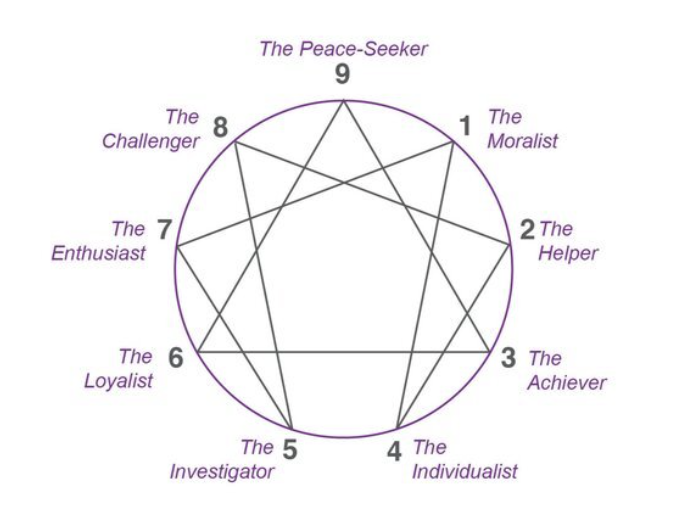
[05:20] Overview of the three triads
[08:00] Competency: Types 1, 3, 5
[12:50] Emotional Realness: Types 4, 6, 8
[16:30] Positive Outlook: Types 2, 7, 9
[19:40] How each Harmonic becomes distorted at lower Levels of Consciousness
[20:40] The role of faith and positivity in conflict resolution
[27:10] Using Competency to build accountability and structural methods
[30:50] Sequencing Harmonics for a virtuous conflict resolution cycle
[34:50] Understanding the two phases of conflict escalation and de-escalation
[38:20] Moving from the ego to the self
Quotes
"For the resolution of any conflict you need…the energy of all the three triads. If you don't have one of the three, the conflict is left unresolved on some level." -Rasanath
“All three of these are inherently good and needed for resolving conflict, but when we approach with our tinted lens, we just butcher what the actual Harmonic is about, and we make it about me. Not the real me, but my ego, selfishly.” -Hari Prasada
“De-escalation is so important in order to really make good headway in a relationship and navigate conflict. So we have to see how the conflict is escalating, and we have to try to de-escalate or mitigate that and create harmony in that way.” -Rasanath
"While we're seeking harmony through our Harmonics, we should never underestimate how the ego creates disharmony even within the Harmonic." -Hari Prasada
"The foundation of spiritual life is being able to recognize that every person, even the person that I have the deepest conflict with, is actually spirit." -Rasanath
Episode Transcript
-
Michael: Hello everyone and hello Hari and Rasanath, and today we're gonna be getting into what I would consider one of the most underrated and underutilized frameworks of the Enneagram, and that is the harmonics. This is also a dimension of the Enneagram that I personally have been extremely excited about, and you guys both know this because.
When we were thinking about who would guide each of the topics, whether it be myself or Vipin, I called the harmonics episode. So I'm very excited that we're, we're here today. Hari, could you get us started please? By sharing what is the definition of the harmonics of the Enneagram?
Hari Prasada: Sure. Thank you.
The harmonics are the different approaches to conflict. So there are three triads, triads meaning consisting of three different Enneagram types that then creates nine types. The Enneagram framework often works with these interesting triads. The harmonics is one of them, and it is based on a shared pattern of approach to conflict.
So how each type. Approaches conflict is similar to two other types and also distinct within that harmonic.
Michael: What is the connection to the word harmonic used outside of the Enneagram, and why do we use this particular word to describe this dimension here?
Hari Prasada: So Don and Russ have really discovered this incredible piece of the Enneagram as they've discovered.
Many incredible pieces of the Enneagram and they chose the word harmonic to show how each type is seeking harmony and is also contributing to disharmony. So the harmonic, I was relating to it from a musical standpoint that I remember when I was playing guitar and I, I had to learn different harmonics, their frequency patterns.
That move at different pitches and they create a resonance. So when one is situated in one harmonic, there's a frequency resonance. And when one is situated in another harmonic, there's a different frequency resonance, just like when you're playing music and the tonal vibration creates a resonance. But if somebody is creating a different.
Tonal vibration and another pitch, it doesn't match. It's a very interesting thing. So we have these harmonics in our psyche as the Enneagram reveals, and they operate at different frequencies. From other people. But then the temptation is to think, well, I need to find people of my frequency.
No, that is not the answer because even within our frequency, there are so many things that are getting in the way of true harmony. So while we're seeking harmony through our harmonics, we should never underestimate how the ego creates disharmony even within the harmonic. And we'll see how that plays out.
Michael: Is there anything you would share about the value of understanding this dimension of the harmonics?
Rasanath: I think for the resolution of any conflict you need, and we'll talk more about this, you'll need the energy of all the three triads and then you don't have one of the three. Then the conflict is actually.
Left unresolved on some level. So for me, what has been very important is to understand all the three harmonics and then try to consciously bring them into any conflict situation to willingly enter even those that are not natural for me, so that the conflict can then be truly resolved. That for me is the biggest advantage that you gain by understanding the harmonies.
Michael: Excellent. So you are wetting all of our appetites. So let us dive in. What are the three harmonic groups and how does each of these groups respond differently to conflict?
Rasanath: So the three harmonics are competency, emotional, realness, and positive outlook. So competency is when we are in a conflict. The idea is that we have to agree to certain conditions for the conflict to resolve.
So the types that fall in the competency bucket, the competency harmonic, are all types that orient towards something to do with agreements and rules. There have to be rules that have to be some agreements for this to get resolved. The emotional realness, harmonic. Is, as the name suggests, that I'm very direct.
I have to put all my emotional cards on the table for the conflict to be resolved. So we have to be very direct about our emotions, The positive outlook is we have to emphasize the positive and minimize the negative. For a conflict to be resolved. My orientation is I highlight the positives and I minimize the negatives.
Michael: Okay. So each of us, depending on our type, will fall into one of the harmonics and tend to neglect the other two.
Rasanath: Yes. When we do go down the levels of consciousness is where we become very narrowly focused on our natural resolution style while simultaneously keeping out the other two.
Hari Prasada: And we distort our own style. It's not that we become really expert in our way of resolving conflict. It's we distort it, and we'll speak more about that. So there's a nobility to each of these approaches, but in our fixation, we actually undermine the nobility of the very thing that is inherently there to help us.
Michael: So when we are in lower levels of consciousness, when we're in more of a controlling way of being, we tend to neglect at least one of the other harmonics and also become selfish in how we employ our own harmonic.
And when we are at higher levels of consciousness, we become more free and flexible, and most importantly. Selfless in that we're thinking about what's best for the other person. How can I serve the other person and really serve the situation at large?
Hari Prasada: Yes. And we mostly lean on our harmonic that comes from our type and expect others to do the same.
Michael: Okay. Very helpful. So let us get into the types that make up each of the harmonics and let's start with the competency Harmonic please.
Hari Prasada: Type one is the first type in the competency harmonic.
And remember, this is about structure and logic. There's gotta be a logical way to get through this conflict, and we make agreements based on that logic. That's what competency is about. So for the one, it's. I better damn well live up to my own structures and agreements so that I can be good enough to pin you down so that you adhere to them as well.
You must adhere to them. And if I'm not setting the example, oh, I'm so bad. I'm so bad. I'm so bad. So I will live up to these things. Come hell or high water and damn it. So will you. That's the one's relationship with competency. Then we come to the three, but I will come back to the three after the middle one is trickiest in all of the harmonics, so I will go to the five first.
So the one is the Moralist five, the investigator for the fives. I really don't want any agreements. I want us to agree that we don't have to agree to anything. I need you to agree to that because if you don't agree to it, then you might come to me with things that I don't want to deal with. And the whole thing about the five is wanting to be free of other people's expectations because people are, number one, an obstacle to my gaining knowledge.
They disturbed me. They have emotions, they have things that get in the way of my pure pursuit of knowledge. So I think, and number two, then tying to the emotions piece of this, I don't know what to do with my own emotions. I certainly don't know what to do with yours. So can we just get 'em out of the picture?
Can we just sign on the dotted line? That's not gonna be there. Please don't come to me with. Your expectations and definitely not your emotions. so let's agree. Please. That's the five's relationship with competency. The three in the center of those two. Plays both sides.
The three is thinking, well, we need structures in order to resolve a conflict. So I'll create the expectations in just such a way that you'll agree to them, and I will find every loophole that I need. For me to come out on top in any conflict, I will always figure out exactly what rules can be bent, what can be broken, what you need to adhere to, what I don't necessarily need to adhere to.
I'll adhere to them if it serves me, if it doesn't. No problem, no problem. You just play by my rules. So I play both sides and it's very interesting for the three that is their relationship with the competency harmonic, the achiever, the three, the achiever.
Rasanath: I just wanted to underscore how
For all the three types that we just spoke about, I just become fixated on something. So for the one, my need for integrity and alignment makes me very fanatical about the rules because that's the only way we are going to come to any sort of agreement, right? For the five, the need to actually step back and analyze, to be able to free see freely and think.
I have to be minimally in agreement with any rules. Otherwise, they will actually not help me think freely for the three. At that point, it's efficiency. So what will very efficiently get me the outcome that I want.
Michael: Efficiency and winning. And winning.
Rasanath: Winning. Yes. Yes. So efficiency towards getting the goal that I want, right?
Which is threes will always say, well, you know, it depends. Let's see how they work. There will always be a clause where I'm actually letting myself I, I don't want to tie myself too much to something because I may realize that this is not working to meet my goal. So it's like right from the start, I want you to head here, but then I will just leave myself the freedom to pivot
Hari Prasada: I'm measuring your adherence, but I'm not so much thinking about mine unless.
I'm afraid that you're gonna be measuring my adherence, in which case I have all of the numbers. I can figure it out.
Michael: Let's go to the emotional realness harmonic,
Rasanath: the emotional realness triad. Begin with the type four, and it's obvious as we know about the type four Emotions are everything for me and for the type four.
The way the emotions express themselves, especially when they go down the levels of consciousness, is, well, do you really get everything that is happening to me at this point? I need to put all my cards on the table because without getting the understanding and making sure that you are emotionally real, there is no real resolution here.
what happens here is that in the process of becoming emotionally real. The four tends to play the victim, and there is also a sense that, do you really want to understand me? You know, because if we are not going to get there, then this conflict can never really be resolved for the type eight, the same thing, emotional realness, but the eights flavor of emotional realness is different than the four where it's.
I'm going to tell you very straight what you need to do because that's just what I feel. So this is where you get the more parenting bossy style where I'll just basically say, I don't like the way you dress. I just need it to be emotionally real with that, and I want you to be emotionally real too. But it has a way where emotional realness becomes akin to, I will just say whatever I want and deal with it.
The six, which is the middle of the four and the eight, and this triad, it has this relationship where I can be like the four, where I will tell you I'm seeking help. I'm telling you how challenging things are, and in the same way, I will also behave. Similar to the eight where it's like, let me tell you what needs to be done, because if we do what needs to be done, what I think needs to be done, then everything will be resolved.
So it's sort of doing a little bit of both
Hari Prasada: For the individualist is wanting the attention and to be understood like, please, no, I'm being emotionally real. You have to deal with that. And the eight, the Challenger is saying, I'm being emotionally real. I'm gonna tell you what's what.
Now you deal with that. And the six, the loyalist. In the middle is playing one and then playing the other, and then playing one, playing the other. And you can't figure out which side is gonna come out, the child or the parent in the same conversation. It can happen like that because I don't really trust where you're coming from.
We gotta get your cards out on the table. I'm going to give you something of mine, but what are you holding in? Uh, I gotta get to it and then you should help me.
Rasanath: For the sixth, I'm also not sure if I can put all my cards on the table because I'm afraid if I put all my cards on the table, then I can be taken advantage of.
So I put my cards on the table and then I would draw them. And then I want to make sure that you are putting all your cards on the table, but I'm not sure if you are putting all your cards on the table. So it gets pretty confusing to deal with.
Hari Prasada: The fluctuation is, here's how you can help me. Oh, I don't know how you can help me, but just understand and then here, let me help you.
This is what you need to know. Let me help you. Right? And so it, it goes back and forth about vacillating like that,
and
Hari Prasada: the
final
Michael: harmonic triad, the positive outlook.
Hari Prasada: First type in positive outlook, which is about seeing things and investing in the good, really seeing the potential. Everything could be so nice if we just believed in each other, believed in the relationship.
The first type here is the type two, the two. The helper relates to this harmonic. By saying, oh, you're so wonderful. You're so good. We don't have to have any conflict around things. I can be there for you. Whatever you need, I can take care of it. Positive for the nine, the peace seeker is well. Actually, interestingly, this one is not in the middle.
This one is the trickier, one of the three, and it's not in the middle. So I'll wait for the nine. The seven is saying the seven is the enthusiast. Okay, look, I've got all these needs that are not being met, but it's fine. It's fine. Like I'll be happy. I'll find my own way of meeting my needs. You be happy with your thing.
Just leave me alone. Let me be free. Let me be happy. Don't hit me with any conflict. I'm happy you be happy. All good. Very positive. Yes. Now, the nine, the peace seeker says, okay, I don't have needs. You don't have to have needs. You're choosing to have needs, which you don't need. Neither of us need to have needs.
What is the need for them? They're just creating conflict. It's not peaceful. I don't want them. So you have to give up your needs. I'm already giving up my own. Which, by the way, I'm not, because this is indicating my needs, need for peace being the primary driver, right? But no, no, no. I don't need peace. I just naturally create peace.
Everything is peaceful if you just follow what I'm saying. So no need, no need, and I minimize all of your problems. I minimize all of my problems and ah, positive, positive, positive, everything is really good. The relationship's great.
Michael: Okay, I love it. So we have competency, positive outlook, and emotional realness.
And I think one of the wonderful and also complex parts of this is that when you look at those three different ways of approaching conflict, at first glance you think, this is great. This is so, so positive. This is exactly what is needed. Who doesn't want emotional realness and competency and positivity.
And then as you've described, each of these nine types just now as we've gone around, it gets distorted, really distorted. So could you say a word about how do we resolve that tension?
Hari Prasada: Well, it's tinted by the lens of consciousness. So if we approach it in a pure way, aligned with who we actually are, our true self, then these things are beautiful and.
There's no question about it. All three of these are inherently good and needed for resolving conflict, but when we approach with our tinted lens, we just butcher what the actual harmonic is about, and we make it about me, not the real me, but my ego, selfishly, that's the problem.
The harmonic is not the problem. The type, the personality is not the problem. It's the consciousness that dictates the approach. In this case, the approach to conflict, it's not made negative by the harmonic. It's made negative by the consciousness with which we employ the harmonic.
Michael: And what happens when we neglect the other harmonics?
What are we missing out on as a result of that?
Rasanath: For any conflict to be resolved, you need to have a positive sense for the relationship. You need to feel deep down that I want for us to be on the good side,
Hari Prasada: and I have faith that we can be, and I'm leading with that faith and the relationship and the goodness of the other.
Rasanath: So without the possibility. Why are you even investing really in it? Right? So even in the conflict, and this is the thing, one of the things that we talk about is to always come into the conflict with hope. What are you genuinely hoping for at the end? And that hope has to be real. There has to be genuine possibility even when you're working through something.
Hari Prasada: Based on what you've seen of the relationship, based on the capacity of the relationship to be strong.
Michael: This is making me think of when we do mediations with people in our coaching work, and this can be couples work in romantic relationships. This can be co-founders who have started a company together but are having problems.
One of the first questions that we always ask. Either in session or even ahead of time for them to reflect on is what is working about this relationship, what is already going well? And even if it feels like nothing is going well, there's usually something that can be found. And even if nothing can be found, there was a reason why this relationship started in the first place.
There is some origin story of positivity around the relationship and that can serve as such a strong foundation to any sort of conflict resolution that needs to happen.
Rasanath: the tricky thing about positivity is positivity is not so separated from emotional realness.
If positivity is for positivity's sake, without it, you actually feeling the positive emotional realness around it, then you are just acting out the positivity. So that's the important thing to understand. Again, it's based on the levels of consciousness here. It has to be positive emotional, to be honest.
Michael: I really appreciated that connection to emotional realness and your point about faith, about having faith, because if there's not even a smidgen of faith in what's the point, nothing will get accomplished.
So we need that.
Hari Prasada: Yeah, exactly.
Rasanath: And ultimately, conflict resolution is. For the people involved in it who are genuinely fighting for the relationship. It's not just that they're fighting for what they want, they're actually fighting for the relationship, for the relationship itself, and you can't if you don't have faith in it.
Now, when you come to emotional realness, when we talked about the emotional realness types here four, six, and eight, their approach to real emotional realness and how they express themselves. Is devoid of the positivity. They think that being emotionally real means take a deep dive into the negative.
Let's just jump in. Let's just tell how dark this thing is, right? And there is an unconscious bias towards the negativity, and that's what I categorize as emotional realness. Whereas anything that's positive is dismissed as shallow. They all do that in some way, right? There is a place, there is a point to it Many times their experience of positivity is just external, superficial positivity, which is why the pressure on talking about what is not going well, the pressure just grows, and then when it comes out, it's just dark.
But the important thing to understand about emotional realness, emotional realness is not just about the dark stuff. And yes, it's important. It's very important for us to talk genuinely about what I'm experiencing, the difficulty that I'm experiencing without being able to talk about the difficulty emotionally being vulnerable, which is what real emotional realness is.
Real emotional realness is about both people bringing their vulnerability. and if they don't bring their vulnerability, then they're not real that way, then you're not really getting to the bottom of what's wrong in the relationship. Ultimately, we are all affected on the emotional level, and if we are not, we all feel vulnerable in the conflict, and when we can't genuinely speak about our vulnerability in a conflict, then there is no scope of understanding.
What the other person is going through, without which the conflict will never get resolved.
Hari Prasada: Emotional realness is just about what's bothering you.
It's not that we should slant completely toward the negative by any means. That would be terrible, but some. Focus here on the negative is absolutely crucial. Otherwise, what's getting me down can never be rectified. We can never uplift because we haven't found the cause and treated it It doesn't work if you don't get at what's not working and what's not working can be.
Too stark. It can be too triggering and upsetting in language. But for our understanding, we wanna see what is bothering us, what is hurting inside? What is the mess that we have to wade through? And this Christian pastor, Andy Stanley, who inspires us very much, he says, we walk toward the messes, we walk toward the messes.
So needed. This is emotional realness, being courageous enough. Truly, it requires a courage. Being courageous enough to say, I'm not going to hide from this. I'm going to look within and I'm going to look at what you're going through. I'm going to let you look at what's within me, and we're gonna clean up the mess.
We're gonna sort it out. So again, it ties back to positive outlook. It's like, it can be done, we can do this.
Michael: So I've been on the edge of my seat waiting for the connection to competency here because you, you both did such a beautiful job of connecting emotional realness and positive outlook, and how those two things need to both be there.
And so what is now the missing piece of competency?
Hari Prasada: Competency is actually the connection between them because it's the way of brokering. Between what is going so well and creating so much hope and what requires examination to work through and uplift. So then we have to create some method to the madness.
We have to figure out how do we approach this with sound reason, and this will prevent future conflicts. This will restore. The level of contentment and harmony, and it will prevent further dynamics from diverging, creating disharmony, disunity that is necessary. This is the nuts and bolts. How are we gonna do this?
Rasanath: I also look at the competency piece as the accountability in the relationship because when there is no accountability. Then there is no real agreement. Accountability is actually what creates the agreement in relationship. We are accountable to follow through. We are accountable to show up in certain ways so that we can move through the conflict.
There is some basic level of understanding and agreement, and without that accountability, we will not have. Any proper follow through, it's accountability that is not devoid of the heart. And what we see in the types one, three, and five, you'll see the rules of engagement are actually devoid of the heart.
It's trying to make agreements in a way when the heart is not really present in the agreement. And so that's what we call transactionality when we experience transactionality. In a relationship, the relationship loses its forward. So when we think about competency, when we don't engage with competency in the, in the right way, it just creates mere transactionality.
And when we do engage with it in a very positive way from the heart, then it creates proper accountability in the relationship, which is required for the resolution of any conflict.
Hari Prasada: There's a how piece here. Right. That's so, so, so important. But it has to be full-bodied, full-hearted. It has to fuse together the positive and the empathy for what is creating difficulty in the relationship.
Rasanath: We can be very emotionally real, but So what are the next steps is the question when we naturally come to, so what are the next step? I have been in mediation meetings where when we ask what are the next steps after having spoken about what is, you know, we go to the space of being as raw as possible and just explaining what is wrong.
You just see silence on both sides, and that can be quite demotivating because when both sides are not ready to say, okay, what are the next steps that we will take to actually move this forward? What do we agree to? So that we can actually move this forward. Same thing, it just becomes a dumping session.
I may feel some sense of belief that I have, like, okay, let it all out. But there is just no real movement, right? So that's why that accountability is the competency piece is so critical to move forward.
Hari Prasada: There's also a natural sequencing to these harmonics. First, you want to affirm the relationship positive outlook.
Then you want to see, okay, what's affecting you And create empathy, and then you wanna see what to do about it. How can we make sure that we are aligned?
Rasanath: And the closure, it has to come back. It has to come back again to positive outlook. So it's like the full circle. It's cyclical.
Hari Prasada: A virtuous cycle. We're never not emotionally real.
We're never not affirming the relationship with a positive outlook, and we're never not in the mode of trying to really serve each other in concrete ways. I
Michael: knew I was excited for this conversation, but I wasn't a hundred percent sure why, but now I know why, because as we've aligned over the last few minutes on this, and particularly that image of the virtuous cycle and how each of these feed off each other, so, so, so helpful because completely independent of any understanding of.
How the harmonics work in the Enneagram and, and the specific types and which harmonic. I mean, this is really a crash course in conflict resolution and relationships overall. And when we see that and we feel the inspiration to actually bring all of these three into anything that we might be dealing with in our lives, any relationships that are important to us or any difficulties that we might be having in any of our relationships, things can really take off in a very beautiful way.
Hari Prasada: Absolutely. And in fact, even if we just employ one of these very sincerely, it will do a lot if you just create empathy for a person. It naturally brings more positivity into the relationship and you start to feel more freedom to act in new ways. The competency piece also, I mean, empathy, I, I chose that.
Because empathy is really, again, I can't emphasize enough the crux of everything. The greatest human need that we have is for empathy. So that's a good starting point. If you wanna start somewhere that's important, but you won't empathize if you don't see the person in the relationship positively. So you see the interdependencies here.
Empathy is not the sole domain of emotional realness. It's not the sole domain. It naturally sits. There, but it applies to everything. And if you're going to hold somebody accountable without empathy, think again. Forget it. I mean, if you're gonna say, well now you agree to this, you better do this. I'll do my part, but you better do yours.
That's not wholesome. That doesn't allow a relationship to flourish. So if you do any one of these sincerely. It starts to naturally usher in more of the other missing pieces, especially if we want that.
Rasanath: It's also important to recognize as we think about the competency and the accountability, as Hari Psad mentioned, you can get to the right agreements if you haven't been emotionally real, and then then the agreements become a way of showing why this relationship shouldn't work.
The agreement is actually rigged. So that it'll fail, which means then the person who held their side of the agreement has an upper hand to basically say, listen, the problem is with you, not with me. Right? So if we can't actually get the emotional realness and the positive outlook in place, the agreements will actually be on something that is faulty.
It will fall apart.
Hari Prasada: We also have to be attentive to the way these harmonics play out in two phases. Because conflict is a matter of escalation and we have to mitigate that.
Uh, Raanana was actually just using this word, which I appreciated a few days ago. Deescalation is so important in order to really. Make good headway in a relationship and navigating conflict. So we have to see how the conflict is getting escalated, and we have to try to deescalate or mitigate that and create harmony in that way.
So there are two phases that Don and Russ point out for the escalation of the conflict. The first phase is where they describe. We give according to our type, we give an olive branch to the other person. In other words, we make a gesture that, yes, I'm a little triggered. Maybe you're a little triggered.
Maybe we're both a little triggered, but here's my good faith. Here's my sincere show of I want things to be well. Then that becomes according to our harmonic, and when it's not met with a degree of enthusiasm that matches my expectation, then I pull out the guns. Phase two, you rejected my generous offering.
How dare you. So in phase two of the conflict, that's when things get more serious and that's when we approach. With a much greater degree of fixation than in phase one.
Michael: So we will, in our type episodes on the harmonics, get into a lot of specifics about how phase one and phase two play out for each of the types, and I really look forward to that.
Hari Prasada: Pay attention to the universal of this, that we get triggered by something or somebody else gets triggered by something and then we think we're being kind and generous.
And that is an egoic thing that we, we think, oh, I'm, it's moral superiority. I think I'm so good. Look, look at how I'm going to approach this with a lot of grace for the other. If I'm not met the way I want to be met, then watch out. This is how conflict escalates. Pay attention. Pay attention. Pay attention.
Michael: Yes. We like to pat ourselves on the bat for offering an olive branch. Even the term itself, there's a sense of nobility in the term, which often comes with moral superiority.
Hari Prasada: Oh yeah.
Rasanath: It's clear that. If I have to dismiss the other person, I have to feel morally justified for it. Mm-hmm. Mm-hmm. I can't do it without actually feeling morally justified for it.
So the unconscious need when I extend the olive branch is to feel justified for phase two. If it works, if somebody takes the branch, then I get what I need. If somebody doesn't take the branch, then I'm justified to do to them. Because they deserve it.
Hari Prasada: Yeah, I give myself carte blanche. Once I feel rejected, that's it. Now I can express myself the way that I want to, however the hell I want to. So there is a kind of movement and consciousness here. Phase one is typically more controlling. Phase two can dip towards or into destructive depending on the situation.
Michael: So in closing, how does understanding this dimension of the harmonics help us spiritually as we move from the ego to the self?
Rasanath: The foundation of, uh, spiritual life is being able to recognize that every person, even the person that I have the deepest conflict with, is actually spirit.
And without that recognition, without actually learning how to live, that I'm spirit and that person's spirit too. It's impossible to talk about spiritual life.
There has to be a fundamental sense of respect that the other person is a soul, and it's very easy to lose that when we have developed a sense of moral superiority. In fact, what breaks, what fundamentally snaps when we have model superiority is we can't see the equality.
We can't see that we are both spirit souls and uh, then there is just no question of spiritual consciousness from that place. So the harmonics actually helps us really move towards a spiritually very impactful relationship. it helps us preserve the fundamental respect that someone is spirit and.
That respect also helps us recognize that we are spiritual beings.
Hari Prasada: The most damaging thing you can do in your spiritual life is offend great spiritualists. So this is the protection on the path that we understand our own fixations. We have empathy for those of others. We have insight to work with so that we can have harmonious, thriving relationships because spiritual relationships, when they are degraded, they cause the greatest harm on the path by far.
Similarly. When they are fueled, when they're poured into, they cause the greatest help, the greatest power. Four one's advancement to self-realization, to inhabiting the real self, the soul. So this is a wonderful way of understanding what is going on in me and what is going on inside of other people, and moving accordingly towards harmony, which is desperately needed.
Michael: Beautiful. Well, thank you both for this conversation. I'm always amazed at how. Enneagram is always so much bigger than the Enneagram, and you too both do a phenomenal job at making that be true for all of us who get to listen
So thank you very much for this conversation and for all your wisdom as always.
Hari Prasada: That means a lot. That's all we would want is to be able to do justice to our gurus and offer everyone the very best that we can to make it most valuable for you.
Michael: And thank you everyone for listening.
Hari Prasada: Thank you. And thank you for guiding us so expertly, Michael.
*This is an automated transcript and may contain minor errors.
Continue Exploring the Enneagram
Browse all Enneagram podcast episodes
Understand the Enneagram framework — clear breakdowns of the Types and how the system works
Join our live Enneagram community, Enneagram Library Live, hosted by the Upbuild team.
Take the two-day Enneagram 101 workshop