
The Upbuild Enneagram Library
Falling in Love with Every Enneagram Type
Subscribe on: Apple Podcasts, Spotify, YouTube, or wherever you get your podcasts

Episode Description
How do we fall in love with the Enneagram Types? In the same way we fall in love with people in real life: by understanding both their gifts and their suffering.
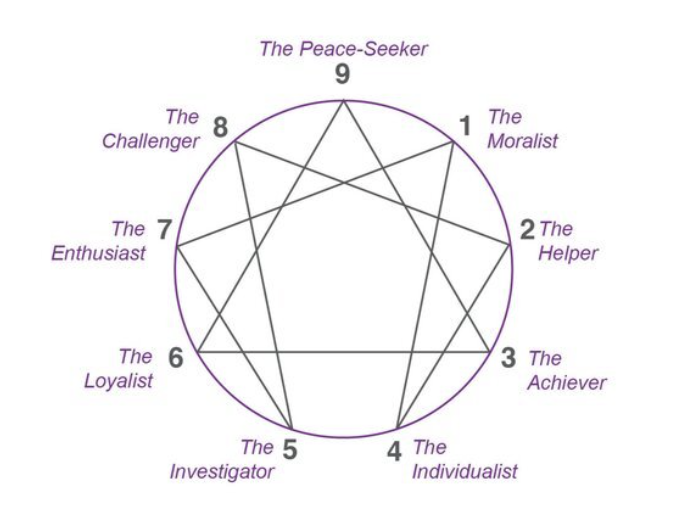
In this episode, Michael, Hari Prasada, and Rasanath explore what it truly means to fall in love with every Enneagram Type. They introduce the idea of “access points,” the doorways that allow us to move beyond intellectual understanding and into genuine compassion for each Type’s lived experience. Moving through all nine Types, they highlight what makes each one uniquely and deeply lovable with the pain they carry. From the Type 1’s longing for purity to the Type 9’s desire for harmony, the conversation reveals how every Type conveys an attempt to cope with their distinct core wounds in an ego-driven world that constantly triggers them. The episode closes with a reflection on why authentic Enneagram work must be rooted in love, and how falling in love with the Types supports spiritual growth, compassion, and our capacity to serve others more fully.
Podcast Hosts: Michael, Hari Prasada Das and Rasanath Das
Listen to this episode on Apple, Spotify, or your preferred podcast platform
Highlights
[01:15] What’s important about falling in love with the Enneagram Types
[02:40] Seeing both the gifts and suffering of every Type
[03:30] Opening your heart as the foundation of Enneagram work
[05:00] Access points
[08:20] Type 1
[13:30] Type 2
[20:00] Type 3
[26:10] Type 4
[31:10] Type 5
[36:30] Type 6
[42:10] Type 7
[45:10] Type 8
[52:10] Type 9
[58:30] Closing thoughts
Quotes
“We want to see the gifts of the Type, and we want to be able to feel for what they're going through…and that will naturally make us fall in love…and then anything we do using the Enneagram will be so rich and beneficial if we have that love.” -Hari Prasada
“We have to be able to really think of what it is like to be this Type. And if it is like an interesting science project [in other words, if it’s something we analyze rather than feel], it won't be enough.” -Hari Prasada
“We want to be able to perceive the divine reality, and the Enneagram is coming from mystical traditions to help us perceive that divine reality.” -Hari Prasada
“Every Enneagram Type struggles in their own unique ways in being able to connect to their heart.” -Rasanath
“If we don't fall in love with all the different species of humans…then we can't serve them. -Hari Prasada
Episode Transcript
-
This is an automated transcript and may contain minor errors.
Michael: Hello everyone. And hello, Hari Prasada and Rasanath. This is Michael Sloyer. We're back for another Enneagram episode today, and today we're gonna be talking about falling in love with each type, and Hari Prasada. It would be great if you could get us started. Why are we recording an episode on falling in love with Enneagram types?
Hari Prasada: This goes back to our experience, RAAT and myself, when we were being trained at the Enneagram Institute by Don Riso and Russ Hudson. And I specifically was touched by something that Russ said, which was that he made a pact with himself that he wouldn't teach any type on the Enneagram, that he hadn't fallen in love with.
And immediately when he said it, I felt, yes, I will also take on that pact. Of course, at that time I wasn't even really teaching so much, but that entered my heart in a way that when we do this work, it has to come from that place, that it is only done out of love. And as much as we are poking fun, and we are also speaking about very, very serious things that are unattractive to the world, it should always be in that spirit where I understand the potential of the type.
I understand what they're meant for, and I understand their struggle and how they're not able to manifest what it is that they actually deep, deep, deep down feel called. To manifest in their lives and for the benefit of others. And I recognized especially
two things are important here, that we wanna see the gifts of the type, and we want to be able to feel for what they're going through, how they're suffering, and that will naturally make us fall in love with the types.
And then anything we do using the Enneagram will be so rich and beneficial if we have that love, that genuine love that comes from real strong understanding and commitment to serve.
Michael: Beautiful. Thank you for that opening. Ana, what would you share about falling in love with the types?
Rasanath: I think the most significant part of falling in love with each type for me was to have the opening of my own heart.
Every Enneagram type struggles in their own unique ways in terms of being able to connect to their own heart. For me, really starting to get access points to how every type has gifts that I wish I could embody more. And every type has suffering that I know I experience in some way makes every type so much more relatable.
But also to do the work to find those access points really help in opening my own heart. So this is also an important work for us as individuals. Whatever our Enneagram type might be to work on our own connection from our heart to the different types.
Hari Prasada: To do that, we really have to be able to get into their shoes,
We have to be able to really think of what is it like to be this type? And if it is like an interesting science project, it won't be enough. You have to actually go there And that can be quite challenging. But it is absolutely possible for all of us.
And with respect to all of the types, because the types are so universal Types are just energies and all nine of those energies live in all of us. We have to do the work to find that part of us that can relate. And I would give the example of the type that feels least relatable to most people, except that type would be the five, the investigator.
So as Russ would say, they feel like they were born on the wrong planet. Like they just don't fit into the human race. And things are so different for them. And therefore it's very different for people in terms of being able to relate to them. And yet when you really get down to it. You will find that you have that same thing going on in you, but it's maybe manifesting in a different way.
It's maybe not given so much voice or so much mind share, but it is there. And the last thing I would say on this, just to put a fine point on it, is with, again, the example of the five, you may not be able to relate to how much their intent on studying bugs. Not that all fives are intent on studying bugs, but let's say this is a big thing for some fives, and most fives can relate to it.
You may not be able to relate to how much they wanna see the thorax of the bug that may not, you know, light you up, but you can relate. Two, wanting to be an expert in something and wanting to really master and understand something and for that to not be just something that everybody else has mastered and understood.
So the specific manifestation of it and the flavor of it based on the energy of the type, may not match how you feel or see things, but if you trace it back to where it's coming from, you will find things. So the access points are there and they're countless.
Michael: So we just wrapped up a five month Enneagram training course and on our final weekend, this is one of the topics that we had spoken about and auth, you introduced this term access points, which became a profound term for every participant who was there that weekend because it was such a clear way to really get into the type, and it was a clear call to action to really understand what is my personal way that I'm going to be able to understand and relate to, and really get into the suffering of the type, and therefore have a way to fall in love with the hype.
So I appreciate you bringing it back here, and then Hari with the specific example with the five of showing us how an access point can actually work. The other thing I wanted to bring up here was what our partner Vipin shared when we were talking about this topic originally a few weeks ago. He said, well.
How do we fall in love with the types we fall in love with the types, just in the same way that we would fall in love with any person that we meet in this world. By really understanding their gifts, as you both have said, and also understanding their suffering and what they're going through.
Okay, let us get into it then. So we will start, as we always do with the type one.
Rasanath: When I think about the type one, what comes to my heart as an access point that I wish I actually embodied more of is this deep desire for purity, wanting to be pure, wanting to be free from anything that corrupts me.
And when we think about the heart, a pure heart, when we see someone who's actually pure, who is showing up as very, very straightforward and honest, it is just very natural that we fall, we, we fall in love with somebody who is extremely honest and who genuinely cares about doing the right thing.
And you see them sincerely striving to do it. My dad has always been an example of the type one who very genuinely cared to do the right thing, and you see that they, they get bothered when people don't take certain things seriously. They get bothered when they see that people neglect things that eventually end up affecting other people.
Even when they have opportunities that the world may deem as well, everybody does this. The question that they will ask themselves is, is this morally the right thing to do? And even when somebody else is doing it, or most people in their environment are doing it, they will not do it
When I think about my dad, you know, that's his entire life, straight as an arrow. It's just natural that when you come across those qualities, it is impossible not to fall in love with someone who is pure and honest and very sincere. Even when nobody's watching
Michael: what you shared about being bothered when other people neglect things, that is something that we can all relate to.
We all have had some experience of just feeling like, why does that person not care? Does not everyone else see what's going on here? And the ones they live their whole life like that.
Rasanath: Yes. Also, the care here is about the universal principles. I feel bothered when people throw plastic on the ground. For some of us, we maybe just very, very blind to that.
I feel bothered when I see plastic on the ground as a type one, because it's littering the earth. There are principles of cleanliness, of sustainability. It's not PR talk. I genuinely care about it and it bothers me, and here is the spirit of botheration. It doesn't take much to be a little attentive.
Right, and what bothers me is the sheer carelessness around it. How can we live our life like this when it significantly affects the world around us?
Michael: What's something about the deep suffering that the ones experience that we should be aware of?
Rasanath: It's connected to what we were just talking about. The suffering for.
The one is the striving for purity is so powerful when you see someone so sincerely striving for purity, even when they haven't gotten there. You know, you feel for the person, you feel their sincerity then genuinely touches your heart. But what happens to the one is the, the purity just seems so elusive at a certain point.
It just feels like it's such a pristine thing to strive for, and perhaps I will never, ever be able to get to that place. I see faults in myself. I'm doing my best to get rid of them. But they just keep, like they're sticky. I just never seemed to reach a place where I feel like I'm free from them forever.
And then on top of that, I see the stickiness in the world outside of myself too. And it bothers me because I feel like I will not be able to make any changes to the world outside if I can get rid of that stickiness inside of myself. So this is a double whammy. I see the impurity in myself and I see the impurity outside.
The only way to clean the outside, and this is very true for the ones they expect from themselves, what they want the world to do. And they also feel the burden that if I am not pure, how will I ever clean up the world? And my own purity is so elusive. So what do I do about this? I'm just surrounded by impurity.
I just feel horribly corrupted living in this world, which is within and without impure. Right? And this leads to a lot of hopelessness, despair where I'm trying so hard, right? I'm trying so hard. I tire myself out by how hard I'm trying. And then I see that people just don't care. Like they're just living their life.
And that despair and hopelessness about will we ever reach a pristine place, turns into resentment. That's the suffering of the one. And we, again, I think this is very universally relatable.
Michael: Thank you. Shall we move to the type two,
Hari Prasada: the two? They are full of this incredible warmth that is so inviting for the entire world.
It's like they never run out of it. It's just always there wanting to bring people in to this space where they feel nurtured, cared for, loved, and they just feel like it is their contribution to make others feel what is the greatest need in all living beings to love and be loved. They want to provide that space for everybody and especially for certain people, much more so.
So that is also a tall order, and they do it very naturally, but it's a lot and they don't get the reciprocation. And that leaves them feeling sober, wrapped, and so empty.
And like I am not good enough. I am inadequate because here I'm supposed to be bringing love to the world, but I don't have enough of it. And so it's leaving others cold, and that's leaving me cold, and I don't know what to do and I feel so terribly alone. So all the types feel a kind of existential loneliness that is very heavy for the two.
It's that no matter what I do, I'll never be loving enough. And so I will never be lovable enough, and that is horrific. They're doing things all the time for people that go unnoticed or uncared about, and even when they are cared about, it's never quite the spark of connection that they're really longing for.
It's never enough. So therefore, I'm never enough. And I think about people in my life who are twos, like my mom, who she was always wanting to be there for me in every way as any mother would be. But the way that she was was so unique. Like she knew all the names of all the people in my life throughout my life, and I was marveling.
And she knew about them, like she had a feel for every single person and still does. She has a feel for everybody. And I remember in college. Calling her up, like I would call my friend to share certain things that I was going through or to have a warm, loving voice, and I don't think too many of my friends were doing things.
It was special because it went beyond the role of mother. It was something like, I am unconditionally with you in your world, for you, behind you, cheerleading you like nobody else, and without entitlement around it. It was so natural and so giving so beautiful and that continues to be the case, it's, it's remarkable.
I'm also thinking of. A dear friend Dina Bundu, who he developed this reputation for being like sunshine because everywhere he go he's just has radiant smile and he uplifts people without even having to say a word.
He's just the kindest, sweetest person, and it's not easy to walk around the world like that. And, uh, both of them have been very vulnerable with me sharing the struggles and what it's like to spread themselves so thin and to not know how to take care of their own needs and how to deal with lack of reciprocation and societal expectation.
Michael: Thank you for that. You were talking about how their love is often uncared for or not noticed. It's also can be even more extreme than that where it's actually rejected because people feel like it's too much, it's too intense, your emotions are too big for me.
And so that can be just so intense for the two to be in the receiving end of that because my whole identity is about feeling that intimacy and connectedness and so when somebody not only doesn't appreciate but actively rejects what I'm putting out there, it can feel like a, a total rejection of me as a person.
Hari Prasada: Absolutely. Going back to the example of the five. This is the type that practically nobody feels like they can relate to except the fives. Then the fives feel like, yes, this is the only sensible type. It's not always that way, but this can be a a, a trend with the twos. There's a similar dynamic in a very different way where it's like everybody has a need for personal space.
Everybody has a need for personal space except the twos, and they feel so rejected that you feel like you need space. What is that about? I don't get it. I don't relate. I don't get it. So they take it as a personal rejection and sometimes it is a personal rejection, which makes matters worse because they do come on so strong and they're so there with you that.
We can feel like, well, I also need a little me time. I need a little space. Like physically, emotionally, everything. So it's a tough dynamic. It's very difficult.
Michael: The thing I'm getting from what you're sharing is this idea of the access point. where one of the possible access points being for the two, like we've all been in situations where we've wanted somebody else's love and we wanted to feel connected with them, and for whatever reason we're not able to get that.
And how painful that is. That is a common experience that the twos walk around feeling. And so we can use however that might manifest in our own life as an access point to really put ourselves in the shoes of the type two Ana, the type three please.
Rasanath: to talk about the gifts of the three threes, they naturally invest in the gifts that they have been given. When you can invest in the gifts that you have been given you can naturally use it for the benefit of the world.
And there is also a way in which I can notice the gifts of other people very quickly. Threes in one sense, have the easiest access to appreciation because, of how they can perceive value. There is a way in which when they're very open and healthy, they can actually see how every person is playing such an important role in their life and can make people genuinely feel valued.
Because that appreciation comes from the heart. The heart feels it, and when the heart conveys it, other people naturally just feel seen. It's remarkable how one of my mentors, by BU, who we know is type three. It is amazing to see him walk on the street interacting with people and you know, he can talk to a complete stranger.
I have seen this happen so many times. You talk to a complete stranger and that person will walk away feeling like, oh, I've never been seen like this before in a five minute interaction. And I see it's not a technique, it is actually the openness of the heart that really sees the true value.
It's so powerful that the other person, even if they haven't experienced themselves that way, suddenly live with a very different feeling about themselves. It's extraordinary, and when you see that happening again, it's just natural to fall in love with someone who can see you, who can genuinely see other people and teach you a new way of seeing yourself.
Michael: So Ana, you often talk about how threes are to poster children for this idea of mirroring, and they require mirroring to really be able to see themselves. What I hear you saying is they're also uniquely gifted with the ability to serve as a mirror for other people and empower them through being that mirror.
Rasanath: Absolutely. They know the function very deeply. They know how important it is, and when they are connected to their heart, they can provide it in such an incredible way because it's natural for them, right? It's not like they're striving for it. It is just very natural for them. The suffering then comes because when I struggle to connect with my own heart, I am not in touch with my value.
My heart doesn't reflect my own value, what to speak now of value of others. That doesn't mean that I don't see other people's values. What then happens is that when I see other people's value, it becomes a threat to my own. This is the izing. It's the same function. I'm still in touch with somebody else's potential.
But now because I'm not in touch with my own, I feel overshadowed and the suffering here then becomes constantly feeling like I don't have with.
And in that process, then I compensate and that compensation then results in VA glory projecting myself to be bigger than what I am who I am at the cost of feeling my own heart, where my true value rests in my own heart.
And when I stop going there because I actually deeply fear and believe that I don't have any worth, then what do I have to do in order to be worthwhile Is project. And that then becomes my suffering.
So there's this emptiness that surrounds what actually felt so full and heartfelt when I was able to mirror extremely well. Now it's the complete opposite where it's just like there's just nothing, right?
A feeling of just emptiness, like when you knock there is really no one to answer because the heart has just been buried
Michael: All types get a bad rap for different reasons. For the threes, they can get a bad rap for being competitive and deceitful, and that's certainly true at lower levels of consciousness for them.
But one of the access points to falling in love with the three is to think about what drives that competitiveness. It can often be a feeling of shame of I'm not worthy, and we all have had an experience of feeling not enough and and wanting to feel more valuable or to be seen as more valuable, and this is an experience that the threes are living with constantly and feeling the weight of not having as much value as I believe that I could have.
Rasanath: Yes. And it is such a fleeting thing for the type three, right? Uh, I can share from my own experience how it's a day-to-day suffering that I have to carry when three coaching sessions go really well, that that feeling seen to then it is not even that something doesn't go well, it's just that the next day I can't feel my own worth.
The fact that so much good happened yesterday, it's shelf life is just so short.
Michael: There's an addiction and the substance is not as much in the system anymore, and then you feel the withdrawal effects of it.
Rasanath: You just return to the emptiness. Next day when I wake up, it's like I have to search again for, okay, where am I really?
What are my hormones to this world?
it's so hard to live life every day feeling like I have to go back and prove it. Thank you,
Hari Prasada: Ari. The type four, the fours. They want to birth the unprecedented into the world, and they are always envisioning what is the unique beauty that is possible to manifest.
That comes from a deep place and helps people connect with truth. It's a lot that they ask of themselves. They are very demanding of themselves to be authentic and to find the most profound reality that is possible, and then communicate that to others so that they can experience it too, and they want to live in that heart to heart connection that is so meaningful and that is so absolutely inspiring and edifying.
So they're very devoted to this. This is what they feel called to do and to not shortchange the reality even when it's not pretty. Hardly anybody wants to go there with them. I mean, this all sounds like way too much work and not enough payoff for people. And who needs this? Is it even possible? Or is it efficient?
You know? So they feel very, very lonely in this quest and they feel also bereft that I'm not able to do all of that, and it is really taxing. And I want to connect so badly with a world that doesn't want what I'm trying to do. And I don't even know myself enough to do what I'm asking of myself. So how is this ever going to work?
And I feel so much pain. Because I feel so much as a, a soft-hearted person, I just feel so much more than any other type and nobody gets what I'm going through. So I feel really cordoned off from everybody.
And I just wish that I could get people to be honest with themselves the way that I'm trying to be honest with myself about where I'm falling short.
I want to bring humanity back to the world and I want to really have the most significant impact possible by going to the greatest depths possible. And I think of my guru Ami, he's so deep, people dunno what to do with him. He's like an anomaly on this planet.
And he sometimes thinks like that. That like people just don't know what to do with me. I'm so different.
He is very soft hearted and he feels a lot, but he's also extremely transcendental. So this is the most unique situation 'cause he is so self-realized. He's realized. Soul, at least I can say this. He wouldn't say this, but I can say this. He's realized the soul, so therefore he's above the, uh, petty struggles of this world.
And yet at the same time, he's still human and very honest and overwhelmed by all of the different demands on his time, different demands of people, the demands of the body. It's super intense, super intense, and he just is so open and honest about it and wanting other people to become authentic and saying, why are you trying to pretend?
Why are you trying to pretend? Can't you be a little authentic? Won't that do some good? What is the use of all this? Pretending so much more. I could say that he's the most lovable, and so
Michael: I will contain myself. I don't want you to contain yourself. 'cause I love when you speak about the four and when you speak about such an non swami in particular, and I feel as you were speaking about the four initially, I really felt similarly to how I felt when Rosoff was describing the one earlier.
There's such a tall ass that they have of themselves. As you said, it's intense and it's like how are you ever gonna find happiness if this is the way that you see the world and you see yourself.
Hari Prasada: Yeah. And my emotions are so heavy. They're so big.
And the drive for creativity is so intense and to like want to always do things in a way that is so unique and so captivating. It's a lot to ask. The forest care, they feel the cross they're carrying, they really feel it.
Most types we're all carrying across. Most types don't feel it very much. They have their defenses against it. The force are like, how do I get defenses? Please help.
Michael: Thank you. The type five,
Rasanath: the type five has a childlike curiosity, when I'm so wide-eyed, really wanting to understand the nature of reality, the truth about reality for so much of the world.
We just live our lives, right? And the fives are actually trying to look behind the curtain, to be honest, to see what is this about the curiosity. And so the feeling that, well, if I am a participant, then I won't be able to really understand. So what I have to do is not participate. So that I can then see is what leads them to essentially starting to isolate from the world.
But it is coming from a place of very genuine childlike curiosity and when they choose to participate while simultaneously. Trying to understand because the only way you can fully understand is if you participate. There is no other way. You can't just separate yourself. And this is the thing, I can't just understand everything by study.
I have to understand things by experience. The deepest level of understanding only lives in experience. And so the heart is a very important part of the understanding, which many times the fives don't know what to do with that because I'm so afraid that when I step into my heart, my emotions will come in the way of my objectivity, my curiosity will actually be interrupted.
My capacity to understand things will actually be interrupted when I experience emotionality. While there's some truth to it, because we all know that when people say, just let's try to be objective. And when they say, let's try to be objective, what they're saying essentially is park your emotions and don't bring them in.
The fives essentially make that their life, They just park their emotions and don't really bring them in. And with time, then everything starts to get dry because now everything is experienced through the intellect. There is no real life to it. There is no taste in it. It is just dry mulling on things, right?
And everything starts to dry up. And now when that dryness happens, I just become even more unrelatable because the realm of emotions become so foreign both to people who are interacting with me and for me in interacting with other people, which then. Confirms. Again, the fundamental notion that the five has, that I'm, I'm just an alien on this planet and I just feel more alienated.
Going back to what said, every type struggles with a certain kind of isolation. The fives feel very isolated and in that isolation then the mind just doesn't stop that. It's just this constant thinking and now it's just undirected thinking. for me, this was actually one of the glimpses of the suffering of the type five, is when you can't get your mind to stop, you can't sleep, you're just constantly thinking about something, and even when you want to stop the mind, you actually cannot stop it.
Michael: So this is one of the access points to the five?
Rasanath: Yes. Just imagining how this thing is just constantly spinning. The mind is just constantly spinning and it's undirected spinning. It's not even like there is a goal here in mind. It is just at this point, it's dry curiosity that has no real end to it,
So again, the two ways of falling in love with the type, right, what do they bring to this world? And I was speaking about the childlike curiosity. When you experience the innocent curiosity of a child, it is just very natural to fall in love with that.
You see their eyes so big and bright and they make something new happen and they come in, they, they wanna show you and say, oh look, I did this, you know, and this is how it works. Oh my God, I discovered something. There is just that excitement about life, living life like a child would. Endless curiosity, that's the heart endearing quality of the type five.
I remember walking on the streets of New York with, again, a mentor figure of mine who was a type five. The very fact that we are having this conversation today about the Enneagram is the gift of a five to us. He was the first person who introduced us to the Enneagram. This was at a time when hardly anybody knew about the Enneagram, and he had really delved into it very deeply, and they introduced it to some of the other monks in the monastery that we were about.
Harry and I were monks, and as a way of understanding the true self, and when you talk to him. You see the curiosity, When you hear him say stories, it's like a child actually telling a story. You actually experience, like you're listening to a, an innocent child telling the stories, all the details around it, and there is just so much heart in it.
Michael: Thank you.
Hari Prasada: The type six sixes are. Spent on figuring out what is their orientation in this world. The world's chaotic and it is completely shaky in every way at every moment. And they just want to figure out what's solid. What can I stand on? How can I navigate this world to be a responsible contributor, somebody who is doing things in a reliable, dependable way that supports other people.
That's what I live for, and there's a humble, dutiful nature that is so beautiful, so endearing, and so different from the kinds of heroes that we tend to glorify. They are just doing their job. What's the big deal? We give the image of the nine 11 firefighter for the creative, for the very healthy six that they would even go into a burning building with no certainty that they will ever be able to come out and not feel that they're owed anything, not feel that they did anything that was so great.
It's just somebody had to do it. So why not me? People deserve to be supported. Why should I not support them? And it's such a touching spirit, such a modest, earthy, I'm here for you without any frills, without any bells or whistles. It's really amazing. And what they suffer from is all of the obstacles to being that.
With all the types that that's really difficult. How can one actually live up? And the world is constantly showing how nothing is certain and they can't trust, and that's the thing that they're craving most. I just need to be able to trust. I need to be able to trust, I need to be able to trust, but nothing is trustworthy.
At every moment I feel like the ground could evaporate from under me, and it's a kind of visceral terror that is there. And then there are always cracks that make it look like that's going to happen any moment. There are substantiations of my fear that I'm getting all the time, and it's so heavy, and I just wish that I had an authority who could help me orient, help me navigate this world and show me what I'm meant to do responsibly for the benefit of others, that I could just follow their lead and then everything would be all right.
But they're all fallible soldiers. They're all human. They don't live up to my expectations. So I suffer so much and I lose faith. And only thing I want is faith, but I can't find it. I can't bring myself to stay with it when I do find it. And there's a back and forth, uh, flipping back and forth between trusting, not trusting, having faith, not having faith.
And ultimately it all comes back to me. I can't trust myself. I may not be able to live up. I may not be able to show up. I am so flawed. I don't come through, oh, what will I do? What will I do? I'm thinking of, uh, our dear friend is also family and, uh, a member, a volunteer member of the Bala Krishna, who does constant.
Service for Upbuild behind the scenes. Nobody knows what he's doing. Maybe a few people know, but they don't know the half of it, even they, and he's struggling to serve with his full heart, not wanting any recognition, not thinking that I deserve anything, not wanting to take a single thing. It's just, well, this is a valuable mission to help people realize the self.
So I'm on this path, I've benefited from it. I was a student and I'm still a student and contributor, so everyone should get this. And so I'll do whatever is needed. And it's really like, call me in the middle of the night. Wake me up even if you need a photocopy of something. I'll do it. I'll be there for you without any expectation, only gratitude and a humble heart.
And it, it melts my heart. I mean, it's so touching once again. So touching much more can be said, but that's the spirit of the six that is very lovable and, and you see the struggle, you see the anxiety and the, how will I do it all and how do I know where I can best serve? Because there's so many causes, so many things, and I'm so limited, so flawed.
I forget things. I don't do things when I want to or when I should or when I'm asked.
Michael: Oh, it's heavy. Thank you. The access point that resonates the most for me with the six is this, the heaviness of this question of what can I trust? And underneath that, how could I ever trust myself? I think we can all relate to those questions in some way.
And for the sixes, they carry the burden of these very intensely, the type seven.
Rasanath: Type seven. When you meet a healthy seven, you know how sometimes life can feel so overwhelming and you feel like you're being pulled down by the weight of the world and you know, sevens have this. It's like nothing really brings me down.
My brother-in-law is a type seven, A man who has actually been through a lot of suffering in his life. including the recent one where he lost his mother with very, very close to him. And you see that the spirit of life never leaves him.
Like he is, been through so much, so many disappointments. Yet there is still a desire to actually like. Live and there's something about looking forward to, uh, that is very present in his spirit. And even now when something is hard, you know, when something goes wrong, he, he'll just say, oh, that's just life, you know?
And there is a smile on his face. he also can play with the kids. He can become a kid, like a real kid with the kids. They love him. They just wanna be with him all the time because he is 53 years old and he will play with them as though he is six years old
It is really amazing to watch how much unbounded energy there is to experience this spirit of life. And then what you also see is the suffering where there is levity, and alongside that levity, I just don't put the time and energy to go deep into anything.
I just float on the surface because I just don't want to be dragged down by life This is also something that I experienced with my brother-in-law where I'm trying to have a serious conversation with him and I can never hold a conversation.
he is brushing it off. It's just too heavy, too intense, too time consuming. I just wanna be funny. I just wanna have fun in life. And especially when a serious conversation actually needs to be had, it just becomes very challenging.
The sevens are running away from their own pain. They don't want to feel burdened by the pain of life.
Michael: When I think about access points, I think about what you shared about the fear of being dragged down. we all know what it is like to be dragged down and to be resisting that. And there's times in life when we just wanna feel light. And for the sevens, that's a constant experience. And to have to be fighting that fight all the time is exhausting, even though they might not act like they're exhausted.
Rasanath: It's also feeling like I will never be able to escape. It's not just feeling dragged down. It's like once I'm dragged down, that's it. I will never be able to experience joy anymore, like ly trapped in a cage.
Hari Prasada: Thank you.
Michael: Type
Hari Prasada: eight eights are very conscious of the fact that they've been gifted with a certain strength of, uh, almost a brute force that is just very, very rare. And they're thinking, what am I gonna do with this? This has to be used. This has to be leveraged for the benefit of other people. Otherwise it's a waste.
So they want to protect people with their very lives. That's what it's all about for them, is like being a force for the sake of others and protecting them. Protecting them from harm, from the danger of this world, from the terrors of what happens in this world so ugly, I will lay down my life at the heart of it's, I will lay down my life to stop that from happening to other people.
And deep down, they're so terrified of that happening to them. They're so terrified of being conquered by old age, by other people, by other forces. So to compensate, they feel I have to become that force that is stronger than everything. And is that possible? Absolutely not. And yet they don't consider that.
It doesn't even cross their mind that it's not possible. I just have to do it. I have to be a force that is bigger than the forces against me. And so they always feel at odds with life, like I am going against the grain and I have to be the biggest force, which denies my humanity, denies my limitations, denies my vulnerability, and steeps me in greater fear.
When is this gonna run out? Because I know everything has its expiration date, So I am fighting a battle that cannot be won, and yet I don't know how to stop fighting it. And it's so much suffering. The demands of myself are insane, and I will drive myself to the ground trying to be bigger than my own humanity, trying to provide and protect and be there in a, uh, forceful way to care for others.
But I'm not allowed to experience my own softness, my own limits, my own weakness, and that in and of itself is the weakness. There's no weakness if I can actually face that, but I'm so scared and I can't admit my fear because that is weak. So I have to be just so tough all the time, and I feel misunderstood by the world because I have this sensitive heart.
Nobody gets to see. And when it comes out, I feel really vulnerable and weak and I feel confused because it's a relief and it's necessary, but like that has to go right back in where it came from, if anybody gets to see it at all. And can you imagine living your life like this where my heart cannot be seen, it cannot be shown to the world because that would be weak.
I'm thinking of a particular member of our community, Peter, who, uh, he has been studying with us the Pita for many, many years. And he's also studied the Enneagram with us for many, many years.
And he is such a larger than life personality. It's crazy. He is, it also works in his favor that he's from Brooklyn. He loves that about himself. So he has this booming Brooklyn accented voice, and he, and he'll come to a workshop to leverage his strength for the benefit of those he cares about. And he wants other people to receive the benefit that he's received, which is so, so sweet.
But his sweetness has a different flavor to it. And so he'll say at the end of a workshop, he would take the mic and say, I gotta say something. You, you, you don't even know. And he is looking directly at Rast. To me, you don't even know what you did from my life. And if anybody ever. Does something to you.
You know who to call. You got that. And then he will give us these big bear hugs where I don't need to see my chiropractor. It's just so much love with so much force, it all gets aligned. This is the spirit of day.
Michael: Thank you. And thank you for that Brooklyn accent. It's pretty spot on there.
Hari Prasada: Thank you. And he is been through the ringer.
He is been through the ringer, and he will tell you what it's like with brute honesty and brute force in just the lows that he's experienced. Terrible, terrible, uh, addiction, depression, and so open and so honest, but has worked so hard to stay with the loving force that he wants to cultivate.
Michael: Because of the emotional realness that you experience with the eighths.
There's a purity that is very lovable about them, and it's something that we can do with all the types, is to look at the insecurity underneath whatever the difficult coping mechanism might be on the outside. But this is especially true with the eighths because their exterior can be so tough and hard and
So they get some of the worst wraps on the Enneagram and it can be hard for a lot of people to relate to them or really to feel any empathy for them. But when we look at where the compensation is coming from and this feeling of weakness and, and fear of being shut down by others, it's very intense and that's how we can start to get that access point to falling in love with the type eight.
Hari Prasada: Yeah. So important that, I was gonna say that the UH, eight, they're constantly making enemies. Because they just come on so strong and they feel like they're going against the grain of life. They've made enemies with natural laws and they're trying to compensate for that, and they make enemies with other people, and it's like, okay, you're not gonna like me.
Fine. But it hurts them. It actually hurts them, even if they can't admit it to themselves, which most of the time they won't. They can, but it's so painful. They want to love and be loved as much as any other human being.
Michael: Thank you. So the type
Rasanath: nine, the type ninex just wants to flow through life. they feel like the world is a broken place and it registers very, very loud when they experience that brokenness, even in like regular day-to-day relationships.
That I actually want to feel very united together, harmonious with the world around me. And it is just like everything is just broken. In fact, this was the example in the visual that I was sharing with our participants at our Enneagram training, that the loudness of hearing glass shatter and then the visual of seeing all those pieces just fallen.
It's a very visceral experience. So the track nine, that's how I experience the world And so what do I do to actually put the world together? uh, the person that I'm most reminded of is my guru, my spiritual master, a swami.
My first experience of him was. A person who actually genuinely understands how broken the world is, and so sensitive to making no assumptions about when somebody talks to him. Just fully aware that there is just more suffering than the human eye can see, and the kindness and the true desire to understand and heal is just extraordinary because I know, what it is to be broken,
And to approach every relationship with genuine kindness, empathy, and wanting to understand all points of view, the amount of patience that is required for that, the amount of tolerance that is required for that is just unending. And yet there is this feeling that nines you naturally love them because there's certain unassuming nature about them.
I'm nobody big. There is truth to it because when you know how broken the world is, how overwhelming the brokenness of the world is, you genuinely experience a sense of like, well, how will I ever be able to put this together? Right? And so there is a genuine spirit of understanding that I'm a very limited person, and yet when they're healthy.
I will do everything in my capacity to put it together, even if I know that it is beyond my capacity. I wanna do something about it. I want to do my part, I wanna play my part. And that is something that I experienced. over the years I've known run that swimming for 27 years. He never gives up.
he has gone to places where year after year, after year after year, all that he has to do is to sit in meetings where there is just, it's just fighting and the suffering and the brokenness just openly expressed. And what I have seen is just being able to hear people patiently. He will say exactly what he says, what he has always kept saying, trying to help people heal.
And he has done miracles through that. And when you talk to him, he'll also say, you know, I'm just a hermit. His line. He'll say, I'm just a hermit. I just wanna be by myself. I don't have any capacity really.
Michael: So one of the things that makes nine so lovable is they not very threatening.
They're really willing to hear one point of view out and then hear another point of view out and bring in voices that might be contradictory and to allow people the space to be able to be themselves and to share.
Rasanath: it's also very, very authentically done. When it's healthy. It's not a scheme.
It's not a strategy. It's how I genuinely feel about the world. There is unity in diversity. I actually feel it. I see a vision in my heart
Now, where the nine succumbs to the suffering is I just feel so terrified by the brokenness of the world. That becomes a reminder of my own brokenness.
That then I'm just desperately trying to escape the brokenness and the best way to escape it is to not see it. So which is where the hiding of the nine starts to happen. Where I'm just going into a shell that I'm not reminded of anything of any conflict of the pain. It's just a very comfortable place to live.
And then the way to justify that, also, nines genuinely feel that they're not really of any big consequence in this world. When it's healthy, it actually translates as humility. Like I'm very real about that, but I don't stop playing the role that I really need to play when the fear overcomes them. I just feel so inconsequential.
I use my own inconsequentially as a way to just not do anything, right. Ah, nothing is gonna happen anyways. I'm not a big person. I can't do anything here, so, so why try?
Michael: So the lethargy and the procrastination and the numbness, it just gets so intense for the nine.
Rasanath: It's like you see someone who is so scared.
I'm so scared to even own my place because I'm so concerned about if I own my place, what I have to deal with. And as a consequence of that, what other people might experience. Because if I own my place, I will be different. I will have a voice, and that might potentially cause a conflict with somebody else.
Oh my gosh, I can't take that. But I just feel like a scared child
Michael: Thank you. Thank you both for that beautiful tour of the nine types, and hopefully we have offered a taste into the gifts of each type and the suffering of each type, and that has allowed us to have various access points into falling in love with each of the nine types.
As we start to come to a close here, if we zoom out and think about, again, the purpose of talking about falling in love with each type, how does that help us on the spiritual path as we work through our own stuff, our own ego, and move closer and closer to who we actually are as the real song?
Hari Prasada: The idea here is that we want to see every living being as.
Part and parcel of the divine. We want to be able to perceive the divine reality, and the Enneagram is coming from mystical traditions to help us perceive that divine reality. And there are these nine different flavors of personality, which then have so many different permutations and dimensions and so on.
But if we can understand the raw materials, the building blocks that are these nine types, truly understand them, which means not only with our mind, but with our heart, then we'll be able to serve.
That's what we're here to do. If we don't fall in love with all the different species of humans, if you will, then we can't serve them. Devotedly, we can't really do much. It's a lot of talk. So we want to bring this to a much, much higher fruition where there's devotion, there's love. That can connect us to the ultimate love, divine love.
Michael: Thank you both for your wisdom as always, for really bringing us into the hearts of each of the type, and therefore giving us access to our own hearts So very grateful for this conversation, for your guidance and wisdom as always, and thank you everyone for listening.
Continue Exploring the Enneagram
Browse all Enneagram podcast episodes
Understand the Enneagram framework — clear breakdowns of the Types and how the system works
Join our live Enneagram community, Enneagram Library Live, hosted by the Upbuild team.
Take the two-day Enneagram 101 workshop