
The Upbuild Enneagram Library
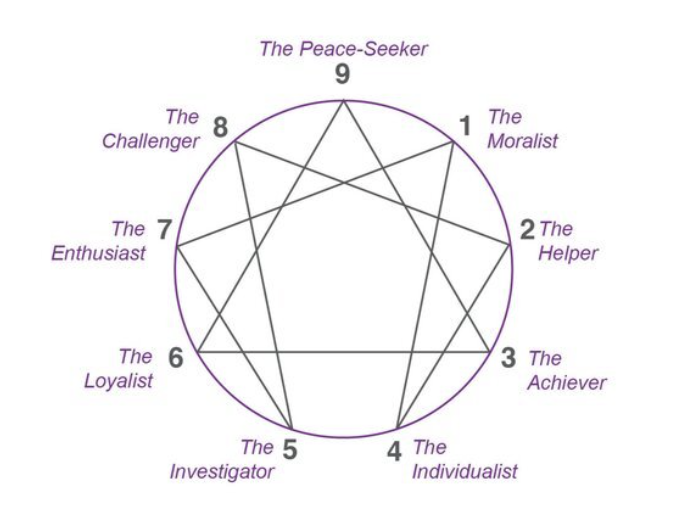
The Directional Movements (the Lines on the Enneagram Symbol)
Subscribe on: Apple Podcasts, Spotify, YouTube, or wherever you get your podcasts

Episode Description
“What are those lines on the symbol?” is one of the questions we get most frequently during our Enneagram workshops. In this episode, Hari, Rasanath, and Michael explore the critical dimension of the Enneagram: the Directional Movements. They describe how each Type experiences stress and growth, clarifying why we sometimes resemble other Types. These movements toward another Type in stress or growth reveal important layers of motivation and insecurity. The conversation highlights why coping is easier, growth includes moving through the shadows of another Type, and understanding this dimension can help prevent mistyping. The team offers a concise tour of what each Type looks like when secure and when overwhelmed. They close by bringing greater focus to the practical and spiritual implications of these movements.
Podcast Hosts: Michael, Hari Prasada Das and Rasanath Das
Listen to this episode on Apple, Spotify, or your preferred podcast platform
Highlights
[01:10] What Directional Movements are and why they matter
[03:40] The power in understanding the Directional Movements of your own Type
[11:10] Stress and growth
[17:00] Type 1’s move to 7 in Growth, 4 in Stress
[19:10] Type 2’s move to 4 in Growth, 8 in Stress
[20:30] Type 3’s move to 6 in Growth, 9 in Stress
[22:30] Type 4’s move to 1 in Growth, 2 in Stress
[25:30] Type 5’s move to 8 in Growth, 7 in Stress
[28:00] Type 6’s move to 9 in Growth, 3 in Stress
[30:10] Type 7’s move to 5 in Growth, 1 in Stress
[31:50] Type 8’s move to 2 in Growth, 5 in Stress
[33:30] Type 9’s move to 3 in Growth, 6 in Stress
[35:50] The idea from Russ Hudson that he wouldn’t teach a Type unless he’d fallen in love with them
[44:30] How the lines help illuminate the journey from the ego to the true self
Quotes
“Health means self-awareness and…owning the difficulties, the struggles, the weaknesses…our insecurity and desire to control other people in situations for validation.” -Hari Prasada
“Our lifetime of work is in owning our Type and our Wing.” -Hari Prasada
“The Inner Critic is the mouthpiece of the ego, and the ego is what's covering the self… If I want to reign free as the self, I have to actually see that my Inner Critic is blocking me. And for each of the Types, that manifests in a different way around the fixation of that Type, which the Direction of Growth offers a key...” -Hari Prasada
“These Types are complex, they're human. There's so much beauty in each of the Types when they're healthy, and there's a lot of darkness and difficulty when they're not healthy…in stress.” -Michael
-
This is an automated transcript and may contain minor errors.
Michael: Hello everyone, this is Michael Sloyer and I'm here with my partners Hari Prasada and Rasanath. And today we are going to be talking about one of the dimensions of the Enneagram that I would say is most underrated, and that is the directional movements. So it's great to be with you guys. And Hari, could you get us started by explaining what do we mean by the directional movements in the Enneagram?
Hari Prasada: Absolutely. Yeah. The directional movements are the two lines that connect each and every type on the Enneagram. So if you've seen the Enneagram symbol, you see that it's a nine pointed figure with lines in between different types. So each type has two lines that connect it to two other types and. One is the direction of growth, the other is the direction of stress.
So we move to resemble a type when we're growing and we move to resemble another type when we are feeling insecure under stress. So the direction of growth and the direction of stress is what make up the directional movements and. They also serve as gateways to two other types on the Enneagram. So if you're feeling like I resonate so much with this type or that type, or I'm having trouble typing myself or somebody else, the directional movements unlocks a lot.
Michael: Beautiful. Thank you for that setup. And Ana, what would you say about the directional movements? And I had mentioned the word underrated, so if there's anything that you'd wanna say about that? I. I was thinking about
Rasanath: your word underrated. My experience in teaching the Enneagram is there's invariably, at least one person consistently in the crowd would say, can you talk a little bit about the lines and what we tend to do during that time and say, Hey, just focus on the types first, because understanding the lines requires a very sound understanding of the types themselves.
So one of the reasons why the lines may appear to be underrated is because they're pretty subtle. They're powerful, but very subtle in terms of how they work, how they're activated, and because they're subtle, it's not so straightforward in terms of being able to understand how it works.
Michael: Excellent. Well, we have time now to really go into the subtle elements of the framework itself.
I'm so excited for this conversation. What is so powerful about understanding the directional movements for our own type, the direction of growth and direction of stress,
Hari Prasada: it explains a lot. It shows us how we cope with difficulty and also what we're missing that we deeply, deeply need in order to become truly integrated.
So I think that's one of the most. Valuable pieces of this. And it also explains a lot in terms of why do I feel close to other types? What's going on there? And making sense of some of the inner chaos of feeling energy of, we have the energy of all nine types, but the two types that you move towards in growth and in stress.
There's something different. I. There's a closeness and it helps to eliminate that.
Rasanath: I also think that when we understand the directional movements, it helps to clarify the mistyping because if you have spent a lot of time on one side, for example, if you have spent a lot of time in your life coping. You might tend to identify yourself as a type that is the number that you cope towards than your actual ennea ground type, which is the subtlety of the framework itself.
And so understanding the directional movements helps parse and clarify, well, is this really the type or have you spent too much time coping so much so that you actually feel like the type that you move towards when you're under stress?
Hari Prasada: Just a caveat here. It's almost always. In the direction of stress that you would be experiencing.
So much of a different type that you might mistype, and this is really important. I mentioned it earlier, this idea that it clarifies typing and it helps to prevent mistyping or to work through mistyping. That's very, very, very. Key here, but I have seen when people come at this with the sense of like, maybe I'm just so healthy that I am this type that, that I go to in growth or that doesn't really work.
See, health means self-awareness and it means also owning the difficulties, the struggles, the. Weaknesses, the controlling tendencies as we always frame it, the tendencies that come from our controlling consciousness, our insecurity and desire to control other people in situations for validation. So you'll find that if you're very honest with yourself and that is a sign of health, that is a sign of growth, then you're more likely to get confused between the type that you go to and stress.
Then you would be getting confused, but maybe I'm just so healthy, but what if I'm
Michael: this type that I go to in growth? Excellent. And it's important to emphasize off the bat that. You don't become the other types. You don't become the types that you are connected to through the lines of growth or stress.
It's just that you start to take on some of the behaviors of those types. You start to resemble those types, but the underlying motivations and insecurities that drive those behaviors are very different from those types. So those underlying motivations and insecurities are. The insecurities and motivations that drive you as a result of your dominant type and your wing,
Hari Prasada: that's one of the most important things we could possibly underscore here.
So it's very, very easy to shift responsibility and blur lines between types. We are always taking responsibility for our type and our wing that is. The whole thing, take responsibility for your type and your wing, and then you will see that because of your type and also because of your wing, but even more so because of your type, you'll be pushed in the direction of stress.
Difficulty in insecurity in the natural course of our egos dominating us, we will be pushed to resemble another type, but it's because of the motivation. The reason we go in that direction of stress is not because of that other type, it's because of our type. So our insecurity from our type is pushing us towards.
The direction of stress and vice versa. What we're missing, what we so badly need is what is the direction of growth? That is because of my type, that I am so fixated on something else and I'm missing this and I need to really invest in it, but I'm not trying to like study the other type. In my direction of growth and saying, well, I'm just gonna become them.
As you pointed out, in fact, Don and Russ at the Enneagram Institute, they don't even recommend making such a big thing out of studying what is the person. This is a natural tendency, and it makes sense. Studying the person who's more towards your direction of growth. Yes, there's something to that. I think there's benefit, but the greatest benefit by far is.
Stop trying to put it on something else. Our lifetime of work is in owning our type and our win and really, really making that the force for our growth, not getting fixated on other things and trying to make it new and exciting.
Rasanath: The only other thing that I wanted to add there was it's not just resembling the behavior of the type that you are growing into or coping into.
The behavior comes from certain qualities that you actually pick up. So it's not just the external activity, it is also some of the internal pieces. Again, you don't change your type, but there is a way in which you start to access and integrate or integrate would be right for both integrate qualities of those types that you are coping towards or growing towards.
Hari Prasada: So that's exactly what I was referring to when I spoke about the gateway to two other types. And the closeness that you feel close to these types because you can relate to them in a more intense way than even the universality of all the types. 'cause we all have all nine types in us. We can't emphasize that enough.
You should be able to relate to all of them should be able to relate to all nine basic fears and different dimensions of the types, different aspects of the types. These two you'll relate to more.
Michael: So let us get into a quick tour of the Enneagram through the lens of the directional movements and so we can go around one through nine and mention how each of the types. Grow through the directional movements in through their line of growth. And then what does it look like for their line of stress?
Rasanath: So before we go there, the one thing that I would like to say generally as a principal when we are coping, coping is easier and growing is harder. And I wanna emphasize that very easily, which means. And sometimes I think I heard Russ use this word to slip, right? So when you're coping, there is a way in which you slip.
When you're growing, it feels like a climb that is exactly, and slipping is much easier. It happens by default. Climbing takes energy, it takes intentionality, it takes, it takes circumstances in us facing those circumstances in a very different way to grow. So this is true. When we talk about how every type is tied to other types, what you will experience is the direction of growth.
And when you are growing, it feels like your life is actually like, oh my God, this is hard. I don't even know. Because many times when we've used the word cope and growth, growth is exciting. If, oh yeah, I wanna grow, I really want, but that is not how it happens. Growth is hard. And when you are growing. The inner experience is like, this is dark.
I'm not able to see the light on the other side, which is why we say that when you are growing, you're always walking through the dark side of the type that you're growing into. There is a steep climb with the direction of stress. There is a slip, it's an auto response, and auto responses are easy and there is a place for them for sure, because when life is overwhelming.
We usually tend to, at least at that moment when the overwhelm hits us, we are coping. When that becomes the default way of living, that just becomes an easy mechanism to just live in my shell. So this is, again, very important to understand. The direction of stress will feel easier, and the direction of growth will feel harder by the sheer dent of how the mechanics work.
Hari Prasada: That's really vital and it brings us to another important clarification. Actually, I think you touched on something of this, but it's very easy to equate direction of stress, bad direction of growth. Good. It's not exactly how this works. There may be something to that as well. There's some sense that we want to grow.
We don't want to behave under stress, so therefore. It's natural to equate them like that, but talk about the subtlety of the framework. It is not black and white. It is not only that that is there, that is one piece of this, which is very important. It's not the only thing. So direction of stress is coping and sometimes we need coping mechanisms.
And if we consciously and intentionally cope. With self-awareness and with a sense of responsibility. We may not be slipping in consciousness. We may take on some of the mechanisms of the other type, some of behaviors in a more intentional, conscious way, or we don't let them drive us too far down. Much of the time, it's more that, that we're not letting them drive us too far down.
There's still some kind of slipping that's happening, but it is possible to cope in a healthy way. It's not normal, it's not usual, but it is possible that you could use some of the behaviors in a healthy way. And likewise with the direction of growth, you do have to walk through the shadow of the type as you were also alluding to, to integrate those.
Needed positive qualities. And also just because you relate so much or you have some of the qualities of the type in growth, doesn't mean that you're really healthy. It can mean that it doesn't have to mean that it could be that you just feel a lot of that intense connection to the type and some of that is coming through.
So it depends on. The person, the situation, the level of consciousness and the trajectory to really determine like, oh, if I'm showing a lot of one qualities, does that mean that if I'm a four, I'm really healthy? Maybe, maybe not. If I'm a two showing a lot of eight qualities, does that mean I'm really unhealthy?
Maybe, maybe not.
Michael: So for the fours, they go towards the ones in growth and for the. Two.
Hari Prasada: Two, they go to eight. And stress. Yeah. And we're gonna get into this in a moment. Yeah. But that was the example I was giving.
Michael: Excellent. So now it's very clear why we don't teach this stuff in the Level one Enneagram workshop.
Yes. Are we ready to go into the tour? Because my provoking that. Last time led to more things that needed to come out before that. So I just wanna get clear with you guys. Is there anything else?
Rasanath: Actually that was the exact point that we would introduce the concept that we just talked about. How do you look at coping and growth?
Just before we begin stepping into the directions itself. So timing wise, it was a very good prompt. I think it's complete so we can start the actual directions itself.
Hari Prasada: So the type one goes in growth towards the type seven. So one being the moralist, very principled, very structured, very dutiful towards a higher order of things, and wanting to be aligned with what's right and feeling very constrained and like the weight of the world is on my shoulders and.
I'm not getting it right and other people are not getting it right and they're the bane of my existence, and that there's this uprightness and uptightness so heavy, the gravest type on the Enneagram, I start to become freer and freer and freer, and there's a joyfulness, a levity, something beautiful. The ability to appreciate.
My own sincerity. The sincerity of others to feel compassion for myself, compassion for others, and to allow for people to be where they are while trying to inspire them to become better, more aligned with what's right, growing more, and therefore happier like the seven in stress, the ones they. Feeling this heaviness, this gravity, the weight of the world on their shoulders.
Nobody cares about what's right. I'm the only one sacrificing my life for what matters. I feel so alone and misunderstood, and I'm reviled for being the order keeper. I. Make sure that everybody falls into line and that every I is dotted and every T is crossed and nobody appreciates this about me. They actually don't like it about me.
And oh, it's so emotional and overwhelming, and how will I ever get out of this cloud? And nobody cares. Like the four,
Michael: the
Hari Prasada: individualist.
Michael: So for the one we have towards the seven in growth and towards the four in stress. How about the type two?
Rasanath: So for the type two, the direction of growth is the four, and the direction of coping and direction of stress is the eight.
So the two is a type that very quickly tends to merge its identity towards the person that the two so deeply loves and wants to be loved by. So I don't have an independent identity outside of the identity of that person or a group when they grow. They take on the qualities of a four, where my sense of identity, just like the fore would, that my unique individual identity is so critical and important.
The two begins to own my own personal identity There is a way in which I can draw healthy boundaries because of that. Now in the direction of stress, the two goes to the eight I. as tools tend to stretch themselves very, very thin because of how many things they want to do for people.
And at this stage, definitely with strings attached, and they're disappointed that people are not reciprocating and giving love, and the resentment builds up to a point where then it explodes. They feel like a doormat, they feel being treated like a doormat. And then it comes out in a very explosive form.
Like an eight would express its anchor.
Hari Prasada: The three, the achiever. They are so intent on establishing their worth and becoming the most valuable person that they possibly can be and being seen for it applauded by the world, or at least by their little world. And so when they grow towards the six, they start to.
Become humble and modest and they shed the vanity of it's all about me and my shining. It suddenly becomes about something much bigger than me. They become devoted to a cause that is worth subordinating myself to sacrificing myself for and being as dependent and loyal and even invisible for. Even as they shine with all of their talents and their capability and the beautiful qualities that they have, so the three goes to six in growth and towards the stress.
The nine qualities start to come about where the three is feeling ashamed that I don't have the worth that I'm seeking, I'm not being seen the way I want to be seen. I'm not going to win. I'm going to lose. And I don't play games where I lose. I don't come out when I'm not going to be seen the way I want to be seen.
So to craft my image and safe face, I. Get rid of the shame. I just disengage from my heart and I disconnect from the world. I become disengaged, procrastinating. You don't hear from me if you do. It's sort of automated responses with as little effort as possible to keep the peace like benign.
Rasanath: At four. The direction of growth is the one and the movement is.
From a subjective experience of reality to an objective experience of reality, the force tend to rely on their emotions tremendously for understanding what is real and who they are, which is a very subjective experience. And the one understands that the subjective only lives because there is an objective reality.
And so when the four moves to the one, I start to align myself towards that objective reality. And measure my subjective experience with respect to that objective reality. There is a very, uh, good reconciliation happening between the two, whereas previously it would just be my reality, my subjective experience.
The four goes to the two in stress, and the experience of that is feeling very much like how a two would. When they are stretched thin, which is I am doing all of these things for people and I just don't feel seen. And the four fields very similarly, it's uh, we talk about how at the lower levels of consciousness, the four fields like an undiscovered virtual.
So that is exactly how the two feels Like. I have so many of these qualities, I'm doing so many things for people and nobody is seeing how good I am. I. The four begins to experience those very feelings that the two has under stress.
Hari Prasada: Oh, I was gonna say one distinction between the two and the four there.
In terms of the undiscovered virtuoso, I. The twos are all about you. The fours are all about me. And the twos are they. They love talent for sure, especially if they're really invested in their talents. But the fours are obsessed. They're obsessed with, I have all these gifts, I have all these talents. The world must see them.
My creativity must explode onto the world and be appreciated for it. So in that sense, the four. It really claims more the undiscovered virtuoso, but the behavior is still very much like the two.
Michael: Yeah. So I was gonna mention some of the behaviors, like becoming people pleasing and overly accommodating, that you'll start to see sometimes in lower consciousness force, and that's the resembling of the two.
Rasanath: Well, also tools that level are actually blaming people for their situation. And you will see the same thing about the four. I am actually saying that I. It's essentially being a victim. And, uh, that victimhood you'll find with two at lower levels of consciousness and the fours when they're coping, that is typically their initial experience.
I feel like a victim,
Hari Prasada: so much more can be said and we will go there in future. The five, so the five moves towards the eight in growth. What this looks like is. Five who is so in the head and chewing on thoughts and ideas and facts, data or experimental possibilities suddenly becomes very practical. Of course, it's not sudden.
I'm saying suddenly for the way that. This has a, um, a dramatic impact and more it manifests, but it happens very gradually. They become very pragmatic and very grounded, very embodied, and there's a weight to the way they carry themselves. There's a fullness in their presence. There's an engagement that's very active and direct, and there's a power to the way they connect with other people in that way, and they can move things in the world.
The ideas don't just sit here in the head, but they actually manifest in the world and they're willing to make sacrifices, take heat and be leaders to shepherd things forward. Great strength and vigor. So as they then move towards stress, the fives go towards the seven. What's happening there is all of the chaos of the mind's thoughts and.
Intellectual preoccupations, they start to consume me to a point where I become manic. I'm just constantly thinking, thinking, thinking, and being titillated by these thoughts, but they're aimless and directional. They're taking me in all different scattered places, and I can't ground myself. I become like this electron.
It's just bouncing around inside a molecule aimlessly, so much going on in the mind, so much restless energy and an inability to really be present with reality. Like the seven.
Rasanath: There is also a, a gluttonous quality, like the seven that appears in the five. I just consume information because it's intellectually stimulating, which is what the seven really.
Lives far, especially at the lower levels of consciousness. The five has a very similar intellectual consumption, like the seven would type six when the six goes to the nine. The direction of growth, the experience is very much the acceptance of uncertainty in life, and there is a sense of peace that is actually made with uncertainty.
I don't have all the answers. I may not know all the things. I may not even know the things that I feel I so badly want to know. And yet, there is a certain commitment, a peaceful commitment to keeping one foot in front of the other, walking through life, which then starts to resemble the behavior of the type nine, uh, that is the expression and the living of courage really.
Now, when the six is under stress. Their behavior resembles a lot like the type three where I become very competitive. I'm comparing myself to others, but the difference between the three and the six is I'm not doing it because I feel completely unworthy. It's that I have lost so much trust. I don't have the trust both in myself and other people, that the only way I feel.
I can reduce my anxiety is by somehow being on the top, is by essentially being in charge so that then that way I know I control things and so their behavior resembles a lot like the type three word.
Hari Prasada: I think again, there's nuance to that aspect because it's universal, that everybody wants to be seen and valued.
People don't feel good enough. They don't feel worthy. And with the six going to three and stress, that gets amped up more. So there is one strong impetus towards like controlling things for the sake of resolving my trust issues. And there's also a desperation of I don't trust myself. I want to be good enough.
I want to be seen for capable and competent and responsible, and I want to be seen and clapped for in that way.
Michael: So there's some image consciousness there and a tendency towards overachievement.
Hari Prasada: Absolutely. So the seven goes towards the five in growth, where they actually, just the flip side of what we described with the five, going to seven, the seven this.
Kind of electron bouncing around a molecule that very scattered, dispersed energy of desperation for stimulation becomes very grounded. Very reigned in. Very anchored in what is most meaningful, most important, which propels me forward towards who I really am, and I can take things in. With a thoughtfulness, a consideration, and an expertise.
I am so, so thoughtful and can go so deep, just like the five. The other way it goes is towards the one, which is when I'm in stress. I feel people are depriving me of my happiness that I'm owed by life. And if anyone's getting in the way, there's going to be a hell to pay. So I start criticizing people, I see you're doing this wrong, you're doing that wrong.
This is not right. This is not right. And I harp on circumstances and especially people that. Obstructions to my unadulterated freedom and happiness, so I go towards the one,
Rasanath: the growth for the Tai eight. The direction of growth is going to the two, and the experience is the strength of the heart, the real strength of the heart, where I deeply now love people.
I want to actually sacrifice myself for the sake of other people. It's in the service. It's done in the service of other people, and there is also a certain humility that comes with it and experience that I don't have all the strength required to even protect myself, and yet I'm going to give everything I have to protect and serve others.
It's a very powerful expression of the eight energy, but there is also an associated, grounded kindness that comes with it. It is strong and it's kind at the same time. Then, uh, the eight is coping. The direction of stress is going to the five. There is a withdrawal from the world because I recognize I don't have all the resources to keep up my strength.
So what I'm going to do is withdraw and prepare, and the preparation takes on many different qualities. It's experimenting, it's reading, it's talking to people to gain more information, but the idea is. They say how before there is a tsunami, one of the ways in which you identify that there is a tsunami coming is when the water recedes, and that is the energy you will experience.
The eight actually recedes only to come prepared with a bigger blast, and that's the way of coping.
Hari Prasada: The nine last of the types benign in growth, moves towards the three. Benign is feeling like I'm so insignificant. What do I matter? I'm nobody. And well, that may be nice if it's done out of true humility.
It's coming out of insecurity by default that. I really don't want to deal with mattering. I don't want to have the responsibility that makes me very not peaceful if I'm a key player in anything. If people are really expecting things from me, oh, I can't, that's too much for me. That's so, so disturbing. So when I move towards the three, I'm actually engaging in a way where I recognize that I do matter and it's still not about me.
It's about what's really important, what will best serve, and I become so driven to serve other people in the biggest and best, most committed way, where actually I shine. I really give it my, all, my full force, my full heart, my, my full capability. And I invest so heavily in contributing to the lives of other people that I'm unstoppable, like the three, when I move towards stress.
The nine goes towards the six. The insecurity of not being a peaceful person gets so amped up that I start causing all kinds of anxieties for myself, and I am I. Really grasping for what is my comfort zone? What can I rely on, what can I depend on? What order and structure can I create? What habits and barricades can I make so that there is certainty and order, and then I'll be peaceful at last.
But actually I'm feeling so, so, so encroached on in my little world of hopeful peace that I'm in much more anxiety
Michael: like the six. Thank you both for that journey. There's a teaching, which I believe comes from Don and Russ, that you can't teach the types or you shouldn't teach the types until you've fallen in love with all of the types.
Hari Prasada: That's a commitment that Russ said, and which as soon as he said that, I, I really took that to heart. I felt so inspired. I took that to heart and I know Ana very similarly, so, yeah. Yeah, it's really important. Extremely important.
Michael: I'm invoking that here because as you were talking about the nine types in both growth and stress, I felt that for each of the types, as we got into the nuance, these types are complex.
They're human. There's so much beauty in each of the types. When they're healthy and there's. A lot of darkness and difficulty when they're not healthy And so I'm, I'm just appreciating that little adventure that we took together through each of the types, because
I have an affinity for them in a way that's different than before we started. And also there's more empathy as a result of understanding what it's like. In the darkness, in the shadows
Hari Prasada: So beautiful and so important makes me really happy.
Michael: So what example would you share either from your own life or if there's any clients that you've worked with or people that have come to our workshops where you have felt like the directional movements were particularly powerful so we can illuminate the application of this dimension of the Enneagram?
Rasanath: I can share from my own personal journey. You know, I think there have been different times in my life where growth is actually forced by the external environment, right? So in his book, falling Upward to Draw talks about how when the dismantling of the ego happens, it's not that the ego desires it, it is forced by the external circumstance.
It's only a question of how we respond to it. And in my personal life. I've had times where as a type three I have projected a sense of competence, coolness, I have it all together and the carpet has been pulled from underneath my feet. And you are also put in the circumstance where the uncertainty that gets created because of that for your own sense of self is just so heightened.
Your self-image is actually shattered. You go through periods of self-doubt.
So when we were talking about the directional movements, I was saying how you have to walk through the dark parts of the side that you're growing into. I very vividly remember feeling very much like a six, which was a very foreign feeling to me. I always thought of myself as a person who had confidence and you know, who could actually go into any situation.
And you know, there is a way in which I got this, you know? And at this time I just felt like, I don't know. I don't have it. I don't have it in me, and. There were periods of real having to confront intense self-doubt, and in that process then also realized that so much of the story that I had told the world about myself is also not true.
To understand all the deceit mechanisms of the three in the process of the shattering of the self image was very, and still continues to be a very, uh. It's very uncomfortable, but when you see the truth of it, you want to go beyond it. You don't want to stay a prisoner.
Hari Prasada: Hard to find a more powerful example than what you just shared.
Ana and I witnessed all of this, so I can attest to it. It's incredible.
Michael: Yeah. Beautiful. And just to put a fine point on it. Even though you weren't necessarily saying that I was becoming humble, I would say that about you in the process of walking through that, those shadows, what you see emerging when a three gets very much in touch with their limitations and that I'm, you know, got plenty of flaws, I might be impressive and successful on, on the outside, but if I'm deeply in touch with what's actually happening internally, I recognize that.
I am flawed, and there's a humility that naturally emerges and that's directly connected to the six. And there's a way that I try to be a member of a team and I'm not looking to outshine other people.
Rasanath: Now on the other side, I can also say I find plenty of times when I have gone in the other direction too, where I have found myself actually afraid of what others will think of me or my competence or my intelligence, and I just won't respond either to an email or in a meeting. And I can also disguise that as.
I'm just very chill. I'm cool. I'm just listening to other people. But what I am really doing is coping with the shame of not being a competent person or not having an answer. Or being afraid of not being liked.
Michael: So when I use the word underrated at the top of our recording. One of the things I was thinking about when I used that word was the experience of bringing a three who has getting knowledge of the Enneagram and understanding who they are through the typing into what it means for them to.
Go into their line of stress towards the nine, and there's almost always a light bulb that goes off when we talk about the procrastination and the disengagement. And I'm, I'm not willing to be out there and play games that I'm not sure that I'm gonna win. And almost always the person is like, wow, yes, that is exactly me.
So what I experienced is that with the introduction of the lines of growth and stress. It can often be a click where like the person becomes fully invested in the Enneagram because now they feel even more understood through the framework than just having knowledge of their type in their way.
Rasanath: It also shows how dynamic the framework is, as much as people would say when they hear about the Enneagram, oh, this is just too static.
It makes me one type. I think that the igram is far from it. Yes, true. There is a fundamental type that is working, but the dynamism around it, the explanation to why you see certain kinds of behavior and the completeness, more completeness of that explanation without abandoning the core of who you are as a person.
To me, that is what makes this so powerful because it, it explains a lot. So
Michael: for people who are just getting their feet wet with the directional movements of the Enneagram Hari, what would you say around how to best first get started with going even deeper and unpacking the value that's here
Hari Prasada: I think spend time with the types that are your two other types that you're connected to. Then from there, also spend time with the relationships between each of the types. We don't wanna be self-centered. We don't wanna only look at myself and what types I'm connected with. That would be a big mistake.
But you start there and you keep coming back to that because everything you do comes from who you are and the more grounded you are. Yourself the better. So if you understand something about the dynamics between yourself and these two other types that you're connected to in growth and in stress, you'll get a lot of mileage to go out into the world with and to go deeper into yourself with, which is much more important even.
And then when you go out into the world, it will be much more impactful.
Michael: Beautiful. So as we come to a close here and we always. Think about our mission and really taking it back to that which is the journey from the ego who we think we should be to the true self, who we actually are. And that's a spiritual journey that we are taking, whether we're aware of it or not.
So how do an understanding of the directional movements relate to that mission of moving from ego to self?
Rasanath: when you understand the directional movements, especially the direction of coping. The direction of stress, because that's where the waking up really happens. How often I do it, how much time have I spent really coping in life and the effects that it has had on me and other people.
It's extremely eye-opening. And from that place, there is an immediate access to growth because the first thing that you then at that point in time have to say is, I can't cope anymore. I'm not going to run. So coping and running are very, very tied to each other in a sense. Sometimes we have to run so that we can turn back.
That is a very intentional, healthy form of coping. But when we are just running, we run so far away from the true self that we don't even know where true self lives, if there is a true self at all.
Hari Prasada: We also want to be mindful that I have blocks to being my true self, the soul in this life, and something on the other side of those blocks is what my type in growth carries.
So I also want to be really clear and targeted. About understanding what that is like. So we gave the example of the one becoming freer through self-compassion and compassion for others. That flows from being compassionate to myself. If I give myself some leeway that I'm not perfect, I'm not right all the time, I have bad qualities, I have negative tendencies.
And I have to accept that about myself, not to be complacent about it, but to start with where I'm at from a healthy, compassionate place that will give me freedom and then I start to show up freely and I start to make other people feel freer and happier like the seven. So I'm never gonna get to the soul if I just am so locked in my own way of being.
The inner critic is the mouthpiece of the ego, and the ego is what's covering the self. So there's no question of reaching the self.
If I let my inner critic reign free like that. If I want to reign free as the self, I have to actually see that my inner critic is blocking me. And for each of the types that manifests in a different way around the fixation of that type, which the direction of growth has a key towards freedom from
Michael: beautiful.
So we often talk about how. Really, the whole Enneagram is actually the levels of consciousness. And the types are just a way to understand how to increase your own levels of consciousness and what you need to become aware of. And I see the directional movements after this discussion with you guys as a microcosm of that.
It really gives us a roadmap for what do we need to become aware of and what is possible when we are healthy So. There's so much more to unpack, but we can leave our discussion here for now. Thank you guys so much for your wisdom, for sharing yourselves personally, also offering to us everything that you have learned over the years from your teachers,
Hari Prasada: such a privilege.
Thank you, Michael. Thank you to everyone listening.
Episode Transcript
Continue Exploring the Enneagram
Browse all Enneagram podcast episodes
Understand the Enneagram framework — clear breakdowns of the Types and how the system works
Join our live Enneagram community, Enneagram Library Live, hosted by the Upbuild team.
Take the two-day Enneagram 101 workshop