
The Upbuild Enneagram Library
The Body Center
Subscribe on: Apple Podcasts, Spotify, YouTube, or wherever you get your podcasts

Episode Description
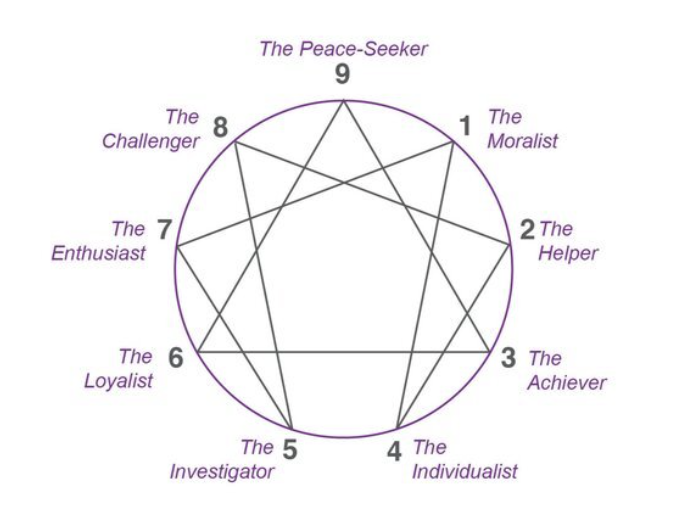
In this episode, Michael, Hari, and Rasanath turn their attention to the Body Center of the Enneagram. They explore how presence is experienced as groundedness, sensation, and gut-level knowing, as well as how energy can move from intuition into action when we are rooted in the body.
The conversation brings out the distinct gifts of Types 8, 9, and 1 while also showing how every Type can cultivate a clearer, more embodied connection to life. Along the way, they discuss the core emotion of the Body Center, the role of practices like yoga and pranayama, and what it means to feel our feet on the ground as a support for spiritual depth.
Podcast Hosts: Michael, Hari Prasada Das and Rasanath Das
Listen to this episode on Apple, Spotify, or your preferred podcast platform
Highlights
[01:20] A meditative portrait of the Body Center
[07:00] Presence as sensation, not just action
[14:30] The three Types of the Body Center
[17:00] Type 8: Fortitude, Aliveness, and Majesty
[20:10] Type 9: Wholeness, Unity, and Flow
[23:45] Type 1: Goodness, Sacredness, Purity
[30:10] Anger as the Predominant Emotion
[33:20] How all Types can cultivate presence in the Body Center
[37:30] Coaching practices that bring awareness to the body
[41:00] The role of yoga asanas and prana in spiritual practice
[46:00] “How can we perceive God if we can’t feel our feet on the ground?”
Quotes
“ When we pay close attention to what is happening in the physical body, it gives us clues to what is going on in our head and our heart, because the body has sensations that are a gateway to an experience and a gateway to understanding what an experience is.” - Hari Prasada
“When we are not present in our physical body, irrespective of our Enneagram Type, we are losing all that information. We are working from a place of less awareness.” - Hari Prasada
“We have been given a body, a heart, and a head, and we have to use all three of them to the maximum degree for the greatest benefit. If we don't, we are only cheating ourselves.” - Hari Prasada
“ Presence in the Body Center helps us…have more confidence to face fears. There's a rooting in ourselves that takes place, that allows us to feel like, ‘Okay, whatever I have to face, I'm ready.” - Hari Prasada
-
This is an automated transcript and may contain minor errors.
Michael: Hello everyone I am Michael Sloyer and I am here with Rasanath and Hari Prasada. It's great to be with you guys today. Likewise, very happy to be here.
Rasanath: Likewise.
Michael: So today we're going to be getting into the Body center of intelligence. Harry Prasada in our Excavating Your Ego Enneagram workshops, you would often share a very meditative portrait of what the Body Center is all about.
And so it would be wonderful if you could get us started by sharing that. Meditative portrait with us. And for everyone listening, this is going to feel a little bit different than our normal introductions and openings. So you can just get yourself set for that. You don't need to do anything differently.
So this will take a few minutes and then after that we'll get back into our normal conversational discussion format. Soha, please bring us into the body center.
Hari Prasada: Thank you. The body is the most foundational of the three centers because it gets us immediately in touch with our present circumstance. The body grounds us where we are.
When we're present in our bodies, we become more aware of our surroundings. From there, we're apt to navigate our circumstances with greater attention. Connection. And in so doing, we find that we're keen on the movements of the world, how things are working, how they're moving, and how we fit into that. How we can move elements of this world.
So that knowingness is what characterizes groundedness in the body center or presence. I. With that comes this distinct feeling of decisiveness. Okay, I know what I must do, there's a time to take action, and I'm ready to do it. So in essence, the experience of presence in a body center is like this.
Intuition converts into energy. Results in action. Intuition converts into energy that results in action. In other words, I get a sense of how things are moving and how I need to fit in, how I need to move and move elements of the world. And with that comes this energy. Okay, here we go. I'm gonna do it.
Then the action follows. So from September 1st, 2007 to December 28th, right on the cusp of 2008, was a most formative time for me when I was working a freelance writing gig from. Within monastery walls, I was living like a monk, but I wasn't yet a monk. I wanted to become a monk, but I was afraid of becoming a monk.
I wanted to go out and pursue a career and make all kinds of waves in the world, and I wanted to go deep spiritually and become very internal and self satisfied, and I was torn. Completely because I felt like, well, if I go one way, I'll have to give up the other. And I thought that this would be the best of both worlds.
But instead, I found that it was the worst of both worlds. I wasn't able to give myself fully to either side. My. Impending career in writing and filmmaking and also my spiritual life that was calling me. and for such a long period of time, I was just praying and getting counsel and trying everything to make a firm decision, and I had no idea which way to go.
Nothing seemed to make sense. It was the fog.
But one day, all of a sudden. That day, December 28th, 2008, it's marked. I woke up with a different feeling that agony was not there. Suddenly a decision had been made. I just knew what needed to happen. I knew how I needed to fit into the world and to move things in my life.
I was going to become a monk. It was not. Because of any specific thing in my mind that I had worked out, it was not a firm analysis and it was not because of some kind of heartfelt experience that particularly told me, yes, this is it. It was a, a knowingness and intuition that this is how I have to move in this world, and it gave me such an energy.
There was such a sense of readiness that I could barely contain myself. It was very mysterious, but then I walked out of my freelance writing job at night, very late on the streets of Manhattan, and it was so crazy that my readiness of this feeling of presence in the body, the intuition, the energy, and the action that was coming through it.
It was somehow showing because a pair of strangers who were asking for directions right by Madison Square Park, as I was preparing to go into the subway, back to the monastery, they stopped me and they asked for the directions, and then they said, you have made a very important decision. And they didn't know anything.
I didn't tell them anything. They just looked at me and they said, you have made a very important decision. So I can never forget that this is my greatest experience of, of feeling presence of the body center. And we should know that action is not the dominant characteristic of presence in a body center.
We move, we act all the time. Presence means to do it with this sense of intuition, this gut feeling that then matches up with how things need to work, how things need to move. But we can act based on pre-programming or knowledge that we have.
And we do that all the time. We can train ourselves even in the extreme to become expert gymnasts. They're Olympic gold medalists who have reported to have programmed themselves such that they did their routine and then they weren't even really there to receive the medal. Of course, they were physically there, but they weren't present, so.
Action is not the dominant characteristic of presence in the body Center. We are mechanical, regularly, practically, constantly. For most of us, what is the dominant characteristic of presence in the body? It's sensation. Sensation. So a simple litmus test that is invaluable. For presence in the body center, how you can see for yourself, am I present or am I on autopilot?
Am I mechanically just walking through this life? Can you feel your feet on the ground? Can you feel your feet on the ground? Literally, what is it like to feel your feet on the ground? You realize that you're really here right now. Occupying this space as you are. And with that comes a rootedness and a strength, a readiness, and that can allow me to walk through all kinds of difficulties, uncertainties, and anxieties
So presence in any of the three centers, the body, the heart, or the head. Opens up the floodgates of possibility. As we feel ourselves more aligned and more alive,
Michael: That was beautiful. I, uh, haven't heard that in many, many years, and I was transported as you were sharing it, so thank you for that.
Harry Prasada, just to anchor a few words that really stood out to me during what you shared, words like presence. Groundedness. Attention, connection, moving elements of the world, decisiveness, intuition, which gets converted into energy, which gets converted into action. A clearing of the fog, a readiness, gut feeling sensation, a rootedness strength in this question.
Can I feel my feet on the ground? So Rasanath would be great to. Bring you into this here. What's important, regardless of our Enneagram type about having a healthy relationship with the body Center,
Rasanath: as we talked about in our previous podcast, when we did a brief introduction to the centers, we were quoting our Enneagram teacher, Russ Hudson, who would say, when you, you're not using one of the three centers, or when you're not using two of them, then why do you want to be one third of a person?
Every center has their own unique way of bringing awareness to reality. And we've all heard the, the phrase and the book, the body keeps the score, where the premise is that experiences are actually lodged in the physical body.
When we pay attention, when we pay close attention to what is happening in the physical body, it gives us clues to what is going on in our head and our heart, because the body has sensations that are a gateway to an experience and a gateway to understanding what an experience. So when we are not present in our physical body, irrespective of our Enneagram type, we are losing all that information.
Yesterday in one of my coaching conversations, this particular person that I was coaching was talking about how he has been, you know, experiencing some challenges around when working with his colleague that they very quickly get into a place of.
Debating, but the debating doesn't necessarily seem healthy. And I just asked him, well, what's your stance? What's your pose when you enter into that? And he said like, I just feel like I am, and he made this action. I just feel like I'm protecting something, and I feel it in my chest. I want him to pay attention to his body.
And in that conversation we were actually able to name what exactly is going on because he was able to tap into the feeling that was happening in the physical body. The body is very foundational for our existence and ultimately everything is passed on to the physical body.
Any pain that we experience and I have, I experienced back pain very frequently and. When I do pay attention to what my body is saying, it is usually an indication that I have not dealt with something emotionally because when I don't deal with things emotionally, the body then keeps the score
So when we are not paying attention to our body, we are losing all that information. We are losing the cycle of interaction. Between the body, head and heart, they're passing information to each other, and when one of them is not working the way that it needs to work, meaning we are not really paying attention to that particular dashboard, then we are losing all that information and then we are acting from a place of much less awareness.
Hari Prasada: Just to be very clear about the three centers and awareness, we're using all three of them. Whether we, our Enneagram type is situated in one center or not, or otherwise, but we are using them. We're just not present in them. We're not aware, we're not using them to their fullest. We're not actually really, for lack of a better term, embodying them.
So the experience is very in passing. It's very much just going through the motions, and that's tragic because we miss out on our own lives that way. So regardless of whether you use your body, your head, or your heart, that's not what we're aiming at. What we're aiming at is really to make the most of it, and with the body center that's being grounded, being
Michael: rooted in where you are.
Beautiful. I feel the gravity of what we're talking about as a result of what you both shared,
So let us use that as a pathway to start going into the type. So what are the Enneagram types that make up the body center and how is a group, are they different than the other six types on the Enneagram?
Rasanath: Type eight, the challenger type nine, peace seeker and type one.
The moralist are the types that compose the body center. And the reason why these types compose the body center is when we really understand how these types work. What are they looking for? We also understand how we need to be present in our physical body. What does it mean to be present in the body?
And uniquely they will also talk about what does it feel like to not be present in our bodies. So types eight, nine, and one uniquely characterize the importance of the body center. Eight, nine and one Also carry the energy of the Body Center because that's the predominant center that these types operate from.
Hari Prasada: It can't be emphasized enough that that doesn't mean they're more present to their bodies. Just because you make up one center does not mean you're more present to that center. This is a critical distinction. It does not mean that I know that even when I say this, many will still think otherwise, but it is not the case.
We have to become present, and the advantage of being situated in one center versus another is sort of a. Predominant energy is what Rasanath was talking about, and utilizing that energy in a way that's distinct, but it doesn't mean that it's easier for me to be present. It doesn't mean that I am more present.
It doesn't mean that I'm using the center better. We all have access to all three centers. We have to be, become present in all three of them. But the place that I work from, again, as Rasanath framed it. That is distinct, and when I'm present and I work from that place, you see some of the gifts in a way that's unique.
Michael: Can you say a little bit more about what you mean by working from that center?
Rasanath: So when we get into the types and how they embody the energy of the center, this will become very clear. Okay. Let's get into the type then. So for the type eight, so we talk about how the essence of the Type eight is fortitude, aliveness, and majesty.
as a reminder, for every Enneagram type, we have what we call the essence qualities. The essence signifies the predominant energy of a particular type. What are they really about in its purest form? In its purest form. Thank you. A hundred percent. So type eight is about fortitude, aliveness, and majesty.
And when we talk about aliveness, aliveness is the fundamental characteristic of the physical body. We know we are alive when we move. We know we are alive when we sense. When somebody is just sleeping, we know that that person is still alive. When we see their body movements, their chest is moving up and down their, their stomach is moving up and down.
There is a way in which the characteristic of aliveness and the experience of aliveness is most strongly felt on the level of the physical body.
It's very similar in terms of fortitude. Fortitude essentially means a sense of presence physically. I, I'm here, I feel rooted. I am ready to face the world. You know how. When I use the subway and I can't hold onto a handle or a bar because the subway is too crowded, I see how I change my stance.
I actually plant my feet on the ground more strongly and shift my balance in a particular direction so that I feel rooted. That is essentially the stance of the eight. As they face the world, there is an experience that they, they know that nothing can shake them, nothing can move them until an unless they want to move.
Hari Prasada: The eights love to feel their body is powerful when you get a sense of power. To me it's so visceral. Like I always think about what it's like when you flex your muscle, you feel your power. That's the thing. Of course, many people do it for looks and to admire themselves, and that's a little different than what we're talking about.
I'm talking about the most visceral thing here. Like you flex your muscle to show your might. Yeah. You know, I'm strong, I'm powerful. That's what the eights are doing to feel fortitude, strength. Aliveness and majesty, like I make things happen. I'm in this world, you gotta deal with me. Yeah, I can plow through stuff Now.
Other types will also relate to that in different ways, but this is core to the eight. This is core to the eight, and it shows up in the body. Just the posture, the kind of like the way that I'm just ready to eat things up in the world because that's what I do.
Michael: So it seems like the eight is the easiest example to. Explain why and how they are part of the body center given this immediately strong presence that you can sense with them as they walk into a room.
It's an announcement of existence. So let's get into the next type. Type nine.
Hari Prasada: The nine. Their essence qualities are wholeness, unity, and flow. So they're sensing how the world is moving and they're. If they're not wanting to go against it, the eights are like, let me go against the world, let me shift things, counter things.
Let me give my presence to move a mountain. Benigns are thinking almost the opposite. Things are already moving in this world. How do I just get into that current? So nines are sensing, okay, things are going like that and like that, and like that. I'll just ease myself in. Yeah, I have that intuition. I'll just enter into that flow like that, and then there will be harmony and I will be able to be peaceful and it will be very nice.
That's the feeling of benign. The world is moving, the world is moving. The world is moving. Don't let it knock me over. Don't let it cause me any disturbance. Let me figure out exactly the right place to enter the stream when it's exactly the right speed and everything is comfortable and nice, and then I can move with it.
Michael: And so how does that situate them in the body center?
Rasanath: One of the characteristics are. The essence of the type ninex is flow. So this word flow has been used a lot. Sometimes in coaching sessions I hear, but I wanna be, I wanna experience the energy of flow. I wanna be in that flowing space. And many times we are talking about that as like intellectual ideation or creativity.
The fundamental basis of flow state, it begins with the physical body. The nines understand this, the how do I navigate the world with a certain sense of smoothness and ease and grace, despite the all the obstacles that I face When you see nines, when they're very present. Our teacher, Russ says this, that nines are very, very good with their physical movements.
There is a way in which when their hands are moving on the piano or when they're playing a sport,
there is a certain ease and grace and flow through the world in terms of navigation. The other thing with.
The nine is also, so when we talk about the eight as the announcement that I am here, the aliveness of it, the nine is also embodying the what does it feel to actually be grounded, you know? And one of the experiences of groundedness is I feel connected. I feel connected to everyone, and there is a sense of unity and harmony that comes with it.
Nine's also. When we talk about the Enneagram, one of the characteristics of the nine, especially as they go down the levels of consciousness, is a sense of overwhelm. A feeling like I have just been uprooted, a sense that my world has been completely shaken, and all of that is coming because there is no longer a sense of grounding.
So with each of your explanations just there, you used a lot of the words that also came out in that. Meditative portrait that Hari shared to help us open with the groundedness and the rootedness being characteristics of the nine. Okay. And let's move on to the final of the three body types. Type one.
so if you were to think about aliveness from the eight. The sense of existence, the groundedness of the nine. The one is all about alignment and the sense of alignment when you think about the body is, you see, when we sit like this, you know, when we slouch. There is an experience of not being aligned.
The ones, when you look at the ones there is a, even in their posture, you actually feel a sense of like erectus. It's that everything in the body is actually aligned to what it needs to do,
Hari Prasada: They are here to bring good into the world, to experience goodness, and to share that with others. So they always have a cause that they're for, and that's something that they just feel in their gut what to align with. I just feel it in my gut and then I create rationale around it.
Ones think, oh, I'm very sensible. I'm very logical, I'm very objective. Uh, it's partially true, but it's actually, that's not what's leading the way. What's leading the way, and this is very subtle and very important, is a gut feeling of what is right that I feel in my bones. I just know this is right.
Oftentimes I'm right. Oftentimes I'm wrong. Depending on the level of consciousness that we're talking about, and according to the level of consciousness they have a very, very different result. There'll be an openness or assurity a confidence that is really powerful. That's at the upper end of consciousness, at the lower end of consciousness.
It's just a closeness and a squeeze, and a, you are not doing what's right. So I'm feeling that in my gut, but I'm not present and I'm giving all kinds of justifications. In terms of, well, this is logic. Here are the facts. I'm substantiating, but all of that is after I've made my decision, this is what we have to pay attention to.
I've already made my decision and now I'm backing it up. So it is not unbiased and objective in the way we might like to think. Now, it may be the right thing if the consciousness is high. But still, it comes from a gut place. And when I walk around sensing what's happening in the world, I see it in terms of right and wrong.
Now, this is not a bad thing. This is necessary, and everybody does this to some degree. The ones, they can't stop doing this in the most central, hardcore way. Everything I see, black, white, black, white, good, bad, right, wrong, good, bad, right, wrong. I've divided up the world that way. I may not have made the right decisions there.
I may not have figured that out, but there's this sense of I'm perceiving the world, I'm seeing how things are moving, and I'm classifying it right or wrong, good or bad. And what I wanna do is set the bad to good, to set what's wrong, right? Again. And I become an activist, whether it's as a grammar teacher, formally or informally.
I'm teaching everybody whether I have the role to play or whether I've chosen to just play that role in my relationship with you, or whether I'm out there protesting on the streets and leading the charge, leading a peaceful protest or a crazy riot. Ones are doing both of those things. Ones are doing all of these things and activist is sort of the quintessential word that characterizes the one.
And you see so many activists are actually ones, not all of them, of course, many are not, but it's very inherent to their nature. And what does it mean? To become active, to rise up, to move the energy of the world in the right direction. So that's what I'm sensing. Okay. Things are not going in the right direction.
I'm gonna rise up, I'm gonna become activated and start to set them right. You feel this bodily energy actually, even when they're speaking so intellectually, which they can do, and even when they're not about physical strength or bodily movement, you still feel the energy is coming from the body. It's this sense of wanting to be decisive, wanting to be ready, wanting to take a stand, and yeah, it's similar to the eight.
You have to get through me. You have to get through me and I have sharp logic that you're gonna have to pierce through. But the real thing is it's come from the gut. If you can break through my gut feeling, then you might be able to get to me.
Michael: I have this experience with ones as well that because of the identity around being a good and righteous and rational and logical person, there's a lot of attention given to thought and the mind.
So this can be a type that is quite surprised that they're in the body center because it can go completely against their identity to think about their decisions and their. Causes and what they're all about in this world, not coming from something that's been really well thought out through the mind.
So I'm appreciating how you are highlighting that here and hopefully that can be a wake up call. And also give the ones a sense of humility, which is sometimes important for them to get.
Hari Prasada: Yes. And the thing is they can be better thought out or their stances can be better thought out than those in the head center.
And they could be more passionate about them than those in the heart center, but where is it coming from? That is what we have to pay attention to, and that is the hardest thing because it's so subtle. And as you said, Michael, it often goes against the way I wanna see myself. One of the characteristics
Rasanath: of the eight, nine and one is their relationship to the emotion of anger.
We're gonna do a whole thing on just that piece. And why it's so directly connected to the body, because amongst all the emotions, I would say one of the most prominent, dominant emotions that is felt by the physical body and expressed through the physical body is the emotional anger. And eight, nine, and one, you will see that this is an emotion that is quite readily.
Available and I'll talk about it, especially for the nine. This emotion is also something that they have some challenges with, and anger is something that is actually felt and experienced and expressed by the physical party. Anger is a characteristic that something has been violated. Something has crossed the boundaries that it shouldn't cross, and the body is actually setting the boundary.
So the anger, when we experience the emotion of anger, it is felt in the physical body very quickly. So aids, they express anger very directly. The ones express anger and the anger is, well, if things are not the right way, there is an expression of anger.
The nines have the same thing, but the nines actually have, they suppress their anger. They have a very hard time acknowledging their anger, but all of them, the root of the anger is experienced in and through the physical body.
Michael: you mentioned about the nine having a little bit of trouble with that.
The challenge with that, because my identity is the peace seeker, the ones, they can also have a similar challenge with it because my identity is, I'm a good, righteous person, and so anger is not part of the equation when I think about being a good, righteous person, and yet when
Rasanath: somebody is doing something wrong, I can't
Hari Prasada: help but feel angry.
I may not acknowledge it in many cases. In many, many cases. I don't acknowledge it. I'm not angry. That's a classic one setup.
Michael: Yeah, and especially for a one with a nine wing or a nine with a one wing, you're gonna have a double version of what we're talking about here, where there's a lot of simmering anger.
But it can be hard to, for me to be in touch with that and even be honest with about it.
Hari Prasada: We'll dive deeper into all of this in another series on the predominant emotions for the types.
Michael: So let's transition to the other six types on the Enneagram for a second. And for those types, what can we gain through an understanding of the body center and specifically an understanding that our type is not dominantly situated in the body center.
So how can we grow as a result of what we're talking about here today?
Hari Prasada: If we are not one of the types that is situated in the body center, then the way that we have to understand it is not that we have less access, but that it's less central. It doesn't mean it's not important, it's extremely important.
So what we want is to reign in all these three faculties, no exceptions, whatever your type is. There's no exemption card from the other centers is no exemption. We have been given a body, a heart, and a head, and we have to use all three of them to the maximum degree for the greatest benefit.
If we don't, we are only cheating ourselves. It's not that there's any excuse, and I've seen this so many times, people are like, yeah, I'm just not a hard person. That makes no sense. What do you mean you're not a hard person? Do you not have a heart? It doesn't make any sense. This is where I've cheated myself and I've made an identity out of the cheating.
Out of my cheating myself out of what's been given the greatest gifts. So for the body, I can't just be like, yeah, well, you know, I don't really do a lot of exercise, so I'm not so concerned with the body. Or even if we're feeling sick, we still can't afford to not be present in our bodies. What we have to do is really take back.
Reigns to these centers. When it comes to the body, it means feeling sensation, allowing that to become the avenue to presence, to heightened awareness, and then intentionality. So now if you just for a moment, sense the air against your fingertips, it's quite something. We rarely ever do that. Then it's a pathway.
It's a way to travel into presence with the body. And now I can decide, okay, how do I really wanna move things with intentionality? And I look around me and I think, how are things moving? And a lot of the time it's not even reasoning with the head, it's just paying attention. It doesn't have to be articulated necessarily with the mind.
It can be. That's always helpful. Many times there's just a, a kind of knowingness, an intuition, a gut feeling that only when you're present will it come. So start by being present and then start to observe how are things moving and how do I need to move with the world? This is in the smallest of ways when you're going about your life.
I. When you're having a meal, when you're having a conversation, when you're doing your exercise, you can do it automatically or you can do it with presence, right? Everything can be done on autopilot or really embodied and see how can I increase the fullness of my using this body by being very present, very grounded, very rooted.
Feel your feet on the ground. See what kind of strength it gives. 'cause we're all fearing so many things.
Presence in the body center helps us. To have more confidence to face those fears. There's a rooting in ourselves that takes place, that allows us to feel like, okay, whatever I have to face, I'm ready.
Michael: So, you alluded to this earlier. Well, when we teach our Upbuild coaching training, we have a whole class, a whole section on the wisdom of the body because there's so much that can be understood as a result of connection to the body and.
A classic coaching question that can be asked in a conversation is when somebody shares, oh, I'm feeling stressed, or I'm feeling overwhelmed, or I'm feeling fearful, or I'm feeling joy and happiness for the coach to ask, where do you notice that feeling in your body? And when I was first asked that question as a client, and I have this experience a lot as a coach asking that question, especially to business people or people who think of themselves as.
Logical achieving type people. They'll look at you like you have five heads. When you ask that question, what do you mean where do I feel that in the body? I'm telling you I feel overwhelmed. That's how I feel. That's not, but actually when we, when we get in touch where that feeling lives, 'cause ultimately if a feeling is a sensation, it's coming from somewhere.
when we get touch with where that feeling lives, it can bring more awareness, more presence to what is actually going on. To that
Rasanath: point, if you really observe the nuances of how the energy shifts when you ask the question, the first is the experience of, because many times people and the people that we coach working in very high powered jobs seem to have an answer for everything.
And when you ask this question there is this. Awkward sense of silence because I don't have an immediate answer to that question, and that is a significant thing because it like, what do you mean?
And then you see, when you ask the question and the person is trying to see it, there is a way in which there is an energetic shift. Usually what happens is they're closing their eyes and things just slow down a little bit, and in that slowing down. They start to experience sensations.
Going back to what Hari said, where are the sensations present? And now the body immediately starts to become the source of information. So you see that shift happening A sense of shock of not having the answer, which is a clear indication. There has been an awareness around it. Then a sense of slowing down to pick up the awareness and then the awareness that gradually appearing.
Hari Prasada: Many times people think that they have awareness of their bodies, but then it gets revealed, oh, wait a minute, maybe I don't. That's very common. That's true. With so many things, we think we're more aware than we are. Our first podcast episode for Upbuilding the Self is if you think you're self aware, you're not.
That's how we miss things. And so somebody will think, oh yeah, look. I worked out today. I'm very aware of my body and I feel my soreness and it's good, but when you ask me where do I feel my overwhelm in the body, I'm like, uh, I don't know. And that's also a great example, by the way, of what Rasanath you talked about, of information being shared between centers because the origin of the overwhelm is not the body.
The center that produced the feeling of overwhelm is not the body, it's the heart, but then it's being shared and it manifests in the body.
Michael: Beautiful. So as we come to a close, our final question here is, what role does the body play in spiritual life and accessing that higher level of consciousness that we're always shooting for?
Rasanath: So one of the. Practices in the tradition that we come from the East and all Eastern traditions talk about this in many different ways. It has also been. And now it has become very popular in the West too, is yoga now? Yoga as an in of itself, if you really observe the origin of yoga. Yoga is not just physical exercise.
In fact, that is not what it actually is really meant to do. What yoga is actually meant to do is to provide the body with grounding and flexibility so that we can spend long hours going deep within. The second reason why yoga is considered to be one of the foundations of spiritual practice is when you do those physical poses, it actually lends to circulate your breath in a particular way.
And that breath, that channeling of the breath, has a significant effect on presence on our capacity to experience more subtler reality. When we are not doing those physical movements, there are blockages and those blockages. The word that's specifically yoga traditions use is called prana. Prana means the flow of air within the body.
In Chinese tradition, they call it qi, the flow of energy. Then there is blockages in many parts in our body, the flow of energy is blocked, just like you would have. When you have a blockage in a pipe or a blockage in the artery, blood doesn't flow, which means the organs suffer. It's a very similar thing, so the movements of the physical body, particular movements of the physical body form the foundation for the energy, the prana that she to flow.
That increases our awareness significantly, especially awareness towards subtlety and spiritual life is all about experiencing the subtle that which is not very directly available to the sense. So it is through the physical body that we can also access what is subtle.
Hari Prasada: So yoga actually does not mean.
Postures were exercise. Yoga means union like the nines are wanting unity. That's their essence. Quality yoga is that unity. It is union between the soul and the supreme. It is us, the individual soul, connecting with a higher power, connecting with the supreme soul and Asana. Is just one of the practices of yoga that is foundational in order to facilitate the rest.
But Asana, which is the postures or the exercises, has somehow become synonymous with yoga. So now when we say yoga, as Ana was saying it, everyone thinks postures exercises. That's not what it is. The purpose of using the body. Is to open things up and to give us facilities that are necessary. But if we don't start with the body, which I mentioned in the very beginning, is the foundational center of the three, how will we access the other centers?
Was talking about subtlety. The body is the most gross of the three centers. That doesn't mean it's bad, doesn't mean it's unimportant. It's absolutely important. It's very good, and it is gross, which means that it's easier to become present too. The heart and the head are more subtle. It takes more to go deep into them.
They're buried within us. You can't see the mind. When we talk about the head center, we're referring to the mind. You can't see it. It's metaphysical. You can't see the emotional heart, can only see the physical heart, the bodily piece, but the seed of emotions is the heart. We can't see that. It's subtle, right?
So we have to start with what we can get in touch with very readily the body. Then use that as a gateway to more subtle realms. What to speak of the spiritual realm, which is the most subtle realm of existence. It is, uh, completely different from the body, the heart, or the mind, and it requires our full faculties to be aligned to go there.
We start with what is most accessible. That is our first step. Make sure that you feel your feet on the ground. If you can't feel your feet on the ground, how you're going to perceive God if you can't even perceive your feet on the ground. It's an oxymoron to start talking about perceiving the spiritual reality.
It doesn't make any sense, My guru Ami, he teaches when you're doing your meditation practice and we have a very rigorous mantra meditation practice.
We've done a podcast episode to offer this to you with, Upbuilding the Self, teaches with respect to mantra meditation. You have to first align your body before you can go deep into the practice and reap the benefits. If you want to access that which is beyond your material senses, you have to at least reign in all of your material faculties that you have and channel them, move them in that direction.
It's so important that first things come first and that we also see, I. We can't navigate anything spiritually without these bodies. This is our vehicle. So how the world is working and how we can work within that world, how we can move within it and serve others as the real self, as the soul that requires presence and presence with our bodies as well.
Michael: How are we gonna perceive God if we can't feel our feet on the ground? I think that that sums it up very, very well. I really appreciate. This conversation with both of you have shared, I'm really taking away a call to action to practice this intuition, feeling our feet on the ground, feeling the sensations in the body.
and I hope all of our listeners are as well, taking a call to action, to practice being more in the body center and seeing what arises as a result.
Thank you everyone for listening. Thank you so much. Thank you.
Episode Transcript
Continue Exploring the Enneagram
Browse all Enneagram podcast episodes
Understand the Enneagram framework — clear breakdowns of the Types and how the system works
Join our live Enneagram community, Enneagram Library Live, hosted by the Upbuild team.
Take the two-day Enneagram 101 workshop