
The Upbuild Enneagram Library
The Behavioral Patterns: The Go-Getters, the Withdrawns, and the Dutifuls
Subscribe on: Apple Podcasts, Spotify, YouTube, or wherever you get your podcasts

Episode Description
Do you tend to push forward and make things happen? Pull back and feel easily overwhelmed? Or constantly track how much you are giving so you can be sure you are giving more than you receive?
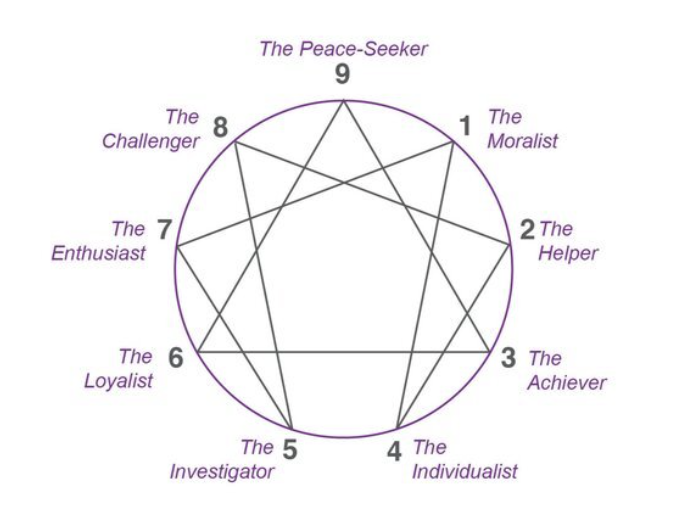
In this episode, Michael, Hari Prasada, and Rasanath explore a core dimension of the Enneagram that is critical in being able to type efficiently and accurately as well as understand better how we show up the way we do and why: the Behavioral Patterns. They unpack the Go-Getter, Withdrawn, and Dutiful triads, three distinct ways we habitually move through the world, relate to others, and respond to stress.
At the center of the conversation is the idea of the Ego Boundary – how protected or permeable we are to external demands and internal experience. They explore Solid, Thin, and Perforated Ego Boundaries, and how these shape introversion, extroversion, perceivable sensitivity, and other aspects of how we function. They explain why people within the same Behavioral Pattern are so often mistyped as one another, and why behavior alone can be misleading without understanding underlying motivation.
Podcast Hosts: Michael, Hari Prasada Das and Rasanath Das
Listen to this episode on Apple, Spotify, or your preferred podcast platform
Highlights
[00:50] Behavioral Patterns as a core Enneagram dimension
[04:10] Why mistyping most often happens within the same Behavioral Pattern
[05:00] Michael’s early mistyping as an 8 when he was working as a trader at Goldman Sachs
[06:00] The Enneagram vs. Myers-Briggs: classifying behavior vs. revealing motivation
[07:30] The Go-Getters (Types 3, 7, 8)
[09:30] Solid Ego Boundaries and the ability to compartmentalize
[13:10] Donald Trump
[14:40] The Withdrawns (Types 4, 5, 9)
[15:00] Perforated Ego Boundaries and the ability to be impacted by the world
[20:10] Susan Cain’s Quiet and the cost of an extrovert-centric world
[20:30] The Dutifuls (Types 1, 2, 6)
[22:00] Thin Ego Boundaries as a complex middle ground
[24:40] Understanding the Types based on their Behavioral Pattern
[45:30] Rasanath’s personal experience with a Solid Ego Boundary
[50:10] Hari Prasada’s personal experience with a Perforated Ego Boundary
[54:00] Final reflections about the importance of understanding Behavioral Patterns for the spiritual journey from the ego to the true self
Quotes
“By observing somebody's Behavioral Pattern, which…significantly aligns with their body language, it's a very quick and effective way to be able to understand and hone in on somebody's Enneagram Type.” -Rasanath
”The Solid Ego Boundaries are not foolproof…It's not that nobody can get to me. I may present myself that way. I may like to think of myself in that way. It's absolutely not true…But these thick walls made me feel like, yeah, I'm fine. I'm good.” -Hari Prasada
“The Go-Getters are very much wanted and accepted in the world. They are making things happen in the world. They're shaping the world, and the world then revolves around them. And the Withdrawn Types have to somehow fit into that and be sort of governed by the Go-Getters, which is extremely challenging…and in many cases excruciatingly painful.” -Hari Prasada
“All the Types can be prone to numbing and going towards all kinds of self-medication.” -Hari Prasada
“Everyone has a soft, sensitive heart and everyone is being affected by the external and internal world…” -Hari Prasada

-
This is an automated transcript and may contain minor errors.
Michael: Hello everyone. Hari and Rasanath. It's great to be back with you guys. Today we're going to be getting into a dimension of the Enneagram that I think is one of my favorite to talk about, and that is the behavioral patterns. So let's just get right into it. Hari, could you share what are the behavioral patterns?
Hari Prasada: The behavioral patterns are broad buckets that classify certain really core patterns of action. Now, with the Enneagram, it breaks up the types, the nine types into three triads. So there are three types that adhere to one classical pattern, three another, and then three a third. These actually are derived from Don and Russ is integrating a teaching of.
The Freudian psychoanalyst, who also questioned many of Freud's theories or insights, and her name is Karen Horney. So she had classified human behavior into these three categories of assertive, compliant, and withdrawn, and Don and Russ at the Enneagram Institute, when they were teaching and training us, they had already integrated that into the framework, mapping out the types according to those patterns, and gave the names that are exactly aligned with Karen Ney.
We have altered the names really in one case. But otherwise have kept the same naming. So from our terminology, we look at the assertive types as go-getters because there are other types on the Enneagram that are also assertive that don't fit into that bucket, but go-getter, like really wanting to go out there and make their mark with force.
So the go-getters will talk about instead of assertives and dutiful and withdrawn are maintained. So if you were to look at these three categories, you'll see there's a lot of difference between each of them, and it gives a ton of understanding into the nature of the types.
We'll talk more about
Michael: Rasanath, what is so important about talking about the behavioral patterns?
Rasanath: when we talk about ways of identifying somebody's Enneagram type, one of the things we talk about, which is actually no small part of the identification, there's just so much that comes at us, even by observing someone is the body language and the behavioral patterns overlap with the body language in a very big way.
So by observing somebody's behavioral pattern, which significantly aligns with their body language, it's a very quick and effective way to be able to understand and hone in on somebody's Enneagram type. The second thing that the behavioral patterns offer is
The Enneagram is really looking at the why behind the behavior, and this again, sheds more light on the why behind the behavior. The third, which I think is extremely important, perhaps the most important from a point of view of learning the Enneagram, is why do we mistype?
And one of the main reasons why we mistype is because we see different Enneagram types demonstrating very similar behavioral patterns, and there is a very common mistyping between Enneagram numbers that fall within the same behavioral pattern.
Michael: Very good. So just to make that concrete with an example, you might see somebody who's showing up as a go-getter and it's very clear that they're part of the go-getter behavioral pattern triad, but we might not be sure about the why behind the go-getter ness.
And when we understand the why, that will help us determine which of the three types within the go-getter behavioral pattern they are.
Rasanath: Yes. So as an example, Michael, you can speak about your own first experience with the EE graph.
Michael: Yeah. So I was working as a trader at an investment bank at the time, and I was seeing how I was a force in the world and a force on the trading floor and how there was the real strength of the way that I carried myself and it would often take down other people.
And so there was a natural gravitation towards the eight. But upon further investigation, and I think you guys probably knew this from the get go when you met me, that it was actually being driven by a desire to succeed and achieve my potential. And it was just that strength was highly. Valuable in an environment like that, and I could mold myself to that kind of strength.
So before we actually get into, uh, a deeper understanding of the three patterns, Hari, is there anything you would say about how this dimension of the Enneagram is similar or different to personality frameworks that are commonly used out there in the world, like Myers-Briggs?
Hari Prasada: Those frameworks, especially based on the work of Carl Jung, Jungian personality typologies, like Myers-Briggs, they classify existing behaviors.
So when we're talking about behavioral patterns with the Enneagram. There's going to be some overlap. There's going to be definitely similarity. The difference is why, where it's coming from, the underlying motivation that the Enneagram gives illumination about, and that is incredible. That really turns things on its head.
So you may see that certain types on the Enneagram tend to gravitate towards certain typings on Myers-Briggs, because especially introversion and extroversion are accounted for by the behavioral patterns in different ways. There are also other dimensions of the Enneagram that account for. Introversion and extroversion, which makes this much more nuanced, much more sophisticated and very, very important to understand.
But the behavioral patterns do a great job at explaining many of the tendencies towards introversion and extroversion. And therefore you can see that showing up in frameworks like Myers-Briggs that tell you, you're more introverted, you're more extroverted. Use I and e and so on to represent that.
Michael: Okay.
So let's go through each of the behavioral patterns, and let's start with the go-getters.
Hari Prasada: So the go-getters, they are characterized by making things happen and coming off as strong. They come off as strong, they make things happen. And as Michael you said, they're like a force in the world that is. Seen with all three of these types, which we'll get into individually as well.
But the overarching sense is I kind of let things roll off me. I plow through life and things, they just, they roll off me. I don't let them affect me so much. You gotta be bold. And actually underlying this behavioral pattern is a very, very crucial dimension within the dimension, and that is called the ego boundary.
So we will share the ego boundary for each of these as we go through for the go-getters, the ego boundary, and what that means is your interface with the world. So the dividing line between the external reality and your internal reality. And what is the. Flow or the opportunity for flow between those two.
In other words, how much do I allow myself to be affected by the external world? This also applies internally. This is another important nuance that on an internal level, this is happening too. So there's the conscious mind, the subconscious mind, and the unconscious mind.
So the ego boundary means it's not only a boundary between the external world and my internal world, but it's also between layers of my internal world.
Okay? So with the go-getters, their ego boundary is solid. It's a big thick line. It's a solid ego boundary, so the world is not affecting me so much. It still affects me, but I have like an armor. There's a layer of protection that also means I'm protected from being touched. I'm protected from being impacted.
It works both ways, and the same is true internally, that I have less access to my unconscious and subconscious mind, even when I'm trying to go there, but I can go there. It's just that the default setup is there are these thick barriers I have to break through, and this is why I can plow through the world and I can feel really good that I'm making things happen.
Look at me. I'm a strong person.
Rasanath: I've encountered this in my own coaching work where the CEO of this company. She has just come back from the hospital. It was a pretty traumatic experience. She runs a big firm with and she told me on the call it's like, I don't know when I will break, but I'm still doing fine.
I'm doing fine. And they're doing fine as a connotation in the sense that I'm still pretty functional. I'm moving things, I'm moving towards my goal, and yes, I feel quite vulnerable, but I'm still going to show up and keep doing the things that I'm doing. So with the Go-getters, the solid Ego boundary gives them a certain kind of functionality, even when things are dire, which actually they sort of wear it as a badge of honor.
Michael: I was gonna say the idea of compartmentalization and Oh yeah, that's great. We talked about this in the past, but these are the people who have the easiest time compartmentalizing things because of the solid boundary. And ha, you did such a nice job, even on the audio format of helping us all visualize what this would actually look like with the solid lines.
Rasanath: It's like having soundproof windows. It's, you know, that's the analogy that I give. There's just so much padding that is available that I don't hear what's happening in the other room. I don't hear what's happening outside the house, um, in my office. And I can just pl through things and there is a certain advantage to that and there is a certain disadvantage to that.
Hari Prasada: Totally. And I just wanna emphasize also the inner world, 'cause this is so important and it's not often well understood. This is going on internally. I'm locking doors within myself. There is an air tight boundary between my unconscious, subconscious, and conscious world, so I have to pay very close attention to that.
And if I wanna raise my consciousness, this is key to understand that I'm gonna
Michael: have to break through some walls. And it doesn't mean that these types are not sensitive people, right? Everyone is
Hari Prasada: sensitive. Everyone is sensitive. The question is, how comfortable are they with their sensitivity and how does it manifest?
What's the flavor of their sensitivity? I give the example of Donald Trump, who's a go-getter with a solid ego boundary, and you see, he would not want to be seen as a sensitive person. Most people don't see him as a sensitive person, but what do you call it? Back in the day when X was Twitter, somebody criticizes him and he fires back instantly to tear them down.
How do you explain that? It's sensitivity. I can't stand, it hurts me. I can't stand being talked about that way. Boom.
Michael: Here we go. Sensitive. You just said there's sensitivity about the sensitivity. There's extreme sensitivity. Yes. To being perceived as sensitive, so that is sensitivity.
Hari Prasada: It's all stemming from this actual impressionable nature in spite of the solid ego boundaries.
So the solid ego boundaries are not foolproof. This is what we also have to understand. It's not that nobody can get to me. I may present myself that way. I may like to think of myself in that way. It's absolutely not true. People are getting through things are getting through, experiences are getting through my own unconscious and subconscious mind is cropping up and calling me.
But these thick walls made me feel like, yeah, I'm fine. I'm good.
Michael: So it's not hard to understand why these types, the go-getter types are the most extroverted
Hari Prasada: Absolutely.
Michael: Okay, so let's go to the withdrawns,
Rasanath: the withdrawn types, by definition, these are types that are shy and are prone to overwhelm and as a way of coping with the overwhelming nature of the world, they tend to pull back. That's why they're called withdrawn.
the ego boundary is a perforated ego boundary. Uh, teacher Russ Hudson also calls it a picket fence in the sense there are gaps, there are perforations, which means now they understand why they feel overwhelmed, because things enter so much more easily from the outside world inside of me, they affect me instantly.
This is also what happens with the difference between the go-getter types and the withdrawn. It takes time for the go-getter types to even recognize that they have been affected because of the solid ego boundary. Whereas with the withdrawn types, I immediately know it's, in fact, I'm almost preparing to be affected.
I know as soon as I step outside, I'm going to be affected by the world because I have things just come in. I also, in the same way, have access to my subconscious and unconscious more readily. Things flow more freely from my subconscious and unconscious into my conscious, so that makes it pretty overwhelming the amount of things that can really affect me, and as a way of coping with the overwhelm, as a way of responding to the overwhelm I tend to pull back from the world.
That affects me so much.
Michael: You use the. Metaphor of soundproof walls for the go-getter types. I'm thinking of being in a New York City apartment on the first or second floor and having paper thin walls on a very crowded street where there's lots of honking and having that is the experience of life for the Withdrawns.
Hari Prasada: When we were living in our ashram, were monastery that we had founded for the purpose of doing this work when we were still monks and we had branched out of our original monastery to focus on this work. I remember having sleepless nights in the beginning because of that noise. I mean, it's such a vivid metaphor and so fitting because that's exactly what it's like that I can't sleep until I get all of the noise machines in place and I figure out exactly what room is most cordoned off, and I mean, we literally have to switch rooms, all of that stuff.
It feels, and this is what I wanted to say, it's crazy making for these types. It's crazy making, and the external world is equally overwhelming, as is the internal world that this free flow of all of the unconscious and subconscious things that just kind of rear their ugly head or crop up or tempt me or attract me.
It's like, what am I supposed to do with that? And it can happen at any time.
Michael: So then it's also not a stretch to understand why these types behaviorally are the most introverted. That's right. Of the three behavioral patterns.
Rasanath: That's exactly right. And when you have a go-getter. This also explains so much in terms of how we don't understand how people are getting affected.
Going back to the ashram, we had a bunch of go-getters who lived in the monastery, some of whom even when they walk, you can experience the go-getter energy. And so for the rest of us who are either napping or reading, even the walking of this person from their room to the bathroom would like significantly affect.
That's loud. And the withdrawn types might sometimes say, Hey, you know, this is too chaotic for me. The go-getter types, look, what are you talking about? Come on, grow up would be the message without really understanding how crazy it is. And this is a lesson that I myself as a go-getter type had to learn because there is a way in which I can just cope with the noise.
Because of the solid ego boundary, but how my behavior is affecting someone else is something that I have to learn.
Hari Prasada: So you preempted something that I, I really wanted to drill into, which is the relationship between these, the go-getters are very much wanted and accepted in the world. They are making things happen in the world.
They're shaping the world, and the world then revolves around them. And the withdrawn types have to somehow fit into that and be sort of governed by the go-getters, which is extremely challenging. Extremely challenging, and in many cases excruciatingly painful. And the response of the go-getters is typically become like me.
Just become like me, do what I do, be as good as I am. Grow some thick skin, toughen up, get
Michael: out there, do something. This is why Susan Kane had to write her book. Quiet. Yes. I was just looking up the subtitle. The Power of Introverts in a World That Can't Stop Talking. Yeah, indeed. Okay, let's go to the third of the three behavioral patterns.
The dutiful, the the dutiful
Hari Prasada: types are defined by constantly measuring how much I am receiving from people so that I can then calibrate to make sure that I give always just more than I'm receiving or as much as I can so that I'm worthy. The idea is if I receive more than I'm giving, then I'm unworthy, and this is what.
Constitutes my sense of wellbeing as a dutiful type, that I'm always trying to make sure that I am responsible in that way. And really you can see this as an obedience to a higher order. The dutiful types are all in different ways, obedient to some higher order. They subordinate themselves to something that is bigger than them, and they want to make sure that they live up to that.
So the dutiful types, they fit squarely in the middle of the solid ego boundary and the perforated ego boundary, we will call it a thin ego boundary. Their ego boundary is thin. It's not perforated, letting everything in and having free flow. It is completely closed. Which is very significant and yet it is not so solid and thick.
So there is an interesting middle ground. That doesn't mean, oh, they're the healthiest. They have the ideal, optimal situation. They got the balance right? Not at all. Not at all. It has its own complexity essentially. You could say they're still impacted by the world and by themselves inside, but not as much.
So they have some more difficulty being affected than the go-getters and also not as much access to things as to with drawings. So you get exactly the same advantage and disadvantage just in a different layout.
Rasanath: The thin, in this case, one of the ways of understanding this thin is the, I'm trying to align to a higher order, right? And because I'm trying to align to a higher order, I do get affected by things because I am looking to see whether I'm aligned to a higher order, whereas with the go getter types, I am the higher order.
So that's the difference. So
Hari Prasada: shall we get into the types? Well, just a word about introversion versus extroversion, as you've been pointing out. For the go-getters and the withdrawns. With the dutiful, it's not clear cut. So for two of the types, there is a tendency to be more influenced by their wing, and we'll see how that plays out.
So they are more neutral in terms of introversion versus extroversion. They're not completely neutral, and if we were to characterize them, we might say they have a little bit more extroversion than the withdrawn stew. So they're not completely neutral. But you'll see there's a way in which they're most affected by the wing, and that's what really determines whether they are introverted or extroverted.
One type is the outlier, is an anomaly in that, and that type is. Completely extroverted By the nature of the type, there are other dimensions that can tone that down and make them introverted and so on. That's there. But by the nature of the type itself, they are completely extroverted. That's just how this works.
Michael: We'll leave that in suspense for, I don't know, 10 or 15 minutes until we get around to the three types of the dutiful. Let's get into the three types of the go-getters, and we can say just what the types are, and then a quick word about how they are a part of the go-getter triad.
Rasanath: So I don't think this will come as any surprise if we have some understanding of the Enneagram types themselves, but the types three, seven, and eight are the types of the Enneagram that are the go-getter types.
So the type three, the name is the achiever. I'm very goal oriented and I am living for the fulfillment of my potential that drives me to go outside and make things happen. The type seven I am in search of the thrill, adventure, and experiences, whatever I want to experience whatever life was to give me to experience.
And so I'm going out there into the world seeking experiences and making experiences happen. And the type eight, which is about strength and the experience of strength, is I am interfacing with the world. To understand and prove my own strength to myself and to the world outside. And so I have to interact with the world, push things, literally push things to experience my own sense of strength.
And of course, I can make a lot of things happen through my power, right? So the types three, seven and eight are the go-getter types and the Enneagram. And what we will also see the solid ego boundaries coming into play with these types. You see, they are not as affected by the world around them, even when they are internally dysfunctional, the go-getter types, they can be externally extremely functional.
This is a very strong characteristic of the go-getter types in their roles, in their jobs and their functions. They can be highly competent even when they're not doing internally very well because of that solid ego boundary. What also becomes the challenge? Is because of the solid ego boundary, they are less affected by the world, which also means, especially as they go down the levels of consciousness, it becomes very easy to shut down what the world is trying to tell me and what is happening in my own internal world.
Extremely easy to shut that down, which means the level of awareness that I have of my surroundings and also of my own self very quickly false because first of all, the access to them is harder. And secondly, when I'm not working to improve the access than they become very quickly unavailable to me.
Hari Prasada: I wanna just give one caveat here.
When we're talking about not being affected by the world or by my internal world, that's for ease of understanding. That's to make a point. It is not strictly the case. Everyone is being affected. The go-getters are no exception. Often what's happening is they're using their ego boundary unconsciously to block to suppress.
It's not actually that they're just not affected, it's that it's more natural in their default state to be less affected, to feel the effect less, but the experience is still living in them and it's causing issues. It's not that they can just ignore it because, well, I have the protection against it with my solid ego boundary.
And if you look at the work of Dr. Sarno, he passed a few years back in the medical field, he uncovered how the unconscious stress is way more devious and even deadly than the conscious stress. So. All types need to be aware of this. Go-getters need to be especially aware of this because it's so easy to chalk it off of like, yeah, I'm just not that affected by things.
And now I just heard this podcast where it's like, see, I'm really not that affected by things. I'm just graced with a solid ego boundary. Yeah. I mean, it has its drawbacks. Sure, I can work on them, but it's pretty good. That's not the case. There is a suppression mechanism that's built in here that we have to be so careful about because everyone has a soft, sensitive heart and everyone is being affected by the external and internal world.
Everybody,
Michael: no exceptions. And with the three individual types that we just talked about, I mean the threes are the most attuned to what other people are thinking. And so how people are perceiving me. And what the need of the hour is, and there's so much sensitivity there. With the three, with the seven, it's like I'm very sensitive to are we having a good time?
And if we're not, I gotta increase the energy and increase the fun. And so there's extreme sensitivity to that. And then with the eight, we talked about that a little earlier with the example of Trump, but there's an extreme sensitivity to my own sensitivity and to my own strength, and making sure that that's there.
That's it. Let us go into the next behavioral pattern with the types. So let's get into the withdrawn types,
Hari Prasada: that withdrawn types. They are the four, the five, and the nine. So the four, the individualists, the five, the investigator, and the nine, the peace seeker. The four is withdrawn because they are experiencing.
That their hearts are so intensely affected by everything and producing all kinds of emotions in reaction and out of desire to experience my authentic self and who I am. Deep down, I wanna be just me, which is great in theory, but when we settle for a proxy, when the fours settle for a proxy, it doesn't work.
When we settle for the ego version of me, then it just becomes a rigged game and it's totally nuts. So I'm being affected by everything. Internally and externally. I wish I could turn it off. It's way too much. And you see how the perforated ego boundary is playing out, and especially with the realm of the heart, there's some kind of connection there that my heart is causing me to feel so vulnerable and kicked around and everything is just overly stimulating and registers way too loudly.
But I want more of the stuff that I want. I want more feelings and experiences that I want. Things are also not affecting me as much as I want. That's another side of it. So that's the four. The five is more in the realm of the mind. You see that the thoughts are constantly percolating, and I'm being affected by this idea and this thing.
Then inside me, oh, I have so many impressions and memories and things that are itching to be seen and dealt with and studied, and I wanna produce expertise out of it all, and it's very overwhelming, and I need to sort of block myself from the world to just study and do my thing and not be affected by all of these unreliable people that are bringing me away from what will make me an expert.
If I just can be cordoned off from the world and have the time to just study and produce and figure things out, investigate. Then, ah, then it will be all right. So I withdraw. And the world of people's emotions is super overwhelming for me. I don't even know how to deal with that. That doesn't make sense to me.
So all the more reason to sequester myself and be separated, the nines, the peace seekers, they are feeling the overwhelm in terms of there's so much conflict and chaos. I'm not in harmony. I wanna be peaceful. I just want to be peaceful. And the world is not peaceful at all, and my own internal landscape is very threatening.
Oh, I wish I could stop this stuff from. Coming up to the surface and pulling me in different directions. I just wanna flow and be quiet and contented in that way. But everybody outside, they just need to leave me alone because they're not peaceful, they're not making me peaceful. And I, I want to withdraw and just settle myself somewhere in a comfort zone.
And then the internal stuff is also like, too much. Too much. Just think of nice things. Think of nice things, be comfortable. Everything is all right. Ah.
Michael: Anyone who's listening on audio is missing out on the incredible facial expressions that you are doing right now.
What's becoming clear to me as you're talking? It was just, I got this image of this perforated ego boundary. The withdrawn nature of the withdrawn types is an attempt to make the perforated ego boundary solid in some way. It's an attempt to give me protection, but it doesn't really work because my natural state is just, it's so perforated
Hari Prasada: and wherever you are, there you are.
The internal piece of this is so important, and even if I'm sitting in a quiet room, even if the temperature is perfect and everything is perfect, I will still see that something is affecting me. If I'm a little attentive, there's no off switch.
Michael: There are numbing mechanisms that are the attempt at the off switch.
Hari Prasada: Yeah, yeah.
Michael: But we can only numb so much.
Hari Prasada: That's right. And all the types will be prone towards numbing and going towards all kinds of self-medication and you name it, or escapism, having fun doing things. It's not only the sevens that wanna have fun in the world. Uh, we know that everybody wants to be happy and do fun things and it's really out of the inability to deal with the stuff I'm being affected by.
It's this dimension that plays a major
Michael: role, major role, the dutiful types. And now we get the reveal of the one dutiful type who is always extroverted.
Rasanath: Thank you for reminding, because we did leave the audience and a suspense there. So the remaining three types, the three beautiful types. Type one, the moralist, type two, the helper, and type six, the loyalist.
And by definition we can also see how each of these types, they are aligning with a higher principle. There is a way in which I am, subordinating and obedient to a higher principle. For the one, it's a moral principle. For the two, it is about service to somebody. And for the six it's about loyalty.
The type two is the anomaly, the type two is very extroverted. It's about going out there. And the reason again is because for the two, it's so much about serving others and being in
Hari Prasada: connection.
Rasanath: And being in connection. Exactly.
Hari Prasada: What I am subordinating myself to in the ultimate is actually love. That's the thing.
So for the one, it's principles of ethics for the two, it's love for the six. It's devotion to a cause and the rules that will help make sure that everything stays in place and that we can serve that cause, and I can trust it.
Rasanath: So. With how they individually play out. For the one, as we have described, it's about being subordinate or obedient to a higher principle.
And I'm constantly looking to see if I'm living according to the principle or not, if others are living according to the principle or not. And here's the equation. In order to help other people lift that principle, I have to live it perhaps even more than other people are living it once. Teach by example.
And so this is where am I giving more than am I receiving comes into play where I have to reach a certain standard of the principle before I can expect other people to live by the same standard, which means I have to do a lot of internal work in order to then go outside and change things. That's the equation.
For the two, it's even more direct. Well, if I'm not doing more for other other people, how can I even be the helper? So it gets relativized for all the igram types, but for the two, and you'll see that the two get very uncomfortable when others around them are serving them. I have seen this. I have a two wing, I've seen this in myself.
If somebody gets up from the couch and goes to wash the pots, I get physically disturbed. I wanna actually just sit back and relax because I've had a long day. But now I feel the compulsion to get up and go and help the person because my identity, my role as a helper here is I have to give more than I receive.
And in this case, in the realm of service love, this is how I express my love, is by I have to become the source of love for other people. Before I can even consider getting something from them in the form of love. And for the type six, it's devotion to a higher cause. So I look for people who have dedicated themselves to a higher cause so that I can follow them.
Sixes also have this deep desire to want to be a support for others. It's like I wanna be the pillar that is supporting everything else, and at the same time, I'm looking towards the ground to see if the ground beneath me is standing. Because otherwise I would like support the ceiling if the ground beneath me is not standing.
So at the same time, I do want to be able to support the roof with the anxiety that I don't want the ground beneath me to be falling apart. That's the energetic difference between the one, two and the six in terms of how they show up as beautiful types.
Hari Prasada: Just a few words on this. The idea of being devoted to a cause is not exclusive to the six.
It's very characteristic of the ones
Rasanath: and the twos as well.
Hari Prasada: The twos also the ones, in some ways, I mean there the prototypical activists, so they're pedalling causes that get seen perhaps more than most types, if not most, any other type. But even they, you can't say, oh, this person has a cause. They must be a one or they must be a six.
Or they even must be a dutiful type. There are plenty of threes who are standing for causes and promoting them very effectively. There are all kinds of nuances that we want to be very mindful of here, and even the defining feature that we gave, we have to pay a little more attention to that defining feature of constantly measuring.
What I receive versus what I give so that I can calibrate to give more than I receive. That's a sign of creative consciousness or high consciousness that we don't want to be in debt to people in a way where we're just takers, right? We don't wanna be takers. We want to be givers. And that can easily be taught or mimicked in a less healthy way where it's, this was what was valued in my upbringing, or it won't make me look good.
If I'm a taker, I'll be sniffed out and that won't work. Right? So we have to just be very mindful. Of those finer aspects to this. What we mean by constantly measuring to see, am I giving more than I receive, is it's a compulsion that I can't get away from. It's just like for the withdrawns, I can't stop being overwhelmed.
I wish I could, I wish there was an off button. I can't here. It's like even if I wanted an off button, I just can't. This is the constant dynamic, okay. To feel like I have an identity in the world. I better be giving more, I better be giving more. I better be giving more. I better be giving more. It's really intense,
Michael: very helpful.
And you also, Hari earlier talked about the influence of the wings, how that was, I mean that's true for all types, but with the dutiful types, it can be particularly true how the influence of the wings shapes how introverted or extroverted. So as an example for. A type one with a nine wing, because the nine is part of the withdrawn triad, that person is very likely to show up as introverted.
And then if you have a one with a two wing, because the two, as we just talked about is always extroverted, that person is much more likely to be bubbly and in connection with other people and showing up as more extroverted.
Hari Prasada: Yeah, this is so important. I had mentioned it earlier, but it's great that you brought it to this.
The thing with the one and the six of the dutiful types is they're actually swayed by the wing, and this is incredibly helpful for typing as well as understanding why we are the way that we are. That the one and the six, they get swayed by their wing. So the six with a seven wing, seven is a go-getter extrovert, six with a seven, predominantly extroverted, six with a five.
Withdrawn wing, predominantly introverted. Doesn't mean that there aren't ways that they can show up as extroverts. Doesn't mean that there aren't other things to account for, but this is a huge influence in terms of introversion versus extroversion. Huge. And so likewise, as you mentioned, the one with a nine versus the one with a two.
Now the two is not a go-getter, but because it is, even though it's a double dutiful type still. That extroversion of the two sways, the one towards extroversion, whereas the introversion of the withdrawn type sways the one towards introversion. And then you get I, I mentioned double dutiful, double withdrawal, and double go-getter.
So those become more extreme in their behavioral pattern. And then you get what we've touched upon as what we call polarized types. This is, again, not an official dimension to the Enneagram. It's just a shorthand to point out something that their energy's going in different directions. You have a three with a four wing or a four with a three wing.
That is. Going in both directions, withdrawn and go-getter. Then those types are like, what is going on? You know, I want, I want both of these things and I don't quite understand it and I don't know how to manage it. So either it makes you more extreme in one way or it balances you out in a way that is crazy making, again, both have their advantages and their disadvantages.
No one type and wing combination is any more fortunate than another. They're just different struggles. Different struggles. And what you do with it is what counts. But we have to know the struggles and we have to own them
Michael: and work through them. So how has understanding the behavioral patterns helped with typing and if there are specific examples that you would share either from your own lives or from the work that you've done with clients or in workshops.
Rasanath: For me personally, the recognition of how my solid ego boundary doesn't make me. So many times I have function in my life thinking, oh, look at me, even when I'm tired, I can do so many things. I can still move the world, make things happen again. Wearing the badge of pride around the fact that I don't get affected so much by physical tiredness or what people have to say, and the recognition of how that may not necessarily be a good thing that, well, sometimes it may give you the resilience when that is very healthily implied, and at the same time it actually dims your awareness of what's happening inside of you, what's happening outside of you, and potentially dims your awareness to such an extent that the only time you'll become aware of it.
Is when things are dire. So one other challenge that I have personally experienced is the access to my heart. And I've shared this very openly many times when things are very, very busy.
Because of the solid ego boundary and the way I am oriented as a go-getter, it becomes much harder to really bring my heart to the things that I'm doing. it's not so easily accessible, but it takes some work to one, recognize that. And number two, actually slow down a little bit before I can genuinely access my heart and bring it along, even when things are chaotic or busy.
Michael: Beautiful. Thank you for sharing that, that personal example. And. You mentioned, you know, maybe this is a good thing, maybe this is not a good thing. And I think you were highlighting that the pride around that is never a good thing. Right? So yes, it can be helpful sometimes to function in this world, and we can use it hopefully in service.
But when we have pride around it, then we are always being misled away from what the actual reality is and what the best version of ourself would be.
Rasanath: Yes. It's the pride around it. And it's also sometimes people say, yeah, I get that, but, and the, but it's almost like a downplaying of the challenges. Mm-hmm.
It's the downplaying of the challenges that is also equally. If not more dangerous. It's very important to, especially for the go-getter types and me being one, we don't really like to acknowledge what our challenges are, what our true challenges are, and it can be a very easy downplaying of the solid ego boundary.
Yes. But you know what it, it gives me whatever I want and so I'm not going to be too concerned.
Michael: Yeah. There's little ends justify the means, and one of the ways to combat this, or to at least start the process of combating it, is to get very in touch with the downsides. That is what brings the humility is that I see that.
I have such a hard time getting in touch with my heart and I wanna get in touch with my heart. That's a really good thing, but I'm not very good at that.
Hari Prasada: The humility is dissolving the false covering to ourselves.
The real self is humble, and that becomes the antidote to the coverings. It dissolves these coverings. Lost, envy, anger, pride, madness, illusion, fear, all of these things, which actually have nothing to do with our essence, our core, who we really are and who we all are craving to be and manufacturing versions of ourselves to try to be like, but which is just increasing the madness of not being who we are.
It's all obfuscating. Humility is actually acknowledging, oh, wait a minute. These things are not healthy for me. They're not good for me. Maybe I should slow down and stop these tendencies and actually work through what I have to work through
Michael: Or is there any example that you wanted to share?
Hari Prasada: Thank you. Well, for myself, the struggles of my type as a four, the individualist are, they were beating me down. I can say when I first discovered my type, I broke down into tears. I felt so exposed and overwhelmed.
Michael: I was just gonna say, how you responded also speaks to the perforated ego boundary.
Hari Prasada: I didn't know what to do with it. It was like, whoa, this just blew open a reality that I had never imagined existed or that I could discover, and now what am I gonna do? Like this is too much. Everything is too much, whether I know this or I don't. But now that I know this, I can't unlearn it, and so I feel a certain responsibility to do something with it, and it was so intense.
Just my entire life has been a string of experiences of feeling really affected by the world and not being able to control it, not being able to calibrate it for maximum wellbeing. And when I learned about the perforated ego boundary, it helped me to become more reconciled. It's not the only thing.
Learning about the four and all the different dimensions have been vital, but the perforated ego boundary marks a significant landmark in that arena where I saw, oh my God, this explains so much. And I could get in touch with some more much needed compassion for myself. Don and Russ say about the fours, you're doing much better than you think.
And. That always soothed me to hear because we are very hard on ourselves and we do feel like there's something wrong with us. Like, why am I so affected by everything? Why can't I just plow through the world like the go-getters who are telling me to do that? They're saying, you can do it too. You should do it.
You're not doing enough of it. I shared in our book distribution podcast and or Upbuilding a self podcast how I was even sentenced to do a service when I was a monk. That was meant to toughen me up. That was meant to make me a go-getter, like the go-getters or like the people who were molding our culture in the monastery.
And it was so painful. It was so painful to go out on the streets and distribute books and face rejection after rejection, after rejection, and to abandon everything that I was building up to because I was told. That you're not like the other monks. There's something, I mean, this message wasn't given explicitly, but this is how I internalized it.
And there was something of a truth to it that there's something wrong in you that needs to be corrected. And I was like, but this is how I'm wired. And when I understood the perforated ego boundary, it was like, whoa, this is what that wiring looks like and feels like. It gave me a visual that was so dramatic and a a sense of order amidst the chaos that I could be much more compassionate with myself.
And it's not so easy to explain that to other people. I hope these teachings help, but the world is the way that it is. And I do find that I would love if people were more sensitive to these dynamics for everybody, and definitely for myself as well. It's a cross that we bear. It's
Michael: a cross that we bear.
I'm actually just so appreciating the beautiful qualities of both the go-getter and the withdrawn type as a result of what each of you have shared about yourselves. Thank you for that. As we start to come to a close, how does the dimension of the Enneagram that we're talking about, in this case, the behavioral patterns, help us on the spiritual path,
Hari Prasada: I think if I had more self understanding and self-acceptance at the time when I gave that example of my book distribution sentence, I think that I would've been more comfortable in my skin. I think that goes without saying, but I just imagine what that would've been like and to know that I'm like this for a reason.
I'm not bad or wrong because of that, and yet it's humbling to be struggling like this. We can't put any false pride in that or make some kind of a cause out of it for self-righteousness, that it's humbling to struggle so much and to have to accept my struggles and be with where I'm at, and this is how I'm wired.
I have to live with it. It's not worse than how anybody else is wired and I can't make a cause out of that. See, everybody else is just more fortunate. I've lived through that. I've lived looking at the go-getters thinking, oh, they're just blessed. Maybe one day I'll become like them or. Going back and forth between wanting to become like them and shunning them.
Oh, I'll never be like that. So it's about seeing reality. It's just seeing everything as it is, accepting it and using it on a path to becoming who we really are. Removing all of the coverings, all of the nonsense that we heap on top of ourselves as ego identities. I'm this, I'm that. I'm good because of this.
I'm bad because of this.
Michael: These are just stories that are confining us. They'll never allow us to be who we are. Who we are is beyond all of this. But it starts with, if you don't even understand your psychophysical nature and these massive.
Hari Prasada: Influences on our psychophysical nature built into our psychophysical nature. How are we gonna get to the real self,
Michael: So what I hear you saying is, on one hand we have to be able to identify, I am a part of this behavioral pattern triad. In some ways this is me, and there's a paradox because. At the same time, this is not me. This is not actually who I am, but we need to be able to see the wiring that we come with and how that tends to show up in the world behaviorally so that we can work on ourselves and actually move to the real us.
Hari Prasada: I have to use my nature in this life to get at my eternal nature, the true self.
Michael: That feels like a phenomenal place to end. Thank you both for this conversation. For as always, sharing your insights on not only the Enneagram but on this most critical journey of all, which is actually beyond the Enneagram of moving from who we think we should be to who we actually are.
Thank you. Thank you so much. Very grateful.
Episode Transcript
Continue Exploring the Enneagram
Browse all Enneagram podcast episodes
Understand the Enneagram framework — clear breakdowns of the Types and how the system works
Join our live Enneagram community, Enneagram Library Live, hosted by the Upbuild team.
Take the two-day Enneagram 101 workshop