
The Upbuild Enneagram Library
The Achilles Heel of Every Enneagram Type (And How to Heal It, Including The Five Stages of Grief)
Subscribe on: Apple Podcasts, Spotify, YouTube, or wherever you get your podcasts

Episode Description
What is the one thing about yourself that you cannot accept?
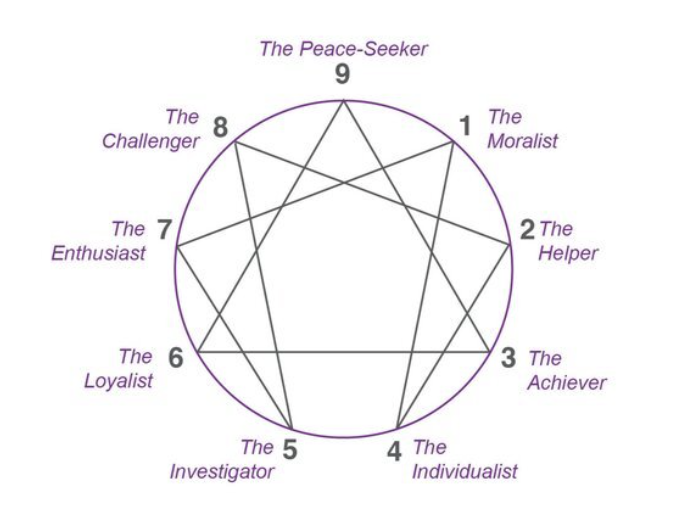
In this episode, Michael, Hari Prasada, and Rasanath introduce the Upbuild original concept of the Achilles Heel. Drawing from years of study and teaching of the Enneagram, they explore how each Type has a specific vulnerability it unconsciously resists accepting, and how that resistance becomes the source of suffering and disconnection. They explore how denial and anger often emerge when we encounter it, and the path to acceptance additionally aided by understanding the five stages of grief.
Podcast Hosts: Michael, Hari Prasada, and Rasanath

Listen to this episode on Apple, Spotify, or your preferred podcast platform
Highlights
[01:00] The Achilles Heel of the Enneagram
[02:50] The relationship between the Achilles Heel and the Basic Fear
[05:30] Type 1
[07:00] Type 2
[09:30] Type 3
[10:50] Type 4
[11:50] Type 5
[13:50] Type 6
[14:40] Type 7
[16:20] Type 8
[16:50] Type 9
[20:20] Understanding acceptance, aided by understanding the five stages of grief
[22:10] Denial and anger
[23:50] The role of bargaining
[25:00] Reaching the stage of depression and experiencing hopelessness
[26:40] Embracing the psycho-spiritual journey of acceptance
[31:30] Moving beyond denial to cultivate humility and growth
Quotes
"Emotions are the first thing we have to wade through before we can get anywhere near the core of who we are." -Hari Prasada
“When we resist, we are making ourselves more vulnerable, more susceptible to the fear.” -Rasanath
“All of these Achilles Heels are universal, but one of them is really the undoing of the Type.” -Hari Prasada
“The self resides in the heart.” -Hari Prasada
"...If we're really paying attention, there's something that we're grieving at all times." -Michael
Episode Transcript
-
Michael: Hello, everyone. Welcome back to another episode of the Upbuild Enneagram Library. This is Michael Sloyer, and as always, I am here with Hari Prasad and Razanath. And today we have an Upbuild original for you with the topic that we're going to be covering today. We're gonna be talking about the Achilles heel
So it's a very exciting topic, and really looking forward to getting into it with both of you today So Hari, could you get us started by sharing what is the Achilles heel in the context of the Enneagram?
Hari Prasada: Yeah. This is something that we've been looking forward to introducing to our listeners. It's something that we created actually many years ago based on our understanding of the Enneagram as taught by Don Riso and Russ Hudson at the Enneagram Institute, and we were trying to boil down what is the suffering that is our undoing.
There is a way in which I cannot accept myself that is specific to my type and which sheds a lot of light.
So we had processed many, many things to try to come to this point of what is it about ourselves according to our type that we cannot accept, something inherent to our being that is the cause of our downfall. It's our undoing. It's just like the great tragic hero, Achilles. He was completely invulnerable except for his heel.
There's apparently a story that his mother had dangled him into the river Styx, and his body became invulnerable through the contact of that river, but the heel was the means to defeat him because she was holding him by the heel, so that was not dipped in the invincible making waters. So there's something about us which is so deeply vulnerable.
It's the means of our being undone. It is how we can never become our real self. It's because we cannot accept this thing about ourselves. And we recently were sharing about this in our Upbuild Enneagram training, and we felt that the impact of this lent even further urgency to be able to share with you.
Michael: So how does the Achilles heel relate to the basic fear of each of the types?
Because you could also think of the basic fear as the thing that causes our downfall.
Hari Prasada: The basic fear is that fear which runs my life. It governs me. So it is a very, very vital primordial lens for understanding the type. Now, there's something that that brings about a way that I cannot accept myself because of that fear And so it pivots us in a direction which illuminates more insight about the type and what it is that we're struggling with, why we are blocked from being ourselves.
Rasanath: I think, um, the idea of acceptance is a very big part of understanding the Achilles heel. And each type, as we see, fails to accept their core vulnerability. And what we will highlight as we go into the types is the idea of acceptance and not acceptance. The idea of when we don't accept, when we have not reached a place where we accept our vulnerability as a type, then we are resisting.
And when we resist, we are making ourselves more vulnerable, more susceptible to the fear. That's the dynamic that we are unpacking here when we talk about the Achilles heel. It's a journey towards acceptance of my core fear.
Hari Prasada: When we teach the Achilles heel, and we're asking, "Can you guess what it would be based on understanding the basic fear, based on understanding more about the type, especially the basic fear?
Can you guess what might be the Achilles heel?" It's often incredibly challenging for people to guess. Sometimes for some types it's easier than others, but this is something very subtle. This is something we're not conscious of, and when we become conscious of it, that's when it has so much power. And the fact that we are not conscious of it shows we have a lot of work to do.
So this is also not something that I have to accept about life. I mean, yes, it also applies to life, but it's about myself specifically. It's not something incidental or something temporal. It's something intrinsic to me about me, and this is really where the rub is, and this is what makes this lens on the Enneagram very distinct.
Michael: Okay, so you wet our appetites let's start with the type one. What is the Achilles heel of the type one?
Hari Prasada: The Achilles heel for the type one, the moralist, is I can't accept my own impurity. I am somebody that fancies I must be good, I must be pure, I must have all sanctity within me, but I'm just not that, and that's a huge problem for me.
That is something which makes me feel like I am not me. I can never be me. This is a catastrophe, so what am I? And yet all I do is just suppress, suppress, suppress so that I can feel like I'm still a good person, I'm good enough. But deep down, I know that I'm not living up to the standard of perfect purity that I fancy.
So I have so much impurity in me, and I can't accept that that is a part of my journey towards purity. I throw that out. I say, "No, no, no, I'm pure enough. I am pure," or, "Who cares? I don't care. Nobody has to be pure," even though that's my driving force, is to be pure. But I'm so at war with myself on this point, unconsciously, that I cannot accept that in my current state, before I identify with my true self,
Before I can come to that point of complete experience of that I have to accept that I'm not there.
I am impure, and that is so confronting for me.
Michael: Thank you. And the type two?
Rasanath: The type two, I can't accept my own neediness. And we have observed this consistently in our workshops as well. When you talk to a two, the word need and the word needy are essentially the same. We all have needs, but for the two, when I acknowledge that I have needs, I essentially become a needy person, and that completely will goes against the grain of me thinking of about myself as being quite unselfish.
Twos have a tendency to dismiss their needs. It's about other people's needs and I meeting other people's needs. It's not about my needs at all. But I use other people's needs as a means to fulfill my own And I'm not able to draw that line. I'm not able to really accept the fact that I am a needy person.
And when I resist this, then I make it all about the other.
Michael: So the common theme of type one and two so far is suppression of what is actually true.
Hari Prasada: That's true for all the types, yeah, all the types. And actually, all of these Achilles' heels are universal, but one of them is really the undoing of the type.
Rasanath: What we also see, again, to just give more color here, we know about the stages of grief. We talk about how denial is the first stage, then, you know, the second stage of grief is anger, and the third stage of grief is acceptance. So you'll see a very similar journey with the types as well. I deny this very thing about myself, but when I can deny it, and I also become very angry at the fact that this is my state before I come to acceptance.
So, and this is true about all the types, you will see very clearly when the types are reminded of their Achilles' heel, the response many times will either be denial or anger around it. And that's a very big clue that there is some grief here associated with this particular vulnerability. So the third stage here is acceptance.
And when we can, we have actually furthered our cause significantly.
Michael: I am looking forward to speaking about the acceptance and how we get to acceptance for each of the types. And for now, let us go into the next of the types, the type three. Type
Hari Prasada: three is a tricky one. I can't accept my own self. I can't accept my own self What is the idea here?
I want to be what you value. I want to be whatever it is that makes me shine in your eyes. I want to feel like I am successful, and that has to be based on standards of other people, what they think is successful. And therefore, I lose myself in the game of trying to win, trying to become something that is valuable.
Valuable means intrinsically other people have to value it. So me, the intrinsic me, gets lost in that, and therefore, I will mold myself, I will do whatever it takes to become something that I think is my own idea, that I think is coming from within me, but it's based on all of the external inputs that I've gotten of what makes life truly valuable, what makes somebody truly valuable.
So I cannot accept me. I cannot accept my own self. I lose myself.
Michael: Type four?
Rasanath: I can't accept my own well-being. The identity of the four is based so tightly on their emotions, and they also, like, often begin to recognize that the positive emotions, they have a much shorter shelf life than the not so positive emotions, especially about myself.
And so as a way of sustaining my identity for a long time, the gravitation is towards the more negative emotions that is fueled from the fact that nothing is quite good in my life. There is a sense of tragedy, and I want to sustain my life in that sense of tragedy. Like, I am just undiscovered. People don't understand me.
So much is wrong in my life. But what they fail to recognize is there is so much good going on, and there is constant underplaying or undercutting of the good. So I can't accept my own well-being.
Michael: Thank you. Type five?
Hari Prasada: For the investigator, it is I cannot accept my own heart. Now, this is, again, universal. All the types have a very, very fraught relationship with their hearts, every one of them without exception, and this would be a fantastic focal point for all of us.
For the type five, why is this the thing? Why is this the centerpiece? The Achilles heel is that I don't fit in to this world where people have all of these emotions and these expectations, and I have to relate to people when I don't even know how to relate to myself. I don't know how to relate to my own emotions.
They bewilder me. I can't trust them. They're fluctuating. I'm looking for what can I trust, and I'm thinking absolutely not my emotions. Absolutely not the emotions of other people. So what are we doing here? I just need my place in the world in a way that I can trust, which is based on facts And emotions seem to be almost the antithesis of that, and then I get all these expectations on my head which overwhelm me, and I feel like I don't know what I'm doing.
I feel like an alien on this planet, and it starts with the fact that I reject my own heart and the emotions that it produces. I decide this thing is confusing, it's bewildering, I don't get it, it's uncomfortable, and definitely that's the case for other people in my life. I just decide I don't really accept my heart.
I'm just gonna go for the facts, and that is my undoing, because I can never be fulfilled in that way. It's impossible to be oneself. The self resides in the heart. emotions are the first thing we have to wade through before we can get anywhere near the core of who we are,
Michael: Type six?
Rasanath: Type six is I can't accept my own knowing. The sixes experience the challenge of not being able to fully trust their own self, and when I don't trust my own self, how do I trust what I know? Even if I know, how do I know I know? So I need to know more in order to know, and then I need to know more in order to know that I know.
This is an endless loop. So it starts with being able to accept that I know. I can own my own knowing. But when I don't accept my own knowing, then there is no ground for me to stand on, which leads to the constant experience of distrust and paranoia for the type six.
Hari Prasada: Type seven? For the seven, it's I can't accept my own pain.
I can't accept my own pain. This is, of course, very clearly coming from the basic fear that what I'm afraid of is being trapped in emotional pain Being trapped in emotional pain, and therefore I have to run away, run away, run away into all the happy-go-lucky experiences so I can feel like myself in the way that I want.
And the fact of the matter is life dishes out so much pain, and there's so much pain before life dishes out any of it because I'm carrying in my heart the disconnect from myself, which is the greatest pain and the source of all other pain. It is the only real suffering. Everything else is a derivative of that.
So I am at odds with this because I just wanna be happy go lucky by default, which I am as the true self, but as long as I'm disconnected from myself, it doesn't work. I have to accept the pain of that disconnect in order to then reconcile, and I don't do that. Instead, I run towards pleasures to drown out my pain.
I'm not in pain. I can't accept my own pain.
Michael: So
Hari Prasada: there's a theme emerging
Michael: of I actually am the thing deepest down
Hari Prasada: Yes
Michael: But I'm not the thing in my current state
Hari Prasada: Yes
Michael: And I can't accept that I'm not the thing in my current state, which prevents us from getting to the thing which is deepest down
Hari Prasada: Well said.
Exactly.
Michael: The Type 8.
Rasanath: The Type 8, I can't accept my own vulnerability. This hits the core of the 8's being itself. And I would say just as true to the Type 8, this doesn't require a lot of explanation. It's very straightforward. The 8's whole being is to make sure that I can never feel my vulnerability.
That's the show of strength and toughness because I can't accept my vulnerability.
Michael: And the Type 9.
Hari Prasada: I can't accept my own importance. Now, this seems paradoxical because the ego wants to make us so self-important, so why should we accept that? This is a different kind of importance. This is not the self-importance like that from the ego.
I can't accept my own importance. It requires a little digging to understand. See, for the 9, I wanna be peaceful at all costs, right? My basic fear is, uh, that I will be unharmonious. My world of internal peace will be lost. And so in order to salvage that, in order to try to live in that world, I decide any kind of responsibility is inherently unpeaceful.
It is not helping the cause. It is exactly what is breaking my peace. And then responsibility also means that other people may have a stake in this, and they may not see everything the same way that I do. There might even be conflict. Oof, this is really too much. So let me avoid all responsibility, and I'll just live in my fantasy land where you're good, I'm good, everything's good.
We just be peaceful, and we flow together, Now, is that real? No. It's a fantasy. It's a la-la land, and it's actually a rejection of my own importance. By not taking responsibility, I'm saying I don't matter. I'll say, I'll be so insignificant that nothing should fall on me that is not peaceful, and then I'll have my out.
I'll have my escape, my justification for not having to do anything that I don't find comfortable And I think of myself in those terms, and I basically make myself so small that, yeah, then I'm peaceful. But this is artificial, it's escapist, it is unkind to myself, and it's unkind to the people in my life who I am responsible for.
It's not satisfying because every one of us needs a sense of contribution, and it's just not true. You are important because your self is important, and your self is important to everybody else in your life. Fulfill your potential. Stop not accepting your own importance. It makes no sense. It's just a very, very poor coping mechanism.
As with all of the types' coping mechanisms, they don't hold up.
Michael: Thank you for that little round trip tour of the Enneagram. And as I think about each of these Achilles' heels, so I can't accept my own impurity, I can't accept my own neediness, I can't accept my own self, I can't accept my own well-being, I can't accept my own heart, I can't accept my own knowing, I can't accept my own pain, I can't accept my own vulnerability, and I can't accept my own importance.
I think we can all relate to all of these. These are universal in many ways, and yet as we share with the basic fears, there is one particular one that is most central to us based on our dominant type. Well, let's talk about acceptance 'cause I was very excited to go there How do we actually do the work of accepting these things which are so hard to accept about ourselves?
Rasanath: So previously, I had mentioned how, you know, before we reach the stage of acceptance, we go through denial and anger. And Elisabeth Kubler-Ross, she's the person who really developed this framework, and it's not three stages, it's actually five stages
So we will walk through very briefly what those stages are so that we understand what the trajectory looks like. Now, what's also important here is that it's not linear and she mentions it very explicitly. It's not linear. The stages are not linear in the sense that we can toggle between stages for a while.
But this is an idea of what happens when we go through the stages completely so that we can get to the final stage of acceptance. I will first name what the five stages are, and then we can look briefly at what each stage is. So stage one is denial, stage two is anger, stage three is bargaining, stage four is depression, and stage five is acceptance.
And for every type, you will see the existence of these five stages as they get to the stage of acceptance. So in the beginning, there is a grief involved, and there is a sense of loss that I have to acknowledge before I get to the stage of acceptance.
But all the types deny that very strongly. That's where they begin. Right? It's the denial, and then as a part of the denial, there is almost like a proving that's going on Where, "No, I don't have this." if we use Type 1 as an example, I can't accept my own impurity is the Achilles heel, then it's at the stage of denial, "I don't have any impurity."
That's where it begins, and my activities are aimed at proving to myself and to other people that I don't have any impurity. Now, the world is a constant reminder to us as, as to how that is not true. that's where the anger expresses itself, and universally, all the nine types have an experience of anger around this.
So when somebody or something or some event reminds us of what we need to look at, then the denial goes into the external manifestation of denial as anger. "No, that is not true. You're wrong." And I'm going... There is a fiery force behind it. Uh, when we talk about anger, we talk about anger as a violation.
Anger arises when something in us is violated, and what we feel when we express anger in that way is that our sense of defense has been violated. Something is reminding me, something is breaking down my sense of denial and my sense of defense, and I become angry at that.
Michael: And is it an angry denial, or is, is the anger at that I'm starting to see some of the impurity and I'm angry that I have the impurity?
Rasanath: It depends on where you are, even within the stage of anger.
Michael: Cause an angry denial still seems like I'm in denial. Like, that's still the stage of denial, it's just
Rasanath: Right, which is why there is a continuum here, right? Okay. You see, you see how the stage of anger, there is a denial. When you go into the later stages of anger, you are angry at the fact that there is truth about what this is, and I'm angry at the truth of it.
Now, which then brings us to the third stage I'm angry at the truth of it. The third stage that she calls the stage of bargaining. You know what? Okay, you know, there's some truth to this. There's something that I have to look at. It's not all true. There may be some truths here, but you know, predominantly I am, right?
So I have to redress the story, to maybe accept the truth in some way, but to still keep the denial sort of alive. This is called the state of bargaining. I sort of, uh, make an arrangement where I can then resettle into a new comfort zone, but I don't have to fully accept what is here. I can accept it to some degree and redress it in a particular way that still makes the ego comfortable.
But you see, the stage of bargaining doesn't really work because, again, we are reminded sufficiently by this world that however you try to redress it, uh, you know, somehow there are holes poked in it. Reality speaks loudly, so it breaks through the shell of bargaining. And bargaining also has an element of proving.
I, I'm not done with my proving. I still have to keep the new story alive and, and well, so I'm still continuing to prove, act in a way that proves the, the truth of my story. Until that breaks down and we reach the fourth stage, and the fourth stage that she talks about is the stage of depression. And in this stage, there is almost an experience of hopelessness.
I begin to see that all my strategies of trying to keep my version of truth, my stories alive are just not working, and it makes me feel extremely down about myself. There is an experience of depression in it. Nothing really excites me anymore because the stories that I told myself have now been, you know, obliterated.
And when we work through the stage of depression, which means to ask ourselves the question, "Well, what am I denying so strongly?" Then the fifth stage is we begin to approach the stage of accepting the complete reality. And in reaching that, then I have to acknowledge a long-standing grief A sense of loss, and this is true about every type, and paradoxically so, we talked about this, that in order to gain what I'm really about, which is actually the nature of the true self, you know, I have to acknowledge this loss, and usually the ego is, the ego actually has lost the very thing that it's trying to gain.
By definition, the ego, it's very paradoxical. The, the ego tries to manufacture what is actually the possession of the true self. So in the experience of grief and loss, we have to acknowledge actually deep down the acknowledgement is that the ego can never really manufacture it, that the ego can never really create what is actually the property of the true self.
And when that happens, there is the experience of the death of the ego, or at least the partial death of the ego, which then brings us to the stage of full acceptance of the self.
Michael: Thank you very much. So it occurs to me that we can't really skip stages, even though it's not necessarily the, the truth that we wanna go to the bargaining stage, and I'm not shooting for that, but there's, there's something natural about this process that we ac- really have to, to go through in order to get to the other side.
Rasanath: Yes. The skipping of the stages only makes the previous stage turn longer, right? It's a, we have to come back and do them, and do them fully. This is what the inner work really calls for. Now, if you have done the work in the beginning, then with time, the stages actually, like, become much quicker, much faster.
The entire thing is collapsed a lot more because I just know kind of what I'm doing. I just become very aware of what I'm actually really trying to do here. And so there is a desire to go towards acceptance and to really understand what is dying here much more quickly
Michael: one of the things I'm really appreciating from this discussion is that we're constantly told that we need to just accept things to have a better life or to be more peaceful or to not be so in anxiety all the time, but this is actually a target on what we need to accept, or otherwise it can just feel like everything is on the table for that, and it doesn't give us so much clarity about what we should be targeting in terms of acceptance.
Rasanath: also doing the work, you know, according to the five stages, it's, it's not an easy thing. It takes a lot of courage to be able to go through the stages. And especially when we talked about the stage of, uh, you know, depression, um, as, uh, Kubler-Ross talks about it.
it's also in spiritual traditions, especially through the work of John of the Cross and St. Teresa of Avila, uh, the Dark Night. And the experience of the Dark Night is something is dying and the actual death of the ego so that the true self can be fully accepted. It's a journey of a lot of courage.
It's actually a spiritual journey. It's a psycho-spiritual journey, but fundamentally a spiritual journey that takes courage and practice and very, very good guidance from people who have walked it. So yes, on one level, there is the theoretical understanding, and on another level, there is the actual walking, which takes a lot of courage and counsel.
Michael: And just by using the word grief, which I'm so glad you did, it's pointing us towards the truth that we should all be grieving something at all times. And we often think that, okay, well, when somebody dies or when I've had a huge loss in my own life, that's when I'm in grief. But if we're really paying attention, there's something that we're grieving at all times.
You're also pointing us towards that. That is ultimately a good process because once we go through it, on the other side of that is the freedom and joy and, and everything that we're actually looking for.
Hari Prasada: And ultimately, that thing is the same thing for all of us. The something that we're grieving is the same thing for all of us, the disconnect from the self, from who we really are, from our soul And we approach that disconnect according to our personality, so therefore you get the Achilles heel that we have to reconcile
Rasanath: And so the grief exists because there is the loss of the true self that has happened.
The ego, you know, on which our identity is now based on is not the true self. So the loss is always felt. Now, what we fail to do is to first acknowledge that there has been a loss.
Hari Prasada: That we numb ourselves so that we don't have to feel it. Yeah, we don't
Rasanath: really feel
Hari Prasada: it. Yeah, we don't feel it. But it's there.
And it will not go away. It will haunt us for the rest of our lives, for the rest of eternity until we actually reconcile. So why not start now?
Rasanath: As much as the stage of bargaining, you know, when we talk about the third stage, the stage of bargaining, the stage of bargaining is a pretty advanced stage in, because there is some admission of loss that happens in the stage of bargaining.
But if you see fundamentally where we are still sitting, most of us are actually sitting in the stage of denial, dipping into anger that is closer to the stage of denial. And that's where life just lives, unfortunately.
Hari Prasada: I think it's really squarely denial because these things are so unconscious and it's so threatening to become conscious of them.
And if somebody suggests that you should become conscious of it, we think, "I either can't relate," or, "Who do you think you are?"
Michael: Yeah, or we start bargaining about our denial, like, "Yeah, I guess so, maybe," but there's all sorts of justifications for it. I'm not really in denial.
Hari Prasada: Look at it this way. Soren Kierkegaard, he declared that every one of us is in despair.
When I first read this in his really watershed work, The Sickness Unto Death, I said, "Who do you think you are? I can't relate to this, and who do you think you are?" I said both. I am not in despair. You don't even know me. You don't know how good my life is. I'm sorry that you suffered. I'm sorry that your life was not what you wanted it to be, but don't project that onto me.
You don't even know me. I'm so good. And guess what? I realized he was right, I was wrong. It was my ego that was in denial, and, uh, much more can be said. But to make it as efficient as possible for our growth, it said, "The wise learn by hearing. The foolish learn by experiencing." In other words, you may hear these things and say, "Oh, whatever."
That is not the wise. The wise hear and they internalize, and they say, "Ooh, I should wake up before I have to experience it the hard way."
Rasanath: I also wanted to share how, you know, in the coaching journey itself, you know, we talk about safe problems and quality problems. And when we, when we, you know, when we go past the stage of the safe problems and go to the quality problems, typically what I've experienced is a sense that the next session is like, "Great, we talked about it.
I feel like we are taking some steps." So there is some acknowledgement, but somehow I wanna, I wanna leave that stage. I don't wanna be there. And you see this happen so many times until, you know, I just keep hitting my head against the same wall again and again and again, and I have to understand, wow, this is...
I have to be humble, right? And that, uh, the, the stage of depression is actually the first experience of humility. Actual humility is starting to crop, which feels like depression because my pride on which I have based so many things is now being actually it's being, it's being taken out.
Hari Prasada: And this is where the pushback comes.
You know, "You're leading us to depression?" No, we're leading you to acceptance, but you have to cross through that. "No, no, no, I don't want depression. I can accept in the self-help way." I'm taught to say, "You're so good. You're so good. You can do anything, no problem. You're worth it." A- and this is how marketing also gets us.
You know, "You should get this shampoo because you deserve it. You're worth it. Because you're worth it." And everything is based on propping up the ego. There is no acceptance in that. That is only denial. That is only the first stage of grief, and it prolongs the grief. If you want to get to the other side of the grief, you first have to figure out that there's something you're grieving.
There's something to be grieved. And then you have to actually diligently work through it. And the, this idea of, "What do you want me to do? Wallow in it?" No. I want you to wade through it. I want you to work through it. I want you to make it clear what you're up against and what you're doing about it, and to keep staying in that until you're not in it anymore.
And when you're not in it anymore, you'll be a self-realized soul, and I I've only met a few in my life, but they do exist. So if you're not yet a self-realized soul, then that means there's more to wade through, and that doesn't mean that it's all depressing all the time. It means that we have to do the hard work, and we have to also face the sorrow, the grief that comes with that.
Michael: Well, I'm very grateful to both of you for this conversation, for taking us through this idea of the Achilles heel and then how this shows up particularly for each of the nine types. And as you were just sharing, Hari Prasad, I was also thinking back to many times that I've had real and deep conversations with each of you about some version of my Achilles heel and how that shows up, and an inability to accept things, and how that results in insecurities and coping mechanisms.
And, uh, I just wanna share with you right now how grateful I am that you have both supported me in that, in particular, over the years.
Hari Prasada: Such an honor. Thank you so much, Michael. Thank you for guiding this conversation, and thank you to everyone listening. We really hope that this Achilles heel sheds the light that, uh, is needed for all of us to grow into acceptance of our true self, who we actually are,
Continue Exploring the Enneagram
Browse all Enneagram podcast episodes
Understand the Enneagram framework — clear breakdowns of the Types and how the system works
Join our live Enneagram community, Enneagram Library Live, hosted by the Upbuild team.
Take the two-day Enneagram 101 workshop