
The Upbuild Enneagram Library
The Predominant Emotions: Anger, Shame, and Fear
Subscribe on: Apple Podcasts, Spotify, YouTube, or wherever you get your podcasts

Episode Description
Each of us lives from one of three distinct inner stances, yet hardly ever realizing it…
“Don’t mess with my world.”
“See me the way I want to be seen.”
“What can I trust?”
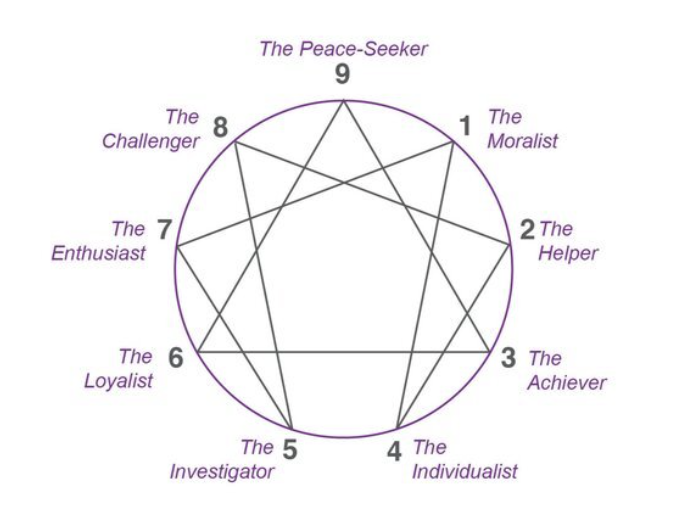
In this episode, Michael, Hari Prasada, and Rasanath explore how Anger, Shame, and Fear function as the Predominant Emotions of the Enneagram (and of the human condition). These emotions correspond to the Body Types (8, 9, 1), Heart Types (2, 3, 4), and Head Types (5, 6, 7), and point to the deeper forces shaping how we experience ourselves and the world. More than surface-level feelings, they reveal what the ego is organized around and what it is constantly trying to manage or avoid. Moving through the three emotional triads, they explore what provokes each emotion, how it is experienced internally, and how it shows up externally. The gift we stand to gain through this knowledge is the freedom to act differently, instead of being habitually forced to act on the emotion. That’s a lifelong pursuit of self-awareness and self-regulation. But by understanding these emotions, where they come from, why they affect us, and seeing their specific hold on us personally, we can become so grounded and judicious in how we respond to them.
Podcast Hosts: Michael, Hari Prasada, and Rasanath
Listen to this episode on Apple, Spotify, or your preferred podcast platform
Highlights
[00:40] Introducing the Predominant Emotions: Anger, Shame, and Fear
[04:00] Predominant Emotions and their relation to the Centers of Intelligence
[11:10] The Body Center with the Predominant Emotion of Anger: “Don’t mess with my world.”
[13:00] Type 8
[14:50] Type 9
[18:20] Type 1
[23:40] The Heart Center with the Predominant Emotion of Shame: “See me the way I want to be seen.”
[25:50] Type 2
[27:00] Type 3
[33:30] Type 4
[38:20] The Head Center with the Predominant Emotion of Fear: “What can I trust?”
[41:10] Type 5
[43:10] Type 6
[46:30] Type 7
[53:30] The importance of this Enneagram dimension on the spiritual path
Quotes
“You sometimes experience one emotion and that emotion is more palpably felt…You may think that the emotion that you're expressing is the Predominant Emotion, but it's not. It is a result of the Predominant Emotion – the emotion that is actually pulling the strings.” -Rasanath
“It's okay to start with looking at the emotion that feels most prominent right now. But… what's behind that? ...If you're honest and sincere and really, truly introspecting, then you will get to the heart of the Predominant Emotion.” -Hari Prasada
“We need to take full responsibility for our emotions. Otherwise it's very easy to blame circumstances or people for what they're causing us. The wound, and the emotion resulting from the wound, is ours. Understanding the emotions really helps us walk toward that wound and then over time really heal it.” -Rasanath
“[We are] drowning in our Predominant Emotions. And if [we] don't even see that we are drowning, then [we are] living in an illusion.” -Hari Prasada
-
This is an automated transcript and may contain minor errors.
Michael: Hello everyone. And hello Hari and Rasanath. We are back to talk about another very nuanced and deep part of the Enneagram framework, and today we're gonna be talking about the predominant emotions. So Hari, it would be great if you could get us started. What are the predominant emotions?
Hari Prasada: So the predominant emotions are the three emotions that.
Three types on the Enneagram respectively, each have to deal with most centrally in their lives. So there is one emotion that is so powerful in its influence that it constantly comes up. It is constantly running us. That emotion then gives rise to the other two predominant emotions. But everything seems to revolve around this one emotion.
And then those other two emotions of the other types that are not our own gets sort of layered in. And then there's also the infinite spectrum of emotions, but there are these three emotions that are very prominent. We call them predominant because. They are so prevalent and there's something which just keeps driving us back to them.
And when we discover what these emotions are and how they interact with us as our particular type, it's incredible how much we can see. We've lost control. We've lost ourselves and what it will take to get more control and come closer to ourselves. This is the whole idea. So three types on the Enneagram have one predominant emotion, three types another and three types a third that makes up these triads.
Rasanath: I think understanding the predominant emotion becomes the gateway. For real growth for each of the types. What we also see, is how each type unconsciously, if we are not really looking at the predominant emotion, then how does each type.
Start to overcompensate for the experience of that emotion, which then leads to greater suffering for themselves and for people around them. That's why the emotion becomes the gateway, because the emotion becomes a very tangible way to start working through. What I'm not seeing
Hari Prasada: It's also worth mentioning that. Don and Russ at the Enneagram Institute refer to these as the dominant emotions of the types, which is very fitting. Of course, they are governing, they are controlling. They are such an influence that they are dominating. And we also have our dominant type, we have our dominant instinct, so.
Predominant gives this connotation of there's something else going on here. There's something that is most palpable, most notable, most prominent, so we just have a slight variation. They can be used both ways, but we refer to them as the predominant emotions.
Michael: Great. And how do the predominant emotions relate to the centers of intelligence?
The heart, the head and the body center that we've spoken about previously.
Hari Prasada: The centers of intelligence are actually what give rise to the predominant emotions. So the heart, the head, and the gut. The three centers that each. Create triads again. So three types are heart centered, three types are head centered, three types are gut centered.
They are the reason why we experience our predominant emotion. So if you are a heart-centered person, you have your predominant emotion because you're heart centered. Likewise for each of the three centers. What that looks like is, let's say my head is thinking about all of the ways that this world is not trustworthy, it's not reliable.
I don't really have the place in it that I'm looking for, and I'm feeling fear. I'm feeling fear because I don't know how I can trust. Anything in this world, which is all fallible, and that naturally gives rise to fear with respect to the gut. The gut is about what my instinct is and how I want to move things in the world.
That's also the body center. So there's a sense of movement and action that is oriented based on intuiting. Figuring out, okay, this is how things should move. So now I'm gonna move like that. And when people get in the way of my movement and when people block my action, I feel angry. Like, I gotta respond, I gotta react.
I'm gonna carve my way. You can't get in the way. And for the heart, it's really about how am I being seen? I want to be seen, I want to be felt, I want to be. Understood for the person that I'm trying to be. And when I'm not seen that way by other people and feeling that heart connection, then I feel ashamed.
I feel exposed and ugh, I can't stand it. It's so embarrassing. How can I be seen like this? It's like, you know, when you're not properly dressed up, I don't want to be seen. That's how the heart center feels. So again, the center gives rise to the emotional experience and then that gives rise to the whole range of emotions.
Michael: Very, very helpful. So you've identified there the three predominant emotions, which are anger, fear, and shame. So as you both have illuminated, uh. We all experience all three of these emotions regardless of which type we are. But the one that is our predominant emotion is the one that we experience most centrally and is really the foundational emotion that leads to the other emotions that we might experience.
Hari Prasada: Yeah. And so it's not that we experience those other emotions. Without great importance. In other words, when we're experiencing the emotions that are not our predominant emotion, it's not that, oh yeah, that's just some fleeting experience, or that's not so prominent or so important. What we're talking about with the predominant emotion is the most prominent, the most central.
The thing that the other emotions get tied back to. It doesn't mean we can ignore or dismiss. We're minimized the other emotions at all. We have to deal with them really seriously, very, very seriously. And we're not saying focus so much more on your predominant emotion than those other emotions. What we're saying is also tie them back to your predominant emotion.
That's the best thing you can do.
Michael: Excellent. And as we were talking about before we started recording, if you do start to really make a lot of work and therefore progress on your predominant emotion, it can start to take care of some of the other emotions that might be negatively affecting you.
Rasanath: Exactly.
Also, you sometimes experience one emotion and that emotion is more palpably felt. It's happening because of the predominant emotion. You may think that the emotion that you're expressing is the predominant emotion, but it's not. It is a result of the predominant emotion, the emotion that is actually pulling the strings.
Hari Prasada: That is a very illuminating experience to be able to organize our emotional landscape and understand what's what is really, really critical. And it's okay to start with looking at the emotion that feels. Most prominent right now. But then, okay, what's behind that?
What's behind that? What's behind that? If you're honest and sincere and really, truly intro respecting, then you will get to the heart of the predominant emotion.
Michael: You can think of it like an iceberg, a visual of an iceberg, where on the surface, if you're outside of the water, you can see some of it, but actually what's underneath the water is often so much bigger than what's above the water.
Wonderful.
Rasanath: Also what's important in, um, this ties very deeply to what Hari Psad said about the predominant emotions arising from the centers. What we also have to realize with the centers and the three centers, the body, the head, and the heart, there is an increased degree of subtle. With those centers, the body is the most external, the most readily felt, the most tangible.
So an emotion that is connected to the body Center, all of us have a body. The emotion that is directly connected to the body Center is most viscerally and directly experienced, even when you might be a part of the heart center. That's anger. That's anger. That's right. So as an example, somebody who is working from the head center or from the heart center.
May experience anger as the most available emotion, just because anger is the expression of the physical body. It's very foundational. But the reason why anger comes out, anger may be coming out first because of it being the most external. But what is really pulling the string is the emotion that is driven by the center, and this is where the distinction really needs to be drawn.
Michael: Okay, great. So let us now get into the actual types and hopefully more will become clear as we go through each of the types. And so rather than going through the types one through nine, we can actually go through each of the types center by center. And I guess it'll make sense to start with the body center or the types eight, nine, and one.
Hari Prasada: The body center being the most immediate access to presence. The most visceral and tangible as Raath was sharing is where Don and Russ often start teaching the Enneagram from. So eight is usually the first type that they will teach, but before we go into. Center, there is a dimension that Don and Russ speak about that is so important and so helpful to understand these centers and the types.
It's a mantra that each of. The centers have as an unconscious maxim. It's something which they don't realize is constantly in their mind because it's in the unconscious mind and it's dictating everything. And you can see exactly how this bridges the connection between. The center and the predominant emotion.
It's really this mantra, this unconscious maxim that the three types of that center constantly have resounding inside to become conscious of. This is really key for growth. So for the first of the centers, the body center, that mantra is. Don't mess with my world 'cause I am acting in the world. I'm intuiting and sensing how to move things and I'm paving my way through the world and it's about autonomy.
I do things the way that I want to do them. I've structured my world in this way. I do the things you do not mess with my world. If you're infringing on my autonomy, I get angry. Don't mess. So the first type, the eight, you see this most directly, most straightforwardly, the eight. The Challenger is really feeling like if you mess with my world.
You gotta mess with me or I am going to mess with you. And that intensity, that strength, that toughness, that identity around not being vulnerable and putting on armory, it comes out and the anger is the most natural protection. And everybody feels more comfortable with anger to some degree. I mean, there are nuances here.
We'll see when we speak about the next type, benign. And also with the one, but for the most part, anger is something that's more comfortable, especially when it's like a righteous anger. It feels less vulnerable than some of the other emotions. So the eights, they feel like, yeah, I'm angry, and you know what?
That's great. That makes me tough. That makes me strong. It brings me further into
Michael: my identity. That's great. I also wanted to mention that these mantras are heavily tied to the basic fears, and we talked about how for the type eight, the basic fear is being shut down and violated at its deepest. That is the fear for the eight.
So you can see how this mantra of don't mess with My world is all about making sure that I'm not being shut down and violated
Hari Prasada: and no other type is as. Bold and brazen about their mantra, don't Mess with My World, and they ate
Rasanath: Type ix. If you are a type IX and you're listening to this podcast, this is not the first time that this has happened to us in our experience, you might be very surprised that the predominant emotion for the Type IX is anger.
Remember, the name of the Type IX is the peace seeker and me angry. No way. This just doesn't make any sense. I'm just not able to relate to it. But here is the catch. It's expressed their anger, as Arial said, in a very straightforward way. For the nines. It's the same autonomy. Don't mess with my world. I want to keep my internal world peaceful and there is all these chaos outside People are too loud.
Sometimes people are just talking about their troubles. I'm just reminded of the messiness and the brokenness of the world. I just don't want that you are messing with my world. Just leave me alone. Is actually the inner spirit of the nine, but because I'm the peace seeker, this is how I do it. I suppress my own anger.
My relationship with anger is quite complex actually, and because I suppress my anger, because it directly comes in contrast to my sense of identity as the peace seeker. I have to suppress it. Many times, nines think that they don't even know what this emotion is because they don't feel much of it. But when you suppress it a lot, it lives in the unconscious and it comes out in passive aggressive ways.
And others experience it as stonewalling, but deliberate stonewalling. It feels very calm from the outside, but it's very stubborn from the inside. And when they don't come in touch with their anger, it's a much more readily in touch with their anger.
I almost like that about myself. Yes, deal with it. This is anger. Deal with it. The nines, they are not in touch with your own anger. And the way they express it is they're trying to protect themselves from seeing their own anger, and they're also trying to protect others from their own anger, which means the only way they can express it is by some sort of stubborn stone walling.
Hari Prasada: One of the most striking things that Don and Russ point out about the nine is that they have the self same anger as the eight. It is exactly the same energy that is being unleashed by the eight, which is so big and so loud and intense is all present in the nine to the same degree. And it's all used to suppress because to minimize my emotions, to make me peaceful, to wall off my emotions requires so much intense energy.
But because it's all happening unconsciously, I don't know, everything's fine. Even when they
Rasanath: say, sometimes
Hari Prasada: everything
Rasanath: is fine. You feel like somehow the anger is just leaking, waiting to come out, but I'm just gonna keep it inside.
Hari Prasada: And many times people won't even feel it and they won't even know. So the one is experiencing this mantra, don't mess with my world.
Around their principles and the fact that I am a good person. I better be a good person. Otherwise, all hell breaks loose. If I don't have my identity as good and right, then who am I? I'm nothing. So you better not get in the way of my principles that make me right and. When you do, you'll feel the vitriol, the spewing of rage in a very, very targeted way.
It's extremely precise as everything that the ones do, and it's very intense, but streamlined in such a way that. It's always around the issue. It's never personal. It's ne, I always feel like I'm still clean. I'm not angry. Why are you raising your voice? I am not raising my voice. I'm a good, decent human being.
I just care. That's how the anger is for the one.
Rasanath: There is a certain ity about the anger of the one. Don and Ru give this very vivid example of how the anger of the eight is like a grenade. It takes everybody around them down. Uh, the angle of the one is like a sniper. It's fired with precision and hits its target in a silent way, in a silent fashion, but it hurts.
There is a very precise caustic edge to the anger of the one.
Hari Prasada: It's really biting and it makes you feel like I'm so bad because that's what they're feeling. You are messing with my world of principles and order and everything in its right place and I'm right and you're making me feel so bad that I'm gonna make you feel like.
How could you be so bad yourself? And the other image, which I love that Don and Rus give, which I think is very helpful for illuminating another side to this, is the fire hose. The fire hose, incredible pressure, but very thin, thin output. And it gets to squeeze and you see the body language of the one to keep all of that anger.
From bursting out of me because that would make me such a bad person. I'm not an angry person. I'm a good person. Similar to the nines. I'm not an angry person. I'm a peaceful person. The ones, I'm not an angry person. I'm a good person. So for that to be held in, it's like the squeeze of the fire hose. But when you, when you let it get released, then whew.
Always very intense and always hits the target.
Michael: Okay, great. And so just a reminder that for then, eight, nine, and the one, they still experience shame and they still certainly experience fear, but the emotion of anger is more foundational than the other emotions for them
Rasanath: and also because they belong to the body center.
The emotion of anger is a body centered emotion. It's very viscerally experienced. The emotion of anger is also experienced by other types that belong to the other centers because they also have a body, but it's being triggered by something else and they'll come to it.
Hari Prasada: So do not think for a moment like, oh, I'm off the hook.
I'm not a body-centered type. Anger is not so big for me. Do not for a second think that way. It's okay. What is causing my anger? What is even more central for me? That is governing me.
Rasanath: I just wanted to mention before we leave the emotion of anger, um, the body center types. The nines express their anger through their wing because the anger is so oppressed, the wing becomes the conduit for the expression of the anger.
It comes out as the wing would express it. So a nine with a one wing would be, as Hari PA mentioned, very precise. You'll see sarcasm frequently being employed because there's a cutting edge to it, and at the same time, I'm trying to keep it, oh, I was just trying to be funny, but it's not, the nine with the eight is explosive and it leaves people very confused because it's like I.
What just happened, I've known this person to be very peaceful, and when the blowing of the top happens, it is explosive anger coming from the nine who has an eight wing
Hari Prasada: actually for both the nine with a one and the nine with an eight. People are like, what on earth happened? It's just a bit bigger and more surprising with the eight wing, but both of them that the suppression is so.
Intense. It's so deep and forceful that when the anger comes out on either side, people are like, what was that? Let's
Michael: get into the heart center. So types two, three, and four.
Rasanath: The predominant emotion for the heart center is shame, and the mantra for the heart center that is very tightly tied to the emotion is See me the way I want to be seen.
See me the way I want to be seen. And yes, if we are not seen the way we wanna be seen, the experience is shame. We wanna hide ourselves and come out. When we will be received in the way that we want to be received. Shame is also the subtlest of the three emotions that we are talking about, anger and fear, and the heart.
As we discussed when we talked about the centers themselves, the heart is the most subtle, the most sensitive of the three centers. So if you're a heart center type, it's quite possible that you'll experience a lot of anger. And you may think, oh, actually anger is my most dominant emotion because I experience a lot of that.
What we have to look for is because we work predominantly from the most sensitive part of our being, the heart, the emotion of shame is also a very subtle, and when I say subtle, that doesn't mean it's small. That just means that it is more hidden. The image of the glacier. Very directly the image of the glacier.
So you see it's just more hidden, but it's very intensely felt. It also because it's more hidden, it's also more unconscious because it's subtle. And so the reaction many times to the experience of shame will be anger, because if I'm not. Healthily dealing with what I'm experiencing deep down. That's how I tend to respond to my environment.
If you are not seeing me the way I want to be seen, I become upset at you. I become angry at you. But what am I really feeling deep down is shame. So the type two see me the way I want to be seen. I wanna be seen as the most loving, most connected. Person And when I'm not seen that way or when I feel disconnection from someone else whose connection is very important for me, I feel I am unlovable.
That is where I go. And going back to the basic fear of the type for the type two, the basic fear is I'm unlovable. And even deeper than that, there is no love to be had, And when I feel unlovable, unworthy of love, what is the emotion that I'm experiencing?
It's the emotional shame. So now many times tools will say that they become very angry at people. They will say they feel angry when they're not reciprocated to. They feel angry when they feel treated like a doormat. And the reason why the anger comes out is when I feel treated like a doormat, I actually feel unworthy of love.
That is shame. And coming from that shame is a reaction to the world, which may show up as anger,
Hari Prasada: the type three. With each of these types, see me the way I want to be seen is there as something that is even more powerful. Uh, I shouldn't say powerful, but even more, again, central than for the other types.
Because for everybody it's about our ego identity. And so I want to be seen and validated. It's all about validation for all of the types. So in one sense, see me, the way I want to be seen is. The thing for all of us, but for these types, it is most on the nose, it is dead on. It is running my life in a way that is just beneath the surface.
Always, always right there. So that's what we have to look out for. And with the shame you can feel like, ah, I don't want to be seen right now. I don't want to be seen. Whereas for the other types, this is again, very subtle, but it's a little less like, I don't wanna be seen right now, or I'm having trouble being seen, or I'm trying to architect my image to be seen the way I want to be seen.
With a three. There is no type that is as centrally tied to this mantra and that whole crafting of how I want to be seen it is so predominant. It's unbelievable. They become masters at. Crafting the image of how they want to be seen. And so the shame is that I need to be successful. I want to have worth, I want to have my value.
And if you don't see me as valuable, then everything falls apart. Everything is a mess. I can't live like that. So I'm feeling so ashamed that I will do anything to get you to see me the way I wanna be seen. And I have all kinds. Of tricks up my sleeve. I can do this dance, I can do that dance, I can do this dance now.
Do you see me the way I wanna be seen now, am I valuable? You like that, right? You like that? Yeah, I can do that. See, look, I'm winning in life. Shame is what's running that shame. 'cause I can't accept myself as I am. So I have to be seen in your eyes for who I'm supposed to be.
Rasanath: So for the type two, the compensation for not working through the shame expresses itself as desperation for the type three, uh, the compensation express itself as self-aggrandizement.
There is very main glory attached to it where I just need to be speaking highly about myself or show myself in a light that then makes you think very highly of me.
Hari Prasada: So that others speak highly about me? No, no, no. I'm very humble, but everybody else should be speaking highly about me. I just call it determination.
I'm just determined to do things that will make you speak highly about me, and it's not about speaking highly about me, it's just about my determination to do the thing. Don't you wish you could do it too.
Rasanath: The other thing for the type three is also. When we talk about the mantra, see me the way I wanna be seen, and for the three I always wanna be seen.
So it makes it very heightened because when I'm not being seen, I feel incredibly restless. But then when I go out and if I'm not seen the way I want to be seen, then I experience shame. So I'm actually caught between a rock and a hard place. Escaping from shame almost becomes an impossibility. So what I tend to do with it.
Does not feel it. And this is very critical to understand this is the key. This is the key that because I always want to be seen, I can't escape from the emotion of shame, which means the only way I can work with the emotion is not feel it. So disconnect from the heart. It's just disconnect from the heart, similar to the nine in its mechanism where the nine suppresses the anger.
The threes just escape. They eject from their shame. They eject from the heart because the heart is the seat of feeling it.
Michael: This is so helpful and it's interesting because if you hear from threes, many will report, I don't need to be seen all the time or. I spend a lot of time alone and actually what's almost always going on there is I've withdrawn from the world in some sort of way Because of that shame, I'm actually afraid.
I feel shame that I'm not gonna be seen the way that I am. So rather than dealing with it and feeling that way, I go and hide or, so we talk about it as situational, introversion rather than introversion. That's hardwired into me. It's coming because it's a compensation for the shame and.
Hari Prasada: I would draw as a three in order to come back better than ever.
I'm building myself. I'm building myself. Then when I come out, ooh, look at how I flap my wings
Rasanath: when the threes would draw. They craft the story, okay, that I don't need to be seen by other people. What I am actually afraid of is being seen by people, but somehow you see how the self deceit runs so deep, but somehow I make a story.
I don't need to be seen by people. So what I do is I tend to dismiss that need that I so badly have, but it still keeps me very restless and empty.
Hari Prasada: The last thing on the three here is. It's very easy for me to say I'm not doing it for the collapse of other people. It's not out of shame. I just do all of these things.
People like it, people appreciate it, or they should appreciate it. They don't appreciate it enough, which is already a sign, right? But I just do, this is just how I am. This is just natural for me. Isn't it great? At least it's good enough. No, but the whole thing is why am I set up? Why is my personality set up this way?
It's to attract the collapse. And if it's working, then it's fine. See, then I don't need anything. Everything is just working. It's in place. But what if you were not getting those claps? What if you were not succeeding? What if it was not going well? And you see the type four,
Rasanath: the type four is same. That belongs to the heart center.
See me the way I wanna be seen. And if we recollect. Type four. The essence qualities of the type four is all around originality, depth, and beauty. And now I wanna be seen as this unique snowflake, right? It's true that every snowflake is unique, but how many people are really noticing it? So I have this very complex relationship with it where.
I know inherently that I'm unique, and yet it never feels quite complete if others don't see it. So see me the way I want to be seen as this unique different from everyone. Uh. Sense to it, but I'm not going to be very overt about it. It's done very covertly. It's done in a very dignified, or rather, I would say understated and classy is the theme here.
Hari Prasada: At least that's the attempt on the part of the four at least.
Rasanath: I'm not going to be so overt about it because if you were classy enough, you would understand. Yet, I feel so pained at the fact that so much of the world is just not classy enough. But deep down, I feel very disturbed by the fact that I'm not seen the way I want to be seen.
And for the fours, when they say, when you talk about See me the way I wanna be seen, the force will say, it's not see me the way I wanna be seen. See me the way as I am. Period, and there is some truth to it. See me the way as I am because the fours have attempted to go closest to who they are. But if they're honest, if they're actually honest, they will see that their attempt to go closest to who they are has potentially taken them further away from who they are.
It's as Hari Psad, you would say, a self on top of the self, a version of authenticity that is actually not really authentic and the experience of not being seen. The way I am in codes brings up the emotion of shame and the compensation for that emotion is I would draw. And then there is this thing that the world just will never understand who I am.
Hari Prasada: See me the way I am is code for see me the way I think I should be. So my ego is we define the ego to build as. The identity of who I think I should be, and for the four, I'm so fixated on being authentic, but I've forgotten who I am. So the only thing I can do is be authentic to what's present, which is the ego.
So I will be so authentic to my ego. You've never seen somebody more authentic. To their ego than me. Now see me the way I want to be seen. See me as my ego actually, please. It's so deep. My ego is so deep. But of course they can't admit this to themselves. This is the problem. I'm being authentic to what is more prominent than the depths of who I am, the core, the self, the soul.
I can't go there. So let me at least be authentic to some version of myself that I can feel good about. So if
Rasanath: we said that the heart is the subtlest of the three centers, the four is the most subtle in terms of understanding and expressing the emotional shame,
Hari Prasada: and it's, it's absurd because it's like. Oh yeah.
I'm really this goth person. That's who I am. See me as the most authentic, deep goth person. That's what I am. Yes. This is absurd. And then 10 years later, I'm a punk. I'm not goth. I'm totally different. Totally different and, and then I'm a hipster or what? You know, it's so embarrassing and I feel the shame of that.
And I'm trying to tie myself to something which is not real, and I feel the shame of that constantly. But I need you to see me for the closest to what I can conjure of who I am as possible.
Michael: Okay. So we move into the last of the three centers.
Hari Prasada: So the head center, the thinking triad, right? We have the thinking, feeling, and willing.
So willing is for the body center, feeling for the heart center, and then for the head center it's thinking, and the mantra here is, what can I trust? What can I trust? As I mentioned at the beginning, this world is so shaky. Everything is unstable, uncertain, and untrustworthy. I can be here today, gone tomorrow, anything and anyone else same applies.
What on earth can I trust? The answer is nothing. So what does this cause? Fear, tremendous fear. I am so terrified. This is the visceral emotion of fear. So we talk about how every type has a basic fear. Every type is born out of fear, frankly. I mean, there's also an essence behind the fear, so that's another thing that we can think about.
But the way that our personality, this, we can say the way that our personality shows up currently is born out of fear, and that is the basic fear. But the emotion of fear is often very detached or disassociated from the basic fear. When we talk about the fear triad or the thinking triad, which is also the fear triad, we are talking about the emotion of fear.
I can feel the anxiety if I don't suppress it, if I allow myself to be in touch with our predominant emotion, which is so hard for all the types to actually, regardless of your center, regardless of your predominant emotion, to actually be in touch with that emotion. It's so confronting. It's so difficult, it's so painful to be in touch with that emotion.
These are not positive valence emotions. If you haven't noticed, these are all negative valence emotions. They're all difficult to hold. So for the thinking triad, if we can hold them, if we can be courageous and be in touch, just as with all of the types and all of the emotions, then you'll feel the visceral emotion of fear.
This anxiety, what can I trust? I have to establish my place in the world somehow. Something that will keep me grounded and sheltered in my existence.
Rasanath: If you remember the visual or one of the, uh, analogies that we talked about when we talked about the head center or the thinking center is when you're driving and it's pouring rain, you can't see what's ahead of you.
We have all experienced being there and the emotion that you experience when you can't see what's ahead of you as sphere 'cause you don't know where you're going. And types five, six, and seven experience Exactly that. Because of them predominantly working from the head center.
Hari Prasada: So the five, the investigator, they are looking for something solid, which they can then establish their identity in the world as expert in.
But the problem is that. There is so little that I can rely on that I know to be true, and people are certainly not giving me truth all the time, and they're certainly not giving me the expertise, especially just if I look around me in, in my little world, how many people are giving me expertise or, or expert enough to trust.
So what I'm looking for is forget about people facts. Facts. People are getting in the way of truth more than they're giving truth. So I look for facts. This is how I'm oriented, and I have to sense that that will then quell my fear of what can I trust? Even if the facts change tomorrow, I'll be up on it.
I'll be up on it. I'll be with the trends in science. I will be with the trends in art. I will be with whatever I need to discover on the cutting edge to quell this fear, get the facts, be an expert, and then be able to espouse knowledge in the world. I'll have my place as a knowledge bearer all out of this fear.
Rasanath: So as a compensation for that fear, I have this voracious appetite for information. It doesn't have to be necessarily practical in any way or form. I just collect and collect and collect the imagination for the type five, especially when they have succumbeded to the fear is a lot of just unbridled thinking.
I am trying to understand the truth of the end and this just completely spirals outta control. Type six, the loyalist. And uh, again, the, the mantra for the head center is what can I trust? And this is much more viscerally felt by the six, which is, so the five will say, I can trust knowledge for the six, the immediate answer will be nothing because knowledge requires some level of trust in my perception.
For the six, the foundation is so shaky that I don't even trust my own knowing. This is where it all starts, right? So when I can't trust my own knowing, I just don't have anything to stand on. And so this becomes a hall of mirrors where in order for me to stand on something, I need external support. How do I know that that external support will help me stand?
So it just becomes circular here. The mechanism here is very circular, which means there is just this endless supply. And Russ puts it very interestingly. He says it's angst. The fear expresses itself in the form of angst, constant angst because of the circularity in the mechanism and for the type six.
Going back to what Hari Psad said, people get in the way for the five people get in the way of the truth. For the six people cannot be trusted. Information cannot be trusted. So what can be trusted? Well, it has to come down to process. I have to make everything so foolproof. Right, how we get the information, who we get the information from, the rules that we have in place to make sure that the way we get the information and the people who are giving us the information are following a set of rules, is what I then tend to rely on in order to keep that angst and the control.
So this is the complexity around the fear.
Hari Prasada: It's trying to pin everything down to make it as reliable as possible, and it's very tenuous. The interesting thing is that sixes have this sense about them, similar to it is interesting, Fox Mulder of the X-Files is a five, so also part of the fear triad. So there's something there, but I'm, I'm gonna use this saying particularly as it applies to the six.
I want to believe the sixes have this sense of, I want to believe, because otherwise the fear is too much. So I want to trust you and I'm just trying to create systems to make sure that I'm supporting you so that you're trustworthy and isn't that good of me. But really it's so that I can trust you because I don't trust you, but I want to believe because otherwise.
I can't live.
Rasanath: Well, it's so interesting that the theme of the X-Files and the captions that they present, sometimes it's, I wanna believe and then sometimes trust no one. Trust. No one. Trust no one. And you see, you see that simultaneously being shown. This is the world of the six.
Michael: You guys are dating yourself with this example of the Xbox.
Happily. Happily.
Hari Prasada: So the last type on the Enneagram here is the seven, and the seven is the enthusiast. What can I trust? I don't know. People sometimes go my way, sometimes, not facts. Uh, they can be boring. They could be useful sometimes, but I don't know. What I trust is experiences. That makes me feel like I have the identity of a happy go-lucky person.
When I have really joyful, exuberant experiences, then I know I am who I think I should be. I'm a happy person. I'm enthusiastic about life. Give me more and more experiences and so I, the voracious of the five towards information goes towards experience. Gimme, gimme, gimme, gimme, gimme. I want this, I want this.
I want this. Oh, we can do this. We can do that. The possibilities are endless, isn't just amazing. Fear, fear, fear, fear, fear. I'm not gonna have enough to make me happy. All these experiences are gonna run out. What am I gonna do? There's a frenetic intensity that is driving me, and I don't even know it because I'm so bent on being happy and outrunning my emotional pain.
That. I'm like, yeah, things are fine. Yeah, life is difficult. Okay, fine. But no problem. You gotta just, you know when life gives you lemons, you make lemonade, no problem. Yeah, it's problems, but it's not real problems. We, we laugh at them anyway. What else can you do? So the sevens, they're feeling so much anxiety.
They're running constantly, but they think it's positive. I'm running two things. I'm not running from things. Ah, look more closely. You're running from something. You don't even know where you're running to. You're just running everywhere. You're running from something. It's the anxiety, oh, life will catch up to me.
I won't be happy. Things will get boring. Things will get hard. Things will make me feel sad, pained, and not able to be who I'm supposed to be. Oof. Terrifying side
Rasanath: because I run so fast for experiences. I also run too fast from experiences, which then makes me compromise on the depth of it. I haven't really fully gotten the depth of it, and very, very soon I have run out of everything.
There is to experience because I've just like gone over the surface, right? And now what I have to do is in order to keep myself entertained, I have to make things entertaining. And this is where things become off color. It's fun for the sake of fun, and it actually gets into gluttony. It gets into like very crass consumption.
Because there is only so much to be had when you can't go deep enough, and so just, I'm going to stuff myself
Hari Prasada: and my anxiety is so endless. That I'm constantly stacking my experiences and constantly going from one thing to the next, to the next, to the next, and I have plan A, plan B, plan C in mind. I have all of this.
I have like spreadsheets in my mind that are so organized and at the same time, so disorganized just. A kind of chaos of planning that when I'm in one experience, I'm like, ah, this is lukewarm. I'm already in my mind in the next experience to try to get the hit of happiness. That makes me feel like I am who I think I should be.
And so I'm never present enough in any experience to even taste it and to get the happiness that I think is there. Which is also questionable and is actually a, uh, a coloration as my guru AMI would say. AMI says.
That we're all coloring our experiences to get the juice from them. We're projecting onto them what we think they should be, and we're enjoying that more than the actual thing itself.
So the sevens are going into all these experiences and they're thinking, oh, this is a blast. And so then they kind of coaxed themselves into being like, yeah, that was a blast. But if you actually look at it, it was just a compensation for the fear.
Michael: So we will often lay out the arc of these podcasts and of course have plenty of spontaneous inspiration, but the mantra was something that we had not laid out in our arc.
So I'm really appreciating how you both have taken us through all of the types, and especially the central focus on the mantra because it's so illuminating, as you said, as the connection between. The center and the predominant emotion that we're talking about today. So just very quickly, in summary, for the body center, the mantra is, don't mess with my world.
And for each of the types, it's different. The reason why they have this mantra, don't Mess with My world, depending on their basic fear is different.
Hari Prasada: And the way that it gets expressed in the world is also different for all of the centers and all the types within them.
Michael: Yeah, so the anger comes out in very different ways, or doesn't come out in different ways.
Uhhuh, for each of the heart-centered types, the mantra is, see me the way that I want to be seen and when I'm not seen in that particular way. And that's different for each of the three types within the heart center, there's a feeling of shame that comes up. And from that feeling of shame, can. Emerge fear and or anger.
And so you often have an intense experience of those emotions, even as a shame centered type, but it's because of the shame. Then with the head center, the mantra is, what can I trust? And each of the three types within the head center are trying to literally answer this question, what can I trust? And for each of the types that either have a very clear answer to the question or not such a clear answer to the question, but it actually doesn't end up calling the fear.
And from that fear stems, shame about not being a certain way. And also can, depending on the. Specific situation. Also STEM anger. So as we start to move towards a close here, let's take it back to, as we always do, the central mission of up build, which is to help us shed layers of ego and move closer to who we actually are as the self.
And we've alluded to this a little bit throughout the podcast, but how does. An understanding of the predominant emotions of our Enneagram type, and also if we're thinking about the people in our lives and their Enneagram types, how does an understanding of the predominant emotions help us move from the ego to the self?
Rasanath: As we said earlier, I think the predominant emotions of the corridor to growth and self work, and then we understand them. We look for them. We look for different ways in which they're being expressed. We also can tie it to why I'm experiencing it, and that's where the work really needs to begin.
We take full responsibility for our emotions.
Otherwise it's very easy to blame circumstances or people for what they're causing to us. But the wound here and the emotion resulting from the wound is ours. And the emotions really help us walk towards that wound and then over time really heal it.
Hari Prasada: I am drowning in my predominant emotion. I mean, all of the emotions are getting the best of me, and I'm trying to suppress them and manage them and pretend I don't have them.
Rarely am I actually channeling them positively. But I'm drowning in my predominant emotion. And if I don't even see that I'm drowning, then I'm really living in illusion. And unfortunately that is the case. The ego blinds us. It makes us believe that we are living in a world that is not the actual world.
So to get to the self, we have to get to reality. And the predominant emotion is blanketing that reality. We have to see that in order to then be able to wade through it, to swim through it, if you will. And if we don't, we have all kinds of reactions, all kinds of tolls that it takes on ourselves and our relationships.
And spirituality becomes much thinner. It becomes much more superficial because we're not engaging really with our conscious. As my gurus guru would say, first become conscious, then become conscious of the supreme reality or conscious of God. So if we're not conscious, it always comes down to this.
There's no question of getting to this spiritual reality. And when we're blanketed and blinded, it's. The spirituality that we profess or that we aspire for, that we are supposedly cultivating is really more of an imagination. It is not grounded, and there are situations where. We will be confronted, and these are tests.
If we don't actually face our emotions and work through them, we will not pass those tests. We will not grow. Period.
Michael: Beautiful. Thank you so much, and thank you for modeling what it's like to take responsibility for your predominant emotion with that phrase of, I'm drowning in my predominant emotion. We are all drowning in our predominant emotions, and if we don't see that clearly, we're limiting our potential in endless ways.
So very grateful to both of you. I think about the phrase emotional intelligence, how that's such a popular phrase these days, and what does it really mean? It. Everything that we've talked about is emotional intelligence today. This is to be truly emotional intelligent. We have to be aware of our predominant emotion and how that is the fountain for all of the other emotions that we are experiencing.
Hari Prasada: Very well said.
Michael: Thank you.
Hari Prasada: So grateful. Thank you, Michael. Thank you everyone.
Michael: Thank you everyone for listening.
Episode Transcript
Continue Exploring the Enneagram
Browse all Enneagram podcast episodes
Understand the Enneagram framework — clear breakdowns of the Types and how the system works
Join our live Enneagram community, Enneagram Library Live, hosted by the Upbuild team.
Take the two-day Enneagram 101 workshop