
ENNEAGRAM DIRECTIONAL MOVEMENTS OF GROWTH AND STRESS
(also called Directions of Integration and Disintegration)
Each Enneagram Type has natural movements. These are patterns we follow when we are growing in consciousness, and patterns we follow when we are under pressure. These movements are the Directions of Growth and Stress.
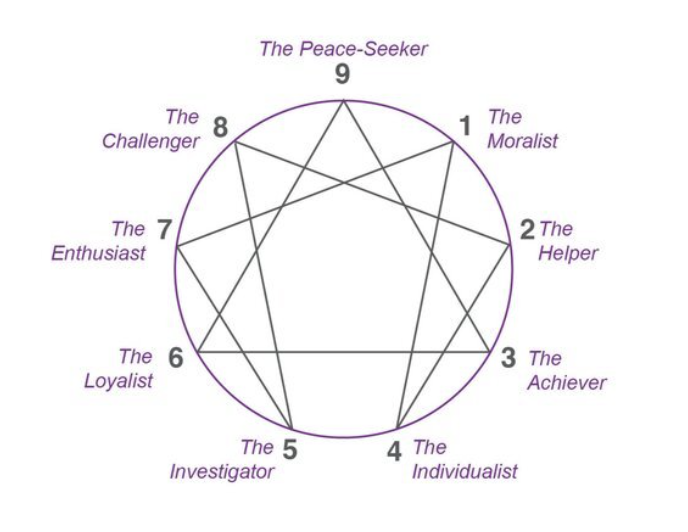
On the Enneagram diagram, each Type is connected to two others by lines. These lines, often shown as arrows, point to the Types we begin to resemble in different states. One arrow indicates where we tend to go in stress. The other shows where we tend to go in growth
These movements are not fixed outcomes. They are tendencies that reflect how we try to protect ourselves or move beyond ego. We can move along these lines both consciously and unconsciously.
When we are stressed and operating on autopilot, we often take on the less healthy traits of our Stress Type. This is usually the ego’s way of coping, grasping for control or comfort. When we are growing, we begin to express the healthier qualities of our Growth Type. This does not mean we become another Type. It means we stretch beyond our usual patterns and access new strengths that support our evolution.
What’s very important to additionally understand is that these Directional Movements act as a gateway into the lived experience of two other Types. These Types are deeply connected to us, and we may even mistake ourselves for one of them.
The key is awareness. Understand the different qualities coming from the two other Types we’re connected to by these movements. And when we recognize our stress patterns, we create the possibility of making different choices. When we understand the direction of our growth, we can lean into it and come closer to who we really are beneath the layers of ego.
How Each Type Moves in Growth and Stress
Type 1
In growth, 1s become more spontaneous, joyful, and self-accepting, like healthy 7s.
In stress, 1s become more emotionally intense, self-critical, and withdrawn, like unhealthy 4s.
Type 2
In growth, 2s become more self-aware, emotionally honest, and boundaried, like healthy 4s.
In stress, 2s become more forceful, controlling, and demanding, like unhealthy 8s.
Type 3
In growth, 3s become more cooperative, loyal, and authentic, like healthy 6s.
In stress, 3s become more disengaged, complacent, and self-doubting, like unhealthy 9s.
Type 4
In growth, 4s become more grounded, disciplined, and balanced, like healthy 1s.
In stress, 4s become more people-pleasing, dependent, and overly accommodating, like unhealthy 2s.
Type 5
In growth, 5s become more confident, decisive, and engaged, like healthy 8s.
In stress, 5s become more scattered, anxious, and hyperactive, like unhealthy 7s.
Type 6
In growth, 6s become more calm, trusting, and open to flow, like healthy 9s.
In stress, 6s become more image-conscious, pressured, and overachieving, like unhealthy 3s.
Type 7
In growth, 7s become more focused, grounded, and thoughtful, like healthy 5s.
In stress, 7s become more rigid, judgmental, and perfectionistic, like unhealthy 1s.
Type 8
In growth, 8s become more open-hearted, caring, and generous, like healthy 2s.
In stress, 8s become more withdrawn, secretive, and suspicious, like unhealthy 5s.
Type 9
In growth, 9s become more focused, motivated, and action-oriented, like healthy 3s.
In stress, 9s become more anxious, reactive, and defensive, like unhealthy 6s.
Learn more at our Enneagram workshop or get in touch about a private Enneagram coaching session (Deep Dive)