Posture
His posture was upright and self-assured, with a calm and composed presence that commanded respect. Even if he was in casual conversation, he often spoke as if he was teaching.

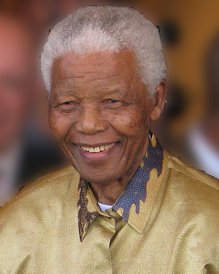
His posture was upright and self-assured, with a calm and composed presence that commanded respect. Even if he was in casual conversation, he often spoke as if he was teaching.
As South Africa's first black president, Mandela led efforts to dismantle apartheid and establish a new, democratic government. He sought to bring about meaningful change and was unwavering in his fight to address the country's deep-seated inequalities.
Mandela consistently demonstrated a commitment to personal integrity, even during his 27-year imprisonment, when he refused offers of conditional release that would require him to compromise his beliefs and principles.
Mandela emphasized the importance of ethical leadership, urging others to follow a moral compass in their lives and actions.
Mandela's commitment to his cause was so strong that he was willing to endure decades of imprisonment, recognizing that his personal sacrifices could help pave the way for a better future for his country.
Mandela, along with other young leaders, formed the African National Congress (ANC) Youth League in 1944. This organization aimed to mobilize and involve the younger generation in the fight for freedom and justice, reflecting Mandela's commitment to ethical and social reform. In 1952, Mandela played a key role in organizing the Defiance Campaign against apartheid laws. This non-violent civil disobedience movement showcased his adherence to principles and determination to create change through lawful means.
During the Rivonia Trial in 1964, Mandela delivered a powerful speech emphasizing the importance of democracy, justice, and freedom. His willingness to face the death penalty for his convictions exemplifies the unwavering commitment of an Enneagram Type 1.
Upon his release from prison and throughout his presidency, Mandela focused on national unity and reconciliation. He sought to heal the deep wounds of apartheid and build a more equitable society, demonstrating a strong moral compass and sense of responsibility.
After serving one term as president, Mandela decided not to run for re-election, focusing instead on social and charitable work. This choice underscores his commitment to the greater good and prioritizing principles over personal power.
In Their Own Words
"Overcoming poverty is not a gesture of charity. It is an act of justice."
"There can be no keener revelation of a society's soul than the way in which it treats its children."
"We must use time wisely and forever realize that the time is always ripe to do right."
"What counts in life is not the mere fact that we have lived. It is what difference we have made to the lives of others that will determine the significance of the life we lead."
"We commit ourselves to the construction of a complete, just, and lasting peace."
"Real leaders must be ready to sacrifice all for the freedom of their people."
"Education is the most powerful weapon which you can use to change the world."
"May your choices reflect your hopes, not your fears."
"For to be free is not merely to cast off one's chains, but to live in a way that respects and enhances the freedom of others."
"As we let our own light shine, we unconsciously give other people permission to do the same."
"Let there be work, bread, water, and salt for all."
Photo: South Africa The Good News, CC BY, via Wikimedia Commons
The Upbuild Enneagram Podcast, with new episodes added frequently.
Enneagram Library Live: twice-monthly teachings and discussion with the Upbuild Team
Explore the Enneagram through an Upbuild workshop.
A private Enneagram Deep Dive to help you figure out and harness your Type.